5 169 résultats
19350101407New York: The Limited Editions Club 1935. Limited edition. Hardcover. pp. xv 363. 4to. Brown cloth with gilt embossed lettering and decoration to spine and front board. Speckled top edge others untrimmed. 6 etched plates by Matisse 20 reproductions of Matisse's sketches printed on blue and yellow paper. Minor wear to edges scuff to gilt decoration on front board 1 cm split to front endpaper at hinge; contents clean binding sound. Lacks slipcase. Limited edition this copy numbered 1044 of 1500; SIGNED by Matisse. The Limited Editions Club hardcover
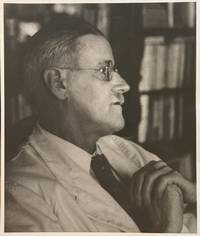
19372884<p>Paris: np 1937. Very Good. POWERFUL IMAGE OF JAMES JOYCE BY SURREALISTIC PHOTOGRAPHER JOSEF BREITENBACH. A remarkable set of circumstances had to come together to this photograph of James Joyce by German born photographer Josef Breitenbach to first exist and then to survive. <br /><br />Throughout the summer of 1937 as he experienced increasingly painful flashes in his right eye Joyce pored over early proofs of Finnegan's Wake then known only as "Work in Progress". Perhaps he was preoccupied with correcting the inevitable and myriad errors in his pun-flecked stream of consciousness prose or perhaps he was overcome with pain but we know from Breitenbach's pocket diary that Joyce canceled four times before the two exiled artists finally met.<br /><br />James Joyce's relationship with Ireland was famously complex and included self imposed exile. He and Nora Barnacle his future wife left Dublin in 1904 for mainland Europe never returning to his homeland after 1912. On the other hand photographer Josef Breitenbach was a Jewish German refugee who fled the rising Nazi's. Both his Jewish background and prior involvement with the short-lived revolution of 1918 made him an early target of the Brownshirts who knocked on his Munich studio door one day in 1932. Thinking on his feet Breitenbach was able to use his portrait of then Vice-Chancellor Papen whom he had photographed the year before together with a letter of thanks from Papen for his work in order to claim that he was under Papen's protection. Seizing the brief vacuum created by his subterfuge Breitenbach immediately packed his bags and within days departed for Paris.<br /><br />Once in Paris Breitenbach mingled with the Surrealists showing in gallery exhibitions alongside Man Ray Henri Cartier-Bresson and Brassai. Over time he developed a reputation for landscapes nudes and photo-journalism. By the time Breitenbach photographed James Joyce in July 1937 he had built a portfolio of portraits of artists such as Max Ernst Emile Bernard and Bertold Brecht. Studio portraits like this print of Joyce were often bathed in a soft seductive glow both flattering and intriguing. Here Joyce sits in profile with clasped hands behind him are blurred rows upon rows of bookshelves. The message is clear: despite failing vision Joyce remained a bright and vibrant writer.<br /><br />Meanwhile history marched on. Two years later in September 1939 Breitenbach was placed with other German and Jewish exiles in a French internment camp. His survival skills still intact he volunteered for a rural labor force that saved him from deportation to a concentration camp. With the help of friends in England and the United States Breitenbach once again fled the Nazi's arriving in New York in June 1941. To his enormous relief his entire oeuvre of photographic prints and negatives including the Joyce pictures had been smuggled out of Paris by another friend and sent to the States by way of Havana.<br /><br />As Breitenbach once again built a life for himself in a new country he turned to his pre-war work. <br />Among the first negatives he developed were those of Joyce - an homage to the writer who had died months before at age 59 in Zurich.<br /><br />Silver gelatin photograph. Taken in 1937; printed later. With "Estate of Josef Breitenbach" stamp on verso. Very faint corner crease only noticeable on verso. Image approx 9x7 1/2 in / 23 x 19.2 cm; with margins 9 3/8 x 7 7/8 in / 23.8 x 19.9 cm. A beautiful evocative image. Rare.<br /><br />References:<br />Michael Shnayerson Josef Breitenbach: James Joyce 9 Portraits. Dublin The Towers 2004.</p> np
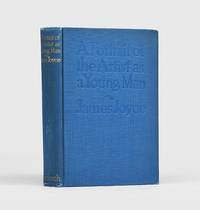
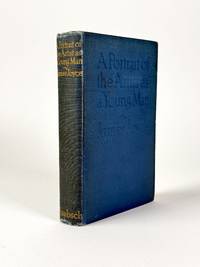
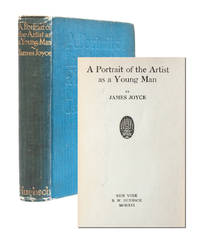
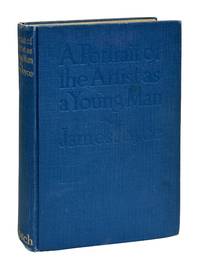
1916172378New York: B. W. Huebsch 1916. To forge in the smithy of my soul the uncreated conscience of my race First edition in book form first printing of the author's landmark first novel. The work was serialized in The Egoist between 2 February 1914 and 1 September 1915. British printers were apprehensive to produce a book edition due to the hostile public reaction to the serial and for fear of prosecution under obscenity laws. It was therefore Huebsch of New York who undertook the true first publication in book form issued on 29 December 1916. No more than 750 sets of the American sheets were reserved for British issue by Harriet Shaw Weaver of the Egoist Press in London appearing there the following 22 January 1917. The Egoist Press later produced their own edition the first printed in Britain in 1918. Octavo. Original blue cloth spine lettered in gilt front cover lettered in blind. Brentano's ticket and ink date of 3 December 1917 on rear pastedown. Spine lightly toned bright overall rubbing to edges browning and spot of skinning to endpapers from previous book protector contents clean. A very good copy. Slocum & Cahoon A11. hardcover
1916JOYCEJAM000887B.W. Huebsch New York. 1916. First edition. Octavo. pp iv 299.Spine slightly dull and a bit rubbed at the ends. Corners also slightly rubbed. Very good. No dustwrapper. B.W. Huebsch, New York. unknown
1989586FISCHER 02-07/1989. 1. softcover. Tredana Deutsche Erstausgabe! 274827492753 FISCHER paperback
1916410927New York: B. W. Huebsch 1916. First edition. Corners rubbed minor edgewear head and foot of spine pushed and worn somewhat rubbed minor soiling. Cream endpapers; pencil notations some effaced to the front endpapers. Internally generally clean and tight; minor scattered thumbsoiling text block edges toned with minor soiling and wear. 8vo. iv 299 1 pages. Publisher's blue cloth lettered in blind to the upper board spine stamped in gilt; lacking dust jacket. A landmark Modernist novel and the author's first. First serialized in The Egoist in 1914 it was first published in book form in New York by Huebsch on 29 December 1916 and then in London on 22 January with the American sheets and a cancel title-page. Slocum & Cahoon A11. B. W. Huebsch unknown
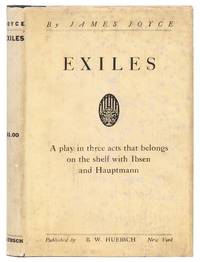
19187836New York: B.W. Huebsch 1918. First edition. Fine/Near Fine. Published simultaneously with the English edition on May 25 1918 see Slocum & Cahoon 14 and 15. A Fine copy of the book in Near Fine dust jacket. vi 154 pp. Publisher's green cloth over tan blindstamped boards. A touch of foxing to edges and top edge dusty otherwise clean throughout. Dust jacket rubbed and a bit foxed with just a few short tears to the rear panel. Overall a very appealing copy of Joyce's only play.<br /> <br /> Exiles captures the romantic dramas of Richard and Bertha a common-law couple recently returned to their home country of Ireland and the complex dynamics that play out between them Richard's cousin Robert and Robert's wife Beatrice. "The play was not especially popular at the time and is commonly regarded as one of Joyce's weaker works. However much of the initial criticism may have had to do with the play's provocative themes: unconventional relationships jealousy weakened national ties to Ireland and exile. All of these topics resonate with Joyce's personal life making Exiles a partly autobiographical work" James Joyce Foundation. <br /> <br /> After W.B. Yeats refused to stage the play Joyce unsuccessfully attempted to interest theatrical companies throughout England Ireland and the United States. Exiles eventually debuted in German translation in Munich in 1919. Of the premiere Joyce wrote: "Complete fiasco. Row in theatre. Play withdrawn. Author invited but not present.Thank God" Morgan Library. The play was not performed in English until a staging at New York's Neighborhood Playhouse in 1925. <br /> <br /> Slocum & Cahoon 15. Fine in Near Fine dust jacket. B.W. Huebsch unknown
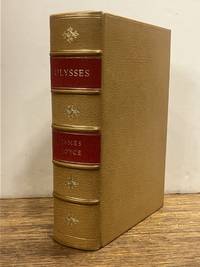
1934334890New York: Random House 1934. hardcover. fine. Thick 8vo handsomely rebound in full beige morocco red leather spine labels. New York: Random House 1934. First Authorized American Edition. Fine.<br/> <br/> Slocum & Cahoon 21.<br/> <br/> Random House unknown
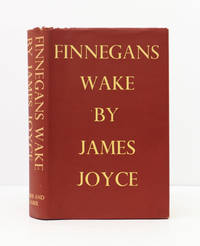
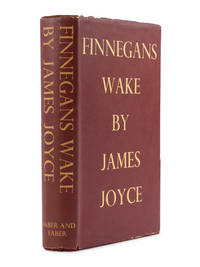
1939145126London: Faber and Faber Limited 1939 First UK edition. iv 628 pp. Tall octavo. Original burgundy cloth. Top edge trimmed. Gilt title and decoration on spine. Fore edge and bottom edges untrimmed. Original endpapers. Text block clean and crisp. Original printed dustwrapper. Touch of wear on the top edge. Price trimmed and a rubber stamp with a US dollar amount added. Really no fading to speak of. A fine copy of a scarce item in this condition. 3400 sets of sheets for the trade edition were printed for Faber. Of these 2255 were bound and sold at 25 shillings 950 were destroyed by the publisher and the remaining were complimentary copies. Joyce thought that the 950 discarded sets of sheets remained unsold because of the price which Joyce believed was too high. Slocum & Cahoon A47.</p><p></p><p>Also included is a small group of ephemera that relates to the first sale of the book in 1939 by Philip C. Duschnes in New York 1939 Faber and Faber Limited hardcover
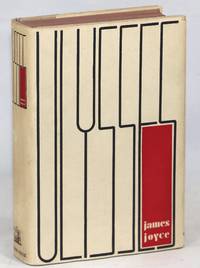
1934000016927New York: Random House 1934. First authorized American edition. Hardcover. Near Fine/Very Good or better. 8vo. 6 vii-xvii 5 5-767 7 pp. Pale buckram cloth over beveled-edge boards black and red lettering on the front board and spine; dark purple topstain. Price of 3.50 on the front flap of the dust jacket. The jacket does not state the jacket designer's name on the front panel. Slocum and Cahoon do not address the question of the designer's name credit though many consider the credit's presence on the jacket to be the preferred variant we have seen this point referred to as a state and as an issue. Slocum and Cahoon 21. A sharp copy of Joyce's modern epic an impressionistic comic tour de force using the epic narrative as a framework. A cultural blend of Irish wit and Greek literary devices and themes dense but beloved and extraordinarily influential. The spine's cloth very gently toned the free front endpaper with two faint wrinkles to its corner; jacket with about three tiny chips on its folds. Random House hardcover
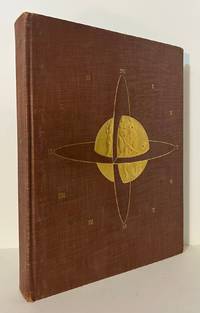
193518427New York: Limited Editions Club 1935. Limited Edition First Edition Thus. Hardcover. Good bound in original full brown cloth with gilt decoration on front panel and spine. Webbing exposed at front hinge binding intact. Toning. Edge wear to exterior includind a few bumps some fading to gilt at a few locations. No markings to text. 4to 12"h x 9 1/4"w. Illustrated by Matisse limited edition also signed by Matisse on the Limitation Page. Limited Editions Club hardcover
1966140604Los Angeles: Expanding Cinema 1966. Shooting final for the 1966 film. Copy belonging to actor Peter Haskell with his manuscript annotations throughout and his shooting schedule laid in. <br /> <br /> Mary Ellen Bute's final film and the first cinematic adaptation of James Joyce's masterfully complex work of fiction. Shot over a two year period Bute was tasked with transforming Joyce's impenetrable prose without losing any of the work's surreal lyrical essence. The subsequent film maintains the original novel's oneiric style. Bute and her husband Ted Nemeth were longtime collaborators and Nemeth worked as both cinematographer and producer of the film. In 1965 it was honored at the Cannes Film Festival as Best Debut and remains Bute's sole feature length film. <br /> <br /> Shot on location in New York City and Dublin. <br /> <br /> Brown untitled wrappers. Title page present dated March 4 1963 and December 3 1962 noted as Shooting Final with credits for screenwriters Mary Ellen Bute Romana Javitz and T. J. Nemeth Jr and editor A.I.M.S. Street. 148 leaves with last page of text numbered 139. Mimeograph duplication with onionskin revision pages throughout. Pages Very Good plus wrapper Very Good plus. Some pages detaching and wrapper slightly cracked. Bound internally with prong binding. Expanding Cinema unknown
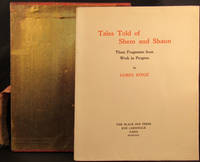
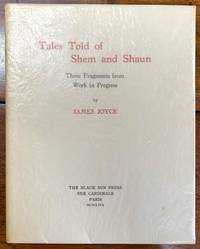
192929728Paris: Black Sun Press 1929. First edition LIMITED. One of 500 numbered copies on Holland Van Gelder Zonen of a total edition of only 650 this being copy 205. With a preface by C. K. Ogden. With an original etched abstract portrait frontispiece by Constantine Brancusi it is the only artwork done for a book illustration by the famous sculptor with tissue guard. Printed in red and black throughout. 8vo publisher’s original cream paper wrappers printed in red and black in the original gilt leafed red paperboard slipcase. xv 55 2 pp. A fine copy internally prisitine a upper hinge with small slit at the gutter the slipcase a bit worn and lacking the back strip. SCARCE FIRST EDITION LIMITED OF THE SECOND SEPARATELY PRINTED PORTION OF FRAGMENTS OF “A WORK IN PROGRESS†AND WHAT WOULD ULTIMATELY BECOME FINNEGANS WAKE. FINNEGANS WAKE is perhaps the most ambitiously conceived novel of all time and is the pinnacle of the Modernist movement in literature. Joyce began working on FINNEGANS WAKE shortly after the 1922 publication of Ulysses. By 1924 installments of Joyce's new avant-garde work began to appear in serialized form in Parisian literary journals Transatlantic Review and transition under the title "fragments from Work in Progress". The actual title of the work remained a secret until the book was published in its entirety on 4 May 1939. Black Sun Press unknown
1917142971London: The Egoist Ltd 1917. First English edition of Joyce’s classic stream-of-consciousness work his first novel one of about 1000 copies. Octavo original cloth. In very good condition. Housed in a custom half morocco and chemise clamshell box. A Portrait of the Artist as a Young Man is a semi-autobiographical novel by James Joyce which describes the formative years of the life of Stephen Dedalus. It was published first in book format in 1916 by B. W. Huebsch New York. The first British edition was published by the Egoist Press in February 1917. Chosen by Modern Library as one of 100 greatest novels of the twentieth century. The Egoist Ltd hardcover
1929299582Paris: Black Sun 1929. Limited. paperback. fine/fine. Three Fragments from a Work in Progress. With a "Portrait" by Brancusi. Sq. 8vo printed wrappers with original glassine. Paris: The Black Sun Press 1929. First Edition.<br/> <br/> Contains work that was later to appear in Finnegans Wake. Number 66 of 500 copies. Fine in the original gilt slipcase. Slocum & Cahoon A-36.<br/> <br/> Black Sun unknown
1927000759Paris: Shakespeare & Co. The 9th printing printed from the wholly new and corrected setting of type prepared for the eighth edition. Original blue wrappers bound in 3/4 leather boards and green tan and gilt paper. Green and tan designed end pages. Gilt title on spine. Gilt topstain. . Very Good. Hardcover. 1st Edition. 5th or later Printing. 1927. Shakespeare & Co., hardcover
193646625London:: John Lane The Bodley Head 1936. First edition printed in England; No. 847 of 900 copies on Japon vellum. . publisher's green buckram stamped with Homeric bow in gold; in dust jacket. Very slight browning to extremities of spine; else a fresh bright copy in a price-clipped jacket with some light wear to its extremities and some hand-soiling particularly to the spine. Uncommon in dust jacket. Small 4to. John Lane, The Bodley Head, hardcover
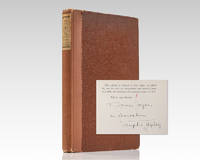
1925151568New York: Greenberg Publisher Inc 1925. First limited edition of this classic work inspired by King John. Octavo original half-cloth. One of 500 numbered copies this is number 8. Association copy inscribed by the author to fellow writer James Joyce on the limitations page "To James Joyce in admiration Joseph Shipley." The recipient James Joyce was an Irish modernist writer whose novel Ulysses 1922 is widely regarded as one of the most influential works of twentieth-century literature. In very good condition. Joseph T. Shipley 1893–1988 was an American author literary critic and lexicographer whose career spanned several decades of influential work in both theater criticism and the study of language. He served as drama critic for The Call later The New Leader from 1918 to 1962 and extended his critical reach through radio broadcasts on New York station WEVD where his program First Nights ran from 1940 to 1982. Shipley was an early and perceptive commentator on modern drama publishing one of the first critical studies of Eugene O’Neill in 1928 and he later held leadership roles in the New York Drama Critics’ Circle including serving as president from 1952 to 1954. Although widely respected as a theater critic he is perhaps best remembered for his contributions to etymology and literary reference particularly his Dictionary of World Literary Terms 1943 and his final work The Origins of English Words 1984. Over the course of his career he authored or edited 27 books and received honors such as the Townsend Harris Medal. Greenberg, Publisher, Inc hardcover
19163926New York: B. W. Huebsch 1916. First edition. Very Good . A Very Good copy with minor shelfwear to extremities. Spine toned. Rear inner hinge tender but holding. Previous owner's bookplate to the front free endpaper. <br /> <br /> Joyce's first novel recounts the coming of age story of Stephen Dedalus the artistic alter-ego of Joyce himself. Stephen grows up ensconced in rigid institutions: the church school system family and national politics. Feeling trapped Stephen experiences a series of awakenings as he grows older and as a result of these awakenings Stephen rejects these traditional bulwarks of Irish culture. Instead he develops an aestheticism that will support his artistic vision. This rejection of existing communities and institutions alongside his embrace of a new aestheticism alienates Stephen from what he knows. Facing this alienation Stephen decides to leave Ireland and pursue his art abroad. <br /> <br /> A Portrait of the Artist as a Young Man is an important contribution to literary modernism. One aspect of this innovativeness is Joyce's use of age-appropriate syntax and vocabulary. The beginning of the novel which starts in Stephen's infancy is mostly monosyllabic nonsense. As Stephen grows older and grasps more about the world and his place in it the novel's vocabulary and syntax become correspondingly complex. Of Joyce's first novel H.G. Wells writes that "It is a mosaic of jagged fragments that does altogether render with extreme completeness the growth of a rather secretive imaginative boy in Dublin. The technique is startling but on the whole it succeeds." Very Good . B. W. Huebsch unknown
1917144189London: The Egoist Ltd 1917. First English edition of Joyce’s classic stream-of-consciousness work his first novel one of about 1000 copies. Octavo original cloth. In very good condition. Housed in a custom half morocco and chemise clamshell box. A Portrait of the Artist as a Young Man is a semi-autobiographical novel by James Joyce which describes the formative years of the life of Stephen Dedalus. It was published first in book format in 1916 by B. W. Huebsch New York. The first British edition was published by the Egoist Press in February 1917. Chosen by Modern Library as one of 100 greatest novels of the twentieth century. The Egoist Ltd hardcover
1934216882New York: Random House 1934. First American Edition; First Printing. Hardcover. Very Good in a Fair dust jacket. Dust jacket heavily chipped away at spine crown/heel. 2 inch closed tear at top of front panel. Reichl name printed at bottom of front panel. Random House hardcover
1941HIN2<p>FIRST ENGLISH EDITION trade issue one of 3400 sets of sheets for the trade edition of <em>Finnegans Wake</em> which were printed for Faber and Faber. Of these 2255 were bound and sold at 25 shillings 950 were destroyed by the publisher and the remaining were gratis copies. It is possible that the 950 discarded sets of sheets remained unsold because of the price which Joyce believed was too high.</p> FABER hardcover
1916JJ046New York: Huebsch 1916 First edition first printing. Publisher's blue cloth blind-stamped front cover and gilt spine. A very good copy with a slight lean to spine and wear to spine ends some light spotting to cloth and rubbing to board edge a slight mark to fore edge of pages 45-48 binding slightly cracked between pages 28 and 29 otherwise sturdy. Internally free of any writing or bookplates. Lacking the scarce original dust jacket. Overall a solid copy of the author's first novel. Slocum & Cahoon A11. A Portrait of the Artist as a Young Man is Joyce's second book and first novel. With the assistance of Ezra Pound the semi-autobiographical text was first published serially in twenty-one monthly installments in the British literary magazine The Egoist from February 1914-September 1915. Readers' critical reactions and fear of obscenity laws led many British publishers to initially reject publication and it was first published in book form in America in 1916. The book which is a virtual rewrite of his abandoned novel Stephen Hero tells the story of the young artist Stephen Daedalus Joyce's fictionalized alter ego. The name alludes to both the Christian martyr Saint Stephen and the Greek mythological inventor Daedalus. A Portrait of the Artist as a Young Man is a Künstlerroman a subset of the bildungsroman genre. The novel is written in Joyce's characteristic style of free indirect speech; Joyce's writing style matures along with Daedalus' own consciousness so that the sophistication of the narrator's voice mirrors the protagonist's level of awareness. First Edition. Hard Cover. Very Good. New York: Huebsch hardcover
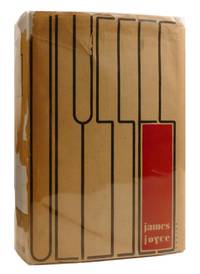
1922OCB3802<p>Ulysses. By James Joyce. First English Edition. Published in 1922. Printed in Paris France. "Published for the Egoist Press London by John Rodker Paris". October 1922. Quarto rebound in later morocco gilt tooling fillet dentelle and armorial at both front and rear boards. Some toning and light surface soiling to title bound without the half title and the rare errata often missing a facsimile of the errata is however laid in at rear. Some wear at edges of spine bit of loss at head. One of 2000 copies.</p><p>First English Edition printed in France number 245 of of 2000 numbered copies on handmade paper. As is noted on the verso of the limitation page 'Ulysses' was first published by Shakespeare and Company of Paris in February 1922 in an edition limited to just 1000 copies. Within a month of the publication this first printing was practically sold out; eight months after the initial printing October 1922 a second printing the first English edition appeared.</p><p>This edition is actually rarer than the limitation statement would suggest. In a letter from Harriet Shaw Weaver dated February 25 1947 the following account is recorded: "A good number of copies sent by ordinary book post to the U.S.A. got through to their various destinations but some time between October 1922 when the Egoist edition was published and December the U.S.A. censorship authorities evidently became suspicious; copies were held up and accumulated at the U.S.A. post offices until finally 400-500 copies were confiscated and burnt." Slocum A18.</p> John Rodker for Egoist Press hardcover
19162940New York: B. W. Huebsch 1916. First edition. Very Good. A Very Good copy with bright gilt on the spine. Shelfwear to extremities. Front inner hinge starting but holding. Some offsetting to front endpaper and early ownership signature to front pastedown. Page 16 with slight skinning affecting several lines of text. <br /> <br /> Joyce's first novel recounts the coming of age story of Stephen Dedalus the artistic alter-ego of Joyce himself. Stephen grows up ensconced in rigid institutions: the church school system family and national politics. Feeling trapped Stephen experiences a series of awakenings as he grows older and as a result of these awakenings Stephen rejects these traditional bulwarks of Irish culture. Instead he develops an aestheticism that will support his artistic vision. This rejection of existing communities and institutions alongside his embrace of a new aestheticism alienates Stephen from what he knows. Facing this alienation Stephen decides to leave Ireland and pursue his art abroad. <br /> <br /> A Portrait of the Artist as a Young Man is an important contribution to literary modernism. One innovation is Joyce's use of age-appropriate syntax and vocabulary. The beginning of the novel which starts in Stephen's infancy is mostly monosyllabic nonsense. As Stephen grows older and grasps more about the world and his place in it the novel's vocabulary and syntax become correspondingly complex. Of Joyce's first novel H.G. Wells writes that "It is a mosaic of jagged fragments that does altogether render with extreme completeness the growth of a rather secretive imaginative boy in Dublin. The technique is startling but on the whole it succeeds." Very Good. B. W. Huebsch unknown