Joyce, JamesBiblio.com
19 858 résultats
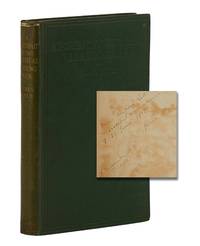
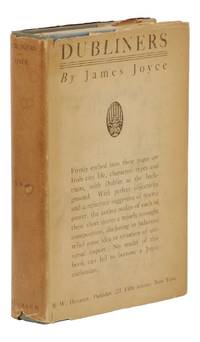
1916140946344New York: B. W. Huebsch 1916. First Edition. Near Fine/Near Fine. First American edition utilizing English sheets first printing of James Joyce's first prose work--a collection of short stories all unified by a common place depicting Irish middle class. The stories were written while Irish Nationalism was at its peak and the search for a national identity was raging. The country was at a cultural crossroads which Joyce felt was responsible for a collective paralysis. He conceived of Dubliners as a "nicely polished looking-glass"held up to the Irish and a "first step towards their spiritual liberation." <p>Bound in publisher's blue-green cloth stamped in green; one of 504 sets of sheets which were imported by Huebsch from the British publisher Grant Richards. Title page is a cancel printed on laid paper with "Utopian" watermark. 278pp. Near Fine textblock edge lightly dust-soiled and with a faint stain to the bottom edge pages tanned. In the incredibly rare original dust jacket Near Fine tanned and lightly edge worn with several short closed tears several droplet stains to spine panel with chipping to ends lightly rubbed. A beautiful example entirely free of repair or restoration. A major work of twentieth-century literature seldom if ever seen in jacket. Slocum & Cahoon 9. B. W. Huebsch unknown
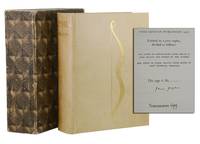
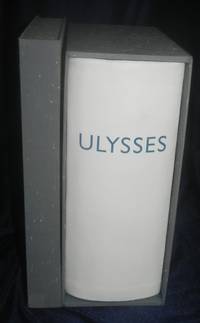
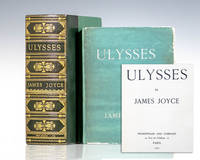
1936140945626London: John Lane the Bodley Head 1936. First Edition Thus. Near Fine. An exceedingly scarce presentation copy of the first English edition printed in England limited issue signed by James Joyce. One of 100 copies from a total edition of 1000 copies this copy unnumbered printed on mould-made paper and bound in full calf vellum. This copy was reserved for presentation by the author unnumbered at the colophon with the words "Presentation Copy" inscribed in calligraphy below the limitation. The only other copy of this edition of 100 that we could locate that bears the presentation inscription this copy also unnumbered was from Joyce's private library now housed in the Poetry Collection at the University at Buffalo. They also hold two other copies of the Bodley Head Ulysses 1/900 that also bear the words "Presentation Copy" on the edition statement: one having been owned by Joyce and the other by Sylvia Beach. <p>Bound in publisher's original full calf vellum with gilt Homeric bows designed by Eric Gill on the upper and lower cover and titles in gilt on spine top edge gilt. Housed in publisher's original patterned slipcase which is also correctly sans number matching the presentation copy's blank. <p>Near Fine with light discoloration and light rubbing to the vellum spine slightly darkened and with light mottled foxing foxing to textblock extremities. Slipcase is rubbed and a little worn with several small stains; Foxing to interior of slipcase. Publisher's prospectus laid in. John Lane the Bodley Head unknown
19162302027New York: Huebsch 1916. First. hardcover. Fine/Near fine. A fine first American edition in a near fine dust jacket with some minor restoration to inside of dj to hinges and some edges. Housed in custom-made fold-out case. Huebsch unknown
1936031076London: The Bodley Head 1936. Book. Illus. by Eric Gill. Near Fine. Full Vellum. Signed by Authors. Limited Edition. Full cream calf vellum with gilt title to spine and the famous Eric Gill designed bow in gilt to front and rear panels. Housed in patterned cardboard slipcase which has in turn been put in a gilt lettered grey morocco clamshell box. This edition limited to 100 copies signed by James Joyce on mould-made paper. This copy #7.lucky seven. Laid in is original prospectus. Vellum is uniformly in great condition Top edge gilt is fine. Cardboard slipcase shows wear especially at extremities . Grey morocco clamshell box is still in near fine condition. This edition with the textual improvements from the editions of Paris in the 1920's has become quite scarce . A nicer copy would be hard to find. The Bodley Head Hardcover
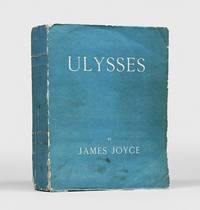
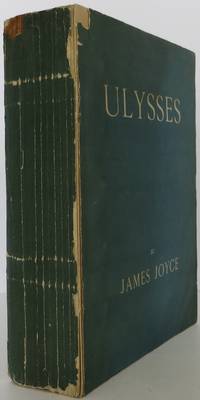
1922126933Paris: Shakespeare and Company 1922. First edition of Joyce's masterpiece one of 750 numbered copies printed on handmade paper from a total edition of 1000 copies this is number 276. Thick quarto original blue and white wrappers. In near fine condition square and tight with a touch of rubbing to the crown and foot of the spine. Housed in a custom slipcase. An exceptional example. Ulysses was published in Paris by Shakespeare & Company 1922. It was a struggle for the author to find a publisher a comic irony considering that Ulysses is "universally hailed as the most influential work of modern times" Grolier Joyce 69. Ulysses was an immediate success. The first printing sold out and "within a year Joyce had become a well-known literary figure. Ulysses was explosive in its impact on the literary world of 1922" de Grazia 27. Even so the book faced difficulties in global reception. It was banned in the U.K. and was prosecuted for the obscenity in the Nausicaa episode Ellmann 1982. Joyce's inspiration for the novel began as a young boy reading Charles Lamb's Adventures of Ulysses and writing an essay entitled "My Favorite Hero" after being impressed by the wholeness of the character Goreman 1939. The idea for the novel grew from a story in Dubliners in 1906 which Joyce expanded into a short book in 1907 before reconceptualizing it as the heady novel in 1914 Ellmann 1982. The book can initially seem unstructured and chaotic and Joyce admitted that he "put in so many enigmas and puzzles that it will keep the professors busy for centuries arguing over what I meant" The Observer 2000. The French translator Stuart Gilbert published a defense of Ulysses shortly after its publication in which he supported the novel's use of obscenity and explained its internal structure and links to the Odyssey against accusations of ambiguity. Every episode Gilbert explained is connected to the Odyssey by theme technique and correspondence between characters. Another instance of Ulysses' literary contribution is his use of stream-of-consciousness a technique employing carefully structured prose both humorous and charactering and involving puns and parodies. Joyce was a precursor to the use of stream of consciousness in the later decades. Similar narrative techniques were used by his contemporaries Virginia Wolfe William Faulkner and Italo Svevo. Their style can be better characterized as an "interior monologue rather than stream of consciousness is the appropriate term for the style in which subjective experience is recorded both in The Waves and in Woolf's writing generally" Stevenson 1992. Shakespeare and Company unknown
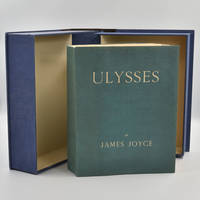
1922153854Paris: Shakespeare and Company 1922. One of the copies distributed by Harriet Shaw Weaver First edition number 825 of 750 copies on handmade paper numbered 251 to 1000. Sylvia Beach's notebook records that this copy was one of two dozen sold to "Miss Weaver on sale". Harriet Shaw Weaver was Joyce's indispensable patron without whose munificent backing Portrait of the Artist as a Young Man Ulysses and Finnegans Wake might never have been published. As a measure of Weaver's paramount importance to Joyce he inscribed copy number 1 of Ulysses to her. Ulysses was published in imitation of the traditional three-tiered French format aimed at both connoisseurs and readers: 100 signed copies on Dutch handmade paper; 150 large-paper copies printed on heavier vergé d'Arches and 750 copies on vergé à barbes forming the trade issue. The novel was published on 2 February 1922. Widely recognized as the key book of 20th-century English literature Ulysses is among the major works in the modernist canon and its creator one of the great geniuses of all literature: "Joyce not to mince words is Ireland's Shakespeare its Goethe its Racine its Tolstoy" John Sutherland. The book also proved to be a major test case for laws of freedom of expression. "Forced underground by censors. this was a cryptoclassic already before it was read a subversive colossus" Norman Sherry James Joyce Ulysses 2nd edition. Small quarto. Original blue wrappers titles to cover in white. Housed in a dark blue leather backed book-form box. Pencil ownership inscription of veterinarian and Joyce collector Alfred T. Cowie 1916-2003 dated 1954 to first blank. Mild rubbing to extremities with some loss to spine ends wrappers lightly soiled but entirely unrestored very few trivial spots within a very good copy. Slocum & Cahoon A17. Horowitz Census p. 131. hardcover
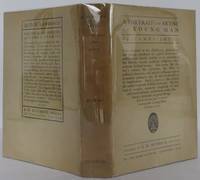
1916129144New York: Huebsch 1916. First edition of Joyce’s classic stream-of-consciousness work his first novel in the exceptionally rare dust jacket. Octavo original blue cloth with titles to the spine in gilt. Near fine in a very good dust jacket with small chips and wear to the extremities. Housed in a custom half morocco clamshell box. Rare especially in this condition without any of the usual restoration usually encountered. A Portrait of the Artist as a Young Man is a semi-autobiographical novel by James Joyce which describes the formative years of the life of Stephen Dedalus. It was published first in book format in 1916 by B. W. Huebsch New York. The first British edition was published by the Egoist Press in February 1917. Chosen by Modern Library as one of 100 greatest novels of the twentieth century. Huebsch hardcover
192221212431922. Paris: Shakespeare and Company. 1922. 4to. Original blue wrappers titles to cover in white; pp. 732 uncut; spine hinges and extremities expertly repaired; a very good copy housed in a custom quarter brown calf over blue cloth book form box lettered in gilt to the spine; early bookplate 'Ex Libris Yester House' to front free endpaper see below.First edition number 442 of 750 copies on handmade paper numbered 251 to 1000; the copy sold to the poet E. E. Cummings according to Sylvia Beach's records.'Ulysses is not a great novel in the sense of A la recherche du temps perdu. The characters do not develop. It has no consistent tragic grandeur and bogs down in several stylistic exercises which have nothing to do with the novel proper; yet the early Dedalus section the middle parts of Bloom and the Nightown orgy and Molly's final reverie stand out like Gaudi's unfinished cathedral. The whole plan fails through Joyce's intellectual preference for language rather than people - yet somehow it does achieve greatness like a ruined temple soaring from a jungle - and should be judged perhaps as a poem a festival of the imagination' Connolly 100 Key Books of the Modern Movement.Cyril Connolly's judgement stands as a fair summation of this astonishing novel - discursive baffling funny moving a unique mingling of highbrow allusion and quotidian detail. It is as dazzling a display of stylistic virtuosity as has ever been attempted in prose to the extent that it might not even be prose any more and it is all in the service of a narrative that does nothing more than illuminate one day in the life of an ordinary man. It is a celebration of the individual that expresses the deep richness of human existence by drawing the parallels between the feats of classical heroes and the deeds of everyday life.It was also famously judged to be so obscene after excerpts of the work in progress were published in the American journal The Little Review between 1918 and 1920 that no mainstream publisher would touch it. Indeed British printers were forbidden from printing it. It would take Sylvia Beach the visionary owner of Shakespeare and Company in Paris to publish this the first edition in book form in a strictly limited run on Joyee's fortieth birthday on 2 February 1922. The first UK edition published by The Egoist Press in the October of the same year had to use Beach's printer in Dijon Darantiere and her plates to obviate the legal restrictions. The very existence of this work in print then is due to the perseverance and commitment of Sylvia Beach. Beach met Joyce at a tea party in 1920 and got to know him and his work after he joined her lending library; from such low-key beginnings quickly grew a creative partnership that would shape literary history. Shakespeare and Company gained considerable fame from the publication of Ulysses but actually lost financially after Joyce signed with another publisher and left Beach in debt caused by bankrolling the printing and distribution of his masterpiece the first book she had ever published. Nevertheless she seems never to have seriously regretted her part in the production of this cultural behemoth a book for which T. S. Eliot wrote in awestruck tones: 'I hold Ulysses to be the most important expression which the present age has found; it is a book to which we are all indebted and from which none of us can escape'.Provenance: According to Sylvia Beach's records copy number 442 was sold to the poet E. E. Cummings in February 1922. The copy has an alternative provenance: Mary Mowbray-Clarke proprietor of The Sunwise Turn bookshop in New York City records copy no. 442 arriving at her shop in January 1923. The Yester House of the elegant bookplate is located in Mobile Alabama and is now called Carolina Hall. It is listed on the National Register of Historic Places. We are not sure who was living there in 1922 but in 1955 a William Clay Perdue and his wife Martha took over the property.Slocum & Cahoon A17. hardcover
1936835191936. JOYCE James. Ulysses. Orig. gilt-stamped vellum in publisher's decorated slipcase. London: John Lane the Bodley Head 1936. Slocum and Cahoon A23. First English edition printed in England. One of 100 copies signed by the author this being no. 11 out of a print run of 1000 copies. Publisher's prospectus laid in. With the iconic Homeric bow designed by Eric Gill stamped in gilt on the front board. The publisher's slipcase is worn at the extremities else a very good or better copy. unknown
1917140947159London: The Egoist Ltd 1917. First British Edition. Very Good. First English edition printed from English sheets preceded by a first American edition and an English edition that was bound using the American sheets because English printers would not accept responsibility for printing it. Signed by James Joyce on the front free endpaper and inscribed to Baron Ambrose Ralli "in grateful remembrance of 21 June 1915" signed in Trieste on 8 November 1919. Bound in publisher's dark green cloth stamped in blind with spine lettered in gilt. Very Good with slight lean to binding fading to spine with fraying to crown light soiling to cloth and crease to bottom corner of rear board. Occasional pencil annotations and corner creases; front hinge a bit tender and offsetting and foxing to endpapers. <p>An important presentation copy to a friend of Joyce's Baron Ambrose Paul Ralli 1876-1938. Here he his thanking Ralli for his crucial role in helping his family flee Italy during World War I. When Italy declared war on the Austro-Hungarian Empire in May 1915 Joyce was compelled to flee Trieste. Baron Ralli and Count Francesco Sordina provided essential support during this perilous time. The date of remembrance June 21st is likely the day Joyce escaped. The Baron championed Joyce's literary career and was the sole subscriber to Ulysses in Trieste. Slocum & Cahoon 13. The Egoist Ltd unknown
19222004106Paris: Shakespeare and Co 1922. first. softcover. very good. Small quarto. Original blue wrappers titles to upper wrapper in white. In a blue quarter morocco case. Very good condition with a chip at the ipper left corner of the front panel of the dj. From a total edition of 1000 copies this is one of the last 750 on handmade paper. Some pages uncut at top. Shakespeare and Co unknown
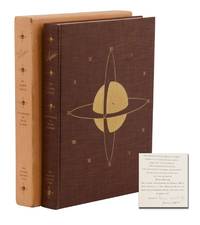
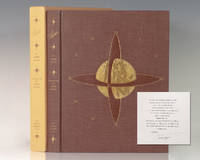
1988106This book is in Fine condition. The lettering to the spine is bright and unrubbed. There are no bookplates signatures or markings of any kind. The pages are clean and free of any foxing. This is a limited edition #27 of 40 copies signed by Robert Motherwell. The book contains 40 etchings by Robert Motherwell 20 of which are in color. The book comes with its rare original slipcase in good condition. There is some fading to some of the sides of the slipcase. This is the deluxe edition which comes with a separate portfolio with an additional set of the etchings. Each etching in the additional suite of prints is signed in initials and numbered by Robert Motherwell. The clamshell case for the portfolio has some fading and minor staining to its front cover. It also comes in its original carboard shipping container from the Arion Press. Arion Press hardcover
1918154058London: Egoist Press 1918. Inscribed to an early reviewer of Ulysses First edition to be printed in Britain inscribed by the author "To George and Mary Slocombe James Joyce Paris 7. i. 1926" on the half-title. George Slocombe was an English journalist writing for the American papers. Joyce asked Sylvia Beach to send him a press copy of Ulysses and he was among its first reviewers telling the readers of the Daily Herald that it was "as large as a telephone directory or a family Bible and with many of the literary and social characteristics of each". Joyce's inscriptions usually appear on the front free endpaper; in this copy however that space was already taken by the ownership inscription dated and located "Paris 1921" of Allan Ross "Dougie" MacDougall 1893-1956 a gay expatriate Scotsman in Paris friend and later biographer of Isadora Duncan. In the early 1920s MacDougall had a regular column in the Chicago Tribune and he and Slocombe shared a close mutual friend in Edna St Vincent Millay. Presumably MacDougall gave the book to Slocombe who then asked Joyce to inscribe it. Portrait was serialized in the English literary magazine The Egoist in 1914 and 1915 and first published as a book in 1916 by B. W. Huebsch of New York from whom Harriet Shaw Weaver proprietor of the Egoist Press purchased and bound some 750 sets of the US sheets issuing them in London under the Egoist imprint in 1917. This second edition is the first to be printed in Britain. Presentation copies of this printing are rare and examples with such intriguing Parisian provenance are exceptional. Octavo. Original green cloth titles to front board in blind and to spine in white. Housed in a navy blue morocco backed book-form folding case by the Chelsea Bindery. Spine heavily toned and somewhat rolled some toning around margins within but still a sound copy in good condition. Slocum & Cahoon A13. hardcover
193648720London.: John Lane / The Bodley Head. 1936. Original publisher's full vellum designed by Eric Gill with gilt bow vignette to front and rear boards cream endpapers title gilt to spine a.e.g. original patterned paper-covered board slipcase with white paper label with printed titles and matching copy number in ink. Large 8vo. 264 x 204 mm. Half-title printed title in blue and black leaf with justification and production credits verso leaf with list of 'Previous Editions of 'Ulysses'' leaf with details of the appendices and Joyce's text concluding 'Trieste-Zürich-Paris 1914-1921' and appendices. The deluxe issue of the first edition of Joyce's magnum opus to be printed in Great Britain.From the edition limited to 1000 copies with this one of 100 on mould-made paper in the deluxe vellum binding designed by Eric Gill and signed and numbered by Joyce; the original slipcase features matching numbering to the book.This authoritative edition of 'Ulysses' the first to be published in Great Britain features Joyce's corrected text see below details of the seven previous editions and their fates where applicable for example for the Egoist Press edition '499 copies were seized by the Customs Authorities Folkestone' and detailed appendices concerning the protests injunctions and trials relating to the publication of the book and a bibliography of works by Joyce.Written over a seven year period during Joyce's peripatetic tour of Trieste Zurich and Paris where it was eventually first published 'Ulysses' chronicles a day in the life of Leopold Bloom: June 16th 1904. The book was banned in Britain Ireland and America until the 1930s due to its apparent obscenity hence the need originally for French publication. Considered by many to be the greatest work of literature in the English language 'Ulysses' is certainly a supreme monument of literary Modernism and conceivably the greatest work of literature of the 20th century; Nabokov considered it one of the 'greatest masterpieces of twentieth century prose'. However the greatness of Ulysses has often been overshadowed by the novel's difficulty its ambiguities and its intense literary nature all factors that led the publisher Sylvia Beach to announce the first edition of the work with the apology: 'the publisher asks the reader's indulgence for typographical errors unavoidable in the exceptional circumstances'; the errors are corrected in the present edition.Although the slipcase for the present copy is rubbed and worn it remains intact and the vellum of the binding of the book is fresh with only slight toning to the spine and some small marks to the boards; overall a good copy of this important text.Slocum & Cahoon A23. John Lane / The Bodley Head. hardcover
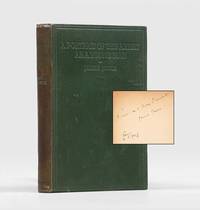
1916109550London: The Egoist Ltd 1916. First English edition second printing of Joyce’s classic stream-of-consciousness work his first novel. Octavo original cloth. Presentation copy inscribed by the author on the front free endpaper "To Beatrice Randegger. James Joyce. 25 Novembre 1919. Trieste." The recipient was a private student's of Joyce in Italy. In excellent condition with light rubbing and wear. Housed in a custom half morocco clamshell box made by the Harcourt Bindery. A Portrait of the Artist as a Young Man is a semi-autobiographical novel by James Joyce which describes the formative years of the life of Stephen Dedalus. It was published first in book format in 1916 by B. W. Huebsch New York. The first British edition was published by the Egoist Press in February 1917. Chosen by Modern Library as one of 100 greatest novels of the twentieth century. The Egoist Ltd hardcover
1935140947396New York: The Limited Editions Club 1935. Signed Limited Edition. Near Fine. First illustrated edition of James Joyce's modernist masterpiece. One of a limited 250 copies signed by both James Joyce and Henri Matisse from an edition of 1500 total the majority of which were only signed by Matisse. Bound in publisher's brown cloth stamped in gilt with top edge speckled brown; housed in the original tan cardstock slipcase with spine stamped in brown. 363 p. Near Fine with trivial rubbing to spine ends corners and gilt at raised relief on upper board. In a Very Good slipcase with soiling and light wear and a short repair to the seam at the opening along the bottom edge. A wonderful copy housed in a custom brown cloth solander case with morocco spine label stamped in gilt. A visually striking production which combines James Joyce's modernist masterpiece with twenty-six illustrations by Matisse including six hand-printed etchings and twenty lithographs. Slocum & Cahoon 22. The Limited Editions Club unknown
193570085New York:: The Limited Editions Club 1935. No. 1142 of 1500 copies; signed by Henri Matisse in pencil and by James Joyce in ink. publisher's embossed gilt cloth in publisher's slipcase. Very slight tanning of inner hinges; but just about a fine copy. The fragile hinges are fine which is unusual for this book. The publisher's box has a little bit of wear to the fore-edges and extremities but is clean tight and strong. . Folio. Illustrations by Henri Matisse. With an Introduction by Stuart Gilbert. Laid in is the publisher's four-page prospectus and postcard announcement for this book plus an additional postcard announcement of shipment addressed to its first owner in which the purchaser is informed that she was one of the fortunate Limited Editions Club members who are being shipped a copy signed by both Matisse and Joyce. The postcard goes on to describe how the Club tried to handle the imbalance between the number of members who wanted the Joyce signatures and the number of copies Joyce agreed to sign. We have never seen another copy of this postcard. The Limited Editions Club, hardcover
1914177683London: Grant Richards Ltd 1914. A landmark of modernism and the short story First edition first impression first issue. Dubliners marks Joyce's masterful short story debut his first major work and second book overall. The final story "The Dead" has been described by T. S. Eliot and others as among the finest ever written. "In its lyrical melancholy acceptance of all that life and death offer 'The Dead' is a linchpin in Joyce's work" Ellmann Biography p. 252. Joyce spent years battling the publishers to release the book in uncensored form stating that no artist should dare "to alter in the presentment still more to deform what he has seen or heard" letter of 5 May 1906 and defending the stories as a "first step towards the spiritual liberation of my country" 20 May 1906. The first issue of Dubliners comprised 746 sets of sheets bound by Grant Richards and issued in London. The remaining 504 sets of the 1250 printed were shipped to Huebsch in New York where they were not issued until much later sometime between 15 December 1916 and 1 January 1917. Octavo. Original red cloth spine and front cover lettered in gilt. Some very light rubbing to cloth at extremities a few faint marks to front and rear boards cloth fresh and gilt bright sound and clean within: near-fine. Slocum & Cahoon A8. hardcover
1922167273Paris: Shakespeare and Company 1922. It soared a bird it held its flight. soaring high high resplendent First edition number 418 of 750 copies on handmade paper numbered 251 to 1000. This attractive copy is finely bound retaining the distinctive original blue wrappers at the front and rear. The edition was published on 2 February 1922 in imitation of the traditional three-tiered French format which was aimed at both connoisseurs and general readers. It consisted of 100 signed copies on Dutch handmade paper 150 large-paper copies printed on heavier vergé d'Arches and 750 copies on vergé à barbes which formed the trade issue. One of the key texts of 20th-century modernist literature Ulysses also proved a major test case for laws of freedom of expression. "Forced underground by censors. this was a cryptoclassic already before it was read a subversive colossus" Sherry p. 1. Its creator is considered one of the great geniuses of modern literature: "Joyce not to mince words is Ireland's Shakespeare its Goethe its Racine its Tolstoy" Sutherland. Small quarto 234 x 184 mm. Finely bound by the Chelsea Bindery in greenish blue morocco spine lettered in gilt quintuple gilt ruled border to spines and covers turn-ins ruled in gilt cream endpapers top edge gilt others untrimmed original wrappers bound in. Housed in a matching leather entry slipcase by the Chelsea Bindery. A fine copy. Horowitz Census p. 121; Slocum & Cahoon A17. Brian Patrick Duggan Saluki: The Desert Hound and the English Travelers Who Brought It to the West 2014; Vincent Sherry Joyce: Ulysses 2004; John Sutherland "Ireland's Shakespeare" The Guardian 10 Feb. 2004. hardcover
19165554New York: B.W. Huebsch 1916. First Edition. Joyce's autobiographical first novel first serialized in 25 installments in The Egoist between February 2 1914 and September 1 1915 by his great patron Harriet Shaw Weaver. As for the book publication she was unsuccessful at finding an English printer willing to assume the responsibility of setting the text - seven of them refused to do it all on moral grounds. "Under English law unlike American the printing of immoral writings is as actionable as their publication" Slocum & Cahoon p.20. Weaver sent a copy of her Egoist serialization to New York bookseller Edmond Byrne Hackett who in turn contacted B.W. Huebsch who undertook the publication of Portrait just as he had for Dubliners several weeks earlier. ".on 16 June an emblematic date for Joyce Benjamin Huebsch wrote to Miss Weaver with his proposal: publication of the complete novel with sheets printed in the US going to the English publisher under joint imprints the costs being shared.He was anxious he said to see Joyce properly launched in America and Pound recommended that Huebsch's offer be accepted" Bowker Gordon. James Joyce: A New Biography p.226.<br /> <br /> Through his alter ego Stephen Dedalus Joyce "describes his spiritual journey through his Jesuit education and petty bourgeois Dublin to forge through 'silence exile and cunning' the 'uncreated conscience of his race'.A landmark in sensibility the prose moves forward in complexity from the child's sensations at the beginning to the adolescent subtleties at the end" Connolly 26. The number of copies of the first printing is unknown but a second was published in April 1917 followed by three additional printings 1918-1922 before Huebsch merged his publishing house with the Viking Press. We know of no documented presentation copies of the American edition of Portrait; the present copy likely one of a very few copies with distinguished provenance not already in institutional hands was one of Benjamin Huebsch's own retained copies left to his son Ian Oscar Huebsch then passed by inheritance to a family friend. Slocum & Cahoon 11. First Printing preceding the British edition by roughly two months. Octavo 19.25cm; blue cloth with titles stamped in gilt on spine and in blind to front cover; dustjacket; iv2991pp. Spine ends gently nudged hint of sunning to spine rear hinge starting but sound with some faint shallow staining to upper board edges; text is fresh with the gilt titling bright and unrubbed; Very Good. In the original dustjacket priced $1.50 net at mid-spine with a brief holograph note in blue grease pencil at lower front panel either in Huebsch's hand or someone at his office: "1st Ed - addtl. copy." Sunning to spine and panels old dampstain affecting spine and upper edge of front panel with shallow losses along the edges - the deepest of these affecting the "SCH" in the publisher's name at base of spine; several splits tears and attendant creases a dozen of them skillfully and nearly invisibly mended on verso; Good to Very Good. B.W. Huebsch unknown
191668262London:: The Egoist Ltd. 1916. First edition; English issue made up of American sheets. rebound in modern morocco t.e.g. illustrated after a photograph of Joyce on the front panel and a cross on the rear panel. Preserved in a custom 1/4 morocco folding box. Joyce made an earlier attempt to inscribe this copy to someone else; the eradication of the earlier inscription can be seen if the page is held to the light. The binder has trimmed the top edge of the sheets in order to gild the top edge and the last letter of "Wadsworth" is very slightly affected. Otherwise a fine copy. . 8vo. Slocum and Cahoon A12. Signed and inscribed by James Joyce for Percy Wadsworth Paris 30 July 1921 at the upper corner of the blank leaf preceding the half-title. The Egoist Ltd., unknown
1935140072New York: Limited Editions Club 1935. First illustrated edition of Joyce’s landmark Ulysses one of only 250 examples signed by James Joyce in pen and Henri Matisse in pencil with 26 illustrations by him one of the 20th-century’s most desirable illustrated books combining the work of two great modern artists. Large quarto original gilt-stamped pictorial brown cloth original slipcase. In fine condition with the rare original slipcase which is in good condition and original glassine jacket. With an introduction by Stuart Gilbert. An exceptional example most rare in this condition and in the seldom seen glassine jacket. One of the most arresting collaborations in 20th-century literature. "It was a great idea to bring them together; celebrities of the same generation of similar virtuosity" Wheeler 15. The 26 beautiful full-page illustrations by Matisse accompany the text of Joyce's Ulysses including six soft-ground etchings with reproductions of the sketches on blue and yellow paper. "One of the very few American livres de peintres issued before World War II. According to George Macy this work's designer who undertook this only American publication of Matisse's illustrations he asked the artist how many etchings the latter could provide for $5000. The artist chose to take six subjects from Homer's Odyssey. The preparatory drawings reproduced with the soft-ground etchings Matisse's only use of this medium record the evolution of the figures from vigorous sketches to closely knit compositions" Artist and the Book 197. Limited Editions Club hardcover
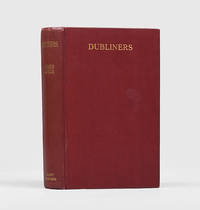
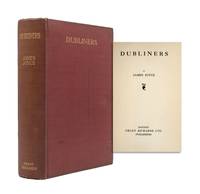
dubliners<p>A beautful example of the first published edition of one of the greatest short story collections of all time James Joyce's Dubliners.<br></p><p>One of approximately 746 copies bound in the publisher's maroon cloth. However now only one of 246 examples after 500 were destroyed in a shipwreck on the way to America.<br></p><p>The publishing history of Dubliners is convoluted to say the least: Joyce had originally hoped to publish the book in 1906 after it was accepted for publication by the London publishers Grant Richards. But "after skirmishes with printers over objectionable passages the publisher abandoned the book".</p><p>Four years later the Dublin publishing house Maunsel & Company agreed to publish the book and 1000 copies were printed in 1910. But there was another row over allegedly objectionable passages in at least one of the stories which Joyce refused to remove and the copies were burnt.</p><p>Another four years passed and in 1914 back in London Grant Richards finally published the book.</p><p>It is believed that 1250 sets of sheets were printed of which 746 were bound up in London and the remainder shipped to the US for an American edition. So the “true†first edition of Dubliners is one of the 746 copies published in London in June 1914 by Grant Richards. However some 500 copies were reputedly lost in a shipwreck so only 246 copies are believed to have survived making this one of the rarest of Joyce's iconic works.<br></p><p><em>First edition first impression. A near fine example in the original publishers maroon cloth binding. Minor wear to the spine. Internally fine the best I have ever seen not a single blemish. A beautiful example with no restoration. </em><br></p><p><em>Published by Grant Richards Ltd London 1914.</em></p> hardcover
1914365353London: Grant Richards Ltd 1914. First edition one of 746 bound for Richards 1250 copies printed. 278 pp. 1 vols. 8vo. Original dark red cloth gilt stamped lettering on the spine and front cover some light fading to spine with slightest rubbing along top edge front cover with some bubbling; marks to endpapers from former protective cover bookplate on front pastedown slight cracking to text block at p. 144. First edition one of 746 bound for Richards 1250 copies printed. 278 pp. 1 vols. 8vo. The rocky publishing history of Dubliners is well documented: finished in 1905 it was rejected by 15 publishers before Grant Richards accepted it. Richards' printers refused to set some of the type - inaugurating Joyce's lifelong struggle with censorship - and Joyce refused most of Richards' changes. It was then taken up by Maunsel & Roberts of Dublin who eventually came to a similar conclusion. Maunsel even burned all but one of the copies of the sheets which Joyce managed to wheedle out of him and it was given back to Richards who set the type from the lone Maunsel sheet saved from the flames. Joyce subsequently added "A Little Cloud" and "The Dead" - possibly his most famous single story - to the collection. Slocum and Cahoon A8 Grant Richards Ltd unknown
1922142260Paris: Shakespeare and Company 1922. First edition of Joyce's masterpiece one of 750 numbered copies printed on handmade paper from a total edition of 1000 copies this is number number 817. Thick quarto original blue and white wrappers. In very good condition with some expert restoration to the spine and a crease to the front wrapper which has been coloured. Housed in a custom half morocco chemise and clamshell box. Ulysses was published in Paris by Shakespeare & Company 1922. It was a struggle for the author to find a publisher a comic irony considering that Ulysses is "universally hailed as the most influential work of modern times" Grolier Joyce 69. Ulysses was an immediate success. The first printing sold out and "within a year Joyce had become a well-known literary figure. Ulysses was explosive in its impact on the literary world of 1922" de Grazia 27. Even so the book faced difficulties in global reception. It was banned in the U.K. and was prosecuted for the obscenity in the Nausicaa episode Ellmann 1982. Joyce's inspiration for the novel began as a young boy reading Charles Lamb's Adventures of Ulysses and writing an essay entitled "My Favorite Hero" after being impressed by the wholeness of the character Goreman 1939. The idea for the novel grew from a story in Dubliners in 1906 which Joyce expanded into a short book in 1907 before reconceptualizing it as the heady novel in 1914 Ellmann 1982. The book can initially seem unstructured and chaotic and Joyce admitted that he "put in so many enigmas and puzzles that it will keep the professors busy for centuries arguing over what I meant" The Observer 2000. The French translator Stuart Gilbert published a defense of Ulysses shortly after its publication in which he supported the novel's use of obscenity and explained its internal structure and links to the Odyssey against accusations of ambiguity. Every episode Gilbert explained is connected to the Odyssey by theme technique and correspondence between characters. Another instance of Ulysses' literary contribution is his use of stream-of-consciousness a technique employing carefully structured prose both humorous and charactering and involving puns and parodies. Joyce was a precursor to the use of stream of consciousness in the later decades. Similar narrative techniques were used by his contemporaries Virginia Wolfe William Faulkner and Italo Svevo. Their style can be better characterized as an "interior monologue rather than stream of consciousness is the appropriate term for the style in which subjective experience is recorded both in The Waves and in Woolf's writing generally" Stevenson 1992. Shakespeare and Company unknown