Emile ZolaBiblio.com

440 résultats
19570106459<p>Elek Books: 1957. First UK edition. Translated from the French by Brian Rhys. Hardcover with unclipped dust cover. Dust cover intact but wear to its extremities. Some marks to cover- now protected by a lightweight mylar cover. Previous owners name to FFEP. Binding tight and text clean.</p> Elek Books hardcover
1957344890London: Elek Books 1957. 1st UK Edition. Hardcover. Very good cloth copy in a good if somewhat edge-nicked and dust-dulled dust wrapper not price clipped now mylar-sleeved. Remains quite well-preserved overall. Physical description: 294 pages 21 cm. Summary: The arrival of Abbé Faujas in the provincial town of Plassans has profound consequences for the community and for the family of François Mouret in particular. Faujas and his mother come to lodge with François his wife Marthe and their three children and his cousin Marthe quickly falls under the influence of the priest. Ambitious and unscrupulous Faujas gradually infiltrates into all quarters of the town intent on political as well as religious conquest. Intrigue slander and insinuation tear the townsfolk apart creating suspicion and distrust and driving the Mourets to ever more extreme actions. In one of the most psychological of his novels Zola links small-town politics to the greater political and national dramas of the Second Empire. Subjects: Fiction. French fiction in English. 19th century fiction. London: Elek Books hardcover
19575259New York: The Citadel Press ELEK 1957. First American Edition. Cloth. Very Good/Very Good. 8vo black cloth with gold lettering on spine Introduction by Brian Rhys archival mylar-protected pictorial dust jacket by Pauram unclipped: Price $3.50 ix x 294 pages. Émile Zola 1840 - 1902 was a French novelist playwright journalist political Liberal and practitioner of "naturalism." His works were favored by ELEK a small British Leftist publishing house who published this book in England during 1957 and several others by Zola around this time. A Priest in the House had been previously published in 1917 as The Conquest of Plassans. According to Jonathan https://readingzola.wordpress.com/category/translators/rhys-brian/ "All you need to know about the plot is that Mouret has become a bit of a recluse and rumours are spreading about the town that he has been beating his wife Marthe and that he's mad. Mouret meanwhile is oblivious to these rumours." VERY SCARCE in such a complete and bright dust jacket and such Very Good cloth. Tight clean copy with typical age-toning to pages. Jacket has a clean bright cover; soiled back panel with a 1" clean tear mid-top. SCARCE title. Rare in this exceptional condition and with a Near Fine dust jacket. The Citadel Press [ELEK] hardcover
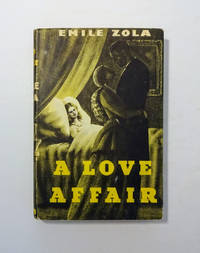
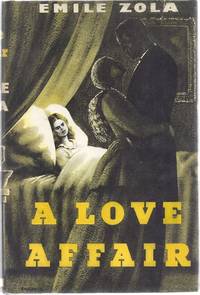
19578286<p>Nice condition vintage copy of "A Love Affair" by EMILE ZOLA with its original dust jacket. 1957; The Citadel Press; New York. The dust jacket is un-clipped with the original price intact on the front flap. The jacket comes with a clear protective sleeve - not shown. From the dust jacket: "This fine novel reveals an unfamiliar side of Zola's art but one no less likely to appeal to his new and already large following of readers in English. It is a simple poignant story of frustrated love and renunciation and a penetrating glimpse into the terrors of childish jealousy. Paris forms the background to the story the Paris landscape seen through the windows of Helene's room drawn at all hours and in all seasons in a series of unforgettable word-pictures. But Zola's mastery of atmosphere and description need no comment; what is most remarkable about this novel is his precise and sympathetic comprehension of the intricacies of the human heart."<br /><br />Condition:<br />Clean covers and spine. Sharp cover corners. Tight binding with no cracks and no loose pages. Both covers are firmly attached. Nice interior - the pages are clean and appear unread with only some very light age-toning. There are a couple tiny stain/foxing marks on the long edge of the text block. Overall the book is in Near Fine condition. The dust jacket is un-clipped with the original price intact on the front flap; the back cover has light soiling and a light brown-ish stain near the right edge; tiny tears at the top and bottom edges of the spine and at the flap corners.overall the jacket is in Very Good condition. The dust jacket comes with a clear protective sleeve - not shown.</p> The Citadel Press hardcover
19571025Elek 1957. 1st UK thus. Hardback. Very good/Good. Introduced and translated by Jean Stewart. In a break from the bleak social realism that had preceded this is more of a psychological study that Zola himself found a little too trivial at times. Nonetheless it is held up as one of the classics of French literature. Included is a contemporary newspaper review by well-known English author Angus Wilson. There is some foxing to page and block edges; it opens a little loosely. The jacket has some loss to spine bottom and lower edge. Rear a little grubby. But not price clipped and largely intact in good presentable condition. Elek unknown
1957344840London: Elek Books 1957. 1st UK Edition. Hardcover. Near fine cloth copy in a very good if slightly edge-nicked and dust-dulled dust wrapper. not price clipped now mylar-sleeved. Remains particularly well-preserved overall; tight bright clean and strong. Physical description: 258 pages 21 cm. Subjects: Beckett Samuel 1906-1989 Criticism and interpretation.Beckett Samuel 1906-1989. Duty; Fiction. Romance fiction French. London: Elek Books hardcover
195722479New York: Citadel Press 1957. First American edition of a new translation. Octavo 20.25cm.; original cloth in price-clipped dust jacket; 258pp. Rear jacket panel rather dust-soiled with a few small dampstains spine a bit toned else Fine in Very Good jacket. Later translation of Zola's novel Une Page d'Amour 1878 which forms part of the "Rougon-Macquart" series. Citadel Press unknown
1957773261957. 1957 Zola Emile A LOVE AFFAIR translated from the French by Jean Stewart NY: The Citadel Press c1957 258pp sm 8vo lower tips of covers lightly bumped else fine bright looks unread hardcover in fine bright d/j. unknown
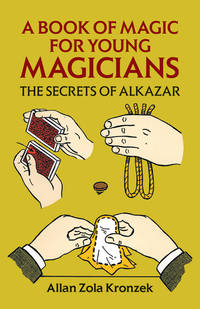
1992Q-048627134XDover Publications 1992-06-01. Paperback. New. In shrink wrap. Looks like an interesting title! Dover Publications paperback
19090008050LOS ANGELES CALIFORNIA. Good. 1909. On offer is an outstanding travel journal written by a young girl in California in the early years of the 20th century. This well-written journal measures 9.25 inches by 7.5 inches and contains 60 pages. It is 60% complete. The cover and pages are in good condition and the handwriting is legible and quite easy to read. Also included is a black and white photograph a map/itinerary and a number of newspaper clippings - all in very good condition. The author is Zola Grace Strawser a 14 year old school girl. Born in 1895 she grew up in Los Angeles where her father Bert was a successful businessman. She had 3 sisters - Nellie Merle and Bertie. Casual research has not discovered any additional biographical information. In July of 1909 she left on a long train trip from Los Angeles to the Worlds Fair in Seattle. Along the way she makes stops in Las Vegas and Salt Lake City amongst other places. She is a keen observer and her descriptions are detailed and well-written. "The train slowly pulled out of the Salt Lake City Station and our long hoped for journey began. Nellie Merle Bertie Papa and Daisy Clark were there to say "goodbye." Daisy Clark gave us our first box of candy and also a beautiful bunch of carnations. The ride to Pomona was not so interesting as we made so many trips to San Bernardino before. Our next stop was Ontario. From Ontario you have a very beautiful view of the mountains which is very interesting. We next passed through Riverside and Coulton and arrived in San Bernardino 12:12. Between Los Angeles and San Bernardino can be seen orange trees and mountains while from San Bernardino is a vast stretch of desert. We then went to lunch and from the window you could see right down between the mountains on which were some snow. I saw an automobile filled with men and for a long time had great fun waving back and forth. They at last got ahead of us. We had to go so slow up a high incline . the rest of the landscape was desert desert desert. ." July 8. In Salt Lake City she visited a number of sites: ". we saw all the important buildings the temple tabernacle the Lion House Bee Hive grave of Brigham Young and the "Eagle Gate" July 9. She goes out to visit Saltair - an amusement park and resort built at the south end of Great Salt Lake. At one time Saltair was the largest and most popular family resort west of New York. Today it is abandoned a victim of shrinking water and the ravages of a changing climate. Each day's entry is accompanied by a small pen and ink drawing representing some remark in the entry. She writes an excellent description of a wedding accompanied by a drawing of wedding bells and music notes and the inscription "No Wedding Bells For Me.: "THE WEDDING: Talk about your presents you ought to have seen Bessie's. Cut glass china silverware well it was enough to make anyone wish it was them getting married. She also received four chairs three tables bedding and linen. The few people assembled to see her married arrived about half past seven. Bessie who was naturally nervous broke right down and cried but as soon as the ceremony was over she was as happy as a lark and was receiving many congratulations. Well while we are waiting for the guests to arrive I will describe the appearance of the house. The rooms were all decorated in carnations roses ferns palms and small trees. On the electric lights were twined smilax and over the globes were different color flower shades. The long porch was made beautiful with small green palms and at the father end a Hawaiian orchestra played the whole evening. The yard which was very large was strung with lanterns of all manner and shapes. There was a wall of canvas all around so as to keep intruders out. The guests have now arrived and the air was sweet with lavender and violet perfume. Ladies with low neck chiffon dresses; with white satin evening coats; ladies with the tight fitting empire ladies in simple white ladies in red pink blue and every imaginable color. In the evening lunch was served and while the bride and groom were eating they threw handfuls of rice at them. Of course their dinner was spoilt and they had to get more dinner. About an hour after the bride and groom were missed and the whole party set out to look for them. The bride was found and the girls who were quite rough drew her across the bed and a hat pin stuck in her and hurt her. Mrs. Brook fought them and Bessie got free again and escaped in the crowd and hid in the cellar. She was so scared and sick that she could hardly stand. She then slipped in the back bedroom and changed her wedding dress for her brother's clothes. There she slipped in the automobile barn until the crowd had gone around the front and slipped over the fence and went in the house next door and mingled with the crowd who did not know her dressed as a boy. Cora the girl next door put on a long black coat and put something over her head. Her brother was waiting in a buggy outside. With one jump Cora was in the buggy and was driving away as fast as possible. The whole party thought it was Bessie and Vic and started after the buggy. Cora's brother had heart trouble and when they were about a block away he fainted and Cora had to drive home with her brother in her arms. When she reached home she fainted and they had an awful time. Of course the crowd found it was not the bride and groom. The bride and groom left for the canyon 20 min. to one. While all the excitement was going on the groom was next door asleep." July 14. After a number of adventures she continues her trip to Seattle and the World's Fair: "In the morning Irene mother and I went to the fairgrounds. I can't very describe how they look only by showing you postcards. They have an imitation geyser which goes up and down all the time. "The Cascades" are simply beautiful. You can stand at the top and look right over the falls and the geyser and see Mt. Rainier. The buildings are all white and the flowers are beautiful. In the evening we went to a show and saw the smallest woman in the world "Princess Checita" July 31. We again went to the fair and visited many buildings. Our feet were just covered with blisters from all the walking up the hills. Mama isn't feeling well. She is lonesome for papa. Aug 1 "As this was to be our last day at the fair we visited all the buildings we had not seen before. In the government building were articles from the "Dead Letter Office." Skulls snakes a pig's tail money jewelry a bustle the hair of a woman who had been scalped guns swords and all manners of weapons beads small funny statues locks of hair old books and dirty table covers pencils and everything imaginable. We had a nice time at the fair and had our pictures taken several times."Aug 6. Before they return to Los Angeles they travel up to Portland on August 8th and on the 9th take a boat trip up the Columbia River all the way to The Dalles. There are two brochures included from this trip and two pages of wonderful descriptions. On Aug 11th they board their train for their return trip. She arrived back in San Francisco on Aug 12th and met her father the next day: ". In the evening we took dinner at the Cafe Bismark a German-influenced restaurant in San Francisco in the 1900s. It was called "the largest and finest café in the city." and then went to the Orpheum a long-vanished vaudeville theatre. After the theatre we met papa on his way to Chicago. Aug 13. Her trip ends when she reaches home on Aug 17th. Following her account of the trip are 4 pages with some notes made in 1910 and 1911. "Nellie and I gave a masquerade party" Dec 3 1910 "Merle Bertie and Mother and I start for Catalina to spend the month."Aug 3 1911. A historian looking at the early history of California would find this journal simply rich in local detail. The descriptions are excellent and her keen eye misses nothing. There are interesting observations about the towns she visits and the people she encounters. It is clear that she comes from a well-to-do family and this would be an interesting contrast to the majority of people living in California at this time.; Manuscript; 4to - over 9¾" - 12" tall; KEYWORDS: HISTORY OF EARLY 20TH CENTURY 1900S PROGRESSIVE ERA UNITED STATES CALIFORNIA LOS ANGELES ZOLA GRACE STRAWSER; BERT STRAWSER; ACME LAUNDRY; SAN BERNARDINO; SEATTLE WORLD FAIR 1909 BISMARK CAFE; ORPHEUM THEATRE DEAD LETTER OFFICE DLO TRAVEL JOURNALS TRAVEL BY RAIL EXPOSITIONS FAIRS TRAIN JOURNEYS TRAIN TRIPS WEDDING CEREMONIES BLACK AND WHITE PHOTOS MAPS DRAWINGS SOCIAL HISTORY AMERICANA HANDWRITTEN MANUSCRIPT DOCUMENT LETTER AUTOGRAPH WRITER HAND WRITTEN DOCUMENTS SIGNED LETTERS MANUSCRIPTS DIARY DIARIES JOURNALS PERSONAL HISTORY SOCIAL HISTORY HISTORICAL HOLOGRAPH WRITERS AUTOGRAPHS PERSONAL MEMOIR MEMORIAL ANTIQUITÉ CONTRAT VÉLIN DOCUMENT MANUSCRIT PAPIER ANTIKE BRIEF PERGAMENT DOKUMENT MANUSKRIPT PAPIER OGGETTO D'ANTIQUARIATO ATTO VELINA DOCUMENTO MANOSCRITTO CARTA ANTIGÜEDAD HECHO VITELA DOCUMENTO MANUSCRITO PAPEL . hardcover
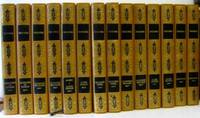
1979262128Famot 1979. Bon à très bon état de conservation tranche un peu ternies; légères rousseurs intérieur frais bonne tenue. in8. 1979. Broché. 8 romans en 14 volumes: La conquête de Plassans t. I et II; la fortune des Rougon t. I et II; le Rêve; la bête humaine t. I et II; le docteur Pascal t. I et II Au bonheur des dames t. I et II la joie de vivre t. I et II; l'assommoir t. I et II Famot unknown
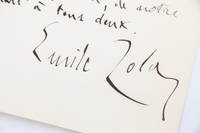
190187263Paris 1901. Fine. ""I have finished my crushing task and I am going to rest a little because I am exhausted"" Paris 4 Mars 1901 13.50 x 20.50 cm deux pages sur un bifeuillet Autograph letter signed by Emile Zola addressed to Octave Mirbeau dated in his hand March 4 1901. Two pages in black ink on a bifolium. Horizontal fold mark inherent to postal delivery. Published in his Correspondence vol. X p. 242. Precious letter from Zola to his great supporter Octave Mirbeau who had paid his fine at the end of his second trial for ""J'accuse!"". Now amnestied the writer attempts - in vain - to recover the sum to reimburse him. After his historic cry from the heart in l'Aurore Zola was first condemned by the Seine jury on February 23 1898 to one year in prison and a three thousand franc fine. The judgment was overturned on appeal and the case was referred to the Versailles assizes which retained only three lines out of the eight hundred that make up ""J'accuse!"" as grounds for accusation. To avoid accepting such a stifling of the debates Zola's defense decided to default and the conviction was confirmed on July 18 - Zola left that very evening for London to avoid prison. The tribunal also demanded 7555 francs from him which Mirbeau spontaneously decided to pay from his own funds. It was also Octave Mirbeau who prevented the seizure of Zola's furniture by obtaining from Joseph Reinach the 40000 francs in damages that Zola had been condemned to pay to the three pseudo-experts in handwriting that he had ""defamed"" in J'accuse!. Following the amnesty law that ended judicial proceedings for ""all criminal or delictual acts connected to the Dreyfus affair"" Zola was acquitted but was not reimbursed. This letter attests to the writer's desire to compensate Mirbeau for his act of generosity: ""Labori his lawyer will attempt an approach to try to recover the seven thousand and some francs that you paid on my behalf for the Versailles affair. He simply wishes to have a letter from you in order to show it and thus be authorized to speak in your name. You certainly do not have down there the receipt that was issued to you. Perhaps you remember its terms. In any case if we must wait we will wait for nothing is urgent after all. The important thing today is only to test the ground to see if they will return the money to us"". However the prosecutor's office refused his request. Furious Zola wrote two days later a letter to Labori asking him to give up claiming the slightest cent - he published it in L'Aurore under the title ""Let them keep the money"": ""they torture the text of the law and the State too keeps the money. If the prosecutor's office persists in this interpretation it will be yet another monstrosity in the unworthy way they have refused me all justice . I do not want to be complicit by accepting anything whatsoever from their amnesty ."". According to Pierre Michel these unsuccessful recovery attempts of which this letter bears witness ""incited Zola to adopt an attitude that emphasizes even more his disinterestedness and that of his 'friend' who is not named in the L'Aurore article probably at Mirbeau's request."" Dreyfus's pardon and the amnesty of his supporters did not satisfy the writer but nevertheless marked the end of long years of struggle: ""I have finished my crushing task and I am going to rest a little because I am exhausted"". Struck down in full glory the following year he would not be able to witness Captain Dreyfus's rehabilitation. Beautiful lines from Zola to Mirbeau who gave him the means to continue his fight for justice. unknown