2 649 résultats
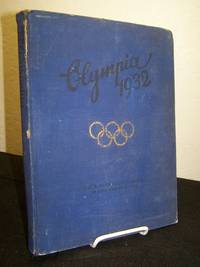
1932193767Hamburg Germany.: H.F. & Ph. F. Reemtsma. ©1932. hardcover. very good minus book with no dust jacket; bumped corners shelf wear split front hinge at top & bottom of spine pages yellowing. folio. German Text. Mounted photos- color and Black & White. H.F. & Ph. F. Reemtsma. hardcover books
1989BN102570MZ-Vlg 1989. 1989. 1989. Die praktische Irisdiagnostik. <br/><br/>Die praktische Irisdiagnostik. MZ-Vlg unknown
193167232Berlin, Hermann Ball und Paul Graupe, 1931. Origi:Broschur, gr.4°, 102 Abbildungen.
19313985Bielefeld 1931. Ein Bergwelt-Zauber aus Hoch-Rhätiens Sonenstadt. 2. Aufl. 8°. Samt-Ebd. Raetica unknown
19318401Bielefeld 1931. Ein Bergwelt-Zauber aus Hoch-Rhätiens Sonnenstadt. Erzählung. 2. Aufl. Kl.-8°. Ln. / kt. Raetica unknown
195026328Celle. Köln: Hermann Moeck Verlag. Charly Oehl PN M.Ch.Oe.15 1950. Folio. Stapled. Original publisher's ivory and blue illustrated wrappers by Schlipphacke. 3 table of contents 4-22 pp. <br /> <br /> Publisher's imprint to verso of upper wrapper. Copyright notice "Copyright by Musikverlag Charly Oehl Köln. " to first page of every number. Without title. <br /> <br /> Wrappers slightly worn and soiled. Uniformly browned. First Edition of nine numbers from the operetta. Rare. Worldcat 2 copies only at the Deutsche Nationalbibliothek and the Zentralbibliothek in Zurich.<br /> <br /> Richartz was a German composer and conductor who is remembered principally for operettas such as Die tauzende Helena 1941 film music and popular songs. [Hermann Moeck Verlag... Charly Oehl] [PN M.Ch.Oe.15] unknown
195026328Celle. Köln: Hermann Moeck Verlag. Charly Oehl PN M.Ch.Oe.15 1950. Folio. Stapled. Original publisher's ivory and blue illustrated wrappers by Schlipphacke. 3 table of contents 4-22 pp. <br/><br/>Publisher's imprint to verso of upper wrapper. Copyright notice "Copyright by Musikverlag Charly Oehl Köln. " to first page of every number. Without title. <br/><br/>Wrappers slightly worn and soiled. Uniformly browned. First Edition of nine numbers from the operetta. Rare. Worldcat 2 copies only at the Deutsche Nationalbibliothek and the Zentralbibliothek in Zurich.<br/><br/>Richartz was a German composer and conductor who is remembered principally for operettas such as Die tauzende Helena 1941 film music and popular songs. [Hermann Moeck Verlag... Charly Oehl] [PN M.Ch.Oe.15] unknown books
198039180Berlin, VEB Verlag Technik, 1980. 10., stark bearbeitete Auflage 264 Seiten , 24 cm, Hardcover/Pappeinband
19123088485Tübingen: Mohr (Siebeck) 1912. XII, 208 Seiten. Gr. 8° (22,5-25 cm). Orig.-Broschur. [Softcover / Paperback].
1940167041ohne angabe, ohne Angabe, 1940. 12 S., Pappe, farbig illustriert, mit Begleittexten, Gr.-8° OHalbleinen
193605865DIE VERSTUCHE AUF DEM GREENWOOD-SEE THE ATTEMPTS ON GREENWOOD-LAKE in DAS NEUE FAHRZEUG Vol. 3 #4 31-12-1936 first edition some tanning to the margins else a vg copy. This 3 page article takes up about 1/3 of this most fragile German publication of contemporary rocketry. Also contains NEUARTIGER PROPELLERANTRIEB FUR MOTORSCHISSE by Otto Steinitz et.al. Berlin unknown
1932923486Stuttgart, Berlin: Deutsche Verlags-Anstalt, 1932. 40 S. Broschiert.
192724331Berlin: Julius Springer 1927. First Edition. Cloth. Very Good. First Edition. viii 418 2-ads pages. 8vo. Publisher's blue/black boards with gilt lettering and publisher's device on spine and titles on front panel. Bookstore tag on front pastedown. Binding glued in gutter at Vorwort foreword. Otherwise a nice clean bright copy. Text in German. Cloth. Wagner was a full member of the Academy of Sciences Berlin and was made in 1931 an Honorary Member of the American Academy of Arts and Sciences Boston. He held numerous other awards including in 1930: Slaby-Plakette des Deutschen Funktechnischen Verbandes. In 1924 he founded the magazine Zeitschrift Elektrische Nachrichtentechnik.<br /> <br /> In the foreword Wagner notes that the sudden onset of broadcasting has created high demand for wireless telephony and has accelerated technical developments dramatically. The new building blocks of broadcasting can be built on the progress made in radio technology. In addition to the general relations of electrodynamics the laws of transmission propagation and reception of electric waves the events occurring in the electron tubes and their mode of action in the various circuits as rectifiers amplifiers and vibration exciters and finally the laws of acoustics and the operation of the electro-acoustic devices all play a role. Knowing all of these things is essential for building a good broadcast radio but is not easy to acquire because so far there has been no where to go for sound details regarding all of these issues.<br /> <br /> The Heinrich Hertz Society in 1925 created a plan to promote broadcasting over the airwaves by organizing a series of lectures about "The scientific basis of radio communications". This book was the much enlarged result. Wagner is probably best known for the development of what we now call wave filterswork he did starting in 1915.<br /> <br /> "The most prominent researchers G. A. Campbell in the United States and K. W. Wagner in Germany explored selective filter circuits for telephone applications in the early years of World War I thus paving the way for the first ideas about electrical circuit synthesis. They designed sophisticated filter circuits simply by cascading elementary sections of lossless inductors and capacitors. The circuits obtained in this way had a striking similarity to circuit models in engineering transmission line theory and henceforth were called ‘wave filters’." Life and Work of Wilhelm Cauer 1900 – 1945 Cauer et al Proc. MTNS2000 Perpignan France June 19 - 23 2000<br /> <br /> Waveguide filters today are most useful in the microwave band of frequencies where they are a convenient size and have low loss. Examples of microwave filter use are found in satellite communications telephone networks and television broadcasting. <br /> <br /> Davis Electrical and Electronic Technologies #372 noting that in 1915 filter technology came into being with the independent proposal of it by Campbell and Wagner. Julius Springer unknown
192724331Berlin: Julius Springer 1927. First Edition. Cloth. Very Good. First Edition. viii 418 2-ads pages. 8vo. Publisher's blue/black boards with gilt lettering and publisher's device on spine and titles on front panel. Bookstore tag on front pastedown. Binding glued in gutter at Vorwort foreword. Otherwise a nice clean bright copy. Text in German. Cloth. Wagner was a full member of the Academy of Sciences Berlin and was made in 1931 an Honorary Member of the American Academy of Arts and Sciences Boston. He held numerous other awards including in 1930: Slaby-Plakette des Deutschen Funktechnischen Verbandes. In 1924 he founded the magazine Zeitschrift Elektrische Nachrichtentechnik.<br/><br/>In the foreword Wagner notes that the sudden onset of broadcasting has created high demand for wireless telephony and has accelerated technical developments dramatically. The new building blocks of broadcasting can be built on the progress made in radio technology. In addition to the general relations of electrodynamics the laws of transmission propagation and reception of electric waves the events occurring in the electron tubes and their mode of action in the various circuits as rectifiers amplifiers and vibration exciters and finally the laws of acoustics and the operation of the electro-acoustic devices all play a role. Knowing all of these things is essential for building a good broadcast radio but is not easy to acquire because so far there has been no where to go for sound details regarding all of these issues.<br/><br/>The Heinrich Hertz Society in 1925 created a plan to promote broadcasting over the airwaves by organizing a series of lectures about "The scientific basis of radio communications". This book was the much enlarged result. Wagner is probably best known for the development of what we now call wave filterswork he did starting in 1915.<br/><br/>"The most prominent researchers G. A. Campbell in the United States and K. W. Wagner in Germany explored selective filter circuits for telephone applications in the early years of World War I thus paving the way for the first ideas about electrical circuit synthesis. They designed sophisticated filter circuits simply by cascading elementary sections of lossless inductors and capacitors. The circuits obtained in this way had a striking similarity to circuit models in engineering transmission line theory and henceforth were called ‘wave filters'." Life and Work of Wilhelm Cauer 1900 - 1945 Cauer et al Proc. MTNS2000 Perpignan France June 19 - 23 2000<br/><br/>Waveguide filters today are most useful in the microwave band of frequencies where they are a convenient size and have low loss. Examples of microwave filter use are found in satellite communications telephone networks and television broadcasting. <br/><br/>Davis Electrical and Electronic Technologies #372 noting that in 1915 filter technology came into being with the independent proposal of it by Campbell and Wagner. Julius Springer unknown books
19783124191Aalen: Scientia-Verlag 1978. XVI, 251 Seiten. Frakturdruck. Gr. 8° (22,5-25 cm). Orig.-Leinenband. [Hardcover / fest gebunden].
1943510Aarau 1943. Ein Beitrag zur bündnerischen Wirtschafts- und Geistesgeschichte des 18. Jahrhunderts. Schweizerische Beiträge zur Wirtschafts- u. Sozialwissenschaft Heft V 8°. kt. Raetica unknown
197259687München: Kindler. 1972. 206 S. 8°. EA. der Sammlung. OLeinen, OU.
1998Q-0792381866Springer 1998-06-30. Hardcover. New. In shrink wrap. Looks like an interesting title! Springer hardcover
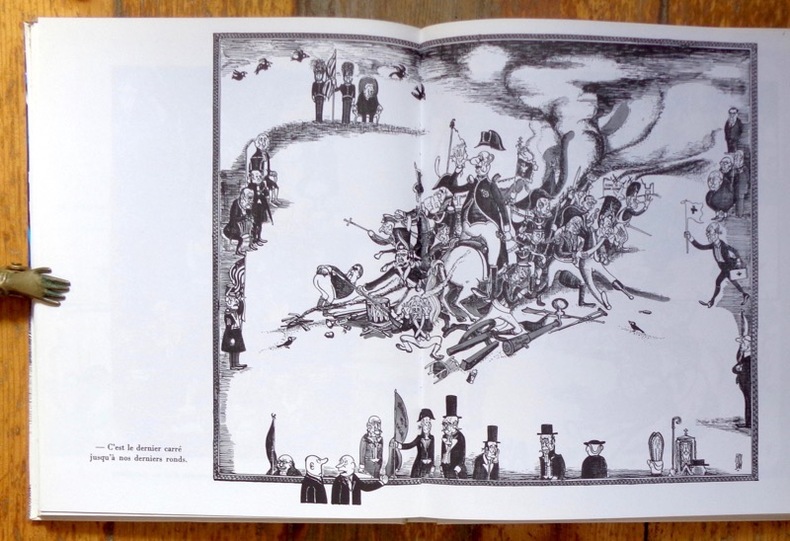
196811122Albin Michel, 1968. In-4, cartonnage couleurs. Second plat très légèrement taché, inscription sur garde, pour le reste en belle condition.
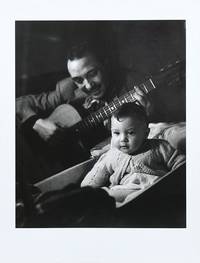
1945150388Paris: Willy Ronis 1945. Django and son Captivating and deeply compatissant image of Django with his young son Babik captured in 1945 by the celebrated French photographer Willy Ronis. At the time Django and his wife Naguine "were living in such a crummy cramped apartment in Paris Ronis was forced to shoot the image in a mirror to have space to capture them both" Dregni p. 102. Willy Ronis 1910-2009 "has been called 'the most poetic photographer of the menu peuple this century'. He travelled little preferring his native France better still his native Paris and best of all the patch around Belleville-Ménilmontant where he could photograph the local people of the 'popular classes' with whom he felt such a gentle affinity. Ronis was born in Paris the son of a Jewish refugee from Odessa who had a photographic studio near the Place de la Nation. His first love was music. He learned the violin and studied composition but his studies were interrupted in 1932 when his father fell ill and he took over the studio. He later claimed to find a resemblance between music and photography in 'the taste I have for composition particularly counterpoint. Many of my photographs are taken from above either looking down or up three planes in one image like three different melodies in a fugue which work together to give the piece structure and harmony'" The Guardian obituary. Distinguished jazz historian James Lincoln Collier remarks that Reinhardt is "without question the single most important guitarist in the history of jazz and probably would be named on most lists of all-time jazz greats. Despite a crippled left hand he had a solid technique; his melodic conception was formidable. and his ability to swing was immense". Original silver gelatin print image size: 316 x 260 mm sheet size: 400 x 305 mm verso with Ronis's studio wet stamp and pencilled inventory numbers. One or two minor creases otherwise in excellent condition. James Lincoln Collier The Making of Jazz: A Comprehensive History 1978; Michael Dregni Django Reinhardt and the Illustrated History of Gypsy Jazz 2006. unknown
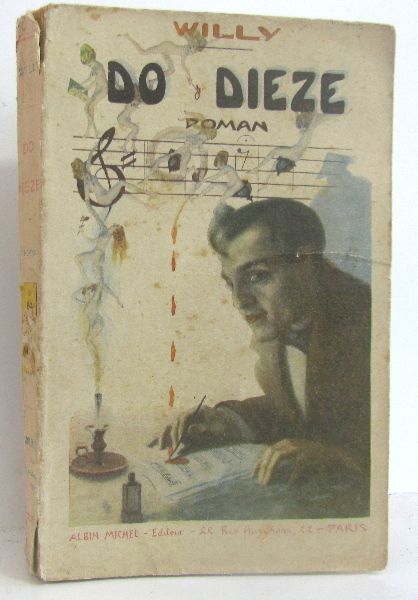
1918R240076557ALBIN MICHEL. 1918. In-12. Broché. Etat passable, 2ème plat abîmé, Dos abîmé, Rousseurs. 242 pages - rousseurs sans réelle conséquence sur la lecture - 1er plat et dos manquant - coins frottés - page de faux titre salie - tranches salies.. . . . Classification Dewey : 843.0872-Le roman policier
193037761930 broché (paperback) in-octavo, dos (spine) marron clair, gouttière en partie non coupée (fore-edge partly uncut), sans illustration (no illustration), 254 pages, sans date (no date) (les années 1920 environ) à Paris Albin Michel Editeur,
1918254791Albin michel 1918 in12. 1918. Broché.
1962115929München Germany: R. Oldenbourg 1962. First Edition. 1st Printing. Hardcover. Near Fine/Good. 8vo 7.75 - 9.75'' tall. Hardcover. Book Condition: Near Fine. Jacket Condition: Good. R. Oldenbourg München Germany 1962. First Edition. 1st Printing. 622 pages. Nice Firm Clean copy ! Has fold-out map in rear. Also has fold-out map and 3 tables in rear pocket. Size: 8vo 7.75 - 9.75'' tall. History::European Military History::WWII 6618 6618 R. Oldenbourg hardcover
1949100074581Paris. 24 cm x 32 cm. 1949. recto/verso. 2 pages. Paris Astoria Films 1949. 1 feuille recto/verso 24 cm x 32 cm. Film de Willy Rozier avec Françoise Arnoul Aimé Clariond André le Gall Raymond Cordy Charles Blavette ... résumé du scénario + fiche technique affiches proposées. Bon état. Premier film de Françoise Arnoul