Vallès JulesLivre Rare Book

1 134 résultats
186663301Paris, Achille Faure, 1866, Demi-parchemin. Plats marbrés. Pièce de titre rouge. Nombreuses rousseurs. Solide reliure., 320 pages.
1951181171951 Paris, Les Editeurs Français Réunis, 1951, in-12 de XIV-(2)-253-(3) pp., très bel ex.
691680 Paris, Ed. Nationales, s.d., In huit, 338 pp, broché, très bon état, sous papier cristal,
6202396431.Gpaperback. Good. Access codes and supplements are not guaranteed with used items. May be an ex-library book. paperback
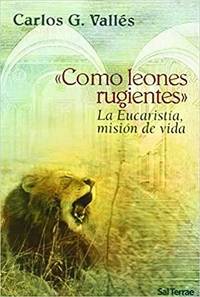
2009G8429318151I4N00Sal terrae 2009. Paperback. Very Good. May have limited writing in cover pages. Pages are unmarked. ~ ThriftBooks: Read More Spend Less.Dust jacket quality is not guaranteed. Sal terrae paperback
0912422661-11-1Inst of Jesuit Sources. Subsequent. Very Good. It's a well-cared-for item that has seen limited use. The item may show minor signs of wear. All the text is legible with all pages included. It may have slight markings and/or highlighting. Inst of Jesuit Sources unknown
1104721120.Ghardcover. Good. Access codes and supplements are not guaranteed with used items. May be an ex-library book. hardcover
3639554469.Gpaperback. Good. Access codes and supplements are not guaranteed with used items. May be an ex-library book. paperback
3659015083.Gpaperback. Good. Access codes and supplements are not guaranteed with used items. May be an ex-library book. paperback
5837410like new. unknown
110417247X.Ghardcover. Good. Access codes and supplements are not guaranteed with used items. May be an ex-library book. hardcover
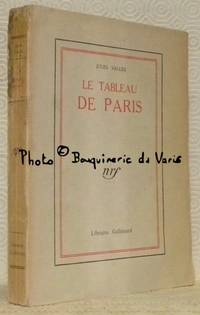
193284194Paris : Edition de la Nouvelle Revue FranÂaise Librairie Gallimard 1932. 220x165mm. brochÂŽ. Haut du dos abimÂŽ et nom du possesseur autrement bel exemplaire. Edition originale sur papier vergÂŽ Lafuma-Navarre numÂŽrotÂŽ n.¡ II / C. 474 Edition de la Nouvelle Revue FranÂaise, Librairie Gallimard unknown
1866698341866 Paris, Librairie Achille Faure,1866, in douze, 328 pp, bon état, reliure en demi-chagrin vert, dos à quatre nerfs,papier piqué par endroits
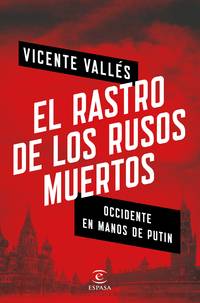
20199788467053753-2025Espasa 2019. Paperback. New. <p><strong>Author:</strong> Vicente Vallés</p><p><strong>Publisher:</strong> Espasa</p><p><strong>Binding:</strong> Paperback</p><p><strong>ISBN:</strong> 9788467053753</p><p><strong>Release Date:</strong> 2019</p><p><strong>Number Of Pages:</strong> 296</p><p><strong>Details:</strong> Occidente en manos de PutinA través de una intrigante cadena de asesinatos y muertes inexplicadas de espías y diplomáticos rusos por todo el mundo Vicente Vallés nos sumerge en un relato tan trepidante como real. ¿Intenta Rusia desestabilizar y provocar situaciones de crisis para conquistar a la opinión pública occidental ¿Es Donald Trump presidente de Estados Unidos gracias a la interferencia de Vladímir Putin ¿Son los mafiosos que se instalaron en la costa española una correa de transmisión del Kremlin ¿Han manipulado los servicios secretos rusos a las sociedades democráticas para condicionar procesos electorales en Francia Países Bajos Alemania España o Italia Quizá nada de esto haya ocurrido pero el poder de la Rusia de Putin reside en que todos creen que sí ha ocurrido. El antiguo agente del KGB es hoy el espía que domina el mundo. Porque las guerras ya no se ganan en los campos de batalla sino en internet y en las redes sociales.</p> Espasa paperback
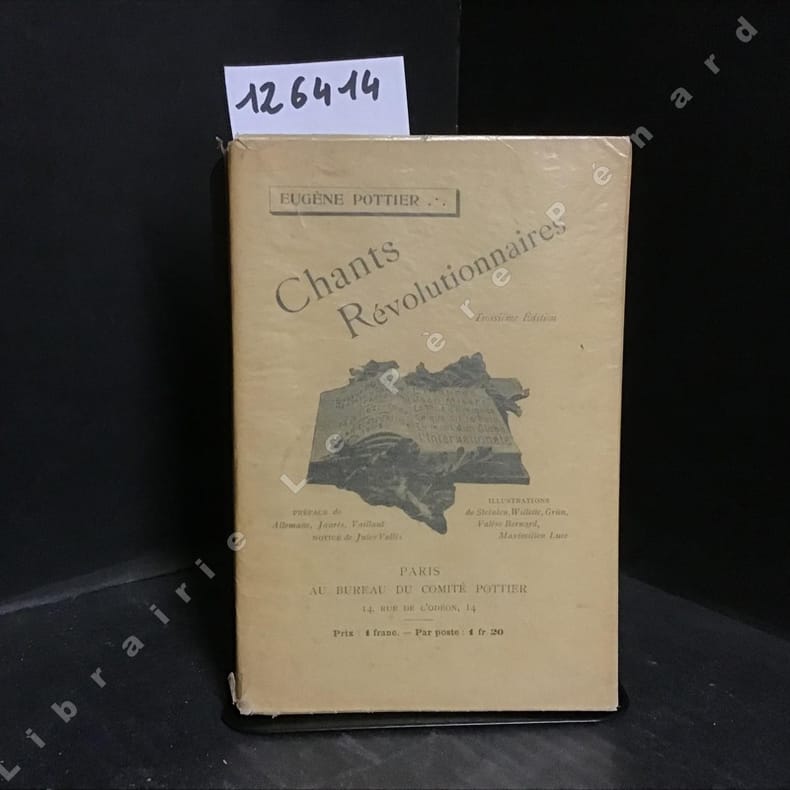
126414sd Paris, Au bureau du comité Pottier - Sans date (1907?) - In-12 broché, couverture illustrée - 161 pages - Illustrations en N&B hors texte
3838384792.Gpaperback. Good. Access codes and supplements are not guaranteed with used items. May be an ex-library book. paperback
19512081502111701784San'ichishobo 1951. Soft Cover. Fine. The book is in fine condition. San'ichishobo paperback
1986Alibris.0031634Instituto Lingüístico de Verano. 1986. Trade paperback. Good. ex-library corner bumped stamps inside front cover stamps on title page text unmarked. 182 p. Includes illustrations. Instituto Lingüístico de Verano paperback
197288488Barcelona Spain: Ediciones Poligrafa S.A. c1972. Second Edition stated Presumed first printing thus. Hardcover. Good/Good. Joaquim Gomis Photographer. 56 pages LXXX. Maps. Illustrations some in color Folding map at the back. Some DJ wear and soiling. The text is in Spanish English French and German. Laid in is a handwritten note on an Embassy of Spain card dated 2-3-01 which states guerido Frank: Uni vernamil gruaial por tu inestimisle coleborccion y daruelus parc el felix resultedo del viaje de le Reine Con i afecto in luerte abrezo Javier Google translates this as Dear Frank: Thank you very much for your invaluable collaboration and thank you for the happy result of the Queen's journey. With my affection in a heartfelt hug Javier Also laid in is a ticket for the Real Monasterio de el escorial celebrating its fourth centennial 1563-1963. Antoni Gaudí i Cornet 25 June 1852 - 10 June 1926 was a Catalan architect and designer known as the greatest exponent of Catalan Modernism. Most are located in Barcelona including his main work the Sagrada Família church. Gaudí's work was influenced by his passions in life: architecture nature and religion. He considered every detail of his creations. His work combined crafts such as ceramics stained glass wrought ironwork forging and carpentry. He introduced new techniques in the treatment of materials such as trencadís. Under the influence of neo-Gothic art and Oriental techniques Gaudí became part of the Modernista movement which peaked in the late 19th and early 20th centuries. His work transcended mainstream Modernisme culminating in a style inspired by natural forms. Gaudí preferred to create three-dimensional scale models and moulding the details as he conceived them. Josep Lluís Sert i López 1 July 1902 - 15 March 1983 was a Catalan architect and city planner established in the USA after 1939. This church is part of an ambitious industrial complex in the town of Santa Coloma de Cervello Barcelona. A large textile factory that Eusebi Güell the great patron of Gaudí launched in 1890. Mr. Güell´s goal with Colonia Güell was he wanted to be away from the city where trade union movement was growing and build workers' houses beside the factory and integrate them into the same property resulting in a village with its own personality that join social and economic life. As a distinctive feature of this colony Güell wanted to give it cultural and sports facilities and although initially not regarding building a church a small existing chapel was used. When this chapel became too small for the growing population of the colony Güell decided to instruct Gaudí to build a new church that could accommodate all the inhabitants. However little did Güell imagine that Gaudí would make a proposal as sober stern and radical. The architecture was based on the task of making Güell a place of worship that harmonized with the unconventional architecture of the workers homes in Güell´s Colony and with the nearby forest and the slope of the hill where it would be projected. Although it is commonly called "Crypt Güell" actually there is none of the church that goes underground since all the windows are facing the street. It is therefore the lower nave of the church which remained unfinished as reflected in the side porch stairs that although currently do not lead anywhere if the project had been completed they would allow access to the upper part of the church. In 1909 ten years after the project began and the first stone of the church was put in place they continued to build despite constant interruptions. Until various economic problems stalked Mr. Güell and the construction of the Güell´s Crypt was paralyzed. In 1915 when the tempo was consecrated they had only built the "crypt" or lower part of the church and the porch. The lower church the starry polygonal floor features a large central dome and it is supported by four hewn basalt columns. The ambulatory where the altar is located has the Catalan vaults on columns of brick and stone from a quarry owned by Güell in the region near Garraf. A very rustic and monochrome interior that is only interrupted by the colors of the large windows that are in the shape of flower petals or butterfly wings. This is the evocative and colorful stained glass work of Josep M. Jujol and it allows light to enter very subdue into the dark interior. The inside of Güell´s Crypt seems more like a natural grotto than a construction of the fruit of human hands. This effect is achieved by having dark colors on the floor and walls that evoke the darkness of the woods either by fallen leaves or by the shadow cast by the trees. Walls are interrupted by small polychromatic clearings of light that would be represented by the windows. In the church on the top floor the idea was that it was to be painted blue gold and white symbolizing the sun and sky above the trees. To set it all off nicely the towers would be topped with white doves alluding to the name of the town. With this complete symbology Gaudí shows the attendees the way of salvation from the darkness of hell at the bottom to the golden white and blue glory of the upper part of the church. Ediciones Poligrafa, S.A. hardcover
036735862X.Gpaperback. Good. Access codes and supplements are not guaranteed with used items. May be an ex-library book. paperback
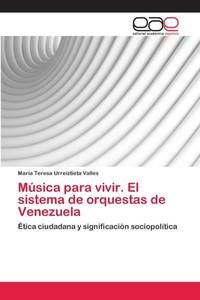
20171-3659656275Editorial Académica Española 2017. Paperback. New. 104 pages. Spanish language. 8.66x5.91x0.24 inches. Editorial Académica Española paperback
3659075949.Gpaperback. Good. Access codes and supplements are not guaranteed with used items. May be an ex-library book. paperback
8489967814.Gpaperback. Good. Access codes and supplements are not guaranteed with used items. May be an ex-library book. paperback
116134232X.Ghardcover. Good. Access codes and supplements are not guaranteed with used items. May be an ex-library book. hardcover
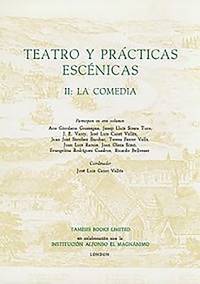
1986__0729302423Tamesis Books Ltd 1986. Paperback. New. 3060 pages. Spanish language. 9.20x6.70x1.00 inches. Tamesis Books Ltd paperback