TREBUTIN GS.MareMagnum

6 182 résultats
DIDIER.. 1865. In-12 Carré. Relié demi-cuir. Etat d'usage. Couv. légèrement passée. Dos à nerfs. Intérieur acceptable. 446 pages. Tampon et note au stylo sur la page de titre.
LIVRE DE PARIS HACHETTE ART. 1980. In-8 Carré. Relié. Bon état. Couv. convenable. Dos satisfaisant. Intérieur frais. 198 + 218 + 227 pages - Frontipsice en noir et blanc sur les 3 volumes - TRanches de tete dorées - Signets conszrvés - Titre, tomaison, filets et caissons dorés aux dos - Ornements dorés surs les plats. Cette edition des "Memoires de Vidocq" reproduit celle parue en 1828. Elle a ete realisée par l'Atelier ARCOGEP avec le concours de J.P. Haudressy.
AMIOT DUMONT. 1955. In-8 Carré. Broché. Bon état. Couv. convenable. Dos satisfaisant. Intérieur frais. 354 pages PREFACE ET POSTFACE par le Duc de la Force.
1332789684.Gpaperback. Good. Access codes and supplements are not guaranteed with used items. May be an ex-library book. paperback
cm. 17 x 24, xvi-592 pp. Biblioth?que d?Histoire des Sciences 1182 gr. xvi-592 p.
2003GEN84082003. Buxton Susan Et Al. Near fine first edition large format 10 X7�"; illustrated 225 pages. unknown
255 pages. Whether they came from Britain or Europe, these newcomers all wove new vigour and spirit into the Canadian cultural, economica and social fabric. And they all vividly remember their first hours, days and momths in a new country. This book is about their memories: sad, happy, sometimes incredible and always moving. The often felt frustrated and homesick and were at times resourceful or bewildered, weak or determined. But always they felt like immigrants in a strange land. Book clean, unmarked and very lightly worn. Some yellowing at edges. Slight lean to spine. Dust jacket in excellent condition but for scratch in lower corner of back panel. Very nice copy. Book
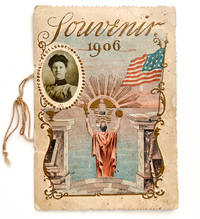
1906Q2159New Philadelphia Ohio: W. E. Seifert 1906. Wraps. Very good. Embossed color lithograph card covers with cord binding and scalloped edges 5.5 x 3.75 inches. Real photograph of teacher Mabel Irwin mounted to the cover. Very Good with light soil and staining to the wraps splitting at the spine where the cord binding has pulled. 8 pages comprised of two bifolia the first printed single-sided on tissue paper and the second on regular stock with illustrated verse "The Close of School" on three pages and one page customized to the local school. <br />The booklet was published by W. E. Seifert New Philadelphia Ohio known for publishing commemorative items. The design was sold to schools around the country who could customize the front matter and mounted photograph. The design is typical of the period and includes the motto "Education is wealth" with other material referencing the role of the school in instilling shared values especially patriotism to both "The poorest child the richest heir." <br />The list of students reflects a small school with multiple ages being taught in the same classroom as many siblings are represented. Pupil names reflect regional Appalachian culture including Paretha Phelia Callus Beury. We checked on students Delter and Other Ward in census records--Other was indeed the boy's name and he was 4 years older than his sister Delter. <br/><br/> W. E. Seifert paperback
1936LA-GMNF-54AE1936. Hardcover. Very Good. Plimpton Press 1936 one of 350 copies INSCRIBED by author. VG minus. No jacket as issued. Moderate external wear with significant sun-fading to spine and parts of rear cover some slight stains. Pages very clean binding tight and square. hardcover
Fine English Paperback., Fine., 20 x 14 cm., 133 p., b/w ills., "Düziçi Köy Enstitüsü ve sonrasi kimi anilarim.", Ahmet Lütfi Daglar, Kadioglu Matbaasi, Ank., 1987. Signed by author.
Fine English Paperback. 4to. (30 x 21 cm). In English. 49, [1] p., 16 numerous b/w plates, 1 folded map. Constantinople during the era of Mohammed the Conqueror, 1453-1481 (Maps, explanations, indices).
Fine German Paperback. Roy. 8vo. (24 x 17 cm). In German and Turkish. [ix], [1], 36 p. Cevat Memduh Altar's first meeting with Paul Hindemith and his memories about it. Paul Hindemith, (1895-1963), was a prolific German composer, violist, violinist, teacher and conductor. In the 1920s, he became a major advocate of the Neue Sachlichkeit (new objectivity) style of music. The Nazis' relationship to Hindemith's music was complicated. Some condemned his music as "degenerate" (largely based on his early, sexually charged operas such as Sancta Susanna). In December 1934, during a speech at the Berlin Sports Palace, Germany's Minister of Propaganda Joseph Goebbels publicly denounced Hindemith as an "atonal noisemaker". The Nazis banned his music in October 1936 and he was subsequently included in the 1938 Entartete Musik (Degenerate Music) exhibition in Düsseldorf.[10] Other officials working in Nazi Germany, though, thought that he might provide Germany with an example of a modern German composer, as, by this time, he was writing music based in tonality, with frequent references to folk music. During the 1930s, he made a visit to Cairo and several to Ankara. He accepted an invitation from the Turkish government to oversee the creation of a music school in Istanbul in 1935, after Goebbels had pressured him to request an indefinite leave of absence from the Berlin Academy. In Turkey, he was the leading figure of a new music pedagogy in the era of president Kemal Atatürk. His deputy was Eduard Zuckmayer, (1896-1977). Hindemith led the reorganization of Turkish music education and the early efforts to establish the Turkish State Opera and Ballet. He did not stay in Turkey so long as many other émigrés, but he greatly influenced Turkish musical life; the Ankara State Conservatory owes much to his efforts. Young Turkish musicians regarded Hindemith as a "real master", and he was appreciated and greatly respected. Cevad Memduh Altar, (1902-1995), is one of the leading intellectuals of the republic period as a Turkish music historian, educator and director.
New English Paperback. Pbo. 4to. (29 x 24 cm). In English, French, and Turkish. 267 p., ills. Anatolian travels 19th century.= Périples Anatoliens XIXe siècle.= Anadolu seyahatleri, 19. yüzyil. This exhibition is the second phase of a series of exhibitions dedicated to the eastern routes of travelers. The series began with "Smyrna in the 18th and 19th Centuries: A Western Perspective", organized at the Arkas Art Center in 2013. The first exhibition looked at Izmir as a beginning point of the journey by exhibiting works and documents that were left behind by travelers, while this exhibition foregrounds the scientific missions of the French, looking at Anatolia as seen by Western travelers beginning their journey in Izmir. This exhibition looks at the information gathered from travel books, documents, photographs, etchings, and portraits to offer a comparative perspective on 19th century Anatolia¿s social, economic, and cultural structure. The exhibition¿s perspective is critically distant to the Orientalist viewpoint that betrayed the East for the sake of aesthetic and cultural goals; the aim is to prioritize the contributions of scientific expeditions to show the reality of the East. The expedition route begins in Izmir and goes through Western Anatolia, the Mediterranean, Eastern Anatolia, Troy, Bursa, Istanbul, Ankara, and the Black Sea region
New English Paperback. Demy 8vo. (21 x 14 cm). In English. 390 p. Istanbul's Great War: Public Order, Crime and Punishment in the Ottoman Capital, 1914-1918 is a study of the social and economic life in an imperial capital at a time when the first total war of history swept through Europe, hitting the entire Ottoman Empire up to its borderlands in the arab Peninsula. The book focuses on the impact of wartime conditions on life in a city of nearly a million citizens, with a specific emphasis on public order, crime and punishment. The author, deniz dölek-Sever, takes us through a six-chapter panorama of four years of hardship in the Ottoman capital during the war, analyzing various aspects of public order, crime and punishment as experienced daily by both Muslim and non-Muslim inhabitants of Istanbul, and as perceived by the state. In doing so, her study uncovers inner workings behind state officials' policies on public order and crime. Tracing instruments of surveillance and control and various crime categories, and making extensive use of primary sources, the work provides a unique understanding of public order and crime, as well as practices of punishment in a period when the Committee of Union and Progress reigned over the political life of the Ottoman empire. Istanbul's Great War is an attempt to bring a fresh approach to the current literature on wartime Ottoman Empire.
New English Paperback. Pbo. Demy 8vo. (21 x 14 cm). In English. 240 p. This work represents an attempt to understand the frame of mind that the members of the Committee of Union and Progress bore through the Revolution of 1908 up to the disintegration of the Ottoman Empire. As such, it is largely based on the memoirs of Committee members and those of their contemporaries. The book's main argument is that, along with the nationalism of the era and the rise of the "individual," various related concepts such as gender and homeland were also being re-evaluated and re-valued in the minds of those who lived through this period. The book focuses on some of the ideas articulated most clearly and repeatedly in these memoirs, such as komitacilik (brigandage) and hope; as well as others that were crucial in defining an individual, such as one's occupation and their understanding of the new concept of "liberty." Noteworthy was conception and role of women in these memoirs, as it can be observed that, among other roles, women were often also seen as stand-ins for homeland. An exploration is also made of the boundaries of the "homeland," as invented (and reinvented) by the Young Turk cadres, and the emotional investment in such a notion. Lastly, the work questions the new lens of nationalism that the memoirists employed to view the communities of the empire. By using the Arabs and the Armenians within the Ottoman society as case studies, the book shows that "nationality" then was not - or at least not yet--a fixed identity, but rather a variety of contextual roles that were performed on a daily basis.".
New Turkish Original bdg. HC. 4to. (29 x 24 cm). In Turkish. 406 p., color and b/w ills. Evliyâ Çelebi. Dogumunun 400. yilinda. [With an 'An Evliya Çelebi bibliography' CD]. Studies and essays commemorating the 400th Anniversary of his birth. With an 'An Evliya Çelebi bibliography' CD.
New English Original bdg. HC. 4to. (29 x 24 cm). In English. 461 p., color and b/w ills. Contents: INTRODUCTORY; Introduction-Nuran Tezcan and Semih Tezcan; Introduction to the English Edition-Robert Dankoff; Selection of Images Relating to Evliyâ Çelebi; The Travel Book of a Genius - Semih Tezcan; LIFE AND LEGACY; The Life of Evliyâ Çelebi: A Chronological Inventory-R. Aslihan Aksoy-Sheridan and Michael D. Sheridan; When did Evliyâ Çelebi Die?-Nuran Tezcan; Evliyâ Çelebi the Archer-Semih Tezcan; The Mosque in Evliyâ Çelebi's Dream-Nuran Tezcan; Documentary Traces of Evliyâ Çelebi-Nuran Tezcan; Evliyâ Çelebi in Vienna; The men he met in Vienna; Graffiti; Patents of Safe Conduct Obtained from the Franks; Interest in Drawing; Interest in Maps; Evliyâ Çelebi in Books of Archery; RESEARCH, MANUSCRIPTS, EDITIONS; History of Research on the Seyahatnâme from 1814 to 2011-Nuran Tezcan; Structure and Contents of the Seyahatnâme; Important Manuscripts and Editions-Nuran Tezcan; MAPS OF HIS TRAVELS; Map: The Travels of Evliyâ Çelebi-Michael D. Sheridan; Map of Evliyâ Çelebi's Travels in Anatolia-Jens Peter Laut; COUNTRIES, REGIONS, CITIES; Notes on Evliyâ Çelebi's Travels in Anatolia-Feridun M. Emecen; Evliyâ Çelebi's Ankara-Nuran Tezcan; Evliyâ Çelebi's Journey to Vienna-Gisela Procházka-Eisle; Journey in Azerbaijan and the Two Iraqs-Christiane Bulut; Tripoli and its Architectural Monuments in the Seyahatnâme-Sawsan Agha Kassab and Khaled Tadmori; Mecca in the Seyahatnâme-Nurettin Gemici; Egypt in the Seyahatnâme-Mohamed Haridy; The Nile Journey: Egypt, Sudan, Habesh-Nuran Tezcan; Evliyâ Çelebi's Perception of the New World-Hakan T. Karateke; EXCERPTS AND CROSS SECTIONS FROM THE SEYAHATNÂME; The Guild Procession-Yücel Dagli; The Marketplaces of Bursa, Kayseri and Urfa-Sule Pfeiffer-Tas; The Prince's Palace in Manisa-Nuran Tezcan; Plato's Pavilion - Tower of the Winds-Semih Tezcan; The Piraeus Lion-Semih Tezcan; The Mostar Bridge in Bosnia-Nuran Tezcan; The Banana Tree-Nuran Tezcan; "Father of Terror": The Story of the Sphinx-Semih Tezcan; An Enemy of Images-Semih Tezcan; Kaya Sultan Handkerchiefs Used as Gifts-Nuran Tezcan; TRAVEL WRITING; Memoirs and Travel Notes of a Boon Companion-Halil Inalcik; What Kind of Traveler was Evliyâ Çelebi?-Sooyong Kim; Travel in the Mind of a Traveler: A Feminist Perspective on Evliyâ Çelebi in Vienna-Arzu Erekli; HISTORY; Evliyâ Çelebi's Views on the Ottoman Dynasty-Yahya Kemal Tastan; CULTURAL ANTHROPOLOGY; Reading the Seyahatnâme as an Ethnographic Text or Regarding Evliyâ Çelebi as an Early Ethnographer-Suavi Aydin; Two Pilgrimage Sites at Ayasofya and their Stories in the Seyahatnâme-Hasan Özdemir; Notes on Turkish Folk Literature from the Seyahatnâme-M. Sabri Koz; Legends about Vienna in the Seyahatnâme and their Austrian Counterpart-Claudia Römer; Legends of Sari Saltik in the Seyahatnâme and the Bektashi Oral Tradition-Helga Anetshofer; "Marvels and Wonders" in the Seyahatnâme-Yeliz Özay; ART HISTORY; Itinerant Gaze: The Representation of Ottoman and Medieval Anatolian; Architecture in the Seyahatnâme-Çigdem Kafescioglu; Matrakçi Nasuh and Evliyâ Çelebi: Perspectives on Ottoman Gardens(1534-1682)-Nurhan Atasoy; Evliyâ Çelebi's Ancient World-Tansu Açik; LINGUISTICS; Languages of the World in the Seyahatnâme-Robert Dankoff; LITERATURE; The Seyahatnâme in World Travel Writing-Sooyong Kim; The Literary Value of the Seyahatnâme and its Place in Ottoman Turkish Literature -Nuran Tezcan; Evliyâ Çelebi's Written Sources-Hatice Aynur; MAP OF THE NILE, Evliyâ Çelebi's Map of the Nile-Robert Dankoff and Nuran Tezcan, APPRECIATIONS; Evliyâ Çelebi and Empire-Ahmet Hamdi Tanpinar; The Hospital of Sultan Bayezid-Behçet Necatigil; Evliyâ Çelebi's Book of Çamlibel-Ilhan Berk; The Seyahatnâme and History-Serafettin Turan; Evliyâ Çelebi of the Future-Talât S. Halman.
Fine English Paperback. Pbo. 4to. (30 x 21 cm). In English and Turkish. 155 p., b/w ills. Photographer Ali Sami, 1866-1936.= Fotografçi Ali Sami, 1866-1936. "Ali Sami (Aközer) is born in Rusçuk in 1866, and moves to Istanbul. Because his family is registered in the Beylerbeyi quarter of Üsküdar, Ali Sami is also called Üsküdarli Ali Sami. He graduates from the Mühendishane-i Berri-i Hümayun in 1866 and becomes a teacher of painting and photography at the school. He is employed in the Ottoman army, and he is also a teacher of phography at the palace and for many years gives lessons to Prince Burhaneddin Efendi. In 1889 he becomes an aide to Abdülhamid II. As a military photographer, he is assigned by Abdülhamid II to accompany German Emperor Wilhelm II during his visit to the Ottoman Empire when he travels from Istanbul to Jerusalem in 1898, and presents an album of this journey to the sultan. After the constitutional monarchy is proclaimed, he becomes a painting teacher at Trabzon High School, and passes away in 1936 in Istanbul". (Source: From Konstantiniyye to Istanbul: Photographs of the Anatolian shore of the Bosphorus from the mid XIXth century to XXth century). Contents: - The World Discovers Photography - Turkish Art and the Effect of the Industrial Revolution on the Ottoman Empire - Photography in the Ottoman Empire - The Imperial School of Engineers - Ali Sami Bey - Album - Captions to Photographs.
New New English Original bdg. Dust wrapper. 4to. (32 x 22 cm). In Turkish. 375 p., color and b/w ills. "The rose is known and loved by the entire world. Smelled by sovereigns, this flower is the symbol of love, of belief and of beauty. It is the richest inspiration for all arts, the sultan of gardens and poetry and the eternal yearning of the nightingale. From the beginning of civilization the rose has adorned the lives of man. For thousands of years countless cultures have turned to the rose as a way of expression, they have held on to it, interpreted it, and enjoyed its beauty while enduring its thorns. Süleyman the Magnificent wrote poetry using the pseudonym Muhibbî and understanding the value of this special flower he placed it on the emerald throne of the meadow. 'The rose sits on the emerald throne and becomes a sultan It gathers all the sweet basil to commence the council.' Ahmet Hamdi Tanpinar said of the rose, "The dream of eternity fitted into a moment." This book is written to provide a stroll into the imaginary and actual rose garden of humanity and enable the gathering of a most colourful bunch. Those who turn the pages will relish the rosy world of nature and roses, the history of the rose, the name of the rose and the smell and taste of roses; the rose in art and rosy pictures, rosy tiles and rosy fabrics, rosy carpets, rosy stones and rosy woods, rosy jewellery and rosy glass, the rose in poetry and the rose in music, wearing the rose and the rose gardens of our lives. With this book the writer of the TULIP book, Gül Irepoglu has taken a new look at the ROSE and embraced it.".
Fine Turkish Paperback. Roy. 8vo. (24 x 17 cm). In Turkish. [vii], [2], 206 p. Polonyali Simeon'un seyahatnâmesi, 1608-1619.
Very Good English Paperback. Pbo. Cr. 8vo. (19 x 13 cm). In Armenian. Color and b/w ills. 30, [2] p. Signed and inscribed by Papazian. Hin Skutary yev mer p'voghots'y. [= Old Scutari and our street].
Very Good Turkish Modern cloth bdg. with original covers. Cr. 8vo. (20 x 14 cm). In Turkish. [viii], 112 p., b/w ills. Alevilik. Dogusu, yayilisi ve hususiyetleri. First Edition. A very scarce book in the early Republican Turkey on Alevism.
Very Good Very Good English Original bdg. Dust wrapper. Demy 8vo. (22 x 14 cm). In English. [xvi], 190 p., full page b/w photographic plts. A village in Anatolia. Translated by Sir Wyndham Deedes. With a foreword by Prof. Lewis V. Thomas. Edited by Paul Stirling.
New New Turkish Original bdg. Dust wrapper. 33 x 25 cm, [4], 290 p., b/w and color ills. Burdur tarihi ve anilar. Local history of Burdur and memoirs from Burdur city.
New English Paperback. Oblong 4to. (31 x 31,5 cm). In English. [xx], [2], [1] p., 99 color plts. 'A treatise on roses' presents a selection of 99 rose drawings gathered from old Turkish manuscripts, book bindings, ornaments on plaster, stone and wood, tiles and various other sources dating from the middle of sixteenth century to the end of nineteenth century.'.