240 résultats
1781WRCAM43195Boston 1781. 4pp. Folio. Old folds. Very minor loss at some folds. Light soiling and wear. Contemporary ownership inscription on top of first page. Very good. THE CONTINENTAL JOURNAL. was a weekly Boston paper published by John Gill from 1776 to 1785. This issue includes an article on the life and execution of Col. Isaac Hayne a South Carolinian taken prisoner and executed by the British at the Siege of Charleston. Also included is an account of the French army under Rochambeau arriving in Philadelphia on their way to Yorktown. unknown books
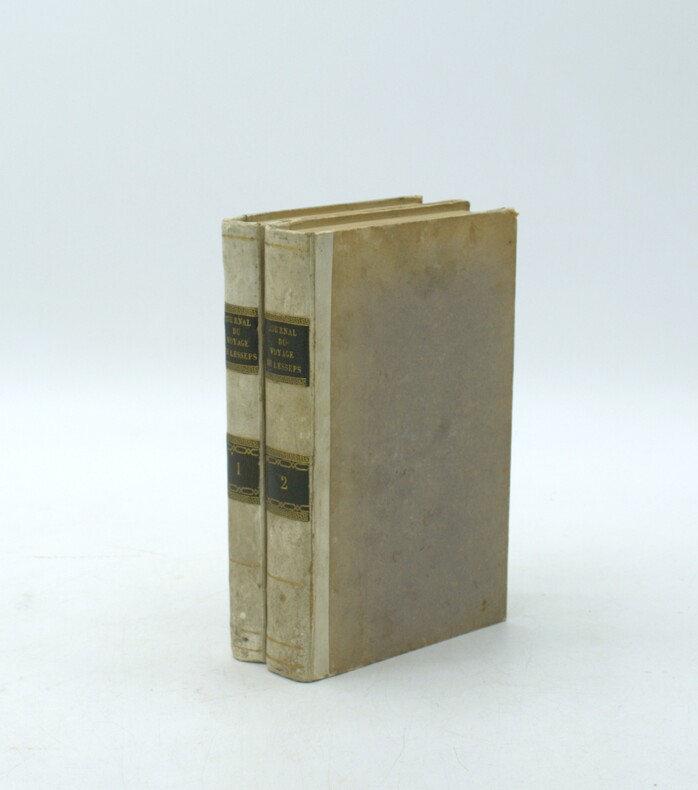
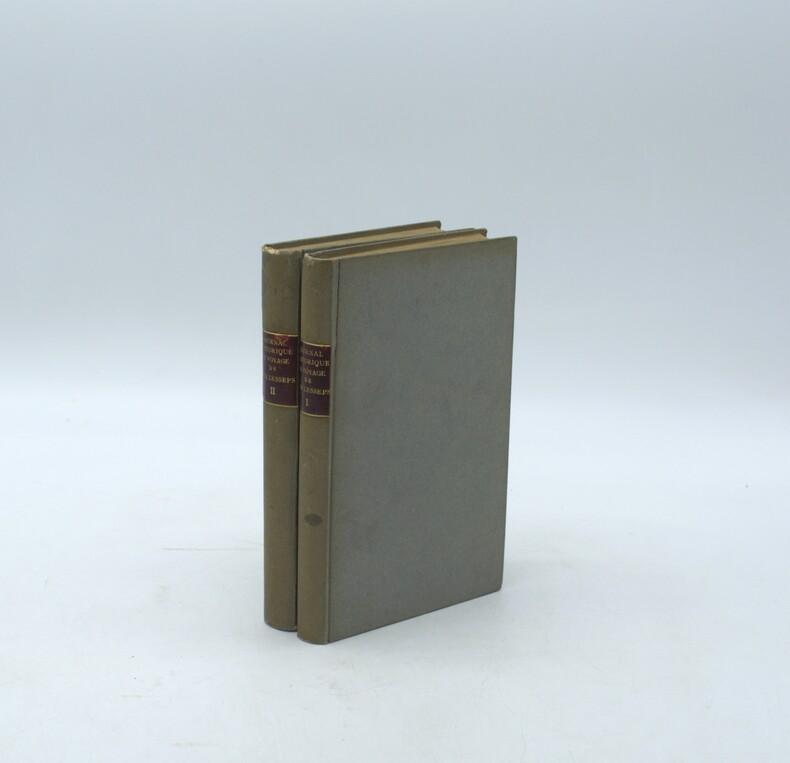
1790PHO-2166Paris, de l’Imprimerie Royale, 1790. 2 volumes in-8° (20 × 12,5 cm), demi veau ivoire, dos lisse avec pièces de titre et tomaison maroquin noir, (6)-VII-1-280 pp. ; 4 ff., 380 pp., VI pp. d’errata. Illustré de deux cartes dépliantes (Kamtschatka ; Route de M. de Lesseps) manque la planche dépliante (Caravane kamtschadale). Petits défauts, coins usés
1782WRCAM43205Boston 1782. 4pp. plus supplementary leaf. Folio. Silked on both sides. Minor losses and wear at old folds. Light soiling. Very good. Revolutionary-era newspaper containing several war related items including a printing of General Cornwallis' letter to Lieutenant Colonel Cruger announcing his defeat of General Gates in South Carolina with a brief account of the battle and casualties thereof. Also a lengthy editorial on controlling Congressional power and the concern over the effect of an impost bill on the already fragile economy. The supplement contains a proclamation from Governor John Hancock calling for a day of fasting and prayer on behalf of the good of the country and the war effort. unknown books
1792012294Northamptonshire: Printed By Dicey & Sutton 1792. The Northampton Mercury. 1792-1793 Circa 73 complete issues each issue has 4pp. 1792. Saturday January 7th 14th 21st 28th February 4th 11th 18th 25th March 3rd10th 17th 24th 31st April 7th 14th 21st 28th May 5th 12th 19th 26th June 2nd 9th 16th 23rd 30th July 7th 14th 21st 28th August 4th 11th 18th 25th September 1st 8th 15th 22nd 29th October 6th 13th 20th 27th November 3rd 10th 17th 24th December 1st 8th 15th 22nd 29th. 1793. Saturday January 5th 12th 19th February 2nd 9th 16th 23rd March 2th 9th 16th 23rd 30th April 6th 13th 20th 27th May 4th 11th 18th 25th June 15th 22nd 29th July 6th 13th 20th 27th August 3rd 10th 17th 24th 31st September 7th 14th 21st 28th October 5th 12th 19th 26th November 2nd 9th 16th 23rd 30th December 7th 14th 21st 28th. Lacking 3 full issues January 26th 1793 June 1st 1793 & June 8th 1793. Also 28 issues have some articles cut-out. These issues are 1792 March 3rd April 21st July 14th & August 25th. 1793 January 12 February 2nd 9th & 16th March 3oth April 13th May 18th July 6th 20th & 27th August 17th & 31st October 5th 12th & 26th. November 2nd 9th 16th 23rd & 30th December 7th 14th 21st & 28th. Out of these issues about 12 has one or two articles cut-away the others have more substantial text cut-out. Book measures 52 x 35.5.cm. Binding heavily worn defective. Internally pages are in good clean condition. . Good Plus. Folio. Printed By Dicey & Sutton unknown
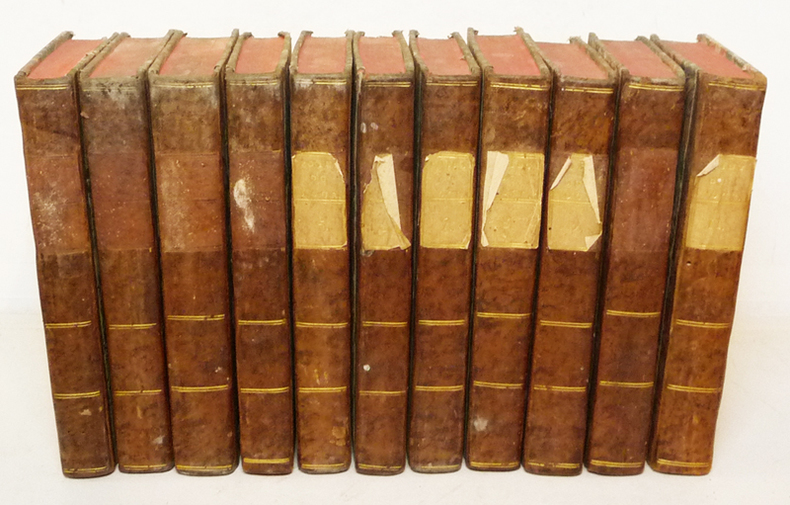
1789mn1219Le point du jour Revue relié 1789 "Onze volumes in-12 (12,7 x 19,5 cm), reliure demi-peau, dos lisses, tranches rouges, ensemble comprenant les n°1 du 19 juin 1789 au n°360 du 10 juillet 1790 du ""Point du jour"" (SAUF le 4e volume contenant les numéros 102 à 120, manquant). Cette publication créée par Bertrand Barère (dit Barère de Vieuzac, député de Bigorre), connut au total 815 numéros, jusqu'au 1er octobre 1791 ; coupes frottées, pièces de titre manquantes ou abîmées selon le volume, assez bon état général. Livraison a domicile (La Poste) ou en Mondial Relay sur simple demande."
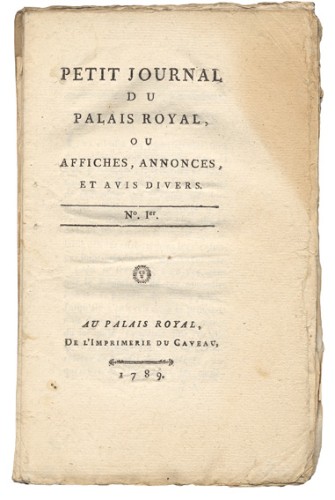
178911113Au Palais Royal, de l'Imprimerie du Caveau, 1789 ; in-8, broché ; N°1, 4, 5, 6 sur les six numéros parus au total (32 ; 19 ; 24 ; 28 pp.).
17963685FBLeipzig/Zürich/Lucern, Büreau der Einheimischen und Auswärtigen Literatur/Gessner/Wolf/Usteri, 1796/97-1802/03. 8°. 21 x 14 cm. XI, 152 Seiten, [1] Blatt, Seite [153]-358, [1] Blatt, 175 Seiten; XXXII, 144 Seiten, [1] Blatt, 174 Seiten, [1] Blatt, 180 Seiten, [1] Blatt; 168 Seiten, Seite [179]-336, Seite [3367]-496, XVI Seiten; XXVIII, 148, 14 Seiten (Register), [3] Blatt, XXII, 166 Seiten, [1] Blatt. Pappbände der Zeit mit marmoriertem Deckelbezug, goldgeprägtem Titel auf farbigen Rückenschildchen und Rundum-Rotschnitt. [4 Warenabbildungen]
178761603Graz , Akademische Druck- u. Verlagsanstalt, 1988 (Nachdruck der Ausgabe Wien, 1784-1787). 8°. Mit 12 Titelbildern u. 3 gefalt. Tafeln. Zus. 3.160 S., OHLdr.-Bde. in OPp.-Schuber.
1796AMO-432Paris, Rue des Poitevins, chez le citoyen Aubry, Directeur 1 volumes in-folio ( 45 x 30 cm), du n°101 (1er janvier 1796 - 4 germinal an IV) au n°221 (30 avril 1796 - 11 floréal an IV), bien complet des feuillets de supplément pour les n°184 et 220. Soit 120 fascicules de 4 pages chacun (480 pages + feuillets de suppléments). Reliure de l'époque demi-parchemin de réemploi, titré à la plume au dos, plats de carton gris. Usures d'usage, ensemble solide. Intérieur en bon état, quelques déchirures et galeries de vers sans gravité. Le papier est de qualité inégale, parfois blanc mais souvent gris et épais, ceci étant dû aux difficultés d'approvisionnement en papier durant cette période post-révolutionnaire. Panckoucke, l’éditeur de l’Encyclopédie méthodique publia tout d’abord La Gazette nationale dans le format in-folio et fut le premier éditeur d’un « papier-nouvelles à la manière anglaise ». La Gazette devait contenir les débats de l’Assemblée constituante, les événements de politique intérieure et extérieure, en transcrivant en entier les actes publics, diplômes, traités et autres documents authentiques. Dès le premier numéro, paru le 24 novembre 1789, les débats de l'Assemblée, comme les actes du pouvoir, furent retranscrits fidèlement et sans commentaires grâce à la sténographie. Il résulta de cette exactitude dans la publication des informations que le Moniteur universel reproduisit, dès l’origine, les faits accomplis avec le sens et les couleurs que lui donnaient les acteurs eux-mêmes, portés tour à tour au pouvoir ou à la tête de la majorité en fonction des différents régimes politiques. « Le Moniteur, dit Montlosier, a eu pour principe de se laisser emporter dans toutes les directions du mouvement révolutionnaire ; il a eu ainsi, selon qu’elles se sont succédé, les teintes monarchique, constitutionnelle, girondine, jacobine, impériale. » Cette diversité successive de tous et de couleurs fait précisément l’intérêt et la valeur du Moniteur comme répertoire historique. (source : Wikipédia) Ce journal est une source de documentation irremplaçable pour servir à l'histoire de la révolution française. BON EXEMPLAIRE.
1796AMO-434Paris, Rue des Poitevins, chez le citoyen Aubry, Directeur 1 volumes in-folio ( 45 x 30 cm), du n°222 (1er mai 1796 - 12 floréal an IV de la République) au n°365 (21 septembre 1796 - 5e jour complémentaire an IV de la République). Soit 143 fascicules de 4 pages chacun (plus de 570 pages). Reliure de l'époque demi-parchemin de réemploi, titré à la plume au dos, plats de carton gris. Usures d'usage, ensemble solide. Intérieur en bon état, quelques déchirures et galeries de vers sans gravité. Le papier est de qualité inégale, parfois blanc mais souvent gris et épais, ceci étant dû aux difficultés d'approvisionnement en papier durant cette période post-révolutionnaire. Panckoucke, l’éditeur de l’Encyclopédie méthodique publia tout d’abord La Gazette nationale dans le format in-folio et fut le premier éditeur d’un « papier-nouvelles à la manière anglaise ». La Gazette devait contenir les débats de l’Assemblée constituante, les événements de politique intérieure et extérieure, en transcrivant en entier les actes publics, diplômes, traités et autres documents authentiques. Dès le premier numéro, paru le 24 novembre 1789, les débats de l'Assemblée, comme les actes du pouvoir, furent retranscrits fidèlement et sans commentaires grâce à la sténographie. Il résulta de cette exactitude dans la publication des informations que le Moniteur universel reproduisit, dès l’origine, les faits accomplis avec le sens et les couleurs que lui donnaient les acteurs eux-mêmes, portés tour à tour au pouvoir ou à la tête de la majorité en fonction des différents régimes politiques. « Le Moniteur, dit Montlosier, a eu pour principe de se laisser emporter dans toutes les directions du mouvement révolutionnaire ; il a eu ainsi, selon qu’elles se sont succédé, les teintes monarchique, constitutionnelle, girondine, jacobine, impériale. » Cette diversité successive de tous et de couleurs fait précisément l’intérêt et la valeur du Moniteur comme répertoire historique. (source : Wikipédia) Ce journal est une source de documentation irremplaçable pour servir à l'histoire de la révolution française. BON EXEMPLAIRE.
1790PHO-2142Paris, de l’Imprimerie Royale, 1790. 2 volumes in-8° (20 × 13,5 cm), reliés en cartonnage postérieur, dos lisse avec pièces de titre, d’auteur et de tomaison, (6)-VII-1-280 pp. ; 4 ff., 380 pp., VI pp. d’errata. Illustré de deux cartes dépliantes (Kamtschatka ; Route de M. de Lesseps) et d’une planche dépliante (Caravane kamtschadale). Petits défauts, réparations aux faux-titre, titre et 1er feuillet.
1783WRCAM43063Boston: Benjamin Edes and sons 1783. 4pp. Folio. Old fold lines. Minor foxing and soiling. Very good plus. THE BOSTON GAZETTE published weekly was established in 1719 as a competitor to the BOSTON NEWS-LETTER and ran for nearly a century 1719-1798. From April 1756 to December 1793 it was published with the additional "AND COUNTRY JOURNAL." During the American Revolution the GAZETTE was a leading publisher of material protesting British taxes and anti-British sentiment. Contributors included such notable personages as Samuel Adams Phyllis Wheatley and Paul Revere who also did the engraving on the masthead. <br> <br> This issue from the end of the American Revolution contains a lengthy article written by "Grotius" on the evil of a federal impost and the rights of states to be independent. He writes: "For the general court to pass an act which they consider in its nature irrepealable thereby giving Congress the power of levying imposts of the property of this state.is 'delivering up the people to the subjection of a foreign power.'" Power assigned to Congress by the Articles of Confederation - or the lack thereof - would be hotly debated eventually leading to the creation of the U.S. Constitution in 1787. It also contains news from the front including an extract from a letter by General Greene to Congress announcing the flight of the British from Charleston. A nice piece from the Revolution. Benjamin Edes and sons unknown books
177065841Boston: Printed by Edes & Gill 1770. Broadsheet supplement to the Boston-Gazette 15 x 9 5/8 inches printed both sides in three columns imprint at bottom of the final column of text the verse filling the first column and almost all of the second the balance of the supplement taken up with interesting ads. Prints an anonymous elegy of 138 lines to the Rev. George Whitfield who had died on September 30 in Newburyport Massachusetts where he was buried; the verses were first published in New York in Hugh Gaine's New York Gazette on Oct. 19 and are preceded by a long paragraph of text describing Whitefield's accomplishments and character sent to Gaine by the author of the verses asking that they be published. First lines: "When in this country's cause a warrior bleeds / The grateful muse records his mighty deeds." Final lines: "No single death in Britain's spacious realm / With equal grief could Zion overwhelm." Whitefield 1714-1770 made seven trips to America 1738-1770 usually spending two or three years there preaching in the colonies; said to be the first to preach to slaves he was memorialized in a famous poem by Phillis Wheatley. Moderately browned folded tape repaired at head of vertical fold some rubbing to several lines of text. <br/><br/> Printed by Edes & Gill unknown books
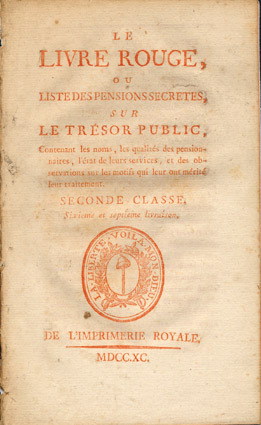
17902889Imprimerie Royale, 1790 ; in-8, broché, imprimé en rouge.
1737WRCAM55322Philadelphia: Andrew Bradford 1737. 4pp. illustrated with two woodcuts in the masthead and four maritime woodcuts in the text. Folio printed on a single folded sheet. Minor foxing and edge wear marginal stabholes along central vertical fold two short repaired horizontal tears. Very good. A rare issue of the first newspaper printed in Philadelphia and in fact the first American newspaper to appear outside Boston. THE AMERICAN WEEKLY MERCURY was founded by the pioneering Philadelphia printer Andrew Bradford in 1719. As would be expected this issue contains news from both Great Britain and the colonies. The first page contains a Parliamentary dispatch regarding the production of iron in the American colonies "where it is capable of being produced in every respect equal in Goodness to the best Iron from Sweden." and a report of a shipwreck off the coast of Bristol. Also included is shipping news from Boston and Philadelphia along with almost twenty advertisements containing information on ships for hire runaway servants trade services debt notices real estate offerings and more. <br> <br> Most notable among the advertisements are three relating to slaves. The first advertises for sale "A Likely young Negro Man about Seventeen that has been in the Country some Years and had the Small Pox." The second seeks return of a runaway "Servant Man named Patrick Burk a Saddler by Trade.of small stature brown Complexion short black Hair mark'd with the Small Pox." The last advertisement in the paper touts for sale "Very good Houshold sic Goods of all sorts: Also divers young Negro Boys and Girls all Born here." <br> <br> Andrew Bradford was the fourth printer in Philadelphia and the son of William Bradford the first printer there and in New York. The younger Bradford became Philadelphia's sole printer when he returned there in 1713 and remained so until Samuel Keimer arrived in 1723. He immediately obtained the lucrative contract to print the colony's laws and produced the first collected volume in 1714. He also published works on his own account including almanacs religious works broadsides the second edition of CONDUCTOR GENERALIS and the present newspaper. Bradford published the MERCURY from December 1719 until his death in 1742 though it was continued by others until 1749. <br> <br> Issues of THE AMERICAN WEEKLY MERCURY or any early 18th-century American newspaper rarely appear at auction or in the market. Andrew Bradford unknown books