234 résultats
18612786np: np 1861. First edition. Original leather covers. Good. A REMARKABLY EXTENSIVE ARCHIVE OF A UNION SOLIDER INCLUDING DIARIES FROM 1861-1865 SPANNING HIS ENTIRE CIVIL WAR CAREER.<br /> <br /> THE SOLDIER CHARLES E. SMITH PARTICIPATED IN SOME OF THE MOST CRITICAL CAMPAIGNS OF THE WAR INCLUDING THE SEIGE OF VICKSBURG THE FALL OF ATLANTA AND SHERMAN'S MARCH TO THE SEA. Background:<br /> <br /> Charles E. Smith 1836-1905 was born in Berlin Township Ohio. He worked as a farmer and country schoolteacher in Alum Creek Delaware County Ohio. He enlisted in the 32nd Ohio Volunteer Infantry at the age of 25 on September 3 1861 and mustered in September 7 1861. He was promoted to the rank of corporal in Company I of the regiment on January 30 1864. He was slightly wounded on July 29 1864 during the Atlanta Campaign. He mustered out of the service on July 20 1865 at Louisville Kentucky.<br /> <br /> The 32nd Ohio Infantry was organized at Mansfield Ohio on August 20-September 7 1861 and mustered in for three years' service under the command of Colonel Thomas H. Ford. The regiment was involved in several important engagements and operations during the Civil War including the Battle of Greenbrier River the Battle of McDowell the Battle of Harpers Ferry the Battle of Champion Hill the Siege of Vicksburg the Atlanta Campaign the Battle of Jonesborough Sherman's March to the Sea the Carolinas Campaign and the Battle of Bentonville. The 32nd Ohio Infantry mustered out of service at Louisville Kentucky on July 20 1865.<br /> <br /> The Collection:<br /> <br /> The collection consists of 26 dairies dating from 1859 to 1866. Except for four volumes covering a period from 1856 to April 1861 and one covering the period September 18 1865 to December 5 1866 the remaining dairies 21 volumes span his entire Civil War career in the 32nd Ohio Volunteer Infantry covering the period September 3 1861 the date of his enlistment to the date of his mustering out of the service on July 20 1865. The diaries of various sizes average approximately 100 pages with few blank pages.<br /> <br /> His daily entries in his Civil War diaries many of which are detailed consist of descriptions of the weather diet geographical locations his devotion to the Union camp activities military news and description of engagements. He also included several drawings in the diaries some in color. He described his day of enlistment of September 3:<br /> <br /> "Enlisted at Lewis Center between 8 and 9 oclock in Captain Dyre's company of 3 years volunteers. I bid good bye to all my folks and started having resolved to assist in sustaining the Government. But the feelings which came over me when I left home friends and all that seemed dear to me I cannot describe."<br /> <br /> The new enlistees moved to Camp Dennison and Smith records the daily activities in camp as his company prepared for their first movement. From Camp Dennison the 32nd Ohio was ordered to western Virginia present-day West Virginia to assist in driving Confederate forces out of the region. On October 3 1861 the 32nd Ohio participated in the inconclusive Battle of Greenbrier River. Smith records in his diary beginning on September 29 through October 3:<br /> <br /> "In the evening we received orders to march to make an attack on Greenbrier about 12 miles distant. Our company numbered 86 men. Our regiment probably numbered 900 men present and able to perform duty. The 32nd. Went in advance and cleared out the road and took one prisoner. Our regiment stopped at the cross roads within four miles of Greenbrier and stopped. We expected there that the battle commenced. but they Confederate troops did not come and we. crept into the thick laurel bushes to lay till morning. When I awoke it was daylight and other regiments were passing. The artillery was hurrying along as fast as possible each gun was drawn by six horses and about nine oclock the canons began to roar. It was kept up till two oclock on both sides when our communication failed and our men withdrew from the field without losing any guns. The canons roared very loud and the sound rolled over the Mountains and valleys and made everything ring once more. Our loss was including those that were killed on the field and those that died of wounds after the battle about 12 men. We took 13 prisoners." <br /> <br /> Smith describes an engagement with Confederate forces around Beverly Virginia on December 18 1861:<br /> <br /> "The rebels came out and met our forces and a bloody fight ensued. The 32nd fought bravely and drove the enemy back. The 25th were in the advance and were cut up dreadfully. They fell back and the 32nd stood their ground and fought them like tigers. Our men made two or three gallant charges and drove them out of their entrenchments and were forced out themselves. Our boys could not drive them out again and after a desperate and bloody struggle our troops retreated. having lost about one hundred men."<br /> <br /> After spending the winter in Beverly Virginia the 32nd Ohio participated in the Shenandoah Campaign of 1862 where they engaged Stonewall Jackson's Confederate force at the Battle of McDowell Virginia on May 8 and were defeated. On that day Smith recorded the following:<br /> <br /> "We formed into line and gave three cheers to the cavalry and were waiting to welcome the infantry when a dispatch came for us to report immediately at headquarters armed and equipped. We went forthwith and formed into line of battle on an open field. The rebels came down on the hills & tried to pick a spot to plant a gun and our boys threw shell amongst and drove them out. The rebels gathered on a mountain at the right of town about 4000 men. Our boys did not find out what they were at or where they were till late in the afternoon. Two regiments went up the mountain and the ball was opened. The battle lasted till after 8 oclock at night when our boys withdrew bringing the wounded and mostly all the dead from the field. The fight lasted about 4 hours."<br /> <br /> The 32nd Ohio retreated to Franklin Virginia where they joined General John C. Fremont's command. Fremont followed the Confederates into the valley and engaged a Confederate force at Cross Keys Virginia on June 8 1862 but Smith's company did not participate in the action. The 32nd Ohio move on to Winchester Virginia where they performed garrison duty for the remainder of the summer.<br /> <br /> In September 1862 the 32nd Ohio was dispatched to Harper's Ferry. The regiment again faced Stonewall Jackson participating in the Battle of Harper's Ferry September 12-15 1862. In this engagement Jackson captured the town and nearly twelve thousand Union soldiers including the 32nd Ohio subsequently paroling them after confiscating their supplies. In his entry for September 15 Smith describes the last day of the battle:<br /> <br /> "At sunrise the ball opened with a heavy cannonade from both sides. Our men were nearly out of ammunition for artillery and the enemy was mowing down our ranks. The shells and shot came down like hail all around and amongst us and many of our officers and soldiers were mortally wounded. Our artillerists run out of ammunition and there was no other way for us to do than surrender or be slaughtered on the field. At about 8 oclock the stripes and stars were hauled down and the white flag waved as a signal for surrender. The rebel cavalry and officers were soon riding through our camp. They hoisted the bars and stars where an hour before our glorious old star spangled banner floated proudly in the breeze. O how my heart beat and my bosom heaved to see that corrupt flag raised in defiance over us."<br /> <br /> The surrender of the 32nd Ohio resulted in a revolt in the ranks of the enlisted men against the regiment's officers which Smith later discusses in a January 15 1863 entry in his diary stating: "we were obliged to surrender 11500 men to the Rebels General A.P. Hill. It was the opinion of nearly all of our men that Colonel Miles of Baltimore betrayed us into the hands of the Rebels. It was said that he got 15 cents per head for us. Our Col Thomas H. Ford was examined by a committee and dismissed from the service for blame that was unjustly laid against him for the evacuation of the Maryland Heights. Since we were paroled a hard feeling was created between the officers of the regiment." Smith and his regiment eventually rejoined General Ulysses Grant's Army of the Tennessee in Memphis on January 25 1863. The regiment was involved in Grant's Siege of Vicksburg beginning in April 1863.<br /> <br /> A pivotal engagement in Grant's Vicksburg Campaign was the Battle of Champion Hill which occurred on May 16 resulting in a Union victory. Smith's entry for that day records the fighting:<br /> <br /> "A battle had begun on the left the firing seemed to be from large guns and the line seemed to be several miles long. We halted to await orders. Soon they came & we went forward & laid behind a ridge where we could see the fighting. The scene was grand but terrible. The heavy fighting was on the left & center at first. Our brigade charged on a rebel battery and took it & hauled it off. The 32nd did a noble part charging on the hills & ravines and out the battery driving the enemy before them killing a large number."<br /> <br /> The siege of Vicksburg ended on July 4 1863 when the Confederate forces surrendered and the Union troops under Grant including the 32nd Ohio entered the city. Smith recorded the events of July 3 and 4 in his diary. On July 3 he wrote: "This is the 46th day of the Siege. The rebels have sustained at this place and nobly and bravely have they defended it but General Grant has been too much for them." The next day's entry detailed the surrender. "At nine oclock it was announced that Vicksburg was surrendered. What a thrill of joy ran through every heart. The boys all seem lively and jubilant over the success which has crowned our arms. At half past ten oclock the rebels march out of their forts and rifle pits. and form in line outside their works and stuck arms."<br /> <br /> After Vicksburg the 32nd Ohio joined an expedition to Monroe Louisiana and then participated in General James McPherson's expedition to Brownsville Mississippi. In addition to his daily entries Smith also drew a number of pencil and ink sketches that reflected what he described in on a particular day such as sketching images that depicted the sleeping arrangements in the soldiers' tents maps of terrains and a two-page spread showing the capture of a Confederate battery in Mississippi. He also wrote down poems whether written by him or others. For example on January 31 1864 he added a six-stanza poem possibly written by him entitled "Evening Thoughts" to that day's entry. A partial transcription reads: "I'm weary and I'm lonely//As I'm sitting in my tent//And I'll take my leaden pencil//And give you my feelings sent// O would this war be over//And these bloody strivings cease//And our country now distracted//Return with lasting peace."<br /> <br /> In February 3 to March 6 1864 the 32nd Ohio was involved in General William T. Sherman's Meridian Expedition which resulted in the capture of Meridian Mississippi. On March 3 Smith recorded a diary entry that detailed the destruction rendered by the campaign:<br /> <br /> "I cannot fully give the amount of damage done to the Southern Confederacy while on this Expedition but the result foots up about as follows. About 200 miles of railroad running east & west was destroyed. About 60 miles of the Mobile and Ohio railroad was destroyed and about 40 miles of the Central Mississippi road destroyed. There were about 25 Locomotives and a considerable number of cars together with Confederate railroad houses machine shops and foundries manufacturing establishments of arms ammunition. A large amount of cotton was burned."<br /> <br /> On June 10 1864 the 32nd Ohio joined Sherman's Atlanta Campaign. In the campaign the 32nd fought in the Battles of Kennesaw Mountain Atlanta Ezra Church and Jonesborough. The campaign ended on September 2 1864 when Union forces occupied Atlanta. Smith's diary entry for June 27 mentions the engagement at Kennesaw Mountain:<br /> <br /> "We were aroused at early dawn. and then ordered to pile our knapsacks and be ready to move. A battery had been brought up and was shelling the Rebels lively for a while. Our division having formed a line of battle came to a right shoulder shift arms and then we advanced in line through the woods toward the enemy. The skirmishers engaged the enemy who replied by volleys of musketry which whizzed overhead and sounded hideous. The rebels brought several batteries down and opened upon us. Moved up a little higher and laid down again and the rebels opened with shot and shell which came whizzing overhead. Some of them sung like an old spinning wheel under the control of a northern farmer's wife. Our loss in this engagement was considerable. We fell back learning that the rebels were massing their force to right and formed a new line of battle in front of our new breastworks and behind the skirmishers. Skirmishing was kept up lively along the lines and many had hair breadth escapes. We made our demonstration to draw as much rebel force away from the right as possible."<br /> <br /> His diary entry for September 3 1864 reported the good news concerning the fall of Atlanta:<br /> <br /> "Atlanta was evacuated yesterday morning at daylight the rebels having blown up large magazines of ammunition destroyed government stores and eighty carloads of ammunition. The Twentieth Corps under General Slocum marched into and took possession of the city of Atlanta an eleven oclock. We have last caused the rebels to evacuate what they called the 'Gate City' or 'Key' to the southern Confederacy and that without a very general battle. The rebels have made many boasting speeches and declared that they would fight for Atlanta till the last man woman and child was sacrificed before they would give it up. Where is their vain boasting where are their prophesies"<br /> <br /> The capture of Atlanta had a major impact on the presidential election of 1864 and helped President Lincoln's chances for reelection enormously. On election day November 8 the 32nd Ohio voted in the field. Smith's diary entry for the day reads "This being election day the polls were opened and we voted for President. Abe Lincoln carried the day."<br /> <br /> In mid-November 1864 the 32nd Ohio participated in General Sherman's "March to the Sea." The command engaged in no noteworthy battles or skirmishes until reaching Savannah Georgia. On December 10 1864 the regiment was among the lead Northern units that drove the Confederate garrison into the confines of city. Upon the Union Army's capture of Savannah on December 21 1864 the 32nd entered and encamped in the city.<br /> <br /> Within a week of the fall of Richmond the capital city of the Confederacy the news of President Lincoln's assassination and death on April 15 spread slowly to the soldiers in the south including the 32nd Ohio. On Monday April 17 Smith recorded in his diary:<br /> <br /> "An order said to have come from Secretary Stanton to General Howard was announced to the soldiers. That President Lincoln Secretary Seward and son were assassinated and that the President was killed. Whether this be true or not it caused sadness in many hearts and was believed to be reliable."<br /> <br /> The next day's entry was in response to the confirmation that Lincoln was dead:<br /> <br /> "News of the death of our President Abraham Lincoln causes a gloom over our minds. We feel that in losing him we have lost one of the best men our nation ever produced. In losing him we lose a wise and intelligent statesman a great and good counsellor a lover of freedom and humanity and the deliverer of our nation from the curse of slavery."<br /> <br /> In addition to the dairies there are several documents and papers relating to Smith and his family including the following: 1 An autograph manuscript entitled "The Vicksburg Campaign from Millikens Bend Louisiana. From March to July 4th 1863" 81 pages one side only in a bound copy book cover missing 8.5" x 11.5" n.p.; n.d.<br /> <br /> 2 An autograph manuscript entitled "The Siege of Vicksburg Continued" 34 pages one side only in a bound copybook 6.75" x 8.25 n.p.; n.d.<br /> <br /> 3 Autograph manuscript signed entitled "Diary of Events Transpiring between the United States and Spain over Cuban affairs." 117 pages in bound copy book 5.75" x 9" n.p.; circa 1901.<br /> <br /> 4 Autograph manuscript signed entitled "Closing Scenes of the Rebellion. An Original Poem" Six pages one side only in bound copybook 8" x 10" n.p.; May 30 1895. Poem was recited on Decoration Day at Cheshire Ohio on May 30 1895.<br /> <br /> 5 An autograph manuscript entitled "The Great Three Days Battle of Gettysburg Fought July 1 2d & 3d 1863. The Greatest and Most Decisive Conflict of the Great Struggle for American Independence" 28 pages one side only in bound copy book missing front cover 8" x 10" n.p.' n.d.<br /> <br /> 6 Autograph manuscript part 2 of number 4 above 27 pages one side only in bound copy book 8" x 10" n.p.; n.d.<br /> <br /> 7 Autograph manuscript entitled "Original Poem Written for the 49th anniversary of the birth of Mrs. Louisa Rolson Smith" Five pages one side only 8" x 10" n.p.; June 22 1895.<br /> <br /> 8 Autograph manuscript signed entitled "Incidents in the war of the rebellion from 1861 to 1865. Poetical Effusions from the pen of Charles E. Smith late of Co. F. 32d Ohio veteran volunteer Infantry" 68 pages one side only in bound copybook missing front and back cover 8.5" x 11.75" n.p.; n.d.<br /> <br /> 9 Photograph of Charles E. Smith 3.5" x 4.75 oval albumin print mounted on board n.p; circa 1894. <br /> <br /> 10 CDV of George Smith brother of Charles E. Smith 2.5' x 4" T.Beach photographer Delaware Ohio; circa 1860s. <br /> <br /> 11 Medal with badge for 32nd National Encampment GAR Cincinnati 1898.<br /> <br /> 12 Photograph of residence of Charles E. Smith West Berlin Ohio an 9.25" x 7.5 albumen print on a 10.25" x 8.5" mount Acme View Company McAlisterville Pennsylvania; 1894. <br /> <br /> 13 A Confederate envelope "captured on the battle field of Raymond Miss. May 12 1863 by C. E. Smith. <br /> <br /> 14 Discharge of Charles E. Smith from the service one page 6" x 8.5" Columbus Ohio; July 28 1865.<br /> <br /> 15 Two pencil sketches by Smith of "A residence near camp of 20th Ohio sketched by C. E. Smith Dec 3d 1863" on front and "A scene in co. D. 20th O.V.I. Thursday evening Nov 26th 1863. A Thanksgiving oyster supper. Sketch by C. E. Smith Nov 27th 1863." <br /> <br /> 16 A pencil sketch of the "View of The Court House at Vicksburg. Drawn by C.E. Smith Nov 4th 1863."<br /> <br /> 17 Pencil sketch of the Rock House inside the Confederate fortifications at Vicksburg "Sketched by C.E. Smith Nov 2d 1863." On verso is sketch by Smith of the city vault in Vicksburg November 2 1863.<br /> <br /> 18 Photocopy of will of Charles E. Smith Two pages West Berlin Ohio; December 18 1901. <br /> <br /> Condition: The 26 diaries all have leather covers over boards which in most cases are worn but intact. The front cover of volume #9 has separated. Most have flaps. Overall the dairies are in good condition. The other items in the collection are overall good; numbers #1 and #7 manuscripts are brittle and fragile. Foxing and toning to letters along with creasing and light tearing at edges. Wear and staining to the exterior of diaries.<br /> <br /> Note: The text of the collection has been published as "A View From the Ranks: The Civil War Diaries of Corporal Charles Smith" in a very limited printing by the Delaware County Historical Society 1999. A copy of the book is included with the collection. <br /> <br /> A REMARKABLE UNBROKEN RUN OF DIARIES OFFERING A HIGHLY LITERATE FIRST-HAND ACCOUNT OF THE CIVIL WAR EXPERIENCE THROUGH THE EYES OF A UNION SOLDIER. np unknown
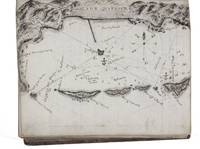
1831F72I8N01U79Omostly on board the barque Sarah of London 1831. Contemporary sheepskin parchment sewn on 2 tapes. 4to 19.5 x 16.5 cm. The journal with an engraved view as frontispiece "Island of Saint Helena" engraved by Everingham in London 15 full-page 1 nearly full-page and 1 smaller manuscript maps and coastal profiles plus a small engraved view "Tomb of Napoleon" mounted on 1 page. The lecture notes with a matching pair of engravings of a scull one signed "A. East del" on and facing the title-page and 27 pencil and/or ink anatomical drawings including 2 full-page some also with red. Most are drawn on the album leaves a few on separate slips mounted on the leaves. Both the lecture notes and the journal are written in brown ink with occasional additions in pencil. Including: MANUSCRIPT - ANATOMICAL. MORSE Edward George.Lecture Book notes on anatomical lectures by Joseph Constantine Carpue.London November-December 1828. A manuscript ship's journal kept by Edward George Morse Bromyard 1805-Deal post 1850 who no doubt served among other functions as the ship's surgeon. Morse made his earliest dated entries in April 1831 at the island Mauritius in the Indian Ocean and others at Madagascar and its surrounding islands from May to August 1831. Morse provides extensive notes on the natural history topography and people of the Seychelles Madagascar and the neighbouring islands and provides detailed maps of many of the islands and coastal areas along with a few coastal profiles. The two manuscripts are written in a single album of laid paper. Morse used it 1828 to take notes when he attended the London lectures on anatomy and blood circulation by the innovative surgeon Joseph Constantine Carpue who had pioneered facial reconstructive surgery by introducing ancient Indian techniques. He was famous for illustrating his lectures with chalk drawings which no doubt served as the models for the anatomical illustrations in Morse's notes. A few clippings and hand-written notes have been inserted. unknown
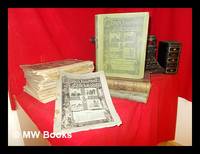
1866010620London: Office for Advertisments and Publications 1866. A near complete run from 1866 to 1994. 231 volumes. Lacking July-Decenber 1948 & January-June 1949. Books measure 36x26.5 last 31 volumes measure 30x21.5. Illustrated throughout. Most volume bound in modern black cloth with gilt lettering others bound in quarter calf. The calf volumes are faded on spines. Generally all bindings in very good clean firm condition. Internally very occasional library mark stamp. Pages and illustrations in very good clean condition. . Cloth. Very Good. Small Folio. Office for Advertisments and Publications Hardcover
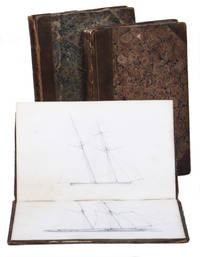
1822ABC_49460Aboard the Winchelsea written and drawn at sea 1822. Contemporary half gold-tooled brown calf marbled paper sides each volume with a different marbled paper the journal volume with marbled endpapers. 8vo. The two sketchbooks contain a total of ca. 100 pages of sketches of ships done in pencil including 1 page containing signal flags in colour. 3 volumes. With: Two sketchbooks with pencil drawings of ships. A neatly-written and illustrated sea journal kept by James Dudman the second mate on board the East India Company's ship Winchelsea during a 1822-23 voyage to India. Launched in 1803 the Winchelsea was already a veteran East Indiaman this being her ninth voyage - she made a total of eleven voyages for the EIC before she was broken up in 1834. On the present voyage commanded by Captain William Adamson she carried 592 people including the 17th and 44th Regiments of Foot and detachments of the King's and EIC's soldiers and a number of women and children. The sea journal volume is accompanied by two additional volumes by Dudman containing pencil sketches of unidentified masted sailing vessels.The Winchelsea's journey from its departure at Blackwall Dock on April 24 1822 to its arrival in Bengal and eventual return to England via St. Helena and The Downs on May 24 1823 reflects the extensive maritime routes integral to British imperial dominance. The ship's role in transporting personnel and cargo exemplifies the strength of the EIC's logistical network sustaining Britain's colonial and economic interests in India. The journal with its careful record-keeping offers an intimate glimpse into the daily operations experiences and extraordinary events encountered by the second mate aboard an East Indiaman during Britain's height of imperial expansion.The journal written in Dudman's beautiful scribe-like handwriting opens with an entry dated 24 April 1822 at Blackwall Dock where the voyage started "bound for Bengal." The next few pages contain a detailed listing of the people on board beginning with the ship's company of 122 men with names followed by the troops on board: "List of a detachment of His Majesty's Troops belonging to the 44th Regt. of Foot on board the Honable. Company's Ship Wincelsea for Bengal" comprising name and rank of 367 men followed by the names of 42 women on board as well as the name and age of 57 children on board including 3 who died at sea plus 4 additional passengers.At Saugur meaning Sagar Island they took on board further passengers duly noted in an additional "List of H.M. 17th Regiment of Foot with the Women and Children accompanying them. Embarked on board the Honble. Company's ship Winchelsea at Saugur New Anchorage for England."Beyond the usual records of position winds weather and other ships Dudman includes interesting notes on unusual occurrences. Perhaps the most fascinating event was recorded on February 10 1823: a major earthquake off the coast of India experienced by the Winchelsea: "At 10 minutes past 1 PM every one on board was greatly alarmed at the singular feel of the ship which was in a violent trembling motion as if the ship was grazing over a rocky shoal and a loud rumbling noise similar to the roll.g! of a Bull quickly along the deck this very singular seuration lasted certainly not less than a minute those below ran on deck to enquire the cause and those below the poop below to ask the same question. I was in the round house at the time when it comen'd. The noise appeared to me as coming along the quarter deck and instantly over the poop the sea was smooth and the day clear. I looked out at the stern windows but saw no appearance of any shoal which I certainly would have done had such existed. The water being very clear and the ship not going more than 2 knots I cannot account for this very singular phenomenon in any other way than its being the shock of an Earthquake".The voyage journal of the Winchelsea during its 1822-23 journey to Bengal provides valuable insight into the maritime operations of the EIC its commercial and colonial reach and the strategic importance of British trade with India in the early 19th century. As a veteran East Indiaman the Winchelsea was part of the vast trading network that connected Britain with the Indian subcontinent transporting soldiers goods and passengers under the auspices of the EIC which functioned as both a commercial enterprise and a colonial governing force.The journal volume contains the typographic book plate of Mr. Jas. Dudman on the front pastedown and a manuscript inscription in ink on the first flyleaf by Lumsden Dudman who was married to Mary Anne Shirreff "Joseph H. Shirreff from L.S. Dudman Xmas 1892" one of the sketchbooks contains a manuscript inventory list in Greek of goods for sale on the first flyleaf and one of the sketchbooks with ownership signature "L: Dudman / Sept. 27 1836" likely Rev. Lumsden S. Dudman perhaps a brother of James Dudman. Some general wear to the leather spines and corners of the boards of the volumes occasionally foxed but overall internally clean. Overall in good condition. unknown
181319270Paris: L’Imprimerie de la Republique 1813. FIRST EDITIONS. Woodcut vignettes head- and tailpieces many with folding engraved plates. All volumes in original bindings uncut some unopened completely unsophisticated. Other than 2 volumes in the original calf-backed marbled boards all are bound in original plain or printed wrappers and preserved in half-calf slipcases with morocco spine labels. First editions of the Journal de l'Ecole Polytechnique one of the oldest scientific journals. It contains sections in mathematics physics chemistry geology astronomy and mechanics design and architecture. Here you find original contributions by the top French scientists of the time. A listing of each of the issues is set forth below with a sampling of the contributors. We offer Numbers 1-16 missing only Numbers 2 9 10.<br /> <br /> No. 1. viii 189 pp. Folding engraved plate. No binding.1 leaf of contemporary manuscript describing the plate laid in. Contributions from Monge Prony Barruel Hassenfratz Fourcroy Chaptal Berthollet Guyton etc.<br /> <br /> No. 3. iv xvi ii 209-444 pp. Original marbled wrappers. Contributions from Prony Guyton Berthollet Observations on the eudiometric properties of phosphorus.<br /> <br /> No. 4. ii xxviii 445-743 3 pp. including errata. With 9 folding engraved plates. Contemporary calf-backed marbled boards. Not in a folding case. Contributions from Fourcroy et Vauquelin Hassenfratz.<br /> <br /> Tom II No. 5. iv 208 iv pp. Original printed wrappers. Contributions from Fourcroy Lagrange Laplace Guyton Prony.<br /> <br /> Tom II No. 6. iv 209-456 pp. Original printed wrappers. Contributions from Fourcroy Lagrange Hassenfratz Laplace Monge.<br /> <br /> Tom III Nos. 7 and 8. iv vii I 477 2 pp. Original marbled paper-covered boards. Contribution from Prony Philosophical mechanics or reasoned analysis of the various parts of the science of balance and movement.<br /> <br /> <br /> <br /> Tome IV No. 11. ii 395 pp. With 9 folding engraved plates. Contemporary calf-backed marbled boards. Not in a folding case. Contributions from Monge Prony Hachette Poisson Biot Hassenfratz Buyton Berthollet Gauss a short report on his Disquisitiones arithmeticae<br /> <br /> Tom V No. 12. iv 324 pp. Original wrappers. Contribution from Lagrange Lecons sur le calcul des fonctions.<br /> <br /> Tom VI No. 13. ii 378 1 pp. Original wrappers. Contributions from Monge Poisson Ampere Biot Fourcroy et Thenard chemistry Hassenfratz chemistry.<br /> <br /> Tom VII No. 14. iv 400 4; ii 90 pp. Supplement. With 3 full-page engraved plates. Original wrappers. Contemporary signature on title. The Supplement is Lagrange Supplement aux lecons sur le calcul des fonctions. Also a contribution from Montgolfier On the possibility of substituting the hydraulic ram for the old Marly machine.<br /> <br /> Tom VIII No. 15. ii 358 pp. Original wrappers uncut and partially unopened. Contributions from Poisson Memoir on the secular inequalities of the means of movement of the planets <br /> Lagrange Clarification of a singular difficulty which is encountered in the calculation of the attraction of spheroids very little different from a sphere Monge Essay on the application of analysis to some questions of elementary geometry another from Monge Construction of the vibrating string equation a number of articles from Poisson Laplace Dissertation on various points of analysis.<br /> <br /> Tom IX No. 16. iv 354 2 pp. Original boards. Contributions from Cauchy Poisson.<br /> <br /> École Polytechnique was created in 1794 a politically and economically troubled time but also the culmination of the Enlightenment. The Journal commenced publication the following year and has since then maintained the highest reputation of published research. L’Imprimerie de la Republique unknown
187943501Paris Aux Bureau du Journal 1879-88. 4to. Bound in 29 uniform contemp. hcalf. Spines gilt and with gilt lettering.Top of spine on 3 vols. with wear. A nick to spine on 2 vols. 4 vols. with some wear to spines. A few vols. slightly rubbed. Internally fine. More than 14000 pp. Profusely illustrated with fine woodcuts in the text. The work is known for its fine executed illustrations of machinary and apparatus. <br/><br/><em>This is the first journal entirely devoted to theory of light and electricity in its practical applications documenting the early history of Telegraphy and Telephony. It describes and depicts the new inventions of electrical apparatus used in industries and communications. It describes the installments of telegraphy in Amerika as well as in Europe. It describes arch-lamps Eddison-lamps the Telephoneworks of Gray Edison Bell and others the introduction of electric lightening in houses and towns applications of electricity to railways electro-motors and dynamoes electromagnetism microphones etc. etc. It contains importent papers on the theory of electricity and magnetism as well.- Weaver Cat.of the Wheeler Gift No. 5919. </em> unknown
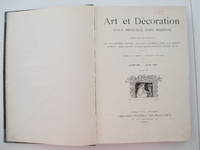
189911386AB1899. 12 volumes. Paris Levy 1899 - 1913. 29 : 215 cm. Richly illustated with many partly coloured plates. Original half-cloth. Important French arts periodical on modern art and architecture with many partly half tone plates on architecture decorative arts painting graphic design sculpture furniture textiles gardens etc. The present volumes covering mainly the art nouveau period. The illustrationas are by Walter Crane Eugene Grasset Alphonse Mucha William Nicholson Auguste Rodin Theo van Rysselkberghe Carlos Schwabe M.P. Verneuil. Present are the following volumes: V. Janvier-Juin 1899 - VII. Janvier-Juin 1900 - VIII. Juillet-Décembre 1900 - IX. Janvier-Juin 1901 XIII. Janvier-Juin 1903 - XVII. Janvier-Juin 1905 missing page 59/60 and 173-176 - XX. Juillet-Decembre 1906 missing pages 141-172 - XXV. Janvier-Juin 1909 - XXVI. Juillet-Décembre 1909 missing page 1/2 and 37-69 - XXVIII. Juillet-Décembre 1910 missing page 115-120 and 143/144 - XXXII. Juillet-Décembre 1912 missing page 17-20 - XXXIII. Janvier-Juin 1913 missing page 177/178. - Also some pages and plates are missing it is still an extensive overview of the arts movements in Europe and overseas containing articles and illustrations of the most important artists of that time. - Binding a bit rubbed some pages in two volumes with menor tears otherwise a good copy. hardcover
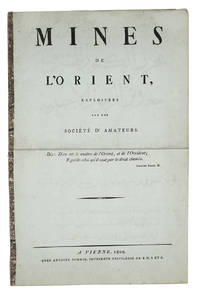
1809ABC_45177Vienna 1809. Folio. Antoine Schmid Folded strengthened with a decorated paper strip. 10 pp. Rare prospectus for a series of volumes to be issued periodically with contributions on a variety of subjects concerning Islamic studies and the Middle East in the broadest sense under the title Mines dOrient Fundgruben des Orients; Fontes rerum Orientalium; Sources for Oriental studies. The founders of this first professional journal were Count Wenceslaus Rzewuski and Baron Joseph Freiherr von Hammer-Purgstall who would also act as editor. Count Wenceslaus Waclaw Seweryn Rzewuski 1784-1831 was a Polish explorer poet orientalist and horse expert. Baron Joseph Freiherr von Hammer-Purgstall 1774-1856 was an Austrian orientalist and historian. Hammer-Purgstall published numerous texts and translations of Arabic Persian and Turkish authors.Both considered Vienna the ideal transfer point between West and East and invited all orientalists of Europe to contribute in French German English Italian Spanish or Latin. Six volumes of the journal were published between 1809 and 1818 by Antoine Schmid in Vienna.Corners a little frayed otherwise in good condition.l WorldCat 2 copies. unknown
186241733Turnwold Putnam County Ga. 1862. Each issue a folio sheet folded to 8 pp. Each page 9-1/4" x12." Each number printed in three columns per page. No. 1 is browned. Very Good.<br /> <br /> Crandall does not record Numbers 4 and 5; but AAS which says The Countryman was "suspended intermittently" evidently owns them. Its first printing was March 18 1862. With the opening issue of this volume III Turner trumpets the "remarkable" success of The Countryman which has received a "universal acclaim of approbation" and has been financially successful. The articles cover an array of subjects including of course much on the War: Why the Hessians Enlist; the "worst provincialisms of the Yankees;" John Adams; observations on the War; the printing of The Countryman; poetry "The Old Plantation"; advertisements; President and leaders of the Confederate States; Iron; "Teaching Negroes to Read." <br /> This interesting Confederate weekly was printed at Turnwold Turner's Putnam County plantation probably the only wartime newspaper so printed. "Joel Chandler Harris was an apprentice for Joseph Addison Turner. In 1862 Turner decided to produce a newspaper from his home at Turnwold Plantation. In fact in a more-than-semi-autobiographical book Harris wrote called On the Plantation he explains that the printing office for The Countryman was established 'in an outhouse.'. . . As was the typical arrangement for the time Harris worked for Turner in exchange for clothing and boarding at the Turnwold Plantation for the four plus years he apprenticed there. As a printer's devil Harris was responsible for setting and inking the type for the paper on the hand-press individually placing the letters so they were spaced appropriately for printing" "Joel Chandler Harris and The Wren's Nest" December 3 2020 Blog site of American Writers Museum accessed May 01 2026. <br /> Crandall 5152. Not in Parrish & Willingham. Lomazow 687. unknown
1895D6188United States 1895-1897. Green cloth over flexible boards "Photographs" stamped in gilt on upper board; 4to; approx. pp. 50 with over 100 mounted postcard-format entries usually two per page on both the recto and the verso. Wonderful! Easily one of the nicest albums of this kind that we have had the pleasure of cataloguing. This unique album contains more than 100 dated "diary entries" out of chronological sequence each one a hand-made postcard featuring original artwork including watercolors pencil sketches ink drawings both naive and accomplished a photograph a cyanotype or an image cut from an unknown source such as a newspaper or magazine. The postcards are created by numerous contributors and their rich variety is difficult to capture except to say that they run the gamut of human capability the sketch artist offers an anthropomorphic chicken the watercolor painter a peaceful landscape and personality sentimental humorous sweet thoughtful. A short list gives you an idea: happy puppies photograph ladies in big dresses wading in the surf photograph a Rorsarch test ink of course kite ink drawing plant specimen baseball joke pencil cartoon a little bird feather collage 8 bars of music ink Jamaica Plain cyanotype bull fight photograph boats photograph a family portrait in the Adirondacks photograph. Our compiler must have enlisted far-flung friends for contributions as images and references hail from Perugia Brooklyn Boston Zermatt Valley Philadelphia Avignon and Arizona. <br/><br/> hardcover
189752614Paris / Rome: Victor Lecoffre / J. Gabalda / Francois Ferrari 1897-2000. 91 volumes of the series. 25x16.5 cm. - first 38 volumes worn browned few pages loose rest very good in firm modern library bindings stamps tickets 19411942 and 1945 have title 'Vivre et penser' 1943 & 1944 not published See pictures more pictures on request Victor Lecoffre / J. Gabalda / Francois Ferrari unknown
18942111902160200920Hoeiken 1894. Soft Cover. Fine. Volume: 1 Hoeiken paperback
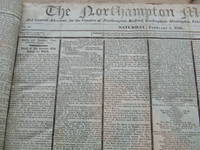
1805012292Great Britain: Printed By Dicey & Sutton 1805. The Northampton Mercury. 1805-1806. 1805. Saturday January 5th 12th 19th 26th February 2nd 9th 16th 23rd March 2nd 9th 16th 23rd 30th April 6th 13th 20th 27th May 4th 11th 18th 25th June 1st 8th 15th 22nd 29th July 6th 13th 20th 27th August 3rd 10th 17th 24th 31st September 7th 14th 21st 28th October 5th 12th 19th 26thNovember 2nd 9th 16th 23rd 30th December 7th 14th 21st 28th. 1806 Saturday January 4th 11th 18th 25th February 1st 8th 15th 22nd March 1st 8th 15th 22nd 29th April 5th 12th 19th 26th May 3rd 10th 17th 24th 31st June 7th 14th 21st 28th July 5th 12th 19th 26th August 2nd 9th 16th 23rd 30th September 6th 13th 20th 27th October 4th 11th18th 25th November 1st 8th 15th 22nd 29th December 6th 13th 20th 27th. Each issue has 4pp. Book measures 50 x 35. cm. Binding heavily worn defective. Internally worming to small section of first 5 issues occasional spotting staining. Pages in good clean condition. . Hardcover. Near Very Good. Folio. Printed By Dicey & Sutton Hardcover
1820012286Great Britain: Printed By Dicey & Sutton 1820. The Northampton Mercury and general advertiser for the counties of Northampton Bedford Buckingham Huntingdon Leicester Warwick Oxford and Hertford. Book measures 54.5x40.cm. From Saturday January 1st 1820 to December 28th 1822. 3 complete years each issue has 4pp. About 15/20 issues have moderate to heavy staining to bottom third of the page occasional light browning the odd page slightly heavier a few pages about 10 with minor loss some minor worming Generally all pages in good clean condition. The text block is holding firm lacking spine both boards detached. January 1st 8th 15th 22nd 29th February 5th 12th 19th 26th March 4th 11th 18th 25th April 1st 8th 15th 22nd 29th May 6th 13th 20th 27th June 3rd 10th 17th 24th July 1st 8th 15th 22nd 29th August 5th 12th 19th 26th September 2nd 9th 16th 23rd 30th October 7th 14th 21st 28th November 4th 11th 18th 25th December 2nd 9th 16th 23rd 30th. Saturday January 6th 1821 13th 20th 27th February 3rd 10th 17th 24th March 3rd 10th 17th 24th 31st April 7th 14th 21st 28th May 5th 12th 19th 26th June 2nd 9th 16th 23rd 30th July 7th 14th 21st 28th August 4th 11th 18th 25th September 1st 8th 15th 22nd 29th October 6th 13th 20th 27th November 3rd 10th 17th 24th December 1st 8th 15th 22nd 29th. Saturday January 5th 1822 12th 19th 26thFebruary 2nd9th 16th 23rd March 2nd 9th 16th 23rd 30th May 6th 13th 20th 27th May 4th 11th 18th 25th June 1st 8th 15th 22nd 29th July 6th 13th 20th 27th August 3rd 10th 17th 24th 31st September 7th 14th 21st 28th October 5th 12th 19th 26th November 2nd 9th 16th 23rd 30th December 7th 14th 21st 28th. . Near Very Good. Folio. Printed By Dicey & Sutton hardcover
182038311Valencia: Imprenta y LibrerÃa de Manuel López Calle de Bordadores nº 1 e Imprenta de Brusola Plaza del Patriarca 1820.- 21 fascÃculos de unas 4 páginas cada uno alguno de 8 páginas; 4º 22 cm.- Noticiario diario de la ciudad de Valencia de corte general satÃrico burlesco militar de orden público de sociedad de polÃtica religión etc etc. Variado y singular se ofrece este diario con números no seguidos que cubren buena parte de 1820 destacando que el suplemento del martes 22 de Septiembre de 1820 es una importante noticia polÃtico-militar circular titulada asi: "El Sr. Gefe PolÃtico superior de esta Provincia recibió anoche por extraordinario lo siguiente: REPRESENTACION PUESTA EN LAS REALES MANOS DE S. M. POR LOS GEFES MILITARES DE LOS CUERPOS QUE EXISTEN EN MADRID à NOMBRE DE TODOS SUS INDIVIDUOS"; en este aviso los Gefes polÃtico-militares constitucionalistas se reafirman en su defensa de la Constitución nuevamente jurada por el rey Fernando VII el dÃa 7 de Marzo de 1820 pues parece ser que hubo nuevas vacilaciones y revueltas cuando comenzaba lo que se dará a conocer como el Trienio Liberal 1820-1823 firmando el manifiesto un buen grupo de liberales que vienen expresados en este suplemento que referimos. Importante resaltar que aunque los números van correlativos y el nombre del diario es el mismo parece ser que las fechas no siguen un orden cronológico con la numeración que llevan los fascÃculos por lo que pensamos que son tiradas diferentes. Se ofrecen todos los números incluÃdo el suplemento del que hemos tratado especialmente de forma conjunta y como unidad documental. GUERRA DE LA INDEPENDENCIA-FERNANDO VII Libro en español Imprenta y Librería de Manuel López (Calle de Bordadores nº 1) paperback
1806011604Northampton: T. Dicey & W. Sutton 1806. The Northampton Mercury 1806. 1807. 2 years 103 issues lacking issue for August 30th 1806. Each issue has 4 pages. Book measures 53x37.cm. Bound in half calf calf corners cloth boards gilt lettering. Calf scuffed worn with loss on edges. Generally a good binding. Internally article cut-away from a few pages a few small repairs occasional minor spotting marking. Pages in good clean condition throughout. A good clean copy. Saturday January 4th 11th 18th 25th February 1st 8th 15th 22nd March 1st 8th 15th 22nd 29th April 5th 12th 26th May 3rd 10th 17th 24th 31st June 7th 14th 21st 28th July 5th 12th 19th 26th August 2nd 9th 16th 23rd 30th September 6th13th 20th 27th October 4th 11th 18th 25th November 1st 8th 15th 22nd 29th December 6th 13th 20th 27th. 1807. Saturday 3rd 10th 17th 24th 31st February 7th 14th 21st 28th March 7th 14th 21st 28th April 4th 11th 18th 25th May 2nd 9th 16th 23rd 30th June 6th 13th 20th 27th July 4th 11th 18th 25th August 1st 8th 15th 22nd 29th September 5th 12th 19th 26th October 3rd 10th 17th 24th 31st November 7th 14th 21st 28th December 5th 12th 19th 26th. . Half Calf. Near Very Good. Folio. T. Dicey & W. Sutton Hardcover
1839055027Kostantiniyye Constantinople - Istanbul: Takvîm-i Vekâyi. AH 1255 1839. Soft cover. Very Good. Original newspaper taken from a volume. Folio. 425 x 28 cm. In Ottoman script Old Turkish with Arabic letters. 5 p. Extremely rare early issue of this first official newspaper of the Ottoman Empire after the proclamation of Reform Tanzîmât in 1839 informed Daguerre's new and weird invention "photography" as it would be called in the 1850s to the Ottoman peoples and readers. The article reads: "It is the talk of the town steam engines have been able to run on rails in factories in recent years. Meanwhile a man carefully focused on his thoughts so much and the craft turned into a strange art and finally a coquettish mirror surface appeared. This skillful Frenchman named Daguerre drew the lines of objects by reflecting the sunlight with the methods of the different science of art he learned drew the contours of the objects and gave 20 years secretly and openly to the formation of this strange art. Finally he reached the goal and this event won the appreciation and admiration of everyone. This is to say the image of the object in the form of a large or small box free from light is pictured inside by passing through the glass in front of it. In order for the reflected picture to be captured on a surface some chemicals must be prepared. Daguerre has achieved this mix based on his experience. This substance applied on the plate is called iodine. After the plate is kept in the vapor of the iodine for a few minutes it is immediately placed in the dark box and the image passing through the window of the box is pictured for five minutes. Considering that some of the things that should be hidden are captured like this it will be understood what a valuable invention this is.". In the continuation of the article it is written that an Englishman named Talbot Henry Fox Talbot found the same thing with almost the same processes ! but Daguerre had taken pictures before. Takvim-i Vekâyi was the first fully Turkish-language newspaper. It was launched in 1831 by Sultan Mahmud II taking over from the Moniteur ottoman as the Official Gazette of the Ottoman Empire. With the beginning of the Tanzimat reform period Takvim-i Vekayi produced versions in multiple language editions. It ceased publication in 1878 resuming in 1891-2 before being closed again. It resumed in 1908 until around 1922. In the 1831-1878 period it published a total of 2119 issues - an average of slightly less than one a week. <br/> <br/> Takvîm-i Vekâyi., [AH 1255] paperback
1807CAT000099Paris: Capelle et Renand 1807. First Edition. Hardcover Full Leather. Good Condition. A mixed set 11 volumes published 1807-1817. Volumes 2-10 in full acid calf worn spines dry and chipped one board detached others loose volume 1 in later half vellum and volume 11 in original wraps worn and chipped. A complete run of this annual of food and drink associated poetry and song. Volume 4 with a portrait of Marc-Antoine-Madeleine Désaugiers who wrote most of the songs laid down and each volume with an engraved frontispiece. Size: 12mo duodecimo. 11-volume set complete. Quantity Available: 1. Shipped Weight: Under 1 kilo. Category: Cooking Wine & Dining; Music. Inventory No: CAT000099. Capelle et Renand hardcover
18482111902160201131Manuscript by Michishige Ochi 1848. Soft Cover. Fine. Volume: 1 Manuscript by Michishige Ochi paperback
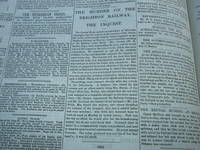
1881011607Northampton 1881. The Evening Herald And Daily Chronicle and Advertiser for Northampton and Midland District. 1881. Circa 255 issues each issue has 4 pages. Book measures 55x46cm. Bound in fawn cloth backed brown boards cloth corners black lettering. Cloth rubbed dust marked. Binding in good solid condition. Internally occasional staning a few pages missing corners with slight loss of text a few short tears pages slightly brittle but can be handled. Generally pages in good clean condition. January 1st 3rd 4th 5th 6th 8th 10th 11th 12th 13th 15th 17th 18th 19th 20th 22nd 24th 25th 26th 27th 29th 31st February 1st 2nd 3rd 5th 7th 8th 9th 10th 12th 14th 15th 16th 17th 19th 21st 22nd 23rd 24th 26th 28th March 1st 2nd 3rd 5th 7th 8th 9th 10th 12th 14th 15th 16th 17th 19th 21st 22nd 23rd 24th 26th 28th 29th 30th 31st April 2nd 4th5th 6th 7th 9th 11th 12th 13th 16th19th 20th 21st 23rd 25th 26th 27th28th 30th May 2nd 3rd 4th 5th 7th 9th 10th 11th 12th 14th 16th 17th 18th 19th 21st 23rd 24th 25th26th 28th 30th 31st June 1st 2nd 4th 7th 8th 9th 11th 13th 14th 15th 16th 18th 20th 21st 22nd 23rd 25th 27th 28th 29th 30th July 4th 5th 6th 7th 9th 11th 12th 13th 14th 16th 18th 19th 20th 21st 23rd 25th 26th 27th 28th 30th August 1st 2nd 3rd 4th 6th 8th 9th 10th 11th 13th 15th 16th 17th 18th 20th 22nd 23rd 24th 25th 27th 29th 30th 31st September 1st3rd 5th 6th 7th8th 10th 12th 13th 14th 15th 17th 19th 20th 21st 22nd 24th 26th 27th 28th 29th October 1st 3rd 4th 5th 6th 8th 10th 11th 12th 13th 15th 17th 18th 19th 20th 22nd 24th 25th 26th 27th 29th 31st November 1st 2nd 3rd 5th 7th 8th 9th 10th 12th 14th 15th 16th 17th 19th 21st 22nd 23rd 24th 26th 28th 29th 30th December 1st 3rd 5th6th 7th 8th 10th 12th 13th 14th 15th 17th 19th 20th 21st 22nd 24th 27th 28th 29th 31st. . Cloth. Near Very Good. Folio. Hardcover
186241734Turnwold Putnam County Ga. 1862. Each issue a folio sheet folded to 8 pp. Each page 9-1/4" x12." Each number printed in three columns per page. No. 12 with a persistent corner chip and occasional small loss. Light foxing. Very Good. EACH ISSUE $250 OR THE ENTIRE RUN FOR $1000<br /> <br /> Crandall does not record Numbers 4 and 5; but AAS which says The Countryman was "suspended intermittently" evidently owns them. Its first printing was March 18 1862. The articles cover an array of subjects including of course much on the War: <br /> This interesting Confederate weekly was printed at Turnwold Turner's Putnam County plantation probably the only wartime newspaper so printed. "Joel Chandler Harris was an apprentice for Joseph Addison Turner. In 1862 Turner decided to produce a newspaper from his home at Turnwold Plantation. In fact in a more-than-semi-autobiographical book Harris wrote called On the Plantation he explains that the printing office for The Countryman was established 'in an outhouse.'. . . As was the typical arrangement for the time Harris worked for Turner in exchange for clothing and boarding at the Turnwold Plantation for the four plus years he apprenticed there. As a printer's devil Harris was responsible for setting and inking the type for the paper on the hand-press individually placing the letters so they were spaced appropriately for printing" "Joel Chandler Harris and The Wren's Nest" December 3 2020 Blog site of American Writers Museum accessed May 01 2026. <br /> Crandall 5152. Not in Parrish & Willingham. unknown
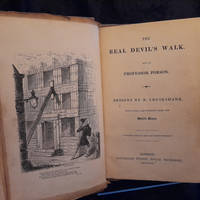
1830001387London: Effingham Wilson Lufton Relfe Printed by J. Bailey 116 Chancery lane 1830. Hardcover. Good. Robert Cruikshank R. Seymour. 3 Volumes bound as one 1- The Real Devil's Walk pp34 plus engraved frontis 6 full page illustrations by Robert Cruikshank with vignettes throughout text. An interesting work believed to be a revised version of "The Devil's Thoughts" 1799 but later revised with a letter appearing in the February 14th edition of the Morning Post 1830 with the claim by one R. C. Porson that the poem "The Devil's Walk" had been actually written by his deceased uncle "Professor Porson".2_ The Devil's Progress pp67 with engraved b/w frontis plus 4 full page b/w engravings and two vignettes designed by R. Seymour and engraved by Evans and Welch. This being another satire expanded from "The Devil's Thoughts" . 3-The Ancient and Modern History of the Devil this final part is missing it's title pages and preface but appears to be complete in two parts. Part one- Ancient history pp1-118 in 10 chapters . Part 2- Modern History pp119-264 in 11 chapters. It states on final page" Printed by J. Bailey 116 Chancery lane". 12mo although the poetry pieces are a smaller size paper. Contemporary binding of half brown calf over marbled boards with 5 tooled gilt lines and the title of "The Devil" to spine in good condition with some rubbing to boards rubbing to edges and leather. Inside hand written title page to history of the devil at beginning of book and old catalogue entry for "the devil's walk" to front pastedown. There is a little foxing and toning throughout but generally all pages in very good condition for their age in a tight solid binding. A very interesting item. Scarce. More photos on request. <br/> <br/> Effingham Wilson, Lufton Relfe, Printed by J. Bailey, 116 Chancery lane hardcover
1895304588Belfast and London: McCaw Stevenson & Orr. Ld. 1895. First Edition. Softcover. Poor set in the original stiff-card wrappers; wear and tear as with age. Text remains in fine condition and without blemish. Some issues in three hardcover bindings two bound in full cloth and one bound in half leather over buckram boards. Physical description; 26 issues. Contents; Vol. I September 1894 No. I ; vol. I: January 1895 No. 2 ; vol. I: April 1895 No. 3 ; vol. I: July 1895 No. 4 ; vol. II January 1896 No. 2 ; vol. II part 3 April 1896 ; vol. II July 1896 no. 4 ; vol. II part I October 1895 ; vol. III: October 1896 No. I ; vol. III: January 1897 No. 2 ; vol. III: April 1897 No. 3 ; vol. III: July 1897 No. 4 ; Index to Ulster Journal of Archaeology: vol. III ; vol. IV: October 1897 No. I ; vol. IV: January 1898 No. 2 ; The Ancient Franciscan Friary of Nun-Na-Margie Ballcastle on the North Coast of Antrim by Francis Joseph Bigger ; vol. IV April 1898 No. 3 ; vol. IV July 1898 No. 4 ; vol. V part 3 May 1899 ; vol. VI January 1900 No. I ; vol. VI part 2 April 1900 ; vol. VI part 3 July 1900 ; vol. VII: January 1901 No. I ; vol. VII: January 1901 No. 3 ; vol. IV: October 1901 No. 4 ; vol. VIII Part I January 1902 ; vol. VIII part 2 April 1902 ; vol. VIII part 3 July 1902 ; vol. VIII part 4 October 1902 ; vol. IX part I January 1903 ; vol. IX April 1903 no. 2 ; vol. IX part 3 July 1903 2 copies ; vol. IX Oct. 1903 no. 4 ; vol. X part I January 1904 ; vol. X October 1904 no. 4 2 copies ; vol. XI part I January 1905 ; vol. XI part 2 April 1905 ; vol. XI part 4 October 1905 ; vol. XII part 2 April 1906 ; vol. XII part 3 July 1906 ; vol. XII part 4 October 1906. Subjects; Archeology. Ulster. Ulster Journal of Archeology. Irish Archeology. Northern Irish Archeology. Academic Periodicals. Belfast and London: McCaw, Stevenson & Orr. Ld. paperback
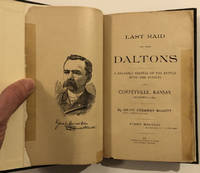
18923832Coffeyville: Coffeyville Journal Print1892. 1892. First edition. First edition. 8vo. Rebound in grey cloth 5 p.1.13 71 1 pp. frontis. portrait illustrations portraits plan on unnumbered page 72. Adams 150 #52 says "Rare." "The author was the editor of the Coffeyville Journal and was an eye-witness to the battle of the citizens and the Dalton Gang. It is said that he was the first man to reach the wounded Emmett Dalton. He wrote this little book to give an account of what he saw and published it in a limited edition immediately after this battle took place. This is about the best account of this battle written thus far." Six Guns 671 says "Rare." "It is now very rare and a collector's item." Lacks the original wrappers a few end-pages reinforced along the edges with cellophane tape that was applied many years ago contents clean and bound into a cloth boards with titles stamped in gold gilt on the front cover. Overall a very good copy of a rare and much sought item. Coffeyville Journal Print,1892. hardcover
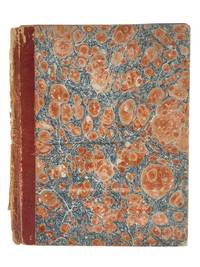
1851218121851. Science Medicine & TechnologyMilitary & WarLabor Environment & Welfare Manuscript industrial journal documenting the British lead shot industry patent culture and metallurgical manufacturing during the height of the Victorian industrial economy. Primarily England and Wales 1851-1853. Approximately 50 pages written in ink in a highly legible hand bound in an octavo-format notebook measuring 8 x 6.5 inches. Quarter red leather over marbled boards. Ownership inscription to front endpaper: "John R. Tracy / Nov 1852."<br /> <br /> An unusually detailed firsthand record of mid-19th-century industrial innovation centered on the manufacture of lead shot at a moment when Britain's expanding military infrastructure mining economy and heavy industry were increasingly dependent on large-scale metallurgical production. Compiled by John R. Tracy the manuscript documents the development and attempted commercialization of what he repeatedly identifies as a "Shot Patent" likely an improvement to the production or grading of lead shot associated with the traditional shot tower process. Rather than functioning merely as a technical notebook the volume captures the broader industrial system surrounding invention in Victorian Britain: factory inspections patent negotiations industrial espionage concerns business networking licensing discussions and the competitive culture of ironmasters and lead manufacturers operating across England and Wales.<br /> <br /> The manuscript opens in October 1852 and proceeds through a sequence of dated entries recording Tracy's travel and meetings with manufacturers engineers and industrial firms. These entries reveal the practical realities of introducing a new industrial process into Britain's established lead trade where manufacturers guarded technical methods closely and approached outside inventors with skepticism. On October 26 Tracy records receiving "letters of introduction to Messrs. A. B. Brown & Green" and to "Platt Bros." illustrating the importance of personal industrial networks and recommendation systems within Victorian manufacturing culture. Another entry dated November 5 describes a meeting arranged through "Mr. Maxwell of Messrs. Norton Theakers" followed by Tracy's note of "Much of 'shot etc.'-a rather funny conversation but on the whole. appointment for tomorrow @ 10 1/2" capturing the uncertain and often informal negotiations surrounding industrial patents.<br /> <br /> Particularly revealing is Tracy's November 6 account of visiting the Flintshire lead smelting firm Newton Keates & Co. where he describes the guarded and competitive atmosphere surrounding lead shot production. Tracy recounts that permission to inspect the works was "at-first-refused in rather a John Bullish manner" before eventually being granted under supervision. He writes perceptively about the mixture of suspicion and curiosity that surrounded industrial patents noting that the proprietor "wished to know the price upon the Patent" but that he deliberately withheld a valuation because "there was no use to let him have the bait to look at before he was hungry enough to bite." The language throughout reveals how industrial innovation in this period depended not simply on invention itself but on strategic secrecy negotiation and control over proprietary manufacturing knowledge.<br /> <br /> One of the manuscript's most important sections is a full-page listing titled "Lead Works in the United Kingdom in 1852" identifying more than two dozen lead works and manufacturers across Britain. Firms including Walker Parker & Co. Newton Keates & Co. and Richmond Anchor Co. are listed alongside annotations describing their production specialties including "sheet" "pipes" "shot" "white lead" and "pig." The page functions as a rare industrial survey of Britain's lead industry during a period of rapid military and industrial expansion documenting the interconnected infrastructure supporting ammunition production construction materials piping paint manufacture and metallurgical processing.<br /> <br /> Later entries contain detailed observations of shot-manufacturing equipment at a Chester lead works including descriptions of shot towers ranging from 76 to 96 feet in height and the use of perforated metal grading systems to regulate molten lead as it fell into spherical form. Tracy records the operation with notable technical specificity: "The shot are dropped through a perforated metal-the holes being smaller at the upper end and increasing in size as you get to the lower cylinder." Accompanying diagrams depict feed bins drop tubes sieves and sorting mechanisms apparently intended to improve efficiency or shot-size consistency beyond earlier tower methods. Tracy critically evaluates the machinery as well remarking that certain sieve boxes "seem inadequate for the work" and comparing the process economically to that employed by "D. De Roy & Co.'s works." The notebook therefore preserves not merely abstract invention but active industrial analysis and comparative manufacturing study.<br /> <br /> The manuscript is documenting metallurgy patent culture and military-industrial production in the decades preceding the major arms expansions of the later nineteenth century. Lead shot remained essential not only for hunting and civilian markets but for military supply systems deeply tied to imperial expansion and industrial warfare. Tracy's notebook reveals the increasingly professionalized yet still highly personal world through which industrial technologies circulated in Victorian Britain where factory visits guarded conversations handwritten technical sketches and negotiated introductions formed the practical infrastructure of innovation. Spine mostly perished with binding delicately held together; boards rubbed and worn. Interior exceptionally clean and highly legible throughout. A substantial and unusually revealing manuscript documenting Victorian industrial manufacturing patent strategy and the lead shot trade during a formative period in British industrial history. unknown