4 788 résultats
197490-16954Doubleday & Co 1974-01-01. Hardcover. Good. Good condition with wear on covers and spine. Doubleday & Co hardcover
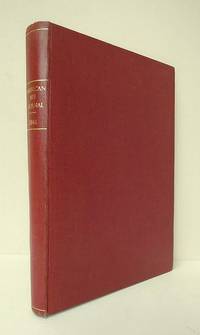
72160Bees Books Published Between 1901 1999 . 1st. Ed. Pub. American Bee Journal 1939. Twelve monthly parts bound in one volume with b/w. photos. plus index. 4to. Hardback. Contents fine. Cloth boards fine. Superbly illustrated. A fascinating insight into beekeeping at the start of WWII and the challenges that came as a result. Full of practical advice and considers beekeeping both in the United States and around the world. Bees Books Published Between 1901 + 1999 hardcover
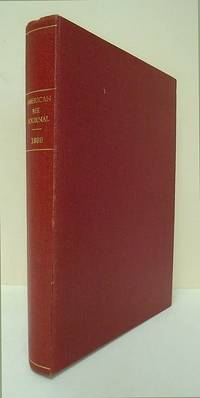
72161Bees Books Published Between 1901 1999 . 1st. Ed. Pub. American Bee Journal 1944. Twelve monthly parts bound in one volume with b/w. photos. plus index. 4to. Hardback. Contents nr. fine. Cloth boards fine. Superbly illustrated. A fascinating insight into beekeeping toward the end of WWII and the challenges that came as a result. Full of practical advice and considers beekeeping both in the United States and around the world. Bees Books Published Between 1901 + 1999 hardcover
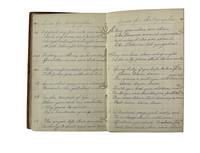
1876167211876. Wakelee Cora B. Diary 1876 records a young Connecticut student's firsthand account of the Centennial Exposition alongside later entries documenting her high school achievements and social writing practices. The manuscript provides primary evidence of how a young woman experienced and interpreted the first official World's Fair held in the United States while also preserving the social and literary conventions of adolescent friendship in the late nineteenth century. The diary supports research into youth education gendered experience at national exhibitions and the integration of public spectacle into personal narrative.<br /> Wakelee Cora B. Diary. 1876-1881. Manuscript volume containing 48 handwritten pages including early entries partially overwritten with inscription "Cora B. Wakelee Huntington Conn. May 22 1876" on the front endpaper. The opening section details Wakelee's visit to the Philadelphia exposition describing exhibits with specificity: a large-scale model of Niagara Falls "160 ft long and 80 ft high" state buildings including a New England log house furnished with objects "100 years old or over" and displays of industrial production such as carpet weaving and tinware manufacturing. She records encounters with global and historical curiosities including "Egyptian mummies" horticultural specimens such as fig orange lemon and pineapple trees and commemorative objects tied to George Washington including his carriage and textile portraits. Later entries document her academic life including transcribed newspaper recognition of her spelling achievement and scholarship prizes. Pages 14 through 48 contain a substantial collection of short poems and inscriptions intended for autograph albums combining sentimental and humorous tones such as "Though short our acquaintance has been.Permit me to call you my friend" alongside moral reflections and religious wishes. The volume also includes original mourning verse for a deceased acquaintance "Mattie Otis passed away.She has gone yes gone forever" situating personal loss within poetic expression.<br /> The diary emerges from a period in which international expositions functioned as sites of national identity formation and technological display while expanding educational opportunities exposed young women to broader cultural experiences. Wakelee's account demonstrates how large-scale public events were absorbed into individual memory and recorded alongside everyday academic and social life. The inclusion of autograph album verses reflects widespread practices among students where poetry circulated as a medium of friendship and remembrance. Original leather boards; approximately 48 pages of manuscript content; measures 8 x 5 inches. Losses to spine and loose hinges; some toning throughout; good condition. A combined record of the 1876 exposition as experienced by a young attendee and of late nineteenth-century female student literary culture. unknown
0259503711.Gpaperback. Good. Access codes and supplements are not guaranteed with used items. May be an ex-library book. paperback
1334662622.Gpaperback. Good. Access codes and supplements are not guaranteed with used items. May be an ex-library book. paperback
1528338359.Gpaperback. Good. Access codes and supplements are not guaranteed with used items. May be an ex-library book. paperback
0259902039.Gpaperback. Good. Access codes and supplements are not guaranteed with used items. May be an ex-library book. paperback
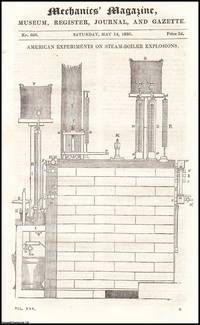
1836507966Knight and Lacey London 1836. Card Covers. Very Good Condition. 48 pages. With woodcuts. Genuine Original and Packed with Innovation! This weekly magazine isn't just a fragment of history it's a window into the cutting-edge advancements of the Victorian era! Since 1823 The Mechanics' Magazine has tackled revolutionary topics from printing presses to vapor baths hydrostatics and hydraulics. It dives into breakthrough safety measures preventing explosive contaminated air while exploring the mechanics of oxy-hydrogen blowpipes and self-laying rail carriages. Every page crackles with Victorian-era engineering brilliance capturing the relentless drive for invention that shaped the modern world! This is an exclusive standalone issue carefully separated from its original volume; authentic original and uniquely crafted. It is not a reprint or reproduction but a distinct piece in its own right. Preserved in a modern card cover prepared for practicality - an unassuming but serviceable presentation that favours function over finery. Size: 13 x 21 cms. Category: Mechanics' Magazine; New Arrivals; Special Interest. This item may require more postage than the rates shown for delivery outside the UK. If extra postage is required we will contact you before processing your order and you will be given the details and option to decline the extra cost. Knight and Lacey unknown
76478vo 172pp 88pp ads approximately another 20pp unnumbered ads original blind stamped brown cloth w/gilt lettering on the spine illustrated w/wood engravings throughout the text Many of the ads have wood engravings index -- Brown cloth evenly dulled minimal wear and rubbing clean and tight -- Very good condition Quantity Available: 1 Category: Science; Pictures of this item not already displayed here available upon request Inventory No: 007647. hardcover
1922Concord NH: printed by Rumford Press for the Journal of the Archaeological Institute of America 1938. Mildly ex-library from the Reading Public Museum with call number on spine bookplate on front endpaper and name stamp on rear endpaper no other marks and no signs of use; a bright clean near fine copy in an attractive binding. Pp. 624 numerous photo-plates and text-figures. Early blue ribbed cloth with black leather spine label 4to. The complete issue of this journal for 1938. Concord, NH: printed by Rumford Press for the Journal of the Archaeological Institute of America, 1938. hardcover
MA03OS-00083St. Louis MO: C. V. Mosby Company. Collectible - Acceptable. St. Louis MO: C. V. Mosby Company 1921. Volume 5. Sm 4to Hardcover. 712pp. B/W photos and tables. Fair Ex-Library book. With usual library markings. syphilis sexually transmitted diseases STDs medical journals Inquire if you need further information. NOT AVAILABLE FOR SHIPMENT OUTSIDE OF THE UNITED STATES. St. Louis, MO: C. V. Mosby Company hardcover
1330259912.Gpaperback. Good. Access codes and supplements are not guaranteed with used items. May be an ex-library book. paperback
0282633863.Gpaperback. Good. Access codes and supplements are not guaranteed with used items. May be an ex-library book. paperback
1527661822.Gpaperback. Good. Access codes and supplements are not guaranteed with used items. May be an ex-library book. paperback
1527674983.Gpaperback. Good. Access codes and supplements are not guaranteed with used items. May be an ex-library book. paperback
63-5714Philadelphia PA: American Phrenological Journal 1843. Two Leaves: One page of printed text recto & verso 8.25" x 5.25" and one leaf with two engraved illustrations of John Quincy Adams. Good with tears minor losses staining. Philadelphia, PA: American Phrenological Journal, 1843. unknown
0331478579.Ghardcover. Good. Access codes and supplements are not guaranteed with used items. May be an ex-library book. hardcover
0331478552.Gpaperback. Good. Access codes and supplements are not guaranteed with used items. May be an ex-library book. paperback
5300CARIBBEAN TRAVEL JOURNAL. Diary. 101 pages. The Caribbean. c. 1908-9. The handwritten journal belonging to C. B. Benson of Hudson New York. The diary recounts Bensons experience on an organized cruise group visit to Caribbean locations such as St. Thomas Puerto Rico Kingston Jamaica Caracas Venezuela Panama City Panama Port of Spain Trinidad and Martinique. Benson records his experiences in each location including his impressions of the town the locals sights he visited and local travel. He visited forts a school churches a mill a sugar plantation and Carnival celebrations. Benson took his tour during the era of colonial rule the attitudes of which infuse both his experiences and observations. Based on his mention of an earthquake in Kingston Jamaica taking place a year or two before he travelled in 1908 or 1909. St. Thomas where we arrived about 6 A.M. mid morning Jan 26 is one of the Virgin group and we found her framed and frescoed in the principal churches. Columbus in 1493 gave the group of 100 islands rocks andwhich comprise the group. St. Thomas is 13 miles in length and 3 miles in width at its broadest. And I guess we walked the length of it speaking broadly and in the abstract at this distance.The heat of the tropical sun also takes its toll and blurs our ideas of time and distance somewhat. The town of Charlotte Amelia contains 13000 inhabitants merchants and black babies and they are all dressed in their Sunday best to receive us properly.Thursday morning at 8 we went ashore at Porto sic Rico.Returning thro the village streets we stopped at the market place and noticed the display of fruits in baskets a couple of men seated on low stools with blacks in front of them.a native womanwas entertaining us in the middle of the road with a dance.When passing the island of Haiti.Do you know why we do not stop at the Island of Haiti No There are cannibals there there are so many fat people aboard you would lose your wife At St Thomas the American council held open house and received some of us who dared to invade this solitude.An hours railroad ride which was made interesting by stops at every littleand station where the bare legged boy with the oil gun in hand squirted oilbearings sic of the cars and engine. As it was before the 17 miles came to an end the rear axle of the parlor car so called because it had leather covered reclining seats caught fire. But when this happened we were nearly at the end of our journey and we were not delayed much. At the sugar plantation where we detrained we found we had some distance to walk downto the sugar mill. As there was no path and the sticky wet ground to soil made worse by the heavy rain of the night before.A sugar mill is never a clean place.The process is somewhat intricate but way he likened to the process of brewing.The cane piled up in the yard is boiled in a number of vats then is run off with barrels and in a black and solid state in shipped to the Refineries at New York. The fiber of the cane is then hardened and dried and is fed to the furnaces to boilcane. After return to the town San Juan we visited the shops. Walked out to the fort at the entrance of the harbor. The town is excellently policed and paved in the principal streets with telegram blocks.As this day was Thursday we concluded that every day was wash day for the native women and girls who for want of other diversions spend most of their time in this form of dissipation. Even the balconies of the main public street filled with traffic of street cars carriages and drays had their fill of wash some of which are found laying in the street having been carried down by the wind. No one had appropriated it as yet; and we did not add it to our collection of souvenirs. At the officers quarters I applied for a permit of the officer of the day to enter the fort San Cristobal the fort commanding the entrance to the harbor.The fort was like most forts. The high tower gave a commanding view of the town and harbor. Then we visited the Governors Palace. In the Reception Room hanging on opposite sides facing each other are life sized oil paintings of McKinley & Cleveland. In the garden were some large palms tropical ferns a fountain &.Jan 29. early in the morning we were at Kingston in Jamaica. The channel is narrow and tortuous but well Taking a local pilot we soonopposite itof three vessels one of which was the Princess Louise that was caught in the hurricane here three years ago andthe larger of the three vessels was trying to pick up the light from the light house which had been blown down. This destruction of the hurricane.After driving about a mile thru the city the destruction to the buildings & pavements made by the earthquake here a year or two ago half of the city seems to be in ruins and no attempt has been made apparently to rebuild & restore the city. Thousands of lives were lost here at that time which did immense damage to the fruits. Most of the uninhabitable part of the island belongs to the United Fruit Company a Boston Corporation who ships immense quantities of bananas from Port Antonio. Owing to recent destruction by fire of Hotel Litchfield our stop at the port of San Antonio and stay of night at the Hotel was omitted. An excursion across the island by train to Mandeville was arranged in its place.The town of Colon in its principle streets are paved with brick and appear clean. We noticed many buzzards. The air was clear and there was a delightful cool breeze blowing.We stopped at all of the stations going to Panama and noted the wonderful impressions made by the Sanitary Commission. The well ventilated and screened houses. The plan for disposal of garbage the open drainage the cleared landsBut of course the facts are here bug and drain all working to the mutual exclusion of some ideas to the American white employers. Therefore after a few months they must have a reaction in the States toand detach themselves from all absorbing facts. The fighting for life againstfires. Most things arebetween the white employers and the black employees. So we find the White Bar and the Black Bar The White Employees The Silver White Employees &c as signs on the cars intended to carry workmen back and forth from the works.Caracas the capital of Venezuela is about 3000 ft up but the sun in the middle of the day we found very hot.Plaza Bolivar was decorated with rows of colored electric lights. They are preparing for the Carnival season which ushers in Lent in Catholic countries. The market place had counters for dry goods highly colored handkerchiefs etc. Another section was devoted to fruits vegetables etc. We noticed some very large apricots. Mr. Bolivar apparently has done a great deal for his native town. He has given his name while the people furnished the funds for the largest parks a street and the coinage of the plutocrats.The Spaniard theHildago -in his easy subjugation of thepleasure loving tropical savage has replaced the native of simple taste and left in his place the mongrel half-breed with all the vices of the conqueror and none of the virtues of theIndian savage. The diary is in very good condition. It is mostly written in pencil but is quite legible. hardcover
193911858AN ELEMENTARY MATHEMATICAL APPROACH TO ASTRONAUTICS in the JOURNAL OF THE BRITISH INTERPLANETARY SOCIETY January 1939 first edition a good copy of the entire issue with some wear and tear and chipping to the covers and some interior and exterior rusting at the staples. The front cover details a design for a Lunar Spaceship. Contributions also by H. E. Ross Maurice Hanson J. H. Edust-wrapper ards Arthur Janser et.al. Quite scarce. JOURNAL OF THE BRITISH INTERPLANETARY SOCIETY unknown
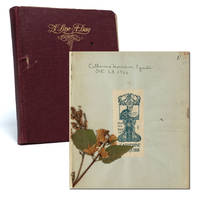
19116011US Germany 1911. Red cloth over card with gilt to front board. All edges stained read. Measuring 200 x 170mm and containing 186 handwritten pages across five years. Dried flowers and theatre program loosely inserted at front. Ownership signature and bookplate of Catherine Harrison Squibb to front pastedown and endpaper with signature of the same to rear endpaper. A research rich and densely written diary the present would be useful in fields including but not limited to intergenerational wealth and its relationship to emotional abuse women's education and educational travel early 20th century reading habits modern friendship courtship and romance and women's increased mobility and travel.<br /> <br /> The second daughter of Charles Fellow Squibb himself the second son of pharmaceutical boss Dr. E. R. Squibb Catherine Harrison Squibb was raised in economic privilege. Her earliest years were spent in the Brooklyn townhouse built for her parents by her grandfather while her teen years were split between her father's historic estate of Welwood and her boarding school in Dresden. At Welwood Charles always considered as "the lesser son" according to his E.R.'s journals followed in his father's controlling footsteps by "purchasing polo ponies setting about learning to jump" and "insisting his children do the same.to maintain the lifestyle of the landed gentry" Belcher. This is confirmed in the opening entry of the diary October 25 1906 near Catherine's 16th birthday where she reports "I rode side-saddle with Rosalie in the morning.rode again in the afternoon ist richerverlobt! er est 62 --- alt!!" The numerous rides do not seem to entirely please Catherine as she hides her frustration in the German parenthetical roughly "he is engaged to be a judge! he is 62 years old!!". Three days later on her birthday she spends her time significantly differently clowning with her brother and aunt and "playing tennis in the afternoon." This becomes something of a tradition as her birthday entries report several times "played tennis all afternoon" She also notes her time in French and German lessons -- with German becoming more frequent during and after her time at school in Dresden especially when she wants to obfuscate her thoughts from unwanted readers. <br /> <br /> If this diary is any indication music and reading travel and school became refuges for Catherine. And she claimed as much time as she could to find independence and develop herself outside of Charles' strict rules. Her reading preferences reflect this desire to immerse herself in Jane Austen's world of social visits and balls where family conflict is eventually smoothed by a woman's exit to a loving partner and home of her own. "Good day!" she writes on April 29 1908 "Stayed in bed all day. I finished Pride & Prejudice and began Emma." This is contrast against her reaction to Charlotte Bronte's work on May 1 of the same year: "Cold & windy. We came in on the 9.30. Aunts at Welwood.had music lesson.I began Jane Eyre. Dismal book!" Her tone and word choice reflect the most happiness in these circumstances whereas riding is reported like a duty -- she may report what time of day and what horse but no expressions of joy accompany them. <br /> <br /> While the diary concludes in 1911 when Catherine is 21 we know that she would return to Europe from 1917-1919 as a nurse in WWI watching her own country battle her beloved Germany. Within the time her father had sold his birthright in Squibb and with "his extravagant lifestyle eating through his money quickly.he was forced to sell Welwood.not long thereafter he went to France" and never returned to the US Belcher. In 1920 she would marry veteran and shoe manufacturing foreman Raymond Pratt moving with him to Pasadena California and becoming a civic leader.<br /> <br /> Much deeper work can be done on Catherine's lives and relationships especially considering the current cultural trends of novels films and series depicting both the glamour and the emotional squalor of the 1%. unknown
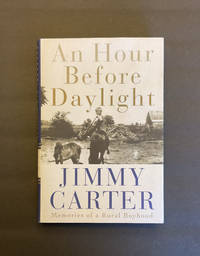
2001030798New York: Simon & Schuster 2001. A gorgeous SIGNED copy of the first printing. Laid in is a newspaper clipping from March 24 2001 discussing the Las Vegas Nevada signing event where President Carter signed this copy. SEE OUR PHOTOS. Signed directly on the first printed page by Jimmy Carter 39th President of the United States and winner of the Nobel Peace Prize his signature only NOT personalized to anyone. Because this copy is signed DIRECTLY it means that former President Carter personally handled the book unlike copies with only a signed bookplate. Fine condition in a Fine dust jacket. NO chips tears creases rubbing or fading. NOT price clipped $26.00. The jacket is protected by a removable Brodart clear-plastic sleeve temporarily removed to reduce glare in photos. Sharp corners. Bright square and tight. NOT a library discard. NOT a remainder. NO owner's name or bookplate. Pages are fresh crisp clean and unmarked. 2001. First printing of the First Edition with complete number row 13579 10 8642 on the copyright page. Illustrated with several photos. Bound in the original biege boards with a blue spine lettered in bright gold. Complete with dust jacket. When asked his favorite from the more than 30 books President Carter authored he immediately responded "An Hour Before Daylight." From the publisher: "The former president offers an intriguing account of growing up on a Georgia farm during the Depression and provides incisive profiles of the people who shaped his life: his segregationist farmer father strong-willed nurse mother eccentric relatives boyhood friends and others.". Signed by Jimmy Carter. First Printing of the First Edition. Hardcover. Fine condition/Fine dust jacket. Illus. by NOT a library discard. 8vo. 286pp. Great Packaging Fast Shipping. Simon & Schuster Hardcover
19852083002116412668Kadokawashoten 1985. Soft Cover. Fine. The book is in fine condition. Kadokawashoten paperback
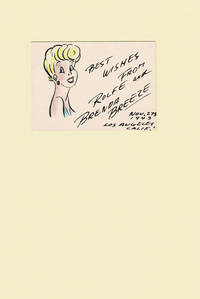
1943100118<p>Los Angeles California November 27th 1943. 1943. Fine. - An original color drawing of Brenda Breeze by Rolfe Mason drawn on a 2-1/2 inch high by 3-1/2 inch wide cream colored card. The drawing portrays the blond-haired Brenda with earrings attired in a shoulderless blue dress. The card is boldly inscribed "Best Wishes from Rolfe and Brenda Breeze" at right and dated "Nov. 27th 1943" from "Los Angeles Calif." Fine together with the original mailing envelope addressed in his hand.</p><p>Rolfe's original drawing portrays the head of the bouffant-haired wide-eyed Brenda Breeze in a shoulder-less gown.</p><p>Rolfe Memison aka Mason was a British cartoonist who settled in the U.S. in the 1920s. He originally wanted to be a painter and spent several years traveling and painting in Europe and Scandinavia. On his return to England he turned to cartooning and after moving to the U.S. created the newspaper comic "Brenda Breeze" which was syndicated by NEA Service between 1939 and 1962.</p> Los Angeles, California, November 27th, 1943.