12 résultats
2005268616New York: Farrar Straus and Giroux 2005. First Edition. Hard Cover. Very Good binding/Very Good dust jacket. A clean copy of the first printing of Friedman's landmark work with Ed Miracle's 1976 painting "I Told You So" as the artwork for the dust jacket. Friedman had had a poster of the painting for years thought it was funny and wanted it for the cover. Farrar Straus and Giroux thought it had obtained permission from the right party but Miracle disagreed and Farrar pulled the cover soon after the book hit the stores. Very Good binding / Very Good dust jacket. Farrar, Straus and Giroux unknown books
1993128836New York New York: Abbeville Press 1993. First. Hardcover. VG. Sage cloth boards color illustrated dj 204 pp. color and bw illustrations throughout. From the publisher: This work provides an intimate portrait of Tibet and its people as they make their pilgrimage through the wheel of life. The book offers lively and engaging intimate and bawdy humorous tragic revealing and inspiring stories of the Tibetans and reveals their extraordinary perception of their everyday lives. Abbeville Press hardcover books
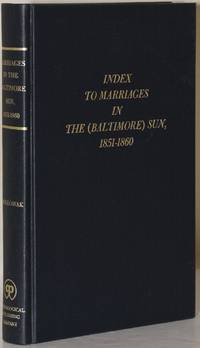
1978260400Baltimore: Genealogical Publishing Co 1978. Hard Cover. Very Good binding/no dust jacket. Binding sound; no markings in text; digital images available upon request. Very Good binding / no dust jacket. Genealogical Publishing Co unknown books
1908290499New York; London: William R. Jenkins Co.; Bailliere Tindall & Cox 1908. Full Leather. Very Good binding. With a folding map and four additional double-page maps. Blank memoranda pages at the rear. Previous owner's name and some notation in pencil on the front and rear endpapers. Beginning of separation to the front joint with surface loss of the leather. Red leather with gilt lettering. All edges gilt. Very Good binding. William R. Jenkins Co.; Bailliere, Tindall & Cox unknown books
198629754Columbia SC: Bruccoli Clark 1986. First Edition. Wrapper Issue. Folio 30.25cm.; original glossy black photo-illustrated wrappers; 6200pp.; chiefly photographic illus. Top fore-edge corner of textblock slightly warped else Fine. Bruccoli Clark unknown books
199748619Charlottesville: The Bibliographical Society of the University of Virginia and the University of Virginia Library 1997. Hardcover. Very good. 500cc. xx 99pp. Very good hardback bound in publisher's cloth backed boards lettered in matching green. <br/><br/> The Bibliographical Society of the University of Virginia and the University of Virginia Library hardcover books
175316Paris/London: Paul Geuthner/Humphrey Milford 1917. Softcover. Good loose copy ready to be bound to your standards. Loose copy with xvi 316 pp color frontispiece with a tissue paper tracing many bw illustrations. "This volume with exception of the index and tables has been in print since June 1914"--Page x. The frontispiece Hâritî is accompanied by a tracing which supplies the obliterated portions of the painting. "A detailed description of each plate will be found either in the body of the work or on the page de garde opposite the plate."--Page xvi. Includes bibliographical references and index. Paul Geuthner/Humphrey Milford paperback books
610Richmond: Everett Waddey Company 1895. . 8vo royal blue publisher's cloth gilt; minor wear on bottom edge of both covers; and tiny spotting on front cover Superb copy. Bitting p. 408; Brown 4284. ".With a good cookery book and manual all housewives have the power within their grasp of .perfecting themselves in various accomplishments and arts far more potent in a majority of household than those acquired at fashionable and expensive boarding-schools. In acquiring this knowledge she is abundantly able to train and instruct all servants in her employ so there will be little friction in the domestic machinery."--Foreword by the author. The first chapter is devoted to hygiene; then comes the body of the recipes; the final chapters devoted to "Invalid and Nurse"; "Invalid and Infant Cookery"; "Simple Remedies"; "Antidotes for Many Poisons" 510-543; "Household Hints"; "Laundry Hints"; and "Motherhood". Elizabeth Rosser was the wife of Major General Thomas Lafayette Rosser. Rosser was born in Virginia but moved with his parents to Texas as a teenager. He was a class-mate and friend of Gen. Custer's at West Point. The two met in battle on at least two occasions: at the battle of Buckland Mills while in command of the Laurel Brigade Rosser defeated Custer roundly; Custer then defeated him at Woodstock the following year. Rosser eluded capture at Appomattox by charging through the Union lines with two cavalry divisions and escaping to Lynchburg. He was captured later near his wife's home in Hanover Court-House. After the war Rosser joined the Northern Pacific Railroad and superintended the construction of its line to Livingston Montana where he renewed his friendship with Custer whose troops often guarded Rosser's surveyors. He then joined the Canadian Pacific and in 1886 moved to Charlottesville Virginia. During the Spanish-American War President McKinley commissioned him a Brigadier-General in the U.S. Army and he commanded a brigade of Northern volunteers at Chickamauga. At the time of his death in 1910 he was Post Master of Charlottesville Virginia Richmond: Everett Waddey Company, 1895. hardcover books
186453217Paris: Leiber 1864. First edition. 12mo. vii 287 pp. illustrated from engravings. Contemporary half morocco gilt and marbled paper over boards. Slight rubbing at the tips with the previous owner's ink signature on the first blank leaf; the owner has also written his name "C. CABOCHE" across the top edge. Else a fine and bright copy. An early text on the chemicals used in the photographic process.<br/><br/>Roosens and Salu No. 1818. WorldCat lists only nine copies. <br/><br/> Leiber hardcover books
18333457Philadelphia: E.C. Biddle 1833. Very good. Hand-colored lithograph by Lehman & Duval after Charles Bird King 445 x 338 mm. Head-and-shoulders portrait of female Oto wife of Chief Shaumonekusse long black braids with hair parted at center white and black beaded ear loops four necklaces silver bracelet ruffled blouse or dress top white and black fur or shawl loosely wrapped around her shoulders one delicate hand showing. Very mild uniform age-toning professionally washed. Original lithograph - NOT a reproduction! Hayne Hudjihini or Eagle of Delight ca. 1804-1822 accompanied her husband to Washington D.C. in 1821 and so delighted those she met that she was loaded down with presents and King painted several portraits of her. She was thought to be the most beautiful of all the Native American wives who visited Washington. Unfortunately she died of measles shortly after her return home. A portrait of her hangs in the White House Library.<br/><br/>When leaders of various tribes came to visit President Monroe McKenney Superintendent of Indian Affairs and a defender of Native American interests commissioned artist Charles Bird King to paint portraits of the delegates in their choice of dress. Most of King's original paintings subsequently burned in a fire at the Smithsonian. The lithographs in McKenney and Hall's publication are the only extant record of the likenesses of many of the prominent Native American leaders of the nineteenth century.<br/><br/>In our lithograph the two small silver portions on the nose of the sitter have combined with sulfur and oxydized to black. In other copies these portions are white. <br/><br/>See: Howes M129. Bennett American Nineteenth-Century Color Plate Books p. 79. Field 992. Lipperheide Mc4. E.C. Biddle unknown books
18433458Philadelphia: James G. Clark 1843. Very good. Hand-colored lithograph after Charles Bird King 496 x 355 mm "Drawn Printed & Coloured at the Lithographic & Print Colouring Estblishment 94 Walnut St." Full-length standing portrait of male Seminole chief carrying a rifle wearing striped fringed wrap skirt striped shirt red sashes around neck and waist red feathered headdress silver arm bands shin-high moccasins with buttons and medal around neck. Very mild uniform age-toning professionally washed some short tears in extreme outer margins closed 1" piece from upper left-hand corner torn away without loss. Preserved in a mylar sleeve. Original lithograph - NOT a reproduction! Tuko-See-Mathla also called John Hicks was an influential Native American leader elected head of his tribe in an election supposedly rigged by U.S. agents. He opposed U.S. slave raids into Florida separate schools for Indians and efforts to move Seminoles from their land. Despite his efforts however he eventually moved back to Alabama and was finally killed by tribesmen who opposed U.S. policies.<br/><br/>When leaders of various tribes came to visit President Monroe McKenney Superintendent of Indian Affairs and a defender of Native American interests commissioned artist Charles Bird King to paint portraits of the delegates in their choice of dress. Most of King's original paintings subsequently burned in a fire at the Smithsonian. The lithographs in McKenney and Hall's publication are the only extant record of the likenesses of many of the prominent Native American leaders of the nineteenth century.<br/><br/>See: Howes M129. Bennett American Nineteenth-Century Color Plate Books p. 79. Field 992. Lipperheide Mc4. James G. Clark unknown books
18373456Philadelphia: E.C. Biddle 1837. Very good. Hand-colored lithograph by Lehman & Duval after Charles Bird King 445 x 338 mm. Full-length standing portrait of male Sioux chief holding a rifle wearing brightly colored blankets feathered headdress necklace of grizzly bear claws and red leggings decorated with bird feathers. Very mild uniform age-toning professionally washed verso of upper left corner with Japanese tissue repair. Original lithograph - NOT a reproduction! Wa-Na-Ta ca. 1795-1848 was an influential Sioux Yanktona on the Minnesota River leader who fought against the Americans in the War of 1812 even leading a charge on Fort Sandusky whence his nickname. For his exceptional heroism he was received at the English court and promoted to Captain. After the war however he sided with the U.S. In 1825 he signed the Treaties of Fort Pierre and Prairie du Chien which established peace and territorial boundaries between the Sioux Chippewas Sac and Foxes and Ioways. He was murdered by his people who were upset with his leadership. Major Stephen H. Long met Wa-Na-Ta in 1835 and commented: "We had never seen a nobler face or a more impressive character."<br/><br/>When leaders of various tribes came to visit President Monroe in 1821 McKenney Superintendent of Indian Affairs and a defender of Native American interests commissioned artist Charles Bird King to paint portraits of the delegates in their choice of dress. Most of King's original paintings subsequently burned in a fire at the Smithsonian. The lithographs in McKenney and Hall's publication are the only extant record of the likenesses of many of the prominent Native American leaders of the nineteenth century. <br/><br/>See: Howes M129. Bennett American Nineteenth-Century Color Plate Books p. 79. Field 992. Lipperheide Mc4. E.C. Biddle unknown books