MCKENNEY, THOMAS L, and JAMES HALLBiblio.com
2 103 résultats
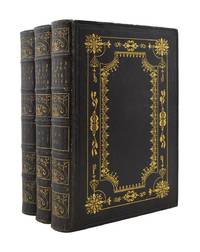
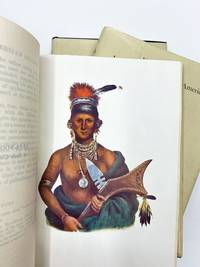
183712<p>3 volumes. Folio 507 x 365 mm. 120 hand-colored lithographed plates finished with gum arabic lithographed map leaf and 17 pp lithographed facsimile signatures of subscribers with two additional names added in manuscript to Pennsylvania subscribers. Original half-morocco upper covers gilt lettered "Indian Gallery / 120 Illustrations" lower spine lettered in gilt "L.A. Godey" yellow glazed endpapers rebacked retaining original spine hinges reinforced.</p><p><strong>Superb complete copy in its original binding of one of the most beautiful books printed in the United States which through 120 hand-colored plates preserves the memory of the Indian people.</strong></p><p>Provenance: Louis Antoine Godey 1804-1878 publisher of Godey's Lady Book spine stamped manuscript identification in another hand; Helen Godey Wilson 1879-1937 bookplates.</p><p>FIRST EDITION of "one of the most distinctive and important books in Americana" Reese.</p><p>In 1821-22 Thomas McKenney began assembling portraits of Native Americans that would eventually become part of a portrait gallery under the Smithsonian. He started by taking visiting Native American dignitaries to the studio of Charles Bird King in Washington who would paint their portraits in oil some copies for the dignitaries and some collected by McKenney. These portraits were eventually preserved in the War Department's "Indian Gallery" becoming part of the Smithsonian in 1858. The collection boasted 147 of McKenney's portraits of Native Americans alongside about 200 paintings by John Mix Stanley when it burned to the ground in 1865.</p><p>Thankfully beginning in 1829 McKenney had embarked on a project to preserve his oil portraits in lithography rescuing most of these important projects for posterity. In September 1829 he signed a contract to publish a work to consist of a history biographies and 120 lithographed plates. The works were issued serially in wrappers and the first volume was collected and published in 1836. By the time the 3rd volume appeared in 1844 15 years after the first contracts were signed the monumental work had consumed six publishers and employed 5 different lithographers.</p><p>"Its long and checkered publication history spanned twelve years and involved multiple lithographers mainly Peter S. Duval and James T. Bowen and publishers but the final product is one of the most distinctive and important books in Americana. Almost all the plates are portraits of individual Native Americans the majority painted from life by Charles Bird King" Reese.</p><p>This copy in its original contemporary binding is from the contemporary American publisher Louis A. Godey. Godey was most famous for the influential Godey's Lady's Book beginning in 1830 famous for their representations of women's fashion employing hand-tinted lithographic plates. With the first issue of the title pages in volumes 1 & 3 the second issue of volume 2; the plates in mixed states as usual. See Lane "A History of McKenney and Hall's History of the Indian Tribes of North America" Imprint Vol. 27 no. 2 Autumn 2002 2-15. Howes M-129; Reese Stamped With A National Character 24; Sabin 43410a.</p> Edward C. Biddle and Daniel Rice and James G. Clark hardcover
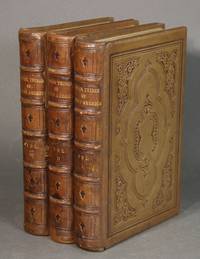
184869369Philadelphia: Published by J. T. Bowen 1848. HALL James. History of the Indian Tribes of North America. with Biographical Sketches and Anecdotes of the Principal Chiefs. Embellished with one hundred and twenty portraits from the Indian Gallery in the Department of War at Washington. Philadelphia: Published by J. T. Bowen 1848.<br> <br> Full Description:<br> <br> McKENNEY Thomas L. and James Hall. History of the Indian Tribes of North America with Biographical Sketches and Anecdotes of the Principal Chiefs. Embellished with One Hundred and Twenty Portraits from the Indian Gallery in the Department of War at Washington. In Three Volumes. Philadelphia: Published by J.T. Bowen 1848-1850.<br> <br> First octavo edition. Three large octavo volumes 10 1/8 x 6 1/2 inches; 258 x 167 mm. iv 1- 333 1 blank; xvii 1 blank 9-290; iv 17-392 pp. With hand-colored lithographed dedication leaf "To the Memory of Washington" and 120 hand-colored lithographed plates "Lithd. & Cold. & Published by J.T Bowen Philada." mostly after Charles Bird King the plates heightened with gum arabic. Protective tissue guard sheets.<br> <br> Publisher's deluxe blue-black morocco binding. Elaborately stamped and tooled in blind and gilt. Spines stamped and lettered in gilt. Board edges gilt. All edges giltSome wear to spines. A few invisible repairs to hinges. Previous owner's old ink signature on top margin of title-page of each volume. Volume I with some minor dampstaining to lower blank margin. Volume II with some dampstaining to inner gutter. Dampstaining never affecting plates most likely because leaves were stained before the book was bound. A small closed tear to the bottom margin of plate "Oche-Fincew" in volume III not affecting engraving. Overall an excellent copy the plates very bright and clean.<br> <br> Originally published in twenty folio parts three folio volumes between 1836 and 1844 with 120 hand-colored lithographed plates. The first octavo edition appeared in 1848-1850 with the plates reduced. Several octavo editions were published between 1850 and the 1870s with varying numbers of plates some maintaining the original 120 and some abridged to contain as few as forty or fifty plates. All are highly desired today.<br> <br> "As early as 1824 the practice was begun of taking portraits of the principal Indians who came to Washington and depositing them in the War Department. They were chiefly painted by Mr. King an artist of high repute who has been remarkably successful in transferring to his canvas the strong lineaments of the Indian countenance. Col. M'Kinney sic who was for many years superintendent of Indian affairs at Washington and was thus brought in constant association with the principal men of the nations and tribes which sent representatives to the seat of government conceived the plan of making this rare and curious collection more valuable to the world by publishing a series of engraved portraits exactly copies and colored from these paintings. With each portrait is connected a biographical sketch of the individual whom it is intended to represent interspersed with anecdotes and narrations. The work contains also a historical account of the various Indian tribes within the borders of the United States" Sabin 43410a describing the 1836-1844 edition. "The original oil paintings of which the plates were copies were all destroyed in the 1865 Smithsonian fire" Howes.<br> <br> Howes M-129 "the most colorful portraits of Indians ever executed". Sabin 43411 describing the 1850 octavo edition. Field 992 1837 ed.<br> <br> HBS 69369.<br> <br> $18500. Published by J. T. Bowen unknown
185453994Philadelphia: D. Rice & A. N. Hart 1854. Second octavo edition 3 volumes 120 brilliant hand-colored plates by J.T. Bowen mostly after Charles Bird King; a lovely set in publisher's full blindstamped brown morocco gilt-lettered spines a.e.g.; very neatly and professionally rebacked with the old spines laid down; the covers with minimal wear and the plates generally fresh and clean 2 plates and several pages in volume I with a tiny dampstain in the very top margin not affecting any text or illustration; a near fine sound copy. Originally published in three large folio volumes 1836-44. "These are the most colorful portraits of Indians ever executed . The original oil paintings of which these plates were copies were all destroyed in the 1865 Smithsonian fire" Howes. "The plates are accurate portraits of celebrated chiefs or of characteristic individuals of the race; and are colored with care to faithfully represent their features and costumes" Field. Field 992; Howes M129; Sabin 43411. D. Rice & A. N. Hart unknown
193444548Edinburgh: John Grant 1934. Fine in very good jackets. Important edition of the monumental visual record of Native American leaders including an extensive account of the original 1836-44 folio edition biography of the original authors and the infamous Smithsonian fire - all new to this edition. Thomas L. McKenney a Quaker served as the US Government's Superintendent of Indian Affairs from 1824 to 1830. During this period he worked with the renowned American artist Charles Bird King commissioning the artist to paint portraits of Native leaders who were visiting the government in DC. The fame of the paintings soon spread and McKenney conceived of a massive printing project to record them in book form. <br /> At the same time incoming president Andrew Jackson fired McKenney after McKenney fundamentally rejected Jackson's stance on the US's relationship with Indigenous nations. Suddenly jobless McKenney threw himself into the project mounting one of the most ambitious book projects ever seen in the United States up to that time: three elephant folio volumes containing 120 hand-colored plates. Already a significant record of leaders and their nations the books took on supreme importance as a cultural document after a fire at the Smithsonian engulfed the majority of Charles Bird King's original paintings. <br /> This edition made the production accessible in the 20th century beyond the increasing rarity of the 19th-century folio and octavo editions. Its introduction by Hodge captures the growing legend of the story behind the production detailing the delays and obstacles that threatened more than once to end the project. A noteworthy edition mythologizing and making accessible the story of a critical record of Indigenous nations in the pre-Jacksonian era. 3 thick octavo volumes 9.25'' x 6.75'' each. Original blue pictorial cloth stamped in blind gilt-lettered spines. In original typographic dust jackets no price on flaps. Top edges gilt other edges uncut some leaves unopened. Illustrated with two photogravure portraits of McKenney and Hall 123 full-page color plates after King's paintings with captions tissue guards and 2 color folding maps. Volume I with historical introduction by Frederick Webb Hodge. lxiv 442 2; viii 458 2; xvi 355 pages. Jackets with a bit of creasing some soiling. Cloth and interior fresh and bright. John Grant unknown
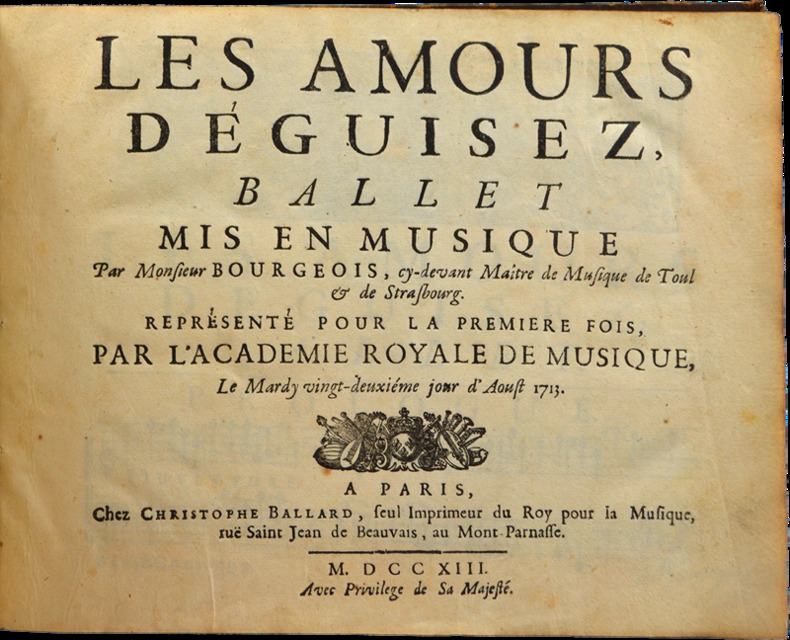
171313283Paris, Christophe Ballard, 1713. 1 vol. in-4 oblong. Plein veau brun moucheté d'époque, dos à nerfs orné, pièce de titre de maroquin brun.
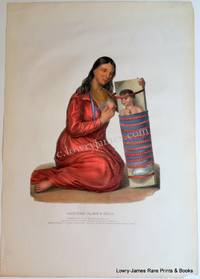
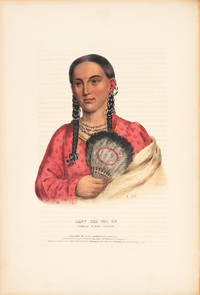
18387304Philadelphia:: F.W. Greenough 1838. First edition. Fine. Fine condition. Original lithograph drawn printed and coloured at J.T. Bowen's Lithographic Establishment No 94 Walnut Street Philadelphia. Folio 15 x 21.25 inches. Full sheet with minor edge tear on bottom right yet with rich original color. Matted in Rag Board. As the oil on canvas portrait of Chippeway Squaw & Child by Charles Bird King after painting by James Otto Lewis was destroyed by fire in 1865 this original hand-colored lithograph by JT Bowen is the only surviving rendering of this essential chapter of Americana. During the first quarter of the nineteenth century as the Native American people traveled to Washington DC to discuss their plight; the loss of their lands and destruction of their people they appealed to Thomas McKenney the then Chief to the Bureau of Indian Affairs in whom they found a sincere advocate in the efforts to improve the welfare of the Native American people. After meeting to discuss the situation McKenney invited every one of his guests to sit for formal portraits and included all members; not only the Chiefs but also the Warriors Braves and Women. A pioneer in the study of North American ethnology and superintendent to the Bureau of Indian Affairs under John C. Calhoun Thomas Loraine McKenney Chestertown MD 1785-1859 assembled in his War Department office a virtual archive of the American Indian; a large collection of books manuscripts artifacts and paintings that constituted the first museum in Washington DC. The core of the collection was a gallery of 150 portraits of prominent Indian men and women most of them painted by Washington artist Charles Bird King Newport RI 1785-1862 during official visits to Washington. In addition King copied and painted several portraits after James Otto Lewis 1799-1858. These portraits were later published as part of a mammoth lithography project that McKenney conceived of and launched with the aid of writer James Hall Philadelphia 1793-1868. Known as the History of the Indian Tribes of North America the publication features the portraits and biographies of 120 Indian men and women from McKenneys collection. The entire archive eventually ended up at the Smithsonian Institution where the portraits were destroyed by fire in 1865. ANB. 0300320 Single sheet matted in rag board F.W. Greenough, unknown
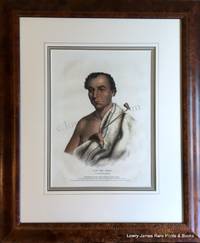
18427307Philadelphia:: J.T.Bowen 1842. First edition. Fine. Fine condition. Original lithograph drawn printed and coloured at J.T. Bowen's Lithographic Establishment No 94 Walnut Street Philadelphia. Folio 14 x 20 inches. Untrimmed with rich original color. Archivally custom framed in 2.25 inch Walnut Burl Veneer with marquetry inlay. Triple matted in Rag Board with gilt French line decoration. Glazed with Conservation Glass. Sized to 22 x 26.5 inches. As stated in McKenney & Hall's History of the Indian Tribes of North America: The Chippeway Chief Katawabeda was an orator of no small repute. Expert and ready in debate his speeches were marked by shrewdness ingenuity and subtlety of argument and by simple brevity and force of expression. As the oil on canvas portrait of Ka-Ta-Wa-Be-Da by Charles Bird King after James Otto Lewis was destroyed by fire in 1865 this original hand-colored lithograph by JT Bowen is the only surviving rendering of this essential chapter of Americana. During the first quarter of the nineteenth century as the Native American people traveled to Washington DC to discuss their plight; the loss of their lands and destruction of their people they appealed to Thomas McKenney the then Chief to the Bureau of Indian Affairs in whom they found a sincere advocate in the efforts to improve the welfare of the Native American people. After meeting to discuss the situation McKenney invited every one of his guests to sit for formal portraits and included all members; not only the Chiefs but also the Warriors Braves and Women. A pioneer in the study of North American ethnology and superintendent to the Bureau of Indian Affairs under John C. Calhoun Thomas Loraine McKenney Chestertown MD 1785-1859 assembled in his war department office a virtual archive of the American Indian; a large collection of books manuscripts artifacts and paintings that constituted the first museum in Washington DC. The core of the collection was a gallery of 150 portraits of prominent Indian men and women most of them painted by Washington artist Charles Bird King Newport RI 1785-1862 during official visits to Washington. In addition King copied and painted several portraits after James Otto Lewis 1799-1858. These portraits were later published as part of a mammoth lithography project that McKenney conceived of and launched with the aid of writer James Hall Philadelphia 1793-1868. Known as the History of the Indian Tribes of North America the publication features the portraits and biographies of 120 Indian men and women from McKenneys collection. The entire archive eventually ended up at the Smithsonian Institution where the portraits were destroyed by fire in 1865. ANB. 0300320 Custom Framed in Period Moulding. J.T.Bowen, unknown
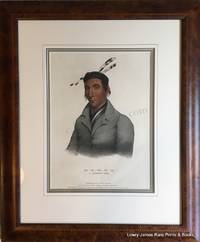
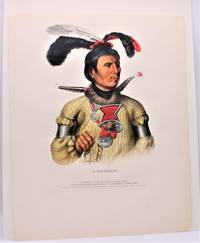
18427306Philadelphia:: Daniel Rice & James G. Clark 1842. First edition. Fine. Fine condition. Original lithograph drawn printed and coloured at J.T. Bowen's Lithographic Establishment No 94 Walnut Street Philadelphia. Folio 14 x 20 inches. Untrimmed with rich original color. Archivally custom framed in 2.25 inch Walnut Burl Veneer with marquetry inlay. Triple matted in Rag Board with gilt French line decoration. Glazed with Conservation Glass. Sized to 22 x 26.5 inches. As the oil on canvas portrait of On-Ge-Wae. A Chippewa Chief by Charles Bird King after James Otto Lewis was destroyed by fire in 1865 this original hand-colored lithograph by JT Bowen is the only surviving rendering of this essential chapter of Americana. During the first quarter of the nineteenth century as the Native American people traveled to Washington DC to discuss their plight; the loss of their lands and destruction of their people they appealed to Thomas McKenney the then Chief to the Bureau of Indian Affairs in whom they found a sincere advocate in the efforts to improve the welfare of the Native American people. After meeting to discuss the situation McKenney invited every one of his guests to sit for formal portraits and included all members; not only the Chiefs but also the Warriors Braves and Women. A pioneer in the study of North American ethnology and superintendent to the Bureau of Indian Affairs under John C. Calhoun Thomas Loraine McKenney Chestertown MD 1785-1859 assembled in his War Department office a virtual archive of the American Indian; a large collection of books manuscripts artifacts and paintings that constituted the first museum in Washington DC. The core of the collection was a gallery of 150 portraits of prominent Indian men and women most of them painted by Washington artist Charles Bird King Newport RI 1785-1862 during official visits to Washington. In addition King copied and painted several portraits after James Otto Lewis 1799-1858. These portraits were later published as part of a mammoth lithography project that McKenney conceived of and launched with the aid of writer James Hall Philadelphia 1793-1868. Known as the History of the Indian Tribes of North America the publication features the portraits and biographies of 120 Indian men and women from McKenneys collection. The entire archive eventually ended up at the Smithsonian Institution where the portraits were destroyed by fire in 1865. ANB. 0300320 Custom Framed in Period Moulding. Daniel Rice & James G. Clark, unknown
199753572New York: Oxford Univ Pr. New. 1997. Paperback. 0195105389 . FREE UPGRADE to Courier/Priority Shipping Upon Request IN STOCK AND IMMEDIATELY AVAILABLE FOR SHIPMENT - Flawless copy pristine - 522 pages. -- with a bonus offer-- . Oxford Univ Pr paperback
200314023Farmington Hills Michigan U.S.A.: Thorndike Pr. New. 2003. Hardcover. 0786249234 . FREE UPGRADE to Courier/Priority Shipping Upon Request - IN STOCK AND IMMEDIATELY AVAILABLE FOR SHIPMENT - Flawless -- with a bonus offer-- . Thorndike Pr hardcover
199914024Farmington Hills Michigan U.S.A.: Thorndike Pr. New. 1999. Hardcover. 0786222395 . FREE UPGRADE to Courier/Priority Shipping Upon Request - IN STOCK AND IMMEDIATELY AVAILABLE FOR SHIPMENT - Flawless -- with a bonus offer-- . Thorndike Pr hardcover
198269778University Park Pennsylvania U.S.A.: Pennsylvania State Univ Pr. Fine. 1982. Hardcover. 0271002816 . FREE UPGRADE to Courier/Priority Shipping Upon Request - IN STOCK AND IMMEDIATELY AVAILABLE FOR SHIPMENT - TEST PRISTINE - 146 pages -- with a bonus offer-- . Pennsylvania State Univ Pr hardcover
200151885Oxford University Press. New. 2001. Hardcover. 0195131290 . FREE UPGRADE to Courier/Priority Shipping Upon Request IN STOCK AND IMMEDIATELY AVAILABLE FOR SHIPMENT - Flawless copy brand new pristine never opened - 338 pages. -- with a bonus offer-- . Oxford University Press hardcover
201297784Allworth Press. New. 2012. Paperback. 158115898X . FREE UPGRADE to Courier/Priority Shipping Upon Request - IN STOCK AND IMMEDIATELY AVAILABLE FOR SHIPMENT - Flawless copy brand new pristine never opened -- 256 pp. ; 153 color illustrations. -- with a bonus offer-- . Allworth Press paperback
0132310775New. Brand new and still unused unknown
125991240XNew. Brand new and still unused unknown
18427305Philadelphia:: F.W. Greenough 1842. First edition. Very Good. Very Good condition. Original lithograph drawn printed and coloured at J.T. Bowen's Lithographic Establishment No 94 Walnut Street Philadelphia. Folio 14 x 20 inches. Untrimmed with light foxing and offset yet with rich original color. Matted in Rag Board. As the oil on canvas portrait of Paddy-Carr by Charles Bird King was destroyed by fire in 1865 this original hand-colored lithograph by JT Bowen is the only surviving rendering of this essential chapter of Americana. During the first quarter of the nineteenth century as the Native American people traveled to Washington DC to discuss their plight; the loss of their lands and destruction of their people they appealed to Thomas McKenney the then Chief to the Bureau of Indian Affairs in whom they found a sincere advocate in the efforts to improve the welfare of the Native American people. After meeting to discuss the situation McKenney invited every one of his guests to sit for formal portraits and included all members; not only the Chiefs but also the Warriors Braves and Women. A pioneer in the study of North American ethnology and superintendent to the Bureau of Indian Affairs under John C. Calhoun Thomas Loraine McKenney Chestertown MD 1785-1859 assembled in his War Department office a virtual archive of the American Indian; a large collection of books manuscripts artifacts and paintings that constituted the first museum in Washington DC. The core of the collection was a gallery of 150 portraits of prominent Indian men and women most of them painted by Washington artist Charles Bird King Newport RI 1785-1862 during official visits to Washington. In addition King copied and painted several portraits after James Otto Lewis 1799-1858. These portraits were later published as part of a mammoth lithography project that McKenney conceived of and launched with the aid of writer James Hall Philadelphia 1793-1868. Known as the History of the Indian Tribes of North America the publication features the portraits and biographies of 120 Indian men and women from McKenneys collection. The entire archive eventually ended up at the Smithsonian Institution where the portraits were destroyed by fire in 1865. ANB. 0300320 Single sheet matted in rag board F.W. Greenough, unknown
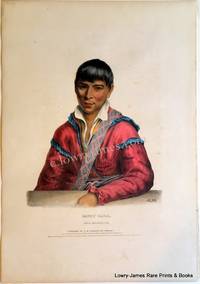
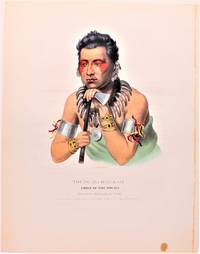
1844W1843Philadelphia: Daniel Rice & James G. Clark 1844. Folio 18 3/8 inches by 14 1/2 inches print from the third and final folio edition. The print is in excellent condition with vivid coloring and none of the foxing frequently seen see the Smithsonian's copy for example. There are some smudges in the margins--well away from the image; there is one very small chip out of the bottom right corner in the margin and one 1/2" closed tear on the bottom edge. It is appropriate that McKenney and Hall identified this leader as "The Orator" because the Winnebago called themselves "Hochungra" which translates as "People of the Big Voice." Oratory was highly valued by tribe members and it was natural that they would send their best orator to speak for them in negotiations in Washington. Third Edition. Paper. Collectible-Very Good. Illus. by Charles Bird King. Elephant Folio - over 15" - 23" tall. Fine Art Print. Daniel Rice & James G. Clark paperback
2009SONG0136125131Pearson 2009-09-11. 8. hardcover. Used: Good. 8.80x2.10x11.10. Buy with confidence. Excellent Customer Service & Return policy. Pearson hardcover
2013SONG145117215XLWW 2013-11-02. Fourth. hardcover. Used: Good. 8.62x1.21x11.20. Buy with confidence. Excellent Customer Service & Return policy. LWW hardcover
1846733371846. McKENNEY Thomas L. Memoirs Official and Personal; with Sketches of Travels among the Northern and Southern Indians; Embracing a War Excursion and Descriptions of Scenes along the Western Borders. Two volumes in one as issued. New York: Paine & Burgess 1846. 1st ed. viii 17-340; vi 9-136 pp. frontis. plates one colored errata tipped in at the rear. Orig. blindstamped cloth gilt-pictorial spine. Light wear to the spine ends. Scattered foxing to the text though the plates remain quite clean. Contemporary owner name on the front free endpaper. A very bright and presentable copy in very good or better condition. HOWES M-130. Field 993. Graff 2628. Clark III 70. Rader 2313. he second title page reads "On the Origin History Character and the Wrongs and Rights of the Indians with a Plan for the Preservation and Happiness of the Remnants of that Persecuted Race." McKenney was the Superintendent of Indian Trade from 1816-1822 and after that office was abolished was appointed as Superintendent of Indian Affairs under the War Department 1824-1830. He was fired by President Jackson for considering the Indian "our intellectual equal." However he was also in favor of ridding the Indians west of the Mississippi River. This is unarguably one of the first high quality first-hand reports published about our early involvements with American Indians. unknown
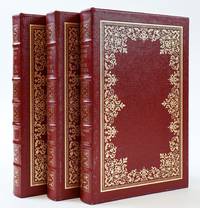
1406117Norwalk CT: Easton Press 2010. Deluxe Limited Edition: #379/400. Hardcover. Octavos Three Volumes. In Very Good condition. Volumes bound in matching red genuine leather with gilt decoration and titling; spines paneled with gilt titling; text block edges gilt with marbled endpapers and bound-in ribbon bookmarks. Light shelf wear to boards with faint scuffing visible on covers and along hinges. Text block edges show light scuffing and wear. Interiors clean. Limitation page in Vol. III is hand-numbered "379" out of 400. Certificate of authenticity also hand-numbered is laid-in within Vol. III.<br /> <br /> <br> <br> <br /> <br /> CONTENTS: Vol. I iv 333 pages; Vol. II 305 xvii pages; Vol. III iv 17-392 pages. All volumes include numerous illustrations not included in the pagination which mostly consist of portraits of the various figures and chiefs discussed. Shelved in Room A. 1406117. Special Collections. Easton Press hardcover
1837W1844Philadelphia: E. C. Biddle 1837. Folio 18 3/4 inches by 14 1/4 inches lithograph from the first folio edition. The print is in excellent condition with vivid hand-coloring and none of the foxing frequently seen. There is a dime-sized stain in the bottom margin--well away from the image; there is a very narrow line of glue residue along the binding edge--again well away from the image. In 1825 Mahaskah's father also named Mahaskah had traveled to Washington where he negotiated a treaty and had his portrait painted by Charles Bird king. In 1837 "Young" Mahaskah made the same trip because the United States had not lived up to the terms of the treaty. He too had his portrait painted by King and apparently he was wearing the same bear claw necklace that his father had worn. First Edition. Paper. Collectible-Very Good. Illus. by Charles Bird King. Elephant Folio - over 15" - 23" tall. Fine Art Print. E. C. Biddle Paperback
170815182(P.) Chez l'Auteur, rue du Petit Lyon vis-à-vis la Rue des Deux portes 1708 reliure d'époque, veau brun très usagé avec petits manques de cuir. (couture solide, bon état intérieur). in-folio, (2ff. titre et dédicace), 89pp. privilège au verso,
19922-9004094830Brill Academic Pub 1992. Hardcover. New. 482 pages. 9.75x5.75x1.50 inches. Brill Academic Pub hardcover