59 résultats
182570130Washington D.C.:: Gales & Seaton 1825. First edition. disbound. Old ink accession number on second leaf; title leaf age-toned and some very light and inoffensive foxing. 8vo. Three folding tables signed in type by Thos. L. M'Kenney Department of War Office of Indian Affairs. 18th Congress 2d Session. Gales & Seaton, unknown
1861024534London: Richard Holmes Laurie 1861. Fifth Edition . Blue Printed Wrappers. Very Good. 8 1/4" Tall. 67 Pp 30 Pp Catalog At End Listing 312 Titles. Fifth Edition 1861 Date On Title Page. Used But Lightly Worn Minor Losses At Top And Bottom Of Spine Thin Split Along Front Spine Edge But Front Cover Still Attached. Small Corner Chip At Bottom Left Corner Of Rear Wrapper. No Names Or Marks Clean A Little Creasing To Corners Of Some Pages. <br/> <br/> Richard Holmes Laurie unknown
182811915Washington: Printed by Gales & Seaton 1828. First Edition. Pamphlet. Good. Removed newly stab-sewn 8 3/4 x 5 1/2 inches 7 pages. 20th Congress 1st Session Document No. 104 House of Representatives. This contains "each and every head of an Indian family who is entitled to a reservation of land by virtue of the Treaty made between John C. Calhoun late Secretary of War and the Chiefs and Head Men of the Cherokee Nation of Indians at the City of Washington on the 27th day of February 1819 distinguishing between those who are entitled to reservations for life only with reversion in fee simple so far as the records of this office enable me to do." p. 5. There are 107 names with Life Reservations and 39 names of Fee Simple Reservations. Printed by Gales & Seaton unknown
186018128Baltimore: Printed by John Murphy & Co. 1860. 16pp untrimmed stitched loosened scattered foxing some wear. About Good. <br /> <br /> As the sectional crisis heated up Murphy's Baltimore press began a little cottage industry in pro-slavery pamphlet material printing speeches of Clingman Jefferson Davis and other Southern politicians. "We shall have to fight them; we had better make up our minds to go into the contest and meet them on the great issue they tender us." Sabin records the Washington printing. <br /> Not in Thornton. Printed by John Murphy & Co. unknown
188517799Delahaye et Lecrosnier 1885 441 pages in-12. 1885. Percaline éditeur. 441 pages. Annuaire pour 1885
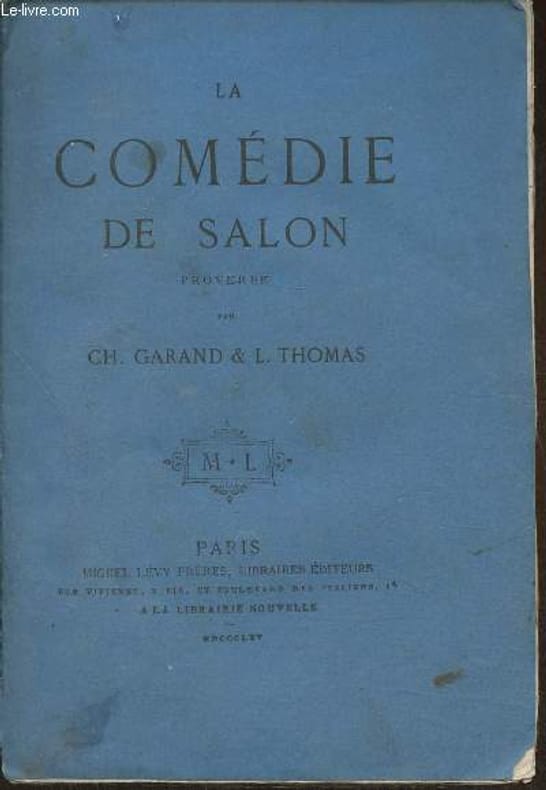
1865RO30368276Michel Lévy frères. 1865. In-12. Broché. Etat d'usage, Plats abîmés, Dos satisfaisant, Papier jauni. 32+36 pages. Coins frottés. Accrocs au dos. Tâches en plats. Rousseurs.. . . . Classification Dewey : 792-Théâtre
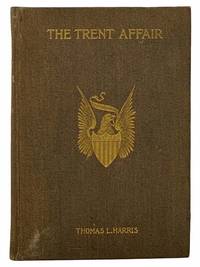
18962306289Indianapolis: The Bowen-Merrill Company 1896. First Edition. Hard Cover. Near Fine/No Jacket. 0x0x0. First edition. Rebacked with original backstrip laid down new end sheets. Spot on page ridge. 1896 Hard Cover. 288 pp. "The Trent Affair was a diplomatic incident in 1861 during the American Civil War that threatened a war between the United States and the United Kingdom. The U.S. Navy illegally captured two Confederate diplomats from a British ship; the UK protested vigorously. The United States ended the incident by releasing the diplomats. On November 8 1861 the USS San Jacinto commanded by Union Captain Charles Wilkes intercepted the British mail packet RMS Trent and removed as contraband of war two Confederate diplomats: James Murray Mason and John Slidell. The envoys were bound for Britain and France to press the Confederacy's case for diplomatic recognition and to lobby for possible financial and military support. Public reaction in the United States was to celebrate the capture and rally against Britain threatening war. In the Confederate States the hope was that the incident would lead to a permanent rupture in Anglo-American relations and possibly even war or at least diplomatic recognition by Britain. Confederates realized their independence potentially depended on intervention by Britain and France. In Britain the public disapproved of this violation of neutral rights and insult to their national honor. The British government demanded an apology and the release of the prisoners and took steps to strengthen its military forces in Canada and the Atlantic. President Abraham Lincoln and his top advisors did not want to risk war with Britain over this issue. After several tense weeks the crisis was resolved when the Lincoln administration released the envoys and disavowed Captain Wilkes's actions though without a formal apology. Mason and Slidell resumed their voyage to Britain but failed in their goal of achieving diplomatic recognition. The Bowen-Merrill Company hardcover
1850630271850. KANE Thomas L. The Mormons. A Discourse Delivered before the Historical Society of Pennsylvania: March 26 1850. Phila.: King & Baird 1850. 2nd ed. 92pp. Orig. printed wrappers. Wrappers lightly chipped rear wrapper lacking else a very good copy. HOWES K-8. Flake 4524. Wagner-Camp 185:2. Streeter 2289. Kane approached by the Mormon leaders for aide accompanied them on the trek west. Later he was sent by President Buchanan to persuade them to accept federal control over the Utah Territory. "Kane provided the most sympathetic appraisal of the Mormon migration. His account.is unusual well-written. It opens with a vivid account of his arrival in the recently abandoned city of Nauvoo. Repeatedly Kane contrasts the orderly beauty that the Mormons had created with the destruction perpetrated by the patriotic rabble who routed them from their homes. He depicts in particular the mysteriously beautiful temple which the mobe had 'as a matter of duty sedulously defiled and deface'"--Flake. unknown
1850373021Philadelphia: King & Baird 1850. First Edition. 84 pp. 8vo. Later half brown cloth tipped in. First Edition. 84 pp. 8vo. A sympathetic account of the Mormon removal from Illinois to Utah. <br /> "Most sympathetic Gentile appraisal of Mormon conduct. Kane describes their trek to Utah in which he participated." Howes. Flake C.J. Mormon bib. 4523 Sabin 37011; Howes K 8; Wagner Camp 185 King & Baird unknown
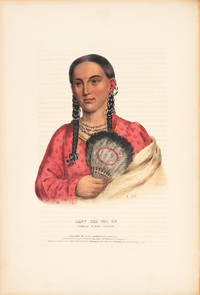
18333457Philadelphia: E.C. Biddle 1833. Very good. Hand-colored lithograph by Lehman & Duval after Charles Bird King 445 x 338 mm. Head-and-shoulders portrait of female Oto wife of Chief Shaumonekusse long black braids with hair parted at center white and black beaded ear loops four necklaces silver bracelet ruffled blouse or dress top white and black fur or shawl loosely wrapped around her shoulders one delicate hand showing. Very mild uniform age-toning professionally washed. Original lithograph - NOT a reproduction! Hayne Hudjihini or Eagle of Delight ca. 1804-1822 accompanied her husband to Washington D.C. in 1821 and so delighted those she met that she was loaded down with presents and King painted several portraits of her. She was thought to be the most beautiful of all the Native American wives who visited Washington. Unfortunately she died of measles shortly after her return home. A portrait of her hangs in the White House Library.<br/><br/>When leaders of various tribes came to visit President Monroe McKenney Superintendent of Indian Affairs and a defender of Native American interests commissioned artist Charles Bird King to paint portraits of the delegates in their choice of dress. Most of King's original paintings subsequently burned in a fire at the Smithsonian. The lithographs in McKenney and Hall's publication are the only extant record of the likenesses of many of the prominent Native American leaders of the nineteenth century.<br/><br/>In our lithograph the two small silver portions on the nose of the sitter have combined with sulfur and oxydized to black. In other copies these portions are white. <br/><br/>See: Howes M129. Bennett American Nineteenth-Century Color Plate Books p. 79. Field 992. Lipperheide Mc4. E.C. Biddle unknown books
18433458Philadelphia: James G. Clark 1843. Very good. Hand-colored lithograph after Charles Bird King 496 x 355 mm "Drawn Printed & Coloured at the Lithographic & Print Colouring Estblishment 94 Walnut St." Full-length standing portrait of male Seminole chief carrying a rifle wearing striped fringed wrap skirt striped shirt red sashes around neck and waist red feathered headdress silver arm bands shin-high moccasins with buttons and medal around neck. Very mild uniform age-toning professionally washed some short tears in extreme outer margins closed 1" piece from upper left-hand corner torn away without loss. Preserved in a mylar sleeve. Original lithograph - NOT a reproduction! Tuko-See-Mathla also called John Hicks was an influential Native American leader elected head of his tribe in an election supposedly rigged by U.S. agents. He opposed U.S. slave raids into Florida separate schools for Indians and efforts to move Seminoles from their land. Despite his efforts however he eventually moved back to Alabama and was finally killed by tribesmen who opposed U.S. policies.<br/><br/>When leaders of various tribes came to visit President Monroe McKenney Superintendent of Indian Affairs and a defender of Native American interests commissioned artist Charles Bird King to paint portraits of the delegates in their choice of dress. Most of King's original paintings subsequently burned in a fire at the Smithsonian. The lithographs in McKenney and Hall's publication are the only extant record of the likenesses of many of the prominent Native American leaders of the nineteenth century.<br/><br/>See: Howes M129. Bennett American Nineteenth-Century Color Plate Books p. 79. Field 992. Lipperheide Mc4. James G. Clark unknown books
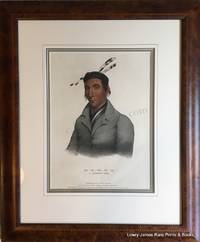
18373456Philadelphia: E.C. Biddle 1837. Very good. Hand-colored lithograph by Lehman & Duval after Charles Bird King 445 x 338 mm. Full-length standing portrait of male Sioux chief holding a rifle wearing brightly colored blankets feathered headdress necklace of grizzly bear claws and red leggings decorated with bird feathers. Very mild uniform age-toning professionally washed verso of upper left corner with Japanese tissue repair. Original lithograph - NOT a reproduction! Wa-Na-Ta ca. 1795-1848 was an influential Sioux Yanktona on the Minnesota River leader who fought against the Americans in the War of 1812 even leading a charge on Fort Sandusky whence his nickname. For his exceptional heroism he was received at the English court and promoted to Captain. After the war however he sided with the U.S. In 1825 he signed the Treaties of Fort Pierre and Prairie du Chien which established peace and territorial boundaries between the Sioux Chippewas Sac and Foxes and Ioways. He was murdered by his people who were upset with his leadership. Major Stephen H. Long met Wa-Na-Ta in 1835 and commented: "We had never seen a nobler face or a more impressive character."<br/><br/>When leaders of various tribes came to visit President Monroe in 1821 McKenney Superintendent of Indian Affairs and a defender of Native American interests commissioned artist Charles Bird King to paint portraits of the delegates in their choice of dress. Most of King's original paintings subsequently burned in a fire at the Smithsonian. The lithographs in McKenney and Hall's publication are the only extant record of the likenesses of many of the prominent Native American leaders of the nineteenth century. <br/><br/>See: Howes M129. Bennett American Nineteenth-Century Color Plate Books p. 79. Field 992. Lipperheide Mc4. E.C. Biddle unknown books
19005090097Boston: Houghton Mifflin and Company 1900. First Edition. Hardcover. Good in No Dust Jacket dust jacket. First Edition. Exlibrary marks. Sound binding hinges a little stressed but holding. Clean tanned pages. Cloth over boards is shelf worn with label at lower spine. Study of losses in both the Union and the Confederate armies during the Civil War. Ex-Library; 9.5" tall; 150 pages. Houghton, Mifflin and Company hardcover
1900029213Boston: Houghton Mifflin and Co 1900. Octavo. 150 pages index and errata sheet tipped in. The author served in the Civil War as a Major of the 5th New Hampshire Volunteers and Colonel of the 18th New Hampshire Volunteers. As a member of the Military History Society of Massachusetts he diligently searched the death tolls of the entire period of the war. From Bull Run to Appomattox. Besides showing the reported losses at each battle by both the Union and Confederate forces he explains why historians see the inadequacy of the War Records though he does not mention how Congress quit buying significant records because they were tired of spending money on the war. His work has become one of the essential guides for historians in the following century. An essential work for the Civil War library. Bound in blue cloth spine lettering gilt minor rubbing to spine ends and corners. Near fine. Houghton Mifflin and Co unknown
182047741Washington: Gales & Seaton 1820. 1820. First edition. First Edition. Disbound. 8pp. "Letter from the Superintendent Of Indian Trade to the Chairman of the Committee on Indian Affairs communicating A Report In Relation To Indian Trade." "December 13 1820. Printed by order of the Senate of the United States." An interesting and informative report providing a general overview of the Indian Trade including various issues related to revenue and expenses. Some light dusty soiling. Very Good. Gales & Seaton, 1820. unknown
1846mon0003811839Paine And Burgess 1846T. hardcover. Very Good. . rebound in sturdy navy buckram with gilt on the spine. pages are lightly tanned and foxed with all plates intact. Paine And Burgess hardcover
1846DE-A0NS-JIY6Paine and Burgess 1846. Hardcover. Very Good. Rebound in modern cloth. All pages are foxed. <br/> <br/> Paine and Burgess, hardcover
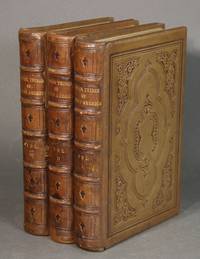
1846005928New York: Paine & Burgess 1846. Two Volumes bound in One viii 340 pages and vi 136 pages respectively First Edition distinguished by the collation of Volume I original blind-stamped cloth with decorative gilt titling to spine all edges gilt wear and exposure to spine head and tail tips lightly bumped and exposed Has a total of 15 plates which includes a frontispiece portrait of the author in Volume 1 and one colored frontispiece portrait of Pocahontas in Volume 2 a facsimile of a letter from Dolley Madison to the author and 12 engraved illustrations by F.O.C. Darley occasional scattered foxing. Spine loose. Inscribed by the Author. Cloth. Very Good/No Jacket Issued. 4to - over 9¾" - 12" tall. Paine & Burgess hardcover
1844W1843Philadelphia: Daniel Rice & James G. Clark 1844. Folio 18 3/8 inches by 14 1/2 inches print from the third and final folio edition. The print is in excellent condition with vivid coloring and none of the foxing frequently seen see the Smithsonian's copy for example. There are some smudges in the margins--well away from the image; there is one very small chip out of the bottom right corner in the margin and one 1/2" closed tear on the bottom edge. It is appropriate that McKenney and Hall identified this leader as "The Orator" because the Winnebago called themselves "Hochungra" which translates as "People of the Big Voice." Oratory was highly valued by tribe members and it was natural that they would send their best orator to speak for them in negotiations in Washington. Third Edition. Paper. Collectible-Very Good. Illus. by Charles Bird King. Elephant Folio - over 15" - 23" tall. Fine Art Print. Daniel Rice & James G. Clark paperback
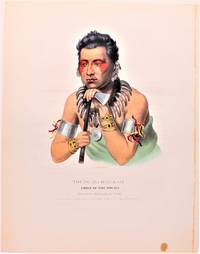
1837W1844Philadelphia: E. C. Biddle 1837. Folio 18 3/4 inches by 14 1/4 inches lithograph from the first folio edition. The print is in excellent condition with vivid hand-coloring and none of the foxing frequently seen. There is a dime-sized stain in the bottom margin--well away from the image; there is a very narrow line of glue residue along the binding edge--again well away from the image. In 1825 Mahaskah's father also named Mahaskah had traveled to Washington where he negotiated a treaty and had his portrait painted by Charles Bird king. In 1837 "Young" Mahaskah made the same trip because the United States had not lived up to the terms of the treaty. He too had his portrait painted by King and apparently he was wearing the same bear claw necklace that his father had worn. First Edition. Paper. Collectible-Very Good. Illus. by Charles Bird King. Elephant Folio - over 15" - 23" tall. Fine Art Print. E. C. Biddle Paperback
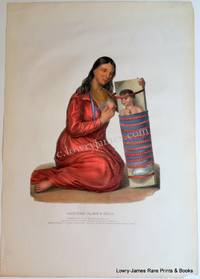
18387304Philadelphia:: F.W. Greenough 1838. First edition. Fine. Fine condition. Original lithograph drawn printed and coloured at J.T. Bowen's Lithographic Establishment No 94 Walnut Street Philadelphia. Folio 15 x 21.25 inches. Full sheet with minor edge tear on bottom right yet with rich original color. Matted in Rag Board. As the oil on canvas portrait of Chippeway Squaw & Child by Charles Bird King after painting by James Otto Lewis was destroyed by fire in 1865 this original hand-colored lithograph by JT Bowen is the only surviving rendering of this essential chapter of Americana. During the first quarter of the nineteenth century as the Native American people traveled to Washington DC to discuss their plight; the loss of their lands and destruction of their people they appealed to Thomas McKenney the then Chief to the Bureau of Indian Affairs in whom they found a sincere advocate in the efforts to improve the welfare of the Native American people. After meeting to discuss the situation McKenney invited every one of his guests to sit for formal portraits and included all members; not only the Chiefs but also the Warriors Braves and Women. A pioneer in the study of North American ethnology and superintendent to the Bureau of Indian Affairs under John C. Calhoun Thomas Loraine McKenney Chestertown MD 1785-1859 assembled in his War Department office a virtual archive of the American Indian; a large collection of books manuscripts artifacts and paintings that constituted the first museum in Washington DC. The core of the collection was a gallery of 150 portraits of prominent Indian men and women most of them painted by Washington artist Charles Bird King Newport RI 1785-1862 during official visits to Washington. In addition King copied and painted several portraits after James Otto Lewis 1799-1858. These portraits were later published as part of a mammoth lithography project that McKenney conceived of and launched with the aid of writer James Hall Philadelphia 1793-1868. Known as the History of the Indian Tribes of North America the publication features the portraits and biographies of 120 Indian men and women from McKenneys collection. The entire archive eventually ended up at the Smithsonian Institution where the portraits were destroyed by fire in 1865. ANB. 0300320 Single sheet matted in rag board F.W. Greenough, unknown
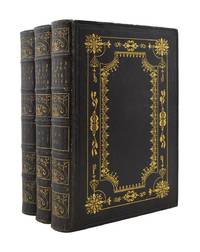
183712<p>3 volumes. Folio 507 x 365 mm. 120 hand-colored lithographed plates finished with gum arabic lithographed map leaf and 17 pp lithographed facsimile signatures of subscribers with two additional names added in manuscript to Pennsylvania subscribers. Original half-morocco upper covers gilt lettered "Indian Gallery / 120 Illustrations" lower spine lettered in gilt "L.A. Godey" yellow glazed endpapers rebacked retaining original spine hinges reinforced.</p><p><strong>Superb complete copy in its original binding of one of the most beautiful books printed in the United States which through 120 hand-colored plates preserves the memory of the Indian people.</strong></p><p>Provenance: Louis Antoine Godey 1804-1878 publisher of Godey's Lady Book spine stamped manuscript identification in another hand; Helen Godey Wilson 1879-1937 bookplates.</p><p>FIRST EDITION of "one of the most distinctive and important books in Americana" Reese.</p><p>In 1821-22 Thomas McKenney began assembling portraits of Native Americans that would eventually become part of a portrait gallery under the Smithsonian. He started by taking visiting Native American dignitaries to the studio of Charles Bird King in Washington who would paint their portraits in oil some copies for the dignitaries and some collected by McKenney. These portraits were eventually preserved in the War Department's "Indian Gallery" becoming part of the Smithsonian in 1858. The collection boasted 147 of McKenney's portraits of Native Americans alongside about 200 paintings by John Mix Stanley when it burned to the ground in 1865.</p><p>Thankfully beginning in 1829 McKenney had embarked on a project to preserve his oil portraits in lithography rescuing most of these important projects for posterity. In September 1829 he signed a contract to publish a work to consist of a history biographies and 120 lithographed plates. The works were issued serially in wrappers and the first volume was collected and published in 1836. By the time the 3rd volume appeared in 1844 15 years after the first contracts were signed the monumental work had consumed six publishers and employed 5 different lithographers.</p><p>"Its long and checkered publication history spanned twelve years and involved multiple lithographers mainly Peter S. Duval and James T. Bowen and publishers but the final product is one of the most distinctive and important books in Americana. Almost all the plates are portraits of individual Native Americans the majority painted from life by Charles Bird King" Reese.</p><p>This copy in its original contemporary binding is from the contemporary American publisher Louis A. Godey. Godey was most famous for the influential Godey's Lady's Book beginning in 1830 famous for their representations of women's fashion employing hand-tinted lithographic plates. With the first issue of the title pages in volumes 1 & 3 the second issue of volume 2; the plates in mixed states as usual. See Lane "A History of McKenney and Hall's History of the Indian Tribes of North America" Imprint Vol. 27 no. 2 Autumn 2002 2-15. Howes M-129; Reese Stamped With A National Character 24; Sabin 43410a.</p> Edward C. Biddle and Daniel Rice and James G. Clark hardcover
184869369Philadelphia: Published by J. T. Bowen 1848. HALL James. History of the Indian Tribes of North America. with Biographical Sketches and Anecdotes of the Principal Chiefs. Embellished with one hundred and twenty portraits from the Indian Gallery in the Department of War at Washington. Philadelphia: Published by J. T. Bowen 1848.<br> <br> Full Description:<br> <br> McKENNEY Thomas L. and James Hall. History of the Indian Tribes of North America with Biographical Sketches and Anecdotes of the Principal Chiefs. Embellished with One Hundred and Twenty Portraits from the Indian Gallery in the Department of War at Washington. In Three Volumes. Philadelphia: Published by J.T. Bowen 1848-1850.<br> <br> First octavo edition. Three large octavo volumes 10 1/8 x 6 1/2 inches; 258 x 167 mm. iv 1- 333 1 blank; xvii 1 blank 9-290; iv 17-392 pp. With hand-colored lithographed dedication leaf "To the Memory of Washington" and 120 hand-colored lithographed plates "Lithd. & Cold. & Published by J.T Bowen Philada." mostly after Charles Bird King the plates heightened with gum arabic. Protective tissue guard sheets.<br> <br> Publisher's deluxe blue-black morocco binding. Elaborately stamped and tooled in blind and gilt. Spines stamped and lettered in gilt. Board edges gilt. All edges giltSome wear to spines. A few invisible repairs to hinges. Previous owner's old ink signature on top margin of title-page of each volume. Volume I with some minor dampstaining to lower blank margin. Volume II with some dampstaining to inner gutter. Dampstaining never affecting plates most likely because leaves were stained before the book was bound. A small closed tear to the bottom margin of plate "Oche-Fincew" in volume III not affecting engraving. Overall an excellent copy the plates very bright and clean.<br> <br> Originally published in twenty folio parts three folio volumes between 1836 and 1844 with 120 hand-colored lithographed plates. The first octavo edition appeared in 1848-1850 with the plates reduced. Several octavo editions were published between 1850 and the 1870s with varying numbers of plates some maintaining the original 120 and some abridged to contain as few as forty or fifty plates. All are highly desired today.<br> <br> "As early as 1824 the practice was begun of taking portraits of the principal Indians who came to Washington and depositing them in the War Department. They were chiefly painted by Mr. King an artist of high repute who has been remarkably successful in transferring to his canvas the strong lineaments of the Indian countenance. Col. M'Kinney sic who was for many years superintendent of Indian affairs at Washington and was thus brought in constant association with the principal men of the nations and tribes which sent representatives to the seat of government conceived the plan of making this rare and curious collection more valuable to the world by publishing a series of engraved portraits exactly copies and colored from these paintings. With each portrait is connected a biographical sketch of the individual whom it is intended to represent interspersed with anecdotes and narrations. The work contains also a historical account of the various Indian tribes within the borders of the United States" Sabin 43410a describing the 1836-1844 edition. "The original oil paintings of which the plates were copies were all destroyed in the 1865 Smithsonian fire" Howes.<br> <br> Howes M-129 "the most colorful portraits of Indians ever executed". Sabin 43411 describing the 1850 octavo edition. Field 992 1837 ed.<br> <br> HBS 69369.<br> <br> $18500. Published by J. T. Bowen unknown
185453994Philadelphia: D. Rice & A. N. Hart 1854. Second octavo edition 3 volumes 120 brilliant hand-colored plates by J.T. Bowen mostly after Charles Bird King; a lovely set in publisher's full blindstamped brown morocco gilt-lettered spines a.e.g.; very neatly and professionally rebacked with the old spines laid down; the covers with minimal wear and the plates generally fresh and clean 2 plates and several pages in volume I with a tiny dampstain in the very top margin not affecting any text or illustration; a near fine sound copy. Originally published in three large folio volumes 1836-44. "These are the most colorful portraits of Indians ever executed . The original oil paintings of which these plates were copies were all destroyed in the 1865 Smithsonian fire" Howes. "The plates are accurate portraits of celebrated chiefs or of characteristic individuals of the race; and are colored with care to faithfully represent their features and costumes" Field. Field 992; Howes M129; Sabin 43411. D. Rice & A. N. Hart unknown
18427307Philadelphia:: J.T.Bowen 1842. First edition. Fine. Fine condition. Original lithograph drawn printed and coloured at J.T. Bowen's Lithographic Establishment No 94 Walnut Street Philadelphia. Folio 14 x 20 inches. Untrimmed with rich original color. Archivally custom framed in 2.25 inch Walnut Burl Veneer with marquetry inlay. Triple matted in Rag Board with gilt French line decoration. Glazed with Conservation Glass. Sized to 22 x 26.5 inches. As stated in McKenney & Hall's History of the Indian Tribes of North America: The Chippeway Chief Katawabeda was an orator of no small repute. Expert and ready in debate his speeches were marked by shrewdness ingenuity and subtlety of argument and by simple brevity and force of expression. As the oil on canvas portrait of Ka-Ta-Wa-Be-Da by Charles Bird King after James Otto Lewis was destroyed by fire in 1865 this original hand-colored lithograph by JT Bowen is the only surviving rendering of this essential chapter of Americana. During the first quarter of the nineteenth century as the Native American people traveled to Washington DC to discuss their plight; the loss of their lands and destruction of their people they appealed to Thomas McKenney the then Chief to the Bureau of Indian Affairs in whom they found a sincere advocate in the efforts to improve the welfare of the Native American people. After meeting to discuss the situation McKenney invited every one of his guests to sit for formal portraits and included all members; not only the Chiefs but also the Warriors Braves and Women. A pioneer in the study of North American ethnology and superintendent to the Bureau of Indian Affairs under John C. Calhoun Thomas Loraine McKenney Chestertown MD 1785-1859 assembled in his war department office a virtual archive of the American Indian; a large collection of books manuscripts artifacts and paintings that constituted the first museum in Washington DC. The core of the collection was a gallery of 150 portraits of prominent Indian men and women most of them painted by Washington artist Charles Bird King Newport RI 1785-1862 during official visits to Washington. In addition King copied and painted several portraits after James Otto Lewis 1799-1858. These portraits were later published as part of a mammoth lithography project that McKenney conceived of and launched with the aid of writer James Hall Philadelphia 1793-1868. Known as the History of the Indian Tribes of North America the publication features the portraits and biographies of 120 Indian men and women from McKenneys collection. The entire archive eventually ended up at the Smithsonian Institution where the portraits were destroyed by fire in 1865. ANB. 0300320 Custom Framed in Period Moulding. J.T.Bowen, unknown