KIRCHMEYER, Carl ValentinAntiquariat.de

38 résultats
1718621602Prag, W. Wickhart, 1718. 6 Bl., 91 S. Mit gestochenem Frontispiz u. 2 gefalteten Kupfertafeln. Schlichter Pappband d. Zeit (Rückenbezug mit Einriß u. kl. Fehlstellen, vorderes Innengelenk angeplatzt). [3 Warenabbildungen]
1780RXzz0616Wien, Johann Thomas Edler von Trattner 1780. 131 S., mit Druckermarke am Titelblatt, Kopfleisten, Initiale u. Schlussvignette.Pappband der Zeit, Papierüberzug marmoriert. Rücken etwas schadhaft, sonst gut erhaltenes Bändchen. Wurzbach 17,288. GV 94,203 der aus Böhmen stammende Autor, Wenzel (Wenzeslaus) M. (auch Meißler; genaue Lebensdaten unbekannt), unterrichtete anfänglich an der Prager Hochschule Logik und Metaphysik. Später wirkte er in Österreich und lehrte vor seinem Tod am Lyzeum in Linz (Vgl. dazu "Ode auf den Todfall des Herrn Wenzel Meisler der freyen Künste und Weltweisheit Doktors und k. k. öffentlichen ordentlichen Lehrers der Logik, Metaphysik und Moral am Lyzeum zu Linz. 1782.").
1797RXzz1215[Wien, F. A. Schraembl 1797]. Kupferkarte. 43 x 56 (Plattengr.) Schönes, breitrand. Expl. mit altem Grenzkolorit Dörflinger / Hühnel A, 60. Wawrik 268f. Böhmen aus dem Schalbacher-Schrämbl'schen "Großen Allgemeinen Atlas" (1786-1803; hier Bl. Nr. 60). Maßstab ca. 1:260.000. - Saubere, breitrandige Karte mit altem Grenzkolorit. - Vorliegende Karte trägt die Nummer XV, diese bezieht sich auf das Herzstück des Schraembl-Atlas, die Neueste Generalkarte von Deutschland ; sie zeigt Südböhmen zwischen Freiberg und Rakonitz bzw. zwischen Iglau und Eger.
172015700AB1720. N.p. 1720. 305 : 345 cm. 5 engraved maps mounted on linen In calf slipcase. Parts 6 to 10 from Section B Showing part of regions of Boleslav Regni Hradec in the north east and part of Silesia. unknown
1719626031Frankfurt, Dominik à Sande, 1719. Folio. 7 Bl., 1222 Sp.; 352 Sp.; 6 Bl., 704 Sp., 22 Bl. Mit gestochener Titelvignette. Neuer Leder unter Verwendung alten Materials. [2 Warenabbildungen]
1719615445Frankfurt, Dominik à Sande, 1719. Folio. 7 Bl., 1222 Sp.; 5 Bl., 352 Sp.; 1 Bl., 704 Sp., 22 Bl. Mit 1 gestochenen Titelvignette. Pergament d. Zeit mit ergänztem Lederrückenschild (etwas berieben u. verstaubt). [2 Warenabbildungen]
1708PHO-2180Amsterdam, aux dépens des Frères Châtelain, 1708. In-folio. [6] ff. n.ch., 90 pp. ; frontispice gravé par Sluyter d’après Romeyn de Hooghe ; planches gravées double page, tableaux chronologiques et chronologies généalogiques, tous présents et conformes à la table. Manque au dos, frottements, mouillure en marge, manque en marge planche 7.
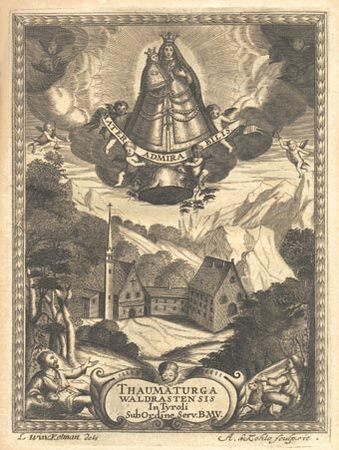
17084354Vetero-Pragae (Prague), Wolfgang Wickhart, 1708 ; in-4 ; cartonnage de papier marbré, pièce de titre havane (reliure fin XVIIIe - début XIXe siècle) ; (4) ff., 167 pp., (1) p. d'errata ; 8 magnifiques planches hors-texte de Johann Leonhard Winkelman, gravées par Antoine Kohl.
1747D4268Paris 1747. Very Good. Large format calligraphic manuscript on paper in French. Paris: c.1747. Large folio 490 x 330mm. 101 leaves. Written in brown ink in a cursive hand under calligraphic headings. Original vellum stained green gilt-lettered title to morocco label on spine REGIE DES VIVRES 1741 1742 1743 COMPTE DE M PASQUIE ; small split to the head of the spine corners slightly bumped lacking ties overall in very attractive condition. <br/><br/>This attractive manuscript details in fine calligraphy the staffing and accounts of the Army of Bohemia composed of French Bavarian and Saxon troops from 1741 to 1743. This time encompassed the occupation of Prague by Charles Elector of Bavaria who had raised a claim to the Bohemian throne at the outset of the Wars of the Austrian Succession. This war was a conflict that embroiled most of Europe and spilled over into America with the Anglo-Spanish War of Jenkins Ear. It is of great interest both for the high quality of the penmanship and for the historical interest of the contents which exhaustively details the staffing and provisioning of the Army of Bohemia. The account appears to have been prepared as a memorandum for François Pasquier principal clerk to the Army of Bohemia assimilating information on the regiments wartime expenses. hardcover books
17926102Mit 28 Abb. auf 5 gefalt. gest. Tafeln. Berlin, A. Mylius, 1789. 8vo. (19,4 x 11,4 cm). 77 S. - Vorgebunden: Rösler, Karl Anton. Bergmännische Nachrichten über die Gebirge und den Bergbau zu Joachimsthal. Nebst einigen Nachrichten über die Gebirge auf der Straße von Prag bis Joachimsthal, hrsg. von Johann Mayer. Dresden, Walther, 1792. 8vo. 126 S. Marmorierter Pappband d. Zt. mit zwei farbigen Rückenschildern. [6 Warenabbildungen]
176957355Wien: Johann Thomas Edlen von Trattnern 1769. First Edition. Folio pp. xvi 282 lvi Illustrated with 27 engravings in the text & 3 folding engraved plates included in the pagination. Some foxed and toned lacks the front flyleaf. Bound in very rubbed contemporary calf still a very good tight copy. Woodcut and typographic ornaments and initials. Text in German black letter with glosses in Latin. Bound in contemporary calf spine gilt little rubbed and recently rebacked red edges. Woodblock printed end papers. Some toning to the text The binding is a little rubbed but still a very good crisp and clean copy. Maria Theresa was the eldest daughter of emperor Charles I and of Elizabeth Christina of Brunswick. At the death of her father in 1740 she became the sole heiress of his dominions of the house of Austria. Upon her accesion to the throne the neighboring countries tried to capture parts of the empire which led to the Wars of Austrian Succession which finally concuded with the treaty of Aix-la-Chapelle in 1748. This is the famous criminal code of Maria Theresa which used torture as a means of "eliciting truth." Her insticts were absolutist and she would allow nothing that limited state power even as she reformed the education system and worked to better the lives of her citizens. And she did not forbid torture. Torture was only to be used only is capital and very serious criminal cases. Included in this volume are very graphic illustrattions of instruments of torture thumb-screws stocks racks burning candles leg vices winches the Viennese shoe! with detailed and precise instruction of their use. According to the Britannica this edition was suppressed by Prince Kaunitz chancellor of the state and an advisor to the Empress. Torture was formally abolished in the empire in 1776. Maria Theresa Walburga Amalia Christina was the only female ruler of the Habsburg dominions and the last of the House of Habsburg. Maria Theresa and her husband Francis I Holy Roman Emperor had sixteen children including Queen Marie Antoinette of France. Maria Theresa was the absolute sovereign . She promulgated financial and educational reforms promoted commerce and the development of agriculture and reorganised Austria's ramshackle military all of which strengthened Austria's international standing. Johann Thomas Edlen von Trattnern unknown books
1769elala199Vienna: Johann Thomas Edlen von Trattnern 1769. 1769. folio. pp. 8 p.l. 282 lvi. 27 engravings in the text & 3 folding engraved plates incl. in pagination. woodcut ornaments & initials. full contemporary dark brown morocco lettered in gilt on upper cover: Constitutio Criminalis Theresiana Spectans Ad Antiquam Civitatem Voitsbergensem 1773 Antonius Josephus Schilcher P.T. Judex Civitatis Voitsberga bit rubbed some browning & foxing marginal dampstain to last section containing engravings folding plates dampstained & repaired -1 with some loss of text. Inscribed on front blank: "Mathias SchuemackerSuperioris Austriae Jo. J. Syndrins Voitsberga 1773". First Edition of the famous criminal code of Maria Theresa which redefined torture as "a subsidiary means of eliciting truth". Torture could be applied to obtain confessions only in cases where condemnation would have involved capital or severe corporal punishment. A remarkable publication including graphic illustrations of instruments and methods of torture thumb-screws stocks racks burning candles leg vices winches the Viennese shoe with detailed and precise instructions on their use. According to the Encyclopaedia Britannica 11th Edn. this illustrated edition was suppressed by Prince Kaunitz chancellor of state and advisor to the Empress a few days after its appearance. Torture was formally abolished in the empire in 1776. Signed by Authors. 1st Edition. Vienna: Johann Thomas Edlen von Trattnern, 1769. hardcover
176952694Wien: Johann Thomas Edlen von Trattnern 1769. First Edition. Folio pp. xvi 282 lvi Illustrated with 27 engravings in the text & 3 folding engraved plates included in the pagination. One of the plates was misfolded and is consequently slightly frayed at the lower edge with an old paper repair at the foredge not affecting the print area. Woodcut and typographic ornaments and initials. Text in German black letter with glosses in Latin. Bound in contemporary calf spine gilt little rubbed and recently rebacked red edges. Woodblock printed end papers. Some toning to the text The binding is a little rubbed but still a very good crisp and clean copy. Laid in: MARIA THERESA; EMPRESS. Autograph Note Signed "Maria Theresia" on black rimmed mouring paper to paymaster Mayer in German concerning her son's pension requesting 500 ducats or sovereigns and in a postscript written at lower edge and vertically at upper edge adding that the letters would follow in the evening. 1 page 12mo mourning stationery; some staining affecting signature but still legible folds. Vienna circa 1776. Maria Theresa was the eldest daughter of emperor Charles I and of Elizabeth Christina of Brunswick. At the death of her father in 1740 she became the sole heiress of his dominions of the house of Austria. Upon her accesion to the throne the neighboring countries tried to capture parts of the empire which led to the Wars of Austrian Succession which finally concuded with the treaty of Aix-la-Chapelle in 1748. This is the famous criminal code of Maria Theresa which used torture as a means of "eliciting truth." Her insticts were absolutist and she would allow nothing that limited state power even as she reformed the education system and worked to better the lives of her citizens. And she did not forbid torture. Torture was only to be used in capital and very serious criminal cases. Included in this volume are very graphic illustrattions of instruments of torture thumb-screws stocks racks burning candles leg vices winches the Viennese shoe! with detailed and precise instruction of their use. According to the Britannica this edition was suppressed by Prince Kaunitz chancellor of the state and an advisor to the Empress. Torture was formally abolished in the empire in 1776. Maria Theresa Walburga Amalia Christina was the only female ruler of the Habsburg dominions and the last of the House of Habsburg. Maria Theresa and her husband Francis I Holy Roman Emperor had sixteen children including Queen Marie Antoinette of France. Maria Theresa was the absolute sovereign . She promulgated financial and educational reforms promoted commerce and the development of agriculture and reorganised Austria's ramshackle military all of which strengthened Austria's international standing. Johann Thomas Edlen von Trattnern unknown books