39 résultats
174062478Paris, Briasson et Piget, 1740, in-8, de XXVI, 457, (3) pages et 4 planches repliées, plein veau marbré de l'époque, dos à 5 nerfs, Première édition. Comme nous le rappelle René Taton dans le DSB, cette publication permit à Gua de Malves de se faire élire, au siège de Le Monnier, à l'Académie des Sciences. Ce travail de géométrie, qui conjugue les géométries de Descartes et Newton, permit, au XVIIIe siècle, le développement de la théorie des courbes et inspira les travaux ultérieurs d'Euler. Quelques restaurations. Couverture rigide
178497089Paris, Pierre-François Didot, 1784, in-8, [2]-IV-44, pp. V-VII-[1], Cartonnage postérieur à la bradel, couverture d'attente conservée, Bien complet des deux planches de figures géométriques. Rare première édition de cet opuscule, qui fait suite aux Découvertes sur la lumière. Le faux-titre indique Oeuvre de Marat; ces dernières paraîtront en 1788. Marat (1743-1793), que l'on connait surtout comme Montagnard à la Convention, avait tenté de former une vaste entreprise de démystification à l'égard du système newtonien, en publiant plusieurs ébauches qui aboutiront à la publication de ses Oeuvres (Mémoires académiques ou nouvelles découvertes sur la lumière relatives aux points les plus importants de l'optique. Paris, Méquignon, 1788). Il consigne ici sa théorie des couleurs avec des expériences détaillées, qu'il mena avec sa méthode d'observation en chambre obscure, et donne la liste des instruments nécessaires à les répéter. Une partie de ces expériences avait été décrite dans ses précédentes Recherches physiques sur le feu (1780). Marat était alors médecin des gardes du corps du comte d'Artois. Il avait ouvert un cabinet dans lequel il faisait ses expérimentations. Il attira l'attention de Benjamin Franklin, dont il reçut la visite. Il fit la traduction de l'Optique de Newton en 1787. Lacunes comblées en tête des deux derniers feuillets, avec atteinte au texte. Une auréole en pied de volume. Bonne reliure moderne. Blake 287. Poggendorff II, 39. Couverture rigide
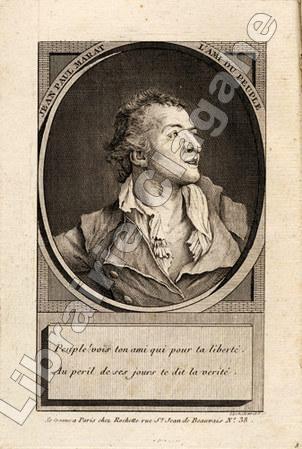
17906476Paris, Rochette, 1790 ; in-8 ; bradel cartonné recouvert de papier marbré, pièce de titre bleu-nuit, non rogné (reliure du XIXe) ; 157 pp., (1 bl.), portrait gravé par Blanchard en frontispice et rajouté : "Commandements de la Patrie par Marat (l'Ami du Peuple), Extrait du Publiciste Parisien" (XIXe).
179224099De l’imp. de Marat, l’an premier de la République 1792 In-8, plein veau époque, dos lisse, filets et fleurons dorés, 364 pp. Reliure frottée, coiffe sup. arrachée. Sans les faux-titre et titre, le premier feuillet défectueux délié, deux petits adhésifs, un manque en coin sup. avec atteinte sur 4 lignes. On joint une photocopie copie de ses 3 ff.
1710165381710 Cologne, Erasme Kinkius, 1710, 6 tomes en 6 vol. in 12 de (48)-394-(10) pp. ; (24)-382 pp. ; 428-(14) pp. ; (349-(7) pp. ; XVI-452-(12) pp. ; 372-(8) pp., rel. d'ép. de plein veau brun moucheté, dos à nerfs ornés de fers dorés, pièces de titres de veau fauve, usures et petits manques à 3 coiffes, sinon très bel ex.
178010334Jombert Paris 1780 1 vol. In-8 broché de 2 ff.n.ch., 202 pp. 1 f. n.ch., couverture muette papier coquille (non rogné, grandes marges).
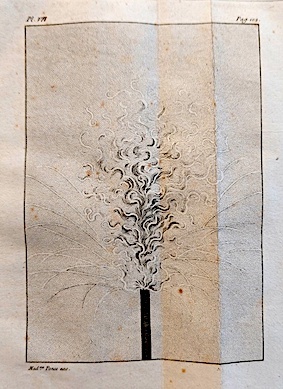
1780S14167Paris :: Cl. Ant. Jombert 1780. 1780. 8vo. 4 202 2 pp. Half-title engraved frontispiece portrait tipped-in title vignette 7 folding engraved plates by Madame Ponce; some waterstaining. Contemporary full mottled calf raised bands spine tooled spine compartments maroon leather label; spine ends worn front joint starting rubbed. Very good. 290 First edition. Marat "practiced in Paris well-known for his activities in the French Revolution; Benjamin Franklin was interested in his electrical experiments but his works especially on fire and heat were discredited." – Cole. / There is apparently one known copy with a portrait plate perhaps spurious or added to the work and yet most every copy does not mention a portrait. Cole notes two copies without a portrait and one at Oklahoma University he saw only in microprint where a portrait was present – Cole says "appears to have a portrait." Of several copies found for sale none had a correct portrait. I inquired about the Oklahoma copy and they verified that it does not in fact have a portrait see above. Net result: the book was not issued to the public with a portrait. Copies mentioning a portrait will thus be referencing a tipped-in plate from another source presumably an unknown source. / "In this book Marat attempts to give a mechanical explanation of the phenomena of heat by the use of his theoretical 'fluide igne.' Some 166 experiments are described in support of his views." – Cole. / NOTE: "Jean-Paul Marat was a leader of the French Revolution along with others like Danton and Robespierre. In 1793 he was assassinated while soaking in a bath—one of the most famous murders in French history. While there is no question about who killed him the reason he was in the bath has confounded historians for centuries. And this mystery may have just been solved." "Marat bled profusely when he was stabbed and his blood soaked the papers he was working on. These were kept by his sister and eventually found their way to the National Library of France. / French forensic scientist Philippe Charlier working with a team of specialists was recently able to extract DNA from these centuries-old papers. As well as finding DNA that confirmed Marat's ancestry French and Italian the team found a number of non-human DNA fragments. / These fragments ruled out many of the popular theories—no syphilis no scabies no leprosy or tuberculosis. But there was strong evidence of an advanced fungal infection of Malassezia restricta. This would explain his pain and sores and would probably have damaged his immune system as well leaving him open to other infections. / While the answer can't be known for sure modern technology seems to have validated the belief of Marat—ever the scientist—that the sewers of Paris were his undoing." – Keith van Sickle The Good Life. REFERENCES: Bolton 1899 284; Cajori History of physics 1929 p. 122; Chevremont p. 14; Cole 909 without portrait; Duveen 388 without portrait; Ferchl 337; Partington III p. 607; Poggendorff II 39; Waller 11396. See: C. Connor Jean Paul Marat: Scientist and Revolutionary. Atlantic Highlands NJ: Humanities Press International 1997. Cl. Ant. Jombert, 1780. hardcover
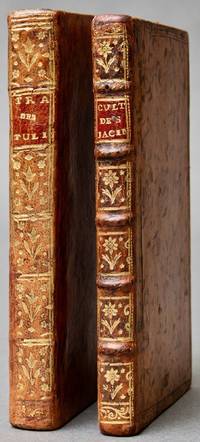
1765BB2489A Avignon: chez Louis Chambeau imprimeur-libraire près les RR PP. jésuites 1765. Full Leather. Fine. Two superb editions on tulips second edition and hyacinths first in closely matched original bindings each in twelve chapters with two folding copper-engraved plates. Hyacinths: 12mo 147 x 86: 156pp. Full fawn mottled calf spine in six compartments decorated with gilt frames and fleurons covers paneled in blind red leather lettering piece gilt edges stained red marbled end papers title page vignette. Tulips: 12mo 52 x 81mm: viii9-2524pp. Full fawn mottled sheep flat spine in six compartments decorated with gilt frames and fleurons brown leather lettering piece gilt edges speckled red marbled end papers title page vignette. Exceptional copies especially rare in the first edition beautifully bound and clean throughout. Oak Spring Flora 76 "full of information by turns erudite and practicalâ€. Hunt 526 note and 587. Haller II p. 352. Payne p. 24. Two of four treatises with studies of the ranunculus and of the carnation written by the French priest and botanist all published at Avignon. The work on tulips discusses their origin varieties cultivation and beauty. Similarly that on hyacinths treats etymology conditions for cultivation and common diseases. Both "addressed not only to florists and gardeners but to scientists flower lovers and cultivated persons generally†and “infused with the author’s profound love for his subject.†Oak Spring Flora N. B. With few exceptions always identified we only stock books in exceptional condition. All orders are packaged with care and posted promptly. Satisfaction guaranteed. Fine Editions Ltd is a member of the Independent Online Booksellers Association and we subscribe to its codes of ethics. chez Louis Chambeau, imprimeur-libraire, près les RR PP. jésuites unknown
17822991Paris, Imprimerie Clousier, 1782 ; in-8 ; pleine percaline havane moirée, dos lisse, pièce de titre bordeaux (reliure du XIXe siècle) ; (IV) pp., 461 pp., (3) pp. (errata, approbation et privilège), 5 planches dépliantes par Sellier.
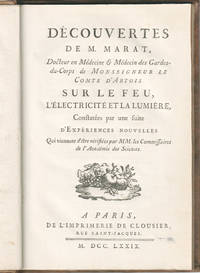
177912883Paris: Clousier 1779. 207x136mm. 8¼x5¼". Paris Clousier 1779. En 4º 207 x 136mm. 6 38 pp. Encuadernación de mediados del siglo veinte en piel. Primera edición del primer trabajo publicado de Marat sobre el fuego la electricidad y la luz presentado a la Academia de las Ciencias y a cuyos experimentos acudieron varios académicos entre ellos Benjamin Franklin. Jean-Paul Marat 1743-1793 fue un cientÃfico y médico francés que realizó gran parte de su carrera en Inglaterra; sobresalió como polÃtico durante la Revolución francesa: identificado con el ala izquierdista de la Revolución los jacobinos su apasionada defensa del Terror le llevó a ser asesinado por Charlotte Corday una joven girondina. Marat presentó esta <em>Memoria</em> para su ingreso en la Academia aunque no consiguió ser aceptado como miembro pues los académicos estaban horrorizados por su osadÃa al disentir de Isaac Newton. Sus experimentos interesaron sobremanera a Benjamin Franklin quien solÃa visitarle y Goethe siempre consideró el rechazo de la academia como una clara muestra de despotismo cientÃfico. Clousier unknown
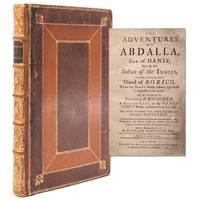
1729353486London: printed for Tho. Worrall at the Judge's Head over against St. Dunstan's Church in Fleet-Street 1729. 8 plates. 4i-vixvi21697 ads pp. 8vo. Later paneled calf gilt spine. Very Good. 8 plates. 4i-vixvi21697 ads pp. 8vo. ESTC T100320; Howgego Encyclopedia of Exploration: Invented and Apocryphal Narratives of Travel B35; McBurney English Prose Fiction 1700-1739 243; Negley Utopian Literature 1285 printed for Tho. Worrall, at the Judge's Head, over against St. Dunstan's Church, in Fleet-Street unknown
179212677Paris, de l'imprimerie de Marat, l'an premier de la République [1792]. In-8 de 364 pages, demi-chagrin marron, dos à 5 nerfs avec titre doré, couvertures d'attente conservées. Non rogné.
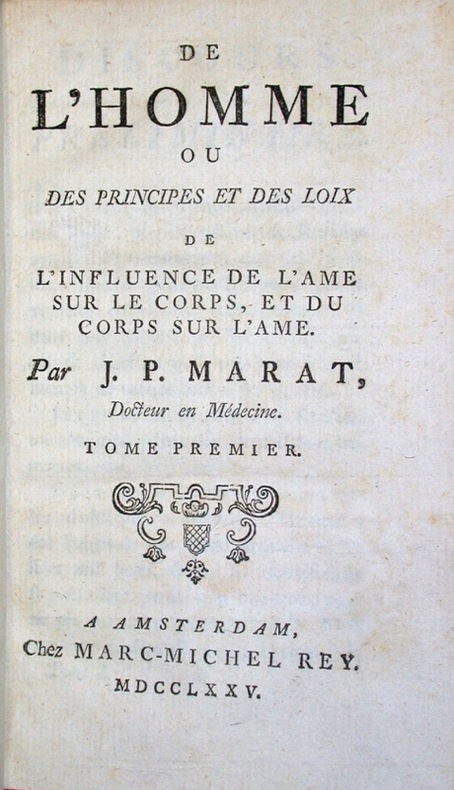
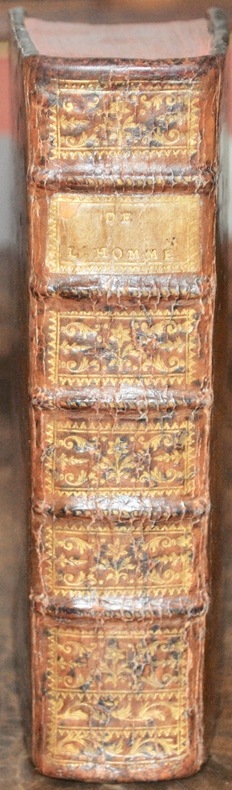
17752819Amsterdam, Marc-Michel Rey , 1775-1776. 3 tomes en 3 volumes in-12 de (4)-XXXIV-323-(3) pp. ; (8)-379-(1) pp. ; (8)-220 pp. 2 planches dépliantes, veau havane marbré, dos à 5 nerfs très richement ornés, tranches rouges (reliure de l'époque).
175515507Amsterdam, Marc-Michel Rey, 1755-1776. 3 tomes en 1 volume in-12 de (4)-XXXIV-323-(3) pp. ; (8)-379-(1) pp. ; (8)-220 pp., veau havane marbré, dos à 5 nerfs ornés, tranches rouges (reliure de l'époque).