[Percy Bysshe Shelley]Biblio.com
8 472 résultats
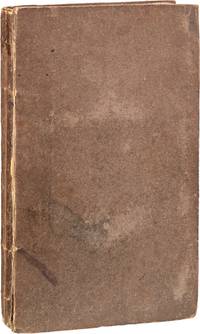
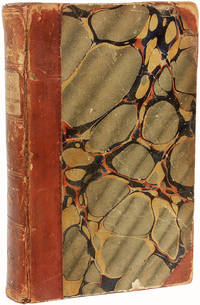
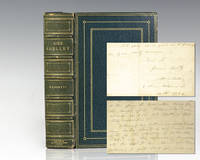
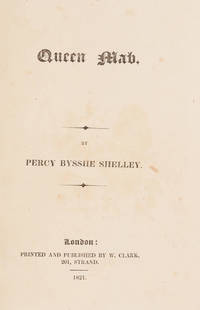
181320<p>In-8. 2 leaves. title dedication to Harriet 240 pp. Copy with full margins.</p><p>Original publisher's cardboard brown paper small rubbing on the spine and hinges.</p><p>Contemporary bottle green silk undershirt with silk ribbon. Case spine titled in long-grain red morocco.</p><p><strong>Extremely scarce original and private edition with an estimated print run of 250 copies.</strong></p><p><strong>Complete copy with the dedication page and printing notices.</strong></p><p>In the copies that he distributed around him Shelley deleted the page dedicating to Harriet name of a young cousin for whom he felt a romantic feeling but also of his first wife married in 1811 from whom he had separated and who committed suicide in 1816. He also cut out from these copies the printing instructions bearing his name on the title page and on the last leaf. In 1816 he revised and reprinted some extracts from his poem under the title <em>The Daemon of the World</em>.</p><p>The few remaining complete copies of the 1813 edition were recovered by the London bookseller William Clark who ensured its distribution despite prosecution by the Society for the Suppression of Vice. In 1821 another publisher Richard Carlile produced a pirate edition in London which Shelley tried in vain to ban.</p><p>Composed between June 1812 and February 1813 the poem <em>Queen Mab</em> named after a well-known figure in Irish legends and popularized by Shakespeare reflects all the utopian passion of a young eighteen-year-old poet having faith in a world full of love and castigating religion and all tyrannical institutions.</p><p>Extremely rare first printing edition in strictly period cardboard of one of the very first works of the great English poet who died at the age of 31.</p> Printed by P. B. Shelley hardcover
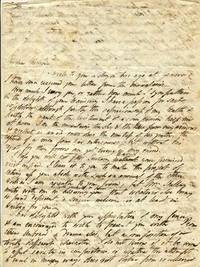
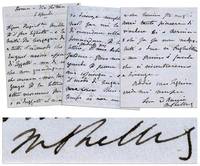
182042<p><strong>SHELLEY PERCY BYSSHE</strong></p><p>Autograph letter signed with his initials <em>P. B. S.</em> three pages 4to Pisa 20th July 1820 to his cousin Thomas Medwin <em>´My dear Medwin´</em>.</p><p>Shelley writes an interesting letter including references to two of his masterpieces stating that he has received Medwin´s letter from the mountains and remarking <em>´How much I envy you or rather how much I sympathise in the delights of your wandering. I have a passion for such expeditions although partly the capriciousness of my health & partly the want of the incitement of a companion keep me at home. I see the mountains the sky & the trees from my windows & recollect as an old man does the mistresses of his youth the raptures of a more familiar intercourse; but without his regrets for their forms are yet living in my mind´</em> adding that he hopes his cousin will not pass by Tuscany without paying a visit <em>´Mrs. Shelley unites with me in assuring.that whatever else may be found deficient a sincere welcome is at least in waiting for you´</em>.</p><p>Shelley proceeds to write at length regarding two of his verse dramas <em>´I am delighted with your approbation of my 'Cenci' & am encouraged to wish to present you with my 'Prometheus Unbound' a drama also but a composition of a totally different character. I do not know if it be wise to affect variety in compositions or whether the attempt to excel in many ways does not deter from excellence in one particular kind. 'Prometheus Unbound' is in the merest spirit of ideal poetry & not as the name would indicate a mere imitation of the Greek drama or indeed if I have been successful is it an imitation of anything. But you will judge - I hear it is just printed & I probably shall receive copies from England before I see you. Your objection to the 'Cenci' as to the introduction of the name of God is good in as much as the play is addressed to a Protestant people; but we Catholics speak eternally & familiarly of the 1st person of the Trinity; and amongst us religion is more interwoven with and is less extraneous to the system of ordinary life. As to Cenci´s curse I know not whether I can defend it or no. I wish I may be able since as it often happens respecting the worst point of an author´s work it is a particular favourite with me. I prided myself as since your approbation I hope that I had just cause to do upon the two concluding lines of the play. I confess I cannot approve of the squeamishness which excludes the exhibition of such subjects from the scene´ </em>at this point of the letter two-and-a-half lines of text have been struck through seemingly by Shelley himself.</p><p>The poet asks <em>´What think you of my boldness´ </em>and reflects on a future project a drama which would remain unfinished at his death <em>´I mean to write a play in the spirit of human nature without prejudice or passion entitled 'Charles the 1st'. So vanity intoxicates people; but let those few who praise my verses & in whose approbation I take so much delight answer for this sin´</em> further making reference to contemporary events involving the British monarchy <em>´</em><em>I </em><em>wonder what in the world the Queen has done. I should not wonder after the whispers I have heard to find that the Green Bag contained evidence that she had imitated Pasiphae & that the Committee should recommend to Parliament a bill to exclude all minotaurs from the succession. What silly stuff is this to employ a great nation about. I wish the King & the Queen like Punch & his wife would fight out their disputes in person´</em> before closing his letter with the lines <em>´This warm weather agrees excellently with me; I only wish it would last all the year. many things both to say & to hear be referred until we meet´</em>. With integral address panel in Shelley´s hand a couple of thin neat strips of the remains of the guard to the edges and centre. Autograph letters of Shelley are extremely rare as a result of his tragic death at the young age of 29 and the present example is particularly rich in its literary content. Some very light extremely minor age wear VG</p><p>Thomas Medwin 1788-1869 English writer poet and translator remembered for his biography of Shelley and for published recollections of his friend Lord Byron.</p><p>The Cenci. A Tragedy in Five Acts 1820 was written by Shelley in the summer of 1819 and inspired by the House of Cenci a real Roman family. The play was not considered stageable in its day owing to the themes of incest and parricide as well as the negative depiction of the Roman Catholic Church all subjects Shelley reflects on in the present letter and was not performed in public in England until over a century later in 1922.</p><p><em>Prometheus Unbound</em> 1820 is a four-act lyrical drama which is concerned with the torments of the Greek mythological figure Prometheus who defies the gods and gives fire to humanity for which he is subjected to eternal punishment and suffering at the hands of Zeus. The play is a closet drama not intended for stage production. In the tradition of Romantic poetry Shelley wrote for the imagination intending his play's stage to reside in the imaginations of his readers. Filled with suspense mystery and other dramatic effects W. B. Yeats famously described the work as being ´among the sacred books of the world´.</p><p>The deleted passage of the present letter according to the published version in Volume IV of The Prose Works of Percy Bysshe Shelley originally read ´a squeamishness the produce as I firmly believe of a lower tone of the public mind and foreign to the majestic and confident wisdom of the golden age of our country´.</p><p>One of the final parts of Shelley´s letter makes reference to the events of 1820 whereby King George IV who had recently succeeded to the throne attempted to divorce his long-estranged wife. Caroline of Brunswick. In order to secure his divorce the King had a special bill moved in the House of Lords and the evidence of the Queen´s adultery was presented to parliament in two green bags. Ultimately the measure was withdrawn by the government and Caroline remained married to the King until her death a year later.</p>
18131124London: P.B. Shelley 23 Chapel Street Grosvenor Square 1813. First Edition. 8vo 200 x 124mm pp. 6 240 2. Shelley’s first major poem. Original boards joints cracked but holding the interior is intact many copies have Shelley’s name and the printer’s imprint cut out as the book was being hunted by moralists and royalists. A virgin and unmutilated copy with the title page dedication and final leaf intact. One of only 250 copies printed for private distribution rare unrepaired and in anything approaching this condition. Morocco case. The poem is written in the form of a fairy tale that presents a future vision of a utopia on earth consisting of nine cantos and seventeen notes. Queen Mab a fairy the name from one referred to in Shakespeare’s play Romeo and Juliet descends in a chariot to a dwelling where Ianthe is sleeping on a couch. Queen Mab detaches Ianthe’s spirit or soul from her sleeping body and transports it on a celestial tour to Queen Mab’s palace at the edge of the universe. Queen Mab interprets analyses and explains Ianthe’s dreams. She shows her visions of the past present and the future. The past and present are characterized by oppression injustice misery and suffering caused by monarchies commerce and religion. In the future however the condition of man will be improved and a utopia will emerge. Two key points are emphasized: 1 death is not to be feared; and 2 the future offers the possibility of perfectibility of man by moral means. Humanity and nature can be reconciled and work in unison and harmony not against each other. While Ianthe is asleep on the couch Henry waits to kiss her. He never does. Queen Mab returns Ianthe’s spirit or soul to her body. <br /> <br /> Ianthe then awakens with a “gentle start.†Of the seventeen notes six deal with the issues of atheism vegetarianism free love the role of necessity in the physical and spiritual realm and the relationship of Christ and the precepts of Christianity. From a critical standpoint in this early poem Shelley forced together his youthful opinions into a scheme of dogmatic materialism. His objective was to show that reform and improvement in the lot of mankind were possible. <br /> <br /> In her notes to the work Mary Shelley explained the author’s goals: He was animated to greater zeal by compassion for his fellow-creatures. His sympathy was excited by the misery with which the world is bursting. He witnessed the sufferings of the poor and was aware of the evils of ignorance. He desired to induce every rich man to despoil himself of superfluity and to create a brotherhood of property and service and was ready to be the first to lay down the advantages of his birth. He was of too uncompromising a disposition to join any party. He did not in his youth look forward to gradual improvement: nay in those days of intolerance now almost forgotten it seemed as easy to look forward to the sort of millennium of freedom and brotherhood which he thought the proper state of mankind as to the present reign of moderation and improvement. Ill health made him believe that his race would soon be run; that a year or two was all he had of life. He desired that these years should be useful and illustrious. He saw in a fervent call on his fellow-creatures to share alike the blessings of the creation to love and serve each other the noblest work that life and time permitted him. In this spirit he composed Queen Mab. P.B. Shelley, 23, Chapel Street, Grosvenor Square unknown
1840324477London: Edward Moxon 1840. First edition. 2 vols. 8vo. Recent half morocco and cloth. Formerly in the Exeter City Library with stamps. With a number of early neat pencil annotations in an unidentified hand 1:164 1:167; 1:234-239 three pages with lines shaved at the bindery. Very good. First edition. 2 vols. 8vo. Contains the first printing of Shelley's "The Defence of Poetry" and also his translations from the classics including Plato's "Symposium" "Ion" and fragments from "The Republic" and 67 letters. "The Defence of Poetry" was edited by John Hunt for inclusion in "The Liberal" but the magazine folded before it could be published. This first appearance used John Hunt's edited version. <br /> <br /> Inscribed in each volume "Julia Robinson from her affectionate friend Mary Shelley Putney 22 Dec. 1839". This inscription documents Mary Shelley's close connection with the Robinson family who figure for many years in her journals as well as in the Journals of William Godwin her father. From February 1827 Mary became close to Julia and Isabel or Isabella Robinson daughters of Joshua Robinson an Oxford graduate and a successful builder with a large family and a large residence Park Cottage in Paddington. After Isabella bore an illegitimate child she and Mary Shelley shared lodgings in the south of England in the summer of 1827. The inscription also points to a long-secret chapter in Mary's life documented by Betty T. Bennett in Mary Diana Dods A Gentleman and a Scholar 1991. Mary Shelley's friend Mary Diana Dods was the illegitimate daughter of a Scottish earl and wrote numerous works for Blackwood's Magazine under the name David Lyndsay including a story collection Tales of the Wild and the Wonderful 1825. Beginning in 1827 Mary Dods assumed the name and persona of Mr. Walter Sholto Douglas and with Isabella Robinson determined to live on the Continent where it was cheaper and where the legitimacy of Isabella's child would not be questioned. Mary Shelley secured the passports for the couple to travel to France as Mr. and Mrs. Walter Sholto Douglas. In April 1828 Mary Shelley travelled to Paris with Mr. Robinson and Julia "who has become Mary Shelley's new young companion" Bennett 38 to visit the Douglases. During much of that stay Mary was ill with smallpox and "her great regret is that she endangered Julia Robinson" Bennett 136. Mr. Sholto Douglas was later imprisoned for debt and died in France. Isabella was estranged from Mary Shelley when she returned to England in 1830 but Mary and her son lived with Julia Robinson for part of 1833 and clearly preserved friendly ties thereafter. <br /> An important book with an evocative association. Forman 77; Graniss 82. For Isabella Robinson and David Lyndsay see Betty T. Bennett. Mary Diana Dods A Gentleman and a Scholar 1991 Edward Moxon unknown
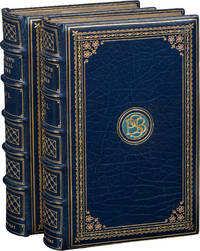
1892989London: Reeves & Turner 1892. Third Edition. 2 vols. A reprinting of the 1839 original the edition selected by Sangorski & Sutcliffe England's premier bindery as the best choice for the binding they planned based on its typeface paper size and inclusion of all the notes by Shelley's wife Mary an essential source for the study of Percy's work. A fastidiously executed dark blue crushed morocco gilt binding. The outside covers with central gilt panel formed by multiple plain and decorative rolls with cornerpiece clusters of three inlaid lavender morocco pansies front boards with central inlaid cerulean morocco medallion stamped with the poet's gilt monogram rear boards with lavender morocco medallion stamped with a gilt pansy within the quote "Pansies let my flowers be" from "Remembrance" raised bands spine compartments gilt in a latticed pattern. Inside the Doublures are in sky blue morocco the one at the front of the first volume is a Cosway style miniature portrait under glass replicating the 1819 portrait by Amelia Curran now hanging in England's National Portrait Gallery one of the few contemporaneous likenesses of Shelley and the chief source today for Shelley's countenance. The portrait is framed by a laurel wreath set with 6 jewels 3 moonstones and 3 rubies and surrounded by a pointillé field punctuated by foliate sprays terminating in 46 white flowers the other 3 doublures with rows of gilt floral and foliate stamps and a trio of inlaid white blossoms in each corner the bindings with a total of 132 large and small floral inlays ivory moiré silk endleaves all edges gilt and delicately gauffered. Frontispiece in each volume vignette title pages. A fine set in a luscious binding of a body of literature graced with a lyricism "unmatched elsewhere in English verse in its ethereal ideal beauty" -Day. A clipped inscription in Shelley's hand is tipped in. Reeves & Turner unknown
1819979London: Ollier 1819. First Edition. 1st edition. Gilt and inlaid crushed green morocco signed by Riviere & Son in gilt on the turn-in. Inlaid morocco doublures green silk moire endpapers original wrappers preserved and bound in. Slightest bit of rubbing at the extremities clean and fresh internally near fine. Written after Shelley had left England for good and with a preface dated in Naples December 20 1818 Rosalind and Helen tells the story of two lovers based on Percy and Mary Shelley whose love is sacred and justified though unconsecrated by marriage. One of the "Other Poems" included here is the well-known Ozymandias a sonnet exploring the impermanence of grandeur a piece apparently inspired by the British Museum's acquisition of a massive Egyptian statue of Ramesses II. Ollier unknown
1819140948806Livorno Italy: C. and J. Ollier 1819. First Edition. Very Good. First edition first printing one of 250 copies without initial blank. xiv 104 pp. Bound in the scarce original blue boards. Housed in a custom crimson red solander polished morocco case ruled in blind and lettered in gilt with matching chemise dust wrapper. Very Good with expertly rebacked spine soiling and light wear to boards and strengthened inner and rear hinges. Former owner's name in pencil at front pastedown light offsetting from chemise wrapper at endhseets title page has likely been washed ownership notations at verso dedication page and rear endpaper and light foxing to contents. A bit of light rubbing and soiling to case and chemise otherwise quite presentable. <p>Penned while living in Rome at Villa Valsovano and based on a true story of a sixteenth-century Roman noble family Shelley recounts the violence accrued by Count Francesco Cenci in this controversial drama. Themes of incest tyranny patricide and near-blasphemous depictions of the Church made it too contentious to be staged publicly during Shelley's career. The play was staged privately by the Shelley Society on May 7 1886 at the Grand Theatre in Islington London to bypass censorship. It had had been denied a license for public performance by the sitting Lord Chamberlain with the first public performance occurring just over a century after publication in 1922.<p>It later inspired influenced playwrights like Antonin Artaud who used it as a basis for his Theater of Cruelty in the 1930's.The Cenci is considered one of Shelley's masterpieces notable for its evocative language and dramatic force and the only work of his to reach a second edition during his tragically shortened lifetime; rather uncommon in the original boards. Ashley V 69. C. and J. Ollier unknown
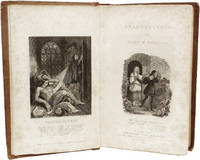
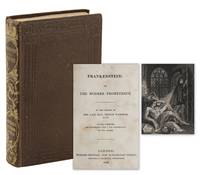
18315134London: Henry Colburn and Richard Bentley 1831 1831. Third edition published as volume IX of Standard Novels series issued with the first part of The Ghost-Seer. 162x100mm. pp. xii 202; 2 163 5. Frontispiece and illustrated additional title page. Black half calf marbled paper covered boards spine lettered and decorated in gilt. Housed in a green cloth covered dropback box. Rubbing to boards and scuffing to head and foot of spine. Corners bumped. Internally very good but with some foxing and slight soiling. The frontispiece and illustrated title page are somewhat browned. Blank preliminary with a contemporary gift inscription and a later ownership inscription. This is the first Bentley edition the first to appear in one volume and the first with any illustration. The frontispiece engraved by W. Chevalier from a painting by Theodor von Holst shows the monster emerging from a skeleton while Dr Frankenstein runs of the door in horror. Holst who was the great-uncle of the composer studied with Fuseli and illustrated many important literary works especially those of the German romantics and the European gothicists. No-one was better qualified to produce the first illustration of the great gothic monster. Montague Summers A Gothic Bibliography p330. London: Henry Colburn and Richard Bentley 1831 hardcover
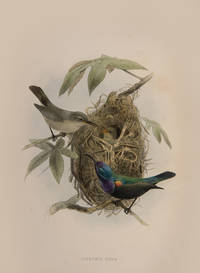
8043London: Published by the author 1876-1880. First edition. Light scattered foxing to the blank endpapers only margin of inside corner missing from one text page; the fine binding the text and hand-colored plates are all very bright and clean with no signs of use; an extraordinary copy in fine condition. Pp. i-cviii 1-393; 121 hand-colored lithographs by Keulemans each heightened with gum Arabic. Contemporary one-half Victorian-red morocco over scarlet red cloth boards spine with five raised bands lettered in gilt in two compartments and with elaborate gilt floral decorations in the other four compartments the title and author are lettered in gilt on the front board top page edge in gilt contemporary red marbled endpapers lg 4to 13 x 10.25 inches; 33 x 25.5 cm. "An excellent monograph of an interesting family of birds with descriptions in Latin and English critical notes and discussions of habits etc. from accounts by many different observers. A total of 138 species of the group are recognized of which all but one are figured on excellent hand-colored plates" Zimmer Ayer p. 588. This work was limited to 250 copies only. In the preface Shelley acknowledges the importance of Keuleman's contribution of the fine color plates: "The illustrations which form such an important portion of my Monograph have all been executed by Mr. Keulemans whose name is sufficient guarantee for the accuracy of the details and for high artistic skill. The latter is rendered perhaps more striking from his being acquainted with this family of birds in their native haunts; and his notes upon the sun-birds inhabiting Prince's Island have been incorporated in my work." The sunbirds are small slender passerines from the Old World usually with downward-curved bills. Many are brightly colored often with iridescent feathers particularly in the males. Most sunbirds feed largely on nectar but will also eat insects and spiders modified after Wiki. This monograph describes two new genera and ten new species. The work originally appeared in twelve parts from July 1876 to February 1880. See also Nissen IVB 873; Casey Wood p. 566; Fine Bird Books 1990 p. 142. No ownership marks; an early owner of this book states it came from David Bannerman's library. London: Published by the author, 1876-1880. First edition. hardcover
106189London The author 1876-80. . First edition. 4to. cviiii 393 pp. 121 hand-coloured lithographs by Keulemans some light spotting to plates; contemporary red half morocco gilt a very good example.<br /> first edition of this important monograph one of 250 copies only. Amongst the most beautiful of bird monographs the Nectariniidae illustrates 138 species including two new genera and ten new species.<br /><br />Shelley acknowledges the importance of Keuleman's specialist knowledge in his preface: "The illustrations which form such an important portion of my Monograph have all been executed by Mr. Keulemans whose name is sufficient guarantee for the accuracy of the details and for high artistic skill. The latter is rendered perhaps more striking from his being acquainted with this family of birds in their native haunts; and his notes upon the sun-birds inhabiting Prince's Island have been incorprated in my work."<br /><br />The work appeared in twelve parts from July 1876 to February 1880. The original title of the work was A Monograph of the Cinnyridae later changed to the Nectariniidae in the final title.<br /><br />"An excellent mongraph of an interesting family of birds" Zimmer.<br /> Fine Bird Books p108; Nissen IVB 873; Wood p566; Zimmer p588. London, The author, [1876-80]. unknown
140949106West Hatfield MA: Pennyroyal Press 1983. First Thus. Near Fine. Deluxe limited edition #1 of 5 advance proof copies from a total print run of 350 copies. Signed by Barry Moser on the limitation page at rear. xvi 282 pp. Small folio bound in publisher's maroon cloth over quarter tan morocco raised bands and maroon morocco title label to spine. Very Near Fine with small stain to spine and narrow scuff to rear board. Together with maroon cloth chemise containing additional suite of 52 wood engravings on 13-3/4 x 10 inch sheets 20 proofs on 11-1/2 x 9-1/2 sheets and one pencil sketch of Victor Frankenstein on tracing paper all signed by Moser in pencil below plate. Proofs include 15 views of the monster's face and 5 other illustrations various inkings. Narrow faint stain to lower edge of one sheet otherwise clean and bright. Book and chemise housed in publisher’s sturdy charcoal cloth slipcase.<br /> <br /> <p>When Barry Moser began what he came to consider his greatest book his first instinct was to depict Frankenstein’s monster as a metaphor for the horrors unleashed by the modern age complete with atomic bomb imagery. Realizing that a timeless book had to be less topical he took his cue instead from the scene in which the monster rescues a young woman from drowning. He is promptly shot by her boyfriend for no better reason than being large and yellow and Moser later wrote:<br /> <br /> <p>"In this scene I discovered a monster I know on a first-name basis. His name is Bigotry. His name is Hate. His name is Racism. Ignorance. Intolerance. My family was real friendly with him and so was I growing up in Tennessee in the '40s and '50s. He wore a white sheet and burned crosses.â€<br /> <br /> <p>Most of the book’s wood engravings are printed in black and white but the second volume in which the monster tells his own story contains a sequence of 8 color prints – partial closeups of the monster’s face as though he were being seen in the dim light of the fire shared by himself and his creator. "Warm colors these†wrote Moser “behind black a metaphor of my sympathy with the monster. A ministration in my struggle as a recovering racist. Pennyroyal Press unknown
25259ELondon: Simpkin Marshall Hamilton Kent & Co n.d. From the library of author Nathanael West signed by him “Nathanael von Wallenstein Weinstein†with his bookplate designed by his then future brother in law S.J. Perelman while they were students together at Brown University. The bookplate shows a bearded man with tears flowing down his cheeks as he embraces a donkey’s head with a banner at the top with West’s birth name reading “Nath: v. Wallenstein Weinstein†and another at the bottom “Lieb’ ich wass andere lieben†with translates to “Do I love what others love†A very good copy bound in full light brown leather with decorative and title gilt-stamping to the front board and spine with some repair by an expert conservationist. Thin 2†split to the front hinge a bit of darkening to the spine and some wear to the spine folds and edges. West is the author of the classic age-defining novels ‘A Cool Million’ ‘The Day of the Locust’ and ‘Miss Lonelyhearts.’ Sidney Joseph Perelman popularly known as S. J. Perelman 1904 – 1979 was one of the most widely read literary icons of the Golden Age of American Humor. His New Yorker pieces fiction and collected essays are legendary for their biting wit and mastery of caricature and language. He was the brother-in-law of the writer Nathanael West with whom he shared a close relationship up until West’s death in a car accident in 1940 at age thirty-seven and whose memory and literary reputation he devoted himself to maintaining. Enclosed in a handsome custom full dark blue cloth clamshell box with gilt-stamped leather label to the spine. Simpkin, Marshall, Hamilton, Kent & Co hardcover
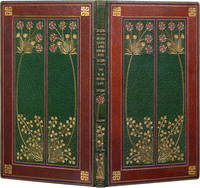
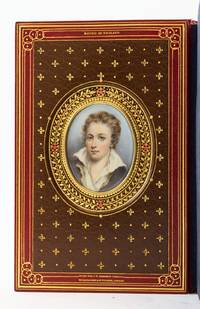
18866240London: Reeves & Turner 1886. Second edition. Fine. Two octavo volumes 7 1/4 x 4 11/16 inches; 184 x 119 mm. 572; 580 pp. A spectacular ca. 1920 Cosway-Style binding by Sangorski & Sutcliffe for the J.L. Hudson Company stamp-signed in gilt on rear turn-in. Full red crushed levant morocco over beveled boards covers lavishly gilt in the Art Nouveau style with inlaid green and light brown morocco inlays. The first volume with a central green morocco medallion with Percy Bysshe Shelley's initials in gilt. The second volume with a central green morocco medallion with the phrase "Pansies/Let My Flowers Be" stamped in gilt. Spines with five raised bands elaborately decorated and lettered in gilt in compartments four of which have onlaid green morocco flowers. Double gilt-ruled board edges and elaborate gilt turn-ins dark blue watered silk liners and endleaves all edges gilt and gauffered. The first volume with a front doublure of dark blue crushed levant morocco multi-ruled in gilt. In the center is a superb gilt framed hand-painted portrait miniature 3 x 2 3/8 inches; 76 x 60 mm. of Percy Bysshe Shelley. The miniature is surrounded by a rectangular recessed frame with eight onlaid red morocco flowers and twenty-four onlaid beige morocco leaves. The front and back joints of both volumes have been expertly and almost invisibly repaired. Housed in a custom-made felt lined half red morocco with a red felt divider clamshell case two spines paneled and lettered in gilt in compartments. <br /> <br /> A wonderful early Sangorski & Sutcliffe Cosway-style binding. The miniature is of exceptional quality and is quite possibly the work of Miss C.B. Currie. The J. L. Hudson Company commonly known simply as Hudson's was a retail department store chain based in Detroit Michigan. Hudson's flagship store on Woodward Avenue in Downtown Detroit was constructed beginning in 1911 with additions throughout the years before being 'completed' in 1946. The building was named after the company's founder Joseph Lowthian Hudson and was demolished on October 24 1998. In 1961 it was the tallest department store in the world and at one time claimed to be the second-largest department store after Macy's in the United States by square footage. The Grand River Avenue Book Shop was on the Mezzanine floor.<br /> <br /> The story of the Sangorski & Sutcliffe Bindery reads like something out of a novel-when two of Douglas Cockrell's talented apprentices Frances Sangorski and George Sutcliffe were laid off during an economic downturn they began working out of an attic. Eventually their bindery would be famous for its intricate multicolored leather inlays and elaborate gold and jeweled bindings. Although named after the English miniaturist Richard Cosway 1742-1821 the desirable "Cosway Binding" with its jewel-like portrait miniature set into a fine binding was first developed at the turn of the century by J.H. Stonehouse director of London's Henry Sotheran Booksellers. Their miniatures were painstakingly crafted by the talented painter Miss C. B. Currie 1849-1940. As the style grew in popularity other publishing houses quickly began to reproduce this technique-each developing their own desirable take on the aesthetic-referred to as "Cosway style.". Fine. Reeves & Turner unknown
1839005001London: Richard Bentley 1839 1839. THIRD EDITION FOURTH PRINTING of the first revised edition of Shelley's masterpiece and the last to contain an illustration with the first printing of the engraved frontis and additional engraved title-page dated 1831. The frontis depicting the creature coming to life. Bound in the publisher's original blind stamped straight grained brown/maroon cloth engraved bookplate of Arnold Henry Robson to front pastedown. Spine expertly relined inner hinges strengthened spine and cover edges slightly sunned text clean and bright some minor foxing or offsetting to the engraved frontis and title-page overall still a GOOD copy of a book becoming increasingly difficult to find. According to RBH only 4 copies of this printing have appeared at auction in the last 25 years. In her introduction Shelley contextualizes the creation of her tale: "It proved a wet ungenial summer and incessant rain often confined us for days to the house. Some volumes of ghost stories translated from the German into French fell into our hands. 'We will each write a ghost story' said Lord Byron; and his proposition was acceded to" This printing was apparently issued with and without the additional engraved frontis dated 1831. We can only assume that additional copies of the 1831 frontis had finally run out with this printing. OCLC/WorldCat locate 9 copies of the 1839 edition 7 without the engraved frontis and only 2 with. London: Richard Bentley, 1839 hardcover
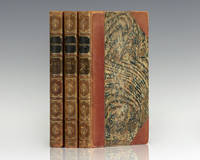
1895140947413Hammersmith: Kelmscott Press 1895. Limited Edition. Near Fine. Limited edition one of 250 copies on paper from a total edition of 256. Three volumes 8vo. Bound in publisher's full limp vellum with yapped edges and spines lettered in gilt printed in Golden type on Flower paper ornamental woodcut borders to title page and facing page. Edited by F. S. Ellis. Near Fine with light darkening to vellum light spotting armorial bookplates to front pastedowns. An excellent set.<p>Unlike other Kelmscott titles of the period Shelley's Works was issued without silk ties; according to Morris's secretary Sydney Cockerell "The ties were omitted from the Shelley as an experiment as some people don't care for them. Kelmscott Press unknown
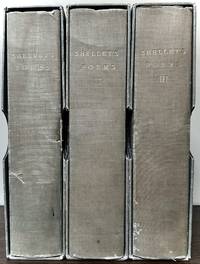
189524707Hammersmith: Kelmscott Press 1895. First Edition. Vellum. Three gray cloth slipcases house the three vellum set. Near fine. 3 Vols. 412 399 421 pages. 21 x 14.5 cm. Limited edition one of 250 copies of an edition o 256 printed in Golden type in red and black black only in first volume woodcut title-page in volume one facing page with full woodcut page border and a few three-quarter and smaller woodcut page-borders with numerous 10-line and smaller initial capitals. Ellis was skeptical the three volume production would be profitable. After further consultation with Algernon Charles Swinburne Morris and Ellis decided to move forward with its production. One of the few Kelmscott productions without cloth ties. Instead to keep the vellum covers from spreading each volume has an added protection a front insert at the volume fore-edge. PETERSON A29. Kelmscott Press unknown
1839002486London: Richard Bentley 1839 1839. THIRD EDITION FOURTH PRINTING of the first revised edition of Shelley's masterpiece and the last to contain an illustration with the first printing of the engraved frontis and additional engraved title-page dated 1831. The frontis depicting the creature coming to life. Bound in contemporary 1/2 tan calf blind tooled spine hand written paper spine label. Early repair to front hinge text clean and bright some minor foxing or offsetting to the engraved frontis and title-page overall still a GOOD copy of a book becoming increasingly difficult to find. According to RBH only 4 copies of this printing have appeared at auction in the last 25 years. In her introduction Shelley contextualizes the creation of her tale: "It proved a wet ungenial summer and incessant rain often confined us for days to the house. Some volumes of ghost stories translated from the German into French fell into our hands. 'We will each write a ghost story' said Lord Byron; and his proposition was acceded to" This printing was apparently issued with and without the additional engraved frontis dated 1831. We can only assume that additional copies of the 1831 frontis had finally run out with this printing. OCLC/WorldCat locate 9 copies of the 1839 edition 7 without the engraved frontis and only 2 with. London: Richard Bentley, 1839 unknown
1843020641Rome 6 April 1843. Letter. Mild crease from mailing. Near Fine. A three-page AUTOGRAPH LETTER SIGNED "Mary Shelley" written in Italian on one sheet of an 8" x 5" piece of paper folded to 4" x 5" dated 6 April 1843. A rough translation: <br />"Esteemed Sir. Thank you so much for your card -- and your kindness. I feel ashamed thinking about all the inconvenience that you are experiencing due to that annoying matter strikethrough of Tozzetti but I am pleased that he is not obtaining all he was looking for. He deserved nothing. Thank you for the letter -- maybe others will come for us either sent to your address or simply to Florence. Would you graciously send someone to the post office to ask for our letters and send them here. My debt I would come and pay. I hope it is not too big to be a burden on my conscience and I will find a way to repay it. strikethrough I hope that the weather has improved and that Nerina feels better. I would really love to see you and Nerina again. And who knows if I won't see both in England but first it is easy that we will meet in Florence. Goodbye dear sir. Please consider me your servant and friend. M Shelley." <br />The recipient Tuscan nobleman Bartolomeo Cini was married to Nerina King daughter of Irish writer Margaret King who was a favored pupil of Mary's mother Mary Wollstonecraft. Mary Shelley was in correspondence with him in regard to getting his assistance to retrieve letters by her husband Percy that were sent to King. Shelley's 1840s travels through Europe with her son Percy and his friends formed the basis of her travelogue RAMBLES IN GERMANY AND ITALY IN 1840 1842 AND 1843. <br/><br/> unknown
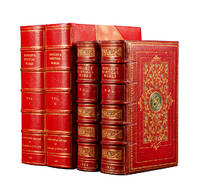
1892ST18713London: Printed at the Ballantyne Press for Reeves & Turner 1892. Third Edition with the Notes of Mary Wollstonecraft Shelley. 188 x 122 mm. 7 3/8 x 4 3/4". Two volumes. Edited by H. Buxton Forman. <br/> PARTICULARLY FINE RED CRUSHED MOROCCO GILT AND ONLAID BY SANGORSKI & SUTCLIFFE stamp-signed on front turn-in covers framed by multiple plain and decorative rolls cornerpieces with the gilt torch of liberty extending obliquely from an onlaid green morocco heart bracketed by volutes front boards with central onlaid citron morocco medallion stamped with the poet's gilt monogram rear boards with onlaid citron morocco pansy surrounded by a gilt collar with the quote "Pansies let my flowers be" from "Remembrance"; raised bands spine compartments with onlaid green morocco quatrefoil at center volutes at corners volume I with FRONT DOUBLURE OF BROWN MOROCCO semé with rows of alternating quatrefoils and dots at center A MINIATURE PORTRAIT OF SHELLEY UNDER GLASS framed by a laurel wreath inlaid with four red morocco cinquefoils navy blue moiré silk endleaves all edges gilt and delicately gauffered. Housed together in a fleece-lined red cloth drop-back box. Frontispiece in each volume vignette title pages. Front flyleaves with engraved bookplates of Edward Laurence Doheny and Carrie Estelle Doheny. A FLAWLESS AND SPARKLING SET.<br/> <br/> This is the outstanding Doheny copy in lovely bindings of a body of literature graced with a lyricism Day asserts is "unmatched elsewhere in English verse in its ethereal ideal beauty." While the notes of Shelley's wife appended here have aroused considerable denigration she is accused among other things of making her husband's verse less political than it actually was her editorial work is nevertheless professional and has remained an essential source for the study of Shelley's work. As Betty T. Bennett explains "biographers and critics agree that Mary Shelley's commitment to bring her husband the notice she believed his works merited was the single major force that established Shelley's reputation during a period when he almost certainly would have faded from public view." Thanks to her efforts Shelley 1792-1822 is one of the best-known English poets and an icon of the Romantic movement. According to DNB our editor Henry Harry Buxton Forman 1842–1917 "channelled a general enthusiasm into a minute study of textual details for which his careful and exacting temperament was ideally suited. His patient application produced impressive editions of Shelley" who was along with Keats Forman's main literary interest. After studying under and then working for Douglas Cockerell Francis Sangorski and George Sutcliffe founded their own bindery in 1901 and continued in a successful partnership until 1912 when Francis tragically drowned. Despite this loss the firm grew and prospered employing a staff of 80 by the mid-1920s and becoming perhaps the most successful English bindery of the 20th century. The "Cosway" binding with painted miniatures inlaid in handsome morocco apparently originated with the London bookselling firm of Henry Sotheran about 1909 the year G. C. Williamson's book entitled "Richard Cosway" was remaindered by Sotheran and presumably given this special decorative treatment. The name "Cosway"--referring to the British miniature painter Richard Cosway 1742-1821--was then used to describe any book so treated whoever its author. This set was bound by Sangorski & Sutcliffe for book dealer J. W. Robinson of Los Angeles who supplied many books for the superb collection of Estelle Doheny 1875-1958 one of the most distinguished women book collectors of the 20th century whose magnificent library was especially rich in fine bindings. Volumes from her collection are sought after for their especially fine condition. [Printed at the Ballantyne Press for] Reeves & Turner unknown
1849140949148London: Richard Bentley 1849. First Illustrated Edition. Near Fine. The fourth reissue of the first illustrated edition of Frankenstein with the long introduction by the Author. There were only three editions of Frankenstein authorized by the author: the first three-volume edition published anonymously in 1818 with a preface by Percy Bysshe Shelley; the second two-volume edition 1823 which included her name and was overseen and slightly edited by her father William Godwin; and this third edition in one volume with a preface by Shelley herself. This is the final Bentley edition which was first published in 1831 and reissued in 1832 1836 1839 and 1849. <p>Bound in publisher's brown cloth with decorative stamping in blind on boards and in gilt on spine printed advertisement endpapers. In one volume as issued with the English translation of another Gothic classic Schiller’s The Ghost-Seer. xii 202 2 163 1 pp. illustrated with engraved frontispiece by Theodor von Holst. Near Fine with light rubbing to extremities and minor bumping to corners. Light foxing to textblock edges and contents heavier at title and frontis. "Wrigglesworth's Library" written in old hand to first page of each novel "Mary Shelley" written in pencil to Frankenstein title page for the benefit of those living under a rock. Lyles B10a.<br /> <br /> <p>A crisp unrestored copy of the fourth reissue of Bentley's 1831 revised Frankenstein the basis for most of the future printings of the novel and the first to depict the Monster. Richard Bentley unknown
1894314918Hammersmith: Kelmscott Press 1894. One of 250 copies. Printed in red and black ornamental woodcut title borders and initials. 3 vols. 8vo. Original full limp vellum spines stamped in gold issued without silk ties. Light foxing to edges long list of signatures inked to first two blanks of volume one otherwise a fine copy. Housed in custom cloth chemises and blue morocco backed slipcases. One of 250 copies. Printed in red and black ornamental woodcut title borders and initials. 3 vols. 8vo. A very nice copy of the magnificent Kelmscott edition of the poems of Shelley with an interesting New York provenance likely from the 1920s. Includes signatures on the two preliminary blank leaves of a number of New York businessmen and philanthropists many with connections to Temple Emanu-El among them:<br /> Sam Sherrington<br /> Dudley D. Sicher<br /> Samuel J. Bloomingdale 1873-1968; son of Lyman<br /> Felix M. Warburg<br /> Herbert J. Martin<br /> Jonah Goldstein<br /> J. Edwin Goldman<br /> Leo Sulzberger<br /> Ralph Samuel<br /> Henry F. Samstag<br /> Louis J. Rosenbach<br /> William Goldman<br /> L.A. Ansbacher<br /> H.A. Guinzburg d. 1928<br /> Fred M. Stein<br /> S.M. Goldberg<br /> Manny Strauss<br /> Albert J. Lehmann<br /> Jos. Gutman<br /> Solomon Lowenstein 1877-1942<br /> Z.D. Bernstein<br /> Bernard Rosenwald<br /> Edwin S. Lorsch<br /> Herman Lissner<br /> Cyrus L. Sulzberger 1858-1932<br /> Maunie Goodman<br /> J.W. Frankel<br /> Joseph Wellen<br /> Herman Sanders. Peterson A29; Ransom 29 29a 29b. Provenance: From the estate of Arthur Lehmann Kelmscott Press unknown
1890133425London: W. H. Allen & Co 1890. First edition of Lucy Madox Rossetti's biography of Mary Shelley; extra-illustrated and with an autograph letter signed by Mary Shelley laid in. Octavo bound in full crushed levant morocco by Bayntun with gilt titles and tooling to the spine in six compartments within raised gilt bands quadruple gilt ruling to the front and rear panels gilt turn-ins and inner dentelles marbled endpapers all edges gilt extra-illustrated with 77 engraved plates of portraits and views 11 of which are hand-colored including a frontispiece portrait of Percy Bysshe Shelley. With a fragment of an autograph letter signed and entirely in the hand of Mary Shelley laid in which reads in full ".to this office the publication being for the benefit of his Widow who at an advanced age & in bad health is left totally unprovided. Many of my father's correspondents have kindly placed in my hands letters of his for the purpose of publication. I looked over the volumes of correspondence with the Revd. Dr. Samuel Parr which you have published & find that you have not. Will you be so good as to. me by an early answer. I am Yours Obediently Mary Shelley 4 Lowes Belgrave St. 23 Sep 1836." After her father's death in April 1836 at the age of 80 Mary began assembling his letters for a memoir for publication as he had requested in his will but after two years of work she abandoned the project. The present letter was likely sent to a publisher before Shelley abandoned the project. From the library of renowned English bibliophile Edward Hailstone with his gilt morocco bookplate to the pastedown. In very good condition. An exceptional example of this rare work; highly desirable with a letter signed by Shelley. English novelist Mary Wollstonecraft Shelley remains best-known for her gothic horror novel Frankenstein which remains widely read and is widely regarded as the first true science-fiction story. The circumstances of its composition are by now well known: 19-year old Mary was in Switzerland with Percy Shelley Byron and Byron's physician John Polidori on that famous evening in 1816 when the discussion turned to one of Shelley's favorite topics the supernatural. Byron proposed that all members of the party write a romance or tale dealing with the subject. The resulting efforts were Polidori's The Vampyre Byron's unfinished narrative about a vampire and Mary Shelley's Frankenstein "the most famous English horror novel… a defining model of the Gothic mode of fiction and… the first genuine science fiction novel the first significant rendering of the relations between mankind and science through an image of mankind's dual nature appropriate to an age of science" Clute and Nicholls Encyclopedia of Science Fiction 1099. W. H. Allen & Co unknown
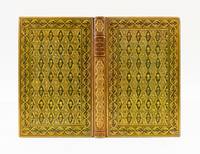
1829ST17129-039London: Printed for John Brooks 1829. 229 x 152 mm. 9 x 6". xxxii 1 leaf section title 270 2 pp. without the initial blank. <br/> LUXURIOUS OLIVE GREEN MOROCCO VIGOROUSLY AND SPLENDIDLY GILT BY ZAEHNSDORF stamp-signed on front doublure and with the firm's oval exhibition stamp on rear endleaf covers framed by multiple plain and decorative rules and garlands of palm and olive branches large central panel densely tooled with 13 horizontal rows of either four or five elegant floral sprigs of various shapes some within flower-framed ovals others on a stippled background; flat spine gilt in similar fashion gilt titling TAN MOROCCO DOUBLURES with intricate central gilt arabesque on a field semé with gilt dots and daggers tan morocco endleaves with gilt border top edge gilt and beautifully gauffered to match the floral design on the covers. From the collection of Cornelius J. Hauck though apparently with his bookplate removed. Granniss 45. Spine sunned toward brown a ubiquitous problem with green morocco very slight rubbing to joints top inch of rear joint a little more significantly so front flyleaf with small closed tear at fore edge title page with small mended half-inch tear in the same place but a very desirable copy nonetheless the text clean and pleasing and the riotously embellished binding almost flaming with gold.<br/> <br/> With distinguished provenance this is a glittering exhibition binding that makes a memorable display with its fine and dense pointillé ground its exquisitely gauffered top edge and its especially refined floral and leafy ornamentation being particularly notable. A spiritual odyssey of lovers divided and seeking reunion "The Revolt of Islam" is Shelley's longest work despite its title the poem has little if anything to do with Islam though religion is generally addressed. The work was issued late in 1817 as "Laon and Cythna" but certain passages of that piece disturbed the publisher who demanded that they be changed or removed. Shelley reluctantly agreed and his alterations included the substitution of the present title. We have the Brooks edition with a new title page using the text of the first edition second issue with the fly title correctly bound as d1 and the preface ending on p. xxi. As Granniss indicates "the original quires and cancel leaves of the work fell into the hands of John Brooks who issued them in 1829 with a new title." Our volume comes from the illustrious collection of Cincinnati businessman arborist and philanthropist Cornelius J. Hauck 1893-1967 whose fortune was made in the family brewery; the auction of his library at Christie's in 2006 totaled more than $12.4 million this item was lot #593 selling for $3360. Printed for John Brooks unknown
1823117880London: G. and W.B. Whittaker 1823. Rare first edition of Shelley's second novel which has been called "a meditation on political psychological and sexual power" and is considered by many to be her finest work. 12mo. bound in 19th century three quarter calf over marbled boards by Bumpus gilt titles and tooling to the spine morocco spine labels raised bands. In very good condition contemporary name. A very sharp example. Valperga "was a novel surprisingly long in its gestation " and possibly concurrent with Frankenstein . "Although not published until 1823 its inception actually dates from six years earlier. 'I first thought of it in our library in Marlow' Mary Shelley wrote as she was completing it in 1821." See: Curran Stuart. Cambridge Companion to Mary Shelley". The preface details some literary sources for this historical tale of the fourteenth-century despot Castruccio Castracani. In terms of historical fiction it represents a feminine counterpart to the male romanticism of Sir Walter Scott. Ref: Block p 213; Summers A Gothic Bibliography p. 541. G. and W.B. Whittaker hardcover
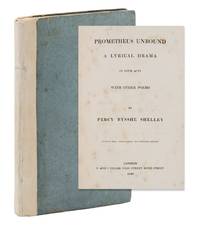
1820140949221London: C. and J. Ollier 1820. First edition. Near Fine. First edition typical second issue with "Miscellaneous" spelled correctly on Table of Contents; leaf is a cancel as noted by Forman. 222 2 pp. Bound in the original drab blue boards issued by the publisher no label; half-title and rear ad leaf present. Near Fine with light edge wear light soiling to boards corners slightly softened with some loss of paper at edges from wear. Foxing throughout contents with a few irregular folds and a small chip to the upper corner of pp 219-220. <p>A lyrical drama adapted from Aeschylus' classical drama trilogy Prometheia. Driven by radical idealism and a future Utopia Shelley alters the ending so that Prometheus does not reconcile with his oppressor Jupiter. Instead Jupiter a representation of tyrannical authority is overthrown. Exceptionally scarce in the original boards and uncommon in the trade. Forman 59. C. and J. Ollier unknown