1729-1797, Burke EdmundBiblio.com
11 résultats
1172581436.Gpaperback. Good. Access codes and supplements are not guaranteed with used items. May be an ex-library book. paperback
22194EDINBURGH. THOMAS CLARK. 1837. 'ON THE ATTACKS MADE UPON HIM AND HIS PENSION IN THE HOUSE OF LORDS BY THE DUKE OF BEDFORD AND THE EARL OF LAUDERDALE EARLY IN THE PRESENT SESSIONS OF PARLIAMENT- 1796'. BOUND IN BLIND STAMPED CLOTH 50 PAGES PAPER LABEL TO THE FRONT BOARD WITH THE ORIGINAL PRICE OF 1s 6d. SOME FOXING TO THE EARLY PAGES BUT A VERY GOOD COPY. EDINBURGH. THOMAS CLARK. 1837. hardcover
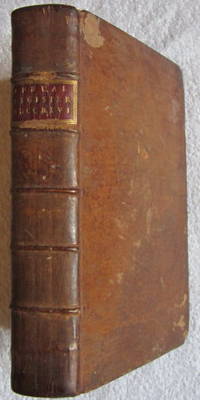
1760d204L.870GB: R & J Dodsley 1760. Contemporary full leather with small coronet above monogram in gold on front covers and near base of spines. "Archibald Douglas his book" written at top of pastedown v1. Both vols have an old label stating "Ante-Room" on pastedown. Spines have raised bands between gold rules. Gold on burgundy title labels VERY WORN. Endpapers and early and late leaves heavily browned at edges. No halftitles. Clean tight texts. Each volume has a folded map in text at pages 281 1 and 293 2. Folding map in each volume by Emanuel Bowen. Maps are clean and undamaged but are a little spotted. Hinges and joints are a little cracked but covers are holding reasonably well by strings. Bindings generally sound but a bit worn. Book is in good double plus condition with noticeable signs of wear and/or age. . 3rd Edition. Hardback. G/No DW. R & J Dodsley Hardcover
1760d903B.003GB: R And J Dodsley 1760. 2 fldg.eng. maps. at p281 and 293 in Vol 1. Both in nice condition. Bookplates of "Caroli Walstein" Charles Waldstein . Clean tight text with only minor spotting etc bound in old full leather. Spine with raised bands and gold on green title labesl with statmped volume nos. Slight wear to joints. Set is in very good minus condition with minor but noticeable signs of wear and/or age. . 3rd Edition. Hardback. VG-/No DW. R And J Dodsley Hardcover
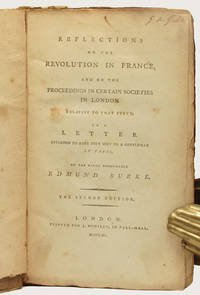
179034171London: J. Dodsley 1790. Second edition. 8vo beige cloth over the original boards lettered in gilt on a black lettering label. iv 356 pp. A handsome and well preserved copy still in the original printer's boards restored at the back with cloth. A REMARKABLE COPY OF THE EDITION STILL IN THE ORIGINAL PRINTER'S BOARDS UNCUT AND UNTRIMMED. Burke's great work on the French Revolution went through eleven printings in the first year of publication and attest to the influence of this book in which Burke refutes the allegations of his support for the French Revolution and distinguishes it from legitimate revolutions to restore political traditions. This text is considered the theoretical foundation of modern conservatism which prompted Thomas Paine to respond with his classic essay "Rights of Man". <br> 'Edmund Burke served in the House of Commons of Great Britain representing the Whig party in close alliance with liberal politician Lord Rockingham. In his political career he vigorously defended constitutional limitation of the Crown's authority denounced the religious persecution of Catholics in his native Ireland voiced the grievances of Britain's American colonies supported American Independence and vigorously pursued impeachment of Warren Hastings the Governor-General of British India for corruption and abuse of power. For these actions Burke was widely respected by liberals in Great Britain the United States and the European continent. Earlier in his career Burke had championed many liberal causes and sided with the Americans in their war for independence. Thus opponents and allies alike were surprised at the strength of his conviction that the French Revolution was "a disaster" and the revolutionists "a swinish multitude".<br> Soon after the fall of the Bastille in 1789 the French aristocrat Charles-Jean-François Depont asked his impressions of the Revolution and Burke replied with two letters. The longer second letter drafted after he read Richard Price's speech A Discourse on the Love of Our Country in January 1790 became Reflections on the Revolution in France. Published in November 1790 the work was an instant bestseller as thirteen thousand copies were purchased in the first five weeks and by the following September had gone through eleven editions. According to Stephen Greenblatt. "part of its appeal to contemporary readers lay in the highly wrought accounts of the mob's violent treatment of the French king and queen who at the time Burke was writing were imprisoned in Paris." The French king and queen were respectively executed three years later in January and October 1793.<br> Burke wrote that he did not like abstract thinking that freedom and equality were different that genuine equality must be judged by God and that liberty was a construct of the law and no excuse to do whatever one would like. He was not comfortable with radical change and believed that the revolutionaries would find themselves further in trouble as their actions would cause more problems. In his opinions the revolutionaries did not understand that "there are no rights without corresponding duties or without some strict qualifications".<br> With his view of what he believed would happen to the revolutionaries one can see why Burke did not like change. Men cannot handle large amounts of power. "When men play God" Burke said "presently they behave like devils".<br> In the Reflections Burke argued that the French Revolution would end disastrously because its abstract foundations purportedly rational ignored the complexities of human nature and society. Further he focused on the practicality of solutions instead of the metaphysics writing: "What is the use of discussing a man's abstract right to food or to medicine The question is upon the method of procuring and administering them. In this deliberation I shall always advise to call in the aid of the farmer and the physician rather than the professor of metaphysics". Following St. Augustine and Cicero he believed in "human heart"-based government. Nevertheless he was contemptuous and afraid of the Enlightenment inspired by the secular liberal writings of such intellectuals such as David Hume Edward Gibbon Jean-Jacques Rousseau Voltaire and Anne Robert Jacques Turgot who disbelieved in divine moral order and original sin. Burke said that society should be handled like a living organism and that people and society are limitlessly complicated leading him to conflict with Thomas Hobbes' assertion that politics might be reducible to a deductive system akin to mathematics.<br> Burke expressly repudiated the belief in divinely appointed monarchic authority and the idea that a people have no right to depose an oppressive government. However he advocated central roles for private property tradition and prejudice i.e. adherence to values regardless of their rational basis to give citizens a stake in their nation's social order. He argued for gradual constitutional reform not revolution in every case except the most qualified case emphasizing that a political doctrine founded upon abstractions such as liberty and the rights of man could be easily abused to justify tyranny. He saw inherited rights restated in England from the Magna Carta to the Declaration of Right as firm and concrete providing continuity like tradition prejudice and inheritable private property. By contrast enforcement of speculative abstract rights might waver and be subject to change based on currents of politics. Instead he called for the constitutional enactment of specific concrete rights and liberties as protection against governmental oppression.<br> In the phrase "prejudice renders a man's virtue his habit" Burke defends people's cherished but untaught irrational prejudices the greater it behooved them the more they cherished it. Because a person's moral estimation is limited people are better off drawing from the "general bank and capital of nations and of ages" than from their own intellects.<br> Burke predicted that the Revolution's concomitant disorder would make the army "mutinous and full of faction" and then a "popular general" commanding the soldiery's allegiance would become "master of your assembly the master of your whole republic". Although he may have been thinking of Gilbert du Motier Marquis de Lafayette Napoleon fulfilled this prophecy on the 18th Brumaire two years after Burke's death.<br> Historically Reflections on the Revolution in France became the founding philosophic opus of conservatism when some of Burke's predictions occurred namely when the Reign of Terror under the new French Republic executed thousands including many nuns and clergy from 1793 to 1794 to purge so-called counter-revolutionary elements of society. In turn that led to the political reaction of General Napoleon Bonaparte's government which appeared to some to be a military dictatorship. Burke had predicted the rise of a military dictatorship and that the revolutionary government instead of protecting the rights of the people would be corrupt and violent.' Wiki<br> PMM cites Reflections on the Revolution in France as "one of the most brilliant of all polemics" and further that ".as the Terror grew Burke seemed almost to be a prophet. In the eternal debate between the ideal and the practical the latter had never had a more powerful or moving advocate nor one whose own ideals were higher." PMM 239 J. Dodsley hardcover
176822097Dublin: S. Watson 1768. full calf five raised bands on spine maroon leather label on spine some wear but binding sound text block clean tight and fresh. Apparent first Dublin edition. Edmund Burke founded this publication in 1758 and was for several years its editor and principal contributor. First Thus. Full-Leather. Very Good/No Jacket. 8vo - over 7¾" - 9¾" tall. S. Watson Hardcover
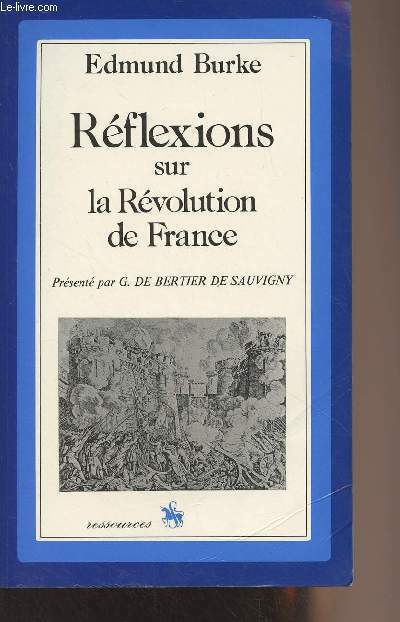
1980R300279653Slatkine Reprints. 1980. In-8. Broché. Etat d'usage, Couv. légèrement pliée, Dos satisfaisant, Intérieur frais. 536 pages. Réimpression de l'édition de Paris-Londres, s.d.. . . . Classification Dewey : 944.04-Révolution de 1789
1943RO60137809J. M. Dent & Sons Ltd - E. P. Dutton & Co.. 1943. In-12. Relié. Bon état, Couv. convenable, Dos satisfaisant, Intérieur acceptable. 361 pages. Annotations en page de garde (ex-libris). Jaquette manquante.. . . . Classification Dewey : 420-Langue anglaise. Anglo-saxon
1987RO60146909Penguin books. 1987. In-12. Broché. Etat passable, Couv. légèrement passée, Dos satisfaisant, Papier jauni. 400 pages. Texte en anglais. Nombreuses rousseurs. Coins frottés.. . . . Classification Dewey : 420-Langue anglaise. Anglo-saxon
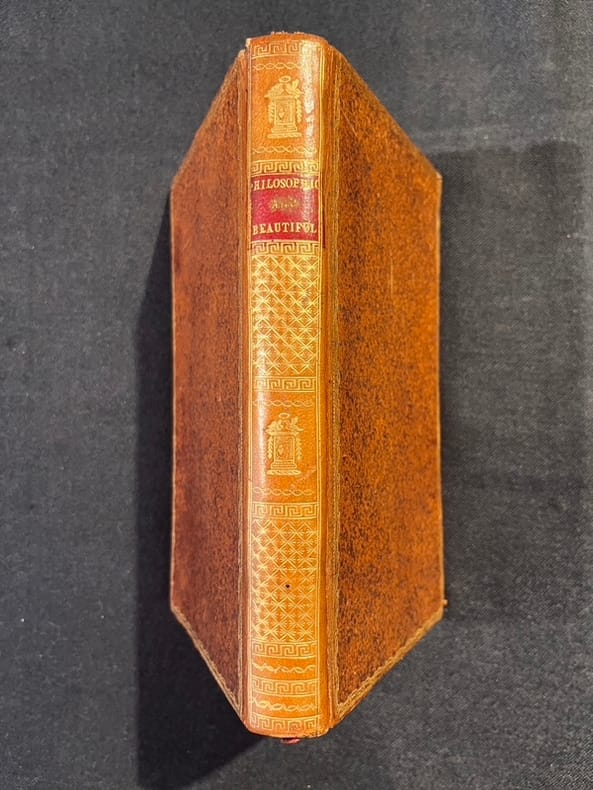
179221302Basil, printed and fold by J. J. Tourneisen, 1792. In-8 de X-[6]-291-[5] pages, plein veau moucheté brun, dos lisse orné de filets fleurons et grecques dorés, pièce de titre en maroquin rouge, filet et roulette dorés sur les plats, tranches marbrées.
2019687232.Gpaperback. Good. Access codes and supplements are not guaranteed with used items. May be an ex-library book. paperback