Edmund SpenserBiblio.com
33 résultats
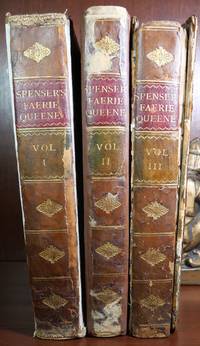
17515320London: J. Brindley S. Wright 1751. First Illustrated Edition. Measuring approximately 11.25" x 8.75" with 453 450 440 numbered pages respectively. <br /> <br /> These volumes are in fair condition. Volume one and two are in various stages of being rebound. Gilt lettering and design on spine is still legible. Volume III is in the worst condition with both boards detached. Front pages are loose and lacking the rear endpages. Interior pages of all volumes are clean and well preserved. <br /> <br /> Please view the many other rare titles available for purchase at our store. We are always interested in purchasing individual or collections of fine books.<br /> <br /> Inventory #F2-3. J. Brindley, S. Wright unknown
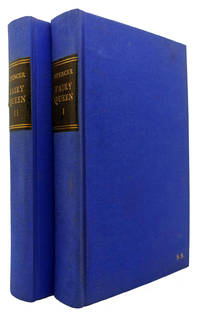
1758300360London: J. & R. Tonson 1758. First Edition; Early Printing. Fine binding. Both volumes Very Good in rebound blue cloth with previous owner initials emblazened on right bottom of front cover. J. & R. Tonson unknown
175157003London: Printed for J. Brindley and S. Wright 1751. .To Which are Now Added a New Life of the Author and also a Glossary. Adorn'd with thirty-two copper-plates from the original drawings of the late W. Kent Esq; architect and principal painter to his Majesty. Mottled calf boards gilt decs to spine. All three vols have detached front board and ffep rear boards also loose. Binding bumped and chipped minor loss to spine ends all lack spine title labels. Bookplates of Henry Curwen and John Law to each front pastedown. Vol II has some minor biological damage to first few pagesTextblocks however in good order clean solid text and plates bright. Full Leather. Good Minus. 4to. Printed for J. Brindley and S. Wright Hardcover
175144948London: printed for J. Brindley 1751. 3 volumes 4to; pp. 4 xxxvii 1 lxv 1 453; 2 450; 2 440 2 errata; 32 engraved plates after William Kent; woodcut head- and tailpieces; volume I bound in recent quarter tan calf antique maroon morocco label on spine; vols. II-III bound in full contemporary calf red and black morocco labels on gilt-decorated spines; joints barely cracked; very neat facsimile restoration in the fore-margin of b4 in vol. I with facsimile lettering touching the beginning or end of a total of 14 words; mild to moderate dampstain enters the foremargins of many pages throughout; textblock is otherwise very good and clean for the most part. One of the most splendid editions of Spenser's masterpiece with useful bibliographical information on the collation of the 1590 and 1596 quartos. The glossary occupies 13 pages of the preliminaries if vol. I. Ebert 21601; Lowndes III 2477. <br/><br/> printed for J. Brindley unknown books
175144948London: printed for J. Brindley 1751. 3 volumes 4to; pp. 4 xxxvii 1 lxv 1 453; 2 450; 2 440 2 errata; 32 engraved plates after William Kent; woodcut head- and tailpieces; volume I bound in recent quarter tan calf antique maroon morocco label on spine; vols. II-III bound in full contemporary calf red and black morocco labels on gilt-decorated spines; joints barely cracked; very neat facsimile restoration in the fore-margin of b4 in vol. I with facsimile lettering touching the beginning or end of a total of 14 words; mild to moderate dampstain enters the foremargins of many pages throughout; textblock is otherwise very good and clean for the most part. One of the most splendid editions of Spenser's masterpiece with useful bibliographical information on the collation of the 1590 and 1596 quartos. The glossary occupies 13 pages of the preliminaries if vol. I. Ebert 21601; Lowndes III 2477. printed for J. Brindley unknown
1758BB1494London: printed for J. and R. Tonson 1758. First Edition thus. Full Calf. Fine. First Annotated Edition illustrated grangerized with the full suite of 32 double-page plates by William Kent for the 1751 edition of Spenser’s Faerie Queene published by Stephen Wright and John Brindley ESTC T35152. 4to: xlii68 including glossary6731; 673pp Illustrated with 32 double-page tab-mounted copperplate engravings by William Kent. Engraved armorial bookplates of John Moore Paget 1791-1866 on front paste-downs. Laid in are various manuscipt leaves one on stationary of the Old Vicarage Cuckfield now a Grade II listed building originally built in the early 17th century rebuilt in Georgian style in 1780s and finally altered in the nineteenth century. A magnificent set printed on heavy paper and bound in contemporary full stained calf joints very skillfully rebuilt spine in six compartments between raised bands four very richly gilt two with red and black morocco lettering pieces gilt; decorative gilt rolls on thick board edges page edges speckled red. A superb perhaps unique example pages and plates pristine crisp fresh and bright. Lowndes V 2477 and III 2477. Alston III101. Spenser Encyclopedia pp. 389 for Kent and 706 for Upton. . Upton's edition was the first attempt at an original-spelling and an annotated text. "The extensive notes tracing sources and identifying historical personages are still valuable; all later annotators are indebted to Upton's erudition." Radcliffe Spenser and the Tradition: English Poetry 1579-1830 William Kent was a skilled designer and decorator but a poor painter and draughtsman and despite their energy and directness his designs for The Faerie Queene are not wholly successful they were severely criticised by Horace Walpole in his Anecdotes of Painting in England. But the subjects represented contain many interesting reflections of Kent's involvement with picturesque gothic architecture and garden design including such romantic structures as the Hermitage and Merlin’s Cave a thatched mock-gothic building housing a library for Queen Caroline at Richmond. John Moore Paget of Cranmore Hall Somerset inherited from his father a "library of curious and valuable books and a decided taste for bibliology. A book-hunter from his youth his constant delight in after life was to search old book-stalls and add from time to time some scarce or quaint old work or rare engraving to his increasing collection." Gentleman's Magazine vol. 221 1866. N. B. With few exceptions always identified we only stock books in exceptional condition. All orders are packaged with care and posted promptly. Satisfaction guaranteed. Fine Editions Ltd is a member of the Independent Online Booksellers Association and we subscribe to its codes of ethics. printed for J. and R. Tonson unknown
1751001<p><strong>SPENSER Edmund <em>The Faerie Queene</em></strong>. With an exact Collation of the Two Original Editions Published by Himself Spenser at London in Quarto; the Former containing the first Three Books printed in 1590 and the Latter the Six Books in 1596. To which are now added A new Life of the Author and also a Glossary. Adorn'd with thirty-two Copper-Plates from the Original Drawings of the late W. KENT Esq. London: Printed for J. Brindely. . . <strong>1751</strong>. 3 volumes. 4to pp. ii lxiii lxiv blank xxxvii xxxviii blank xxxix - xl Contents xli errata xlii blank 453 454 blank; ii 440 20 full-page engraved plates in volume 1 7 full-page engraved plates in volume 2 5 full-page engraved plates in volume 3 dully rebound probably 19th century in quarter calf publisher's cloth; tear in pp. 125-126 in volume 3 but otherwise a good clean set with good impressions of the plates.</p><p>The life is by Thomas Birch prolific writer member of the Society of Antiquaries and Fellow of the Royal Society. <em>The Faerie Queene </em>is an epic poem one of the longest in the English language. It is primarily an allegorical poem and was originally presented by Spenser to Queen Elizabeth I in 1589 in an attempt to gain Royal patronage. It has become a hugely influential work in which Spenser invented the verse form known as the Spenserian stanza.</p><p>Free Tracked Post for All UK Customers<br />Overseas Customers please contact for postage prices</p> J. Brindely. . . hardcover
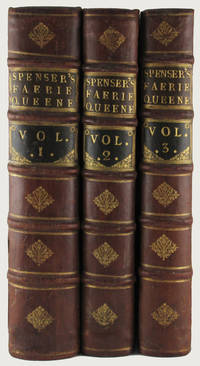
175133225London: for J. Brindley in New Bond-Street and S. Wright Clerk of his Majesty's Works. 1751. 3 volumes. Very Scarce First Printing of the Edition. A copy with pleasing provenance coming from the library and with the bookplate of John Templer who was educated at Westminster School and Trinity College Cambridge graduating in 1836. He was admitted to the Inner Temple in 1837. Templer became a close friend of James Brooke through his elder brother James Lethbridge Templer 1811–1845 of the East India Company Merchant Navy. Templer acted as Brooke's legal counsel. In 1853 Templer was called to the bar and from 1854 he was one of the Masters of the Court of Exchequer Illustrated with 32 very finely engraved full-page copper plates and engraved head and tailpieces and initials throughout. Large thick quartos in very fine contemporary polished calf the spines with raised bands gilt ruled two compartments with fine contrasting maroon and black morocco lettering labels gilt the remaining compartments with central gilt tooling original endleaves. 2 lxiii xxxvii 453 2; 2 450; 2 440 pp An unusually fine handsome and beautifully bound set. The bindings are in excellent condition and these are crisp clean copies especially so. Very rarely are such fine copies encountered in the marketplace. TRULY FINE COPIES OF THIS BEAUTIFUL PRINTING OF SPENSER'S FAIRIE QUEENE ONE OF THE GREATEST WORKS IN THE ENGLISH LANGUAGE.<br> Edmund Spenser stands with William Shakespeare and John Milton in the history of English poetry and litereature. He is recognized as one of the premier craftsmen of modern English verse from its infancy and one of the greatest poets in the language. Spenser was known to his contemporaries as "the prince of poets†and was said by them to be "as great in English as Virgil in Latinâ€. He was greatly preferred over Shakespeare by Queen Elizabeth and many others of the day. He left behind his masterful essays in every genre of poetry from pastoral and elegy to epithalamion and epic. A century later John Milton would call Spenser "a better teacher than Aquinas†and was greatly influenced by him. Since then generations of readers have admired his subtle use of language his imagination his immense classical and religious learning and "his unerring ability to synthesize and ultimately to delightâ€.<br> THE FAERIE QUEEN is Spenser’s best known work and arguably his best. It is especially notable for its form: it was the first work written in what is now called Spenserian stanza and is also one of the longest poems in the English language. An allegorical work written in praise of Queen Elizabeth I it is largely symbolic the poem follows several knights in an examination of several virtues. It found not surprisingly great political favour with Elizabeth I and was such a public success that it quickly became Spenser's defining work. The last six books of the twelve Spenser intended were never written though two cantos noted as the Seventh and Eighth Bookes appear here. for J. Brindley, in New Bond-Street and S. Wright, Clerk of his Majesty's Works.... hardcover