ESSEX HOUSE PRESS: SPENSER, EdmundBiblio.com
302 résultats
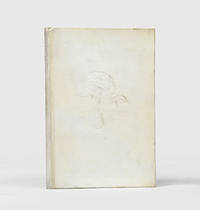
1901165727London: Essex House Press 1901. The epitome of an Essex House Press production First Essex House Press edition number 62 of 150 copies only each printed on vellum and hand-coloured. First published in 1595 Spenser wrote this ode for his bride on their wedding day. It is printed here as the fifth work in the Essex House Press Great Poems Series. The Essex House Press was founded by Charles Robert Ashbee and Laurence Hodson following the closure of William Morris's Kelmscott Press in 1897 and "came from the heart of the arts and crafts movement" Franklin p. 64. Ashbee bought the Kelmscott Press's Albion printing presses after William Morris's death and employed one of the Kelmscott compositors Thomas Binning. In 1902 "a bindery was established in the Guild under the direction of Annie Power who had been a student of Douglas Cockerell" Crawford p. 400. For this work Florence Kingsford Cockerell 1871-1949 one of the leading book illuminators of the English arts and crafts movement provided the illuminated letters. Kingsford Cockerell studied calligraphy under Edward Johnston and predominantly worked for the Ashendene Press. Octavo. Printed in Caslon type. Hand-coloured frontispiece woodcut by Reginald Savage illuminated letters in gilt red blue and green by Florence Kingsford Cockerell with tissue guards. Original vellum spine lettered in gilt rose and "Soul is Form" blind-stamped to front cover. Pastedowns lifting slightly from boards: a near-fine copy. Ashbee A Bibliography of The Essex House Press p. 15; Franklin p. 243; Ransom Essex House Press 23. Alan Crawford C.R. Ashbee: Architect Designer & Romantic Socialist 2005; John Mansfield Thomson Farewell Colonialism: The New Zealand International Exhibition Christchurch 1906-07 1998. hardcover
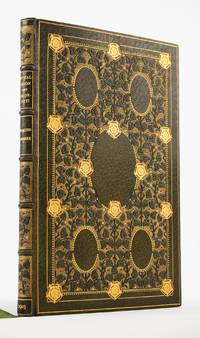
1903ST20957London: John & E. Bumpus 1903. 211 x 140 mm. 8 1/2 x 5 1/2". 86 pp. <br/> LOVELY GREEN MOROCCO GILT AND INLAID FOR J. & E. BUMPUS stamped in gilt on rear turn-in LIKELY BY RIVIERE & SON upper cover with gilt fillet frame central panel with densely blind-stamped leafy vines on a gilt pointillé background accented with onlaid red morocco dots large oval at center and four smaller ovals all framed by gilt beads the central oval adorned with four gilt and onlaid red and white morocco Tudor roses 10 more such roses at corners and along the sides of outer frame lower cover with gilt fillet frame raised bands spine compartments with blind-stamped leafy sprig on pointillé ground with onlaid black ivory and red morocco dots gilt lettering turn-ins with gilt border gilt trio of leaves at corners all edges gilt. With engraved frontispiece portrait title page vignette two headpieces and two tailpieces. Upper cover and spine evenly faded to olive green likely from being displayed just a hint of bowing to boards but A VERY FINE COPY the text entirely clean fresh and bright and the binding unworn.<br/> <br/> This lovely printing of Spenserian poetry comes in an unusual and skillfully executed binding likely by Riviere & Son which was producing some of its very best work at the time of publication. The poems here were inspired by Spenser's courtship of and 1594 marriage to his second wife Elizabeth Boyle. Day calls "Amoretti" "a unique sonnet sequence in Renaissance England" and he is unreserved in his praise for "Epithalamion" calling it "the most beautiful nuptial poem in English and perhaps in any language." Spenser 1552 - 99 was the first modern English poet to achieve major stature and Day points out that those "influenced by Spenser are virtually a roster of the great English poets since his time" among them Milton Wordsworth Keats Rossetti and Tennyson. Bumpus bindings were done for the bookselling firm of John and Edward Bumpus founded in 1780. The firm long enjoyed a reputation as purveyors of fine and beautiful bindings without ever operating a bindery. Instead they outsourced the work to the best binders of the day including Riviere and Morrell the former being a likely choice here. The combination of swirling blind-stamped vines a densely stippled background and onlaid blossoms demonstrates creativity in design proficiency in a range of finishing techniques and meticulous execution. The five blank ovals on the upper cover bring to mind the layout of Cosway bindings a specialty of the Riviere firm in which those ovals would be filled with miniature paintings on ivory under glass. Cosway bindings could sometimes be ornate to the point of being overwhelming so the blank ovals here are a welcome moment of restraint amid the animation of the cover design. Apparently an earlier owner enjoyed displaying this binding--as who would not--and the leather has mellowed to an olive green--which may actually be a more pleasing foundation for the decoration than the original brighter green. Certainly the book saw no other use as the contents are as fresh as the day the volume left the printer. John & E. Bumpus unknown