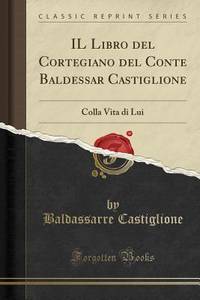
Castiglione, AlfioBiblio.com
502 résultats
1471075303.Ghardcover. Good. Access codes and supplements are not guaranteed with used items. May be an ex-library book. hardcover
1990214372Genova Italy: Sagep Editrice 1990. Softcover. VG- wraps with minor creasing sunning and sticker on back cover all else excellent. Color illustrated wraps with white text. 267 pp. Bw and some color illustrations. Catalog of an exhibition at the Accademia ligustica di belle arti Genoa Jan. 27-Apr. 1 1990. Sagep Editrice paperback
1016438567.Ghardcover. Good. Access codes and supplements are not guaranteed with used items. May be an ex-library book. hardcover
1024621219.Ghardcover. Good. Access codes and supplements are not guaranteed with used items. May be an ex-library book. hardcover
50953214like new. unknown
1272682390.Gpaperback. Good. Access codes and supplements are not guaranteed with used items. May be an ex-library book. paperback
45389050like new. unknown
8811362601.Gpaperback. Good. Access codes and supplements are not guaranteed with used items. May be an ex-library book. paperback
1771C0584<br />4 books in 2 volumes: 8xvi255 pages with frontispiece; 205 pages with index and errata. Octavo 8" x 5 3/4 bound in stiff wrappers with labels to spines and deckle edges. This edition not in <i>Bibliotheca Van der Linde-Niemeijeriana</i>; however there are a number of listings for this title in the bibliography 4315 through 4330 listing 16 editions of various dates and publishers. First published in 1528.<br /><br />Baldassare Castiglione count of Novilara was an Italian courtier diplomat soldier and a prominent Renaissance author. He was born into an illustrious Lombard family at Casatico near Mantua. In 1494 at the age of sixteen Castiglione began his humanist studies in Milan which would eventually form his future writings. However in 1499 after the death of his father Castiglione left his studies and Milan to succeed his father as the head of their noble family. Soon his duties seem to have included representative offices for the Gonzaga court. For the Gonzaga he traveled quite often; during one of his missions to Rome he met Guidobaldo da Montefeltro duke of Urbino. Urbino was at that time the most refined and elegant among Italian courts a meeting point of culture ably directed and managed by duchess Elisabetta Gonzaga and her sister-in-law Maria Emilia Pia. The most constant guests included: Pietro Bembo Giuliano de' Medici Cardinal Bibbiena Ottaviano and Federigo Fregoso and Cesare Gonzaga a cousin of both Castiglione and the duke. The hosts and guests organized intellectual competitions which resulted in an interesting stimulating cultural life producing brilliant literary activity. Castiglione wrote about his works and of those of other guests in letters to other princes maintaining an activity very near to diplomacy though in a literary form. In 1516 Castiglione was back in Mantua where he married Ippolita Torelli descendant of another ancient noble family; two passionate letters he wrote to her expressing deep sentiment have survived but she unfortunately died only four years later. At that time Castiglione was in Rome again as an ambassador this time for the Duke of Mantua. In 1521 Pope Leo X conceded to him the tonsura first sacerdotal ceremony and thereupon began Castiglione's second ecclesiastical career.<br /><br />In 1528 the year before his death the book by which he is most famous <i>The Book of the Courtier Il Libro del Cortegiano</i> was published in Venice by the Aldine Press run by Andrea d'Asolo father-in-law of Aldus Manutius. The book is based on a nostalgic recreation of Castiglione's experience at the court of Duke Guidobaldo da Montefeltro of Urbino at the turn of the sixteenth century. It describes the ideal court and courtier going into great detail about the philosophical and cultured and lively conversations that occurred at Urbino presided over by Elisabetta Gonzaga. Castiglione himself does not contribute to the discussion the book is his tribute to his friendship with the participants of the discussion all of whom went on to have important positions. <i>The Book of the Courtier</i> caught the "spirit of the times" and was soon translated into Spanish German French and English. One hundred and eight editions were published between 1528 and 1616 alone. Pietro Aretino's La cortigiana is a parody of this famous work. Castiglione's depiction of how the ideal gentleman should be educated and behave remained for better or for worse the touchstone for all the upper classes of Europe for next five centuries. <b>The work on chess is in the second volume of this work</b>.<br /><br /><b>Condition:</b><br /><br />Old stamps to title of volume two and first un-numbered page of volume one Spine ends chipped with loss to heal corners bumped wrappers rubbed else a good copy of scarce title. Vendramini Mosca hardcover
0364089849.Gpaperback. Good. Access codes and supplements are not guaranteed with used items. May be an ex-library book. paperback
0364691263.Gpaperback. Good. Access codes and supplements are not guaranteed with used items. May be an ex-library book. paperback
036491940X.Ghardcover. Good. Access codes and supplements are not guaranteed with used items. May be an ex-library book. hardcover
0365078026.Ghardcover. Good. Access codes and supplements are not guaranteed with used items. May be an ex-library book. hardcover
1390621944.Gpaperback. Good. Access codes and supplements are not guaranteed with used items. May be an ex-library book. paperback
1391483642.Ghardcover. Good. Access codes and supplements are not guaranteed with used items. May be an ex-library book. hardcover
2016BN191902Quondam A. Bulzoni 2016. 2016. Il libro del cortegiano: Europa delle Corti 160 EAN ISBN-13: 9788868970321 ISBN ISBN-10: 8868970325 Erscheinungsjahr: 2016 Herausgeber: Quondam A. Bulzoni ISBN/EAN: 8868970325 ISBN: 88-6897-032-5 978-88-6897-032-1 Autor des Buches: castiglione cortegiano Titel des Buches: libro del cortegiano castiglione quondam Il libro del cortegiano: Europa delle Corti 160 Europa delle corti Baldassarre Castiglione Il libro del cortegiano: Europa delle Corti 160 A. Quondam Europa delle corti Baldassarre Castiglione Il libro del cortegiano <br/><br/>Baldassarre Castiglione Il libro del cortegiano: Europa delle Corti 160 Il libro del cortegiano: Europa delle Corti 160 cortegiano Titel des Buches: libro del cortegiano castiglione quondam Il libro del cortegiano: Europa delle Corti 160 Europa delle corti Baldassarre Castiglione EAN ISBN-13: 9788868970321 ISBN ISBN-10: 8868970325 Erscheinungsjahr: 2016 Herausgeber: Quondam A. Bulzoni ISBN/EAN: 8868970325 ISBN: 88-6897-032-5 978-88-6897-032-1 Autor des Buches: castiglione Il libro del cortegiano: Europa delle Corti 160 A. Quondam Europa delle corti Baldassarre Castiglione Il libro del cortegiano Quondam, A. Bulzoni unknown
0364784350.Ghardcover. Good. Access codes and supplements are not guaranteed with used items. May be an ex-library book. hardcover
0366834835.Ghardcover. Good. Access codes and supplements are not guaranteed with used items. May be an ex-library book. hardcover
0366834703.Gpaperback. Good. Access codes and supplements are not guaranteed with used items. May be an ex-library book. paperback
B9781168438348New. unknown
0364285591.Gpaperback. Good. Access codes and supplements are not guaranteed with used items. May be an ex-library book. paperback
1168438349.Gpaperback. Good. Access codes and supplements are not guaranteed with used items. May be an ex-library book. paperback
1161294708.Ghardcover. Good. Access codes and supplements are not guaranteed with used items. May be an ex-library book. hardcover
1161204156.Gpaperback. Good. Access codes and supplements are not guaranteed with used items. May be an ex-library book. paperback
154532371Venetia Venice: nelle case de figlioli di Aldo I Manuzio 1545. Fourth Aldine printing. Small folio. 122 ff. Eighteenth century full pigskin gilt lettering to the spine all edges green a single leaf in book three lacking but the text supplied in consummate manuscript predating or contemporary with the binding. Faint dampstain cutting across the upper corner of the last 16 leaves at the gutter also evident on both pastedowns a few marks to the boards an attractive copy. Baldessare Castiglione 1478-1529 was very much a man of his day educated in a Humanist school in Milan in the 1490s where he also served at the court of Duke Ludovico Sforza. He returned to his native Mantua on the death of his father at the age of 21 whereupon he entered the service of the local marquis Francesco Gonzaga for the next five years. During this time he became acquainted with Guidobaldo da Montefeltro Duke of Urbino whose court he entered in 1504. Castiglione acted in various capacities for Guidobaldo and his successor principally diplomatic though he also played an active role in the flourishing cultural life of the court. His talents took him to Rome in ambassadorial roles for Urbino and subsequently Mantua leading to his involvement with the Vatican and his later ecclesiastical career towards the end of his life he was made Bishop of Avila. He is now best remembered for this work first published in 1528 by the Aldine Press. Written in the form of a dialogue between several protagonists Castiglione sought to define the courtly ideal. Going beyond a mere book of etiquette he described the essential characteristics and traits that a courtier should exhibit. These include refinement in the arts athletic prowess most obviously in bearing arms great oratory skills very much in the Ciceronian tradition and something which Castiglione termed "sprezzatura". Translated and defined by the Oxford English Dictionary as "studied carelessness" Castiglione suggested that a man about court should eschew flamboyance and grandiosity in favour of a genteel modest and nonchalant manner and temperament - essentially that all his efforts and undertakings should be worn lightly and completed with as little perceptible exertion as possible. Its contemporary importance is demonstrated by the fact that the Aldine Press had printed it another four times by 1547 the first four editions in folio as here the final as an 8vo. By 1616 over 100 further editions in Italian and in translation had been published. Unsurprisingly its cultural influence in the succeeding centuries became manifest across Europe with traces of the work found in the writings of Cervantes Corneille and amongst others in the English language Shakespeare Spenser and Shelley. Printing and the Mind of Man 59. "It is an epitome of the highest moral and social ideas of the Italian Renaissance. Venetia [Venice]: nelle case de figlioli di Aldo [I Manuzio] unknown