Captaine B.-H. Liddell HartLivre Rare Book
178 résultats
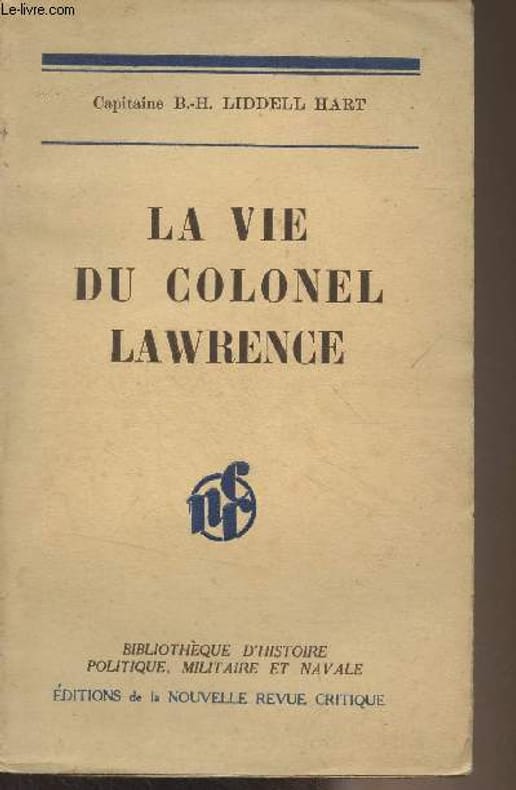
1935R300324825Ed. de la Nouvelle Revue Critique. 1935. In-8. Broché. Etat d'usage, Couv. légèrement passée, Dos plié, Papier jauni. 317 pages - quelques cartes en noir et blanc hors texte.. . . . Classification Dewey : 820-Littératures anglaise et anglo-saxonne
1953R320001654AMIOT-DUMONT. 1953. In-8. Broché. Bon état, Couv. convenable, Dos satisfaisant, Intérieur frais. 318 pages illustrées de nombreuses photos et plans en noir et blanc.. . . . Classification Dewey : 904-Recueils de récits d'événements
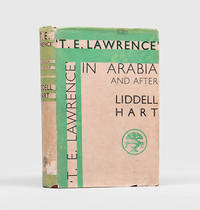
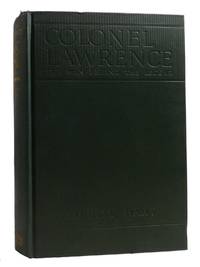
1934175310London: Jonathan Cape 1934. First edition first impression of this influential early biography which was central to the formation of the Lawrence myth. Captain Sir Basil Henry Liddell Hart 1895-1970 was one of the leading military thinkers of the 20th century and his book is often considered the first "serious" Lawrence biography after the sensationalism of Lowell Thomas and Robert Graves. It provides valuable insight into Lawrence's achievements as a strategist "who had the vision to anticipate the guerrilla trend of civilized warfare" p. 382. Liddell Hard considered that his friend Lawrence "was more deeply steeped in knowledge of war than any other general of the First World War"; a judgement that has been seen as hyperbolic by many in the intervening 80 years but which in view of current thinking on the increasing prevalence of asymmetric warfare and counterinsurgency operations seems remarkably prescient. Liddell Hart views Lawrence as a brilliant leader worthy of comparison to Napoleon and Marlborough. Using minimal resources against a numerically and technologically superior foe Lawrence "turned the weakness of the Arabs into an asset and the strength of the Turks into a debit" p. 383. Octavo. Half-tone portrait frontispiece after Augustus John 11 similar plates 5 folding maps. Original red cloth spine and front cover lettered in gilt publisher's device in blind on rear cover top edge red bottom edge untrimmed. With dust jacket. A few faint stains to cloth top right corner a little bumped; jacket unclipped minor chips along edges spine a touch toned with small skinned patch at foot front panel with faint tide marks and neat repair to foot: a very good copy in like jacket. O'Brien E058. hardcover
1934191023London: Jonathan Cape 1934. First edition first impression the copy of David Garnett with his ownership signature on the front free endpaper. Liddell Hart produced one of the earliest and most influential biographies of Lawrence relying on official histories correspondence with friends and colleagues and research into Lawrence's own war time papers. David Garnett 1892-1981 was the son of Edward Garnett the publisher and editorial advisor to Jonathan Cape. He came to share a close friendship with Lawrence often exchanging letters and giving his thoughts on manuscripts. Garnett was one of the first readers of The Mint and published their correspondence in The Letters of T. E. Lawrence 1938 and Selected Letters of T. E. Lawrence 1952. Octavo. Photographic portrait frontispiece of T. E. Lawrence 11 half-tone photographic plates 5 folding maps maps in text. Original red buckram spine and front board lettered in gilt red board blind-stamped with publisher's device top edge red bottom edge untrimmed. With dust jacket. Cloth a touch marked spine a little cocked contents lightly foxed especially title page; jacket unclipped overall toned and foxed closed tears and spine ends sometime repaired with tissue on verso: a very good copy in like jacket. O'Brien E058. hardcover
19457953London: Jonathan Cape 1945. New Enlarged Edition. Eighth Printing. fair to good. 491 illus. fold-out maps ink name & bookplate inside front flyleaf boards somewhat scuffed spine discolored. Jonathan Cape hardcover
19352058London: Jonathan Cape 1935. Second Revised Edition. First Printing. fair. 491 illus. maps boards scuffed and soiled small tear at spine. Jonathan Cape hardcover
19271390668Boston: Little Brown and Company 1927. Hardcover. Octavo viii ix xi 281 pages. In Good plus condition. Bound in the publisher's red cloth with gilt lettering to the spine. Boards have slight wear including faint sunning to the spine and some rubbing to the head/tail edges. Slight cocking to the spine. Text block has moderate wear including age toning to the edges and mild offsetting to the end papers. Some foxing to several interior pages. Previous bookshop's small sticker to the rear pastedown. Frontispiece. Illustrated. <br /> <br /> <p> NOTE: Shelved in Netdesk Column O ND-O. 1390668. FP New Rockville Stock. Little Brown and Company hardcover
19261822Edinburgh: William Blackwood & Sons Ltd 1926. fair ex-lib. 281 maps bibliography discolor ins bds lib bkplate ins fr bd bds weak bds scuffed & worn lib call no. on spine. William Blackwood & Sons Ltd unknown
193473494London: Faber & Faber 1934. revised edition. Nice Copy. octavo. orig. cloth 635pp. fldg. maps bibliog. index A Fine account of WWI. An expanded Version of ÒThe Real WarÓ. No dust jacket a couple of brown marks to edge of text block but a nice copy of the first printing of the revised second edition Faber & Faber hardcover
1926158659London: William Clowes and Son 1926. Third and updated edition uncommon in commerce incorporating the findings of two years Liddell Hart spent watching Regular and Territorial Army training. "Apart from an increase in the 'meat' or explanation clothing the bones of the framework the revisions comprise a modification in the framework and a slight change in nomenclature" author's preface. The first edition published under the title The Framework of a Science of Infantry Tactics 1921 was an early exploration of Liddell Hart's "Expanding Torrent" system of attack. For the third edition Ivor Maxse revised his foreword praising the author for having "visualised minor tactics from the point of view of junior commanders" and for his "diagrams plates and definitions which can be understanded of the people" p. vii. Small octavo. With 3 folding plates including 2 illustrating "Expanding Torrent" system. Original brown cloth cloth title in black to spine and front board. Ex-War Office Library with its bookplate on front pastedown and ink stamps on verso of half-title and title page; couple of instances of blue pencil sidelining. Spine ends fraying boards clean front free endpaper renewed: a very good copy. hardcover
197290967Noguer/Rizzoli/Purnell 1972. hardcover. Bueno. Barcelona 1972. Noguer/Rizzoli/Purnell. Piel con dorados. 416 pp. 32x27. Profusamente ilustrado. Noguer/Rizzoli/Purnell hardcover
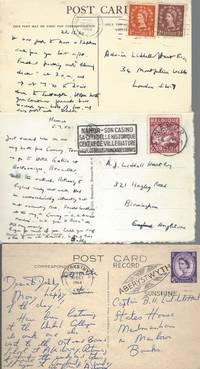
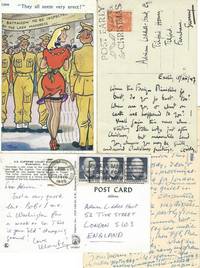
1950101383AB1950. Namur / Stockholm / Panama / Gibraltar / Tarjeta etc. 1950 - 1965. Small Oblong Octavo. 7 postcards. Softcover. Very good condition with only minor signs of wear. Content of the postcards mainly of private nature about travel etc. The collection comes with two 2 additional postcards by Basil Liddell Hart to his mother. paperback
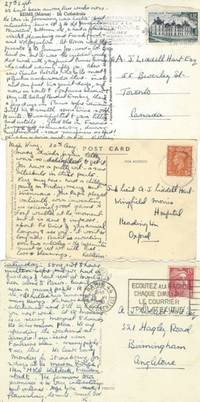
1944101382AB1944. Firenze / Reims / Tanger / Dingle etc. etc. 1944 - 1970. Small Oblong Octavo. 45 postcards. Softcover. Very good condition with only minor signs of external wear. The collection also comes with 3 additional postcards written by Kathleen to Basil's mother. paperback
1942101384AB1942. Santa Barbara / Firenze / Washington / Sweden / Germany etc. etc. etc. 1942 - c. 1989. Small Oblong Octavo. postcards. Softcover. Very good condition with only minor signs of wear. Content of the postcards mainly of private nature about travel meetings small talk etc. paperback
19341393315New York: Dodd Mead and Company 1934. Fourth Printing. Hardcover. Large Octavo vi viii ix 382 pages. In Good plus condition with a Fair dust jacket. Dust jacket protected with a mylar covering clipped front flap. Spine pictorial green beige and red with red and beige lettering. Exterior has moderate plus wear including age toning slight soiling marks and several instances of chips to the head/tail edges and joints. Boards have slight wear with sparse light whitish scuffs and light rubbed head tail edges. Slight cocking to the spine. Text block has modest wear including moderate age toning to the fore/tail edges and red coloring to the head edge. Deckled fore edge. Offsetting to the green end papers. Frontispiece. Illustrated. Fourth printing. <br /> <br /> Oversized books. Additional postage necessary for international/expedited customers. Economy International shipping unavailable due to size/weight restrictions. For international/expedited customers please inquire about rates. <br /> <br /> <p>NOTE: Shelved in Netdesk Column Q ND-Q. 1393315. FP New Rockville Stock. Dodd Mead and Company hardcover
1934208198New York: Dodd Mead & Co 1934. First Edition; Fourth Printing. Hardcover. Very Good in boards. Owner name on FEP. Dodd, Mead & Co hardcover
1934331New York: Dodd Mead & Company 1934. Fourth Printing. good. 382 illus. maps index rear board scratched spine soiled. Dodd, Mead & Company unknown
19341235New York: Dodd Mead & Company 1934. Fourth Printing. good. 382 illus. maps index discoloration inside boards lettering on spine faded. Dodd, Mead & Company hardcover
19342061New York: Dodd Mead & Company 1934. Fourth Printing. fair. 382 illus. maps index front board weak stain on fore-edge bookplate inside front board boards scuffed tears at spine. Dodd, Mead & Company hardcover
1934101438New York: Dodd Mead & Co 1934. Third Printing. Hardcover. Very Good in boards. Scuffing to page edges and to panels. Wear to crown and heel. ; 8vo 8" - 9" tall. Dodd, Mead & Co hardcover
193753700New York: Halcyon House 1937. new edition. Very Good. octavo. orig. cloth ix 406pp. frontis. b/w pls. maps index Fine account of a great Warrior by a great Strategist. New & enlarged edition. Cloth rather mottled o/w a VG tight clean copy. Uncommon edition Halcyon House hardcover
195080473London: Cassell and Company Ltd 1950. First Printing. Hardcover. Good/Fair. Format is 5 inches by 7.5 inches. viii 2 390 pages. Index Sir Basil Henry Liddell Hart 31 October 1895 - 29 January 1970 commonly known throughout most of his career as Captain B. H. Liddell Hart was a British soldier military historian and military theorist. In the 1920s and later he wrote a series of military histories that proved influential among strategists. He argued that frontal assault was a strategy that was bound to fail at great cost in lives as happened in the First World War. He instead recommended the "indirect approach" and reliance on fast-moving armored formations. In his writings on mechanized warfare Liddell Hart had proposed that infantry be carried along with the fast-moving armored formations. He described them as "tank marines" like the soldiers the Royal Navy carried with their ships. He proposed they be carried along in their own tracked vehicles and dismount to help take better-defended positions that otherwise would hold up the armored units. That contrasted with J.F.C. Fuller's ideas which put heavy emphasis on massed armored formations. Liddell Hart foresaw the need for a combined arms force with mobile infantry and artillery which was similar but not identical to the make-up of the panzer divisions that Heinz Guderian developed in Germany. In 1954 Liddell Hart published his most influential work Strategy. The book was largely devoted to a historical study of the indirect approach and in what ways various battles and campaigns could be analyzed using that concept. Still relevant it was a factor in the development of the British maneuver warfare doctrine. The author deals with some basic problems of the human search for security against aggression. Part I of the book analyzes some of the principal puzzles of World War II. Derived from a Kirkus review: A serious well-informed military analyst and historian considers the military situation of Western Europe with appraisals and recommendations for its defense in a war with Russia. The book falls into five parts. Part I deals with blunders of the last war French military orthodoxy leading up to the 1940 collapse failure to clean up in Africa in 1941 much of this based on interviews with German generals Germany's lack of tank transport in Russia the policy of unconditional surrender and fostering resistance movements.Part II titled "Tomorrow" considers the next war and here the author recommends a minimum land force to check the Russian spearheads with preponderant effort concentrated on air strength. Part III surveys Russia's forces today and describes the unused airborne forces as the "ace up Stalin's sleeve". Part IV considers unification the future of armored forces conscription and the Army reorganized for greater flexibility. Finally Part V reviews such problems as an international police force disarmament and limitations of war. There are enough issues addressed to make it of enduring interest to the military strategist and historian. Cassell and Company Ltd hardcover
19507952New York: William Morrow & Co 1950. Presumed First Edition First printing. Hardcover. Good/Fair. 2 x 335 5 pages. Occasional footnotes. Index. DJ worn torn soiled and chipped. Book is slightly cocked. Some page discoloration and soiling. Sir Basil Henry Liddell Hart 31 October 1895 - 29 January 1970 commonly known throughout most of his career as Captain B. H. Liddell Hart was a British soldier military historian and military theorist. He wrote a series of military histories that proved influential among strategists. Arguing that frontal assault was bound to fail at great cost in lives as proven in the First World War he recommended the "indirect approach" and reliance on fast-moving armored formations. His pre-war publications are known to have influenced German World War II strategy. He worked as the military correspondent of The Times from 1935 to 1939. In the mid-to-late 1920s Liddell Hart wrote a series of histories of major military figures through which he advanced his ideas that the frontal assault was a strategy bound to fail at great cost in lives. He argued that the losses Britain suffered in the Great War were caused by its commanding officers not appreciating that fact of history. He believed the British decision in 1914 of intervening on the Continent with a great army was a mistake. He claimed that historically "the British way in warfare" was to leave Continental land battles to her allies intervening only through naval power with the army fighting the enemy away from its principal front in a "limited liability" commitment. In his early writings on mechanized warfare Liddell Hart had proposed that infantry be carried along with the fast-moving armored formations. Liddell Hart foresaw the need for a combined arms force with mobile infantry and artillery which was similar but not identical to the make-up of the panzer divisions that Heinz Guderian developed in Germany. According to Liddell Hart's memoirs in a series of articles for The Times from November 1935 to November 1936 he had argued that Britain's role in the next European war should be entrusted to the air force. The ideas influenced Neville Chamberlain then Chancellor of the Exchequer who argued in discussions of the Defence Policy and Requirements Committee for a strong air force rather than a large army that would fight on the Continent. Becoming prime minister in 1937 Chamberlain placed Liddell Hart in a position of influence behind British grand strategy in the late 1930s. Liddell Hart gained an introduction to the Secretary of State for War Leslie Hore-Belisha. Through July 1938 the two had an unofficial close advisory relationship. Liddell Hart provided Hore-Belisha with ideas which he would argue for in Cabinet or committees. On 20 October 1937 Chamberlain wrote to Hore-Belisha "I have been reading in Europe in Arms by Liddell Hart. If you have not already done so you might find it interesting to glance at this especially the chapter on the 'Role of the British Army'". Hore-Belisha wrote in reply: "I immediately read the 'Role of the British Army' in Liddell Hart's book. I am impressed by his general theories". Derived from a Kirkus review: A serious well-informed military analyst and historian considers the military situation of Western Europe with appraisals and recommendations for its defence in a war with Russia. The book falls into five parts. Part I deals with blunders of the last war French military orthodoxy leading up to the 1940 collapse failure to clean up in Africa in 1941 much of this based on interviews with German generals Germany's lack of tank transport in Russia the policy of unconditional surrender and fostering resistance movements.Part II titled "Tomorrow"" considers the next war and here the author recommends a minimum land force to check the Russian spearheads with preponderant effort concentrated on air strength. Part III surveys Russia's forces today and describes the unused airborne forces as the "ace up Stalin's sleeve". Part IV considers unification the future of armored forces conscription and the Army reorganized for greater flexibility. Finally Part V reviews such problems as an international police force disarmament and limitations of war. Dated by the swift passage of history with the Korean War nonetheless there are enough basic issues to make it of interest to the armchair strategist. William Morrow & Co hardcover
19508021London: Cassell and Company Ltd 1950. First Printing. fair ex-lib. 390 index slight discolor ins bds sm rough spots ins bds bds & spine scuffed & worn tears at spine sm rough spot on spine. The author deals with some basic problems of the human search for security against aggression. Part I of the book analyzes some of the principal puzzles of World War II. Cassell and Company Ltd unknown
19502055New York: William Morrow & Co 1950. First U.S. Edition. good. 335 index boards soiled stamps inside front and rear boards. William Morrow & Co hardcover