KŌETSU UTAI BON 光悦謡本 from the Saga PressBiblio.com
1 430 résultats
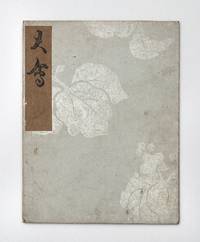
1117114 pages of text & two pages forming paste-downs of varying shades of pale pink & cream gofun biki torinoko mica-printed paper all printed with mica patterns endpapers printed with mica patterns of plum flowers on branches & autumnal weeds bound in two “quires†& sewn together. Small 4to 240 x 180 mm. orig. pale gray semi-stiff wrappers with mica woodblock-printed designs of hydrangea leaves orig. printed label on upper cover. Saga near Kyoto: about 1608 or shortly thereafter.<br /> <BR> <BR> An ultimate luxury copy tokusei bon 特製本 in very fine condition with mica-printed text leaves and covers using paper of shades of pale pink cream and gray. This is the second time we have handled a copy of a KÅetsu utai bon in the most luxurious state of three.<br /> <BR> <BR> This is one of the series of 100 Noh plays produced at the famous private press in Saga just north of Kyoto. These sumptuous luxury editions were printed for the wealthy and enlightened merchant Suminokura Soan 1571-1632 in collaboration with his calligraphy teacher KÅetsu a leading cultural figure of his day famous as an artist potter lacquerer and connoisseur. These books are amongst the most remarkable printed works created in Japan or anywhere else; their design is far in advance of anything produced in the West. Issued in limited numbers they were intended for private distribution to an elite audience friends and acquaintances of the creators who formed the patrons of the Saga artistic community.<br /> <BR> <BR> Printed with movable type on luxurious thick paper the books have according to Hillier a modernity in design matched only by the works of William Blake and the French artists’ books of the late 19th and early 20th centuries. They reveal the beauty of native Japanese calligraphy. The movable type is based on the calligraphy of KÅetsu.<br /> <BR> <BR> This series of mostly chants from Noh plays comprises “small pamphlet-size books each of about twelve or thirteen sheets whose outstanding feature is the decoration invariably of mica-printed patterns on stained or dyed paper which is of a distinction that immediately links them with the collaborative scroll works by KÅetsu and SÅtatsu and which has led to their being called KÅetsu-bon…These designs resulting from a sophisticated adaptation or distortion of natural forms are notable examples of one of the unique contributions of Japan to world art…<br /> <BR> <BR> “But decoration apart these No booklets are remarkable in other ways. An unusually thick and opaque kind of paper was used no doubt made specially for these editions and contrary to normal practice it was printed on both sides of the sheet. This ruled out the normal construction of a book whereby the sheets printed on one side only were folded in two and bound at the loose edges. The majority of the KÅetsu-bon were made up by an entirely different method. A number of sheets usually six in this copy three in the first “quire†and two in the second the outer leaves used as paste-downs were placed flat one above the other and the batch was then folded in two; two such sections would form a complete book. The binding again was unusual. The outer covers though printed first as a single sheet invariably with a mica-printed design were cut in two and each given a folded turnover along one edge in which one batch of the folded sheets was lodged. The two halves were then sewn together through the turn-overs of the two halves of the cover brought together at the inner edge. This is a binding method unique to Japan and is known as Yamato-toji or recchÅsÅ…<br /> <BR> <BR> “These KÅetsu-bon represent an astonishing leap forward to something entirely unprecedented in the history of the illustrated or decorated book. This was the first time a book had been conceived as a single unified work of printed decorative art…not until we come to William Blake’s Prophetic Books do we encounter anything remotely comparable and the creation in the West on any appreciable scale of books composed as homogeneously decorated printed works of art did not occur until the appearance of the French livres d’artiste in the late nineteenth and early twentieth centuries.â€â€“Hillier The Art of the Japanese Book pp. 51-54.<br /> <BR> <BR> The KÅetsu utai bon were produced in three levels of luxury. The finest such as our example has mica patterns or images printed on the text leaves and covers before the text was printed with movable type. The next level also had mica-printed covers but employed papers of different colors with no mica printing on the text pages. The least luxurious version used only cream-colored text paper and had mica patterns printed on the covers.<br /> <BR> <BR> The covers of our copy are mica-printed with images of bamboo and with backgrounds of sprinkled mica. Each of the five sheets with text exhibits different mica-printed images including grass adorned with dew in the field Japanese pampas grass plum blossoms on branches and waves.<br /> <BR> <BR> The movable type characters are based on the calligraphy of Hon’Ami KÅetsu 1558-1637; this type is called hiragana majiri a combination of kanji and kana accompanied by dashes next to each syllable. These dashes are the notations for the pitches to be sung. The notes are not written as specifically as they are in Western sheet music. If the dash goes up the pitch is raised; if it is straight the same pitch is continued; and if it goes down the pitch is lowered.<br /> <BR> <BR> A very fine and fresh copy preserved in a wooden box. These KÅetsu utai bon are very rare on the market especially when in excellent condition like our example. Covers a bit dusty and a few unimportant marks.<br /> <BR> <BR> ⧠Fischer et al. The Art of Hon’Ami Koetsu Japanese Renaissance Master pp. 174-75–“The deluxe editions of utai-bon that were printed at the Saga presses where Koetsu and Suminokura Soan collaborated to produce classics of earlier Japanese literature were intended for amateur connoisseurs like themselves. The thick paper mica-printed motifs and carved wood type were all part of an artistic whole meant to complement the aesthetic pleasure of the utai vocal performance.†Murase Tales of Japan. Scrolls and Prints from the New York Public Library pp. 157-59. unknown
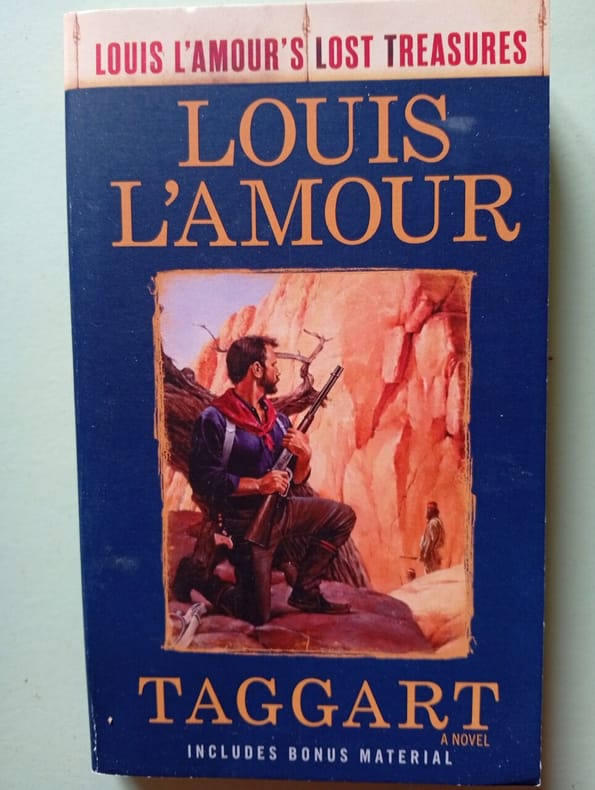
2021500230594Random House Publishing Group 2021 208 pages 10 5x17 2x1 6cm. 2021. mass_market. 208 pages.
188413434Stuttgart, Verlag von Adolf Bonz & Comp., 1884. origi.Halblederband, 8°, 356 Seiten.
19443119413Reykjavík: Ísafoldarprentsmidja 1944. 384 Seiten. 8° (17,5-22,5 cm). Orig.-Halblederband mit goldgeprägtem Rückentitel, Prägepapierbezug und Lederecken. [Hardcover / fest gebunden].
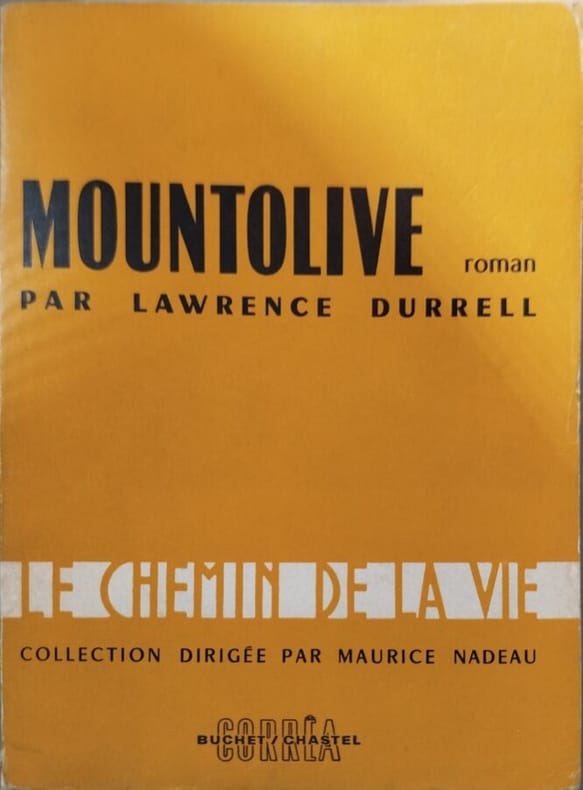
19598934Buchet/Chastel 1959 410 pages in8. 1959. broché. première édition. 410 pages. Mountolive est le troisième tome du 'Quatuor d'Alexandrie' de Lawrence Durrell. Le roman suit David Mountolive un ambassadeur anglais qui devient le personnage principal. L'intrigue explore sa liaison avec Leila la mère de Nessim et le surprend à Berlin alors que le mari de Justine achète des armes pour défendre les coptes contre les Anglais offrant une nouvelle perspective sur les événements des premiers volumes
Magnus Magnusson and HermNot in perfect condition. unknown
Arent, A. MargaretIn Pristine Condition. unknown
189613727Halle a. S. 1896. XIV276 pp. Altnordische Sagabibliothek. unknown
189613727Halle a. S., 1896. XIV,276 pp. (Altnordische Sagabibliothek).
2004753502004 Editions Lyonnaises d'Art et d'Histoire - 2004 - In-8 broché, couverture illustrée en couleurs - 173 p. - Reproductions photographiques en couleurs et N&B
MOLTO BUONO
IL VAMPIRO ROMANZO
2012882192012 Editions Bragelonne - 2012 - In-8, broché - 946 p.
19771123471977 Editions Presses de la Cité - 1977 - In-8, broché, couverture illustrée en couleurs - 247 p. - Un cahier de reproductions photographiques en couleurs
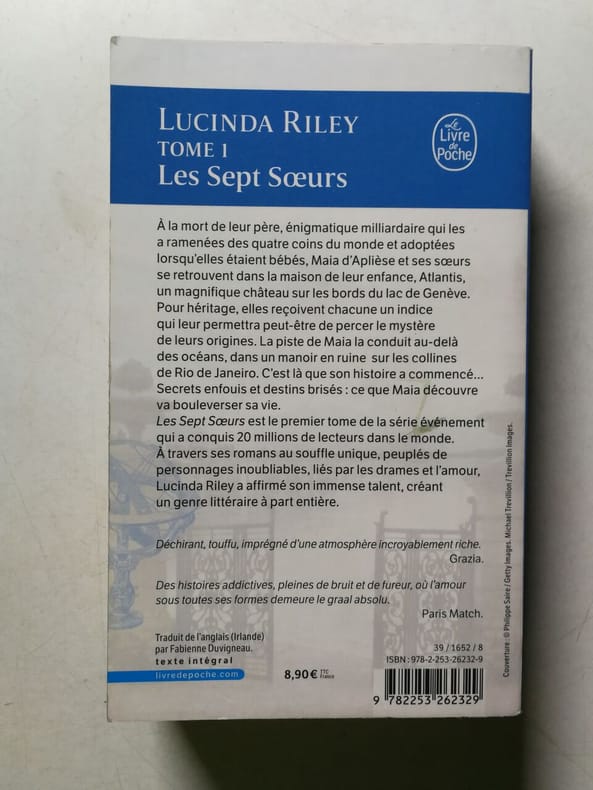
500305787Le Livre de Poche Sans date. Le premier tome de la série 'Les Sept Sœurs' de Lucinda Riley suit six sœurs adoptées chacune recevant un indice sur ses origines après la mort de leur père mystérieux. Le roman mêle quête identitaire voyages à travers le monde et révélations historiques
193453632Halle (Saale), Niemeyer, 1934. X, 114 SS. 8°, Original-Broschur.
198169107Oslo, Dreyer u. Viking Society for Northern Resaerch, University College London, 1981. LX, 105 SS. mit 3 (2 doppelseitige) Karten. 8°, Illustrierte Original-Broschur.
200514288Grand livre dumois 2005 352 pages 15 2x3 2x23 6cm. 2005. Broché. 352 pages. La série 'La Malédiction des Trencavel' de Bernard Mahoux est une saga historique centrée sur la famille Trencavel durant la croisade contre les Cathares. Le premier tome 'Adélaïs comtesse de Toulouse' suit le destin d'Adélaïs et de son fils Raymond-Roger Trencavel plongés au cœur des conflits religieux et politiques du XIIIe siècle
334 pages including index. A doctor tells why today's physicians are so useless. "Dr. Malleson writes with some of the acerbic wit and toughmindedness of Dr. Szasz and Eric Hoffer... he takes on doctors, patients, and the whole saga of medical superstition right up to the modern medical scene... Dr. Malleson manages a persuasive impressionistic picture of doctors, drug merchandisers, and patients wallowing in a welfare-state morass - the doctors wastefully trying to 'cure' patients who too frequently would do better on their own." - Publisher's Weekly. Illustrated in black and white. Average wear. Book
18385541BBLeipzig, Otto Wigand, 1838. 8°. Zus. ca. 800 S. Mit einigen Textillustr. nach Holzschnitten. Pappbd. d. Zt. mit goldgepr. Rückentitel + Wichtig: Für unsere Kunden in der EU erfolgt der Versand alle 14 Tage verzollt ab Deutschland / Postbank-Konto in Deutschland vorhanden + (berieben u. bestossen).
18385541BBLeipzig, Otto Wigand, 1838. 8°. Zus. ca. 800 S. Mit einigen Textillustr. nach Holzschnitten. Pappbd. d. Zt. mit goldgepr. Rückentitel (berieben u. bestossen).
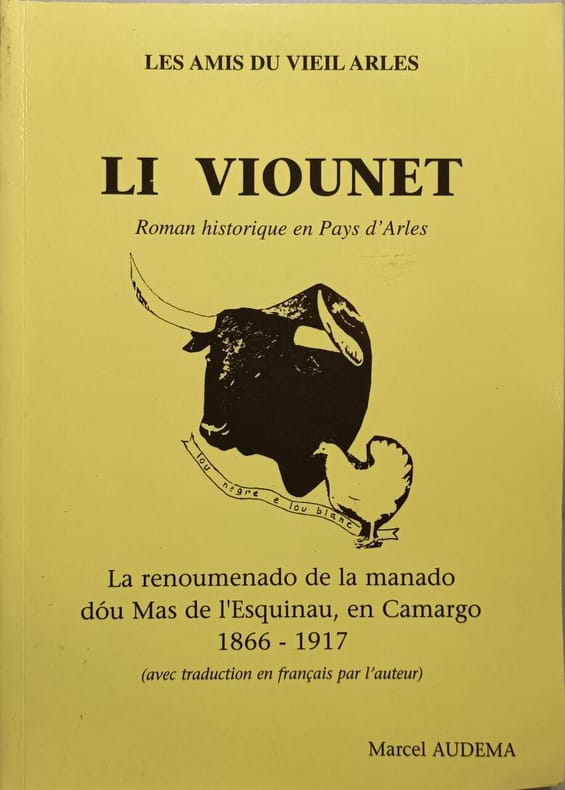
8337Amis du vieil arles 247 pages in8. Sans date. broché. 247 pages. Li Viounet est un roman historique qui retrace la saga d'une manade (troupeau de taureaux) au Mas d'Icart de Crau en Pays d'Arles sur la période 1792-1865. Il s'inscrit dans une série de romans historiques se déroulant dans cette région explorant la vie et les traditions camarguaises
2015500339081Editions De Borée 2015 310 pages 2015. 310 pages. Miséréré est le troisième tome de la saga 'Le Royaume du Nord' de Bernard Clavel. Le roman se déroule en 1929 et suit des familles québécoises et montréalaises victimes de la crise économique qui quittent leurs villes pour coloniser les terres hostiles du Grand Nord canadien où tout est à construire
Brossura 141 pg. Buone condizioni.
Anno pubblicazione: 1978 Editore: Mondadori brossura, buone condizioni generali ib8