Larusson, OlafurAntiquariat.de

1 427 résultats
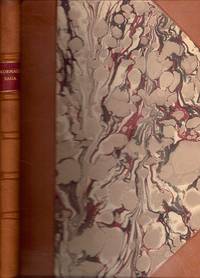
19443119413Reykjavík: Ísafoldarprentsmidja 1944. 384 Seiten. 8° (17,5-22,5 cm). Orig.-Halblederband mit goldgeprägtem Rückentitel, Prägepapierbezug und Lederecken. [Hardcover / fest gebunden].
188413434Stuttgart, Verlag von Adolf Bonz & Comp., 1884. origi.Halblederband, 8°, 356 Seiten.
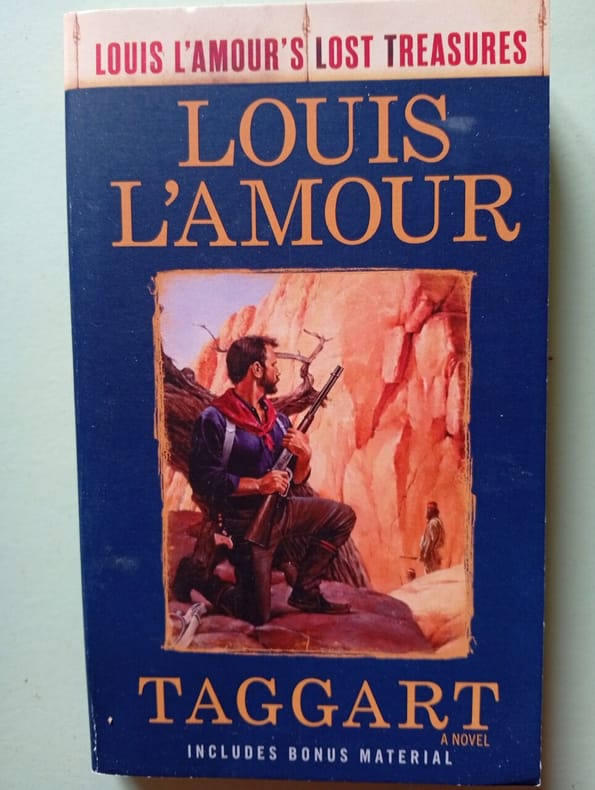
2021500230594Random House Publishing Group 2021 208 pages 10 5x17 2x1 6cm. 2021. mass_market. 208 pages.
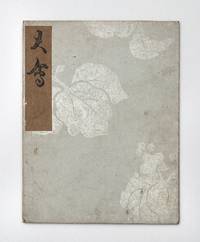
1117114 pages of text & two pages forming paste-downs of varying shades of pale pink & cream gofun biki torinoko mica-printed paper all printed with mica patterns endpapers printed with mica patterns of plum flowers on branches & autumnal weeds bound in two “quires†& sewn together. Small 4to 240 x 180 mm. orig. pale gray semi-stiff wrappers with mica woodblock-printed designs of hydrangea leaves orig. printed label on upper cover. Saga near Kyoto: about 1608 or shortly thereafter.<br /> <BR> <BR> An ultimate luxury copy tokusei bon 特製本 in very fine condition with mica-printed text leaves and covers using paper of shades of pale pink cream and gray. This is the second time we have handled a copy of a KÅetsu utai bon in the most luxurious state of three.<br /> <BR> <BR> This is one of the series of 100 Noh plays produced at the famous private press in Saga just north of Kyoto. These sumptuous luxury editions were printed for the wealthy and enlightened merchant Suminokura Soan 1571-1632 in collaboration with his calligraphy teacher KÅetsu a leading cultural figure of his day famous as an artist potter lacquerer and connoisseur. These books are amongst the most remarkable printed works created in Japan or anywhere else; their design is far in advance of anything produced in the West. Issued in limited numbers they were intended for private distribution to an elite audience friends and acquaintances of the creators who formed the patrons of the Saga artistic community.<br /> <BR> <BR> Printed with movable type on luxurious thick paper the books have according to Hillier a modernity in design matched only by the works of William Blake and the French artists’ books of the late 19th and early 20th centuries. They reveal the beauty of native Japanese calligraphy. The movable type is based on the calligraphy of KÅetsu.<br /> <BR> <BR> This series of mostly chants from Noh plays comprises “small pamphlet-size books each of about twelve or thirteen sheets whose outstanding feature is the decoration invariably of mica-printed patterns on stained or dyed paper which is of a distinction that immediately links them with the collaborative scroll works by KÅetsu and SÅtatsu and which has led to their being called KÅetsu-bon…These designs resulting from a sophisticated adaptation or distortion of natural forms are notable examples of one of the unique contributions of Japan to world art…<br /> <BR> <BR> “But decoration apart these No booklets are remarkable in other ways. An unusually thick and opaque kind of paper was used no doubt made specially for these editions and contrary to normal practice it was printed on both sides of the sheet. This ruled out the normal construction of a book whereby the sheets printed on one side only were folded in two and bound at the loose edges. The majority of the KÅetsu-bon were made up by an entirely different method. A number of sheets usually six in this copy three in the first “quire†and two in the second the outer leaves used as paste-downs were placed flat one above the other and the batch was then folded in two; two such sections would form a complete book. The binding again was unusual. The outer covers though printed first as a single sheet invariably with a mica-printed design were cut in two and each given a folded turnover along one edge in which one batch of the folded sheets was lodged. The two halves were then sewn together through the turn-overs of the two halves of the cover brought together at the inner edge. This is a binding method unique to Japan and is known as Yamato-toji or recchÅsÅ…<br /> <BR> <BR> “These KÅetsu-bon represent an astonishing leap forward to something entirely unprecedented in the history of the illustrated or decorated book. This was the first time a book had been conceived as a single unified work of printed decorative art…not until we come to William Blake’s Prophetic Books do we encounter anything remotely comparable and the creation in the West on any appreciable scale of books composed as homogeneously decorated printed works of art did not occur until the appearance of the French livres d’artiste in the late nineteenth and early twentieth centuries.â€â€“Hillier The Art of the Japanese Book pp. 51-54.<br /> <BR> <BR> The KÅetsu utai bon were produced in three levels of luxury. The finest such as our example has mica patterns or images printed on the text leaves and covers before the text was printed with movable type. The next level also had mica-printed covers but employed papers of different colors with no mica printing on the text pages. The least luxurious version used only cream-colored text paper and had mica patterns printed on the covers.<br /> <BR> <BR> The covers of our copy are mica-printed with images of bamboo and with backgrounds of sprinkled mica. Each of the five sheets with text exhibits different mica-printed images including grass adorned with dew in the field Japanese pampas grass plum blossoms on branches and waves.<br /> <BR> <BR> The movable type characters are based on the calligraphy of Hon’Ami KÅetsu 1558-1637; this type is called hiragana majiri a combination of kanji and kana accompanied by dashes next to each syllable. These dashes are the notations for the pitches to be sung. The notes are not written as specifically as they are in Western sheet music. If the dash goes up the pitch is raised; if it is straight the same pitch is continued; and if it goes down the pitch is lowered.<br /> <BR> <BR> A very fine and fresh copy preserved in a wooden box. These KÅetsu utai bon are very rare on the market especially when in excellent condition like our example. Covers a bit dusty and a few unimportant marks.<br /> <BR> <BR> ⧠Fischer et al. The Art of Hon’Ami Koetsu Japanese Renaissance Master pp. 174-75–“The deluxe editions of utai-bon that were printed at the Saga presses where Koetsu and Suminokura Soan collaborated to produce classics of earlier Japanese literature were intended for amateur connoisseurs like themselves. The thick paper mica-printed motifs and carved wood type were all part of an artistic whole meant to complement the aesthetic pleasure of the utai vocal performance.†Murase Tales of Japan. Scrolls and Prints from the New York Public Library pp. 157-59. unknown
20072110502151107788Not Available 2007. Soft Cover. Fine. Number of books: 1 Not Available paperback
20092080502106909573Not Available 2009. Soft Cover. Fine. The book is in fine condition. Not Available paperback
19332080502106511333Imperial Chamber of Commerce 1933. Soft Cover. Fine. Volume: 1 Imperial Chamber of Commerce paperback
19302080502106501501Japan Chamber of Commerce and Industry 1930. Soft Cover. Fine. Volume: 1 Japan Chamber of Commerce and Industry paperback
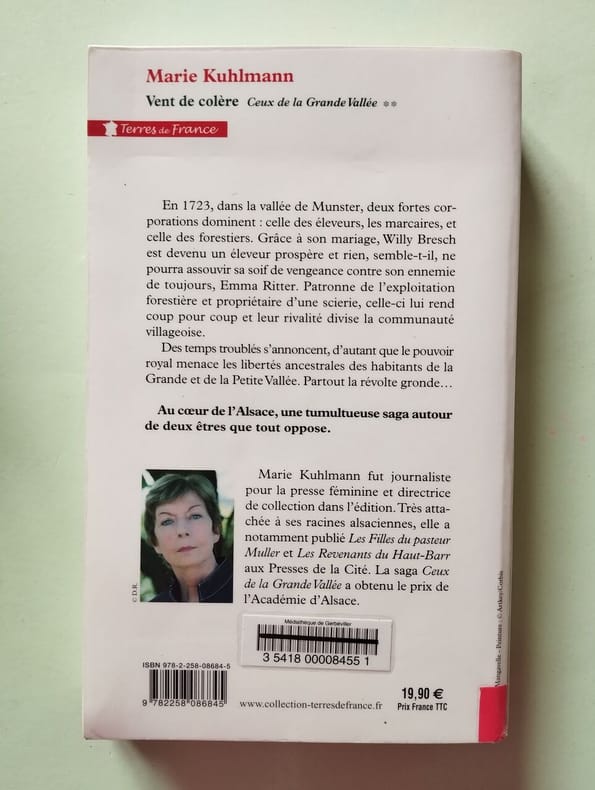
2012500331759PRESSES CITE 2012 405 pages 14x3x22 4cm. 2012. Broché. 405 pages. Deuxième tome de la saga "Ceux de la Grande Vallée" se déroulant en 1723 dans la vallée de Munster en Alsace. L'histoire suit les tensions entre deux corporations puissantes - les éleveurs (marcaires) et les forestiers - ainsi que la menace du pouvoir royal sur les libertés ancestrales des habitants. La rivalité entre Willy un marcaire prospère et sa sœur Emma patronne de l'exploitation forestière divise la communauté villageoise
199485085Hamburg, Helmut Buske, (1994). 463 (1) S., mit zahlr. Farbtafeln u. Abb. sowie 1Karte auf beiden Innendeckeln. Gr.-8vo. 24 cm. Dunkelgrünes OKunstleder mit Goldpräg.
199427527Hamburg, Helmut Buske, (1994). Gr.-8vo. Mit zahlr. Farbtaf. u. Textabb. 463 S. OKunstldr. m. goldgeprägt. Deckel- u. Rückentitel.
19523120635Köbenhavn: Jörgensen 1952. IL, 38 Seiten. 8° (17,5-22,5 cm). Privater Halbleinenband mit montierten Deckeln der Orig.-Broschur. [Hardcover / fest gebunden].
1980238246Reykrjavik, Iceland Review., 1980. 95 Seiten. Mit zahlreichen farbigen Abbildungen. Originalpappband. 19cm
196662410Reykjavik, 1966. LXXII, 92 SS., 2 Bll. Gr.-8°, Original-Broschur.
557 pages including index, reference notes and black and white illustrations. "Recognized as the definitive work on the history of the Icelandic people in Manitoba" - from verso of copyright page. "...Will be welcomed not only by those who have special links with Iceland and her people, but by anyone with a broad interest in the settlement of Western Canada. The author's painstaking scrutiny of an enormous wealth of source material has resulted in a carefully documented historical study." - Professor Haraldur Bessason, University of Manitoba. Clean and unmarked with light wear. Glossy illustrated covers. A quality copy. Thibault 1,029. Book
Collana: Narrativa Nord n.142, giugno 2000. Brossura con bandelle. Prima edizione. Esemplare in condizioni eccellenti. Spedizioni tracciabili con raccomandata entro 24 ore dall'ordine. First edition. Soft cover in fine conditions, no inscriptions or markings inside. Worldwide delivery.
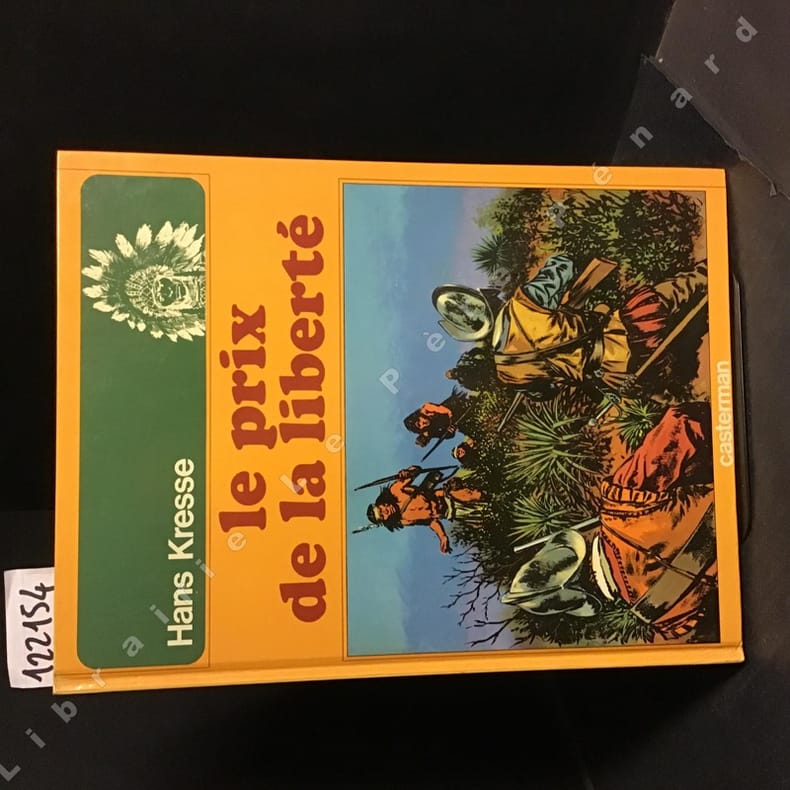
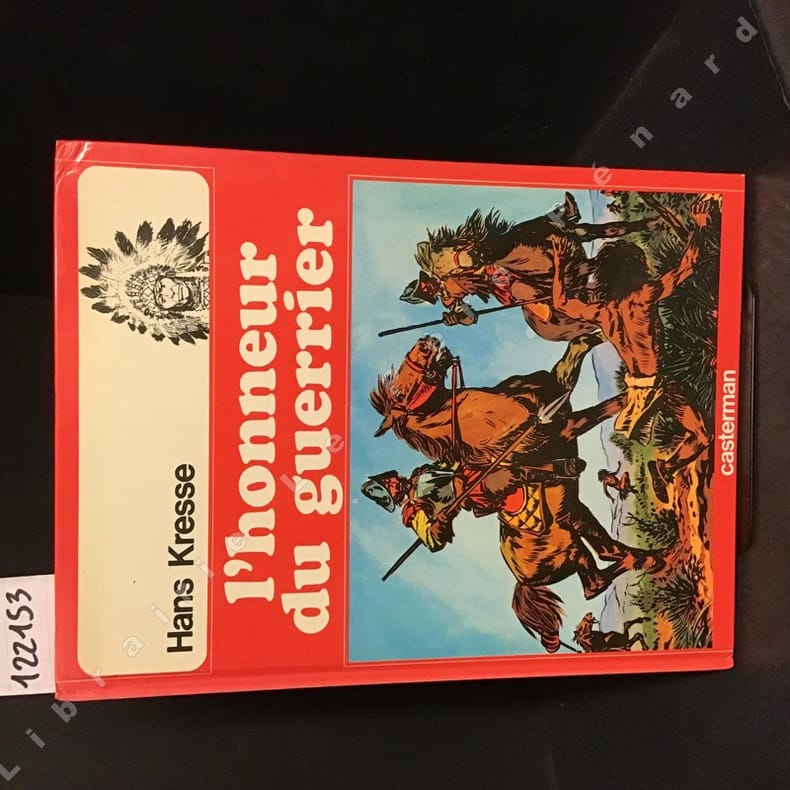
19791221541979 Editions Casterman - 1979 - Première édition - In-4, cartonnage illustré en couleurs - 46 planches en couleurs
19821221531982 Editions Casterman - 1982 - Première édition - In-4, cartonnage illustré en couleurs - 46 planches en couleurs
19622004270361xbvkNew York, Kraus, 1962. 28 unnumbered pages, photographically illustrated throughout. - Publisher's elegant softcover; Folio (ca. 35 x 23 cm).
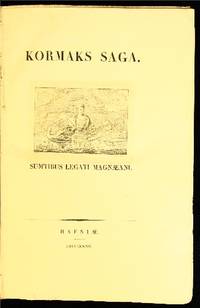
183256680Hafniae, Thiele, 1832. Uncut in original blank wrappers. Titlepage with engraved vignette. Printed titlepage. (2),XVI,340,(2) pp. Ren og frisk. Oldnordisk og latinsk tekst.
243007Halle a. S. 1886. 4 206 2 s. Nyere fint skb. Nyere ex libris på forsats. Særlig de første sidene med en hel del anmerkninger i margen på islandsk noen undertsrekninger og enkelte overstrykninger i teksten med penn. . unknown
10317Hafniae sumptibus legati Magnæani ex typographeo H. H. Thiele 1832. 8:o. 4 XVI 340 1 errata pp. Engraved vignette on half-title. Uncut in original paper boards. Copy printed on better paper. Fiske 326. Editio princeps of Kormaks saga. Edited and translated by Thorgeir Gudmundsson. “Fragmenta carminum Kormaki in Skálda†pp. 253-287 was prepared by Finn Magnússon. hardcover
183256680Hafniae Thiele 1832. Uncut in original blank wrappers. Titlepage with engraved vignette. Printed titlepage. 2XVI3402 pp. Ren og frisk. Oldnordisk og latinsk tekst. <br/><br/><em>Originaltrykket. - Fiske I326. </em> unknown
20052080502106914959Not Available 2005. Soft Cover. Fine. The book is in fine condition. Not Available paperback
19312083002116201884Kokin Shoin Nobuo Aoyama Saga High School 1931. Soft Cover. Fine. The book is in fine condition. Kokin Shoin Nobuo Aoyama (Saga High School) paperback