23 résultats
188932611Paris Plon 1889 in-12° dos consolidé au paoier kraft, cachet d'une bibliothèque municipale qui a " Désherbé " ses livres
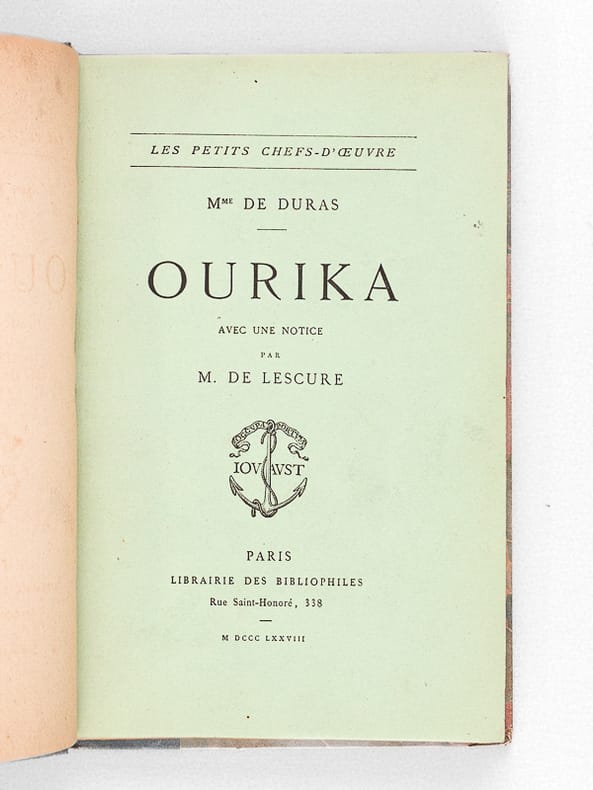
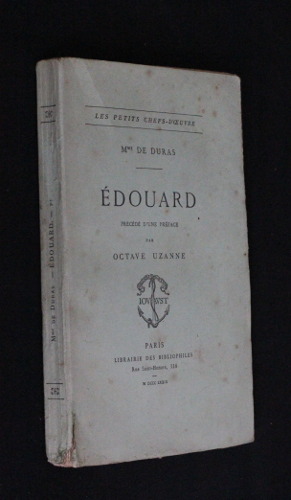
1879pl2049Jouaust librairie des bibliophiles Les petits chefs-d'oeuvre Broché 1879 In-12 (11x18 cm), broché, (XII)-144 pages, tiré à petit nombre, préface par Octave Uzanne, vignettes, lettrines et culs-de-lampe ; pliures au dos frotté, coiffes frottées, mors supérieur fendillé à la coiffe inférieure, rousseurs sur les plats, intérieur assez frais, assez bon état. Livraison a domicile (La Poste) ou en Mondial Relay sur simple demande.
1852LFA-126713225Un ouvrage de 533 pages, format 120 x 180 mm, relié cartonnage dos cuir, publié en 1852, Didier Libraire-Editeur (Paris)
1889R240144832Librairie Plon. 1889. In-12. Broché. Etat d'usage, Couv. légèrement passée, Dos plié, Quelques rousseurs. 322 pages. 2e plat légèrement déchiré.. . . . Classification Dewey : 848-Ecrits divers, citations, journaux intimes, souvenirs, mémoires
187916728Paris Editions Jouaust 1879 In-12 XII + 144 pp, tête dorée
1889G56101Paris, Plon 1889 322pp., 2e éd., reliure demi-toile (titre doré au dos, brochure originale conservée et reliée), 19cm., 2 cachets, bon état, [relié avec: Anne-Paule-Dominique de Noailles marquise de Montagu, Paris, Douniol/ Dentu, 1872, 446pp.], G56101
187861630Avec une notice par M. de Lescure, 1 vol. in-12 bradel reliure de l'époque demi-percaline bleu, couverture conservée, collection des Petits Chefs-d'Oeuvres, Librairie des Bibliophiles, Paris, 1878, XXIII-616 pp.
1831480361831 1 vol in-8 broché - N° 31 de octobre 1976 - Revue trimestrielle - Editions Larousse - 128 pages
18258030478Chez Ladvocat 1825. Volume 2. This is an ex-library book and may have the usual library/used-book markings inside.This book has hardback covers. In good all round condition. No dust jacket. Small octavo half brown leather marble boards gilt lettering and decoration on backstrip general shelf wear tightly bound text clean foxing Please note the Image in this listing is a stock photo and may not match the covers of the actual item300grams ISBN: Chez Ladvocat hardcover
1853100068090Hachette et cie 1853 in12. 1853. Relié.
1836EYL-294Paris, Ladvocat, 1836. 3 vol. in 8 de 2 ff., VIII-398 p. ; 2 ff., 398 p. et 2 ff., 396 p. Demi basane brune de l’époque, dos lisses (unif. passés, blonds) ornés de fers dorés. Agréable exemplaire dans une reliure romantique.
18251431Paris: Ladvocat, 1825 2 tomes en un volume in-12, 181 x 100 : (2 ff.), 238 pp.; (2 ff.), 225 pp. Demi-veau rouge, dos lisse orné, tranches mouchetées (reliure de l’époque).
182587244Ladvocat | Paris 1825 | 10.50 x 18.50 cm | 2 volumes reliés en 1
1824100301AB1824. Édition Originale. Paris Chez Ladvocat 1824. 18 x 11 cm. 172 pages. Relié plein cuir vert / Beautiful contemporary Hardcover. Intérieur bon état malgré légéres rousseurs éparses. Couverture défraichie et tachée. Provenance: Exlibris: A Debidour Élie Louis Marie Marc Antonin Debidour / Premiere edition dans le commerce après la rare édition originale publiée entre 25 et 40 exemplaires en décembre 1823 par l'Imprimerie royale pour les amis de l'auteur. Ce court récit fut rapidement écrit en 1820 lors d'une retraite de convalescence. Sollicitée par Chateaubriand ami de la Duchesse de Duras depuis 1809 qui avait parti- culièrement aprécier le texte l'auteur se décida à publier l'ouvrage anonymement. L'histoire de cette jeune sénégalaise éduquée en France se rendant compte à l'âge de 12 ans des préjudices liés à sa couleur de peau est considérée comme le premier roman de la littérature française à aborder les problèmes de racisme. / First published edition following a private printing of 25 copies. A very good copy in contemporary paper-covered boards. An anonymously published novel by a French woman who was a close friend of Chateaubriand and who established a well-known salon in London. Her work has been compared to that of Richardson and Rousseau for obvious reasons but she is perhaps more relevantly understood in the context of the early 19th-century French women's writing that has only rather recently become a subject of study. Based on the true story of a Sengalese servan unaware of her race until she overhears talk of it among the French family for whom she works and thus begins her life as a black woman. In large part the tale recounts her hopeless love for a white man and her eventual retreat to a convent. This is the first European novel featuring a black female protagonist and according to John Fowles who at least in part based his own The French Lieutenant's Woman on the work the first attempt by a European to enter the mind of a black character. An attractive copy of this cultural landmark. Claire Duchesse de Duras née Claire de Kersaint 1777 Brest Finistère 1828 was a French writer best known for her 1823 novel called Ourika which examines issues of racial and sexual equality and which inspired the 1969 John Fowles novel The French Lieutenant's Woman. Claire de Duras left her native France for London during the French Revolution in 1789 and returned to France in 1808 as the Duchess of Duras. She maintained a famous literary salon in post-Revolutionary Paris and was the close friend of Chateaubriand who she had met while in exile in London and who helped her to publish her books. Ourika was published anonymously in 1823 one of five novels Claire de Duras had written during the previous year; only two of them were published during her lifetime. The three novellas that she did publish were only done so in order to prevent any possible plagiarism. Claire de Duras treated complex and controversial subjects primarily dealing with oppressed/marginalized characters. She explored many fundamental principles of the French Revolution and touched upon the intellectual debates of the Age of Enlightenment particularly the equality of all men -- and women. In holding with these subjects tragedy is a common theme. For a long time she was seen as the writer of small and unimportant sentimental novels but recent criticism has revealed her works to be treasure troves of postmodern identity theory. It is likely she has not been well read because her choice and treatment of subject could not be appreciated until recently; she was ahead of her time. Wikipedia Extrait du résumé : Ravie vers 1786 à un bateau négrier avant la traversée de l'Atlantique par un riche aristocrate qui achète la fillette à peine âgée de deux ans et en fait cadeau à Madame de Beauvau Ourika n'aurait pu avoir que le destin de ces bibelots de luxe qui égayaient la cour et que l'on retrouve enturbannés costumés d'or et de poupre dans les peintures de Watteau ou de Lancret. Mais son histoire fut tout autre. Madame de Beauvau l'éleva comme sa fille lui donna une éducation brillante et raffinée et elle traversa à ses côtés les turbulences révolutionnaires et les dangers de la Terreur. Un jour seulement Ourika découvrit la réalité de sa condition et le préjugé de couleur qui la condamnait à la solitude elle entra au couvent et mourut de chagrin. Elle avait tout juste 18 ans. Morte loin du monde dans l'obscurité d'un couvent Ourika aura pourtant eu un destin post mortem étonnant. Son histoire passionna les romantiques du début du XIXe. La duchesse de Duras s'en saisit et imagina un récit fait en confidence par Ourika dans son couvent peu avant de mourir. Elle raconte son enfance sa méprise l'amour de sa protectrice et sa grandeur d'âme. Le roman de Mme de Duras dès 1823 circula dans les salons littéraires de Saint-Germain et emporta l'adhésion de toute une société aristocratique en mal d'histoires où la noblesse fasse la preuve de ses qualités morales et humanistes comme cette sainte Mme de Bauveau qui éduqua et protégea dans sa maison Ourika. www.africultures.com. hardcover
182587244Paris: Ladvocat 1825. Fine. Ladvocat Paris 1825 10.50 x 18.50 cm 2 volumes reliés en 1 Second printing of the second edition illustrated with two frontispiece engravings. Some foxing. Half-navy blue shagreen binding spine in four compartments set with gilt dots and decorated with triple gilt fillets gilt armorial device at foot of spine gules fess six martlets red paper boards combed paper endpapers and pastedowns all edges marbled binding signed J. Rousseau. Ladvocat hardcover
182546404662Paris, Ladvocat, 1825 ; 2 volumes in-12, demi-cuir de Russie rouge, dos lisses ornés de filets dorés, titres dorés, tranches jaspées, chiffre “LG” doré au bas des dos. (Reliure de l’époque) 2 ff., 238 pp. - 2 ff., 225 pp., 7 ff. n. chiffrés (catalogue)Seconde édition, la première destinée au public. La première édition de ce roman, parue la même année chez Jules Didot et tirée à seulement 100 exemplaires n’a pas été mise dans le commerce. Après le succès d’Ourika, la duchesse de Duras entreprit ce second roman sur le même thème de l’amour rendu impossible par des raisons sociales. Edouard est un enfant d’extraction modeste adopté par une famille de nobles. Il tombe amoureux de sa sœur adoptive ce qui le conduit à quitter son milieu d’aption pour partir à la guerre...Vicaire III, 535 - Brunet II, 908 - Barbier II, 31 - Clouzot 63 - Quérard II, 723Ex-libris sur les gardes : P. Guiraudi, R. de Genas et de leurs héritiers Testu de Balincourt (Provence).Bel exemplaire.
1824436626Paris: Chez Ladvocat 1824. Hardcover. Near Fine. Second edition. 12mo. 172pp. Contemporary full vellum spine decorated in gilt with morocco label titled in gilt. Contemporary owner name "Sophia Lipton" boards slightly bowed and a little soiled modest foxing a handsome near fine copy. An important novel written anonymously by a White Frenchwoman. Based on the true story of a Senegalese girl freed from slavery and raised by an aristocratic French family unaware of her race until she overhears a conversation that makes her conscious of it and after which point she lives her life as a Black woman. The novel was a bestseller when published and was the basis for four contemporary stage productions. Ourika represents a number of important firsts: the first Black heroine in a novel set in Europe the first French literary work narrated by a Black female protagonist and according to John Fowles: "the first serious attempt by a white novelist to enter a black mind." It was also the inspiration for Fowles' novel The French Lieutenant's Woman. A lovely copy of a fragile and important book. Chez Ladvocat hardcover
18245825A Paris, chez Ladvocat, 1824. In-12 de 172 pp., demi-basane brune, dos lisse orné (reliure de l'époque).
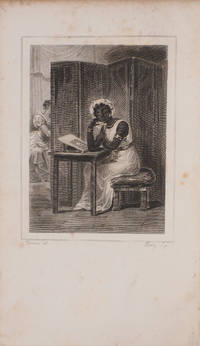
18248529a<p>First edition to contain the engraved frontispiece and title. Marked 'troisième édition' on the title-page this edition is actually the fourth — following the edition printed privately in just 25-40 copies in 1823 and the first two trade editions of 1824. The illustrated edition is considerably rarer at least in commerce than the preceding two trade editions and the true first virtually unobtainable. The plate shows Ourika at the moment of realisation of her isolation and her fate in white European society. Ourika based on fact and influenced by Rousseau and Chateaubriand is the complex story of a black African child bought some said rescued from the slave trade and raised in aristocratic circles in Revolutionary France. It is the first fully developed attempt to portray a black heroine in Europe and the first French novel with a black female narrator. It proved controversial from the start and remains so. On the one hand it has been interpreted as a compassionate account of both racial and female alienation Duras certainly projects her own experience onto that of her heroine while on the other it has been described as a sustained act of appropriation and even as an apology for slavery. Whatever is the case it caused a sensation with the first trade edition of 1824 becoming a bestseller and later editions very widely read in France and further afield with early translations into English German Italian Spanish Swedish and Danish.</p><p>8vo 165 × 90 mm pp. 172 complete with half-title plus engraved frontispiece and an engraved title by Derly after Devéria. A few foredges slightly frayed some spotting to the frontispiece and engraved title. Contemporary marbled sheep. Gilt panelled spine red morocco label. Rubbed but still a good copy.</p> [J. Tastu for] Ladvocat,
18248708<p>First trade edition of a novel which had first appeared in a small edition between 25 and 40 copies privately circulated in December 1823. Ourika based on fact and influenced by Rousseau and Chateaubriand is the complex story of a black African child raised in aristocratic circles in Revolutionary France. It is the first fully developed attempt to portray a black heroine in Europe and the first French novel with a black female narrator. This edition bears the statement on the verso of the half-title 'Publié au profit d'un établissement de charité and has no edition statement on the title-page which bears a quotation from Byron as called for. A true best-seller at least four editions appeared in 1824 together with four plays and two poems based on the novel.</p><p>12mo 162 × 92 mm pp. 172 8 including half-title and publishers' adverts. Very minor loss to a couple of upper margins careless opening or insects. Contemporary marbled sheep spine gilt. A very good copy.</p> [J. Pinard for] Ladvocat.
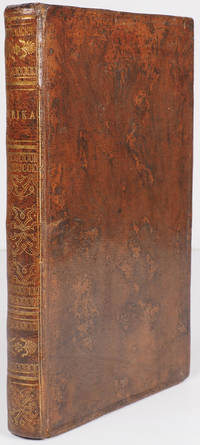
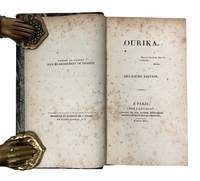
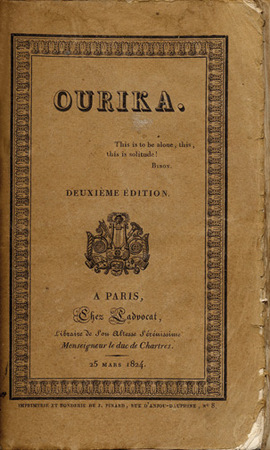
1824229771824. Duras Claire de. Ourika 1824 presents one of the earliest sustained literary treatments of race gender and social exclusion in nineteenth-century European literature centering a Black female protagonist raised within French aristocratic society. The novella follows Ourika a Senegalese girl educated and socially refined within elite French circles whose status remains defined by racial hierarchy despite her assimilation. Duras a French aristocrat writing in the aftermath of the Revolution situates the narrative within ongoing debates over slavery colonialism and citizenship giving psychological depth to the experience of racialized isolation. The text frames its central theme through the epigraph "This is to be alone this this is solitude!" foregrounding the enforced alienation that structures Ourika's life and emotional world. The work engages directly with the social limitations imposed on Black individuals in European society and contributes to early literary discourse on race and interiority.<br /> <br /> Duras Claire de. Ourika. Paris: Chez L'Advocat Libraire de Son Altesse Sérénissime Monseigneur le Duc de Chartres 1824. Deuxième édition. Text in French. Octavo volume bound in contemporary half leather with marbled boards spine gilt titled "Ourika." Published "au profit d'un établissement de charité."<br /> <br /> Issued during the Bourbon Restoration this edition aligns with a period of continued instability in French policy toward slavery and colonial governance following abolition in 1794 reinstatement under Napoleon and final abolition in 1848. The narrative's focus on a Black female subject within aristocratic society places it within broader intellectual efforts to confront the contradictions of Enlightenment ideals and racial inequality. Duras's portrayal of Ourika as educated perceptive and socially constrained contributed to later Romantic and post-Romantic explorations of marginalized identity. Rubbing to binding extremities with some loss at head and tail of spine; scattered foxing heavier on preliminary leaves; binding sound; overall good condition. unknown
1832G92146Bruxelles, J.P. Méline 1832-1833 Ouvrage complet en 12 tomes: 302 + 313 + 332 + 312 + 293 + 295 + 292 + 283 + 302 + 303 + 330 + 320pp., 16cm., brochures originales, quelques rousseurs (texte toujours bien lisible), bon état, G92146
18249443Paris, Ladvocat, 25 mars 1824 (Imprimerie de J. Pinard) ; in-12 ; demi-chagrin bleu-marine, dos à nerfs orné de roulettes décoratives de style romantique, fleurons à froid, filet doré sur les plats, plats de couverture marron illustrés conservés, non rogné (reliure fin XIXe-début XXe) ; 172 pp. y compris le faux-titre et le titre ; au verso du faux-titre on lit "Publié au profit d'un établissement de charité".