FIELDING HENRYLivre Rare Book
17 résultats
1797RO40116129Au Bureau du Journal de Perlet - Chez Ouvrier, Paris. 1797. In-18. Relié plein cuir. Etat d'usage, Couv. légèrement pliée, Dos abîmé, Quelques rousseurs. 224 pages. Pièce de titre noire sur le dos. Auteur, titre et caissons dorés sur le dos. Dos très abîmé avec manques importants. Petits manques en surface du 1er plat.. . . . Classification Dewey : 820-Littératures anglaise et anglo-saxonne
1781RO40210733Chez Nouffer de Rodon & Co., Genève. 1781. In-12. Relié demi-cuir. Etat passable, Plats abîmés, Dos abîmé, Mouillures. 352 pages. Dos manquant. Manques sur le cuir du 2e plat.. . . . Classification Dewey : 820-Littératures anglaise et anglo-saxonne
179069871Printed for C Cooke. 1790. Hardcover. Very Good. No date but c 1790 336pp frontis 5 engraved plates sl foxing of plates bound in ful leather respined new endpapers; 12 Mo . Printed for C Cooke hardcover
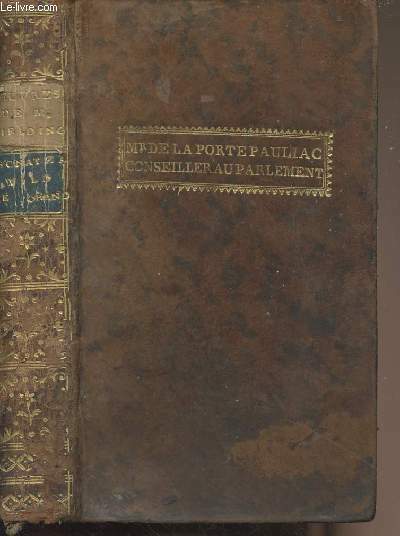
1781R300124611Chez Nouffer de Rodon & Compagnie. 1781. In-12. Relié plein cuir. Etat d'usage, Couv. légèrement passée, Dos frotté, Quelques rousseurs. XV + 365 pages. Bandeaux et culs-de-lampe illustrés. Contreplats jaspés. Tranches roses. Signature à l'encre en page de titre. Ex libris doré sur le 1er plat : Mr de la Porte Pauliac, conseiller au parlement. Plats légèrement frottés. Pièces de titre beige et bleue sur le dos. Titre, auteur et motifs dorés. Léger manque en coiffe de pied.. . . . Classification Dewey : 840.05-XVIII ème siècle
1782RO40210558Chez Nouffer de Rodon & Co., Genève. 1782. In-12. Relié demi-cuir. Etat passable, Couv. légèrement passée, Dos abîmé, Intérieur acceptable. 332 pages. Dos très abîmé et presque entièrement manquant.. . . . Classification Dewey : 820-Littératures anglaise et anglo-saxonne
17829253Genève, chez Nouffer de Rodon & Compagnie, 1782. 2 tomes en un volume in-8 de [4]-300; [4]-256 pages, plein cartonnage du temps, dos lisse orné d'une étiquette de titre beige, cahiers légèrement déboîtés.
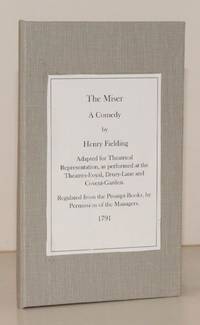
179132216Bell 1791. 12mo. with 2 engraved plates; twentieth century grey boards upper board with printed paper label a very good bright crisp copy. Bell, hardcover
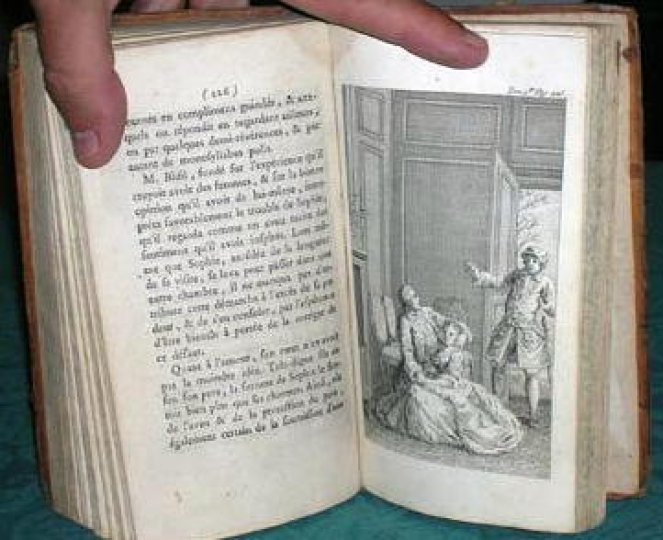
177719135Imitation de l'anglois de M.H. Fielding (1707-1754) par M. Pierre Antoine De La Place (1707-1793). Illustrée d'un frontispice et de 15 gravures hors texte par Gravelot, Avéline, Chedel, Fessard et Pasquier.Quatrième édition, revue, corrigée et augmentée de la Vie de l'Auteur Anglois. A Londres, et A Paris, chez Bauche - 1777 - xlvij, 336, 331, 296 et 356 pages.Reliure plein veau de l'époque. Dos lisse orné de fleurons dorés avec pièces de titre et de tomaison. Dos et plats frottés. Coins émoussés. Quelques mouillures angulaires ou marginales. Quelques pages uniformément roussies. Assez bon état. Format in-12°(17x10).
177715662Imitation de l'anglois de M. Henry Fielding (1707-1754) par M. Pierre Antoine De La Place (1707-1793). Illustrée d'un frontispice et de 15 gravures hors texte par Gravelot, Avéline, Chedel, Fessard et Pasquier.Quatrième édition, revue, corrigée et augmentée de la Vie de l'Auteur Anglois. A Londres, et A Paris, chez Bauche - 1777 - xlvij, 336, 331, 296 et 356 pages.Reliure plein veau de l'époque. Dos lisse orné et doré avec pièces de titre et de tomaison. Dos et plats frottés. Quelques mouillures angulaires ou marginales. Quelques pages uniformément roussies. Assez bon état. Format in-12°(17x10).
175530863London: Printed for A. Millar in the Strand 1755. First Edition First Issued Edition. The Rothschild catalogue states that “two editions of this book one altered from the original probably by John Henry Fielding’s blind half-brother were printed in January 1755. The unedited version which was printed first was suppressed in favor of the edited text but was issued later in response to the demand promoted by the Lisbon earthquake.†This is the text which was issued first. With the half-title as called for woodcut initials and head-pieces. 12mo. bound in contemporary polished calf the spine with raised bands gilt ruled the covers with double gilt fillet rules at the borders. iv xvii 1blank 19-240 193-228 pp. Correct as called for. A very well preserved copy handsome with a bit of wear from age at the tips and edges. FIRST EDITION IN CONTEMPORARY BINDING. Fielding was known for his earthy humour and satire and he and Samuel Richardson are seen as the founders of the traditional English novel. Fielding also is credited with founding the first professional police force in London in his position as magistrate. His book on the voyage to Lisbon is considered a fine travel journal filled with sympathy and good cheer. Printed for A. Millar, in the Strand hardcover
174524706London: M. Cooper 1745. First Edition . Hardcover. Very Good. Hardback. A very good copy in a modern full calf binding with title on spine in gilt on a maroon title-piece. Five raised bands on spine. Ownership inscription on front free end-paper. Half-title present. Generally clean but with a little foxing to early pages. What appears to be minor worming at the foot of some pages. Pp.iv47. The title continues: "In which is a full Account of the Conduct of this Young Invader from his first Arrival in Scotland; with the several Progresses he made there; and likewise a very particular RELATION of the Battle of Preston with an exact List of the Slain Wouinded and Prisoners on both Sides. Taken from the Relation of Mr. JAMES MACPHERSON who was an Eye-Witness of the Whole and who took the first Opportunity of leaving the Rebels into whose Service he was forced and in which he had a Captain's Commission." Fielding the famous novelist and dramatist and author of "Tom Jones" was strongly anti-Jacobite. He published this one of his scarcest works anonymously. James MacPherson the Jacobite Captain whose account of the Rebellion is supposed to form the basis of the Work was not in fact a real person but was a figment of Fielding's imagination. Photographs available on request. <br/> <br/> M. Cooper hardcover
1749044429London: A. Millar 1749. Second Edition. Hardcover Quarter Leather. Very Good Condition. 6 volumes in modern calf backed marbled boards with added endpapers - attractively rebound. The Second Edition the same year as the first the first was oversubscribed - what publishers now refer to as second printing before publication with the errors corrected. Scattered foxing a few minor stains the title for volume 3 a little grubby and trimmed - a clean attractive set overall. Along with Tristram Shandy Humphrey Clinker and Pamela a foundation of the English novel and only the epistolary novel Pamela roundly mocked by Fielding with his Shamela in 1741 was published first. Size: Octavo 8vo. Quantity Available: 1. Shipped Weight: 1-2 kilos. Category: Literature & Literary; Antiquarian & Rare. Inventory No: 044429. <br/><br/> A. Millar hardcover books
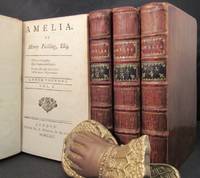
17521278641752. First Edition. FIELDING Henry. Amelia. London: Printed for A. Millar 1752. Four volumes. Small octavo early 20th-century full tan calf raised bands elaborately gilt-decorated spines brown and russet morocco spine labels all edges gilt. $3000.First edition of Fieldings final novel his landmark work that introduced the novelistic tradition of social protest and reform. Handsomely bound by Riviere and Son.Fielding's last novel Amelia shows the ""mellowness pathos and insight"" of a mature writer whose humor and ""realistic frankness shocked the 19th century but delighted his century and delights ours Fielding stands at least shoulder to shoulder with the great Victorian novelists whose spiritual father he was"" Kunitz & Haycraft 190. ""An innovating master of the highest originality"" Fielding's comic epics were ""the first modern novels in English"" Drabble 348. Samuel Johnson lavished unexpected praise on the novel for though he earlier called the ""author of Tom Jones 'a blockhead' and a barren rascal"" he read Amelia through at one sitting and observed that this was a publishing event so anticipated that it was ""perhaps the only book which being printed off betimes one morning a new edition was called for before night."" Johnson's story about Amelia's publication and the novel's immediate popularity was not however entirely accurate. Yet the anecdote was so popular that it was ""accepted by every student of the novel's publishing history until 1953 when in a deft piece of bibliographical analysis Professor Todd in ""Three Notes on Fielding"" set the record straight. Johnson's account squares not at all with the printing history of Amelia"" Battestin lvii xlviii. For despite subsequent critical praise that views Amelia as a forerunner of realism and a work that ""established the tradition of the novel of social protest and reform"" Johnson's high regard did not reflect the general response of the time Battestin & Probyn eds. Correspondence of Henry and Sarah Fielding vi. ""The audience at mid-century was ill prepared either for the kind of realism Fielding here attempted or for the disturbing moral and social purpose it was calculated to serve Even those who wished him well were puzzled and a little embarrassed that he could so willfully disregard the proprieties of polite literature"" Battestin liv-lv. ""Amelia was published on Thursday 19 December 1751 a day later than originally expectedthough in accord with the usual printer's practice in the period for works not ready to be issued before November the title-page carries the date of the ensuing year 1752"" Battestin xlvii. Due to the expected high demand for the novel two printers were used: William Strahan for Volumes I & III and an unknown printer for Volumes II and IV. Minor press variants exist with no distinguishing characteristics noted and no priority established. Two impressions of the first edition were made one in December 1751 the other in January 1752. Copies are reported to exist in two states with no precedence confirmed: i.e. that of an uncorrected inner forme backed by a corrected outer forme or a corrected inner forme backed by an uncorrected outer forme. With advertisement of ""The Universal-Register-Office"" in Volume II. Battestin: Appendix VII 583-586 & Appendix VIII. Cross III:321. Lowndes 797. Rothschild 853. Owner signatures.Interiors bright and clean. Front joint of Volume I repaired. A lovely set in near-fine condition. hardcover
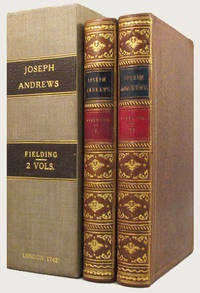
174231733London: for A. Millar 1742. 2 volumes. Very Scarce First Edition. With provenance of the Newberry Library officially withdrawn and earlier of Gustavia A. Senff millionairess and wife of Charles H. Senff of the famed Senff Collection including paintings by Rembrandt Rubens Franz Hals Velazquez Corot Clays and Hobbema etc. With the terminal advertisements in both volumes as called for. 12mo very handsomely bound during the period in bindings of full speckled calf the boards framed with double-gilt rules with circular corner-tools expertly rebacked with gilt hatched raised bands betwixt beautifully gilt tooled compartments with the original contrasting red and green labels ruled and lettered in gilt marbled endpapers and housed in an attractive cloth-covered clamshell box with morocco labels gilt lettered. xix 1 306pp 4 ads; 310pp 2 ads. A fine and handsome set the text as clean and fresh as one could hope to find the antique boards very solid with only a touch of expert restoration and minor wear the spines beautifully accomplished. FIRST EDITION OF THE FIRST FULL NOVEL BY HENRY FIELDING AND VERY EARLY AMONG THE MODERN NOVELS PUBLISHED IN THE ENGLISH LANGUAGE. Fielding called this his "comic epic poem in prose" and it embodies two aesthetics of period literature; being both neoclassical and mock-heroic. Fielding states that the work is an "imitation of the manner of Cervantes" and it does indeed owe much of its humor to Cervantean techniques. But it was Samuel Richardson and the cultural phenomenon caused by Richardson's PAMELA that Fielding had centered in his cross-hairs within the first few chapters Richardson is parodied mercilessly.<br> Fielding claims in his preface that his impetus for writing the novel was to establish a literary genre "which I do not remember to have been hitherto attempted in our language." He defined this as a "comic epic-poem in prose" being a work of prose fiction epic in length and varied in chapter; making this a very early example of what we would now call a modern English novel.<br> Thematically JOSEPH ANDREWS tells of a good-natured footman and his friend and mentor Abraham Adams. Andrews is the brother of Richardson's Pamela. Joseph shares his sister's commitment to premarital chastity and also like Pamela has caught the eye of someone the Lady Booby intent on seducing it away from him. What follows is a bawdy tale of impending marriages confused parentage various twists and turns of social standings and of course true love.<br> First Issue with the following points as called for: Vol. I p.159.8 “issomething; p. 245.-3 ‘dans’ for ‘Adams’ p. 308 numbered 306; Vol. II p. 241 for 214 p. 14.9 ’ threarned’ for’ threatened’ p. 57.21 ‘thent hese’ for ‘than these’ p. 93.-3 ‘mead s’ for ‘meadows’ p. 221.2 ‘t’ of ‘not’ up one line p. 235.11 ‘f rom’ has the unwanted space. <br> Bibliography:: First Edition “Published 22 Feb. 1742 with a run of 1500 copies; 2nd Edition. In May and author made hundreds of substantive revisions some of them a page or more in length.†– see Studies in Biblio. XVI 1963 81-117. for A. Millar hardcover
175231403London: for A. Millar 1752. 4 volumes. First Edition with the rare final leaf “At the Universal-Register-Office†present at the end of Volume II and the final blank N12 in Volume I present. 12mo handsomely bound in contemporary polished calf the spines with raised bands and contrasting red and black morocco lettering labels gilt the bands ruled in gilt. xii 285 2; vii 2621 ad;ix 323; vii 296 pp. A very handsome set the contemporary bindings in a wonderful state of preservation the tight and clean text essentially free of any foxing spotting or toning whatsoever a very desirable set with only light evidence of age or use. AN ESPECIALLY PRETTY SET OF FIELDING'S LAST NOVEL the product of "a Fielding touched with tears yet as much in love as ever with nobility and generosity of character and equally full of interest in men and women" Cambridge Hist. of English Literature X p. 37. It is also considered by many to be the first significant novel of social protest and reform in English. It contains many allusions to classical literature and focuses on the theme of marriage and feminine intelligence but Fielding's stance on gender issues cannot be determined because of the lack of authorial commentary discussing the matter.<br> From the library of Cullen House. There were two impressions of the first edition one on 19 December 1751 the second in January 1752; no distinguishing characteristics have been recorded. Rothschild No. 853. Points: Volume 2 p 189 the catchword given as “yna†rather than “anyâ€; and Volume 3 p 191 line 4 is in the uncorrected state “the at Follyâ€. for A. Millar hardcover
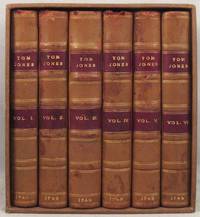
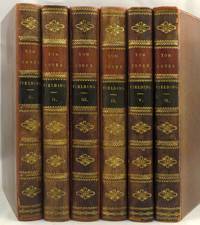
174931802London: for A. Millar 1749. 6 volumes. First edition the first issue with errata leaf in volume I and all the cancels listed in Rothschild also with the cancels N12 in Vol. II and B1 in Vol. IV overlooked in the Rothschild collation. Small 8vo handsomely bound in contemporary polished calf the spine panels sometime replaced to match with raised bands gilt ruled two compartments with red morocco labels gilt lettered one compartment with date in gilt The six volumes now housed in a slipcase. lxii errata 214; 2 324; 2 370;2 312; 2 294; 2 304 pp. A handsome set the textblocks well preserved with just a bit of expected age mellowing the bindings handsome one volume with some signatures springing some expected minor rubbing at the joints and tips one volume with a small chip. HANDSOME FIRST EDITION AND FIRST ISSUE OF A CORNERSTONE WORK IN ENGLISH LITERATURE. An attractive set of Fielding’s classic story.<br> ‘Tom Jones’ is not only generally regarded as Fielding’s greatest work but is one of the first and most influential English novels. Coleridge acknowledged it as having one of the three great plots of all literature. Although a great success the book drew criticism from many including Dr. Johnson for the hero’s high-spirited and varied sexual escapades. for A. Millar hardcover
174928994London: for A. Millar 1749. 6 volumes. First edition the first issue with errata and uncorrected text. From the noted collection of Beverly Chew with his red morocco gilt lettered ex libris on the front endpapers. Small 8vo in very handsome polished antique mottled calf the boards framed in gilt the spines with gilt stippled raised bands between gilt framed and tooled compartments featuring large central gilt tooling two compartments with contrasting red and green morocco labels gilt tooled and lettered board edges gilt tooled page edges speckled. Now housed in a fine slipcase. lxii errata 214; 2 324; 2 370;2 312; 2 294; 2 304 pp. A very desirable and handsome set the textblocks well preserved with just a bit of expected mellowing and occasional light sings of fox clean then is usually found the bindings very handsome three volumes very expertly restored at the backs preserving the original spine panels two of the remaining three with minor rubbing at the joints and tips the third with a bit more. VERY HANDSOME FIRST EDITION AND FIRST ISSUE OF A CORNERSTONE WORK IN LITERATURE. An unusually attractive set of Fielding’s classic story.<br> ‘Tom Jones’ is not only generally regarded as Fielding’s greatest work but is one of the first and most influential English novels. Coleridge acknowledged it as having one of the three great plots of all literature. Although a great success the book drew criticism from many including Dr. Johnson for the hero’s high-spirited and varied sexual escapades.<br> This copy with the fine provenance of Beverly Chew. The death of Beverly Chew in 1924 marked the end of a group of American book-collectors who may never be replaced. The influence of such men as Robert Hoe William L. Andrews Theodore DeVinne S. P. Avery Charles B. Foote E. H. Holden and Beverly Chew on the collecting world had been great and their consistent stand for all that is best in book-building had helped to mould American standards in such matters. Chew was the last of that group to leave the world and with him was gone a wealth of literary and bibliographical knowledge an enthusiastic and never-failing interest in all that pertains to books a kindly and courteous willingness to help younger seekers after truth and to share his unequaled knowledge of both the insides and outsides of books. for A. Millar hardcover