2 932 résultats
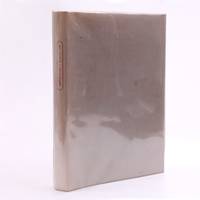
PJH26014Book Club of California 1978. Near Fine in publishers cloth backed boards with paper label to spine in dusty dustjacket with chip to rear panel. xix 119pp. 1st edition 1st issue of very attractive title limited to 500 copies. Handsome production printed at the Plantin Press. ISBN B0000E92HJ Book Club of California 1978 hardcover
197852494The Book Club of California. Fine in Near Fine dust jacket. 1978. Hardcover. Original quarter cloth with spine label gold boards. Limited to 500 copies. Fine condition. The DJ is sunned to spine with a 1cm closed edge tear. ; 8vo 8" - 9" tall; xix 3 119 pages . The Book Club of California hardcover
197813949San Francisco: Book Club of California 1978. First edition. One of 500 copies printed at the Plantin Press. xix 119 3 pp. 1 vols. 8vo. Cloth and boards. Mint copy in dust jacket which is very slightly faded at spine. First edition. One of 500 copies printed at the Plantin Press. xix 119 3 pp. 1 vols. 8vo. Book Club of California unknown
1978000246San Francisco: Book Club of California 1978. 1st Edition . Hardcover. Fine/Fine. San Francisco: Book Club Of California. First Edition 1978. Edited by Florian J. Shasky and Susan F. Riggs With an Introduction by Carlton A. Sheffield. 1/500 copies printed at the Plantin Press in Los Angeles. Orange paper boards tan cloth spine spine label in tan dustwrapper. Fine/Fine. 119pp. A nice copy. Size: Octavo <br/> <br/> Book Club of California hardcover
1989792221PN. New. 1989. Soft Cover. Date is original print. This is a reprint edition. . PN paperback
3480221904.Ghardcover. Good. Access codes and supplements are not guaranteed with used items. May be an ex-library book. hardcover
348022279X.Ghardcover. Good. Access codes and supplements are not guaranteed with used items. May be an ex-library book. hardcover
1949018107Los Angeles:Republic Pictures 1949. Book. Fine. Soft cover. Signed by Authors. 4to - over 9¾ - 12" tall. Original Lobby Card for 1949 Film The Red Pony.Signed by Steinbeck.Beautiful Copy Framed. Extra Postage Required. Los Angeles:Republic Pictures Paperback
195125-3-20-1 box 3<p>Jacket not price clipped shows $4.00. Jacket with some chips spine faded. </p> Vinking hardcover
19513-21-25 -1 box 3<p>Unclipped jacket price of $4.00. Jacket shows wear spine faded and some chips.</p> Viking hardcover
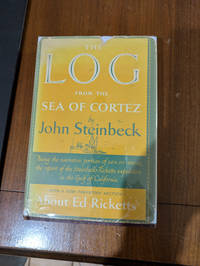
06579London: Heinemann 1958. Steinbeck & Ricketts in the Gulf of California<br /> A Scientific Journey Recast as Literature<br /> <br /> STEINBECK John. The Log from the the Sea of Cortez. The narrative portion of the book Sea of Cortez with a profile "About Ed Ricketts". London: Heinemann 1958.<br /> <br /> First U.K. edition. Octavo 8 1/4 x 5 1/2 inches; 210 x 140 mm. lxvii 1 blank 1 1 blank 282 pp.<br /> <br /> Publisher's blue cloth over boards spine lettered in gilt. Corners a little bumped slight fading approx. 1/8 inch at foot of spine and some very light foxing. Original color printed dust jacket with minimal rubbing at extremities. Blue pencil inscription dated "19.9.58" on verso of front free endpaper. A very good copy in an excellent dust jacket.<br /> <br /> A reworking of Steinbeck's earlier collaborative expedition narrative with marine biologist Ed Ricketts originally published as Sea of Cortez 1941. In this later version Steinbeck presents the narrative portion alone accompanied by his moving biographical essay on Ricketts written after his friend's death.<br /> <br /> The result is a more personal and reflective work - part travel narrative part scientific observation and part elegy - capturing both the ecological richness of the Gulf of California and the intellectual companionship that shaped Steinbeck's thinking. <br /> <br /> Goldstone & Payne: see A40 U.S. edition; U.K. issue not separately enumerated. London: Heinemann, 1958 unknown
19381056Some discoloration to spine of book. Discoloration of pages due to age of book.<br /><br />DJ without clipped corners. Original price $2.50.<br /><br />DJ has rubs to edge and spine edge. Slight toning to spine.<br /><br />1st edition The Viking Press hardcover
1938006331NY: VIKING PRESS 1938. STATED SECOND PRINTING. . Hardcover. Very Good/NoNE. N/A. SOLID CLEAN AND BRIGHT THIS THE FIRST BOOK IN WHICH THE RED PONY STORIES APPEAR PREVIOUS OWNERS BOOKPLATE SQUARE CORNERS VERY CLEAN TEXTBLOCK PRIVATELY OWNED SPINE HAS CONSIDERABLE BROWING STATED SECOND PRINTING SEPTEMBER 1938 <br/> <br/> VIKING PRESS hardcover
1949188916The Albatross. 1949. vg. Paperback. 7-1/8" tall; yellow cover with cover design repeated on dust jacket; 265pp ads for other titles; dust jacket has small tears along edges light sunning to spine; includes freestanding post card from The Albatross . The Albatross paperback
06573New York: The Viking Press 1938. Steinbeck's Salinas Stories - A Cornerstone Collection<br /> First Edition in Exceptional Condition<br /> <br /> STEINBECK John. The Long Valley. New York: The Viking Press 1938.<br /> <br /> First edition. Octavo 8 x 5 inches; 203 x 127 mm. 1-8 9-303 1 blank pp.<br /> <br /> Publisher's quarter light tan buckram over orange cloth boards spine lettered in red top edge stained red. A fine copy in a fine dust jacket.<br /> <br /> A superb copy of The Long Valley an important early collection by John Steinbeck that brings together some of his finest short fiction much of it set in the Salinas Valley of California. The volume includes such notable stories as The Chrysanthemums The White Quail and The Red Pony in episodic form each reflecting Steinbeck's deep engagement with landscape isolation and the emotional lives of ordinary people.<br /> <br /> Published just one year before The Grapes of Wrath this collection marks a crucial moment in Steinbeck's development demonstrating his growing command of narrative form and thematic depth. <br /> <br /> The stories reveal in concentrated form many of the concerns that would define his major novels - loneliness the fragility of dreams and the tension between human aspiration and environmental constraint.<br /> <br /> The first edition is increasingly difficult to obtain in such fresh condition particularly with the dust jacket intact and unrestored. <br /> <br /> A cornerstone Steinbeck title here preserved in an unusually fine state-an essential addition to any serious collection of twentieth-century American literature.<br /> <br /> Goldstone & Payne A11a. New York: The Viking Press, 1938 unknown
Q-0141185511Penguin Classics. Paperback. New. New. In shrink wrap. Looks like an interesting title! Penguin Classics paperback
LV101556Plaza & Janés . Nuevo. 1981simil piel marrón con dorados.Papel biblia.SINOPSIS: Gerhart Hauptmann. Michael Krämer En el torbellinodel destino / Karl Gjellerup. El peregrino Camanita / André Gide. Dostoievski / Salvatore Quasimodo. Poemas / Saint-John Perse. AntologÃa poética / Ivo Andric. Un puente sobre el Drina El lugar maldito. / John Steinbeck. La perla El ómnibus perdido. Plaza & Janés unknown
8493544817.Gpaperback. Good. Access codes and supplements are not guaranteed with used items. May be an ex-library book. paperback
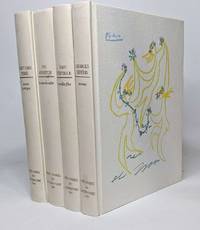
100109125Éditons rombaldi. Très bon état dos insolé tranches légèrement fânées intérieur propre. in8. Sans date. Relié. 1960: oeuvre poétique / 1961: la cour maudite / 1962: tortilla flat / 1963: poèmes Éditons rombaldi unknown
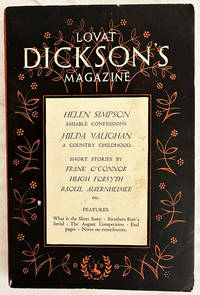
1934003452London: Lovat Dickson 1934. Book. Near Fine. Pictorial Wraps. 1st Edition. October 1934 edition. Contains the short story "The Murder" by John Steinbeck. There are nine other stories by various writers including Frank O'Connor and Hugh Forsyth. Approximately 120 pages softcover. Minor rubbing to corners and spine ends. Very scarce. Book is protected in a custom cut clear mylar cover. All books are carefully wrapped and shipped in a box. Lovat Dickson Paperback
1942555911Copenhagen: De Danske Studenters Forlag 1942. Softcover. Near Fine. First Danish edition of The Moon is Down. Quarto. 58 1pp. Mimeographed pages in stapled unprinted beige wrappers. Small tears at the edges of teh slightly oversized yapped wrappers. very good or better. Apparently printed for students. De Danske Studenters Forlag unknown
194214792MAANEN ER SKJULT THE MOON IS DOWN De Danske Studenters April 12 1942 one month after the American publication first Danish edition some light tanning to the margins of the covers else vg in unprinted light green wraps with just about fine contents. This very scarce mimeograph issue of this novel was an underground production by the Danish Resistance as the Nazi's would not allow this title to be published in occupied Denmark during the war. Text in Danish of course. De Danske Studenters paperback
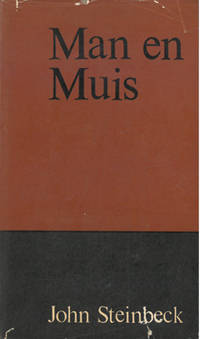
1965900025Johannesburg: Afrikaanse Pers Boekhandel 1965 A clean and tightly bound book. Dust jacket chipped and creased. Small signature on flyleaf. Afrikaanse Pers Boekhandel hardcover
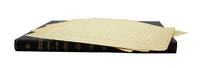
195369082n.p. 1953. n.p.: 1953.<br> <br> Full Description:<br> <br> STEINBECK John. Manuscript draft for essay entitled "My Short Novels". n.p.n.d ca: 1953.<br> <br> Manuscript draft in Steinbeck's hand for the essay entitled "My Short Novels which served as a preface to the Literary Guild's 1953 edition of "The Short Novels of John Steinbeck." A near word for word representation of the essay which was originally published by The Literary Guild Review and found in their magazine "Wings" in October 1953 Pages 4-8. This manuscript is exciting because it is an close representation but still a draft of what was finally printed. In comparing the two documents you can see that the published piece was trimmed down a bit from what Steinbeck wrote in this manuscript draft. Many of the edits are eliminations of a few words here and there but there are a few places where whole sentences and ideas have been cut. Most of these are some what self-deprecating which is interesting to watch him ultimately play down. Apart from punctuation changes the parts of this manuscript that are not found in the final publication have been indicated by us below by being housed within brackets.<br> <br> Four foolscap legal-sized pages 12 1/2 x 8 inches; 318 x 202 mm. Written in pencil on recto only of each page. With a few notes and corrections. Each page is approximately 28 lines long. Lacking a final leaf which would go on to discuss the final two stories. Some minor toning and a small bump to bottom left corner of all leaves. Still a near fine example of a wonderful Steinbeck manuscript. Housed in a blue quarter morocco clamshell. Another manuscript draft version of this essay was sold at auction in 2023 for 32500 Euros and was also incomplete.<br> <br> Together with A copy of the The Literary Guild Review Magazine "Wings" which includes the entire essay.<br> <br> In the four present pages he discusses the origins of the stories The Red Pony Tortilla Flat Of Mice and Men and The Moon is Down. The final page which is lacking goes on to discuss Cannery Row and The Pearl.<br> <br> The Manuscript reads:<br> <br> "I have never written a preface nor a comment to one of my books before believing that the work should stand on its own feet even if it's legs ankles were slightly wobbly. When I was asked to comment on the five short novels of this volume my first impulse was to refuse. And then thinking over the things that have happened to these stories since they were written I was taken with the idea that the things that happen to a book are very like those that happen to a man. These stories cover a long period of my life. As each one was finished that part of my life it represented was finished. It is true that while he is doing it the writer and his book are one. When the book is finished it is a kind of death a matter of pain and sorrow to the writer. And then he starts a new book and a new life and if he is growing and changing a new life starts. And the writer like a fickle lover forgets his old love. It is no longer his own- the intimacy and the surprise are gone. So much I knew but I had not thought of the poor little stories thrust out into an unfriendly world to make their way. They have experiences too they grow and change or wane and die just as everyone does. They make friends or enemies and sometimes they waste away from neglect. Remembering the careers of these short novels has been interesting to me. All of the have been experiments. That is why no two of them are remotely alike. And experiments are rarely accepted all at once.<br> <br> My stories have been slow starters almost like shy young men who do not make friends quickly. Indeed most of my books have succeeded without trying in making quick and fierce enemies at first. It is pleasing to me that they do in time make lasting and loyal friends.<br> <br> The Red Pony was written a long time ago when there was desolation in my family. The first death had occurred- and the family which every child believes immortal was shattered. Perhaps this is the first adulthood of any man or woman- the first tortured question why and then acceptance and your child was a man. The Red Pony then was an attempt an experiment if you must to set down loss and acceptance death a the transfiguration the adult mind must create for itself.<br> <br> At that time I had had three books published and all of them had failed to come any where near selling their first editions. The Red Pony could not find a publisher. It came back over and over again until at last a foolishly brave editor bought it for The North American Review and paid 90 dollars for it. This was more money than I thought the world contained. What a great party we had in celebration. The Magazine went broke almost immediately and my story disappeared for a good number of years. That it ever came back is the remarkable thing. But it not only did but it seems to gather friends as it goes.<br> <br> It takes only the tiniest pinch of encouragement to keep a writer going and if he gets none he sometimes learns to feed even on the acid of failure.<br> <br> Tortilla Flat grew out of a reading of the sources of The Arthurian cycle- from Mabinogion Through Geoffrey and through the to Tennyson. I wanted to take the stories of my town of Monterey and cast them into a kind of folklore. The result was Tortilla Flat. It followed the pattern. Publisher after publisher rejected it until Pascal Covici finally published it. But it did have one distinction the others had not. It was not ignored. Indeed the Chamber of Commerce of Monterey fearing for its tourist business issued a statement that the book was a lie and that certainly no such disreputable people lived in that neighborhood. But perhaps the chamber did me a good service for this book sold two editions I think and this was almost more encouragement than I could stand. I was afraid I might get used to such profligacy on the part of the public and I knew it couldn't last. A moving picture company bought it and paid 4000 dollars for it- 3600 came to me. It was a fortune. When a few years later the company fired its editor one of the reasons was that he had bought Tortilla Flat. He bought it for the from the company for the original 4000 and several years later sold it to MGM for 90000 dollars a triumph for me albeit shallow a kind of justification for me and a fortune for the editor.<br> <br> Of Mice and Men was another experiment- an attempt to write a novel in three acts to be played from the lines. I had nearly finished it when my setter pup ate it one night- literally made confetti of it. I had to start fresh. I don't know how close the first and second versions would prove to be.<br> <br> This book had some success but as usual it found its enemies. It was called brutal its characters sub humans its story sadistic and one group found homosexuality in it which puzzled me quite a bit. With rewriting however it did become a play and had some success.<br> <br> There were long books written between these little novel. I think the little ones were exercises for the longer ones. The war came on and I wrote The Moon is Down as a kind of celebration of the durability of democracy. I couldn't have conceived that it would be denounced as almost treason. I had written of Germans as men not super men and this was considered a very weak attitude to take. I couldn't make much sense out of this and it seems."<br> <br> HBS 69082.<br> <br> $10000. n.p. unknown
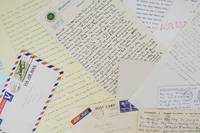
1966140946326Various places: No Publisher 1966. A vast archive of correspondence featuring approximately 395 letters postcards and correspondences from the iconic American author John Steinbeck sent to family members over the course of twenty-nine years. The scope is incredible spanning from the publication of his masterpiece Of Mice and Men to two years before his death. Provenance: from the estate of John’s sister Mary Dekker Steinbeck. <p>The bulk of John’s correspondence over 300 letters is written to his younger and much-adored sister Mary. These letters span a sweeping twenty-eight year period beginning in 1937 and continue until right before Mary’s death in 1965. <p>The remainder of John’s letters are written to other family members primarily his sisters Beth and Esther Mary’s daughter Joan and her husband David Heyler. These letters continue up until 1966. <p>The majority of the letters and postcards are autograph though roughly 93 are typed or typed and signed; including roughly 14 typed and sent in triplicate by John to his three sisters. The vast majority of John’s letters are accompanied by their original transmittal envelopes—over the years postmarks come from various locations such as New York City Sag Harbor California Mexico the Virgin Islands Europe and more detailing John’s life by location. <br /> The condition varies but most range from Near Fine to Very Good. A spreadsheet of the contents can be provided upon request. A partial transcription is available as well serious inquiries only. <p>The archive additionally includes 165 pieces of communication from other family members mostly sent within the family and a small assortment of ephemera. The majority of these peripheral letters were sent by John’s second wife Gwyn Conger Steinbeck m. 1943-1948 and third Elaine Steinbeck m. 1950-1968 to Mary. These correspondences begin in 1940 when William Bill Dekker a World War I pilot sends his wife Mary a letter home. Bill would disappear in action over Italy in July 1943 and John would detail attempts he made overseas with his military correspondent connections to locate Bill in letters he sent Mary. The family letters stretch onward until 1997 nearly 30 years after John died with letters from Elaine written to Joan and David. <p>Included in the assorted ephemera is a note from Mary to John’s editor and friend Pat Covici on the necessity of the title East of Eden notes two typescripts seven snapshot photographs depicting John and several others on a boat and one depicting John in a yard being greeted by a dog. Several telegrams are present; including the one John sent to Mary relaying the news of the birth of his second son John IV June 12 1946: “A BOY BOTH FINE 5 POUNDS 4 OUNCES. LOVE= JOHNâ€. <p>These letters portray a sweeping and intimate look at Steinbeck’s life as told in his own words and the words of those closest to him through deeply personal letters covering his private and professional life during his most artistically productive years. He ranges over countless topics from the mundane minutia of daily life such as stockpiling meat in his new deep freeze to save a few pennies per pound should meat prices raise to the profound—childhood memories the births of his sons the collapse of his marriage to Gwyn his grappling with depression mortality and much more. Despite John’s worldwide acclaim and success winning both the Pulitzer and Nobel Prizes his nostalgic thoughts often drift back to a green cliff overlooking the Carmel River of his youth. <br /> He writes at length of his professional life his work and milestones from being a war correspondent to novelist and playwright. He expounds on the ups and downs of his writing process—from research to starting new work becoming frustrated and throwing work out finishing work and starting again. <p>Collections of this magnitude and breadth regarding such a major American author are virtually unobtainable in the marketplace with most material already held by institutions. Because this correspondence comes from family members it offers a much more intimate and private look into the life of John Steinbeck than otherwise available. Despite his prolificacy he never wrote an autobiography and these intimate letters offer insights available no other way. [No Publisher] unknown