- Saâdi - DominusLivre Rare Book

12 résultats
190083043Partitions sur les Lettres et poste 1900 approx.
1882631049Leipzig, Hirzel, 1882. IX, 285 S. OU. angeschmutzt.
185245988Wien, Hof- und Staatsdruckerei, 1852. 8°. Mit einem gest. Frontispiz, einer ganzs. Textillustration u. 8 illustr. Zwischentiteln in versch. Techniken. 233 (1) S., Etw. späterer blauer HLdr.-Bd. a. 5 Bünden m. Rückenverg., goldgepr. Rückentitel u. dreiseitigem Rotschnitt.
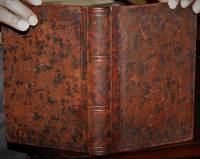
182352767London: J. M. Richardson 1823. 8vo pp. 4 475 1; recent half tan calf over marbled boards gilt-lettered direct on gilt-paneled spine; fore-edge of first two leaves very slightly chipped; all else near fine and sound. This is the first volume in the proposed series of English translations of select Persian classics "chiefly intended for the use of the students at their colleges." Wikipedia notes that AbÅ«-Muhammad Muslih al-DÄ«n bin AbdallÄh ShÄ«rÄzÄ« better known by his pen-name Saadi also known as Saadi of Shiraz was a major Persian poet and literary figure of the medieval period. He is recognized for the quality of his writings and for the depth of his social and moral thoughts. Saadi is widely recognized as one of the greatest poets of the classical literary tradition earning him the nickname "Master of Speech" or "The Master" among Persian scholars. The Gulistan containing stories and personal anecdotes was completed in 1258. It is "interspersed with a variety of short poems which contain aphorisms advice and humorous reflections demonstrating Saadi's profound awareness of the absurdity of human existence. J. M. Richardson unknown
182352767London: J. M. Richardson 1823. First edition in English 8vo pp. 4 475 1; recent half tan calf over marbled boards gilt-lettered direct on gilt-paneled spine; fore-edge of first two leaves very slightly chipped; all else near fine and sound. This is the first volume in the proposed series of English translations of select Persian classics "chiefly intended for the use of the students at their colleges." Wikipedia notes that AbÅ«-Muhammad Muslih al-DÄ«n bin AbdallÄÂh ShÄ«rÄÂzÄ« better known by his pen-name Saadi also known as Saadi of Shiraz was a major Persian poet and literary figure of the medieval period. He is recognized for the quality of his writings and for the depth of his social and moral thoughts. Saadi is widely recognized as one of the greatest poets of the classical literary tradition earning him the nickname "Master of Speech" or "The Master" among Persian scholars. The Gulistan containing stories and personal anecdotes was completed in 1258. It is "interspersed with a variety of short poems which contain aphorisms advice and humorous reflections demonstrating Saadi's profound awareness of the absurdity of human existence." <br/><br/> J. M. Richardson hardcover books
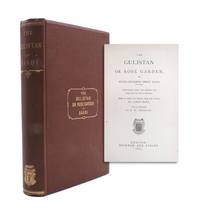
186528081Boston: Ticker and Fields 1865. 1st edition thus. Cloth. Very Good. 1st edition thus. A Very Good copy. 12mo. 379 pp. Bound in the publisher's maroon cloth with gilt titles; beveled boards. t.e.g. Moderate wear at the spine's crown and tail. Book plate. Small tear along the hinge. Sometimes spelled Golestan is a landmark of Persian literature written by Saadi Shirazi also known as Sadi of Shiraz. Ticker and Fields unknown
186581805Boston:: Ticknor and Fields. Very Good. 1865. Hardcover. B000JK4IS6 . Translated from the Persian by Francis Gladwin. Essay on the life of the author by James Ross. Preface by Ralph Waldo Emerson. First American edition. Small octavo half bound in light brown leather raised bands and gilt lettering and borders on the spine marbled boards marbled edges marbled endpapers. Moderate edge wear to leather portions age darkening along the spine else very good. ; 379 pages . Ticknor and Fields, hardcover books
1865007988Boston: Ticknor & Fields 1865. xviii 2 paginated 21-379. A gorgeous copy of this SCARCE First American Edition in contemporary unsigned binding of full polished calf the back intricately tooled in gilt and with gilt lettering on green morocco label end papers and page edges marbled and Near Fine faint rubs to calf. A notable Ralph Waldo Emerson Preface BAL 5247. First American Edition. Polished Calf. Near Fine/No Jacket As Issued. 12mo - over 6¾" - 7¾" tall. Ticknor & Fields Hardcover books
1865333537Boston: Ticknor and Fields 1865. First American edition and first edition thus of this translation with preface by Emerson. 379pp. 8vo. Original brick cloth. Binding has light soiling with rubbing and few tiny tears at tips of spine else a very good bright copy with text fresh and clean. First American edition and first edition thus of this translation with preface by Emerson. 379pp. 8vo. A nice association copy; John Albee was a friend of Ralph Waldo Emerson and he wrote 'Reminiscences of Emerson' 1882; reprinted in 'Concord Lectures in Philosophy'Myerson E202 and 'Remembrances of Emerson' 1901; revised edition 1903. Persian poet Musle-Huddeen Sheik Saadi 1184-1291 was born in Shiraz.<br /> <br /> In Emerson's introduction he explains the reason for the late date of publication "The slowness to import these books into our libraries-mainly owing no doubt to the forbidding difficulty of the original languages- is also due in part to some repulsion in the genius of races. At first sight the Oriental rhetoric does not please our Western taste . " Francis Gladwin translated several of the Oriental writers and wrote a "History of Hindostan." In addition to his numerous translations he also produces several vocabularies and grammatical works including a Persian-Hindustani-English dictionary which was published in 1809. In the 1860's there was a revival of interest in the Persian poems at the time of and following the publication of the "Rubaïyat." Sa'dî was an early 12th century Persian poet described by the "Encyclopedia Britannica" as "the greatest didactic poet and the most popular writer of Persia." Richard Burton and Sir Edwin Arnold both were interested in him and translated his works as did several others. This work is described by Gay Wilson Allen as a "humorous miscellany of ethical subjects in rhymed prose." p. 481 Saadi was Emerson's favorite poet in fact apparently he considered using Saadi in "Representative Men" in place of Shakespeare. Emerson became acquainted and then enamoured of the Persian poets in the late 1830's. Originally he had read Saadi in a German translation. In 1841 he wrote a poem for "The Dial" entitled "Saadi" German thought Oriental influences and Platonic thought were all integral parts of the New England Transcendentalists. Myerson D55 Ticknor and Fields unknown
185360483København, C. G. Iversen, 1853. 8vo. In the original cloth binding with blindstamped frames to boards. With dedication from the translator: ""Til min kiære broder / til erindring om / efteråret 1853 / fra Boisen"" (i.e. English: ""To my dear brother / in memory of / fall 1853 / from Boisen""). Wear to hindges and capitals, with some loss of the cloth. Ex-libris (K. F. Plesner) pasted on to pasted down front end-paper. Light brownspotting throughout. VIII, 216 pp.
185360483København C. G. Iversen 1853. 8vo. In the original cloth binding with blindstamped frames to boards. With dedication from the translator: "Til min kiære broder / til erindring om / efteråret 1853 / fra Boisen" i.e. English: "To my dear brother / in memory of / fall 1853 / from Boisen". Wear to hindges and capitals with some loss of the cloth. Ex-libris K. F. Plesner pasted on to pasted down front end-paper. Light brownspotting throughout. VIII 216 pp. <br/><br/><em>Rare first Danish translation - with dedication from the translator - of Saadi's "Gulistan" often translated as "The Rose Garden" a masterpiece of Persian literature written by the 13th-century Persian poet and prose writer Saadi Shirazi – “probably the single most influential work of prose in the Persian tradition" Encyclopædia Iranica. It is a collection of stories anecdotes moral teachings and poetry that are presented in both prose and verse forms. The work is considered one of the most important and enduring pieces of Persian literature. The book is divided into eight chapters each of which focuses on different aspects of life morality ethics and social conduct. These chapters cover topics such as justice humility friendship love and the importance of education. The stories and anecdotes in the "Gulistan" are often used to convey moral lessons and practical advice. They are known for their wit humor and deep insight into human nature. Saadi's writing style is characterized by its eloquence simplicity and use of everyday language making his teachings accessible to a wide audience. The "Gulistan" has been translated into numerous languages and has had a profound influence on literature and thought across the world. Its teachings have been appreciated by scholars philosophers and leaders throughout history. The work has also played a role in shaping Persian cultural identity and ethical values. </em> hardcover
1844B6733Tehran Iran. C.1844. A good example of this text. Some pages browned with marginal spotting. Some bleeding of colour. Some leaves professionally restored with occasional missing text. Binding: Full contemporary mottled calf expertly rebacked in matching style. Upper and lower with blind paneling and motifs in blind. Spine with blind rules. Notes: Extremely rare First or very early edition. With original hand colouring throughout.<br>Saadi Shirazi also known simply as Saadi 1210 – 1291/2 was a prominent Persian poet and writer. Nicknamed “The Master Of Speech†or “The Wordsmith†he is widely recognized as one of the greatest poets of the classic literary tradition. <br><br><br> Size: 8vo. 223x146 mm. Illustration: Titlepage with arabesque-style border and figural headpiece coloured in blue and yellow. Text in 19 lines most often in two columns inside illuminated frame. Main text inside border containing text written in diagonal often with emphasized catchwords and illustrations of plants animals and people. Many pages with additionally decorated and coloured borders in arabesque or floral style or with figural scenes and illustrations. A few of the pictures are dated around 1855. Pages: 314 pages. Category: Book Literature; Book Asia Middle East Iran; unknown