Anon,Biblio.com
6 407 résultats
11484413like new. unknown
19566938like new. unknown
19566805like new. unknown
10037046like new. unknown
12301759like new. unknown
SONG1447436253Read Books 2017-02-27. Illustrated. paperback. Used: Good. 5.50x0.20x8.50. Buy with confidence. Excellent Customer Service & Return policy. Read Books paperback
1996Q-1856279472Grange Books Ltd 1996-07-01. Hardcover. New. In shrink wrap. Looks like an interesting title! Grange Books Ltd hardcover
12695037-nnew. unknown
12695037like new. unknown
18375296like new. unknown
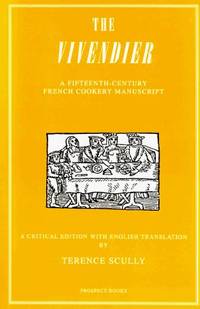
1998SKU-0613AO01105196Prospect Books 1998. 1. Softcover. Good. Good; Softcover; Very light wear to the covers but with sun-fading to the spine and spine edges; Unblemished textblock edges; The endpapers and text pages are all clean and unmarked; The binding is tight with a straight spine; This book will be shipped in a sturdy cardboard box with foam padding; Medium Format 8.5" - 9.75" tall; 0.6 lbs; Yellow covers with title in white lettering; 1998 Prospect Books; 129 pages; "The Vivendier" by Terence Scully et al. Prospect Books paperback
7853438like new. unknown
0859780554.Gpaperback. Good. Access codes and supplements are not guaranteed with used items. May be an ex-library book. paperback
1976128087Foreign Languages Press 1976. paperback. Good. 0x0x0. Unmarked paperback with some minor scuffs on front cover. Foreign Languages Press paperback
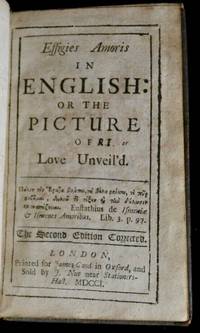
1701779Oxford: London : Printed for James Good in Oxford and sold by J. Nut i.e. Nutt London 1701. Second edition of the English translation by John Norton. ¶ Duodecimo; A-E12 F11 A1 half title present Bound in original full calf missing some leather from spine but cords are very strong. ESTC Citation No. N1243 415J. Some wonderful quotes for this book: <br /> <br /> The Answer of R. W. to his Friend importunately desiring to know what LOVE might be<br /> <br /> I Acknowledge the wanton Ty∣ranny of imperious Love that is always requiring the most diffi∣cult Trials of the Affections. Now though it be a kinde of an Hercu∣lean Labour it self to Love considering those severe duties those toyls and hazards appendant to it; as if Cruelty were its sole delight: Nevertheless we believe it reasonable what names so∣ever we have given to Love that he should exercise his Soveraignty which is certainly very great and puissant; and by the Severity of his Commands that he should augment the glory of his high Rule and our obedient Sub∣mission.<br /> <br /> "However this is the supreme Office of Reason to make a right choice of Disposition and Conditions; to choose a Companion with whom we are sure to live with more delight than with our selves; whose judgment we may be sure to follow as our own: or else to stay till we can finde a proper Ob∣ject of Love. Then also so to love like one who is guided by Judgment not carried away by Passion; like one so far from ceasing that he is always beginning to Love. This is to joyn Patience with Constancy. This is to receive the Idea more fairly imprinted in the Minde than in Wax and to preserve more stedfastly. 'Tis the Of∣fice of Vertue to determine upon one measure of wishing; to covet a dispo∣sition and inclination like his own through all the changes of Fortune; and so to make two of one that they may act the same person.". The "Amoris Effigies anon. London 1649 1664 1668 1671. In 1680 appeared a loose English translation by a Robert Nightingale which deviated in many points from the Latin original. John Norris under the pseudonym Phil-iconerus published a fresh translation London 1682; 2nd edit. 1701; In his introduction Norris wrote of Waring's "sweetness of fancy neatness of style and lusciousness of hidden sense".<br /> Waring also wrote Latin verses including in Jonsonus Virbius playwright Ben Jonson.1639 reprinted in the 1668 and subsequent editions of the Amoris Effigies under the title of Carmen Lapidorium." DNB. London : Printed for James Good in Oxford, and sold by J. Nut [i.e. Nutt, London] hardcover
1861748R32Glasgow: Thomas Murray & Son 1861. Leather. Near Fine. 6.5" by 4.5". J. O. Brown Esq. A lovely insightful novel set in Victorian Glasgow. This charming volume novelthe tale of Alfred Leslie and his escapades in the city of Glasgow. Author remains anonymous but was named Frederick Arnold as denoted by a pencil inscription to the verso of the front endpaper.In a half calf binding with a beautiful decorative gilt spine and marbled boards. Features a full illustrated frontispiece and an engraved title page along with a number of full plate illustrations by J. O. Brown. Contemporary ownership inscription to the front blank. Externally lovely very minor shelfwear. Inscription to front endpaper denotes the author 'by Frederick Arnold' and an ownership inscription. Internally firmly bound pages bright and clean. Near Fine Thomas Murray & Son hardcover
186533247New York: James Miller 1865. 1st Edition 1st Printing. Hardcover. Good/No Jacket. First edition first printing. Hardback. 306 pp Also contains remarks on the minor poems of other early English poets Sidney; Drayton; Chaucer and Carew. Brown cloth with pictorial gilt design of classical muse with lyre. Edge of covers slightly faded with exposure to damp but still in Good condition generally. VERY SCARCE. <br/> <br/> James Miller hardcover
47982116-nnew. unknown
47982116like new. unknown
ria9781039167025_inpPaperback. New. New Book; Fast Shipping from UK; Not signed; Not First Edition; N/A paperback
ria9781039167032_inpHardcover. New. New Book; Fast Shipping from UK; Not signed; Not First Edition; N/A hardcover
B9781039167025Paperback / softback. New. paperback
A9781039167032Hardback. New. hardcover
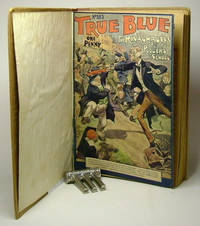
190433049London: Aldine Publishing Co 1904. 1st Edition. 1st Edition. TRUE BLUE LIBRARY. Published Weekly. 4to. 32 pages per issue. THE RIVAL HALVES OF PODGER'S SCHOOL plus 11 other titles. London : Aldine Publishing Co. 1904. 4to. tan cloth backed untitled plain beige boards. Original coloured wrappers bound-in. Illustrated throughout in black & white. A run of 12 isssues: Nos 263 264 265 267 268 270 271 276 277 278 282 286. In very good antiquarian condition. TRUE BLUE weekly magazine was published for boys just prior to the turn of the 19th century & featured one complete & patriotic adventure story per issue set. Intended to celebrate Britain 's glorious national past in a creative range of historical periods each issue had a full colour illustrated themed wrapper with black & white drawings inside. Each issue generally ran 32 pages. Extremely popular in their day these junior magazines had a lengthy run waning only as alternative forms of entertainments gradually took over their audience's attention. Penny Dreadful Dime Novels were the American version was a term applied to nineteenth century British fiction publications usually lurid serial stories appearing in parts over a number of weeks each part costing a penny. The term however soon came to encompass a variety of publications that featured cheap sensational fiction such as story papers and booklet "libraries." The Penny Dreadfuls were printed on cheap pulp paper and were aimed primarily at teenage boys from the working class though there is some evidence that many girls read them as well. Penny Parts The penny part stories got underway in the 1830s originally as a cheaper alternative for the working class adults but by the 1850s the serial stories were aimed exclusively at teenagers. The stories themselves were reprints or sometimes rewrites of Gothic thrillers such as The Monk or The Castle of Otranto as well as new stories about famous criminals. Some of the most famous of these penny part stories were The String of Pearls which ostensibly introduced Sweeney Todd The Mysteries of London inspired by the French serial The Mysteries of Paris and Varney the Vampire. Highwaymen were popular heroes. Black Bess or the Knight of the Road outlining the largely imaginary exploits of real-life highwayman Dick Turpin continued for 254 episodes. Working class boys who could not afford a penny a week often formed clubs that would share the cost passing the flimsy booklets from reader to reader. Other enterprising youngsters would collect a number of consecutive parts then rent the volume out to friends. Penny Dreadfuls In 1866 Boys of England was introduced as a new type of publication an eight page magazine that featured serial stories as well as articles and shorts of interests. It was printed on the same cheap paper though sporting a larger format than the penny parts. Numerous competitors quickly followed with such titles as Boys Leisure Hour Boys Standard Young Men of Great Britain etc. As the price and quality of fiction was the same these storypapers also fell under the general definition of Penny Dreadfuls also known as Penny Bloods or Blood and Thunders in their early days. American dime novels were edited and rewritten for a British audience. These appeared in booklet form such as the Boys First Rate Pocket Library. Frank Reade Buffalo Bill and Deadwood Dick were all popular with the Penny Dreadful audience. Half-penny Dreadful In the mid-1890s a publisher Alfred Harmsworth decided to do something about what was widely perceived as the corrupting influence of the Penny Dreadfuls. He issued new story papers The Half-penny Marvel The Union Jack and Pluck all priced at one half-penny. At first the stories were high-minded moral tales reportedly based on true experiences but it was not long before these papers started using the same kind of material as the publications they competed against. A.A. Milne once said 'Harmsworth killed the penny dreadful by the simple process of producing the ha'penny dreadfuller. '. Aldine Publishing Co unknown