Theophrastus La Bruyere, Jean deBiblio.com
21 résultats
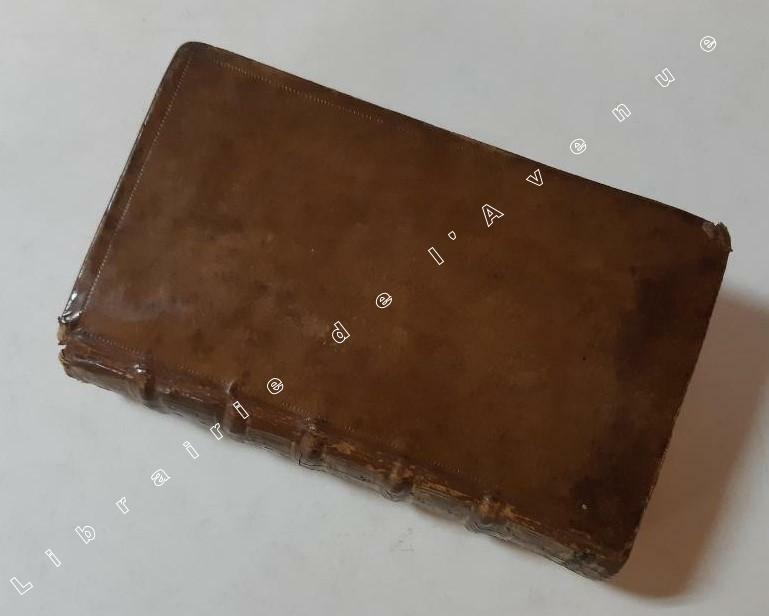
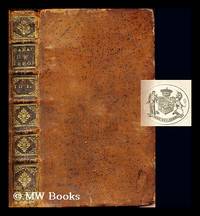
1700256955A Paris: chez estienne michallet 1700. First Edition. Hardcover. Worn copy bound in full aniline calf with a leather gilt-blocked label to the spine. Some wear and tear to the spine and panel edges as with age. Provenance; library armorial bookplate with the motto 'sero sed serto'. Edition; Nouv. éd. augmentée. Physical description; 311 pages. Subjects; Theophrastus. Characters A Paris: chez estienne michallet hardcover
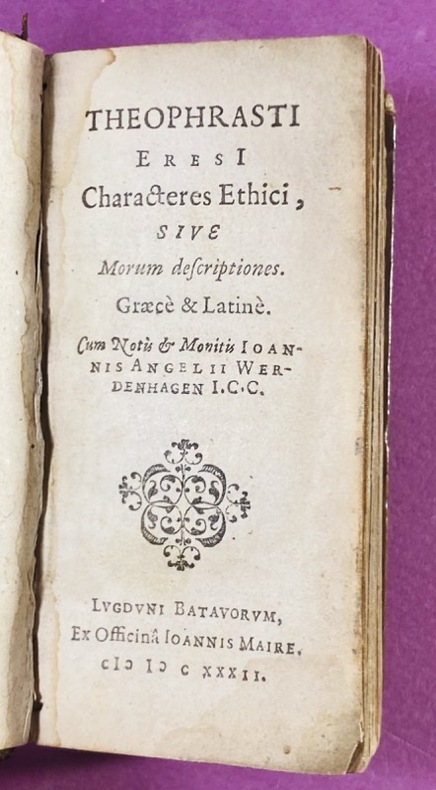
163215591632 Couverture rigide Leyde (Lugduni Batavorum), Jean Maire, 1632.Un volume in-32 (10 x 5 cm), reliure plein veau fauve de l'époque, dos à nerfs orné, double filet doré d'encadrement sur les plats, coiffes absentes, coins émoussés, manques à la charnière supérieure et au dos. Feuillet blanc, 71, 98, 237 (2) pages. BREUGELMANS (J. Maire) 335. Edition donnée par J. A. Werdenhagen (1581-1652)) Texte en grec suivi de la traduction latine et des commentaires de Werdenhagen. Bon état intérieur.
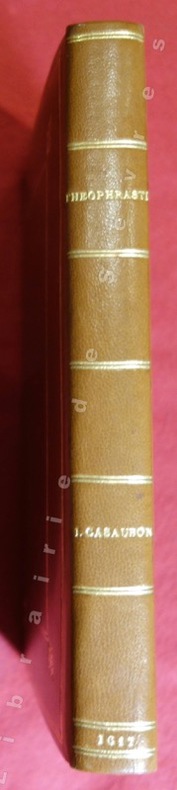
1617015348Lyon: Lugduni Lyon : Apud viduam Ant. De Harsy Ad insigne Scuti Coloniensis 1617. Book measures 16.5x12.cm. 16367132pp. Characters. Latin & Greek. Bound in period full calf raised bands. Binding heavily worn top board detached. Internally lacking front endpaper minor loss to margin of title without loss of text inscription on top margin of title. Some minor annotations or underlining annotations heavy to a few pages. Pages in good condition. A good copy. Leather. Good Plus. Small 8vo. Lugduni [Lyon] : Apud viduam Ant. De Harsy, Ad insigne Scuti Coloniensis
1632C35028Lugduni Batavorum 1632. Binding slightly rubbed with loose front board. Otherwise clean and tight. 71 1 98 237 2pp. Small octavo 9 x 4 cm. Greek and Latin texts of Theophrastus's Characters with the very seldom seen commentary of Johann Angelius Werdenhagen 1581-1652. Full plain calf. The binding and endpapers are about early nineteenth-century. unknown
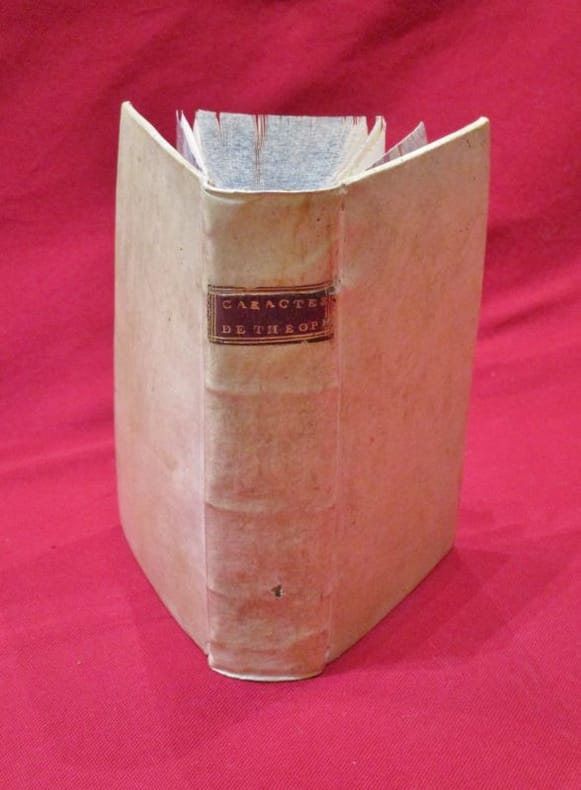
1699112877estienne michallet 1699 in-12 A Paris, Chez Estienne Michallet, 1699, 1 volume in-12 de 95 x 255 mm environ, (16) ff. (Page de titre, Discours sur Theophraste), 52 pages (Caractères de Théophraste), 662 pages ( Les Caractères ou les moeurs de ce siècle), xliv pages (Discours), (3) ff. Reliure plein parchemin portant titres dorés sur pièce de cuir bordeaux, tranches mouchetées, gardes marbrées au motif feuille de chêne. Trou de 3 mm environ de diamètre sur la partie inférieure du dos, ainsi qu'un discret trou de ver au niveau de la pièce de titre, ex libris ôté ayant arraché des parties de la garde du contreplat supérieur, rares rousseurs, bel état malgré les défauts signalés.
1617116291617 Lyon, Jacques du Creux pour Ant. de Harsy, 1617, in 12 de (16)-367-(11)-(2) pp., rel. moderne pastiche du XVIIe siècle, pleine basane brune, dos lisse orné de double-filets dorés, date en pied, plats ornés d'encadrements dorés à fleurons angulaires à la "Du Seuil", tranches dorées, bel ex.
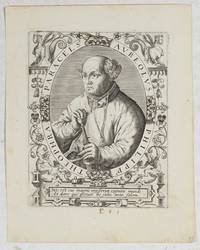
1642664811642. Monogrammist BR J.Th. de Bry Kupferstich aus J.J. Boissard Icones virorum illustrium Frankfurt 1642 Kupferstich 142 x 115 auf 190 x 142 mm; mit kleinem Fleck am Rand feines Blatt. Unter dem Oval in Latein: Hier ist der dem das Geheimnis der großen Welt bekannt war und der sich mit der Kunst des Verstandes den Verstand geben konnte. Die Granatäpfel in den Händen der Faune symbolisieren die verbindung des Bösen mit dem Guten. Philippus Aureolus Theophrastus Rombastus Paracelsus ab Hohenbeim "auch "Helvetius Eremita" genannt war 1491 in einem Hause nahe an der über die Sihl führenden Teufelsbrücke eine Stunde weit von dem berühmten Wallfahrtsorte Maria Einsiedeln Canton Schwyz geboren. Sein Vater der Arzt Wilhelm ab Hohenheim stammte aus der alten und berühmten schwäbischen Adelsfamilie der Bombaste die sich von dem adeligen Schloss Hohenheim dem nachmaligen Esslinger Hof bei dem Dorfe Pfänningen bei Stuttgart "Bombaste von Hohenheim" nannten. 1502 siedelte er mit seinem Vater nach Villach in Kärnten über wo letzterer 1534 starb. Er bezog 1506 die Universität zu Basel gab sich hier besonders chemischen Studien hin lebte längere Zeit bei dem als Alchemist bekannten TRITHEMIUS machte dann grössere Reisen durch Europa hielt sich an verschiedenen Universitäten Studien halber auf und genoss bereits um 1527 wegen seiner Kenntnisse einen solchen Ruf dass er auf des bekannten Kirchenvaters seines Landsmannes Oekolampadius Empfehlung als Nachfolger von COPUS 1527 zum Stadtarzt von Basel ernannt wurde. In dieser Eigenschaft trat er in ebenso abenteuerlicher wie verletzender Weise auf indem er als Zeichen seiner Verachtung der arabischen Medicin alle Werke des AVICENNA auf öffentlichem Markt verbrannte. Noch mehr brachte er seine Collegen gegen sich auf als er es wagte sich der deutschen Sprache zu bedienen. Es kam schliesslich zu völligem Zerwürfniss als er auf das schmutzige geschäftliehe Treiben der im Bunde mit den Apothekern stehenden Aerzte aufmerksam und demselben ein Ende machte. Zuletzt zerfiel er auch noch mit den Behörden; er liess aus Aerger darüber dieselben in Pamphleten angreifen musste aber in Folge dessen heimlich aus Basel entweichen und führte nun ein abenteuerliches Wanderleben das ihn durch den Elsass die Schweiz Deutschland und bis an die entferntesten Punkte Europas selbst bis nach Asien hinein verschlug wobei er von einer grossen Zahl von Schülern begleitet war meistens Vagabunden die nur Stein der Weisen kennen lernen wollten und PARACELSUS für den Besitzer desselben hielten. Allmälig verbreitete sich sein Name und sein Ruhm über ganz Europa. Er wurde 1640 nach Salzburg berufen lebte aber hier nur noch 1 Jahr und starb daselbst 24 Sept. 1541. - PARACELSUS ist jedenfalls für die mystische Richtung der Medicin im 16. Jahrhundert die einflussreichste Persönlichkeit gewesen. Es ist über ihn sehr viel gedacht und geschrieben worden. Von der einen Seite ist er als Reformator Vater der Heilkunde Begründer der neuen Richtung in der Medicin gepriesen und in den Himmel erhoben von der anderen als ein Mystiker Schwärmer Betrüger Trunkenbold Gaukler bezeichnet worden. Dieser Widerspruch löst sich wenn man auf die Quellen zurückgeht aus denen er sich ergeben hat. Nachgewiesenermassen ist der bei Weitem grösste Theil aller Schriften die unter seinem Namen erschienen sind untergeschoben und von den übrigen ist es höchst fraglich wieviel davon ihm angehört und wieviel von seinen Freunden und Feinden hineingearbeitet worden ist. Seine Freunde glaubten seine Lehre gar nicht dunkel genug darstellen zu können und seine Feinde die ihn zu verunglimpfen bestrebt waren scheuten sich nicht in seine Schriften einen Wust von Unsinn hineinzutragen. Selbst die von seinen Gegnern gegen ihn erhobenen Angriffe sind darin als sein eigenes Werk aufgeführt. - Als Quelle des Wissens bezeichnete PARACELSUS die Erfahrung aber nicht die auf dem Wege einer rationellen inductiven Forschung gewonnene Kenntniss sondern das aus der neueren Philosophie geschöpfte aprioristische Wissen; vorzugsweise ist es die Analogie aus der er die Erkenntniss ableitet. Sein System basirt wesentlich auf den Theo- und Kosmosophien der Neuplatoniker in die er eben nur das neuere philosophische Element hineingebracht hat. Die ganze Welt wird von ihm streng pantheistisch aufgefasst. Er unterscheidet 3 Sphären: eine himmlische mit den reinen Intelligenzen und körperfreien Seelen eine astralische Welt mit den seelenlosen Elementargeistern und eine körperliche Welt d. i. die irdische Natur die au beiden genannten Sphären Theil nimmt. In dem Menschen sind nun alle 3 Sphären miteinander verbunden. Er ist der Mikrokosmus in dem Makrokosmus. Alles Geschaffene wird auf ein Magisterium magnum zurückgeführt u.s.w. Die Basis der ganzen körperlichen Welt bilden die 4 Aristotelischen Elemente; diese finden sieh körperlich gedacht in 3 Stoffen wieder die PARACELSUS von seinem chemischen Standpunkte aus sich durch ihre chemischen Eigenschaften von einander unterscheiden lässt. Diese 3 Stoffe sind: l Salz d. i. der Begriff des Festen aller der chemischen Stoffe die durch das Feuer unzerstörbar sind; 2 Quecksilber d. i. der Begriff des Flüssigen das durch Feuer unverändert verflüssigt wird ; 3 Schwefel d. i. der Begriff des Luftigen das durch das Feuer nicht bloss zerstörbar sondern auch gleichzeitig veränderlich ist. Diese 3 Begriffe werden rein symbolisch von PARACELSUS gebraucht für alle Stoffe die sich ebenso in Bezug auf ihr Verhalten dem Feuer gegenüber qualificiren lassen. Das eigentliche Wesen liegt aber nicht in dem Stoffe sondern in dem Geiste in dem ihm eingepflanzten göttlichen Keime in den Kräften die sich aus ihm entfalten; diese werden als Quinta essentia häufig auch als Archaeus als das eigentlich Belebende von ihm bezeichnet. Der Mensch besteht nun indem er an jenen 3 Sphären sich betheiligt aus sieht- und fühlbarem Körper sodann aus einer körperlichen Seele Archaeus der eben die an dem Organismus hervortretenden lebendigen Eigenschaften vermittelt und endlich aus der unsterblichen Seele. In seiner Pathologie unterscheidet er 4 Gruppen von Krankheitsursachen sog. "Entia": 1 Ens deale die göttliche Schickung; 2 Ens astrale Einfluss der Gestirne der sich namentlich als Quelle der pestilenzialischen epidemischen Krankheiten kundgiebt: 3 Ens spirituale archaeus das geistige Element im Menschen das er sich übrigens körperlich vorstellt; endlich 4 das Ens naturale die den ganzen Menschen umgebende körperliche Welt a als Ens alimentorum et veneni und b als Ens seminis die Ursache der angeborenen und hereditären Krankheiten. Jede Krankheit kann nun von einem dieser Entia ihren Ursprung nehmen indem diese eine chemische Einwirkung auf den Organismus hervorbringen auf chemischem Wege Trennungen und neue Verbindungen bilden. Salz Schwefel und Mercur erfahren mannichfache Veränderungen. Die Art wie PARACELSUS nun die einzelnen Krankheitsformen auf die verschiedenen Veränderungen zurückführt ist weiter nichts als ein subtiles Spiel mit Analogieen. - Den Mittelpunkt seiner Lehre bildet die Therapie. Der erkrankte Organismus wird gesund einerseits durch die ihm immanente Kraft die er als Archaeus darstellt die xxxx der griechischen Aerzte und ausserdem durch directe ärztliche Eingriffe und zwar nicht in dem Sinne der alten Medicin Contraria contrariis sondern es muss nach PARACELSUS dieser Gegensatz zwischen Krankheit und Heilmittel in den Ideen liegen. Er sagt z. B. Wassersucht ist im Mikrokosmus Das was Ueberschwemmung im Makrokosmus ist; so wie man nun Ueberschwemmung beseitigt durch Ableitung von Wasser so glaubt er auch durch reichliche Entleerung die übermässige Feuchtigkeit zu entfernen. Die Kolik z. B. vergleicht er mit dem Winde und verlangt Wärme und Trockenheit bei der Behandlung derselben. Atrophieen und Phthisen vergleicht er mit der Austrocknung und empfiehlt die entsprechenden Mittel die der Idee nach direct entgegengesetzt sind u.s.w. Eine zweite Methode der Behandlung ist die durch Arcana d. h. durch Substanzen die durch die in ihnen innewohnende magische Kraft die in dem Organismus wuchernde Abnormität zerstören also die Krankheiten in ihren Wurzeln angreifen. Man muss nach PARACELSUS dahin kommen die Krankheiten nicht nach den anatomisch ergriffenen Theilen sondern nach dem entsprechenden Heilmittel zu benennen. Er unterscheidet also z. B. Morbus terebinthinus helleborinus etc. in der allerneuesten Zeit hat diese Lehre in RADEMACHER wieder ihren Apostel gefunden. PARACELSUS giebt nun auch Vorschriften über die Art die Heilmittel für die einzelnen Krankheiten zu entdecken. Er lehrt dass die Natur selbst auf sie hinweise durch die eigenthümliche Gestaltung Farbe etc. der Pflanzen namentlich aber durch die Aehnlichkeit die diese Stoffe mit gewissen Organen des Körpers haben die auch als Organheilmittel als solche anzusehen seien. Hieraus entwickelte sich die Lehre von den sog. "Signaturen" welche die Pflanzenstoffe tragen und aus denen ein Schluss auf ihre Wirkung als Heilmittel gezogen wurde. Bei denen die solche Signaturen nicht tragen entscheidet lediglich das Experiment. Um nun die Wirkung dieser Arcana festzustellen wurde es nothwendig die Heilmittel genau zu studiren. Auf seine Veranlassung sind denn auch zahlreiche metallische Heilmittel zuerst für den innerlichen Gebrauch in die Therapie eingeführt worden so: Eisenoxyd Mercur Antimon Blei Kupfer Arsen Schwefelpräparate u.s.w. die bis dahin so wenig angewandt worden waren dass als PARACELSUS's Lehre grössere Verbreitung fand von Seiten verschiedener Facultäten dagegen opponirt und sogar die Regierungen veranlasst wurden ein Verbot gegen den innerlichen Gebrauch der metallischen Mittel zu erlassen. Die Paracelsische Lehre führte ausserdem zu einer Darstellung der in der Pflanze vorhandenen Kräfte da nicht die ganze Pflanze heile sondern nur einzelne Stoffe derselben. So entstanden die Tincturen Spirituosen Extracte etc. - PARACELSUS hat seine Schriften deren Zahl sich auf 364 belaufen soll meistens deutsch geschrieben resp. dictirt und im Manuscript verkauft. Viele derselben sind von seinen Anhängern ins Lateinische übersetzt und zum Druck befördert worden. Sie sind mehrfach gesammelt von J. HUSER 10 voll. Basel 1589-91; Frankfurt 1603 3 voll. fol.; Strassb. 1605; von F. PETISCUS : "Opera omnia medico-chemico-chirurgica" 3 voll. fol. Genf 1658; 11 voll. Basel 1575; 12 voll. Frankf. 1603. Als die wichtigsten der echt befundenen nennen wir: "De gradibus et compositionibun receptorum" geschr. 1526 - "Die kleine Chirurgie. Von französischen Blatern Lähme Beulen etc." 1528 bildet den 4. Theil der "Grossen Wundparznei" - "Sieben Bücher von allen offenen Schäden so aus der Natur geboren werden" 1528 3 Thle. der "Grossen Wundarznei"' - "Vom Holtz Guajaco" 1529 - " Von den Imposturen der Aerzte" 1530 - "Opus paramirum ad medicam industriam" 1531 - die beiden ersten Bücher der Grossen Wundarznei '" 1536 u. 37 - "Paragranum" 1538. Die Sprache die PARACELSUS führt ist sehr derb mit oft plumpen Ausdrücken und wo es gilt feindliche Angriffe zu widerlegen sehr auffallend und den guten Geschmack - nach der Sitte der damaligen Zeit - völlig bei Seite setzend. Er hatte eine ganz tüchtige wissenschaftliche Bildung wie sich das auch in seiner Verehrung des HIPPOKRATES kuudgiebt doch war er allerdings im höchsten Grade der mystischen Richtung seiner Zeit verfallen dabei aber vom eigentlichen Aberglauben von allen den Thorheiten der Astrologen und Alchemisten weit entfernt die er selbst sogar lächerlich machte indem er sagte dass jeder Mensch die Dämonen etc. in seinem eigenen Busen trage. Im Publicum fand seine Lehre ausserordentlich vielen Anklang: dagegen hat er eigentliche Schüler nicht gehabt. Er spricht es selbst sehr oft aus dass wenn man Alle zusammenzählt die seine Schüler heissen wollten Hunderte herauskämen aber darunter wären nur 2-3 die ihn verstanden hätten die übrigen seien Lumpen die nur von ihm die angeblichen geheimen Künste hätten lernen wollen." Pagel Hirsch IV pp.482-485 siehe - Biogr. med. VI p. 361; Dict. bist. III p.665 M. B. Lessing PARACELSUS sein Leben und Denken. Berlin 1839 Moll in Württemb. ärztl. Correspondenzbl. 1851 33 Allgem. Deutsch. Biogr. XII p.675 Kat. Diepenbroik 1976; Wellcome 2218/13 unknown
1699110674à Paris, chez Estienne Michallet 1699 3 ouvrages en 1 volume] In-16 15,5 x 9 cm. Reliure de l’époque veau havane marbré, pièces de titre et de tomaison maroquin grenat, 163-273-229 pp. Reliure légèment frottée, coiffe de tête usée, coins légèrement émoussés, intérieur frais.
1653ABC_50270Leiden 1653. 24mo. Joannes Maire Contemporary vellum sewn on 2 supports laced through the joints with the manuscript author on the spine. With a vignette on the title page built up from typographical ornaments the work is partly printed in Greek type. 359 1 pp. Miniature edition of the "Moral Characters" a major work of ancient philosophy by Theophrastus ca. 371-287 BCE. The work is published with the Greek and Latin texts on opposite pages to which are added the extensive notes and comments of over 200 pages by Johannes Augustus Werdenhagen 1581-1652 for use of students. The present second Dutch edition is quite rare with only three copies recorded in institutions.Theophrastus was born on the island of Lesbos and was a student of Aristotle. He wrote numerous treatises across all areas of philosophy but the present work is his most well-known and has been imitated many times especially in the 17th century. The work which was already widely read in classical antiquity contains thirty descriptions of moral types which are both humorous and morally instructive. As the first recorded attempt of systematic character writing it paints a vivid picture of various human behaviours and offers insight into universal human weaknesses. Theophrastus' simple and direct style makes the work accessible while offering a profound reflection on the qualities and flaws of human nature.With the armorial bookplate of Edward Shipperdson mounted on the front pastedown and the manuscript initials "RK" on the first free flyleaf. The vellum is somewhat soiled and stained with a tear and small loss at the foot. The leaves are somewhat browned. Otherwise in good condition.l The children's world of learning 208; STCN 113911513 3 copies; USTC 1809102 3 copies; Welsh A bibl. of miniature books 6679; not in Dibdin. hardcover
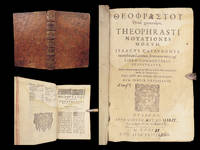
161729016<p>Issued in Lyon in 1617 this edition of Characters by Theophrastus was translated and edited by Isaac Casaubon. The work includes 28 character types presented in Greek and Latin with Casaubon's annotations. First printed in 1592 this edition adds five character sketches not present in earlier forms. Casaubon's involvement established a lasting reputation in classical studies. The text explores fixed moral profiles as literary forms rather than continuous narratives. Known for its compact presentation the sextodecimo format facilitated access by early scholars. The publisher the widow of Antoine de Harsy issued many classical works and this volume appears in major bibliographies. Bound in full leather the book shows surface wear; the binding remains tight. The title page has been restored. Collation: 16 367 13. Format: Sextodecimo 16mo single volume. #29016 PHOTOS AVAILABLE UPON REQUEST.</p> viduam Ant. De Harsy hardcover
168828099Paris, Estienne Michallet, Se vend à Bruxelles chez Jean Leonard, 1688. Later (ca. 1800) cardboardbdg. w. marbled peper. Library-labels on back. Hinges, capitals and corners w. traces of use. Occationally brownspotted. (56), 226, (1) pp.
168828099Paris Estienne Michallet Se vend à Bruxelles chez Jean Leonard 1688. Later ca. 1800 cardboardbdg. w. marbled peper. Library-labels on back. Hinges capitals and corners w. traces of use. Occationally brownspotted. 56 226 1 pp. <br/><br/><em>This is the reimpression of the original second edition with the words "Se vend à Bruxelles chez Jean Leonard" on title-page from the same year as the first original edition. "Cette réimpression assez belle a 28 ff. prélim. et 226 pp. de texte plus un f. pour le privilége; l'errata n'y est pas reproduit bien que les corrections qu'il indique n'aient pas été faites dans le texte." Brunet III p.720. This work includes the first French translation of Theophrast's Characters and probably the first translation into any modern language. "Theophraste a eu le grand honneur comme on sait d'être ttraduit au XVIIe siècle par La Bruyère: et c'est pourquoi en France plus que dans tout autre pays en dehors même du cercle des érudits son nom et son opuscule sont populaires." navarre Budé-edition of "Caractères" Paris 1920.Jean de la Bruyère 1639/1644 - 1996 was a very famous French moralist and writer. "C'est au commencement de 1688 que parut la premiere édition des "Caractères de Théophraste traduits du grec ou les Mæurs de ce siècle." L'auteur mettait ses propres observations sur la société moderne sous le patronage d'un ancien." N.B.G. p. 427. The "Characters" gave La Bruyère quite a few enemies and created furor in the learned world. In Denmark Holberg calls him "trivial and simple" Epistle 404. "Mais si en effet la malignité contemporaine applaudissant aux traits satiriques de l'ouvrage a peu contribuer à sa vogue le jugement de la postérité l'a consacré comme un des meilleurs livres de notre langue." N.B.G. p. 427. This work is thus still considered to be one of the greatest French books. Voltaire writes in "Siecle de Louis XIV c. XXXII": "On peut compter parmi les productions d'un genre unique les "Caractères" de La Bruyère. Un style rigide concis nerveaux des expressions pittoresques un usage tout nouveau de la langue mais qui n'en bless pas les règles frappèrent le public". Bruyère's work with the translation really did cause astonishment and had an immense impact on late 17th century Europe and onwards; it created a new litterary genre in Europe and the age of Enlightenment was delighted with the short precise characterisations of people and their customs. For an analysis of the contents and the impact on the time of La Bruyère see Nouvelle Biographie Generelle N.B.G. pp. 426-39. Brunet V:798 III:721 Graesse 4:61. </em> unknown
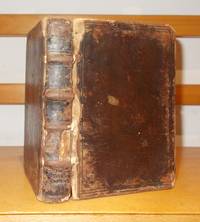
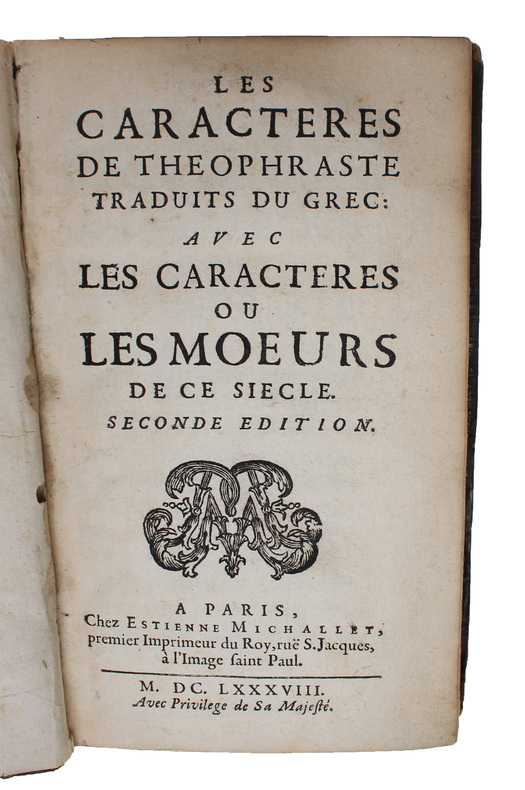
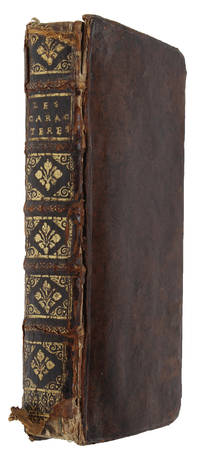
168827999Paris, Estienne Michallet, 1688. Cont. full calf. 5 raised bands on back, back richly gilt, all edges of boards gilt. Lacking leather at capitals, front-hinge cracked, so cords are showing.
168827999Paris Estienne Michallet 1688. Cont. full calf. 5 raised bands on back back richly gilt all edges of boards gilt. Lacking leather at capitals front-hinge cracked so cords are showing. <br/><br/><em>Second or third printing of the original edition. The title-page states "seconde edition" but it is probably the third printed in the same year as the first and second being a page-by-page re-impression of the second except for the fact that corrections have been made and the errata-leaf is thus not printed in the third. Both the second and third original editions are from the same year and by the same printer as the first. "La seconde édition également impr. en 1688 n'offre que quelques légers changements. et la troisième sous la même date ne qu'une simple réimpression de la seconde." Brunet III:720. This work includes the first French translation of Theophrast's Characters and probably the first translation into any modern language. "Theophraste a eu le grand honneur comme on sait d'être ttraduit au XVIIe siècle par La Bruyère: et c'est pourquoi en France plus que dans tout autre pays en dehors même du cercle des érudits son nom et son opuscule sont populaires." navarre Budé-edition of "Caractères" Paris 1920.Jean de la Bruyère 1639/1644 - 1996 was a very famous French moralist and writer. "C'est au commencement de 1688 que parut la premiere édition des "Caractères de Théophraste traduits du grec ou les Mæurs de ce siècle." L'auteur mettait ses propres observations sur la société moderne sous le patronage d'un ancien." N.B.G. p. 427. The "Characters" gave La Bruyère quite a few enemies and created furor in the learned world. In Denmark Holberg calls him "trivial and simple" Epistle 404. "Mais si en effet la malignité contemporaine applaudissant aux traits satiriques de l'ouvrage a peu contribuer à sa vogue le jugement de la postérité l'a consacré comme un des meilleurs livres de notre langue." N.B.G. p. 427. This work is thus still considered to be one of the greatest French books. Voltaire writes in "Siecle de Louis XIV c. XXXII": "On peut compter parmi les productions d'un genre unique les "Caractères" de La Bruyère. Un style rigide concis nerveaux des expressions pittoresques un usage tout nouveau de la langue mais qui n'en bless pas les règles frappèrent le public". Bruyère's work with the translation really did cause astonishment and had an immense impact on late 17th century Europe and onwards; it created a new literary genre in Europe and the age of Enlightenment was delighted with the short precise characterizations of people and their customs. For an analysis of the contents and the impact on the time of La Bruyère see Nouvelle Biographie Generelle N.B.G. pp. 426-39. Brunet V:798 III:721 Graesse 4:61. </em> hardcover
1688002823Paris, Estienne Michallet, 1688
163846402371Paris, Au Bureau d’Adresse, rue de la Calandre au grand Coq., 1638-41 ; 4 volumes, veau fauve marbré, encadrement de doubles filets dorés, dos ornés. (Reliures de l’époque) I) Titre, 1 f. blanc, 2 ff. n. ch. (avis au lecteur et table), 408 pp. (conférences 1 à 50.)II) Titre (daté 1654), 4 ff. n. ch. (dédicace et table), 420 pp. (conférences 51 à 100.)III) Titre (daté de 1654), 2 ff. de table, pp. 9 à 524 (conférences chiffrées 101 à 185, plusieurs renfermant 2 conférences par numéro.)IV) Quatrième centurie... titre (daté 1641), 1 f. blanc, 2 ff. de table, 460 pp. (100 conférences chiffrées 186 à 295.) Rarissime publication donnée par Théophraste et Eusèbe Renaudot. Il s’agit, dit E. Hatin dans Th. Renaudot et ses “innocentes inventions” p. 137 de NOTRE PREMIER RECUEIL SCIENTIFIQUE.Dès 1633, Renaudot tenait à son Bureau d’adresse une “académie ouverte à tous les bons esprits, qui venaient conférer en public de toutes les plus belles manières de physique, de morale, mathématiques et autres disciplines, et laquelle était une des plus belles et plus utiles institutions qu’eût faites Renaudot au jugement même de plusieurs de ses ennemis.” Les comptes-rendus de cette académie suivent de près la célèbre Gazette et les Petites Affiches, débuts du journalisme en France. Le goût des réunions littéraires était alors fort répandu. On se réunissait chez Melle de Gournay, Balzac et Ménage pour parler de langue et de littérature. Renaudot, le premier, organisa des conférences scientifiques tous les lundis de 2 à 4 heures. Le programme était donné à l’avance et le compte rendu était publié en livraisons. Les sujets étaient variés. Pour n’en citer que quelques uns : la matière première, le mouvement perpétuel, le feu, l’air, l’eau, deux frères monstrueux dans un même corps, petite fille velue, les 3 soleils, les mélancoliques sont-ils les plus ingénieux ou prudents ?, du siège de la folie, l’homme est-il plus enclin à l’amour que la femme ?, l’écho, l’origine des vents, le flux et reflux de la mer, astrologie judiciaire, le cocuage, embaumements, somnambulisme, cabbale, comètes, pierre philosophale, du vide, si les couleurs sont réelles, le sommeil, la goutte, les fards, le tabac, la rosée, remèdes chimiques, talismans, volcans, eaux minérales, mal de mer, incubes et succubes, origine des pierres précieuses, métempsychose, noblesse commerçante, truffes et champignons, si la musique fait plus de bien que de mal, sterilité, ivrognerie, hiéroglyphes, feux follets, hermaphrodites, nègres, licornes, plantes sensitives, mandragore, etc.Physique, chimie, ésotérisme, philosophie, médecine, pharmacie, histoire naturelle, métaphysique, morale, politique, hygiène, tous les sujets sont abordés dans ce recueil extraordinaire qui est l’ancêtre de toutes les annales scientifiques.Reliure du tome IV abimée, mouillures sur ce même tome.
1603197541603. Strassburg Lazarus Zetzner 1603 Folio 12 1127 52; 8 691 32 pp.; Tit. rot/schwarz allegor. Titelbordüre mit Portr. 62 Holzschnitten Pergamenteinband d.Zt.; Papier bedingt gebräunt; sehr gutes Expl. Erste Straßburger Folio-Edition selten wie alle Erstausgaben in deutscher Sprache! Aureoli Philippi Theophrasti Bombasts von Hohenheim Paracelsi . Opera : Bücher und Schrifften/ so viel deren zur Handt gebracht: und vor wenig Jahren/ mit und auß ihren . Originalien collacioniert/ vergliechen/ verbessert / und durch Joannem Huserum Brisgoium in zehen unterschiedliche Theil/ in Truck gegeben jetzund aber von newem in ein Corpus zusammen gebracht gebessert und mit Registern versehen. Argentorati Typis Lazari Zetzneri Anno 1603. Der erster Theil enthält u.a. die grundlegenden medizinisch-theoretischen und naturkundlich-iatrochemischen Schriften: Paramirum Lehre von den fünf Entien der Krankheiten Paragranum Programmschrift zur Reform der Medizin De morbis invisibilibus von den unsichtbaren Krankheitsursachen das Buch von der Gebärung die sogenannten Kärntner Schriften Labyrinthus medicorum errantium Defensiones Chronica Kärnten die Traktate Vom Tartaro / De morbis ex Tartaro die Abhandlung De morbis amentium über Geisteskrankheiten die berühmten Bergkrankheiten drei Bücher De morbis fossorum metallicorum den Kommentar zu den Aphorismen des Hippokrates sowie zentrale iatrochemische Hauptwerke: die Archidoxis erster Teil De natura rerum neun Bücher De praeparationibus und De tinctura physicorum. Der zweite Teil bildet die Fortsetzung und ergänzt den ersten Teil durch die chirurgischen medizinisch-praktischen sowie magisch-astrologischen Schriften. - Enthält u.a. die Große Wundarznei Chirurgia magna und die Kleine Wundarznei Chirurgia minor mit weiteren Chirurgischen Büchern und Schrifften u.a. zu Brüchen Geschwülsten Ulcera Verbrennungen und Harn-/Geschlechtsleiden den Traktat De vita longa über die Lebensverlängerung zusätzliche Pest- und Seuchenschriften De pestilitate sowie die für den Paracelsismus charakteristischen Schriften zur Magia und occulta philosophia zur Geister- Engel- und Dämonenlehre Imagination Besessenheit Exorzismus und zur Astrologia medica Einfluss der Gestirne auf Körper Temperament und Krankheiten daneben mehrere kürzere medizinisch-praktische Traktate als Ergänzung zu den Hauptwerken. "Die Ausgabe beruht vollständig auf der von Johann Huser 1589-1591 in Basel hrsg. Quart - Gesamtausgabe der deutschen Werke des Paracelsus; Zetzner übernimmt deren Textgestalt und Anordnung der Schriften nahezu unverändert im Folioformat." First folio edition in German of the collected works of Paracelsus based on Johann Huser's Basel quarto edition 1589-1591. Paracelsus helped transform medicine by fusing close observation chemistry and theology into a new experience-based healing art. He became one of the most influential and provocative medical thinkers of the sixteenth century. Garrison & Morton No. 3805: "De generatione stultorum" 2: pp.174-182: "Paracelsus was the first to note the coincidence of cretinism and endemic goitre". VD17 12:168467C; VD17 12:168390P; Osler 526; Sudhoff Paracelsus 256 & 257 unknown
161810867Straßburg, Zetzner, 1616 - 1618. 2 Werke in 3 Bdn. 6 Bll., 1127 S., 26 Bll.; 4 Bll., 691 S., 6 Bll.; 6 Bll., 795 (recte 797) S., 19 Bll. mit 2 Holzschnitt-Titelbordüren und einigen Textholzschnitten. Kl.-4°. Mod. Pgmt. mit hs. Rückenschild. [6 Warenabbildungen]
1644M14453Amstelodami: apud Henricum Laurentium 1644. 1644. Folio in 6s. 20 418 417-694 495-529 730-994 997-1187 1 88 pp. Numerous mispaginations noted. With the magnificent engraved title and 600-700 decorative botanical woodcuts. Text in 2 columns index not paginated parallel texts in Greek and Latin. Bound recently in full antique-style speckled calf richly gilt-tooled in a masterfully elegant binding; some neat paper mends to gutter front & back leaves some leaves variously stained at edges in the rear pages 950-988 browned. New endleaves. The splendid Bodaeus van Stapel edition of Theophrastus' seminal work Enquiry into Plants beautifully illustrated with hundreds of fine woodcuts of all the known plants. This is the first edition by edited by Johannes Bodaeus van Stapel 1602-1636 who died prior to the book being issued. This edition of Bodaeus van Stapel is the most important and influential edition of Theophrastus. The book is the first comprehensive systematization all known plants and as such important in the history of plant science. Plants of the new world America Asia and Africa are included. / The editor Bodaeus van Stapel is known for this particular work the Latin version of Theophrastus' Historia plantarum the text completed before his death in 1636 and published posthumously in Amsterdam in 1644 by his father. / Thomas Frognall Dibdin wrote of this edition: "This edition displays great care and research; the notes are numerous and learned and all botanical information to be gleaned from Aristotle Pliny Dioscorides and other ancient writers seems to be embodied in this work. The conjectures of Scaliger Constantine and Salmasius and also incorporated; and although Haller has censured Bodaeus for occasionally wandering from his subject and introducing a few errors the present this edition of 1644 is nevertheless an edition well deserving of the curious botanist's attention: for it has collected into one body the opinions of the old writers on the subject of plants. It contains some wood-cuts of the rarer species which are much better uncoloured than coloured." - Thomas Frognall Dibdin An Introduction to The Knowledge of Rare and Valuable Editions of the Greek and Latin Classics . . . London 1808 vol. II p. 285. / This edition of Theophrastis is "one of the best and most thoughtfully prepared of all the editions of Theophrastis" - Hunt. / "It is interesting not only because of the brilliance of the editing but curiously enough to the American botanist as well for involving in the discussion certain species from Virginia other parts of the New World and Asia. The illustrations of these plants have been largely overlooked in botanical history because of their incidental presence in a work which might not be expected to contain anything of the sort. Some were merely borrowed from l'Ecluse or de Lobel but others seem original in this work." - Harley Harris Bartlett Fifty-five Rare Books for the botanical library of Mrs. Roy Arthur Hunt. Clements Library 1949. / SEE: Theophrastus. Enquiry into Plants. With an English translation by Arthur Hort. Cambridge: Harvard University Press 1916. / McDiarmid J. B. 'Theophrastus.' In: Dictionary of Scientific Biography edited by Charles Coulston Gillispie. New York 1976. Vol XIII pp. 328-334. / Morton Alan G. History of Botanical Science. London and New York 1981. / Negbi Moshe. 'The scientific cradle of botany - Theophrastus and other pioneers.' In: Israel Journal of Plant Sciences vol 58 pp. 309-18. 2010. / Sharples Robert W. Theophrastus of Eresus. Sources for this Life Writings Thought and Influence. Commentary Vol. 5. Sources on Botany. Leiden: Brill 1995. apud Henricum Laurentium, 1644. unknown
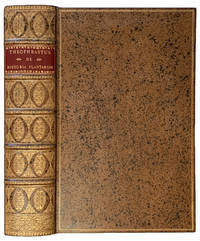
164450986Amsterdam, Heinric Laurentius, 1644. Folio. Contemporary full vellum with neat later (19th century) rebacking. Six raised bands and gilt title to spine. Some wear to extremities. Internally a fresh and clean copy with only a bit of occasional brownspotting. Endpapers with a bit of soiling. 2 bookplates to inside of front board: Gilbert Redgrave, London (dated 1894) & Gorden M. Jones, Virginia. Text in Greek and Latin. Woodcut title-page, numerous woodcut intials throughout, and more than 600 woodcut illustrations in the text. (20), 1187, (1), (88 - Index) pp.
164450986Amsterdam Heinric Laurentius 1644. Folio. Contemporary full vellum with neat later 19th century rebacking. Six raised bands and gilt title to spine. Some wear to extremities. Internally a fresh and clean copy with only a bit of occasional brownspotting. Endpapers with a bit of soiling. 2 bookplates to inside of front board: Gilbert Redgrave London dated 1894 & Gorden M. Jones Virginia. Text in Greek and Latin. Woodcut title-page numerous woodcut intials throughout and more than 600 woodcut illustrations in the text. 20 1187 1 88 - Index pp. <br/><br/><em>First edition thus being the most important and influential edition of Theophrastus' seminal work "Enquiry into Plants" - the first systematization of the botanical world and the most important contribution to botanical science up until the Renaissance. Bodaeus von Stapel's groundbreaking edition constitutes the first illustrated edition of Theophrastus' masterpiece as well as the first with both Greek and Latin text. Furthermore von Stapel has not only collected all relevant commentaries and knowledge he has also added corrections and much foundational information turning the work into one of the most influential botanical works of the 17th century profoundly influencing the likes of Linnaeus and contributing significantly to the development of modern scientific botany. "This edition displays great care and research; the notes are numerous and learned and all botanical information to be gleaned from Aristotle Pliny Dioscorides and other ancient writers seems to be embodied in this work. The Greek text is Heinsius's; the Latin version is that of the editor who has placed Gaza's in the margin with frequent corrections. The conjectures of Scaliger Constantine and Salmasius are also incorporated. it has collected into one body the opinions of the old writers on the subject of the PLANTS. It contains some wood-cuts of the rarer species which are much better uncoloured than coloured." Dibdin II:498. The numerous woodcut plant illustrations were partly copied from other sources and partly made especially for this edition. Thus apart from being "one of the best and most thoughtfully prepared of all the editions of Theophrastos" Hunt our editor has also made original contributions that are of great importance. "It is interesting not only because of the brilliance of the editing but curiously enough to the American botanist as well for involving in the discussion certain species from Virginia other parts of the New World and Asia. The illustrations of these plants have been largely overlooked in botanical history because of their incidental presence in a work which might not be expected to contain anything of the sort. Some were merely borrowed from l'Ecluse or de Lobel but others seem original in this work" H.H. Bartlett: Fifty-five Rare Books - quoted by Hunt.At the height of the Renaissance with the expansion of the known world and the spreading of the book due to the invention of the printing press many new publications on plants appeared. Most of these publications however were primarily concerned with the medicinal qualities of individual plants and only few authors or editors took an interest in the general nature of the plants and how they could systematically be classified. One of the few exceptions was Bodaeus von Stapel. With his seminal 1644 edition of "Historia Plantarum" he focused on the overarching classification system of plants and took Theophrastus' work a step further adding essential commentaries and illustrations - illustrations that were to be copied for centuries after. These illustrations remain the standard illustrations of Theophrastus' foundational work. This edition of Theophrastus' "Historia Plantarum" became the standard edition of that earliest work on systematic botany and the edition that all serious scientific botanists of the 17th and 18th centuries will have studied. "Linnaeus in the practice of his favourite art of systematizing classified not only plants but the writers about them. The writers he distinguishes primarily as Botanists and Plant Lovers recognizing as Botanists only such as treat of plants from some philosophic or scientific point of view. Choosing his illustrations from annals of remote antiquity he names among the earliest of the Greeks who wrote of plants Hippocrates; but because he wrote of plants only in the interests of medicine Linnaeus styles him Father of Medicine. Similarly Aristotle. is down in the Linnaean list of ancient celebrities as Prince of Philosophers. To Theophrastus however he accords the title Father of Botany. From this opinion far from having been newly promulgated in Linnaeus's time there has been no dissenting voice. On the contrary Albert Haller one of the most learned men in Europe in his day and a botanist of such renown that Linnaeus held him in reverence and also in some fear denominates Theophrastus "the first of real botanists in point of time." Kurt Sprengel in the nineteenth century having rehearsed the names of a long line of ancient authors who had written more or less concerning plants says: "But the most illustrious of them all and the true father of botany was Theophrastus Eresius…." Greene Landmarks of Botanical History I:128.It is no wonder that Linnaeus should find in Theophrastus the Father of his own field - The "Historia Plantarum" was not only the earliest work on systematic botany it also contained Theophrastus' description of the formation of the plant seed the earliest account known and the best that was made for 2000 years.Hunt: 240; Pritzel: 9197; BM: V:2091; Dibdin: II:498. </em> hardcover