TheophrastusBiblio.com
Collection des Moralistes Anciens Dédiée au Roi
0267356420.Gpaperback. Good. Access codes and supplements are not guaranteed with used items. May be an ex-library book. paperback
Bonita · États-Unis53,63 $US≈ 45,38 €
606 résultats
1573622821573. Argentorati = Basel Petrus Perna 1573 Folio 10 223 1 28; 2 250 36 pp. alter Halbledereinband; Titelblatt aufgelegt etwas fleckig; mit alten Marginalien; feines Expl. mit ExLibris von Kenneth Harvey Abbott. Erste Ausgabe! PHILIPPI AVREOLI THEOPHRASTI PARACELSI BOMBAST EREMITAE SVMMI INter Germanos Medici & Philosophi. CHIRVRGIA MAGNA in duos tomos digesta. . Nunc recens à IOSQVINO DALHEMIO OSTOFRANCO Medico Latinitate donata. Tomus I : De vulneribus et fracturis libri III. De ulceribus libri III. De tumoribus et aperturis libri III. Tomus II : De Tumoribus Pustulis & Ulceribus / Morbi Gallici Lib. X. De Curatione & Imposturis Morbi / Gallici Lib. Octo. Dieser Band enthält die "Chirurgia magna" in zwei Tomi in lateinischer Übersetzung von Josquinus Dalhemius tätig 2. H. 16. Jh. humanistischer Übersetzer paracelsischer Schriften. - Gedruckt von dem aus Lucca stammenden seit den 1540er-Jahren in Basel tätigen Humanisten- und Reformationsverleger Petrus Perna ca. 1519-1582. Die Chirurgia magna ist das zentrale chirurgische Werk Paracelsus' und dokumentiert seine praktische Wundarznei ebenso wie seine Reinterpretation traditioneller Krankheitslehren. In ihr treten seine Abkehr von der bloßen Galen Exegese sein empirisches Vorgehen am Krankenbett und sein Einsatz chemischer Präparate deutlich hervor; sie ist für das Verständnis der paracelsischen "Reformation der Medizin" unverzichtbar. Paracelsus betont systematisch die Bedeutung gründlicher Wundreinigung Drainage und Verhinderung von Fäulnis; die "gute Eiterung" der traditionellen Chirurgie wird kritisch relativiert und der Fokus stärker auf rasche "spezifische" Heilung gerichtet. Er beschreibt Trauma Frakturen Ulzera und Tumoren in enger Verbindung mit Umwelt und Stoffeinflüssen; damit wird die spätere Toxikologie vorbereitet Stichwort "Die Dosis macht das Gift" und eine spezifische substanzgebundene Krankheitsauffassung gefördert. Von besonderem Interesse auch für die frühe Geschichte der Neurochirurgie: Paracelsus behandelt in der Chirurgia magna Kopf- und Schädelverletzungen inkl. Indikationen zur Trepanation im Rahmen einer empirisch orientierten Wundchirurgie und verknüpft traumabedingte Lähmungen und Krampfzustände mit lokalen Strukturverletzungen statt ausschließlich mit humoral-systemischen Ursachen. Die Perna-Ausgabe von 1573 ist die erste große lateinische Gesamtausgabe der paracelsischen Chirurgie: Sie überführt die ursprünglich deutschsprachigen Wundarznei-Schriften Große und Kleine Chirurgie in ein gelehrtes europaweit rezipierbares Format und ist damit ein Schlüsselstück der frühen Paracelsus-Rezeption. Chirurgiegeschichtlich markiert der Band den Übergang von handwerklich-zunftgebundener Wundbehandlung zu einer spezifischen substanzgebundenen Therapieauffassung Toxikologie organspezifische Wirkungen Kritik an der "guten Eiterung" und ist für die Geschichte der Chirurgie wie der Pharmakologie gleichermaßen bedeutend. First major Latin edition of Paracelsus' surgical works containing the two tomes of the "Chirurgia magna" in one folio volume. Translated into Latin by Josquinus Dalhemius and printed by the Basel humanist printer Petrus Perna in 1573. Covers wounds fractures ulcers tumours and related conditions combining practical wound surgery with Paracelsus' innovative chymical pathology. Key document in the spread of Paracelsian medicine from German vernacular surgery into the international learned medical world. VD16 P 469 Sudhoff "Bibliographia Paracelsica" Nr. 146-147 unknown
0267356420.Gpaperback. Good. Access codes and supplements are not guaranteed with used items. May be an ex-library book. paperback
0267356919.Gpaperback. Good. Access codes and supplements are not guaranteed with used items. May be an ex-library book. paperback
0364199059.Ghardcover. Good. Access codes and supplements are not guaranteed with used items. May be an ex-library book. hardcover
0364503815.Gpaperback. Good. Access codes and supplements are not guaranteed with used items. May be an ex-library book. paperback
036493476X.Ghardcover. Good. Access codes and supplements are not guaranteed with used items. May be an ex-library book. hardcover
0365971502.Gpaperback. Good. Access codes and supplements are not guaranteed with used items. May be an ex-library book. paperback
0366161741.Gpaperback. Good. Access codes and supplements are not guaranteed with used items. May be an ex-library book. paperback
1396674535.Ghardcover. Good. Access codes and supplements are not guaranteed with used items. May be an ex-library book. hardcover
1396646361.Gpaperback. Good. Access codes and supplements are not guaranteed with used items. May be an ex-library book. paperback
1391241754.Ghardcover. Good. Access codes and supplements are not guaranteed with used items. May be an ex-library book. hardcover
1390823954.Gpaperback. Good. Access codes and supplements are not guaranteed with used items. May be an ex-library book. paperback
0526701056.Ghardcover. Good. Access codes and supplements are not guaranteed with used items. May be an ex-library book. hardcover
In folio; due opere in un volume: (8), 396, (28) pp. e 143, (9) pp. Bella legatura seicentesca in piena pergamena con titolo in oro al dorso che si presenta a sei nervi, qualche lieve segno del tempo ma nel complesso in buone condizioni di conservazione. Bella marca tipografica di Guillaume Rouillé (1545-1589) al frontespizio di ogni volume. Alcune pagine leggermente ed uniformemente brunite a causa alla qualità della carta, ininfluente. Un leggerissimo alone ininfluente al margine esterno bianco delle ultime 10 carte del secondo volume e nel complesso ambedue le opere si presentano in buone-ottime condizioni di conservazione. Testatine, iniziali e finalini xilografici. Bell’edizioni stampate da Rouillé di queste due celebri opere del grande scrittore, medico e filosofo originario di Riva del Garda, Giulio Cesare Scaligero, latinizzato in Julius Caesar Scaliger (1484-1558). Di origine italiana, trascorse in Francia parte della sua vita, e la parte più fruttuosa della sua carriera. A dispetto del suo atteggiamento arrogante e incline alla polemica, era alta la sua reputazione tra i contemporanei, che lo giudicavano così distinto nel suo sapere e talento, che, secondo Jacques Auguste de Thou, nessuno degli antichi poteva essere collocato sopra di lui, e che l’età in cui visse non presentò nessun sapiente paragonabile a lui. Nelle proprie note biografiche, Scaligero si spaccia per un discendente del casato dei Della Scala (che furono, per 150 anni, i signori di Verona) e si dice nato nell’anno 1484 a Rocca di Riva, sulle rive del Lago di Garda. Era forse figlio di Niccolò della Scala, a sua volta figlio di Guglielmo.Quando era dodicenne, il suo protettore, l’imperatore Massimiliano I d’Asburgo, lo nominò tra i suoi paggi. Rimase per diciassette anni al servizio dell’imperatore, distinguendosi prima come soldato e poi come capitano. Ma non dimenticava di coltivare né le lettere, nelle quali aveva avuto come precettori alcuni tra i più eminenti studiosi del tempo, né le arti, che aveva studiato con considerevole successo sotto la direzione di Albrecht Dürer. Nel 1512 prese parte alla battaglia di Ravenna. Ma poco in verità è provato della vita dello Scaligero fino al 1525 quando divenne medico personale del vescovo di Agen, in Francia. Definiva i suoi studi classici come un gradevole rilassamento da compiti più severi. Qualsiasi siano state le sue vere faccende nei suoi primi 40 anni di vita, sicuramente queste lo resero un osservatore accurato e ravvicinato, e lo avevano reso edotto di molti fenomeni curiosi e poco noti, che aveva pienamente registrato in una tra le più tenaci memorie della storia. E’ celebre anche per aver in un certo modo anticipato il metodo induttivo. I due trattati qui presentati sono considerati fra i suoi più originali. In essi metteva a frutto le proprie dirette esperienze nel campo della botanica ed erboristeria, esperienze sia maturate nella sperimentazione diretta sia nella ricerca erudita di descrizioni di piante in fonti letterarie e artistiche, tanto classiche che moderne in parte mutate da Teofrasto ed Aristotele. Importante opera di botanica, farmacia ed erboristeria. Due rare edizioni. Good copies, rare. Bibliografia: I opera Pretzel 8090, II opera 8088.
1161563474.Ghardcover. Good. Access codes and supplements are not guaranteed with used items. May be an ex-library book. hardcover
1161567003.Ghardcover. Good. Access codes and supplements are not guaranteed with used items. May be an ex-library book. hardcover
1161591265.Ghardcover. Good. Access codes and supplements are not guaranteed with used items. May be an ex-library book. hardcover
1892265601892 Montpellier : Ricard (1892),38 p. ; in8 broché,non coupé,bon etat.
1161547614.Ghardcover. Good. Access codes and supplements are not guaranteed with used items. May be an ex-library book. hardcover
6827412Harvard University Press pp. 368 . Hardback. New. Harvard University Press hardcover
6827415Harvard University Press pp. 480 . Hardback. New. Harvard University Press hardcover
0674995236.Ghardcover. Good. Access codes and supplements are not guaranteed with used items. May be an ex-library book. hardcover
0674995198.Ghardcover. Good. Access codes and supplements are not guaranteed with used items. May be an ex-library book. hardcover
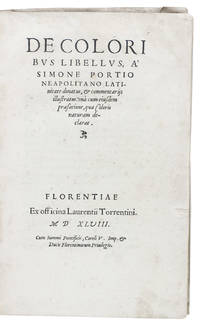
1548642CKI1RIA1QFlorence 1548. 4to. Lorenzo Torrentino Contemporary limp sheepskin parchment straight sewn on 3 wittawed thongs laced through the joints manuscript title down the spine with 4 fragments of a Latin manuscript in an upright humanistic hand on vellum used as spine lining. With 2 large woodcut historiated initials and a vine leaf ornament by Granjon Vervliet 178: 1st recorded in this year. Set in roman types with whole paragraphs in Greek 2 sizes and the dedication and some end matter in italic. 197 3 pp. First edition of one of the earliest printed books about colour translated from the Greek into Latin and with commentary by the Neapolitan physician and philosopher Simone Porzio 1497-1554. Usually attributed to Aristotle it is now thought to be the work of the peripatetic scholar and pupil of Aristotle Theophrastus.''As the author states at the end of the treatise it is intended rather to supply data for a detailed examination into the scientific theory of colour than to expound a complete thesis. He has realized that the development of colour in animals and plants depends to some extent on heat and he seems to suggest that heat and moisture are the controlling factors. It is of more value as a collection of observed facts than for any theory of the origin and development of colour in physical life'' Aristotle Minor Works Cambridge and London Loeb Classical Library 1936 p. 3.With some spotting on the title-page and some marginal tears not approaching the text but otherwise in very good condition and with large margins. Binding with the sewing supports broken a tear in the backstrip and some small stains. An important treatise on colour and one of the earliest.l Adams P1958; Caillet 8881; EDIT16 CNCE 16133; Hoffman I 289 "rare and very important"; Kemp The science of art p. 264; Schwab Bibliographie d'Aristotle 3503; USTC 803281. hardcover
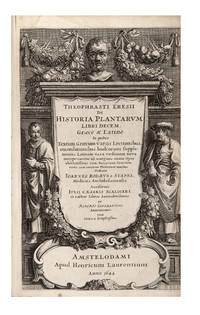
7301Finely engraved title-page a trifle shaved at outer edge & 675 woodcuts in the text. 11 p.l. incl. engr. title 1187 i.e. 1185 87 pp. Folio cont. Dutch vellum over boards upper joint with small split of 7 cm. at foot minor pale dampstaining to first 20 leaves & last third of book panelled in blind central arabesque in blind to each cover ties gone. Amsterdam: H. Laurentius 1644.<br/> <br/> First edition to be edited by Joannes Bodaeus à Stapel; it “is one of the best and most thoughtfully prepared of all the editions of Theophrastos.â€â€“Hunt 240.<br/> <br/> H.H. Bartlett wrote in his Fifty-five Rare Books Ann Arbor: 1949 of this edition: “It is interesting not only because of the brilliance of the editing but curiously enough to the American botanist as well for involving in the discussion certain species from Virginia other parts of the New World and Asia. The illustrations of these plants have been largely overlooked in botanical history because of their incidental presence in a work which might not be expected to contain anything of the sort. Some were merely borrowed from l’Escluse or de Lobel but others seem to be original in this work.â€<br/> <br/> A fine and crisp copy. Bookplate of Piergiorgio Borio M.D.<br/> <br/> ⧠D.S.B. XIII pp. 328-34. See Garrison-Morton 1783. unknown