571 résultats
In 4, cm 21 x 30, pp. 576 con moltissime illustrazioni nel testo in b/n e a colori. Brossura editoriale. Ricco e importante catalogo sulle avanguardie culturali, i movimenti letterari e politici tra Francia e Germania: espressionismo, dada, costruttivismo, bauhaus, fotografia, cineama, teatro ecc.
Edizione originale. Ottimo esemplare. Volantino originale del Movimento surrealista contro l'elezione di 50 deputati qualificati come fascisti, Paris, 21 Janvier 1956. Firmatari: Bedouin, Benayoun, Breton, Brouté, Dax, Flamand, Goldfayn, Joubert, Legrand, Mitrani, Peret, Pierre, Pieyre De Mandiargues, Sautès, Schuster, Senelier, Silbermann e Tertrais.
Edizione originale. «Lettre ouverte de solidarité avec Garry Davis et son mouvement “citoyen du monde”, et qui se rend célèbre en interrompant une séance de l'ONU au Palais de Chaillot en novembre 1948» (sito web Adrebreton). Pierre, Tracts surréalistes (Losfeld ed.), vol. II p. 43
Edizione originale. «Premier tract surréaliste publié en 1947 à Paris après le retour en France d'André Breton. Tract relatif à la prise de position anticolonialisme des surréalistes» (sito web Andrebreton). Pierre, Tracts surréalistes (Losfeld ed.), vol. II p. 315
Introduction par Georges Hugnet; 14 ill. in 7 pagine patinate f.t. Edizione stampata in 2020 esemplari.
196415911964 Couverture souple Paris, Revue Strophes, 1964. Une brochure in-8 (21 x 13,5 cm), couverture en deux couleurs, papier cristal de protection. 63 (3) pages, illustrées d'une reproduction photographique et de dessins. Numéro consacré à Tristan Tzara, décédé en décembre 1963. Textes et poèmes de Jean Frémon, Jean Cassou, Philippe Ferrand, Pierre Morhange, Maurice Lemaître, Jean Marcenac, Michel Leiris, Tristan Tzara... Bon exemplaire de cette édition originale, en très bon état.
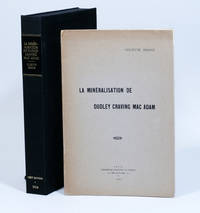
19242729Paris: Imprimerie Croutzet et Depost 1924. First edition. Original wrappers. Very Good. FIRST EDITION of Roche's surreal dadaist roman à clef exposing the misogynistic world of the French avant-garde. With annotations likely in Roche's hand. Like too many women artists of the early twentieth century French writer and artist Juliette Roche 1884 - 1980 has been long overshadowed by her male contemporaries. Roche came of age amidst leading artistic and literary salons of early 20th century Paris. She studied at Académie Ranson then considered the absolute best art school in Paris and was an early adopter of Cubism. However she is most closely associated with Dadaism. Despite Dada being a movement of absolute rebellion it harbored the normalized misogyny of the early twentieth century. Roche's most explicit critique of this discrepancy of rebellion vs repression can be found in La Minéralisation de Dudley Craving Mac Adam her groundbreaking novella.<br /> <br /> Part satire and part Dada nonsense the thinly veiled roman à clef is a prime example of the daring poetic style that Roche developed while living in New York during World War I. Having watched artistic vanguards come and go in Paris' salons and exhibitions Roche observed the New York City hijinks of Francis Picabia French 1879 - 1953 and Marcel Duchamp 1887 - 1968 with a level of detachment that alluded their American peers. She had close access to Picabia perhaps too close: in 1917 he and his wife Gabrielle Buffet-Picabia moved into an apartment directly beneath one Roche shared with her husband Albert Gleizes a French artist and philosopher who helped popularize Cubism on the Upper West Side. While Roche admired Picabia's iconoclasm she was disturbed by the misogyny she saw in works like his manometres where woman as 'la machine' was at best a manipulable object at worst the butt of a private joke. If taking Roche's ambivalence towards and her neighborly proximity to Picabia into consideration the novella could be inspired in part by an age-old story: pure contempt of one's neighbor.<br /> <br /> The novella is an indirect indictment of certain illicit behaviors Roche found annoying and dangerous. She synthesizes her fellow expatriates' personalities and physical traits to create the decadent Mac'Adam and the men he encounters on the day of his demise. Picabia becomes Mac'Adam. Swiss writer and boxer Arthur Craven 1887 - 1918 lends his name to the protagonist while becoming Lloyd Willow. Juliette Roche herself appears as Juliette Granite a play on words since roche means rock in French. Roche spins the narrative in poetic and surreal fragments at turns absurd and others told in a stream-of-consciousness style. La Minéralisation moves beyond conventional storytelling to allow readers into the minds of her characters through rich interior monologues revealing in each case her estimation of the particular model's idiosyncrasies. Roche seemed to find the antics of the all-male world of the Dadaists to be too limited and they're wickedly satirized among these pages.<br /> <br /> Written in ink on the first page is "Publié dans 'La Vie des Lettres' en 1921 / New York 1918" and there are a few words written on page 20 in the same hand. It appears to be Roche's handwriting from the few samples we've seen but we can't guarantee it.<br /> <br /> Paris: Imprimerie Croutzet et Depost 1924. Thin octavo 33pp terminal blank original printed wrappers stapled as issued; custom box. Small tear and split at top of spine; a near-fine extremely well-preserved copy.<br /> <br /> EXCEEDINGLY RARE: We can find records of no other copies that have been on the market.<br /> <br /> References:<br /> <br /> Burke Carolyn "Recollecting Dada: Juliette Roche." Women in Dada: Essays on Sex Gender and Identity edited by Naomi Sawelson-Gorse MIT Press 1998 557. Imprimerie Croutzet et Depost unknown
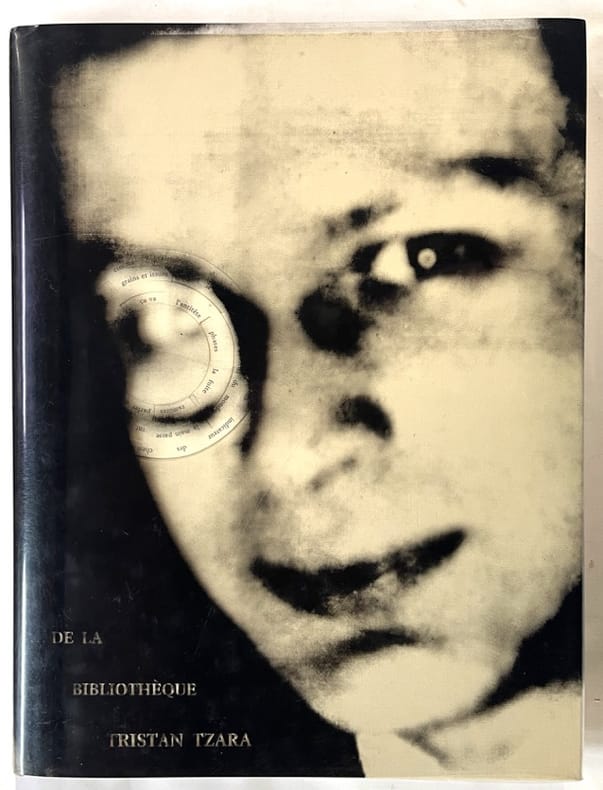
198954122Paris, Guy Loudmer 1989 In-4 28,5 x 22 cm. Reliure cartonnée crème de l’éditeur, sous jaquette rhodoïd illustrée d’un portrait de Tristan Tzara dont un oeil coïncide avec le Poème perpétuel, la Rose et le Chien, imprimés sur trois disques contrecollés sur le premier plat. 126 pp., 476 lots décrits, illustrations en noir et en couleurs. Bel exemplaire.
8094Réimpression intégrale en fac-simile de la collection complète en 8 numéros par les éditions Jean-Michel Place. 1976. 2 grands et forts volumes in-8°, reliure pleine toile noire, titre frappé en blanc, étui cartonné. Environ 800 pages pour chaque volume.
11561Editions Jean-Michel Place. 1981. In4°, reliure cartonnage illustré, dos de toile grise. Présentation de Michel Giroud. Traduction des textes allemands Sabine Wolf et des textes italiens Michael Gluck. 256 pages.
1767Lyon. N° 5. Novembre 1921. 16 pages. Henri Focillon ("Lettre à Jean Epstein"), Ozenfant et Jeanneret ("Esthétique et Purisme"), Pierre Combet-Descombes (Texte télégraphique), Louis Delluc ("Toros"), Chlebnikoff (Poème), Marcel Requien ("Expiation", film). Bois gravés hors texte de Jean Epstein, Jeanneret, Pierre Deval, Jean Lacroix (et un frontispice non signé, très beau). Catalogue de la 1ère Exposition du Promenoir : "Cubisme - Purisme - Expressionnisme" (oeuvres de Albert Gleizes, Ch. E. Jeanneret, Oscar Kokoschka, Fernand Léger, Amédée Ozenfant, Lasar Segall).
196323321963 Roma, Editori Riuniti, 1963. 28 x 25,5 cm, 19 pp. - 85 planches en noir ou en couleurs - 4 ff. n. ch., cartonnage de l'éditeur illustré en couleurs.
19795531Prestel-Verlag Munchen 1979 In-4 cartonné 25 cm sur 20. Illustrations noir & couleurs. Livre en allemand. 359 pages. Très bon état d’occasion.
199923478Fond Mercator 1999 In-4, pleine toile bleue, sous jaquette illustrée, photographies en noir et en couleurs, 331 pp. Etat correct, jaquette sale.
Prima edizione. Più che buon esemplare (ruggine alla pinzatura; dorso scurito e lievi segni del tempo perimetrali alla copertina), internamente pulito e con normale uniforme brunitura. Fondamentale antologia di manifesti e testi letterari del movimento Dada. Contributi di Tristan Tzara (le sue «Chronique Zurichoise 1915-1919» tutte parolibere alle pagine 10-29), Hans Baumann, Francis Picabia, Ribemont-Dessaignes, Maria d'Arezzo (Volata a p. 50), Hugo Ball (la parolibera «Karawane a p. 51), Philipe Soupault, Hans Arp, Paul Dermée, Raoul Hausmann, Vincente Huidobro e altri. Contiene tra gli altri il «Dadaistisches Manifest» impaginato creativamente alle pagine 36-41 (con le firme di Tzara, Grosz, Janco, Huelsenbeck, Hausmann, Ball, Albert Birot, d’Arezzo, Cantarelli, Prampolini, Arp, etc.), il «Manifest Cannibale Dada» di Picabia alle pagine 47-49 Dada Zürich 1916-1920 (Berlin 2016), n. 55
Edizione originale, emissione in francese. Esemplare integro e pulito in più che buone condizioni di conservazione (piccola lieve gora all’angolo interno alto, appena visibile sulla copertina superiore e su un paio di pagine interne; poche fioriture al taglio alto di alcune carte [1/2, 5/6, 13/14, 19/20, 27/28, 31/32], che sono anche un po’ brunite; minima lacerazione senza perdite al piede interno dell’ultima carta). Ultima uscita zurighese della rivista «Dada», fondata e diretta da Tristan Tzara a partire dal 1917 (nn. 1-2, seguiti dal n. 3 nel 1918). Sarà continuata a Parigi per altre due uscite fino al marzo 1920, per poi chiudere definitivamente. Straordinario numero doppio, ricchissimo di contenuti impaginati assai creativamente — su falsariga futurista — su carte di vario colore e con ampio uso di tipografia sperimentale e parolibera, non a caso chiamato «Anthologie Dada» in copertina. Come il precedente numero della rivista, anche «Dada» 4/5 fu pubblicato in una versione tedesca e in una francese, che differiscono per sole nove pagine. L’emissione francese non presenta alcuni dei testi in tedesco, ma ha in più tre xilografie di Arp non presenti nell’emissione tedesca, per un totale di sette incisioni (sei a mezza pagina e una testatina) stampate su carta colorata. Completano il notevolissimo apparato iconografico di questo numero tre litografie a piena pagina da disegni di Francis Picabia (tra i quali il «Réveil matin» al frontespizio), due litografie astrattiste a piena pagina di Viking Eggeling, una xilografia a mezza pagina di Hans Richter e due xilografie a mezza pagina di Raul Hausmann (per tacere delle tavole patinate applicate che riproducono opere di Augusto Giacometti, A. van Rees, Hans Richter, Vassilij Kandinskij, Arp e Paul Klee). Sul versante dei contenuti, alcune poesie e un «Autre petit manifeste» di Picabia sono seguiti da Tristan Tzara (Note 14 sur la poésie; Proclamation sans prétention DADA 1919; Aa 24 IX; Bilan), Jean Cocteau (3 pièces facile pour petites mains), Pierre Reverdy (Globe; 199 Cs), Philippe Soupault (Servitudes), Louis Aragon (Statue; Le délire du fantassin – dedicata a De Chirico), André Breton (Pour Lafcadio), Raymond Rediguet (A plusieures voix), Pierre Albert-Birot (Catastrophe; Extrait de «Poèmes à la chair»), Georges Ribemont Dessaignes (Le coq fou; Trombone à coulisse), Gabrielle Buffet (Gambit de la reine), J. Perez Jorba (Elle a deux têtes). Dada Zürich 1916-1920 (Berlin 2016), n. 25; Ilk, Janco graphische Werk, n. 37; Arntz, Graphischen Arbeiten von Hans Arp, pp. 40-44
Edizione originale. Esemplare su carta beige, in ottime condizioni (millimetrica mancanza al taglio basso). Uno dei quattro «papillon dada» tirati in 1000 esemplari nel 1920, su carte di sei diversi colori (beige, rosa, rosso, verde kaki, verde e giallo). Attribuiti per lungo tempo a Tzara, la revisione degli epistolari ha messo in discussione la paternità tzariana dell’idea, riconducibile piuttosto al dada parigino e a Breton in particolare. Documents dada (1974), n. 3; Sanoulliet, Dada à Paris (2005), pp. 180-194
Edizione originale. Esemplare su carta beige, in ottime condizioni (millimetrica mancanza al taglio basso). Uno dei quattro «papillon dada» tirati in 1000 esemplari nel 1920, su carte di sei diversi colori (beige, rosa, rosso, verde kaki, verde e giallo). il «Taisez-vous» sembra debba essere attribuito specificamente a Paul Eluard, che lo avrebbe elaborato per il lancio del suo «Proverbe» (febbraio 1920). Attribuiti per lungo tempo a Tzara, la revisione degli epistolari ha messo in discussione la paternità tzariana dell’idea, riconducibile piuttosto al dada parigino e a Breton in particolare. Documents dada (1974), n. 5; Sanoulliet, Dada à Paris (2005), pp. 180-194
6496Jean-Jacques Pauvert. 1965. Grand et fort in-8° broché. 28 pages de documents. 642 pages. E.O. Exemplaire de première émission sous sa très sorbonnarde couverture gris-vert.
6947Paris. 1966-67. Grand in-8° broché. Nombreuses planches hors texte. Non paginé [170 pages]. Textes de Michel Sanouillet, René Wehrli, Bernard Dorival. Est joint le fascicule " Souvenirs et témoignages ", de présentation identique à celle du catalogue, avec des textes de Hans Arp, Hugo Ball, Gabrielle Buffet-Picabia, Serge Charchoune, Raoul Hausmann, Richard Huelsenbeck, Marcel Janco, Man Ray, Georges Ribemont-Dessaignes, Hans Richter, Tristan Tzara.
197416171974 Genève, Weber, 1974. In-4, 48 ff. n. ch., fac-similés en noir et en couleurs, broché, couverture orange imprimée.
3081Lausanne. Ed. Rencontres. 1967. Grand in-8°, reliure de cuir bordeaux, illustrée sur le premier plat d'un dessin de Gino Severini. 207 pages. Nombreuses illustrations. E.O.
197526450Chene 1975 In-4, pleine toile editeur rouge, illustree. 359 p. 439 reproductions n&b et couleurs. Sans la jaquette
11817Sans lieu, sans nom déditeur. [1959] « Ce livre, écrit en 1932 dans le port de Cannes sur le Yacht de Francis Picabia, " lHorizon ", a été imprimé 200 et 20 fois pour lauteur et quelques amis ». Grand in-8° en feuilles sous chemise vert deau imprimée. 66 pages. E.O. 1/220 du seul tirage. Chemise partiellement insolée. Bon exemplaire. Rare.
200421661Bibliotek der Provinz publication PN°1 2004 In-8, pleine toile noire, sous jaquette illustrée, photographies en couleurs, non paginé. En allemand. Très bon état.