Anacreon AnacreonBiblio.com
237 résultats
0259126020.Gpaperback. Good. Access codes and supplements are not guaranteed with used items. May be an ex-library book. paperback
0282820515.Gpaperback. Good. Access codes and supplements are not guaranteed with used items. May be an ex-library book. paperback
0282820604.Gpaperback. Good. Access codes and supplements are not guaranteed with used items. May be an ex-library book. paperback
0483346179.Gpaperback. Good. Access codes and supplements are not guaranteed with used items. May be an ex-library book. paperback
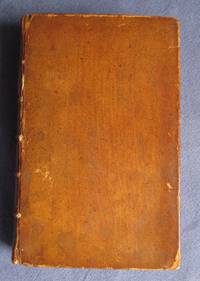
22365Hardback. Good. Chez Charles Clouzier Paris. 1692. Translated from the Greek into French by de Longepierre with notes. Black and White frontis. One of the earliest European collections to include most of Sapho's works which have since eclipsed Anacreon's. Bound in leather. Good only: Text block generally clean and tight but front cover detached and leather worn. hardcover
0282083847.Gpaperback. Good. Access codes and supplements are not guaranteed with used items. May be an ex-library book. paperback
0282069410.Gpaperback. Good. Access codes and supplements are not guaranteed with used items. May be an ex-library book. paperback
0243458576.Gpaperback. Good. Access codes and supplements are not guaranteed with used items. May be an ex-library book. paperback
181563216London: Printed for Carpenter and Son 1815. 12mo. Two volumes in one. 175 148 pp. Contemporary half dark brown calf over marbled boards. Gilt & blind-stamped decoration to spine with gilt lettering. Gilt bright. Boards clean. Bookplate of Trelissick Library in Cornwall to front pastedown. Cornish binder's ticket of 'J. Gill Binder Penryn'. Frontis portrait to each volume. Internally clean. A nice copy. . Near Fine. Half Calf. 1815. Printed for Carpenter and Son 1815 unknown
0365972185.Gpaperback. Good. Access codes and supplements are not guaranteed with used items. May be an ex-library book. paperback
1331897475.Gpaperback. Good. Access codes and supplements are not guaranteed with used items. May be an ex-library book. paperback
0243457537.Gpaperback. Good. Access codes and supplements are not guaranteed with used items. May be an ex-library book. paperback
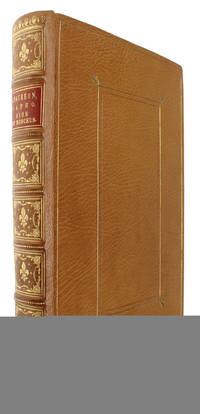
176826070London:: J. Ridley. Full leather binding. 12mo xxxii 287pp.contemporary errata page. Full leather with raised bands to spine. Gilt titles to red spine label. Gilt dentelles. Two armourial bookplates: firstly that of Robert Shafto d.1780 of Benwell in Northumberland and secondly that of his son-in-law William Adair. Robert Shafto was a distant cousin of the Robert Shafto MP 1732-1797 of whom the folk song ' Bobby Shafto' is believed to refer. However some sources Thomas & George Allan in Tyneside Songs and Readings 1891 believe Robert Shafto 1760–1781 of Benwell was the inspiration - he was the son of the owner of this book. Either way the Shafto family with their strong Northumberland and Co. Durham connections make this volume of particular interest to those with interest in NE England. Most of the prelim is taken up with The Classic poem. The text is in English. Front hinge split and held only by one cord rear hinge tender. Though the binding is rather fragile the gatherings remain tightly bound and square. Pages show some age toning to the very edges more so towards the beginning and end of the text block. Starting to crack vertically down the middle of the spine. Prelims are unevenly tanned. Rubbed to edges with the tips of the board showing to two corners. Some slight scuffing to the surface of the leather. Fair copy . Hardback. 1768. J. Ridley hardcover
189913102607NY: Merrill & Baker 1899. Gray cloth paper spine label top edges gilt others untrimmed. Circular waterstain in bottom margins of about 1/2 the pages spine ends and cover edges rubbed covers lightly soiled: Good to VG-/no dj. 8vo. Frontispiece illustration by J.E. Weguelin. #191 of 500 copies. Merrill & Baker hardcover
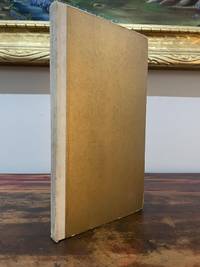
19235316Soho: The Nonesuch Press 1923. First Thus. Very Good. Newly embellished with copper engravings by Stephen Gooden. Limited to 725 copies this is #656. No jacket. Bound in gold boards and vellum backed title is gilded on the spine. General rubbing to all edges some spotting to spine. Uncut and rough edged. Former owner bookplate on ffep. The interior is clean clear and crisp. Complete with all seven engravings with tissue guards and endpapers with watermarks. <br /> <br /> Pages: 110 Dimensions: 9½ x 5½ x ½. The Nonesuch Press unknown
19231235E076London: The Nonesuch Press 1923. 1st Edition . Hardback. Printed pages: 52. Near Fine/Good. 5.5 x 9.5 inches 14 x 24 cm. Dust jacket: Gold paper jacket with wear and loss to edges. Rubbing to front cover. Overall jacket condition is Good. Book: Limited edition number 637 of 725 copies. Quarter parchment with gold paper covered boards. Page edges untrimmed. Very slight tanning to edges of pastedown endpapers. A few spots of foxing to page edges otherwise in excellent condition throughout. Engraved title page headpiece tailpiece and four plates all with tissue guards. One tissue guard has been bound in at an angle. An outstanding example. Overall book condition is Near Fine. Size: 5.5 x 9.5 inches 14 x 24 cm. The Nonesuch Press hardcover
19231235E075London: The Nonesuch Press 1923. 1st Edition . Hardback. Printed pages: 52. Good. 5.5 x 9.5 inches 14 x 24 cm. Limited edition number 520 of 725 copies. Lacking jacket. Quarter parchment with gold paper covered boards. Page edges untrimmed. Heavy rubbing to boards foxing to page edges and front free endpaper. Occasional spotting to the text. Slight residue from previous owner's bookplate to front pastedown and slight offsetting to front free endpaper. Engraved title page headpiece tailpiece and four plates all with tissue guards. Overall condition is Good. Size: 5.5 x 9.5 inches 14 x 24 cm. The Nonesuch Press hardcover
19031196P082New York: G.P. Putnam's Sons / The Knickerbocker Press 1903. 1st Edition Thus . Hardback. Printed pages: x 166. Very Good Minus. 4.75 x 7.5 inches 11.5 x 19 cm. Quarter leather binding with paper-covered boards gilt emblem to front board. Top page edge gilt other edges untrimmed. Fading and rubbing to spine. Wear to ends of spine and lower corners of boards. Light marking to boards. A couple of spots of foxing to endpapers. Good solid binding. Very clean text throughout. Previous owner's inscription to front free endpaper. A fine production from the Knickerbocker Press. Scarce. Overall condition is Very Good Minus. Size: 4.75 x 7.5 inches 11.5 x 19 cm. G.P. Putnam's Sons / The Knickerbocker Press hardcover
177338330à Paphos & se trouve à Paris: Chez Le Boucher 1773. Fine. Chez Le Boucher à Paphos & se trouve à Paris 1773 14 x 22.20 cm relié First edition of this translation by Moutonnet de Clairfonds and first issue of the illustration which comprises a frontispiece 12 headpieces and 13 tailpieces by Eisen engraved by Massard and Duclos. Title page in red and black. Full red morocco binding late 19th century signed Pickering. Jansenist spine with raised bands. Wide inner decorative border. Edges gilt. Small brown stains on upper cover. Despite the minor defects noted a very fine copy. Cohen rightly cites this work as ""one of the most elegantly illustrated books of the 18th century""; Eisen's contribution is indeed delicate and inspired and the headpiece engravings are superbly executed. Chez Le Boucher hardcover
41920Chez Horace Molin In-12 429pp. texte grec et francais nombreux culs de lampe et bandeaux gravés reliure plein cuir du XXe dos a nerfs et pièce de titre Bwx-07 unknown
1864WB16253Paris: Ambroise Firmin-Didot 1864. Hardcover. Near Fine. 24mo 140 x 85mm. Pagination: iii-xlvii 158pp. including table. Signatures: a6 b-44 1-204 including final blank. Title printed with engraved border of muses and signed by engravers H. Catenacci - Hercules Louis Catenacci 18161884 and A. F. Lemaitre - Augustin Francois Lemaitre 17971870. 54 photolithograph plates of Girodets compositions illustrating the odes with fine classical figures and settings. Greek text with French prose translation for 64 odes by Ambrose Firmin-Didot. Text printed within red ruled borders with headings printed in red. Finely bound in a French 19th-century crimson morocco covers gilt with central ornament spine with five raised bands lettered in gilt: ODES DANACREON / F. DIDOT 1864 inner gilt dentelles marbled endpapers edges gilt custom cloth case; only slightest wave to a few leaves otherwise a very good and attractive copy. Front pastedown with the typographic bookplate of Robert Percy Alden an American Gilded Age lawyer and collector hailing from Pennsylvania who died in 1909. <br/><br/>Fine French edition of the Odes of Anacreon edited and produced by Ambroise Firmin-Didot 17901876 reusing the illustrations in a reduced scale by the French artist Girodet Anne-Louis Girodet de Roussy-Trioson 17671824. Girodets graceful neoclassic designs were executed in the revived Second Empire style and engraved by his pupil Henri-Guillaume Chatillon 17801856. J. B. de Saint-Victor originally commissioned the Girodet illustrations in 1808 but only two complete designs were published with his translation in 1810. Girodet continued to work on the illustrations privately as well as his own translation of the ancient Greek Odes until his death in 1824. Ambroise Firmin-Didot was an accomplished classicist editor and man of letters within the established line of Didot printers in Paris. This production is an outstanding example of one of the finely printed classics issuing from the renowned Didot press. It maintains the distinctive Didot typographic layout and refined use of red and black inks. The introductory text of a later English edition of the Odes 1869 by Thomas Moore notes that the Firmin-Didot edition was sold at the almost prohibitive price of two pounds. Wonderful copy most likely bound for Robert Percy Aldens American villa-library in the late 19th century. Alden spent several of his Yale post-graduate years in Europe and was married in Paris in 1878 when he likely procured this book. Ambroise Firmin-Didot hardcover
53114Glasguae Glasgow : Excudebant R. & A. Foulis M.DCC.LI. 1751 . A very good full leather miniature binding with slip-case. 81mm x 52mm x 9mm. 4pp./pp.75/3pp. 32mo. Later brown calf probably 19th century with gilt filet border. Spine with gilt titles and four raised bands. Ink spots to spine and rear board. Previous owner's signature to top of title-page: "Arnage 1804." Clean Greek text throughout. Numerous pencil underlinings one page of inked Greek text to rear endpaper. Title transliterated from the Greek preceded by an additional title-page in Latin: "Anacreontis Carmina. Cum Sapphonis Et Alcaei Fragmentis." Contains the songs of Anacreon and fragments of Sappho and Alcaeus. Referenced by: Gaskell 181 - The Foulis Press ; ESTC T085607 "Anacreon 582 BCE�485 BCE was a Greek lyric poet born in Teos an Ionian city on the coast of Asia Minor. He likely moved to Thrace in 545 BCE with others from his city when it was attacked by Persians. He then moved to Samos to Athens and possibly again to Thessaly seeking a safe place to write his poems as his patrons including Polycrates tyrant of Samos and Hipparchus brother of Athenian tyrant Hippias kept being murdered. It is unknown where Anacreon died though he lived to the unusually advanced age of 85. Glasguae [ Glasgow ] : Excudebant R. & A. Foulis, M.DCC.LI. [1751] . hardcover
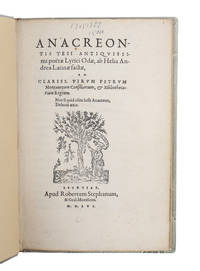
155662303Lutetiae i.e. Paris Robert Stephanum i.e. Robert Estienne & Guillaume Morel 1556. Small 8vo. Lovely newer full marbled paper binding with gilt leather title-label to spine Jens E. Hansen Aarhus. Light brownspotting to a few leaves and somne leaves towards the end with inkspotting at outer blank margin. Early neat handwritten marginal annotations throughout. A lovely copy. 54 pp. <br/><br/><em>Scarce second edition of Elie André’s seminal Latin translation of the Anacreontea – the first complete - which itself is a classic in the history of classical literature. It came to directly influence all later readings of Anacreon. In 1554 Henri Estienne II published the seminal editio princeps of Anacreon which is no less than an outright Renaissance sensation causing the “Anacreaonta†to become the most influential “ancient†Greek poetic text during the Renaissance initiating a poetic revolution in Europe. Simultaneously with this editio princeps Henri Estienne published his own Latin translation of it which constitutes the first translation into Latin. Merely a year later in 1555 Elie André extremely important translation of the Anacreaontea appeared in 1555 printed by Thomas Richard. This translation included additional Odes not in the Estienne edition and was thus the first complete Latin translation of the “Anacreontiaâ€. The following year 1556 Robert Estienne II published his first work namely a second edition of the original Greek Anacreontea that Henri Estienne had published in 1554. Silmultaneously Robert Estienne republished Elie André’s Latin translation which was published separately but which is often found together with the 1556 second edition of the Greek Anacreontea. “The first full translation of CA was again in Latin. It was published by the humanist Elie André 1509-1587 from Bordeaux who was friendly with the Parisian circle around the Pléiade. André’s translation appeared less than a year after Estienne’s edition and comprised the Latin translation only without the Greek text. In a way this can be taken as a signal that the Latin tradition was coming into its own. Accordingly André makes some bolder choices in his translation which already shows in his first lines see Aiijr: Cantare nunc Atridas Nunc expetesso Cadmum: Testudo vero nervis Solum refert Amorem …. In classical Latin the verb expetessere is used only by Plautus and it is extremely rare in postclassical Latin. This brings a somewhat odd ring of comedy to the poem. Here and in a number of other places the translator wishes to strike his readers with an unusual turn of phrase or by some sort of amplification. He does not just imitate ‘Anacreon’ but also competes with him as arguably with Estienne’s translation. André’s willingness to adapt the original text shows also in a certain moralistic tendency not otherwise seen in Latin translations. On the one hand he openly and avowedly changes the text when it comes to unequivocal references to homosexuality: in CA 12 10.8-10 Ï„ µευ καλν νεÏων … φÏπασας Βθυλλον; “Why from my sweet dreams … have you snatched away Bathyllus†for instance he replaces Bathyllus with a puella Cur mane somnianti / Ista loquacitate / Mihi eripis puellam…; in CA 29 17.1-2 ΓÏφε µοι Βθυλλον οτω / τν ταÏον Ï‚ διδσκω “Paint for me thus Bathyllus my lover just as I instruct you†he simply suppresses the word ταÏον “lover†Mihi pinge sic Bathyllum / . Estienne’s translation is: Meos Bathyllum amores / Ut te docebo pinge. Here André proceeds in a way similar to the original Neo-Latin Anacreontics in which homosexual love simply does not occur. On the other hand André makes generous use of a metatextual element which is less conspicuous than his changes but is even more extensive and significant. He includes a considerable number of passages in quotation marks and thus identifies them as sort of sententiae. In CA 4 32 for instance lines 1-6 describe how the poet wishes to lie down on myrtles drink and have Eros as his wine steward. This description of a specific setting is followed by some more general lines about the brevity of life which André includes in quotation marks lines 7- 10: “Cita nanque currit aetas / Rota ceu voluta currus. / Sed et ossibus solutis / Iaceam cinis necesse est†“For hurried life runs along just like a rolling wheel but I shall soon lie a bit of dust from crumbling bonesâ€. The focus of this quotation technique is on lines concerned with the transitory nature of life the uncertainness of tomorrow and the futility of riches. By marking out such lines as sententiae André distinguishes Anacreon the philosopher from Anacreon the drinker and lover and contributes to a larger discourse about the morality of the poet and his poems. While opinions in antiquity were often critical of Anacreon’s morals ‘Anacreon’s’ large flock of modern imitators was united to defend their hero’s virtue. From Estienne’s preface onwards they usually referred to Plato’s Phaedrus 235c where Socrates calls Anacreon “wise†σοφς in matters concerned with Eros. In the 18th century Anacreon the philosopher could even turn into a key-image of enligthened discourses. André’s identification of sententiae in ‘Anacreon’ prepared for this development and could have had a direct influence on it since his translation was widely read until well into the 18th century. The Latin translations of Estienne and André soon became classics in themselves and were the most successful ones in the early modern period.†Tilg: Neo-Latin Anacreontic Poetry. Its Shapes and Its Significance 214. Pp. 177-78. Brunet: I:250; Renouard: I:161. </em> hardcover
180255219London Bulmer et Soc. apud White et Miller 1802. 8vo. Contemp. full morocco. Gilt spine with gilt lettering. Broad gilt borders on covers. Inside gilt borders. Edges gilt. Edges with light wear. 4130 pp. Many fine executed engraved vignettes and endpieces. Finely printed with Greek letters on good paper. The first leaves with light browning further a few minor brownspots. With engraved bookplate of Hen. J. Blakeney and his written name. unknown
177460357Paris Le Boucher 1773 & 1774 4to 228 x 156 mm. Bound in a very beautiful a bit later light brown full grained morrocoo binding with five raised bands richly gilt spines gilt lines to boards inner gilt dentelles and gilt capitals. All edges gilt. Binding by 'Sture Falks Bogbinderi' Lund Sweden. Housed in a slipcase. Ex-libris to pasted down front end-paper Maurice B. Worms and to front free end-paper Per Erik & Ludmilla Lindahl. A very nice and clean copy. 4 IV 280 XVI 104 pp. 2 frontispieces 12 headers and 13 tailpieces by Eisen engraved by Massard and Duclos. <br/><br/><em>First edition of Moutonnet's translation of Anacreon illustrated by Duclos after Eisen - widely considered to be "One of the most charmingly illustrated books of the eighteenth century" Salomons. Sander 17 Cohen 79: "l'un des livres les plus élégamment illustrés du XVIIIe siècleFürstenberg 92: "The Anakreon from 1773 is on the same level as the illustrations for 'Le Temple de Gnide' from 1772 and must also be counted among the most beautiful books of the century." </em> hardcover