Blackmore, R. D.MareMagnum
Blaine EmilyLivre Rare Book
La creperie des petits miracles
2021500125734HarperCollins 2021 336 pages 12 4x17 6x2 4cm. 2021. pocket_book. 336 pages.
Démons et Merveilles · Joinville, France5,00 €
5 581 résultats
Two volumes. pp. 516; 565 + Fifty-one wonderful photogravure plates from the photographs of Dr. Charles L. Mitchell and Francis Frith. Original full red cloth binding., brilliantly decorated in gold. Set against the turbulent historical backdrop of the 1680s, in England's lawless West Country, Lorna Doone is an action-packed tale of romance, revenge and family warfare. Blackmore's sweeping story of love and crime is one of fiction's most respected works. Three young people are caught in a taut emotional triangle - Carver Doone, murderous member of a feared family of aristocratic outlaws; John Ridd, a young farmer dedicated to avenging his father's death; and Lorna Doone, the dark-eyed beauty for whom both men would willingly die. At once independent and vulnerable, Lorna is the Doone "Princess", condemned by the family to marry Carver. But Lorna may not be quite what she seems. Richard Doddridge Blackmore (1825-1900) was born in Longworth, Berkshire, where his father John Blackmore was Curate-in-charge of the parish. Only a few months after his birth his mother died of typhus, his father moved back to his native West Country and young Richard was taken in charge by his aunt. In 1831 John Blackmore married again and Richard went to live with his father and stepmother in Devon. Richard went to school in Tiverton where he excelled in classical studies and later won a scholarship t o Oxford, where he took his degree in 1847. He made his first attempt at writing a novel during a university vacation. After leaving Oxford he entered the law, being called to the Bar in 1852. Ill-health, however, forced him to give up legal work as a full-time occupation and in 1853 he took the post of classics master at Wellesley House Grammar School, Hampton Road, Twickenham. Soon after accepti ng this post, Blackmore moved from London to Hampton Wick, where he lived until he moved to his new home in Teddington. In 1853 he married, and in 1854 published anonymously two volumes of poetry. In September 1857 his uncle died leaving his nephew a sum of money which enabled him to realise a long-held ambition - that of possessing a house in the country with a larger garden. Blackmore selected a plot of land at Teddington and built his new house (completed in 1860). He was to live there for the rest of his life. Gomer House, named after one of his favourite dogs, had extensive grounds. Within them Blackmore developed an 11 acre market garden, specialising in the cultivation of fruit. The grounds were surrounded by high walls. Although an expert in horticulture, he lacked the necessary bu siness sense and his market garden was not a very profitable enterprise. In the late 1860's Blackmore fought the coming of the railway to Teddington, winning claims against his property by the London and South West Railway Company, but being unable to prevent the erection of a station almost directly opposite his house. Some local residents in Teddington apparently regarded Blackmore as unsociable, if not misanthropic. Charles Deayton, a Teddington merchant is recorded as saying to a visitor: "He is not a social man, and seems wedded to his garden in the summer and his book writing in the wint er. That is all I know of him; except that he keeps the most vicious dogs to protect his fruit, and I would advise you to avoid the risk of visiting him." In fact, though of a retiring disposition, Blackmore did have a number of intimate friends whom he met regularly and many friendships with Americans as a result of his wide following in the United States. Blackmore died at Teddington in 1900 after a long and painful illness. He was buried at Teddington Cemetery. His wife had died in 1888. He had no children. **PRICE JUST REDUCED!
2 Vol. Vol. I. pp. xxii, 341, +Plus 46 Photogravure illustrations, with captioned protective tissues + 14 leaves of additional plates, a portrait, and color map; Vol. II. pp. ix, 361, +Plus 30 Photogravure illustrations, with captioned protective tissues and 15 leaves of plates. 12mo. 210mm. A beautiful set of a famed historical fiction romance novel. Bound in the original publiaher's full cream cloth with dark green and silver gilt decoration. Top edge of both volumes gilt. Spine also lettered and decorated in green and silver gilt. Corners sharp. All plates are present. Contents clean. Hardbound. Very Good. Richard Doddridge Blackmore (1825-1900), known as R.D. Blackmore, was one of the most famous English novelists of the second half of the nineteenth century. He won acclaim for vivid descriptions and personification of the countryside, sharing with Thomas Hardy a Western England background and a strong sense of regional setting in his works. Blackmore, often referred to as the 'Last Victorian', was a pioneer of the movement in fiction that continued with Robert Louis Stevenson and others. He has been described as 'proud, shy, reticent, strong-willed, sweet-tempered, and self-centred.' Apart from his novel Lorna Doone, which has enjoyed continuing popularity, his work has gone out of print. NW63
2021500125734HarperCollins 2021 336 pages 12 4x17 6x2 4cm. 2021. pocket_book. 336 pages.
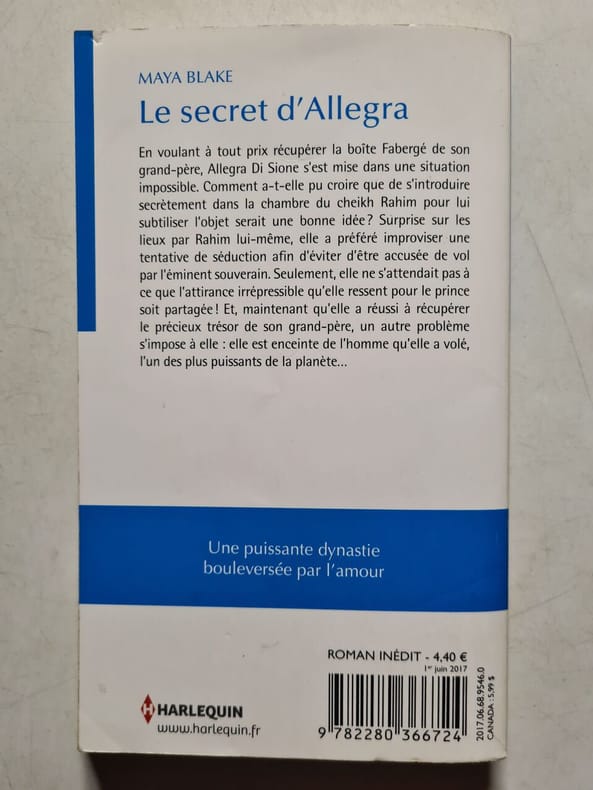
2017500095774HARLEQUIN 2017 378 pages 13x20 4x2 8cm. 2017. Broché. 378 pages.
2019500063025HARLEQUIN 2019 432 pages 13x20 2x3 2cm. 2019. Broché. 432 pages.
2019500081147HARLEQUIN 2019 432 pages 13x20 2x3 2cm. 2019. Broché. 432 pages.
500055468AUDIOLIB 13 6x18 8x0 8cm. Sans date. audioCD.
2021500230302HARLEQUIN 2021 160 pages 10 7x16 8x1 2cm. 2021. pocket_book. 160 pages.
2017500290674HARLEQUIN 2017 160 pages 10 6x17 6x1 2cm. 2017. pocket_book. 160 pages.
2020500186991HARLEQUIN 2020 160 pages 2020. Broché. 160 pages.
2014500210271Harlequin 2014 10 6x1 2x17 6cm. 2014. Broché.
pp. (4) 226, (8) [Publisher's Advertisements]. 16mo. 182 mm. Interesting original full cloth binding. First edition. Quite scarce. **PRICE JUST REDUCED! FRENG 3
180 pages, edges browned, ex public library with usual signs, (Circle of Love ; 14). eng
18651204373Paris, Morizot, 1865. Gr.-8vo. Stahlstich-Frontispiz, 4 Bl., 504 S., 7 Stahlstichtafeln. Brauner Hldrbd d. Zeit m. Rückenvergoldung u. allseitigem Goldschnitt (berieben, erste u. letzte Blätter stärker, sonst gering braunfleckig).
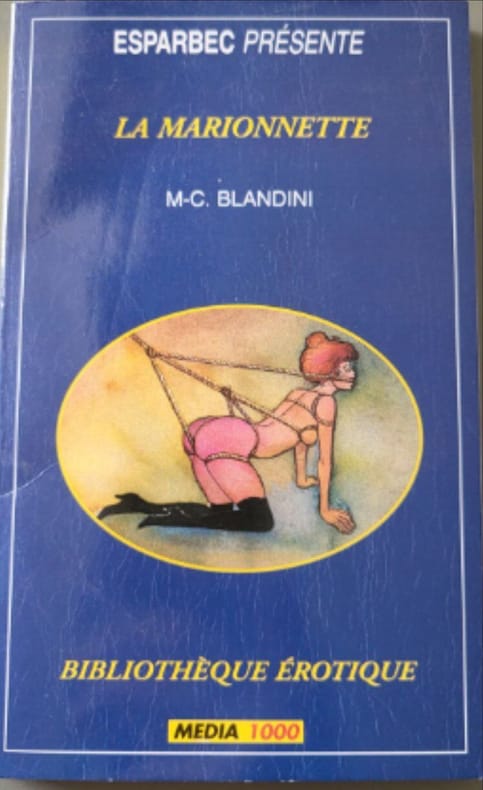
200315984Media 1000 2003 122 pages collection BIBLIOTHÈQUE ÉROTIQUE. 11 1x1 4x18 5cm. 2003. Broché. 122 pages.
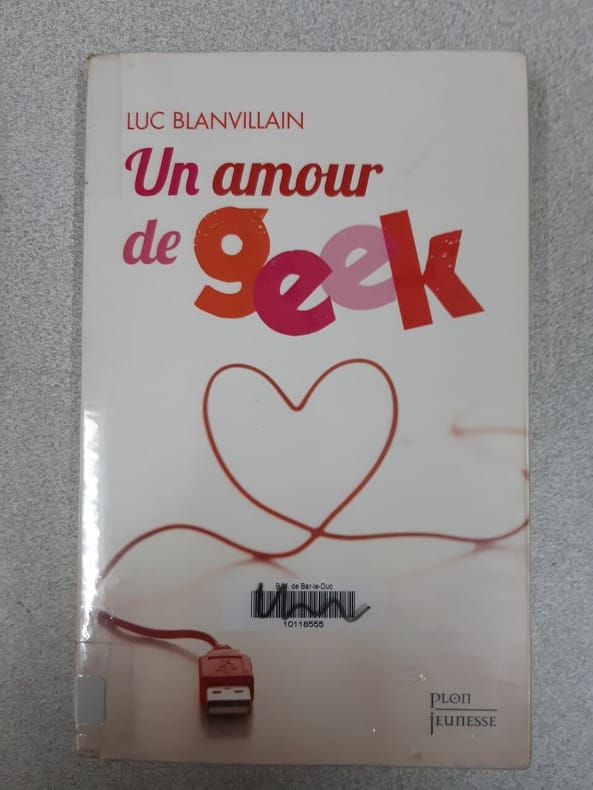
2011500084064PLON 2011 208 pages 14x2 2x22 4cm. 2011. Broché. 208 pages.
ill., br. Questo corso rappresenta una sintesi originale e aggiornata di linguistica sarda. La parte teorica, corredata di esempi attinti alle varietà dialettali isolane, informa criticamente su tutti i settori di studio e ricerca relativi alla lingua sarda, fornendo al lettore gli strumenti per conoscere e approfondire la materia. Ogni capitolo chiude con un confronto serrato tra sardo e lingue neolatine, dove si prendono in considerazione sia le strutture sia la pianificazione linguistica. La parte pratica contiene un'antologia di testi, dialettali, di linguaggio giovanile e di sardo medievale, destinata alle esercitazioni seminariali, ed è anche munita di nuove carte geolinguistiche e di fac-simili. Un agile manuale di riferimento obbligato per ogni docente di linguistica romanza o studente di linguistica sarda.
Modena, Società Tipografica Modenese, 1938, in-16, br., pp. 110, (2). (Testi e manuali dell'Istituto di Filologia Romanza della R. Università di Roma, a cura di Giulio Bertoni, N° 6).
In 16°, brossura editoriale ornata, pp. 72, (4), coll. "Testi e manuali N°11", intonso, lievi bruniture ma buon esemplare. (MAG ZD3) (spedizione standard SEMPRE tracciata con raccomandata-piego di libri, eventuale FATTURA da richiedere all'ordine)
In 16°, brossura editoriale ornata, pp. 106, (4), coll. "Testi e manuali N°6", intonso, lievi bruniturema buon esemplare. (MAG ZD3) (spedizione standard SEMPRE tracciata con raccomandata-piego di libri, eventuale FATTURA da richiedere all'ordine)
19791019206Bonn, 1979. 218, (2) S. Kart.
1914156162Heidelberg, 1914. 4 Bl., 109 S. Brosch. Letztes Bl. farbspurig u. mit kl. Einriß.
18421312725Paris, Charpentier, 1842. 8 (recte 10), 348 S. Hldrbd d. Zeit m. Rückenvergoldung (Einbd beschabt, gering fleckig, kl. Feuchtigkeitsrand im Kopfsteg).
2004500141670Arrow 2004 672 pages 13x3 6x19cm. 2004. Broché. 672 pages.
19081247321Leipzig, 1908. 76 S. Br. (Titelbl. leicht angestaubt, St. a. T.).