Bezzerides, AI A IBiblio.com
5 583 résultats
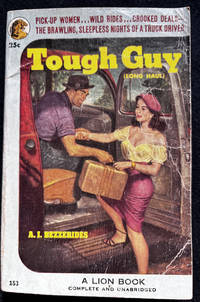
1953004830New York: Lion Books Inc. 1953. Soft cover. Good. 16mo - over 5¾ - 6¾" tall. 160pp. Some creases to cover and very light wear. Text is age-toned and is unmarked. First published by Lion Books in July 1953. <br/> <br/> Lion Books, Inc. paperback
pp. 256, cm 19x12, brossura.
In 8, pp. 99-131 + (1b). Dedica autogr. dell'A. al p. ant. Dedica autogr. dell'A. al p. ant. Br. muta coeva. Estratto dagli 'Studi di Filologia romanza'.
(Mills & Boon Romance ; 3531). eng
1961705906Kráków, 1961. 67 S. (Prace Komisji Historycznoliterackiej 5).
pp. xiv, 79 + Plus full page color drawings by Michel Ciry. Title page printed in red and black. Sm. 4to. Original full yellow buckram binding. Original yellow slip case. Hardbound. Very nice copy. THESE HERITAGE PRESS BOOKS MAKE GREAT GIFTS. W83
19691050489(1969). 150 S. (Linguistica et Litteraria 3). OKart.
19571259826Münster, Aschendorff, (1957). Gr.-8vo. 3 Bl., 231, (1) S. (Spanische Forschungen der Görresgesellschaft II/6). OKart.
1963163157München, Hueber, 1963. M. 1 Portr. u. 10 Tafelabb. XX, 411 S. OLwd. Namenszug a. Innendeckel.
pp. 335, cm 24x17, brossura, Nuovo.
pp. 421, cm 24x17, brossura, con 33 tavole in nero fuori testo, Nuovo.
1920150442Göteborg, 1920. 60 S. (Göteborgs högskolas arsskrift 1920,1)
19271204337Lyon, Vitte, 1927. 2 Bl., 260 S., 2 Bl. OKart. (unbeschnitten).
Dustjacket has minor shelfwear, soiling and rubbing. Very light shelfwear to book else Fine. ; Illuminated Manuscripts; 125 pages; Publishes all the miniatures of this masterpiece manuscript of 1410 which describes the touching story of Tristan and his beloved.
17691196796Berlin, G. J. Decker, 1769. 116 S. Interimsbroschur d. Zeit (unbeschnitten, Umschl. fleckig u. m. kleinen Randläsuren, innen gebräunt u. vereinzelt minimal braunfleckig).
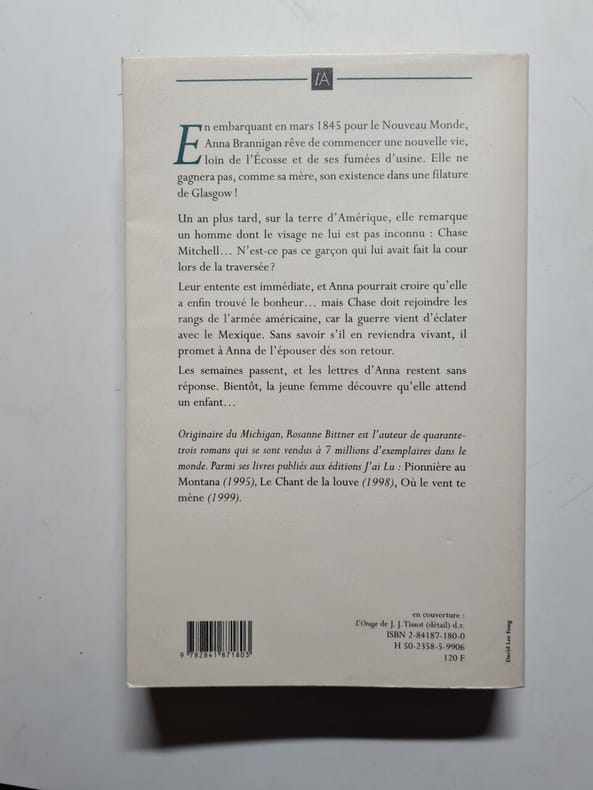
1999500256350L' Archipel 1999 15 5x24x2 9cm. 1999. mass_market.
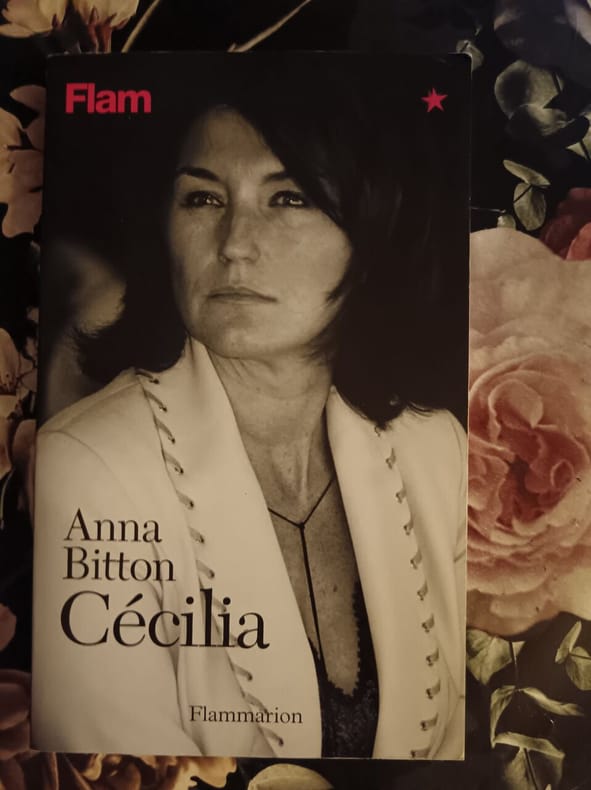
2008500144641Flammarion 2008 174 pages 13 6x1 8x22cm. 2008. Broché. 174 pages.
18810007946Boston: Houghton Mifflin 1881. First American edition. Hardcover. Very Good. 12mo 200 pages green decorated cloth half in margnal tear to one leaf. <br/><br/>Bjornson was the first Norwegian to win in 1903 the Nobel Prize for Literature. This was translated by the notable Norwegian-American Rasmus B. Anderson who was designated by Bjornson to be his American translator. Bjornson "revises each work before it is translated thus giving his personal attention to this edition - Publisher's Note. Bjornson visited America in 1881. ARNE is a sketch of Norwegian country life. Houghton Mifflin hardcover
No marks or inscriptions. A very clean very tight copy with bright unmarked boards, slightly dusty page edges and very tiny bump to lower rear corner. Dust jacket not price clipped or torn with very slight marking/rubbing/dustiness and nick to upper front corner. 224pp. Romantic novel from Hermina Black.
00005712Philadelphia: Porter & Coates Two volumes Twentieth edition very decorative gilt on red cloth light wear to bottom of spine shelf wear- previous owner's bookplate on front endpage of both volumes. Really a beautiful set with illustrations. Porter & Coates hardcover
19472RM0448Collins 1947. A very good blue hardcover. Slight spine slant. Light wear around the edges cover and spine. Library stamp on the ffep otherwise no other library markings. Nice and clean. Small puncture on the back cover. Copyright 1947.A Collins Romance. 1st Ediiton. Hard Cover. Very Good. Collins Hardcover
239 pages, covers worn. eng
Two volumes. pp. 516; 565 + Fifty-one wonderful photogravure plates from the photographs of Dr. Charles L. Mitchell and Francis Frith. Original full red cloth binding., brilliantly decorated in gold. Set against the turbulent historical backdrop of the 1680s, in England's lawless West Country, Lorna Doone is an action-packed tale of romance, revenge and family warfare. Blackmore's sweeping story of love and crime is one of fiction's most respected works. Three young people are caught in a taut emotional triangle - Carver Doone, murderous member of a feared family of aristocratic outlaws; John Ridd, a young farmer dedicated to avenging his father's death; and Lorna Doone, the dark-eyed beauty for whom both men would willingly die. At once independent and vulnerable, Lorna is the Doone "Princess", condemned by the family to marry Carver. But Lorna may not be quite what she seems. Richard Doddridge Blackmore (1825-1900) was born in Longworth, Berkshire, where his father John Blackmore was Curate-in-charge of the parish. Only a few months after his birth his mother died of typhus, his father moved back to his native West Country and young Richard was taken in charge by his aunt. In 1831 John Blackmore married again and Richard went to live with his father and stepmother in Devon. Richard went to school in Tiverton where he excelled in classical studies and later won a scholarship t o Oxford, where he took his degree in 1847. He made his first attempt at writing a novel during a university vacation. After leaving Oxford he entered the law, being called to the Bar in 1852. Ill-health, however, forced him to give up legal work as a full-time occupation and in 1853 he took the post of classics master at Wellesley House Grammar School, Hampton Road, Twickenham. Soon after accepti ng this post, Blackmore moved from London to Hampton Wick, where he lived until he moved to his new home in Teddington. In 1853 he married, and in 1854 published anonymously two volumes of poetry. In September 1857 his uncle died leaving his nephew a sum of money which enabled him to realise a long-held ambition - that of possessing a house in the country with a larger garden. Blackmore selected a plot of land at Teddington and built his new house (completed in 1860). He was to live there for the rest of his life. Gomer House, named after one of his favourite dogs, had extensive grounds. Within them Blackmore developed an 11 acre market garden, specialising in the cultivation of fruit. The grounds were surrounded by high walls. Although an expert in horticulture, he lacked the necessary bu siness sense and his market garden was not a very profitable enterprise. In the late 1860's Blackmore fought the coming of the railway to Teddington, winning claims against his property by the London and South West Railway Company, but being unable to prevent the erection of a station almost directly opposite his house. Some local residents in Teddington apparently regarded Blackmore as unsociable, if not misanthropic. Charles Deayton, a Teddington merchant is recorded as saying to a visitor: "He is not a social man, and seems wedded to his garden in the summer and his book writing in the wint er. That is all I know of him; except that he keeps the most vicious dogs to protect his fruit, and I would advise you to avoid the risk of visiting him." In fact, though of a retiring disposition, Blackmore did have a number of intimate friends whom he met regularly and many friendships with Americans as a result of his wide following in the United States. Blackmore died at Teddington in 1900 after a long and painful illness. He was buried at Teddington Cemetery. His wife had died in 1888. He had no children. **PRICE JUST REDUCED!
2 Vol. Vol. I. pp. xxii, 341, +Plus 46 Photogravure illustrations, with captioned protective tissues + 14 leaves of additional plates, a portrait, and color map; Vol. II. pp. ix, 361, +Plus 30 Photogravure illustrations, with captioned protective tissues and 15 leaves of plates. 12mo. 210mm. A beautiful set of a famed historical fiction romance novel. Bound in the original publiaher's full cream cloth with dark green and silver gilt decoration. Top edge of both volumes gilt. Spine also lettered and decorated in green and silver gilt. Corners sharp. All plates are present. Contents clean. Hardbound. Very Good. Richard Doddridge Blackmore (1825-1900), known as R.D. Blackmore, was one of the most famous English novelists of the second half of the nineteenth century. He won acclaim for vivid descriptions and personification of the countryside, sharing with Thomas Hardy a Western England background and a strong sense of regional setting in his works. Blackmore, often referred to as the 'Last Victorian', was a pioneer of the movement in fiction that continued with Robert Louis Stevenson and others. He has been described as 'proud, shy, reticent, strong-willed, sweet-tempered, and self-centred.' Apart from his novel Lorna Doone, which has enjoyed continuing popularity, his work has gone out of print. NW63
2021500125734HarperCollins 2021 336 pages 12 4x17 6x2 4cm. 2021. pocket_book. 336 pages.