37 résultats
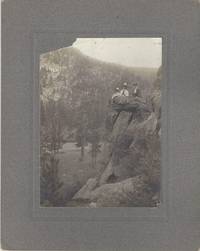
19001968Estes Park CO 1900. Large format gelatin silver photograph 17 cm x 12 cm on a plain gray mount 25 cm x 20 cm view chipped at upper left corner and coming up from mount on the left side. Image of two women and a boy in jaunty hats sitting atop of a rock ledge with a forested canyon beneath them.<br/><br/>Manuscript note on the reverse "Hat rock above McLeod cabin at Shenstone 19 Keith McLeod Bertha McLeod Aunt Florence Stewart. unknown books
18632488New York: Wm. C. Bryant & Co Printers 1863. First edition. Very Good . Original paper wraps. 23 pages. Number 10 in a series of 17 pamphlets addressing the causes and outcomes of the Civil War. One of two variant printings with no priority assigned this with page 23 beginning "attempt at corrupting." Some separation to the foot of spine with text block holding well. Soiling and edgewear to front wrap; rusted imprint of paperclip affecting top of pages 13-15. Small blot to text of page 13. Else a solid copy of this important work which suggests that all women who have survived the Civil War deserve credit for their strength and sacrifice. <br/><br/>While at its release A Few Words was anonymous an 1865 publication by the Loyal Publication Society attributes the work to Caroline Kirkland Mrs. C. M. Kirkland. Kirkland a writer educator and abolitionist brought a unique perspective to the debate on women's roles in the Civil War. A Northerner by birth she spend the years leading up to the war living with her husband on a homestead in Michigan. Her experience living in the North and West and traversing the South informs her response to the accusation being made by men on both sides: that the strength of Southern women and the apathy of Northern women had contributed to seccession and the duration of the conflict. According to Kirkland's argument women on both sides nursed sick soldiers rationed and experienced the losses of husbands brothers and fathers. Yet Kirkland argues that women of the South are implicated in the evils of slavery. "They having seen slavery felt it known its horrors suffered under its attendant evils and learned.its incompatibility with God's benign law of love have deliberately lent themselves.to the perpetuation of so awful an evil." As an abolitionist and a women's rights activist Kirkland highlights the cognitive dissonance involved in promoting the strength of women who refuse to recognize that their fight for equality is tied to that of all oppressed Americans. She concludes with hope from the West where she comments that strong-minded women have rejected courtships and shunned deserters who refuse to stand their ground. A rare and interesting work documenting a Union woman's perspective on American women's responsibilities in wartime.<br/><br/>History of American Women. Very Good . Wm. C. Bryant & Co Printers unknown books
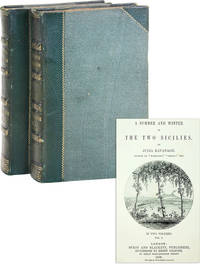
185850251London: Hurst and Blackett 1858. First Edition. Two volumes; small octavo 19cm; late 19th /early 20th-c. half-morocco over green cloth boards; marbled page edges; engraved frontispiece to each volume; vignette title pages; vii1-333 1-316pp. Small marginal perforation at gutter of v.1 leaf R1 pp.241-242; closed marginal tears to leaves N5-8 in v.2 pp 187-192 in both cases with no loss to text. Else a fresh Very Good or better set in an attractive period binding. Ex-libris "The Countess Dowager of Carnarvon" likely Elizabeth Catherine Howard 1857-1929 second wife of Henry Howard Molyneux Herbert 4th Earl of Carnarvon. The Earls of Carnarvon are the hereditary proprietors of Highclere Castle made famous as the locale for the popular television series "Downton Abbey." Popular account of Mediterranean travel by the prolific Irish novelist and essayist. Kavanagh 1824-1877 spent most of her adult life in France supporting herself and her mother on the proceeds from her writings which were numerous; in addition to several novels the best-known being Nathalie 1851 Kavanagh published volumes of critical essays devotional works books for children and many stories and short pieces for periodicals. Kavanagh's concern with gender and society inflected much of her published work and this is perhaps most true of her travel writing a genre which afforded her the opportunity to couch social critique in the form of casual observation. As one modern critic has noted ".as a hybrid genre travel writing.gave women such as Kavanagh the opportunity to write on historical and political themes and to compare the position of women in British society with that of women in other countries." see Anne O'Connor "Travel Literature and Traveling Irishness: an Italian Case Study" in Traveling Irishness in the Long Nineteenth Century Marguerite Corporaal and Christina Morin eds Lon: 2017. Hurst and Blackett unknown books
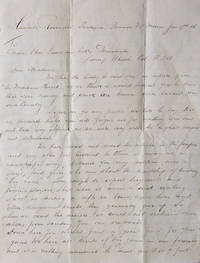
1896315329Hacienda Rosendal Tantojón Pánuco Vera.Cruz Mexico 1896. 2 pages; with original envelope featuring pen and ink portrait of a bear on the back; and with clipped article from the "Mexican Herald" of December 24 1895. 4to. Old folds. 2 pages; with original envelope featuring pen and ink portrait of a bear on the back; and with clipped article from the "Mexican Herald" of December 24 1895. 4to. In praise of three California huntresses. A charming tribute with subtle overtures from three Swedish bachelors living in Mexico to three California sisters whose hunting prowess was described in an article in the "Mexican Herald." Headlined "Three California Dianas. They Kill Bears and Panthers and Olive in Particular is an Expert Shot" the article describes the sisters who live in the "wilderness above Ukiah California" as "sportswomen of rare talent" and gives an account of their encounter with a bear which ends up with their treeing and killing the animal. The letter reads in part: ".we think it would interest you to know that your bravery and pluck are known even outside your own Country . We have read and reread the article and . we could not restrain ourselves from sending our respects. Down here you would find a great field for your guns. We have all kinds of big game . it is nothing unusual to meet an 8 or 9 feet sic tiger on the roads when we are out riding. We will described one of our hunting experiences that might interest you." The letter goes on to relate how after wounding and trailing a deer towards a lagoon "a big Puma jumped out from the jungle and pounced upon our poor wounded deer. A rifleshot and we had both deer and Puma." The letter continues: "We are three Swedes 26 28 & 31 years old and run a fruit plantation in partnership in the district of Huasteca on the shores of the beautiful Panuco river. We have been here only 5 months but we have found the prospects for the future very bright. We would greatly enjoy a few lines from you as to ascertain whether our epistle ever reached you . and if the article is a ghost-story or not." They close "With admiration for the 3 brave Dianas in California. unknown books
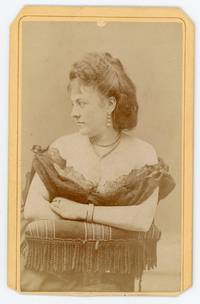
1867List309Virginia City: Sutterley and Co 1867. Albumen photograph on mount 4 x 2 ½ inches. Pauline Cushman was an actress and one of the most successful spies for the Union Army. She ingratiated herself with the Confederate army by toasting Jefferson Davis after one of her performances. She was eventually caught and sentenced to death by hanging. She was spared only due to the arrival of the Union Army. <br /> <br /> After the war she toured the country giving lectures and performances recounting her experiences as a spy. She eventually headed west marrying in 1872 in San Francisco and eventually working a range of jobs in Arizona Territory Texas and eventually back in San Francisco where she died in 1893 at age 60 from a morphine overdose. <br /> <br /> We find no record of this portrait which was taken by the Sutterley brothers James and Clement in their Virginia City Nevada studio somewhere between 1864 and 1867. The Sutterleys operated out of their studio on the Union block of Virginia City for five years before dissolving their partnership in 1867. It is likely that the portrait was taken during one of Cushman's tours throughout the region during these years. <br /> <br /> A beautifully preserved example in very good condition with a small chip to upper margin and some fading. Though Cushman ostensibly would have sold cartes-de-visite in support of her touring few survive on the market today. Sutterley and Co unknown books
1900D7004early-to-mid 1900s. Ephemera. Near Fine. Collection of 7 sepia and b/w picture postcards photographic one of them hand-colored each about 3.5 x 5.5 inches. All are addressed to Alfred Creutzberg handwritten in English or German on the verso except one where the handwriting is written in the photo border framing the girl's face with their original postage stamps and postmarks. Mr. Creutzberg must have been a known fan of the ladies as the singers and actresses his friends sent him include: Janet Alexander Reta Walter 2 but not duplicates Aenny Hindermann image a bit silvered prettily so Edna May Isabel Jay and Denise Orme. <br/><br/> unknown books
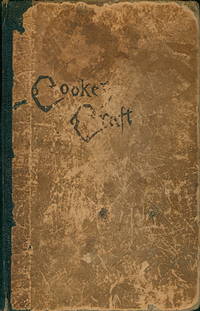
18943017St. Johnsbury VT: Press of C.M. Stone 1894. Octavo 17 189 blanks 18 1. Ads. First edition of this church cookbook with some of the recipes attributed. With a witty essay about the history of food titled "Cookery Craft Miscellaneously Considered" at the rear. A number of manuscript recipes have been added on the pages provided and an owner has very neatly tipped-in a number of additional manuscript recipes and clippings. The book is well used but also shows signs of being well loved more than most. Binding and hinges shaken with wear and soiling to pages throughout. Title printed on paper covered boards over black pebbled cloth spine. Overall good or a bit better. OCLC locates just three copies; Cook page 252; not in Brown or Cagle. Press of C.M. Stone hardcover books
186022166np 1860. Broadside 5"x 11". Caption title as issued. Program of theatrical and musical presentation by the school. Light wear couple of spots light horizontal folds. Good. unknown books
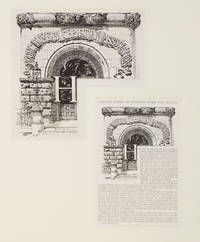
188822743New York 1888. Published in The Century Magazine June 1889 p. 217. 1 vols. Image 8-1/4 x 9 inches; archivally matted with the original page showing the illustration as published. Fine. Fenn Harry. Published in The Century Magazine June 1889 p. 217. 1 vols. Image 8-1/4 x 9 inches; archivally matted with the original page showing the illustration as published. Fine YWCA Drawing by Harry Fenn. A splendid rendering of the Romanesque facade of the New York YWCA at 7 East 15th Street incorporating the letter H the initial letter of the article "Certain Forms of Woman's Work for Woman". Harry Fenn 1838-1911 was born in England and came to the United States in 1864 where he made a successful career as an engraver painter and illustrator. Among his commissions was one from D. Appleton to travel extensively throughout the country and illustrate Picturesque America. He was one of the founders of the American Water Color Society and was a member of Salmagundi Club and the Society of Illustrators. Reed The Illustrator in America p. 20 unknown books
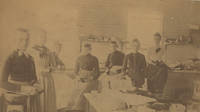
1880LIST124Lawrence 1880. Albumen photograph on card stock 7 ¾ x 4 ½ inches. Good. Working conditions were notoriously bad in Lawrence one of the industrial hubs of the textile industry in the late nineteenth century after the harnessing of the Merrimack River's water power in 1845. The city was a hub of immigration - mostly Irish - and many immigrants who were familiar with mill work flocked to the city in the 1850s. In 1860 an accident at the Pemberton Mill killed 145 workers. The Bread and Roses strike of 1912 also known as the Lawrence Textile Strike was the culmination of decades of poor working conditions. This uncommon occupational photograph of female mill workers gives scant clues as to the background of the workers or specifics of the factory. We find no record of the photographer a J.J. Greene based in Lawrence. The seven women pictured are mostly looking off-camera suggesting that the photographer had a companion. The date is unknown but the albumen cabinet card format and general feel suggest a date of 1880s-1890s. <br /> <br /> An uncommon occupational photograph of women in Lawrence's mills. Good condition overall fading to image and some light foxing verso with tears from tape removal. unknown books
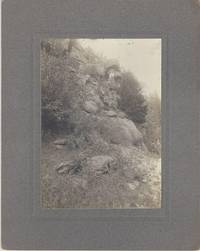
19001967Estes Park CO 1900. Large format gelatin silver photograph 17 cm x 12 cm on a plain gray mount 25 cm x 20 cm Very good. Image of two women and a boy standing among and atop of rocks in a canyon.<br/><br/>Manuscript note on the reverse "Rocks back of McLeod Cabin Shenstone - Big Thompson Canon - 'Perfect Tree' Aunt Florence Stewart Bertha McLeod Keith McLeod. unknown books
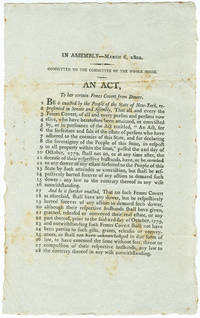
1802WRCAM55701Albany 1802. Letterpress broadside 13 1/2 x 8 1/4 inches. Docketed on verso. Old folds light foxing. Very good. Untrimmed. An unrecorded slip-bill printing of an act presented in the New York state legislature in 1802 to prevent widows of Loyalists from receiving dowers for confiscated property. It is evidence not only of continuing acrimony toward Loyalists and attempts to profit from their financial losses but also of continued legal efforts to keep women economically dependent in Federal-era America. This act was probably considered or presented in conjunction with an "Act to Facilitate the Discovery and Sale of the estates of Attainted Persons" that passed in the same session. That act allowed New Yorkers who discovered property owned by Loyalists and subject to forfeiture under its 1779 Forfeiture Act to receive a twenty- five percent share of the proceeds of the sale of this newly-discovered property. The present slip bill calls for preventing widows of deceased Loyalists from receiving any property deemed subject to confiscation. "Femes covert" is a legal term meaning simply "married woman." The final act as passed on March 31 1802 does not mention widows of deceased Loyalists but speaks simply of heirs to confiscated lands. <br> <br> "During the American Revolution many states passed laws allowing them to seize the property of known loyalists. So-called 'confiscation laws' effectively criminalized dissent against the American Revolution. The seizure and sale of loyalist property also raised revenue for the state by redistributing property from Loyalists to the rest of the community. Many new states established their legitimacy in the eyes of their constituents by depriving certain people of their right to property. New York built one of the most robust property confiscation regimes. In fact New Yorkers started seizing loyalist property even before the state ratified its Constitution. In March of 1777 the Provincial Convention - a provisional government - created in counties under Patriot control 'Committees of Sequestration' which seized property abandoned by Loyalists auctioned it off and sent those funds to the state treasurer.Alexander Hamilton made his legal career by representing former loyalists in lawsuits where they tried to reclaim seized property. Many of the loyalists Hamilton represented were quite wealthy and Hamilton believed these men and their capital would prove critical for building the United States. He wanted them to reintegrate into American society. Resolving disputes over property confiscation was a critical first step in accomplishing that goal and enabling the broader transition from violent revolution into routine civil government. Hamilton won in New York. Most other states also successfully reintegrated loyalists. The United States Constitution even includes a clause prohibiting bills of attainder the broad category of laws under which confiscation acts fell. It took away from democratic state legislature this coercive and punitive power to enforce political conformity" - Boonshoft. <br> <br> The legal discourse on attainder and the confiscation of Loyalists' property in the state of New York seems to be largely silent on the issue of widows' rights. The present broadside illuminates a dark corner of this rather difficult issue and helps bring to light yet another instance when the rights of women in early America were often null. <br> <br> Slip-bills' were printed in small numbers for the use of members of legislatures as a bill is being debated and considered. They are quite uncommon survivals and significant evidence of legislative intent and process. This slip-bill is unrecorded with no copies in auction records nor in OCLC. Mark Boonshoft "Dispossessing Loyalists and Redistributing Property in Revolutionary New York" posted on the New York Public Library Blog September 19 2016. unknown books
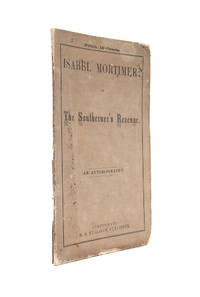
18584036Cincinnati: H. M. Rulison 1858. First edition. Original publisher's printed wrappers with price 15 cents and publisher misspelled on front wrapper Wright II 1328. Wrappers somewhat chipped and soiled with rear wrap tender. 36 pages with 2 woodcuts. The only copy on the market of this scarce and delicate title OCLC reports 7 institutionally preserved copies. Isabel Mortimer last appeared at auction over a century ago in 1916. <br/><br/>Scarce and understudied Isabel Mortimer's sensational tale of seduction and revenge in New Orleans offers opportunities for considering how this popular Victorian form not only dealt with representations of femininity generally but more specifically forms of white Southern femininity. On a general level sensation novels explored the "ideological constructs of female irresponsibility passivity explosiveness and inacapacity" by pushing them to their limits; as female characters encounter or engage in seduction and murder they "undermine the validity of these constructions of womanhood.By linking women's subversive behavior directly to the stifling economic and psychological conditions of their lives the novels reveal women's madness is not the result of their instability as the doctors claimed but of their confined lives" Zahn. In the case of Isabel Mortimer a privileged young woman living in antebellum New Orleans readers witness her response to being taken advantage of by "a professional gambler a married man!" who trifled with her feelings and her virtue "hoping in some covert manner to obtain possession of her fortune." As a commodity on a marriage market Isabel's prospects are ruined. But the story proves that she is not the passive recipient of men's advances; she will not perform shame nor will she accept her current status with genteel docility expected of Southern women. Instead she decides to take her behavior to the opposite extreme: "I resolved like a second Delilah to shear these proud sons of Adam of their boasted strength and humiliate them." Isabel places blame for her situation on a patriarchal system that infantilizes women then punishes them for failing to see and respond to danger. A knowing Delilah now she will punish the representatives of that system. Ultimately the troubling contradictions that exist within the small space of the novel urge readers not to take popular value systems at face value encouraging them to look for tears within the seams of social expectation. H. M. Rulison unknown books
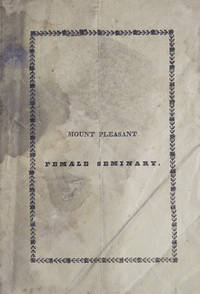
18313497Mount Pleasant: Roscoe Printer 1831. First edition. 8 pp. 1 vols. 8vo. Original printed yellow wrappers dampstained throughout. First edition. 8 pp. 1 vols. 8vo. NEITHER IN NUC NOR AMERICAN IMPRINTS. Prime of the well known family was made Principal of the Seminary in 1831 after the Ladies who conducted it were relieved of their duties. The curriculum included Latin Greek and French; Geology Mineralogy Botany and Zoology as well as Domestic Economy and Vocal Musick sic. Everything the well turned out young ladies of the seminary would need to know. Not in NUC. Not in American Imprints Roscoe, Printer unknown books
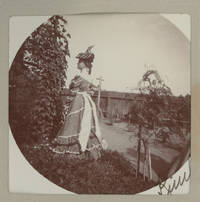
1899List805Los Angeles and Vicinity 1899. Oblong quarto green cloth 11 ¾ x 5 ¾ inches with 98 photographs. Very Good. Frances Coulter the daughter of a department store magnate in turn-of-the-century Los Angeles was a socialite who regularly made the society pages of Los Angeles newspapers. The collection of photographs here - preserved in their original oblong green cloth album - give a candid look at upper class California in the 1890s. The bulk of the images show Frances and her friends in varied scenes of society gaiety: dressed formally on the beaches staging goofy scenes including a mock proposal drinking from a water hose and many scenes involving costumes and umbrellas. Some of the photographs interestingly were taken with a Kodak No. 2 camera which was in production until 1895 producing distinct circular images. Some of the scenes show the beaches of Santa Monica. Overall the collection offers an uncommon look into Los Angeles at the end of the 1890s when the city had only 100000 residents. Frances's father B.F. Coulter was a minister from Kentucky and some of the photographs show the Coulters at home. A very good collection images with slight fading album with a slightly musty odor but overall well preserved. books
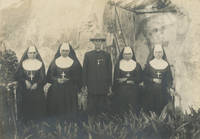
1900List518Most Cuba or Jacksonville 1900. Silver gelatin or albumen photographs various sizes ranging from 3 x 3 to 6 x 8 most captioned to verso. With handwritten manuscript four leaves discussing various diseases. The Spanish-American War was the first war in which nurses formed their own dedicated units as well as the first war in which they were accepted within military hospitals. While no nurses died in battle 153 died during the war from disease. Nurses were responsible for both treating soldiers as well as maintaining sanitary conditions within the camps. Conditions were often poor leading some to work until they were too sick to continue. <br /><br /> The current collection of photographs documents the experiences of a Mrs. Waters who was originally from Groton Massachusetts. The collection begins with a couple early photographs including a portrait as a young woman and a cyanotype of one of Waters' leprosy patients at Johns Hopkins Hospital in Baltimore. The next section shows Waters' training in Jacksonville Florida with either the Fourth or Seventh Army Corps at what was called Camp Cuba Libre both Corps trained there in 1898. The photographs of Jacksonville show life around the military camp and environs with some notable photographs of African-American inhabitants of the region. Three photographs quite notably show the Congregation of American Sisters a small group of American Indian nuns led by Reverend Francis Craft. The photographs taken in Cuba are notable for their portrayal of local life. Several photographs of military installations are taken around the "trocha" or line established by General Valeriana Weyler from Mariel to Majana. Another notable photograph is a cabinet card of a large group of nurses taken by the Havana photographer R. Testar. <br /><br /> The group overall shows very early photographic records of military nurses in training as well as a scarce photographic record from a woman in a combat situation. The photographs are generally well preserved in very good to excellent condition with some light fading. Accompanying the photographs is a four page manuscript essay presumably by Waters discussing leprosy as well as the booklet Spanish Phrase Book for American Soldiers and Sailors published by the National Relief Commission of Philadelphia. <br /><br /> Offered in partnership with Daniel / Oliver Gallery. books
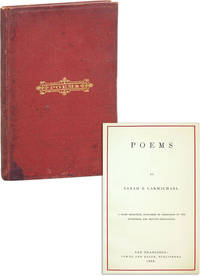
186645434San Francisco: Towne & Bacon 1866. First Edition. 12mo 18.5cm. Publisher's red cloth boards lettered in gilt on front cover; 72pp. Text printed within red borders throughout. External light wear and soil with cloth darkened at base of spine and bottom of rear cover; internally clean tight and unmarked and a pleasing Very Good copy overall. Privately-printed collection of poems by Sarah Carmichael a Mormon pioneer author who contributed so prolifically to the Deseret News in her youth that she came to be known as "The Sappho of Salt Lake City." According the the "Mormon Literature & Creative Arts" website maintained by Brigham Young University ".Carmichael's literary zenith was cut short when a year after her marriage she suffered an unspecified mental decline that may have been the result of a genetic problem her parents being "double cousins." She died in 1901 after more than thirty years of mental debilitation." <br/><br/>The current poems touch on a variety of topics with much descriptive of western and particularly California scenery; includes an ode on the death of Abraham Lincoln. Towne & Bacon unknown books
189750702Philadelphia: Jewish Publication Society of America 1897. First Edition. 8vo pp. 426 plus catalog. Indices. Green cloth stamped in gilt. Front hinge loose cover scuffed and little worn at edges o/w VG. Jewish Publication Society of America unknown books
189750348Philadelphia: Jewish Publication Society of America 1897. First Edition. 8vo pp. 426 plus catalog. Index. Dark green cloth stamped in gilt. Cover little worn at edges hinges beginning tender o/w VG. Jewish Publication Society of America unknown books
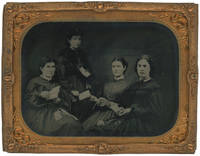
1860LIST0125American 1860. Tintype in case 3 ¼ x 4 ¼ inches. Fine. A quarter plate tintype of a women's sewing circle probably circa 1860s. Three women hold patterns while one sews. Ante-bellum sewing circles were often anti-slavery or missionary in nature though we can find no details here that offer clues as to the nature of this circle. A sharp image with good contrast fine condition. unknown books
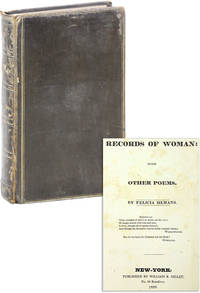
182846343New-York: William B. Gilley 1828. 12mo 17cm.; contemporary full brown gilt-ruled polished calf gilt spine; 324pp. Extremities a bit scuffed chipping to spine leather foxing throughout textblock slightly later clipping on the life of the author in French tipped to front free endpaper else Very Good and sound better than often seen. Published the same year as the Boston edition no priority. Poetry collection by the English author the first half devoted to paeans to women both fictional and historical. The work was her most popular documenting "the courage nobility and tragedy of women's lives; embedded in their painful situations lies a critique of the domestic ideal of patriarchal values" Paula R. Feldman "British Women Poets of the Romantic Era" 2001 p. 278. SHOEMAKER 33524. William B. Gilley unknown books
1873M7603Washington DC:: Government Printing Office 1873. 1873. 305 x 244 mm. 4to. iv 430 1 errata 1 blank pp. 19 plates 18 numbered and 1 un-numbered tables 3 figs. index; occasional light foxing. Modern maroon cloth gilt spine new end-leaves. Very good. Beginning at page 202 J. Harry Thompson gives a remarkable case report of a woman who had been admitted more than once to the Columbia Hospital for Women suffering from severe pain in the supra-pubic region with continuous urine dribbling. Having discovered a foreign object in the bladder Thompson removed it by an incision made in the viscous through the vagina with the patient under etherization. The foreign object turned out to be an iron handle of a crochet-needle around which had been wound and knotted hempen cord. The crochet-needle was encrusted with deposits of urine salts. The un-numbered plate gives an image of the crotchet-needle. Plates include illustrations of surgical procedures and instruments. Contributors include Samuel C. Busey on the diseases of children; D. Webster Prentiss on diseases of the eye and ear; and F. A. Ashford on the diseases of women. Rutkow GY20.1 Government Printing Office, 1873. hardcover books
1877List323Chicago: J.B. Westendorf 1877. Folio 10 ½ x 14 inches 6 pp. Very Good. J.B. Westendorf unknown books
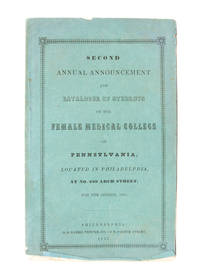
18512970Philadelphia: G.S. Harris 1851. First edition. Very Good . Original blue printed paper wraps printed to front. Some chipping and creasing to edges but overall intact and undamaged despite being quite delicate. Light scattered foxing throughout. Ownership signature of the college's original dean N.R. Mosely struck out at the top of the Faculty list on page 4; pencil ticks next to the names of several students listed in the catalogue on page 6. Exceptionally rare OCLC lists copies of this Announcement at only 2 institutions.<br/><br/>Only one year after Dr. Elizabeth Blackwell graduated valedictorian and became the first female M.D. in the U.S. the Female Medical College of Pennsylvania opened its doors. Located in Philadelphia it was the only the second school to open with the mission of training women in medicine -- having been preceded by the New England Female Medical College two years earlier in 1848. Founded by Quaker abolitionist and Underground Railroad activists who believed that women could make exceptional doctors "the college provided rare opportunities for women to teach perform research manage a medical school and with the eventual establishment of the Woman's Hospital in 1861 learn and practice in a hospital setting. It was the longest-lasting all-women medical school in the nation until it became coeducational in 1970" Mandell. The present Announcement predates these growths however showing the roots from which they emerged. One year running and the faculty remain largely male because there has yet to be an inaugural graduating class this would come in 1852; but already a female student Hannah E. Longshore is listed as a Demonstrator in Anatomy. Indeed Longshore and her sister Anna would both be part of the inaugural class of the college with the latter going on the author Discourses to Women in Medical Subjects 1897. Indeed the majority of women listed in this catalogue went on to become doctors even when it took time -- as it did for Hannah W. Ellis and Susanna H. Ellis both listed among the graduates of the 1865 class. 12 pages in all this scarce pamphlet contains Officers Corporators Faculty and Students of the school; an Announcement on the school's missions and accomplishments; information on Specialties available; Terms of enrollment; and a list of required Textbooks. It also conveys the excitement optimism and pride of those involved. "The Faculty of the Female Medical College of Pennsylvania are inspired by very different feelings from those that attended their efforts one year ago. Then they were about to enter into an untried path to engage in a great experiment.But that which was an experiment is an experiment no longer.give a woman knowledge commensurate with her natural qualifications enable her to go forth healing the sick and comforting the afflicted and she will bless the world." A rare survivor documenting that pivotal moment when women had been given the chance to prove their intellect rose to the challenge and made the future of the next female students more secure. Very Good . G.S. Harris unknown books
189863866Raleigh NC 1898. Large format photograph 7 x 9 1/4 inches mounted on larger card stock 11 x 14 inches picturing 10 older women faculty and staff members one older man and 44 female students all posed in four rows in front of a campus building set among tall trees; verso with manuscript names for those pictured almost all with home towns. Founded in 1842 as a school for young ladies with the support of the Episcopal Church St. Mary's has operated continuously since presently as college preparatory school it included two years of college through 1998. Mount rubbed eroded in spots upper right corner broken off affecting three names on verso. 10340. <br/><br/> unknown books