257 résultats
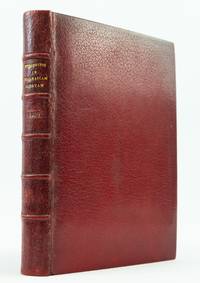
1539ST20126Pavia: Giovanni Maria Simonetta 1539. FIRST EDITION Second Issue. 210 x 147 mm. 8 1/2 x 5 3/4". 215 leaves. <br/> Restrained 19th century crimson morocco by Trautz-Bauzonnet stamp-signed on front turn-in raised bands spine with gilt text wide turn-ins gilt marbled endpapers all edges marbled and gilt. A small leather label with the year affixed to the spine. With two woodcuts depicting the "phagotus" instrument. Title with an attractive pictorial woodcut border. Printed in black and red. Occasional early ink marginalia; early ink ownership inscription to lower margin of colophon: "Hieronymi Pinzoni Cantoris Cremonensis et praepositi." An Armenian alphabet is inscribed in ink on the rear flyleaf dated March 28 1540. Mortimer 20; Adams I 957; Brunet I 229; Graesse I 59. Spine and edges slightly darkened joints a bit rubbed but without any cracking and the wear skillfully retouched. Only scattered very minor stains and soiling--quite a clean copy internally the leaves very fresh.<br/> <br/> This volume features one of the strangest combinations of a gravely serious treatise and an oddball curiosity: it comprises a landmark study of linguistics as the first European work concerning Syriac and Armenian--along with 36 other languages; and incongruously it also describes and pictures a contemporaneous musical instrument whose design was sufficiently peculiar to limit its interest to just one person the book's dedicatee. Our work originated when Teseo Ambrogio degli Albonesi 1469-1540 a lawyer scholar and canon of the church of Saint John of the Lateran was tasked with the publication of a Syriac manuscript psalter brought by a Maronite contingent to the Fifth Lateran Council. This was not merely a minor exercise in church outreach: 16th century scholars believed Syriac as a derivative of Aramaic to be the language of Christ. While the present work is of great interest because of its Syriac and Armenian content Ambrogio did not limit himself to those tongues: the text includes in particular short studies of Samaritan Arabic Coptic Cyrillic and Ethiopic. Of these some alphabets are provided in print in types specifically designed by Ambrogio and others are supplied in manuscript in spaces left in the text for that purpose. Ambrogio's sample texts range from simple alphabets to biblical passages to a letter purportedly from the Devil! In addition to the serious work done by our volume the text here deviates to include a fascinating musical surprise. Dedicated to the author's uncle Afranio degle Albonesi ca. 1465 - ca. 1540 a fellow church canon and apparently something of an eccentric the work includes an illustrated section on the "phagotus" a musical instrument of Afranio's own invention. Described by composer John Pickard as a "remarkable monstrosity" the phagotus combined features of the bagpipe and the bassoon. It never gained widespread popularity though not for lack of trying on Afranio's part--he once even performed with it for the duke of Ferrara Alfonso d'Este at a banquet in Mantua. Our copy in a pleasing though unassuming binding by one of the foremost 19th century French workshops was owned during its early history by yet another prominent churchman--Girolamo Pinzoni d. 1554 canon of the church of San Leonardo in Cremona. Giovanni Maria Simonetta unknown
175755793London: Printed for T. Heath and J. Nourse in the Strand: J. Hodges on London-Bridge and J. Fuller in Ave-mary-Lane 1757. 8vo. xx 188 pp. With 1 large folding copper-engraved frontisp. of mathematical instruments 8 copper engraved plates occasional minor closed tears creasing to the fore-edges of the plates couple of the joints starting in the folds. Nineteenth-century half-calf over marbled boards marbled endpapers hinges repaired minor thumbing and darkening to some leaves otherwise a VG copy. Second edition of this well-written mathematics instrument manual incorporating a short history of 44 previous works on mathematical instruments spanning 200 years with specific descriptions of particular instruments and their development. This work which is considered by Erwin Tomash to be “one of the most complete descriptions of a set of portable mathematical instruments extant†was expanded by over a third to detail the use of Gunners Calipers or a Gunter’s scale for navigation purposes into a type of slide rule which were made and sold by Nairne & Blunt in London. Robertson 1716-1776 who is perhaps best remembered for his Elements of Navigation considered one of the finest English-language navigation education manuals of the 18th century Tomash & Williams R100; Cajori A History of the Logarithmic Slide Rule and Allied Instruments pp. 32-33; See: Ellerton & Clements Samuel Pepys Isaac Newton James Hodgson and the Beginnings of Secondary School Mathematics: A History of the Royal Mathematical School within Christ’s Hospital London 1673-1868 2017 pp. 50-52 110 146 218. Printed for T. Heath and J. Nourse in the Strand: J. Hodges on London-Bridge, and J. Fuller in Ave-mary-Lane, hardcover
2240452 x 40 mm. With Beham's initials in the plate to upper left. <br /> <br /> A fine impression on laid paper with thread margins. A rare contemporary version in reverse of the print first published in ca. 1537. Pauli: Hans Sebald Beham Ein Kritisches Verzeichnis 191a. Bartsch 190. Kinsky: Music in Pictures p. 80 no. 2 the original version. unknown
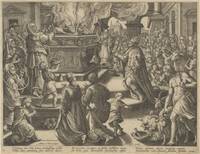
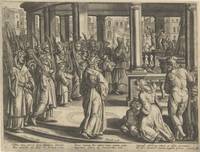
159038903Antwerp: Philip Galle 1590. Solomon takes the Tabernacle into the Temple the Levites singing. 2 Chronicles v 4-6. Plate 9.<br /> <br /> The engraving depicts a biblical scene and incorporates an illustration of trumpets timbrel harp horns drums flute rebec and cymbals with reference in Latin text beneath the image to the musical instruments depicted. Ca. 220 x 285 mm with narrow margins. <br /> <br /> Minor wear; occasional foxing; laid down to mounting paper. In very good condition overall. The Encomium Musices Eulogy of Music is an important set of highly detailed late 16th century engravings published in Antwerp ca. 1590 by Philip Galle 1537-1612 best-known as a publisher of Old Master prints; the engraver of this particular plate Collaert was Galle's son-in-law. The suite of engravings is thought by some to commemorate the rededication of Antwerp's churches to Roman Catholicism following the capture of the city by Alexander Farnese in 1585. Philip Galle unknown
159038907Antwerp: Philip Galle 1590. Inauguration of Jerusalem's Walls by Nehemiah. Nehemiah xii 27-39. Plate 13.<br /> <br /> The engraving depicts a biblical scene and incorporates an illustration of cymbals harps trumpets and horns with reference in Latin text beneath the image to the musical instruments depicted. Ca. 220 x 285 mm with narrow margins. <br /> <br /> Minor wear; occasional foxing; laid down to mounting paper. In very good condition overall. The Encomium Musices Eulogy of Music is an important set of highly detailed late 16th century engravings published in Antwerp ca. 1590 by Philip Galle 1537-1612 best-known as a publisher of Old Master prints; the engraver of this particular plate Collaert was Galle's son-in-law. The suite of engravings is thought by some to commemorate the rededication of Antwerp's churches to Roman Catholicism following the capture of the city by Alexander Farnese in 1585. Philip Galle unknown
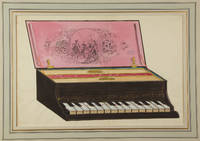
37111Executed in ink pencil and gouache highlighted in gold. 294 x 443 mm. On wove paper.<br /> <br /> The drawing depicts a 2-octave piano in a wooden case the interior of the hinged top decorated with a scene of performing musicians.<br /> <br /> Slightly worn and soiled; creased at central fold. In very good condition overall. <br /> <br /> Most likely of German or Austrian provenance ca. 1860-80. unknown
19972091202133200900Gyosei 1997. Soft Cover. Fine. Volume: 1 Gyosei paperback
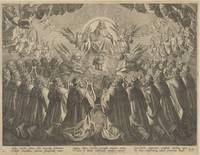
159038909Antwerp: Philip Galle 1590. The Glory of the Lamb. Revelations v 8 and xv 7-8. Plate 18.<br /> <br /> The engraving depicts a biblical scene and incorporates an illustration of multiple harps with reference in Latin text beneath the image to the musical instruments depicted. Ca. 220 x 285 mm with narrow margins. <br /> <br /> Minor wear; occasional foxing; laid down to mounting paper. In very good condition overall. The Encomium Musices Eulogy of Music is an important set of highly detailed late 16th century engravings published in Antwerp ca. 1590 by Philip Galle 1537-1612 best-known as a publisher of Old Master prints; the engraver of this particular plate Collaert was Galle's son-in-law. The suite of engravings is thought by some to commemorate the rededication of Antwerp's churches to Roman Catholicism following the capture of the city by Alexander Farnese in 1585. Philip Galle unknown
159038905Antwerp: Philip Galle 1590. Sacrifice of King Asa People of Judah rejoicing. 2 Chronicles xv 10-15. Plate 11.<br /> <br /> The engraving depicts a biblical scene and incorporates an illustration of trumpets cornets horns timbrels and a flute with reference in Latin text beneath the image to the musical instruments depicted. Ca. 220 x 285 mm with narrow margins. <br /> <br /> Minor wear; occasional foxing; laid down to mounting paper. In very good condition overall. The Encomium Musices Eulogy of Music is an important set of highly detailed late 16th century engravings published in Antwerp ca. 1590 by Philip Galle 1537-1612 best-known as a publisher of Old Master prints; the engraver of this particular plate Collaert was Galle's son-in-law. The suite of engravings is thought by some to commemorate the rededication of Antwerp's churches to Roman Catholicism following the capture of the city by Alexander Farnese in 1585. Philip Galle unknown
159038906Antwerp: Philip Galle 1590. Coronation of King Joas. 2 Chronicles xxiii 11. Plate 12.<br /> <br /> The engraving depicts a biblical scene and incorporates an illustration of trumpets harp horn drums cymbals timbrel and triangle with reference in Latin text beneath the image to the musical instruments depicted. Ca. 220 x 285 mm with narrow margins. <br /> <br /> Minor wear; occasional foxing; laid down to mounting paper. In very good condition overall. The Encomium Musices Eulogy of Music is an important set of highly detailed late 16th century engravings published in Antwerp ca. 1590 by Philip Galle 1537-1612 best-known as a publisher of Old Master prints; the engraver of this particular plate Collaert was Galle's son-in-law. The suite of engravings is thought by some to commemorate the rededication of Antwerp's churches to Roman Catholicism following the capture of the city by Alexander Farnese in 1585. Philip Galle unknown
159030831Antwerp: Philip Galle 1590. Saul among the Prophets I Samuel x 10-11. Plate 5.<br /> <br /> The engraving depicts a biblical scene and incorporates an illustration of musical instruments including timbrels harp drums cornet and trumpet with reference in Latin text beneath the image to the musical instruments depicted. Ca. 220 x 285 mm with narrow margins. <br /> <br /> Minor wear; occasional foxing; laid down to mounting paper. In very good condition overall. Philip Galle unknown
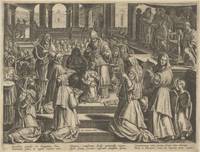
159038908Antwerp: Philip Galle 1590. Rededication of the Temple by Simon Maccabaeus. I Maccabaeus Apocrypha xiii 49-51. Plate 15.<br /> <br /> The engraving depicts a biblical scene and incorporates an illustration of harp timbrels trumpet horn and flute with reference in Latin text beneath the image to the musical instruments depicted. Ca. 220 x 285 mm with narrow margins. <br /> <br /> Minor wear; occasional foxing; laid down to mounting paper. In very good condition overall. The Encomium Musices Eulogy of Music is an important set of highly detailed late 16th century engravings published in Antwerp ca. 1590 by Philip Galle 1537-1612 best-known as a publisher of Old Master prints; the engraver of this particular plate Collaert was Galle's son-in-law. The suite of engravings is thought by some to commemorate the rededication of Antwerp's churches to Roman Catholicism following the capture of the city by Alexander Farnese in 1585. Philip Galle unknown
185529821Paris 1855. Image size 156 x 198 sheet size 197 x 238. Printed on china paper and laid down to mounting sheet. Signed by the artist. <br /> <br /> This humourous scene depicts six musicians plyaing the violin flute double bass trombone and clarinet. A double bass player offers amorous advances to a young lady holding a tray of drinks a dog and cat play in the foreground and there is a general sense of confusion in the music performance.<br /> <br /> Mount browned. unknown
196461504Saginaw MI & Indianapolis IN: Trippensee Planetarium Co. George F. Cram Co. ca. 1964. Planetarium Orrery stands 12.5 in. tall at the top of the central Sun made from yellow plastic mounts on a 7.5 in. diameter moulded plastic base the model extends 22 in. when fully extended with Mercury on opposite side of the Sun from Moon extending out from central Earth. The Earth is a paper-covered 4 in. globe mounted on a gear mechanism mounted with wooden painted Moon mounted on metal rod as is the Venus globe which rotates around the moon all of which are driven by chains when handle underneath the swing arm is moved. Moulded plastic base has iron weight bolted underneath minor closed crack to the outer fore-edge of the base minor rippling to paint finish at base chipping to plastic bushing at base of Earth & Lunar globes still an exceptional piece in beautiful working condition. The Trippensee Planetarium tellurion or “Elementary Planetarium†has been produced for over 90 years and offers a wonderful astronomical mechanism depicting how day night and the seasons are caused by the movement of the Earth on its axis and its orbit around the Sun. It shows solar and lunar eclipses the motion of Venus in relation to the Sun and the rotation. The globe shows the major continents and cities with no internal political divisions except for the continental United States & Alaska shaded in green on the North American continent. The Tellurion or Tellurium was patented by Alexander Laing originally in 1897 as an educational device to be used in schools. He set up operations in Detroit MI and was later bought out by the Trippensee brothers who introduced their own version with a more reliable bicycle-style chain and gear drive and they sold them steadily. In order to further diversify the company they also built the Eddie Rickenbacker automobile for the E-M-F Company until 1927 when the Everitt Company went under. Trippensee brothers moved later to Saginaw Michigan where they occupied a three-story building at the corner of Cass and South Hamilton staying in business until 1999 when they were purchased by Science First. Their Orrery planetariums were made originally from wood and brass then Bakelite and finally plastics. See: Mark Theobald Coachbuiltcom Trippensee Manufacturing Company Rickenbacker Motors. Trippensee Planetarium Co., George F. Cram Co., unknown
191260283New Orleans LA: The McDermott Surgical Instrument Co. Ltd. 736-738 Poydras St. ca. 1912. Tall 8vo. 2 576 xvi pp. “Section G†printed on coated paper stock. With well over 1500 photographic and woodcut-engraved text illustrations throughout. Dark green publisher’s cloth Arts & Crafts decoration front cover black lettering front cover & spine minor scuffing edgewear minor bumping to corners inner hinges starting still VG- sound copy. Second edition stated revised & updated of this surprisingly scarce Louisiana medical supply company’s offerings in the Progressive Era. This catalogue includes a remarkable range of early 20th-Century medical equipment ranging from microscopes fitted with new electric arc lamp to electric centrifuges for testing hypodermic syringes antitoxine syringes anaesthetic equipment electrical illuminating apparatus electro-therapeutic wall cabins X-Ray machines portable radiographic Scheidel cases and much more. The McDermott Surgical Instrument Co. Ltd. was owned and directed by T.C. Hills 1867-1930 and Edwin J. Sack initially on Charles Street specializing in surgical instruments artificial limbs trusses medical equipment and more. Founded originally at the end of the 19th-Century and specializing in artificial limbs and trusses by 1910 the company had substantially expanded and moved to 736-738 Poydras St. expanding their offerings and their reach. Worldcat does locate over 10 locations for this catalogue however the collation is often not matching and the dating incorrect. The McDermott Surgical Instrument Co., Ltd., 736-738 Poydras St., hardcover
191658803Boston: L.E. Knott Apparatus Co. 1916. 4to. 8 507 1 pp. Four pp. frontisp. insert announcing new building in Cambridge with over 1000 text illustrations diagrams woodcut engravings. Brick-red publisher’s cloth black lettering & company logo on front cover minor bumping to corners minor sunning to spine edgewear some minor soiling toning to endpapers still VG copy w/ publisher’s notice mounted front pastedown. First edition of this uncommon and one of the most expansive scientific instrument catalogues ever issued by the famed New England company. The Knott company organized under this name in 1895 targeted universities high schools laboratories manufacturers and inventors across the World. Along with surveying navigation and mathematical instruments they also sold water turbines Bell glasses demonstration jars orreries lantern slides solar calculators 3-dimensional geography models and electrical equipment. Functioning and sectional model steam engines were available colour apparatus dynamos and so much more could all be ordered. Worldcat locates 5 copies Temple Getty U of Cincinnati U of N. TX Am. Inst. Physics. L.E. Knott Apparatus Co., hardcover
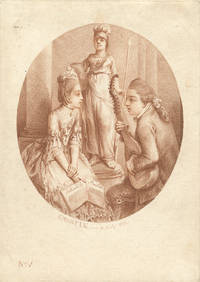
177237112London 1772. 235 x 168 mm. On laid paper with "No. V" printed at lower left.<br /> <br /> A female singer holds an open music book on her lap entitled "Pastorale by Musolini." A Signor Mussolini is recorded as a singer and mandolin player making his first public appearance at Covent Garden on 27 April 1773 "playing a concerto on the double mandolin and royal guitar and accompanying a young gentlewoman in song." Highfill et al. Vol. 10 p. 407. unknown
ANAIS-0070637512McGraw-Hill Inc.US. hardcover. Good. 1.8x09x2.1. Buy with confidence. Excellent Customer Service & Return policy. McGraw-Hill Inc.,US hardcover
183655778London: Sold for the Author by Messrs. Troughton and Simms 136 Fleet Street 1836. 8vo. xi 1 118 pp. 10 pp. of tables plus 7 1 pp. catalogue. With numerous woodcut engravings text diagrams illustrations. Quarger-blue publisher’s cloth over gray boards printed label mounted front cover minor edgewear slight bumping to corners minor dustsoiling inner hinges expertly repaired still a VG presentation copy from the author to William Figg 1800-1866 well-known Lewes Sussex surveyor who includes pencil note corrections on last page. Second edition revised of this informative work by the author details the use of the Land Chain Surveying Cross Prismatic Compass Theodolite Spirit Level Sextant Transit Instrument and others. Simms 1803-1865 a surveyor and civil engineer of the Royal Observatory Greenwich and formerly with the Ordnance Survey was the son of William Simms d.1860 scientific instrument maker with Edward Troughton joined the Southern Eastern Railway Company as resident engineer in 1836 and oversaw the construction of the Bletchingley and Saltwood tunnels. Sold, for the Author by Messrs. Troughton and Simms, 136 Fleet Street, hardcover
BAY_00_SH_021213McGraw-Hill. Used - Like New. Text block pages boards and binding are pristine dust wrapper is like new. Supporting Bay Area Friends of the Library since 2010. Well packaged and promptly shipped. McGraw-Hill hardcover
2009New-May2-2017--17221Pearson 12/28/2009. Paperback. New. 0x0x0. New US Edition Textbook Ships with Emailed Tracking from USA Pearson paperback
191054930Chicago: Hobart M. Cable Co. ca. 1910. Oblong 8vo. Seven linen-backed silver gelatin photographs of airbrushed images including frontisp. birds-eye view of factory. Preserved in original leather pocket portfolio gilt stamping for Cable Co. on inside pockets rounded corners NF exemplar from the collection of Charles Spurgeon Onderdonk Jr. 1889-1958 son of a Colorado rancher and later manufacturer who became a piano salesman before World War I. First edition thus of this scarce salesman sample photo portfolio for Hobart M. Cable pianos. Founded originally in 1900 in LaPorte Indiana they still used the Cable Co. piano manufacturing factory in Chicago which was also used by Fayette S. Cable and H.D. Cable producing pianos. The Hobart Cable pianos are known for their musical excellence attractive cabinet work and remarkably sweet and pure tone qualities combined with unusual power. The pianos featured in these images include the Style M which was double veneered ivory keys copper wound bass strings and full swinging music desk about 5.5 feet in length; Style C which was also available in Extra Fancy figured mahogany or walnut and featured Poehlman steel music wire; as well as a beautiful Style G Player Piano quite similar to the company Style A. The company remained in business until the mid-1960s were absorbed by Story & Clark Piano Company and later the brand was acquired by the American SeJung Corp. No copies located in Worldcat; See: Hobart M. Cable Bluebook of Pianos 2018; Hobart M. Cable Pianos Total Piano Care 2018. Hobart M. Cable Co., hardcover
189852564Denver CO: Wm. Ainsworth 2151 Lawrence St. 1898. Oblong 8vo. 24 pp. Text illustrations & diagrams throughout. Pink-coloured printed softcovers cover art of assayers scale on front and back covers minor shelfwear minor tidemark to upper fore-edges slight sunning still VG- copy w/ original printed mailing envelope addressed to Joe Seliger 1868-1947 former stenographer secretary and metalworker for Honeyman Hardware Co. Portland OR. First edition of this very rare catalogue detailing the precision balances for mineral assayers manufacturers chemists jewelers and pulp paper makers. Ainsworth 1850-1917 began as a fine watchmaker steam engineer toolmaker and distiller who moved to Denver in 1877 where he initially began working for A.B. Ingols Jewelry. By the 1880s he was operating a jewelry store repairing balance scales for miners and assayers because at the time these were produced in England and required months of turnaround time for them to be shipped back and repaired prior to Ainsworth. Ainsworth developed his own excellent balance as presented in this catalogue which featured a shortened balance beam speeding up the assaying process and were much preferred by Western assay offices and miners. He continued to operate as a watchmaker and clock repairer but by 1895 began producing Brunton’s newly patented Pocket Transit which together with the balances proved to be a very successful combination with his first Catalogues A & B depicting both products issued in 1898. The company would continue to grow after his death and would be purchased by Xavier Science Corporation and now owned by the Denver Instrument Company. No copies located in Worldcat; See: John Shannon & Geraldine Shannon The Assay Balance: Its Evolution and the History of the Companies That Made Them -- William Ainsworth Robert A. Paselk Scientific Instrument Museum Humboldt State Univ. Dept. of Chemistry 1999. Wm. Ainsworth, 2151 Lawrence St., paperback
20092081502112500011B5 Japan Folk Instruments Association 2009. Soft Cover. Fine. Number of books: 1 B5 Japan Folk Instruments Association paperback
188855798Troy NY: Published by W. & L.E. Gurley 1888. 12mo. viii 9-362 pp. Woodcut-engraved frontisp. 100s of text illustrations & diagrams. Brick-red coloured pebbled publisher’s cloth gilt lettering stamped on front cover very minor shelfwear slight rubbing front inner hinge starting still VG copy w/ former ownership markings & annotations on ffep. Twenty-seventh edition of this excellent handbook and catalogue from the largest manufacturer of engineering and surveying instruments in the United Stated during the 19th-century helping to fuel the massive expansion of railroads and development across the West. The company produced levels chains railroad compasses solar compasses surveyor’s compasses transits and more. Published by W. & L.E. Gurley, hardcover