John H. ClarkeMareMagnum

646 résultats
About The Book : The Revolution in Medicine was the seventh Hahnemannian oration delivered by John H. Clarke on 5th October, 1886 at the London Homoeopathic Hospital. In his oration, Clarke has expressed the journey of Hahnemann from his birth place Meissen, in Saxony, family environment, his struggle, accomplishments and the prevailing medical scenario of that era. Clarke has categorised his oration under 4 headings where he has explained how Hahnemann had revolutionised the medical world. The oration covers all aspects of Hahnemann, the man, the physician, translator, medical philosopher, founder of scientific therapeutics, about his contribution and literary work. The headings of the oration are (a) Darkness & Dawn Night {1786, Hahnemann, A Reformer Not A Destroyer, In The Valley Of The Shadow, Dawn} (b) The Three Fold Work {Cleansing The Augean Stable, Constructive And Defensive, Unexpected Allies} (c) The Revolution & The Man {1786 And 1886, Medical Dogberry’s, The Man} (d) Our Inheritance {The Revolution Not Complete, “Medical Ethics”, En Avant!. About The Author : John Henry Clarke (1853 –1931) was an English classical homeopath. He was also, arguably, the most important anti-Semite in Great Britain. He led The Britons, an anti-Semitic organisation. Educated at the University of Edinburgh, he received his medical degree in 1877. As a physician Clarke had his own clinic in Piccadilly, London, but he also was a consultant at the London Homeopathic Hospital and did research into new homeopathic remedies. The Title 'The Revolution in Medicine written/authored/edited by John H. Clarke', published in the year 2022. The ISBN 9788121265959 is assigned to the Paperback version of this title. This book has total of pp. 101 (Pages). The publisher of this title is Gyan Publishing House. This Book is in English. The subject of this book is HOMEOPATHY . Size of the book is 13.34 x 21.59 cms Vol:-
ABOUT THE BOOK:- The Bowel Nosodes are a series of homeopathic remedies made from human intestinal flora, developed first by Dr. Edward Bach and continued by John Patterson and his wife, Elizabeth from 1920 until 1960. These remedies were used chiefly in British Homeopathic practice but after some years of neglect they are gaining more favour, especially now with the issues of allergies and antibiotic damage prevalent in today’s patients. Their field of action is much broader than their name suggests. The methodology of using the bowel nosodes is illustrated with nine case histories from the human world and ten from the animal, demon strating the common guidelines that are applicable to all species. The second edition contains new cases and an extra chapter offering readers an even greater insight into this fascinating area of homeopathic practices. ABOUT THE AUTHOR:- John Paterson (1890-1954) was an orthodox Physician who converted to homeopathy. He was a Microbiologist, who was married to Elizabeth Paterson, also a Microbiologist. They both worked at the Glasgow Homeopathic Hospital and at the Royal London Homeopathic Hospital. He was President of International Homeopathic Medical League in 1939. He rightly understood that bowel bacteria were scavengers of disease, and so could be of use in homeopathy. John Paterson lived at time when ‘cross pollenation’ between homeopaths and allopaths was possible and both homeopaths and allopaths were industriously researching pathology and bacteriology at this time. The Title 'The Bowel Nosodes written/authored/edited by John Paterson', published in the year 2017. The ISBN 9789351285502 is assigned to the Paperback version of this title. This book has total of pp. 20 (Pages). The publisher of this title is Kalpaz Publications. This Book is in English. The subject of this book is Homeopathy. Size of the book is 13.34 x 21.59 cms Vol:-
About The Book : Hahnemann wrote this book in order to document his new system of medicine, "Homoeopathy". In 1796, some six years after Hahnemann first experienced the effect of Peruvian Bark Cinchona in 1790 he published an article under the title "Essay on a New Principle".After conducting personal observations and experiments, Hahnemann published his new account of homoeopathy in book form in 1810. The original title of the book was Organon of Rational Art of Healing. In 1819, the second edition was published, with the revised title Organon of Healing Art. The third edition (1824) and fourth edition (1829) kept this new title, while the latter introduced Hahnemann's "Theory of Chronic Diseases".The fifth edition was published in 1833, and included the doctrine of vital force and drug-dynamization. The sixth edition, written in 1842, a year before his death, was retitled Organon of Medicine and not published until 1921. About The Author : Samuel Hahnemann, in full Christian Friedrich Samuel Hahnemann, (1755-1843), German physician, founder of the system of therapeutics known as homeopathy. Hahnemann was dissatisfied with the state of medicine in his time, and particularly objected to practices such as bloodletting. He claimed that the medicine he had been taught to practice sometimes did the patient more harm than good: After giving up his practice around 1784, Hahnemann made his living chiefly as a writer and translator, while resolving also to investigate the causes of medicine's alleged errors. While translating William Cullen's A Treatise on the Materia Medica, Hahnemann encountered the claim that cinchona, the bark of a Peruvian tree, was effective in treating malaria because of its astringency. Hahnemann believed that other astringent substances are not effective against malaria and began to research cinchona's effect on the human body by self-application. Noting that the drug induced malaria-like symptoms in himself, he concluded that it would do so in any healthy individual. This led him to postulate a healing principle: "that which can produce a set of symptoms in a healthy individual, can treat a sick individual who is manifesting a similar set of symptoms." This principle, like cures like, became the basis for an approach to medicine which he gave the name homeopathy. He first used the term homeopathy in his essay Indications of the Homeopathic Employment of Medicines in Ordinary Practice, published in Hufeland's Journal in 1807. This translation brings about new and original expressions of Dr. Hahnemann's original work. The expressions, figures of speech and even the tautological style of the original book has been retained by Dr. C. Wesselhoeft during this translation. The Title 'ORGANON OF THE ART OF HEALING written/authored/edited by SAMUEL HAHNEMANN, C. Wesselhoeft', published in the year 2022. The ISBN 9788121266994 is assigned to the Paperback version of this title. This book has total of pp. 252 (Pages). The publisher of this title is Gyan Publishing House. This Book is in English. The subject of this book is HOMEOPATHY . Size of the book is 13.34 x 21.59 cms Vol:-
About The Book : The Genius of Homoeopathy comprise of a series of lectures delivered at the New York Homoeopathic Medical College. Close was a student of P.P. Wells and Bernhardt Fincke. This book is one of the most clear and lucid compilation of the philosophical basis of homoeopathic study. It is written with extreme clarity. This conspicuous work by a stalwart explains the principles and philosophy of homeopathic system of medicine. It thoroughly explains the concept of life, health and disease. It discusses Hahnemannian principles from a modern standpoint. It will prove beneficial to all the students and practitioners to master the art and science of homeopathy. About The Author : Dr. Stuart Close (1860-1929) came to study homeopathy after the death of his father in 1879. His mother remarried a homoeopathic physician who turned Close's interests from law to medicine.His stepfather helped him study the Organon and he attended medical school in California for two years. Finishing his studies at New York Homeopathic College he graduated in 1885. Completing his homeopathic education. Close preceptored with B. Fincke and P. P. Wells. Setting up practice in Brooklyn, Dr. Close went on to found the Brooklyn Homoeopathic Union in 1897. This group devoted itself to the study of pure Hahnemannian homeopathy. In 1905 Dr. Close was elected president of the International Hahnemannian Association. He was also the editor of the Department of Homeopathic Philosophy for the Homeopathic Recorder. Dr. Close taught homeopathic philosophy at New York Homeopathic Medical College from 1909-1913.Dr. Close's lectures at New York Homeopathic were first published in the Homeopathic Recorder and later formed the basis for his masterpiece on homeopathic philosophy, The Genius of Homeopathy.The homeopathic library of Dr. Close was reputed to be the one of the best in the country. He was an accomplished musician as well as an avid genealogist. The Title 'The Genius of Homoeopathy written/authored/edited by Stuart Close', published in the year 2022. The ISBN 9788121265911 is assigned to the Paperback version of this title. This book has total of pp. 292 (Pages). The publisher of this title is Gyan Publishing House. This Book is in English. The subject of this book is HOMEOPATHY . Size of the book is 13.34 x 21.59 cms Vol:-
Roy., 4to., First Edition, with a frontispiece and many hundreds of coloured and monochrome reproductions in the text; burgundy cloth, gilt back, a fine copy in unclipped dustwrapper.
2280Ed. de la Marque, no 2 - s.d. - in-16o (à l'italienne) : 4 pp. de texte + 12 cartes sous pap. protecteur - couv. décollée.
19888630ASchaffhausen, Stemmle, 1988. Gr.8°. Orig.-Pappband mit illustr. Orig.-Umschlag mit Front- und RTitel.
15170, Brussel, Kredietbank, 1968, Paperback, geillustreerde papieromslag, 255 x 185mm., 96pp., 24 platen hors texto in z/w.
Vintage photographs of the Danforth in mailable Postcard format [6.5x4"] bound together with a booklet describing the buildings and streets in the neighbourhood. [13p.of text including bibliography + 9 mailable Postcards ] Book
New English Paperback. Pbo. Large 8vo. (22 x 22 cm). In Turkish. [42] p. Color and b/w ills. Beyoglu Belediyesi 155. Yil Beyoglu Bellegi Arsiv Sergisi. Efemera sergisi. 2-25 Agustos 2012. [Exhibition catalogue].
36851ABCa. 12 x 7 cm. [2 Warenabbildungen]
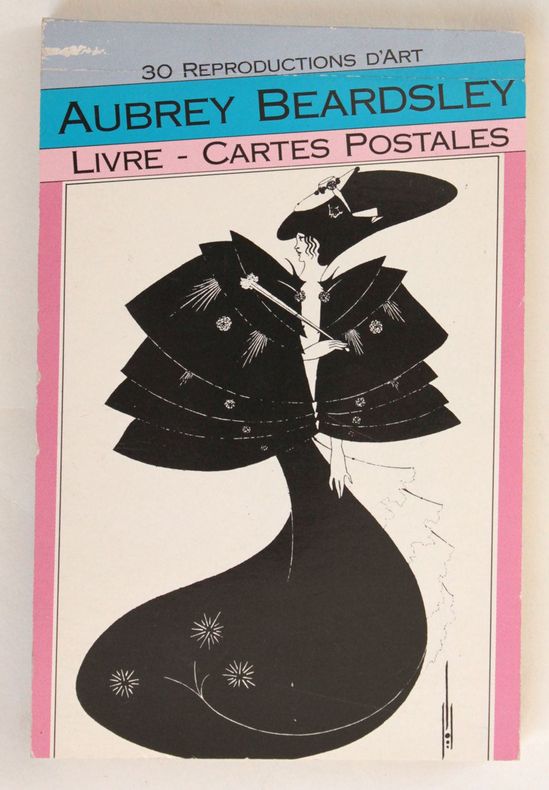
19903191Paris Bookking international 1990 in-16 broché Paris, Bookking international, 1990. 16 x 10,5 cm, 2 ff. n. ch. - 30 cartes postales détachables en noir, broché sous couverture illustrée.
1st edition. VG pbk. ISBN 0860019225. 19013. eng
No marks or inscriptions and no creasing. A set of 30 postcards in fine unused condition. They are attached to the book and can be removed and used for messages by post or for display puposes. 32pp.
No marks or inscriptions and no creasing to cards. A set of 30 postcards in fine unused condition. They are attached to the book and can be removed and used for messages by post or for display puposes. 32pp.
19979477München. Prestel Verlag GmbH + Co., 1997. 18 Postkarten. Broschiert.
16 leaves Paperback Very good condition
2005120670William Morrow Books - HarperCollins Publishers, New York, 2005. XI, 276 S. ; 26,5 x 20 cm ; Pp. ;
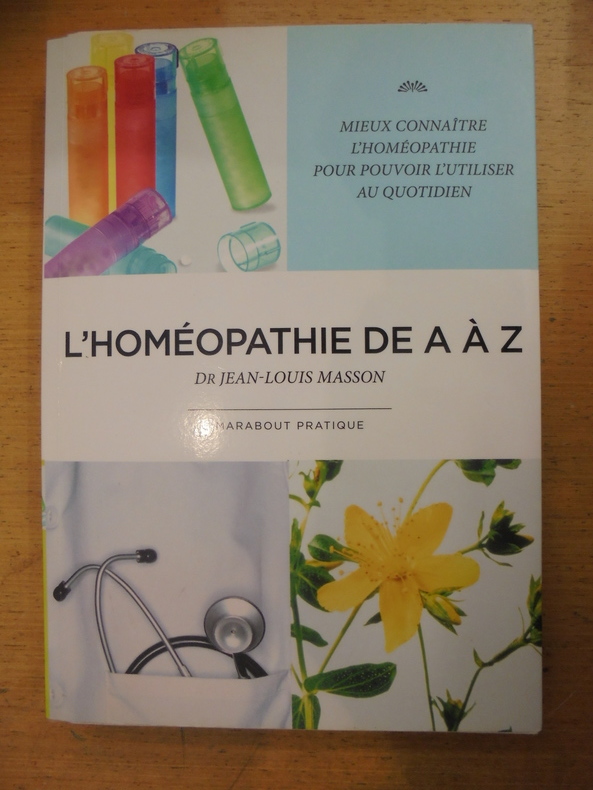
2003DIV369MMarabout, 2003. In-8° Broché, 223pp. largement illustrées.
19403832BUm 1940. 15 x 10,5 cm.
19403840BUm 1940. 15 x 10,5 cm.
19403835BUm 1940. 15 x 10,5 cm.
19403839BUm 1940. 15 x 10,5 cm.
19403838BUm 1940. 15 x 10,5 cm.
19403834BUm 1940. 15 x 10,5 cm.