Ryan, Dorothy; Ryan, GeorgeMareMagnum

646 résultats
A clean, unmarked book with a tight binding. 280 pages. Large tears on dust jacket. 71 cards in color, over 125 in black and white. Large format:
About The Book : Hahnemann wrote this book in order to document his new system of medicine, "Homoeopathy". In 1796, some six years after Hahnemann first experienced the effect of Peruvian Bark Cinchona in 1790 he published an article under the title "Essay on a New Principle".After conducting personal observations and experiments, Hahnemann published his new account of homoeopathy in book form in 1810. The original title of the book was Organon of Rational Art of Healing. In 1819, the second edition was published, with the revised title Organon of Healing Art. The third edition (1824) and fourth edition (1829) kept this new title, while the latter introduced Hahnemann's "Theory of Chronic Diseases".The fifth edition was published in 1833, and included the doctrine of vital force and drug-dynamization. The sixth edition, written in 1842, a year before his death, was retitled Organon of Medicine and not published until 1921. About The Author : Samuel Hahnemann, in full Christian Friedrich Samuel Hahnemann, (1755-1843), German physician, founder of the system of therapeutics known as homeopathy. Hahnemann was dissatisfied with the state of medicine in his time, and particularly objected to practices such as bloodletting. He claimed that the medicine he had been taught to practice sometimes did the patient more harm than good: After giving up his practice around 1784, Hahnemann made his living chiefly as a writer and translator, while resolving also to investigate the causes of medicine's alleged errors. While translating William Cullen's A Treatise on the Materia Medica, Hahnemann encountered the claim that cinchona, the bark of a Peruvian tree, was effective in treating malaria because of its astringency. Hahnemann believed that other astringent substances are not effective against malaria and began to research cinchona's effect on the human body by self-application. Noting that the drug induced malaria-like symptoms in himself, he concluded that it would do so in any healthy individual. This led him to postulate a healing principle: "that which can produce a set of symptoms in a healthy individual, can treat a sick individual who is manifesting a similar set of symptoms." This principle, like cures like, became the basis for an approach to medicine which he gave the name homeopathy. He first used the term homeopathy in his essay Indications of the Homeopathic Employment of Medicines in Ordinary Practice, published in Hufeland's Journal in 1807. This translation brings about new and original expressions of Dr. Hahnemann's original work. The expressions, figures of speech and even the tautological style of the original book has been retained by Dr. C. Wesselhoeft during this translation. The Title 'ORGANON OF THE ART OF HEALING written/authored/edited by SAMUEL HAHNEMANN, C. Wesselhoeft', published in the year 2022. The ISBN 9788121266994 is assigned to the Paperback version of this title. This book has total of pp. 252 (Pages). The publisher of this title is Gyan Publishing House. This Book is in English. The subject of this book is HOMEOPATHY . Size of the book is 13.34 x 21.59 cms Vol:-
About The Book : Hahnemann wrote this book in order to document his new system of medicine, "Homoeopathy". In 1796, some six years after Hahnemann first experienced the effect of Peruvian Bark Cinchona in 1790 he published an article under the title "Essay on a New Principle".After conducting personal observations and experiments, Hahnemann published his new account of homoeopathy in book form in 1810. The original title of the book was Organon of Rational Art of Healing. In 1819, the second edition was published, with the revised title Organon of Healing Art. The third edition (1824) and fourth edition (1829) kept this new title, while the latter introduced Hahnemann's "Theory of Chronic Diseases".The fifth edition was published in 1833, and included the doctrine of vital force and drug-dynamization. The sixth edition, written in 1842, a year before his death, was retitled Organon of Medicine and not published until 1921. About The Author : Samuel Hahnemann, in full Christian Friedrich Samuel Hahnemann, (1755-1843), German physician, founder of the system of therapeutics known as homeopathy. Hahnemann was dissatisfied with the state of medicine in his time, and particularly objected to practices such as bloodletting. He claimed that the medicine he had been taught to practice sometimes did the patient more harm than good: After giving up his practice around 1784, Hahnemann made his living chiefly as a writer and translator, while resolving also to investigate the causes of medicine's alleged errors. While translating William Cullen's A Treatise on the Materia Medica, Hahnemann encountered the claim that cinchona, the bark of a Peruvian tree, was effective in treating malaria because of its astringency. Hahnemann believed that other astringent substances are not effective against malaria and began to research cinchona's effect on the human body by self-application. Noting that the drug induced malaria-like symptoms in himself, he concluded that it would do so in any healthy individual. This led him to postulate a healing principle: "that which can produce a set of symptoms in a healthy individual, can treat a sick individual who is manifesting a similar set of symptoms." This principle, like cures like, became the basis for an approach to medicine which he gave the name homeopathy. He first used the term homeopathy in his essay Indications of the Homeopathic Employment of Medicines in Ordinary Practice, published in Hufeland's Journal in 1807. This translation brings about new and original expressions of Dr. Hahnemann's original work. The expressions, figures of speech and even the tautological style of the original book has been retained by Dr. C. Wesselhoeft during this translation. The Title 'ORGANON OF THE ART OF HEALING written/authored/edited by SAMUEL HAHNEMANN, C. Wesselhoeft', published in the year 2022. The ISBN 9788121267007 is assigned to the Hardcover version of this title. This book has total of pp. 252 (Pages). The publisher of this title is Gyan Publishing House. This Book is in English. The subject of this book is HOMEOPATHY . Size of the book is 14.34 x 22.59 cms Vol:-
1982132041982 broché grand in-octavo (paperback in-octavo), dos et couverture blancs imprimés (white spine and cover printed) et première de couverture illustrée en couleurs (front cover illustrated in colours), toutes tranches lisses (all smooth edges), sans illustration (no illustration), 362 pages, 1982 à Paris Editions Robert Laffont,
1986132021986 broché grand in-octavo (paperback in-octavo), dos et couverture blancs imprimés (white spine and cover printed) et première de couverture illustrée en couleurs (front cover illustrated in colours), toutes tranches lisses (all smooth edges), sans illustration (no illustration), 277 pages, 1986 à Paris Editions Robert Laffont,
464 pages. Index. Unmarked with moderate wear. Binding tight. Sound copy. Book
1910258BGWien, Postkartenverlag Gebrüder Kohn, (ca. 1910). 4 farb. Postkarten. Bildgrösse: 8,5 x 13 cm. Blattgrösse: 9 x 14 cm.
18941253417Leipzig, W. Schwabe, 1894. Gr.-8vo. 10 (von 12), 374 S. Neuer Lwdbd m. altem, goldgeprägten Rückenschild (Papier etwas gebräunt, ohne den Vortitel).
1910258BGWien, Postkartenverlag Gebrüder Kohn, (ca. 1910). 4 farb. Postkarten. Bildgrösse: 8,5 x 13 cm. Blattgrösse: 9 x 14 cm. + Wichtig: Für unsere Kunden in der EU erfolgt der Versand alle 14 Tage verzollt ab Deutschland / Postbank-Konto in Deutschland vorhanden +
Features: The Glidden Tour; The 60th Anniversary of the Original "Brighton" Run of 1896 - includes article and list of 232 entrants; Eagle Rock Hill Climb; Steam Car Meet at Schwenksville, PA; The First New York Auto Show; Bollee's Steam Carriage; 1923 "Hard Top" Buick; The Antique Auto Hobby; Grandpa Knows Best; Car and Carriage Caravan - to open at Luray Caverns, VA in May, 1957; The Washington Motor Car; Model T Topics; Front Axle - Caster, Camber and Toe-in; Rare Model T Postcards; In Duster and Veil; Photo and details of a curious six wheeler 1903 Pullman; Instructions for Operating the Stanley Steam Car - 1911 (Part 2 of 2); and more. Average wear. Some external soiling. Unmarked. A sound copy. Magazine
1931131645Verlag Dr. Steffens & Co., Hamburg 1931. 48 Seiten. Plakativ mehrfarbig illustrierte Originalbroschur. (Einband etwas fleckig u. mit Apothekerstempel versehen). 18x12 cm
19652090502113716436Not Available 1965. Soft Cover. Fine. The book is in fine condition. Not Available paperback
New English Paperback. Oblong 4to. (23 x 28 cm). In English and Turkish. 127 p., profusely color and b/w ills. Print run: Only 500 copies. The eyes of the Levant: Period postcards 1890-1920. Damascus, Beirut, Jerusalem & others, Seyhun Binzet Collection.= Levant'in gözleri: Dönem kartpostallari 1890-1920. Sam, Beyrut, Kudüs ve baska kentler. Seyhun Binzet Koleksiyonu. [Exhibition catalogue]. Designed by Engin Özden. Consultant: Tan Oral.
1901088706Washington DC: Ralston Health Club 1901 Book. Good. Hardcover. Ninth Edition. Includes "a complete presentation of diets in health and disease and foods of the Ralstonites". 614 pages illustrated. RARE copy of this work from the early 20th century health fad movement. Notes Vol I on the spine strip. Cover has light wear a few pages are loosening from the binding minor marks within. Ralston Health Club hardcover
12 parts iv, 18, 19, 19, 23, 25, 18, 18, 19, 19, 19, 19, 19pp., each tract has separate title page dated 1853 or 1854 and of various editions, disbound. Formerly in the library of the Birmingham Medical Institute.
41053201A group of 68 items: 1 orignal early b. w. panoramic view of Singapore factory & quay; post cards: 11 color 27 b. w. 29 original b.w. photographic cards all very good most unused a few used with text and some stamps. A nice lot ! unknown
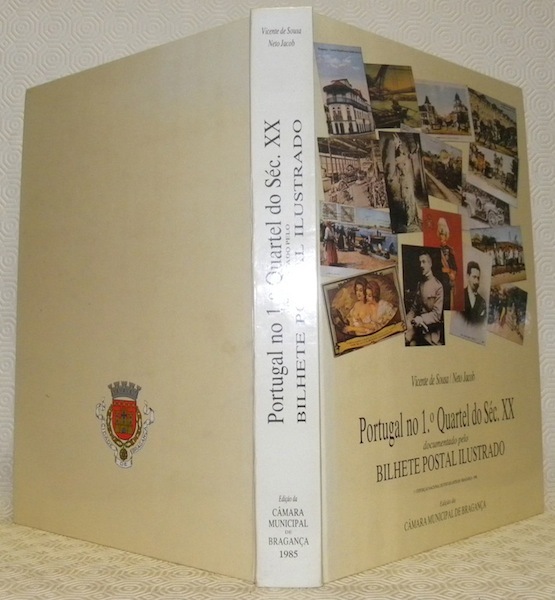
77193Bragança, Câmara Municipal de Bragança 1985, 345x250mm, 509páginas, encadernação de editor. Bom estado.
67122Berlin, Ferdinand Osertag Verlag,, 1923 Original hardcover binding,(1) 50 pages (1), 27x20cm. illustrated with 20 b/w illustrations (woodcuts) *fine condition.
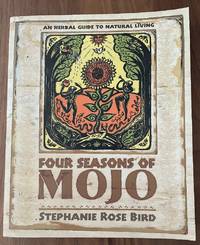
2006c913VG083122b1Llewellyn Publications 2006-03-08. First Edition Paperback. Paperback. VERY GOOD. 9x7x0. First Edition. 2006. Very Good. Unmarked. Paperback. Clean interior text w/ no highlighting underlining or writing. Softcover clean & bright w/ a bit of edge corner & shelf wear. No rips chips stains or tears. Binding in very good condition solid & square. Currently out of print uncommon or hard to find book. Multicultural spiritual guide by Stephanie Rose Bird integrating seasonal herbalism with global ritual practices. Features recipes and techniques from Caribbean Buddhist Hindu Native American Aboriginal and European traditions for natural living throughout the year. Ships quickly and with care. Llewellyn Publications paperback
1900104990Ohne Verlag, um 1900.
About The Book : The Genius of Homoeopathy comprise of a series of lectures delivered at the New York Homoeopathic Medical College. Close was a student of P.P. Wells and Bernhardt Fincke. This book is one of the most clear and lucid compilation of the philosophical basis of homoeopathic study. It is written with extreme clarity. This conspicuous work by a stalwart explains the principles and philosophy of homeopathic system of medicine. It thoroughly explains the concept of life, health and disease. It discusses Hahnemannian principles from a modern standpoint. It will prove beneficial to all the students and practitioners to master the art and science of homeopathy. About The Author : Dr. Stuart Close (1860-1929) came to study homeopathy after the death of his father in 1879. His mother remarried a homoeopathic physician who turned Close's interests from law to medicine.His stepfather helped him study the Organon and he attended medical school in California for two years. Finishing his studies at New York Homeopathic College he graduated in 1885. Completing his homeopathic education. Close preceptored with B. Fincke and P. P. Wells. Setting up practice in Brooklyn, Dr. Close went on to found the Brooklyn Homoeopathic Union in 1897. This group devoted itself to the study of pure Hahnemannian homeopathy. In 1905 Dr. Close was elected president of the International Hahnemannian Association. He was also the editor of the Department of Homeopathic Philosophy for the Homeopathic Recorder. Dr. Close taught homeopathic philosophy at New York Homeopathic Medical College from 1909-1913.Dr. Close's lectures at New York Homeopathic were first published in the Homeopathic Recorder and later formed the basis for his masterpiece on homeopathic philosophy, The Genius of Homeopathy.The homeopathic library of Dr. Close was reputed to be the one of the best in the country. He was an accomplished musician as well as an avid genealogist. The Title 'The Genius of Homoeopathy written/authored/edited by Stuart Close', published in the year 2022. The ISBN 9788121265911 is assigned to the Paperback version of this title. This book has total of pp. 292 (Pages). The publisher of this title is Gyan Publishing House. This Book is in English. The subject of this book is HOMEOPATHY . Size of the book is 13.34 x 21.59 cms Vol:-
About The Book : The Genius of Homoeopathy comprise of a series of lectures delivered at the New York Homoeopathic Medical College. Close was a student of P.P. Wells and Bernhardt Fincke. This book is one of the most clear and lucid compilation of the philosophical basis of homoeopathic study. It is written with extreme clarity. This conspicuous work by a stalwart explains the principles and philosophy of homeopathic system of medicine. It thoroughly explains the concept of life, health and disease. It discusses Hahnemannian principles from a modern standpoint. It will prove beneficial to all the students and practitioners to master the art and science of homeopathy. About The Author : Dr. Stuart Close (1860-1929) came to study homeopathy after the death of his father in 1879. His mother remarried a homoeopathic physician who turned Close's interests from law to medicine.His stepfather helped him study the Organon and he attended medical school in California for two years. Finishing his studies at New York Homeopathic College he graduated in 1885. Completing his homeopathic education. Close preceptored with B. Fincke and P. P. Wells. Setting up practice in Brooklyn, Dr. Close went on to found the Brooklyn Homoeopathic Union in 1897. This group devoted itself to the study of pure Hahnemannian homeopathy. In 1905 Dr. Close was elected president of the International Hahnemannian Association. He was also the editor of the Department of Homeopathic Philosophy for the Homeopathic Recorder. Dr. Close taught homeopathic philosophy at New York Homeopathic Medical College from 1909-1913.Dr. Close's lectures at New York Homeopathic were first published in the Homeopathic Recorder and later formed the basis for his masterpiece on homeopathic philosophy, The Genius of Homeopathy.The homeopathic library of Dr. Close was reputed to be the one of the best in the country. He was an accomplished musician as well as an avid genealogist. The Title 'The Genius of Homoeopathy written/authored/edited by Stuart Close', published in the year 2022. The ISBN 9788121265928 is assigned to the Hardcover version of this title. This book has total of pp. 292 (Pages). The publisher of this title is Gyan Publishing House. This Book is in English. The subject of this book is HOMEOPATHY . Size of the book is 14.34 x 22.59 cms Vol:-
46049, Luster uitgeverij, 2014 softcover,186pp rijkelijk geillustreerd. tekst in het Nederlands. ISBN 9789460581298.
First edition, 8vo, xxiv, 131, [1]pp., some occasional spotting to text, orig. green cloth, a little worn and stained.
New English Paperback. Pbo. Oblong large 8vo. 131 p. In French and Turkish. B/w and color ills. L'exposition qui s'oeuvre a la du lycee Notre Dame de Sion a partir du 8 mars est une selection de cartes postales dont la collection s'etend de 1885 a 1930. elle regroupe le travail de divers photographes qui ont parcouru l'Afrique du Nord colonisee. Principalement axee sur des portraits de femmes et sur des scenes de genre les mettant en scene dans un univers domestique, cette exposition ne pretend pas dispenser un savoir anthropologique ou social sur les femmes des colonies de la Fin-De-siecle. Ces cliches nous offrent neanmoins la possibilite de reflechir sur les representations coloniales du siecle dernier, representations qui perdurent encore dans les stereotypes publicitaires ou sont la source de certains prejuges toujours actuels.