3 résultats
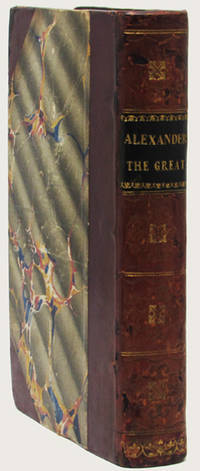
182934651London: John Murray Albemarle Street 1829. First Edition. Illustrated with a large folding map showing the campaigns of Alexander. Small 8vo handsomely bound in contemporary three-quarter calf over marbled paper covered boards the spine ruled in gilt and with a black morocco lettering label gilt. vi 402 pp. A well preserved copy handsome and in good order the binding tight and strong the text-block clean and fresh the map also in fine state. FIRST EDITION OF THIS VERY READABLE HISTORY AND BIOGRAPHY OF ALEXANDER THE GREAT. Alexander III of Macedon Ancient Greek: Aléxandros most commonly known as Alexander the Great was king of the ancient Greek kingdom of Macedon. He succeeded his father Philip II to the throne in 336 BC at the age of 20 and spent most of his reign conducting a lengthy military campaign throughout Asia and Egypt. By the age of 30 he had created one of the largest empires in history stretching from Greece to northwestern India. He was undefeated in battle and is widely considered to be one of history's greatest and most successful military commanders.<br> Born in Pella Macedon Alexander was tutored by philosopher and polymath Aristotle until the age of 16. In 335 BC shortly after assuming the throne of Macedon he launched a campaign in the Balkans and reasserted control over Thrace and parts of Illyria before marching on the city of Thebes which was subsequently destroyed. Alexander then assumed leadership of the League of Corinth created by his father.<br> With this authority over all Greeks he launched a pan-Hellenic invasion of the Persian Achaemenid Empire in 334 BC and with it began a series of campaigns which lasted for ten years. Following his conquest of Asia Minor and a series of decisive battles particularly at Issus and Gaugamela the power of the Achaemenid Empire was broken. He subsequently overthrew Darius III and conquered the Achaemenid Empire in its entirety. After the fall of Persia the Macedonian Empire held a vast swath of territory between the Adriatic Sea and the Indus River. Alexander endeavored to reach the "ends of the world and the Great Outer Sea" and invaded India in 326 BC achieving an important victory over Porus an ancient Indian king of present-day Punjab at the Battle of the Hydaspes. Facing mutiny from troops he was eventually forced to turn back at the Beas River and later died in 323 BC in Babylon Mesopotamia the city which he had planned to make the capital of his empire while on his return to Greece. Alexander's death put an end to his planned invasion of Arabia. John Murray, Albemarle Street hardcover
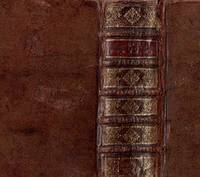
16-3924Lugduni Batavorvm Leiden : Excudit Petrus vander Aa bibliop. 1696. Contemporary calf gilt spine. 11 x 19 cm.36 plates some folding including a map of Alexander the Great's route. Manuscirpt annotatations in an ancient hand with added engraving.Manuscript notation in Getty Research Institute copy attributes the engravings to Adriaan Schoonebeeck.Illustrated with an added engraved title-page frontispiece and plates.Signatures: â¸-1 2²-2² A-3E⸠3F² a-h⸠i²-i2 kâ´.QUINTII CURTII D. REBUS GESTIS ALEXANDRI MAGNI. Commentarris. Lug. Batavorrum. P. Vander Aa. 1696. 36 planches hors texte rel. de l'époque veau moucheté dos ornéExpertise by Roger ROQUES - 06.12.15.30.68 - – 2 rue du Périgord – 31000 TOULOUSE Lugduni Batavorvm [Leiden] : Excudit Petrus vander Aa, bibliop., 1696 unknown
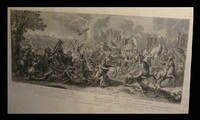
1750160741750. A Paris chez Dallenne s.d. circa 1750. Dimensions hors marges : 423 x 217 mm. Rare et importante eau-forte - gravÂŽe ˆ l'adresse de Dallenne ; d'un tirage sans doute rÂŽalisÂŽ circa 1750. Elle est signÂŽe dans la plaque en marge infÂŽrieure gauche de Le Brun. Le nom du graveur ne figure ici pas. AnimÂŽe de trÂs nombreux personnages l'oeuvre met en scÂne Alexandre le Grand en prise avec Darius ; lors de la bataille de GaugamÂles. Sous cadre en bois postÂŽrieur. LÂŽgÂres altÂŽrations affectant les marges blanches. Du reste trÂs belle condition. b42961 unknown