I P SwordBiblio.com

935 résultats
B9789400980532Paperback / softback. New. This is the fourth volume of Standard Operating Procedures SOPs compiled from documents prepared in these laboratories in part fulfilment of the requirements of various Good Laboratory Practice GLP regulations and guidelines. paperback
146113739X.Gpaperback. Good. Access codes and supplements are not guaranteed with used items. May be an ex-library book. paperback
1480251720.Gpaperback. Good. Access codes and supplements are not guaranteed with used items. May be an ex-library book. paperback
1484810759.Gpaperback. Good. Access codes and supplements are not guaranteed with used items. May be an ex-library book. paperback
1480251828.Gpaperback. Good. Access codes and supplements are not guaranteed with used items. May be an ex-library book. paperback
1461026415.Gpaperback. Good. Access codes and supplements are not guaranteed with used items. May be an ex-library book. paperback
1482089866.Gpaperback. Good. Access codes and supplements are not guaranteed with used items. May be an ex-library book. paperback
19982081502111902091Guangxi education 1998. Soft Cover. Fine. Number of pages: 1078p Size: A4 hardcover book Guangxi education paperback
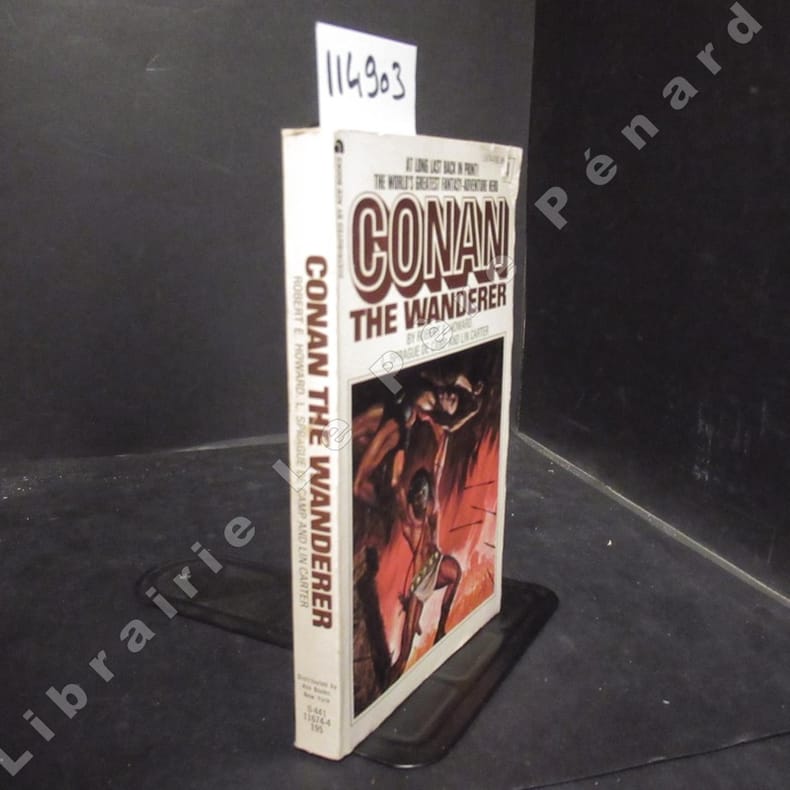
19681149031968 Editons Ace Books - 1968 - In-12, broché, couverture illustrée - 222 p. - Ouvrage en anglais
19121027001912 HOTEL DROUOT - Me F. LAIR-DUBREUIL - Me HENRI BAUDOUIN - 1912 - 1 vol in-4, broché - Nombreuses Illustrations en noir et blanc en et hors texte - 123 pages non coupées - 888 lots
19712090502126903496Osaka Umeda Department Store Venue 1971. Soft Cover. Fine. Size: B5 Osaka Umeda Department Store Venue paperback
19702090502126904010Not Available 1970. Soft Cover. Fine. Volume: 1.00 Not Available paperback
194632BzParis La Gaule 1946 12 x 19 117 pages - broché - beaux hors texte de maguy sablé - couverture defraichie - etat correct
194632BzParis La Gaule 1946 12 x 19 117 pages - broché - beaux hors texte de maguy sablé - couverture defraichie - etat correct
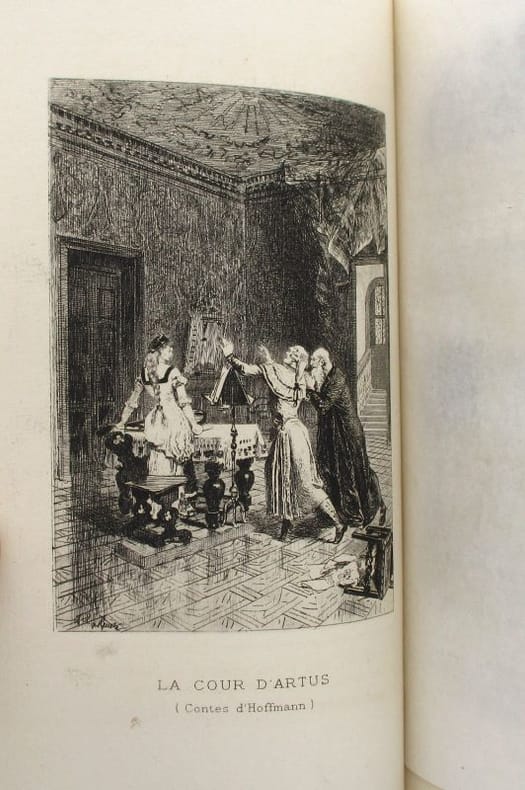
17848Paris, Jouaust, 1883. 2 vol.in-12, XV-306 pp. 6 pl. + 308 pp. 5 pl., demi-maroquin rouge de Becquet, double filet doré sur les plats, dos à nerfs orné de caissons et de fleurons dorés, tête dorée, couverture conservée (quelques minuscules frottements).
197733298New York: Hawthorn Books 1977. Hardcover. xv 219p. 8.5x11 inches fashion guide for men illustrated by Weber's photos and Sable's drawings very good second printing in cloth boards and unclipped dj. Hawthorn Books hardcover books
New English Original bdg. Dust wrapper. 4to. (32 x 25 cm). English Edition. 241, [1] p., color ills. The arms of the sultans. The arms collection of Topkapi Palace. Translated by Alev (Kerimoglu) Bulut. "Weapon is a device that was developed by the mankind in the ancient ages for protection against the events of nature and enemies. The arms that were used for the functions of drilling, cutting, defense, and the firing function to be acquired later, were accepted as works of art owing to the mastery and craftsmanship skills that they display. The present work title The arms of the sultans. The arms collection of Topkapi Palace was prepared for the purpose of presenting to the readers The Arms of Collection of the Topkapi Palace Museum, where some of the rarest examples of these works of art are on display, as a whole along with an analysis of its fundamental attributes". Covering 1,300 years and consisting of 52,000 weapons of Arab, Umayyad, Abbasid, Mamluk, Persian, Turkish, Crimean Tartar, Indian, European, and Japanese origin, the Topkapi Palace Museum's weaponry collection is also among the world's premier weapons collections. The collection is made up in part of weapons transferred from the cebehâne and those used by the palace guards; however, the collection's most noteworthy section consists of those weapons ordered by the sultan personally or specially made as gifts for him, which weapons are a part of the palace's private collection. This collection includes weaponry owned by such sultans as Mehmed II, Bayezid II, Selim the Grim, Suleiman the Magnificent, Selim II, Mehmed II, and Ahmed I, as well as the weapons of such high-level dignitaries as grand viziers, pashas, and palace chamberlains; all of these weapons are eye-catching with their fine craftsmanship and decorations. An additional factor that contributed to the diversification of the collection's highly artistic weaponry was the tradition of bringing to the palace the weapons of important figures that were obtained through plunder.
New English Original bdg. Dust wrapper. 4to. (32 x 25 cm). English Edition. 241, [1] p., color ills. The arms of the sultans. The arms collection of Topkapi Palace. Translated by Alev (Kerimoglu) Bulut. "Weapon is a device that was developed by the mankind in the ancient ages for protection against the events of nature and enemies. The arms that were used for the functions of drilling, cutting, defense, and the firing function to be acquired later, were accepted as works of art owing to the mastery and craftsmanship skills that they display. The present work title The arms of the sultans. The arms collection of Topkapi Palace was prepared for the purpose of presenting to the readers The Arms of Collection of the Topkapi Palace Museum, where some of the rarest examples of these works of art are on display, as a whole along with an analysis of its fundamental attributes". Covering 1,300 years and consisting of 52,000 weapons of Arab, Umayyad, Abbasid, Mamluk, Persian, Turkish, Crimean Tartar, Indian, European, and Japanese origin, the Topkapi Palace Museum's weaponry collection is also among the world's premier weapons collections. The collection is made up in part of weapons transferred from the cebehâne and those used by the palace guards; however, the collection's most noteworthy section consists of those weapons ordered by the sultan personally or specially made as gifts for him, which weapons are a part of the palace's private collection. This collection includes weaponry owned by such sultans as Mehmed II, Bayezid II, Selim the Grim, Suleiman the Magnificent, Selim II, Mehmed II, and Ahmed I, as well as the weapons of such high-level dignitaries as grand viziers, pashas, and palace chamberlains; all of these weapons are eye-catching with their fine craftsmanship and decorations. An additional factor that contributed to the diversification of the collection's highly artistic weaponry was the tradition of bringing to the palace the weapons of important figures that were obtained through plunder.
Generously illustrated with black and white photos and illustrations. Features: Africa's Mystery Beasts - Remarkable stories concerning what may be the progeny of prehistoric monsters, several of which appear to be formidable opponents for any hunter; Through the Heart of Afghanistan - Part I - Emil Trinkler had exceptional opportunities for travelling in untrodden regions, with photos; The Dancing Dead - A veteran gold-seeker's account of a weird and terrifying experience that befell a party of prospectors in New Guinea, with photo of witch-doctor; Further Adventures of a Tenderfoot in Canada - Part II; "King Kauri" - The Kauri tree is to New Zealand what the oak is to England - article with photos; The Two Sheriffs - A strange murder situation is encountered by a veteran cow-puncher in the wilds of Montana; My Wild Boar - A newcomer to India is warned not to shoot wild pig; "Next Time" - An amusing story from the Yukon country; Lachmee's Vow - A tiger tale from Hindustan; The Sacred White Crow of Yaunghwe - brief article with two photos; The Great Boulder Murder Case - The story of one of the most remarkable murder mysteries in the annals of Australia, with photo and map; Photo of salt prospecting in Cheshire; "Bushman's Luck" - A remarkable story from New Zealand; Out of the Deep - The strange story of a famous schooner that sank off Sable Island, the "graveyard of the Atlantic," to reappear in most dramatic circumstances; Sequel to the "Lost Cabin" Mine Mystery - New information regarding this story which appeared in the September, 1920 issue; Trailing the Beaver-Poachers - Game law enforcer Frank Mossman relates some of his experiences with illegal trappers in the North-west, who often do not hesitate to shoot - with photos; "Baldy Red's" Come-Back - A bootlegger smuggles illicit whisky into the forbidden Northland of Canada. 84 pages plus 12 pages of nice vintage ads. Unmarked with average wear. Lower half of backstrip missing. A worthy copy of this interesting vintage issue. Book
2017x-1621902900Univ of Tennessee Pr 2017. Hardcover. New. 369 pages. 9.50x6.00x1.25 inches. Univ of Tennessee Pr hardcover
089766146X.Ghardcover. Good. Access codes and supplements are not guaranteed with used items. May be an ex-library book. hardcover
18981000F58London: Macmillan and Co 1898 . First edition. Cloth. Good. 9.5" by 6.5". Not Stated. The first edition of Henry S. L. Alford and W. Dennistoun Sword's illustrated and highly informative account of the history of Egyptian Soudan. The first edition first impression of this uncommon work.Illustrated with a frontispiece eleven maps - many of which are folding - and twenty-one plates. Collated complete.Arranged in three sections: I. A Rapid Sketch of the History of the Soudan. II. A Narrative of the Dongola Expedition 1896. III. A Full Account of the Nile Expeditions 1897-8. A wonderful account of life in late 19th century Egyptian Soudan from Henry S. L. Alford and W. Dennistoun Sword.With the bookplate of Sir Albert Ruskin Cook a British medical missionary in Uganda and the founder of Mulago Hospital and Mengo Hospital to the front pastedown. His inscription also appears to the half title. In the publisher's original cloth binding. Bumping to back strip head and tail with a touch of fraying to back strip head. Rubbing to joints. Fading to front board with area of fading to head of rear board. Bookplate to front pastedown. Inscription to half title. Internally firmly bound. Pages lightly age toned with instances of spotting and foxing to page perimeters. Good Macmillan and Co hardcover
195513058La Guilde du Livre 1955 225 pages in8. 1955. reliure editeur sous rodhoid. 225 pages. À travers l'itinéraire moral et sentimental du lieutenant Auligny La Rose de sable propose une critique humaniste de la colonisation française de son système d'exploitation et de son mépris des peuples soumis. Le roman écrit par Henry de Montherlant entre 1930 et 1932 et publié en 1951 dépeint la prise de conscience progressive du lieutenant qui l'amène à un retournement des valeurs notamment par son amour pur pour une jeune fille du désert
1968AUB-3071Paris, éd. Gallimard 1968. Bel exemplaire broché, couverture ornée d'éd., in-8, XIII + 579 pages avec note.
1996338232University of Michigan Press March 1996. First Edition. Hardcover . Very Good/Very Good. First printing; Solid binding gently worn at spine; Pages free of markings; Un-clipped dust jacket Very Good w/ no significant flaws to disclose; Jacket housed in protective mylar to ensure further preservation; An excellent copy. University of Michigan Press hardcover