GOS, Charles.Livre Rare Book
2 365 résultats
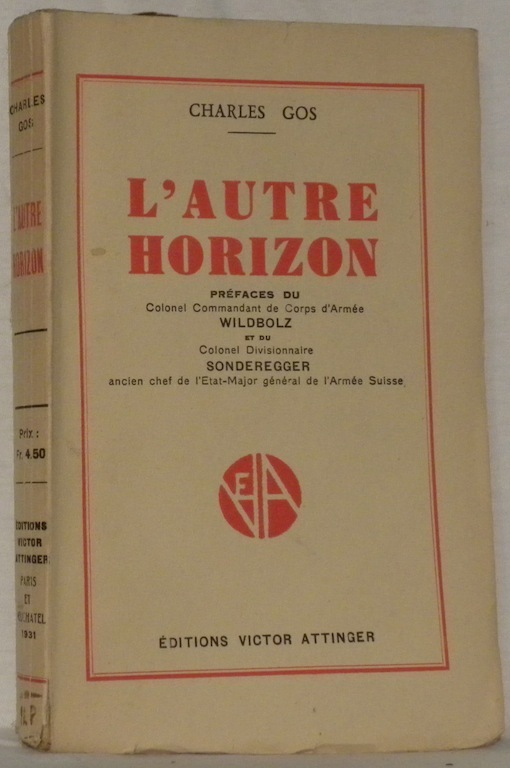
33350Paris - Neuchâtel, Victor Attinger 1931, 185x120mm, XXVII - 165pages, reliure demi-basane. Pièce de titre au dos, plats papier marbré.
19041834Evanston Illinois: National Woman's Christian Temperance Union 1904. Wraps. Very good. JUVENILE TEMPERANCE SOCIETY WOMAN AUTHOR. <br /> Wrapper title: Loyal Temperance Legion 29th Thousand Marching Songs for Young Crusaders. Temperance Songs for the Cold Water Army. No.1 Evanston Illinois: Published by National Woman's Christian Temperance Union.<br /> 16mo 6 ½" x 5"; 62pp index; stiff grey wrapper the front features decorative lettering and a child hugging an American flag and the cross of Christ the side border banner is lettered "Bond of Hope" vertically stacked lettering states "Tremble Kind Alcohol. We shall grow up"; rear wrapper publisher's ad for other publications; two staple binding; 1" split at head of wrapper fold one staple pulled from wrapper but secure light wear; very good. OCLC does not locate any with this publication date. An interesting collection of songs aimed at children recruited by the National Woman's Christian Temperance Union a religious group founded in Ohio in 1874 and dedicated to limiting the use of alcohol because of its deleterious effects on the family and society. They supported the drafting of the 18th amendment in 1917. This songbook for children originally published around 1885.<br /> <br /> Titles of the songs all dedicated to teaching children the danger of alcohol through music include: Cold Water Our Glasses Upside Down Our Coming Army We'll Rally Round the Ballot Box We'll Never Touch the Wine and Temperance Boys and Girls are We. Many of the words mix religion and patriotism in their fervor. National Woman's Christian Temperance Union unknown
200439891ABFrankfurt am Main, Zweitausendeins, 2004. 4°, 224 S. mit 245 Farb-und s/w-Abb. und Illustr., original Pappband mit illustr. original Schutzumschlag, (Hardcover), schönes, sauberes Exemplar (L)
4471Paris, G. Masson, 1879, petit in8, demi rel. basane prune, d'ep. 248pp.
Book is in excellent condition with deep red cloth covers, gilt print at front and spine. Bottom corners show Very slight wear only, otherwise book is as new, map endpapers, over 30 detailed line drawn maps throughout text, usually full page. Binding is solid and square, covers have sharp corners, exterior shows no blemishes, text/interior is clean and free of marking of any kind. Dust jacket shows chipping at edges, 1/4" tear top back spine. Author has six books on similar subjects: A soldier with the Arabs, The story of the Arab legion, Britain and the Arabs, War in the desert, Empire of the Arabs, The course of empire. Contents include: Quraish, Pirate strategy, Yarmouk, Qadasiya, Medain, Babylon, Egyptain surrender, Abu Lulu, Othman, Heresy and Schism, etc. Copyright 2011 Pistil Books
24701No place or date. Responding to Richard’s undated letter from Moncton New Brunswick Canada. See his entry in the Oxford DNB. Written large at the foot of a page on a 4to leaf. In good condition lightly aged and creased with a short closed tear to the outer edge just below Glubb’s sprawling signature which consists of an illegible line of curls. Folded once for postage. At the head of the page is Diane Richard’s Typed Note Signed addressed to ‘General Glubb’ and requesting that he sign ‘two pictures from my collection’. Glubb replies: ‘Dear Miss RICHARD / I return your two pictures herewith with much pleasure. / All good wishes / Your sincerely / signature’. No place or date. Responding to Richard’s undated letter from Moncton, New Brunswick, Canada. unknown
265131959 . 'If he survives he may well be a great man at 40':Glubb Pasha gives his assessment of King Hussein of Jordan in 1959Three autograph documents by 'Glubb Pasha' giving a detailed and perceptive assessment of the character and situation of his erstwhile master King Hussein of Jordan 1935-1999 written to assist John Freeman 1915-2014 in preparing the interview with King Hussein broadcast in the BBC series 'Face to Face' on 1 January 1960. From the papers of the programme's producer Hugh Burnett 1924-2011. The first item is a long letter from Glubb to Burnett giving a thoughtful and perceptive assessment of Hussein's character and situation including a discussion of relations between Jordan and Britain and a comparison between Hussein and President Nasser of Egypt. The second item is a series of 34 potential questions which Glubb suggests be put to the king. The third item is the covering letter to the second describing the questions in it as 'ideas which I hope may be useful' and offering to involve himself in the preparation for the interview 'we have lots of time'. The fourth item is the printer's copy of the transcript of the interview as published in Burnett's 1964 book of the series.Sir John Bagot Glubb 1897-1999 is described in his entry in the Oxford DNB as 'servant of both Britain and Jordan' and 'the last in the long line of powerful British proconsuls'. In 1939 Glubb took command of the Arab Legion subsequently the Jordan Royal Army transforming it into the best-trained and most effective military force in the Arab world and himself leading it across the River Jordan to occupy the West Bank during the 1948 Arab-Israeli War. According to the ODNB Glubb 'was greatly reliant on King Abdullah's support which vanished when the king was assassinated on 20 July 1951. His son Talal reigned only a few months before abdicating and was succeeded by his son Hussein still only sixteen and a schoolboy at Harrow. Although Hussein respected Glubb the gap between their ages proved impossible to bridge and they soon fell out. Military and political developments were rapidly outgrowing Glubb and the influential foreign adviser to an oriental monarch was becoming an anachronism.' In 1956 Glubb was dismissed from his command and given 24 hours to leave the country. He returned to Britain with only £5 and did not receive a general's pension from either Britain or Jordan. Despite the manner of Glubb's dismissal the two documents present here reflect the 'exemplary dignity' with which the ODNB notes he always acted thereafter.The four items are in fair condition lightly aged and worn all four with punch-holes for binding.ONE: Autograph Letter Signed with Glubb's stylised curling signature. Mayfield Sussex; 5 December 1959. 6pp. foolscap 8vo. With Televsion Registry date stamp.A thoughtful assessment of King Hussein's character Addressed to 'Dear Burnett' and written 'In continuation of my previous notes on King Husain sic.'The letter covers:Hussein's 'extremely democratic & informal' nature on first coming back from England to assume the Jordanian throne: 'He liked jumping alone into his car without a hat and driving into the Town - perhaps to go to the cinema. The police the officials & the escort used to be in a frenzy looking for him. … I don't think he can do that so much now there seems to be too much risk of his being assassinated.'Hussein's 'attitude to everything' which is 'in schoolboy language' 'flat out': 'In 1953 1954 & 1955 there were several ugly incidents on the Jordan Israeli frontier villages being raided by the Israeli army & many people killed. In every case the king's first instinct was to jump into a car and drive himself to the frontier to see in person what was happening. … He was most anxious to meet the people and would get out of his car in the villages to talk with villagers and get their first hand knowledge.'His love of risk: 'He delighted to drive his car at breakneck speed along the roads at imminent risk to himself & the public. I do not know if he still does that.'His headstrong nature: 'Although however he was then 18 19 or 20 years old all the cabinet ministers & officials were afraid of him & unable to control him. … he always won. Thus although he did a great many foolish things from lack of experience there was no doubt that he had a remarkably strong & independent personality and was full of initiative.'How he was 'deceived by politicians into thinking that Britain was the enemy of his country' resulting in a breaking-off of relations between Jordan & Britain'. Of Hussein's dismissal of 'all the British officers' including Glubb himself he writes: 'He did this entirely on his own initiative using his own courage & will-power. The extremists merely gave him the ideas but he carried all the responsibility. Now he has discovered that he was deceived and is drawing near to Britain again - once more on his own responsibility.'His political position. Jordan has 'a parliament almost in theory like Britain' and 'The influence of his grandfather King Abdulla & his own power are not due to an "Oriental despotic constitution but to the personalities of their two characters.' Although Hussein 'now thinks Britain can be his helper he is an enthusiastic Arab nationalist.'The contrast between Hussein with President Nasser of Egypt. 'Nasser likes to brand everybody who does not bow to his personal leadership as being a traitor and a "colonialist tool" etc. This is a local political line. Hussein is as nationalist as Nasser but his personality will not allow him to be a subordinate of Nasser. Nasser is inclined to want only subordinates. King Husain also feels strongly about Israel and is of course bitterly opposed to the present Iraqi regime which began by murdering all his family - King Feisal of Iraq was his cousin.'Glubb sums up his opinion of Hussein's character: 'In brief the picture is one of a young man of considerable character still retaining a strong streak of teenage enthusiasm for jet aircraft and fast motor cars. He came to the throne at 17 and was swept off his feet by the usual anti-imperialist propaganda. Now gaining first hand experience he is becoming wiser.'Glubb concludes the letter: 'If he survives he may well be a great man at 40'.TWO: Autograph List by Glubb of thirty-three suggested questions for Freeman to pose to King Hussein. Without date place or signature but sent with Item Three below dated 3 December 1959 as its covering letter stating that Glubb is sending 'some ideas which I hope may be useful'. 13pp. foolscap 8vo. With slip carrying a further question numbered 8A. With a few minor emendations. Topics include: Hussein's time at Sandhurst his view on the British boarding school and military service; his activities as a pilot and 'driving in car races'; military affairs; ceremonial and recreation; King Abdulla. The first question indicates the respectful tone that Glubb considered the interviewer should adopt: '1. The people of Britain emended from 'England' admire the personal courage which Your Majesty has shown in facing your difficulties in Jordan. May I ask how you sir feel towards the British people' A number of questions concern military matters and the following reflects Glubb's personal knowledge: '12 Everybody expects Arabs to fight but many people are surprised that the Jordan Army is so completely mechanized and has its own workshops and technical services. In England such units are possible because the technicians exist in factories in civil life and the army can draw on them Is not this difficult in a largely agricultural country like Jordan' The conclusion of the document demonstrates Glubb's attempt to 'prime' the interviewer: "Thank you very much Sir and may I wish you every success to BREAKS OFF HERE Insert further back somewhere. 33. I am afraid that I am not very experienced in Arab affairs but we have the idea in Britain that King's sic in "The East" live in great state but rather isolated from their subjects. I think that perhaps this does not apply to Arab countries. Does Your Majesty succeed in getting about and meeting the people of the country Note. He is very keen on doing this.' Question 30 reads: 'Is it true sir that you were actually standing beside King Abdulla when he was assassinated'THREE: Typed Letter Signed from Glubb to Burnett. On letterhead of West Wood St. Dunstan Mayfield Sussex. 3 December 1959. 2pp. 12mo. With Television Registry date stamp. Covering letter to Item Two above. 'Here are some ideas which I hope may be useful. As it is not until 1st January we have lots of time. Please ring up or write or send my draft back with marginal notes or anything else you like which will help you.' In a postscript he explains that he has not typed Item Two 'to save time'.FOUR: Typed text prepared for publication of the section on 'KING HUSSEIN' in the book 'Face to Face Edited and introduced by Hugh Burnett' Jonathan Cape 1964. 2pp. foolscap 8vo. With instructions to the typesetter in pencil and red ink. Corresponding to the text as published on p.30 of the book. [ 1959 ] unknown
8vo., First Edition, on laid paper, with a sepia-toned frontispiece, 53 sepia-toned plates on 19, 5 full-page maps in the text and endpaper maps, small blind stamp on title; handsomely bound in yellow full morocco, back gilt with five raised bands, second and fourth compartments lettered and ruled in gilt, all other compartments tooled and ruled in gilt, a most attractive copy ideal as a gift or for presentation. Glubb Pasha commanded Transjordan's Arab Legion from 1939 to 1956. Enser, p.425.
195830257Paris Plon & Cie 1958 In-8 avec 17 cartes hors texte 466 pp
1958142968Paris, Plon 1958 In-8 23 x 13,5 cm. Reliure demi-basane fauve, dos nerfs, couvertures et dos conservés, V-464 pp., 17 cartes dans le texte, table des cartes, table des matières. Bon exemplaire.
1999100149600Perrin 1999 in8. 1999. Broché. Cet ouvrage historique de Pierre Giolitto retrace le parcours des 30 000 soldats français qui se sont engagés dans l'armée allemande entre 1941 et 1945 combattant sur le front de l'Est et en Normandie. Il analyse leurs motivations souvent fondées sur la croyance de servir leur patrie et la lutte contre le bolchevisme et constitue la seule étude historique en français sur ce sujet longtemps occulté
7e Régiment d'Infanterie Coloniale. Non daté. In-8 Carré. Broché. Etat d'usage. Couv. légèrement passée. Dos abîmé. Intérieur acceptable. Plaquette de 24 pages. Comparaison des Règlements. Avant-garde. Arrière-garde...
Ed. de la Légion française des combattants, 1943. In-12 broché, 120 pages. Non coupé. Quelques rousseurs sur la couverture et la page de garde. Bon état.
in-8°, 333 pages, ill. hors texte N&B, tabl., cartes, bibliogr., index, broche, couverture illustree plast. Leg. pli au 1er plat sinon très bel exemplaire [CA28-2]
ISBN : 2857042752. Pygmalion - Gérard Watelet. 1988. In-8 Carré. Broché. Etat d'usage. 2ème plat abîmé. Dos satisfaisant. Intérieur frais. 333 pages. Illustré de nombreuses photos en noir et blanc hors texte. 2e plat troué. L'histoire complète de la légion.
Paris, Pygmalion 1988. In-8 broché, couverture illustrée 333 pages + table. Illustrations hors texte.
Broché. 335 pages.
1981LFA-126750134Un ouvrage de 383 pages, format 155 x 240 mm, broché couverture couleurs, publié en 1981, Editions Plon, bon état
11045relié avex jaquette - 16x24.5 - 383pp - 1981 - éditions france loisirs
21838Stock, 1964. Format 15x22 cm, broche, 427 pages.Bon etat, petites traces d'usage sur un livre d'occasion.
1983LFA-126749257Un ouvrage de 438 pages, format 155 x 240 mm, broché, illustré, publié en 1983, Editions Bernard Grasset, bon état
18070JT115France: None 1807. Stunning vignette on this near mint rare as such military edict printed in 1807 regarding the conscription of 1808. Signed in Print. Manuscript. Very Fine. 8vo - over 7¾" - 9¾" tall. None Paperback
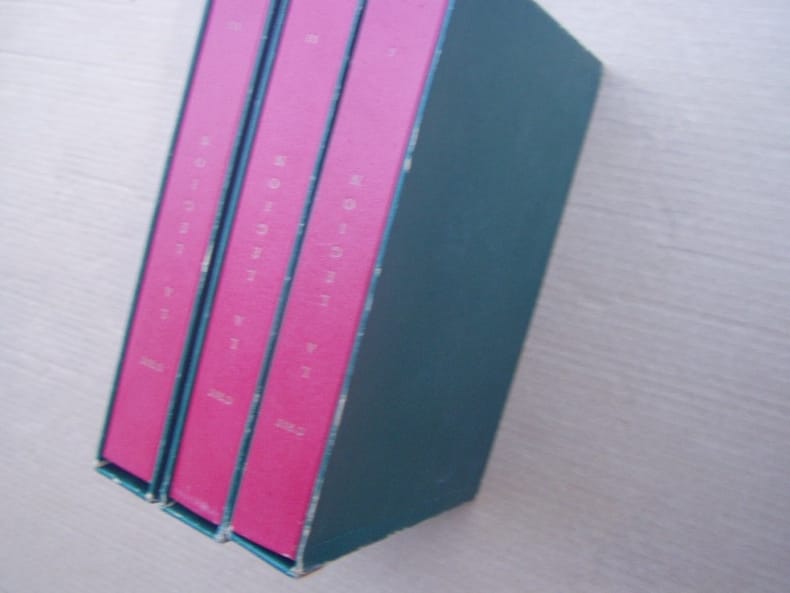
50612Les Impressions Françaises.3 vols.in-4 en feuilles.Couvertures,jaquettes et emboîtages.Ex.530.Ills.de Louis Frégier.Dédicace des Auteurs.Pages non coupées.Etat neuf.
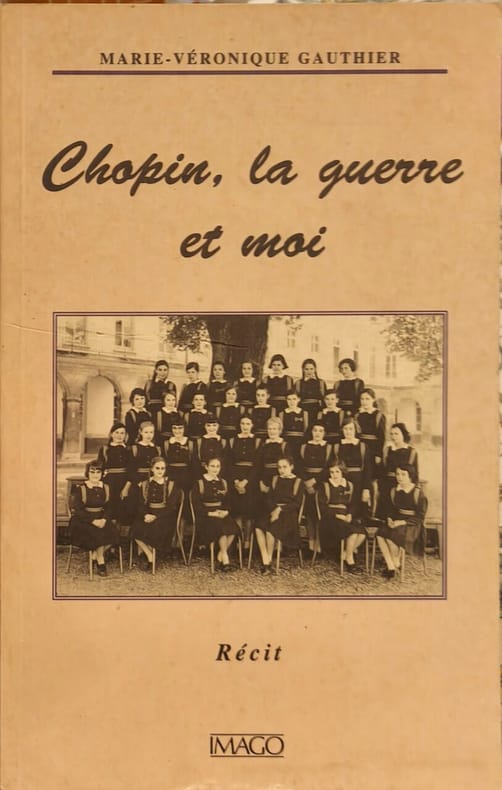
20005497IMAGO 2000 168 pages 13 4x1 4x20 2cm. 2000. Broché. 168 pages. Récit autobiographique d'une jeune fille pensionnaire à la Légion d'Honneur après la guerre qui développe une passion éperdue pour Frédéric Chopin et son œuvre transfigurant ainsi sa réalité quotidienne. Le livre mêle avec humour et tendresse le témoignage sur la vie en internat et l'évocation d'un amour idéalisé pour le compositeur
1963243171963 [Paris,Valence-sur-Rhone] : les Impressions françaises,sans date ( 1963), 3 volumes In-4ʻ (26 cm),carrés, en feuillets sous couverture rempliée,sous chemise cartonnée (verte et rouge) et sous emboitage (vert).Nombreuses illustrations en n/b (surtout in texte) + quelques couleurs (toujours pleine page,sous serpentes) de Louis Frégier.Exemplaires non coupés,Tomes I et II : La légion au combat. Tome III ; Telle qu'elle fut ,telle qu'elle est.Tome I : VI-154 p., ill., pl. -Tome II : 217 p., ill., pl. en coul.- Tome III : 219 p.ill., pl. en coul. Tirage limité à 2000 exemplaires numérotés (ici le 767). L'ouvrage commencera à paraître pour le centenaire de Camerone le 30 avril 1963 ,(précision apportée en fin du feuillet Pensées liminaires ).Très bel intérieur.Frottements, surtout périphériques, sur les arretes des emboitages. Les dorures de titres au dos sont un peu affadies.BON ETAT pour cet ensemble.