2 256 résultats
194637551n.p.: n.p. c1946. First Edition. First Printing. fair ex-lib. Quarto 128 illus. some color color maps usual library markings boards worn and soiled edges worn. n.p. hardcover
19456500n.p.: n.p. c. 1945. fair to good. 128 illus. color maps some color illus. & color maps pasted in stamp ins rear bd minor water damage wrinkled endpapers n.p. unknown
192949297Fort Sill OK: Field Artillery School 1929. Presumed First Edition First printing. Wraps. Good. 37 pages. Wraps. Illustrations. Study Questions. Text somewhat darkened. Some wear to cover edges. Topics covered include the panoramic sight the French sight M-1901 the bracket fuze setter M 1916 the hand fuze setters model 1912 and model 1913 gunner's quadrant model of 1918 and study questions. The United States Army Field Artillery School USAFAS trains Field Artillery Soldiers and Marines in tactics techniques and procedures for the employment of fire support systems in support of the maneuver commander. The school further develops leaders who are tactically and technically proficient develops and refines warfighting doctrine and designs units capable of winning on future battlefields. The mission of the Field Artillery is to destroy neutralize or suppress the enemy by cannon rocket or missile fire and to help integrate all fire support assets into combined arms operations. The U.S. Army Field Artillery School trains educates and develops agile adaptive and decisive Soldiers and leaders; engages collaborates and partners with other branches sister-services and other fires warfighting function proponents; and serves as the lead agent for the development of Field Artillery doctrine concepts and dissemination of that knowledge to the Field Artillery force in support of commanders operating across the full spectrum of conflict and in the joint inter-organizational and multinational JIM environment. The U.S. Army Field Artillery enables maneuver commanders to dominate in Unified Land Operations through effective targeting integration and delivery of fires. The origin of USAFAS can be traced back to the 1907 reorganization of the Artillery Corps and to the character of Fort Sill at that time. The 1907 reorganization created Coast and Field Artillery Branches. In the process of this reorganization the Field Artillery was deprived of its former home at Fort Monroe Virginia. Fort Sill was considered the best location for a Field Artillery school since its 15000-acre reservation allowed ample room for target practice and its great variety of terrain offered an excellent area for different types of tactical training. In addition the post had already assumed the character of the home of artillery with a large number of artillery units assigned. The first artillery school the US Army School of Fire was organized in 1911 by Captain Dan Tyler Moore. With the exception of a brief period in 1916 when school troops were used as frontier security guards during the Mexican Revolution the School has operated and expanded continuously. Hundreds of thousands of artillerymen have been trained at Fort Sill since the inception of the School. After the United States entered World War I the school reopened in 1917 with Col. William J. Snow as commandant. The Field Artillery School as it was now known added more courses. After the war school commandants began a long-range program to improve field artillery mobility gunnery and equipment. Budget cuts during the 1920s hampered their efforts but innovative directors of the Gunnery Department with support from school commandants helped modernize the field artillery in the 1930s. Maj. Carlos Brewer director of the Gunnery Department in the late 1920s and early 1930s introduced new fire direction techniques so fire support would be more responsive. Maj. Orlando Ward the next department director developed the fire direction center to centralize command and control and to facilitate massing fire. Brewer Ward and Lt. Col. H.L.C. Jones encouraged replacing horses with motor vehicles for moving field artillery guns. During World War II to best use new long-range guns and better response times the Field Artillery School championed the use of air observation to control artillery fires. The War Department approved organic field artillery air observation in 1942. The artillery air observers adjusted massed fire and performed liaison reconnaissance and other missions during the war. Following the war the school adapted to the atomic age and the Cold War. The War Department consolidated all artillery training and developments under the U.S. Army Artillery Center at Fort Sill in 1946. At that time the center included the Artillery School the Antiaircraft and Guided Missile School at Fort Bliss Texas and the Coast Artillery School at Fort Scott Calif. Field Artillery School paperback
194288061Atlanta: Army Press 1942. Hardcover. Good. photos 134p. Red cloth. 31cm. Cover scuffed and worn along joints and other extremities. Contents sound A pictorial history of the stateside training and organization of this segregated unit for African Americans. Separate sections are devoted to the 350th 351st and 353rd Field Artillery Regiments and the 46th Tank Destroyer Battalion. Army Press hardcover
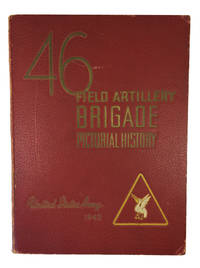
1945188278Muzzleburst 1945-01-01. Paperback. Good. Covers worn. Has a good binding. Will illustrated with plates for each chapter. History following the unit from California to the end of the war in Germany. Scarce unit history pamphlet. Muzzleburst paperback books
0364832819.Ghardcover. Good. Access codes and supplements are not guaranteed with used items. May be an ex-library book. hardcover
193290559Fort Sill OK: United States Army. Field Artillery School. Department of Tactics & Communication 1932. Presumed First Edition First printing thus. Single sheet printed on one side. Fair. The format is approximately 18 inches by 17 inches. RARE SURVIVING COPY. FRAGILE. Flimsy overlay paper. Tear in the lower right panel. Numerous pencil notations adjusting number printed on the overlay sheet. Several perforations noted. Short text notation at lower right corner. The United States Army Field Artillery School USAFAS trains Field Artillery Soldiers and Marines in tactics techniques and procedures for the employment of fire support systems in support of the maneuver commander. The school further develops leaders who are tactically and technically proficient develops and refines warfighting doctrine and designs units capable of winning on future battlefields. The school is currently located at Fort Sill Oklahoma. The mission of the Field Artillery is to destroy neutralize or suppress the enemy by cannon rocket or missile fire and to help integrate all fire support assets into combined arms operations. The U.S. Army Field Artillery School trains educates and develops agile adaptive and decisive Soldiers and leaders; engages collaborates and partners with other branches sister-services and other fires warfighting function proponents; and serves as the lead agent for the development of Field Artillery doctrine concepts and dissemination of that knowledge to the Field Artillery force in support of commanders operating across the full spectrum of conflict and in the joint inter-organizational and multinational JIM environment. The U.S. Army Field Artillery enables maneuver commanders to dominate in Unified Land Operations through effective targeting integration and delivery of fires. The vanguard sometimes abbreviated to van and also called the advance guard is the leading part of an advancing military formation. It has a number of functions including seeking out the enemy and securing ground in advance of the main force. The vanguard derives from the traditional division of a medieval army into three battles or wards; the Van the Main or Middle and the Rear. The term originated from the medieval French avant-garde i.e. "the advance guard". The vanguard would lead the line of march and would deploy first on the field of battle either in front of the other wards or to the right if they deployed in line. The origin of USAFAS can be traced back to the 1907 reorganization of the Artillery Corps and to the character of Fort Sill at that time. The 1907 reorganization created Coast and Field Artillery Branches. In the process of this reorganization the Field Artillery was deprived of its former home at Fort Monroe Virginia. Fort Sill was considered the best location for a Field Artillery school since its 15000-acre reservation allowed ample room for target practice and its great variety of terrain offered an excellent area for different types of tactical training. In addition the post had already assumed the character of the home of artillery with a large number of artillery units assigned. The first artillery school the US Army School of Fire was organized in 1911 by Captain Dan Tyler Moore. With the exception of a brief period in 1916 when school troops were used as frontier security guards during the Mexican Revolution the School has operated and expanded continuously. Hundreds of thousands of artillerymen have been trained at Fort Sill since the inception of the School. After the United States entered World War I the school reopened in 1917 with Col. William J. Snow as commandant. The Field Artillery School as it was now known added more courses. After the war school commandants began a long-range program to improve field artillery mobility gunnery and equipment. Budget cuts during the 1920s hampered their efforts but innovative directors of the Gunnery Department with support from school commandants helped modernize the field artillery in the 1930s. Maj. Carlos Brewer director of the Gunnery Department in the late 1920s and early 1930s introduced new fire direction techniques so fire support would be more responsive. Maj. Orlando Ward the next department director developed the fire direction center to centralize command and control and to facilitate massing fire. Brewer Ward and Lt. Col. H.L.C. Jones encouraged replacing horses with motor vehicles for moving field artillery guns. During World War II to best use new long-range guns and better response times the Field Artillery School championed the use of air observation to control artillery fires. The War Department approved organic field artillery air observation in 1942. The artillery air observers adjusted massed fire and performed liaison reconnaissance and other missions during the war. Following the war the school adapted to the atomic age and the Cold War. The War Department consolidated all artillery training and developments under the U.S. Army Artillery Center at Fort Sill in 1946. At that time the center included the Artillery School the Antiaircraft and Guided Missile School at Fort Bliss Texas and the Coast Artillery School at Fort Scott Calif. United States Army. Field Artillery School. Department of Tactics & Communication unknown
194358834Field Artillery School 1943. Reprint. Second printing 5 000 copies. Wraps. Good. No dust jacket as issued. 1 58 p. Staple bound with holes cut for insertion into a standard Army binder. Marked "Restricted" Field Artillery School paperback
0267990030.Ghardcover. Good. Access codes and supplements are not guaranteed with used items. May be an ex-library book. hardcover
0267879202.Ghardcover. Good. Access codes and supplements are not guaranteed with used items. May be an ex-library book. hardcover
026556011X.Ghardcover. Good. Access codes and supplements are not guaranteed with used items. May be an ex-library book. hardcover
0266538827.Ghardcover. Good. Access codes and supplements are not guaranteed with used items. May be an ex-library book. hardcover
0282387447.Gpaperback. Good. Access codes and supplements are not guaranteed with used items. May be an ex-library book. paperback
0282947817.Gpaperback. Good. Access codes and supplements are not guaranteed with used items. May be an ex-library book. paperback
0282747796.Gpaperback. Good. Access codes and supplements are not guaranteed with used items. May be an ex-library book. paperback
0365500860.Ghardcover. Good. Access codes and supplements are not guaranteed with used items. May be an ex-library book. hardcover
A9781345895131Hardback. New. hardcover
1945188278Muzzleburst 1945-01-01. Paperback. Good. 0x0x0. Covers worn. Has a good binding. Will illustrated with plates for each chapter. History following the unit from California to the end of the war in Germany. Scarce unit history pamphlet. Muzzleburst paperback
0267995660.Ghardcover. Good. Access codes and supplements are not guaranteed with used items. May be an ex-library book. hardcover
18901410180Chicago: The Craig Press 1890. Hardcover. Octavo 129 pages. In Fair minus condition. Spine is red with gold print. Boards in red cloth gold print mitred edges; tattering to spine caps and corners blemishes toning shelf wear cocked spine. Text block has cracked hinges front flyleaf loose intermittent spine breaks light age toning to paper. Illustrated: b&w frontispiece and plates photographs with tissue guards. <br /> <br /> NOTE: Shelved in Netdesk Column Z. 1410180. FP New Rockville Stock. The Craig Press hardcover
1528087690.Ghardcover. Good. Access codes and supplements are not guaranteed with used items. May be an ex-library book. hardcover
1331203767.Gpaperback. Good. Access codes and supplements are not guaranteed with used items. May be an ex-library book. paperback
1830SB-0730Berlin, J. A. List, 1830. Brauner Original-Halbleinenband im Format 21 x 13 cm mit goldgeprägtem Rückentitel auf rotem Rückenschild, ornamentalen Zierprägungen sowie vier goldgeprägten Ornamentbändern. Einbanddecken in mehrfarbiger bräunlicher Marmorierung und mit Lederecken. Rot eingefärbter Buchschnitt (Ganzschnitt). VIII, 668 S., 5 gefaltete Kupfertafeln im Anhang. Ephraim Salomon Unger (1789 - 1870) zählt zu den führenden Mathematikern des frühen 19. Jahrhunderts. Popularität erwarb er sich neben seinen fachlichen Arbeiten durch sein renommiertes Erfurter Privat-Pädagogium. Zu seinen Schülern zählte unter anderem der Ingenieur und Brückenarchitekt Johann August Röbling.
18673Librairie Aristide Quillet - 1915, in-4 relié toile éditeur, reliure Engel illustrée par A. Pierson représentant le canon de 75 de face avec encadrement d?obus, 52pp; exemplaire a transformation
224676Strasbourg, I.C.A.M., 1988 in-8, 286 pp., nombreuses ill. in-t. dont des cartes, biblio., broché.