3 résultats
16861235701686 A Cologne, Chez Jean de Clou, 1686 - Seconde édition - 1 volume in-12; reliure pleine basane; dos à 5 nerfs; titre et filets en dorés (effacés par le temps) - 392 pages
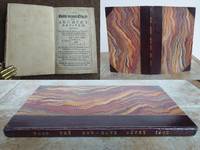
168252208<p>London printed by Samuel Roycroft and are to be sold by Edward Gough at Cow-Cross 1682. TITLE CONTINUED:As by their several gracious Commissions here recited may appear. With a brief Relation of the Manner of the Archers marching on several days of Solemnity. FIRST EDITION 1682. Small slim 8vo approximately 170 x 110 mm 7 x 4½ inches pages: xvi 1-78 lacking last leaf "Post Script" many copies are lacking this leaf pages 1-31 mostly printed in black letter then a new title page "A Remembrance of the Worthy Show and Shooting by the Duke of Shoreditch" followed by roman text bound in 19th century in maroon half roan over marbled boards marbled endpapers with bookplate of Fox Pointe Manor Library on first pastedown. Slight rubbing to binding pale stain affecting the lower inner margins of first 7 leaves including title page tiny repair to blank side of lower edge of title page slight shelf wear to edges and corners 3 corner tips neatly repaired not affecting text small closed tear to 1 margin and top margin of last page both neatly repaired not affecting text some very light soiling and staining to margins a very good copy. See Sotheby's Library of the Earls of Maccclesfield Part 10 page 364 No 3850; Catalogue of The Famous Library of Henry Huth Volume 9 page 2254 No. 8182; ESTC R22583. MORE IMAGES ATTACHED TO THIS LISTING ALL ZOOMABLE FURTHER IMAGES ON REQUEST. POSTAGE AT COST.</p> London, printed by S[amuel] R[oycroft] and are to be sold by Edward Gough at Cow-Cross, 1682. hardcover
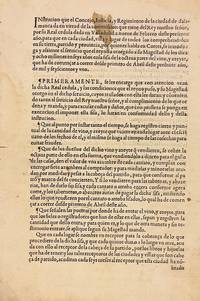
16013683Salamanca: S.n. 1601. First edition. Signed at foot by a municipal officer Diez de la Puente. One-page contemporary manuscript on p. 3 relating to the administration of the tax. Unbound as issued. Pinholes at gutter some edge chipping and small dents brown stain affecting the upper portion throughout. Otherwise a good well-preserved copy. First edition. Signed at foot by a municipal officer Diez de la Puente. One-page contemporary manuscript on p. 3 relating to the administration of the tax. Unbound as issued. 4 last 2 blank p. <p><br /> Unrecorded 1601 ordinance from Salamanca enforcing the Armada-era servicio de millones Spain’s foundational fiscal levy.<br /> <p><p><br /> Printed ordinance issued by the municipal council of Salamanca implementing the royal tax known as the servicio de los dieciocho millones. In accordance with the royal cédula of 9 February 1601 the Concejo Justicia y Regimiento instructs subordinate towns and villages to collect an eighth part of all wine and olive oil sold to be remitted through a chain of local receivers. The text regulates how wine and oil must be measured recorded and taxed forbids additional repartimientos and orders prompt transfer of funds to the city’s main treasury. Dated at Salamanca 10 March 1601 and naming four municipal commissioners appointed for its execution it represents the earliest stage of local enforcement of Philip III’s fiscal scheme transforming the national levy into a functioning municipal excise. A contemporary handwritten endorsement below the text signed by Diez de la Puente attests its execution. Accompanying the printed ordinance is a contemporary manuscript headed on p. 3 “Dudas que se ofrecen en la administración de las sisas†listing practical questions concerning the execution of the tax—registration and measurement of goods roles of administrators and receivers form of payment penalties and conditions of tax farming arrendamiento.<br /> <p><p><br /> The servicio de los dieciocho millones formed part of the broader system of millones taxes created by the Cortes of Castile to meet the Crown’s desperate financial needs after the prolonged wars of Philip II. The servicio de millones had first been introduced by royal request and approved by the Cortes on 4 April 1590 conceived to raise eight million ducats over six years to finance the royal expenditure associated with the Armada campaign against England and other military commitments. Rather than remaining temporary it evolved into a regular levy on six staple items—wine oil vinegar meat soap and tallow candles—collected through local sisas and eventually forming the backbone of Castile’s fiscal structure. By 1600–1601 under Philip III the scheme was renewed and expanded to eighteen million ducats its collection entrusted to municipal governments such as Salamanca’s Concejo Justicia y Regimiento. As described in Bartolomé Yun Casalilla’s Sobre la transición al capitalismo en Castilla this marked a transition from feudal income to a centralized fiscal system financed through municipal taxation embedding local economies within the machinery of the Habsburg war state. The present ordinance captures this process of consolidation—when the monarchy sought tighter control over municipal revenues demanded proper accounting and remittance of surpluses and aimed to prevent arbitrary over-taxation—reflecting both the fiscal strain and administrative centralization characteristic of early-seventeenth-century Spain.<br /> <p><p><br /> Reference: Yun Casalilla B. 1987. Sobre la transición al capitalismo en Castilla: EconomÃa y sociedad en Tierra de Campos 1500–1830. Valladolid: Junta de Castilla y León ConsejerÃa de Educación y Cultura.<br /> <p>. [S.n.] unknown