131 résultats
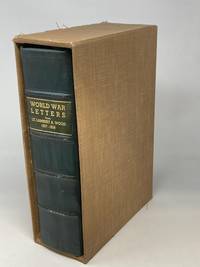
191888062SELF PUBLISHED 1918. Manuscript. Very Good Plus. Half-bound dark green morocco over light brown woven linen. A large sturdy hand-crafted book with sewn signatures 11 3/4 in. x 8 in. x 3 in. housed within a sturdy wooden slipcase covered with woven linen matching the cover of the book itself. Letters envelopes official documents etc.are displayed behind within clear plastic "jackets" each mounted to individual pages of thick card stock. The large tipped in photo shows some spotty residue and the slipcase shows a bit of edgewear.<br /> <br /> The archive consists of 77 detailed letters written by Lieutenant Wood 9th Infantry Regiment 2nd Division who was commanding his machine gun company and was killed during combat July 18 1918 southeast of Soissons France. <br /> <br /> A collection of remarkable letters reflecting an extraordinarily deep and philosophical grasp of both the lofty purpose justification and horrors of war "I am fighting for our very civilization" with none of the details left out "I have seen men die smiling." or "I haven't been out of my clothes for 30 days."<br /> <br /> Roughly half of this notable 77-letter archive are addressed to both parents with some addressed individually to "Mother" "Father" "Dad" and the other half -- 36 letters -- addressed to M____S____ his sweetheart. Woven throughout so many of the letters is Lambert Wood's profound and unstoppable sense of duty and responsibility and consistent view of himself as a crucial component of a much larger grand effort than merely his individual self -- one utterly dependent upon his steady and ferocious all-in participation. Further as an officer he felt his comportment had to be visibly far and above that required of the ordinary soldier - on a number of occasions he mentioned to M____S____ depriving himself of sleep and duly awarded leave - because he felt compelled to set an example -- yet with no trace of egoism or grandstanding; Lambert Wood was fighting the good fight the real fight and coming to realize and mentioning that it was the big brave two-fisted men who were the wons who would win this very tough war. Apparently he had encountered those who were ambivalent about what was required for a war effort.<br /> <br /> In his absolutely devoted deep and very sweet letters to M____S____ he explained both the logistics of his various responsibilities and placements -- instructor in Gas warfare for example -- and seldom neglected to delve deeper into the reasons behind waras if in explaining it to his beloved M____S____ he was also explaining it to himself; the young man was clearly a highly articulate writer who was able - at 22 and 23 - to clearly and convincingly convey the American sense of righteousness against a loathesome enemy. Somewhat alarmingly reading through the letters one sees this soldier-leader's growing -- it must be called "joy" for he himself terms it so in this and other synonymous words in KILLING the enemy the cold and dispassionate"otherizing" which steadily grows to supplant his still youthful and natural 23-year old boyish innocence and permits the taking of human life behind a script of justification.<br /> <br /> Lambert Alexander Wood age 23 was killed in action on July 181918 southeast of Soissons France while in command of his machine gun platoon on a flank movement against an enemy group which was enfilading the advancing infantry line 9th Infantry Regiment 2nd Division.<br /> <br /> Reading through this remarkably articulate archive one follows along the horrific yet fascinating path through the eyes of an educated and perhaps privileged son of Portland Oregon gradually transform into a focused and efficient killing machine a capable and effective instructor and leader of other men who had no choice but becoming the same if they were to survive. Their unit was the first in the actual trenches.<br /> <br /> Wood was the son of Dr. William Lee Wood a physician and Elizabeth Lambert Wood a Northwest author best known for her adventure stories for boys. His grandfather was J.H. Lambert Oregon pioneer horticulturist and originator of the Lambert Cherry. He grew up in Portland Oregon. While attending Willliams College in Massachusetts Wood enrolled in the vollunteer pre-enlistment training program in Plattsburgh New York as part of the "Preparedness" movement before actual U.S. involvement in World War I sailing for France in March of 1917. Note: The soldier Lambert Alexander Wood was the son of Oregon/Washington/Arizona author Elizabeth Lambert Wood. Two books comprising excerpts from these very letters were published and are included with the purchase of this letter-archive: The first entitled HIS JOB: LETTERS WRITTEN BY A 22 YEAR-OLD LIEUTENANT IN THE WORLD WAR TO HIS PARENTS AND OTHERS IN OREGON was published in 1936 by the Metropolitan Press of Portland OR. <br /> <br /> The second which appears to be a reissue but which may contain an edited selection of letters is entitled CERTAIN BRIEF CONCLUSIONS: FROM SELECTED LETTERS OF LAMBERT WOOD was issued by publishers Binfords & Mort Portland OR in 1939 and also printed by the Metropolitan Press in Portland OR. <br /> <br /> This copy includes the tipped-in photograph of Lambert Wood opposite the titlepage and a tipped-in handwritten presentation slip written and signed by his mother Northwest author Elizabeth Lambert Wood "With the compliments of soldier-author's mother. Elizabeth Lambert Wood".<br /> <br /> Wood served with the Machine Gun Company 9th Infantry Regiment 2nd Division. unknown
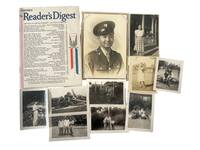
1944217981944. Japanese American WWII 442nd Regimental Combat Team soldier and family photograph archive showing Japanese American military service and community life in Hawaii during and immediately after World War II. This group documents the lives of Nisei soldiers connected to the 442nd Regimental Combat Team a segregated United States Army unit composed primarily of second generation Japanese Americans. The material shows individual soldiers with their families and communities while also documenting expressions of American patriotism among Japanese Americans during the period of wartime incarceration and discrimination generated by Executive Order 9066. <br /> <br /> Archive of 11 pieces including 10 silver gelatin photographs and one periodical issue. The photographs produced in Hawaii during the 1940s and early 1950s range in size from approximately 6.25 x 4 inches to 3.5 x 2.5 inches and depict Japanese American soldiers and members of their extended social circle in both military and civilian settings. One image presents a formal studio portrait of a Japanese American soldier in United States Army uniform wearing a cap and corporal's chevron. Other photographs show groups of men gathered outdoors among tropical plants and residential houses including scenes of veterans posing together in civilian clothing that suggest continuing friendships after military service. One image shows several Japanese American men raising an American flag while another depicts a group of young men lying closely together on the ground with their heads touching in a circle an intimate scene of camaraderie. Additional photographs depict domestic and social life within the Japanese American community including a young woman in Western dress seated with two soldiers on a porch and a young girl wearing a lei. Included with the photographs is the July 1945 issue of Reader's Digest containing the article "Hail Our Japanese-American GIs!" by Blake Clark and Oland D. Russell which publicly praised the service of Japanese American soldiers and called for recognition of their loyalty and wartime contributions.<br /> <br /> The 442nd Regimental Combat Team became the most decorated unit for its size and length of service in United States military history earning thousands of individual decorations for valor during combat operations in Europe. Many Nisei soldiers volunteered from mainland incarceration camps while others enlisted from Hawaii where Japanese Americans were not mass imprisoned but remained under intense scrutiny after the attack on Pearl Harbor. Contemporary publications such as the 1945 Reader's Digest article included here sought to influence public opinion by highlighting the loyalty of Japanese American soldiers at a time when their families continued to experience displacement discrimination and political marginalization. Photographic documentation of Nisei soldiers within family and community spaces is comparatively scarce particularly images that bridge wartime service and postwar civilian life in Hawaii. Minor edge wear and light handling marks visible to several photographs and the magazine otherwise well preserved with clear photographic contrast; overall very good condition. This archive provides direct documentation of Japanese American military participation and community during one of the most consequential periods in twentieth century civil rights and wartime history. unknown
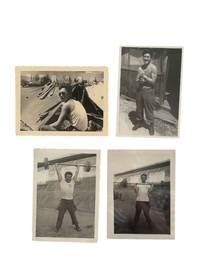
1945213801945. Japanese American soldier photograph archive documenting Nisei service in the United States Army during World War II in the European Theater a body of material connected to the generation of second-generation Japanese Americans who entered military service while many of their families were confined in American incarceration camps following Executive Order 9066. The photographs depict a uniformed soldier and fellow servicemen in training camp life and travel scenes during wartime service. Images include rifle drills field training exercises barracks and tent encampments and informal portraits of soldiers lifting barbells or posing at military installations. Such imagery is closely associated with the wartime mobilization of Japanese American troops that culminated in the formation and deployment of segregated Nisei units including the 100th Infantry Battalion and the 442nd Regimental Combat Team formations that fought extensively in Italy France and Germany while their families remained subject to wartime incarceration in the United States.<br /> <br /> Archive of 19 original black and white photographs documenting Japanese American soldiers during World War II service and training connected to the European Theater. Each measuring approximately 2.5" x 3" to 3.5" x 5" each. Photographs appear to date from the early to mid-1940s and show multiple scenes of military life including rifle training with U.S. service weapons soldiers conducting ground drills outside wooden barracks encampments of canvas military tents transport vehicles and informal moments of recreation including weightlifting and camp leisure. Several images depict European landmarks and travel scenes including a clear photograph of the Leaning Tower of Pisa and war-damaged Italian architecture indicating presence in Italy during the Allied campaign. Verso inscriptions appear on several photographs including handwritten captions such as "That's me in down town Chattaroy" and "Remembrance from leave 10 Min to Roberts 6345 Selma Ave Hollywood Calif." suggesting correspondence between soldiers and family or friends in California and documenting the personal circulation of these photographs during wartime service.<br /> <br /> Photographs measure approximately snapshot format to larger prints and consist primarily of silver gelatin prints typical of mid-twentieth-century military photography. The images collectively document the lived experience of Japanese American soldiers during the war including training camp life leisure travel and combat preparation. The presence of identifiable locations in Italy aligns the archive with the Italian campaign of 1943-1945 where Nisei units gained international recognition for battlefield performance while also serving as a powerful counterargument to domestic anti-Japanese prejudice in the United States. Light edge wear scattered corner creases and minor surface marks visible on several prints with occasional small stains and light curling typical of handled snapshot photographs; overall condition good. A visually varied documentary archive of Nisei military service during World War II preserving both training scenes and personal inscriptions connected to the Japanese American wartime experience. unknown
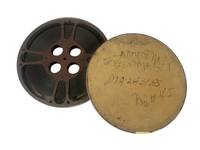
1945232061945. Capra Frank. Japanese-Americans a 1945 wartime military screen magazine segment film reel highlighting Japanese American service in the U.S. Army's information and morale boosting film distributions during the final year of World War II. Produced for exhibition to servicemen as part of Army-Navy Screen Magazine No. 45 the segment is also an example of the wartime contributions of legendary Italian-American filmmaker Frank Capra one of Hollywood's most influential directors best known for It Happened One Night Mr. Smith Goes to Washington and It's a Wonderful Life. During World War II Capra became a major figure in official U.S. military filmmaking directing or supervising films that translated government policy and Allied war aims into accessible emotionally forceful cinema for soldiers and civilians. Here his Army film work presents Nisei troops not as an isolated human-interest subject but as participants in a broader program joining military projection democratic rhetoric and controlled public acknowledgment of Japanese American loyalty after mass incarceration. The film's focus on the 100th Infantry Battalion the 442nd Regimental Combat Team battlefield casualties and a widow receiving the Silver Star shows how Capra's wartime production apparatus helped frame Japanese American military service for uniformed audiences in 1945.<br /> <br /> Capra Frank producer. Japanese-Americans. Segment from Army-Navy Screen Magazine No. 45. U.S. Army Signal Corps Army Pictorial Service 1945. Black and white sound film reel 16mm. Present on a large reel in metal can the lid handwritten in grease pencil "ARMY/NAVY SCREEN MAG." and "NO #45." The identified segment shows a spokesman in Hawaii praising Japanese Americans in the U.S. Army a war widow receiving a Silver Star scenes of Nisei troops in the Italian campaign the 100th Infantry Battalion entering Livorno wounded men being evacuated and General Mark Clark citing soldiers of the 34th Infantry Division. The physical reel remains tightly wound; the present housing and handwritten can notation directly support identification to issue no. 45.<br /> <br /> Issued at a time when Japanese Americans were serving in segregated units even as many of their families remained confined under wartime exclusion policy the segment shows how Capra's Army film production participated in reconciling racial tension and patriotic messaging to American servicemen. Japanese American servicemen are honored here as heroes and patriots. Light wear and dust to can; reel housed and tightly wound; surface inspection only. A strong piece of World War II military film notable both for its Japanese American subject matter and as a sample of Frank Capra's influential wartime propaganda work for the U.S. Army. unknown
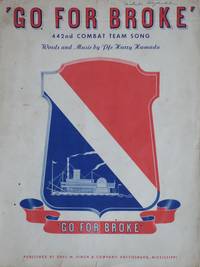
1944List2436Hattiesburg: Earl M. Finch 1944. Sheet music measuring 12 x 9 inches 4 pp. Signature of a Nabuko Hayashida on front cover. Slight tears at fold some toning two small pinholes very good overall quite attractive. Very Good. In Hawaii in May 1942 a battalion of Nisei volunteers was assembled for service in World War Two despite earlier failures of efforts to recruit Japanese-Americans due to the Army’s labeling of Nisei recruits as 4-C enemy aliens. Designated as the 100th Infantry Battalion they were deployed to North Africa in June 1943 integrating with the 34th Division in active combat. Their subsequent deployment to Italy in September 1943 exposed them to intense warfare earning them the moniker of the "Purple Heart Battalion" due to their notably high casualty rate.<br /> <br /> In January 1943 the U.S. War Department officially declared the establishment of the segregated 442nd Regimental Combat Team RCT which was comprised of Nisei volunteers originating from Hawaii and the mainland. The culmination of this initiative transpired in June 1944 when the 442nd RCT merged forces with the 100th Infantry Battalion in Europe subsequently absorbing the latter into its structure. The notable achievements of Nisei soldiers in combat operations prompted the reinstatement of the draft in January 1944 specifically targeting Nisei detainees to augment the ranks of the 442nd. Over time the 442nd RCT expanded to encompass the 2nd 3rd and 100th Battalions; the 522nd Field Artillery Battalion; the 232nd Engineering Company; the 206th Army Band; Anti-Tank Company; Cannon Company; and Service Company. <br /> <br /> Offered here is a very scarce piece of sheet music entitled “Go For Broke†which was written by the Hawaiian musician Harry Hamada reflecting the slogan of the 442nd and performed by Shelby and others during the war as part of efforts to boost morale. Hamada would feature in the 1951 movie “Go For Broke†as Masami alongside several other veterans of the 442nd. This publication of “Go For Broke†is from 1944 seven years before the movie’s release. The piece is dedicated to Colonel C.W. Pence. Hamada was a Hawaiian musician who performed with a band called the Shelby Hawaiians or the Shelby Serenaders. They performed as early as 1943. The Hattiesburg Mississippi merchant Earl M. Finch who ran an Army and Navy store close to Camp Shelby befriended Hamada and other members of the 442nd and acted as a sponsor for the group and eventually published this version despite his business being a dry goods merchant house and not a publishing house. The group with the support of Finch performed throughout the country to lift morale. At some point Hamada penned this composition likely in 1944 as we find no reference to it in 1943 articles and Finch published it - Hamada’s composition would become the theme song of the 442nd and Hamada would perform at the Halloran General Hospital in New York and the Walter Reed Hospital in Washington D.C. in 1944 likely performing this composition. Another composition called “Go For Broke†exists as well and it is unclear to what degree Hamada’s work caught on among the regiment. <br /> <br /> We find two records of Finch’s published version of the composition one listed as part of an online remembrance of the 442nd by the Smithsonian Institution https://americanhistory.si.edu/explore/stories/day-remembrance-70-years-after-executive-order-9066 which appears to have been on loan from the National Japanese American Historical Society and another copy held at Stanford though not listed in OCLC. Finch’s story is also interesting and is the subject of a remembrance on a 100th Battalion History page online https://www.100thbattalion.org/history/stories/earl-finch/. We find no copies listed in OCLC. Overall a very scarce piece of Japanese-American wartime history. Earl M. Finch unknown
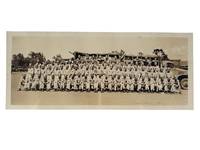
1943217311943. Japanese American soldiers associated with the 442nd Regimental Combat Team appear in these World War II panoramic photographs documenting Nisei military units training in Hawaii during the early stages of the regiment's formation. The 442nd Regimental Combat Team was composed primarily of second generation Japanese Americans who volunteered for military service during World War II while many of their families remained incarcerated in U.S. internment camps following the Executive Order 9066. Organized in 1943 and later deployed to Europe the regiment became one of the most decorated units for its size and length of service in United States military history. These photographs record the logistical and engineering personnel who supported that combat formation capturing the organization of Nisei soldiers stationed at Schofield Barracks during the training period preceding overseas deployment.<br /> <br /> Archive of two panoramic silver gelatin photographs taken outdoors at Schofield Barracks each measuring approximately 19.5 × 8 inches and stamped by Schofield Studio and Supply. Both photographs bear manuscript annotations on the versos identifying the images as taken while the writer served in a "Dump Trk. Co." at the "motor pool" indicating a transportation or engineering support unit attached to the broader 442nd organizational structure. The first photograph depicts approximately ninety Japanese American servicemen posed in uniform before two covered military transport trucks with soldiers seated in the vehicle beds and arranged in rows on the ground. Uniform details include khaki service uniforms garrison caps and visible rank insignia identifying several sergeants and noncommissioned officers seated in the front row. The second panoramic photograph shows a larger company of more than two hundred soldiers assembled on an open field beneath trees and utility poles. A banner marked "H & S" identifies Headquarters and Service Company and the front row includes a small group of white officers seated among the Nisei troops including a commanding officer identified in the caption as "my C.O Lt. Smejkal from Houston."<br /> <br /> These photographs illustrate the organizational structure of Japanese American military units during World War II when Nisei soldiers frequently served in segregated formations led by white officers under prevailing U.S. Army policies. Units associated with the 442nd Regimental Combat Team and related engineer and service companies trained extensively in Hawaii before later deployments connected to major European campaigns. The images therefore document a transitional moment in American military and social history when Japanese Americans sought to demonstrate loyalty to the United States through military service despite the wartime incarceration of their families in camps administered by the War Relocation Authority. Both photographs retain clear detail and legible manuscript annotations. Rolled with scattered foxing and light toning consistent with age; overall condition very good. unknown
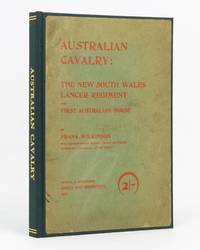
1901129531Sydney: Angus and Robertson 1901. First Edition. Hardcover. Fair. Sydney Angus and Robertson 1901. Quarto x 64 pages with an illustration plus 8 plates but lacking the colour frontispiece called for by Dornbusch. Modern binder's cloth with the front panel of the original green wrapper printed in red mounted on the front board; text block tide-marked near the head of the spine with the plates a little stained; some discolouration and foxing heavy in places; minor signs of age and use; a decent copy of an absolute rarity. This history of these two cavalry units from their foundation through to the end of the Boer War is 'undoubtedly a regimental record but it is something more - it is an attempt to explain and to some extent combat the unreasoning prejudice which has grown up as a result of the South African campaign against the cavalry arm of the service. On this point Mr. Wilkinson says:- "It is my purpose to show not only that cavalry regiments like the New South Wales Lancers have done equal yeoman service to the Empire in the South African struggle with their comrades in the other branches of the service but that they have done infinitely more as the pioneers of the cavalry movement in Australia to enhance the value of our defence force and to shew the world of what fighting stuff our men are made"' from a review in the 'Daily Telegraph' 12 October 1901. The last 18 pages contain numerous appendices including nominal and casualty rolls. <p>Dornbusch 126; Fielding and O'Neill page 126. Angus and Robertson hardcover
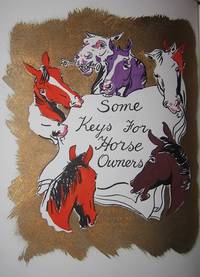
1928003636London: Country Life Ltd 1928. First Limited Edition. Full Pictorial Pigskin. Near Fine. No. 65 of 150 Edition de Luxe limitation signed by author and the illustrator using his pseudonym. 4to. 11.5 by 9.5 inches 29 by 24 cm. 240 6 pp. The illustrations through the body of the work are sprightly colorful fun and perfect exemplars of a twenties to thirties highball sophisticated aesthetic -- a sporting extension of the sleek look associated with thirties screwball comedies and musicals! The book makes riding and all its mishaps seem like one endless lark a party in which nothing really bad could possibly intrude. This is the kind of work that everyone will have a favorite image but few can not but admire the frontis of horses' heads awash with a gilt border. Much of the illustration by the way appears as if it were applied directly by hand and this slapdash manuscript quality greatly adds to the charm of the production. The pigskin binding has a film of soiling but remains attractive especially with its inked title and inkwell and feather quill pen imagery. With also a letter from the publisher. Country Life Ltd unknown
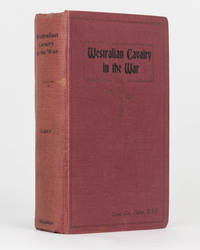
1921122313Melbourne: Alexander McCubbin 1921. First Edition. Hardcover. Very Good. Melbourne Alexander McCubbin 1921. Octavo 343 1 colophon pages plus 3 maps 2 folding 86 plates and 7 folding maps in a rear endpocket. Decorated cloth a little stained on the rear cover and lightly stained and sunned on the spine; endpapers offset; trifling signs of age and use; a very good copy internally excellent. The two-page foreword by Lieutenant-General Sir Harry Chauvel describes the author thus: 'Lieut.-Colonel Olden is well qualified to undertake the work as joining the Regiment on its inception he served with it throughout the War and though twice wounded was never long away from duty. He temporarily commanded it during the absence wounded of Colonel Todd on more than one occasion notably during the 2nd Battle of Gaza and finally succeeded to the command after the death of Colonel Todd'. He was awarded the DSO. <p>Dornbusch 399; Fielding and O'Neill page 233; Trigellis-Smith 280. Alexander McCubbin hardcover
1942129472Brisbane: William Brooks and Co 1942. First Edition. Hardcover. Fair/Fair. Brisbane William Brooks and Co. 1942. Octavo xvi 186 pages with an illustration and 4 maps plus 67 pages of plates containing 108 plates in all; the regimental colour patch is printed in three colours on the title page. Maroon sand-grain cloth lettered in gilt on the spine and front cover; cloth a little stained and rubbed with two small worm holes to the spine and front cover with some short tracks visible on the front pastedown; edges marked; binding a little shaken and cracked between some gatherings; trifling remnants of the original tipped-in plain opaque paper dustwrapper on the leading edges of the pastedowns as often; minimal adhesive residue to one page from an old insert; paper a little tanned; some scattered foxing; overall a decent copy. This is a rare item with provenance from two light horsemen. An inscription on the front free endpaper reads: 'Originally owned by the late 868 Corporal Jack Ledlie but given to me by his widow Olive. Clive Kynaston. 512 - 12th ALH'. A second inscription in the same hand at the head of one of the contents pages indicates that he later presented the book to '2/14 QMI' Queensland Mounted Infantry. <p>The author was Signal Sergeant of the Regiment. <p>Dornbusch 393; Fielding and O'Neill page 233; Trigellis-Smith 282. William Brooks and Co hardcover
19822091202133105888Automobile Regiment History Publishing Society 1982. Soft Cover. Fine. Volume: 1 Automobile Regiment History Publishing Society paperback
19190011016Coblenz Germany Benton Pa: Occupied Germany Coblenz Benton PA 56th Infantry. Good. 1919. Softcover. On offer is a superb pocket notebook kept by an American soldier in occupied Germany in the months immediately following World War One WW1. The author of this notebook is Ezra Skow. Little is known of Skow's early life. He was born in 1892 and enlisted in the U. S. Army in about September 1918 at the age of 25 or 26. Burial records in Benton PA indicate that he was attached to the 156th Infantry Regiment. However there was no 156th Infantry in the United States Order of Battle in WWI. In his notebook Skow records that he served in the 56th Infantry. This accords with the record of service of the 56th Infantry Regiment. The 56th Infantry Regiment was a regular infantry regiment in the United States Army. Its roots date back to the American Civil War where it served in the North's Army of the Potomac. It originated from personnel of the 17th Infantry Regiment in 1917 and fought in the region of Metz during World War I. In April 1919 a battalion of the 56th entered Metz as an honour guard for the Commanding General of the American Expeditionary Force John J. Pershing. Skow was married before joining the army. His wife Laura lived until 1987 passing away at the age of 93. Skow himself died in 1947 at the age of 57. His entries take the form of letters to his wife. They cover the period Jan 11 1919 through June 25 1919. In his diary Skow records several of the towns and cities in which his unit was stationed including Metz France Mulheim Metternich and other places in and around the city of Coblenz Germany. His entries speak about the day-to-day existence of a private soldier: "This is some place. Gee I wish I was home now. I would tell you a lot. The women are carrying their things on their back when they go to the store" Jan 13; ". I wrote you a letter tonight and send you the worlds clock too as I saw that today over at the city. And I was to see Charley Chaplin in the front line trenches and it was good. I would like to see you now. . I sit here at a Dutch table now writing notes and the Dutch man is reading the paper and his wife is talking out of the front window and you can see they are like but not quite as bad. Your Husband Ezra Skow xxxx" May 2; ". I was over to Coblenz today and wrote you a letter. And it is a fine day. I didn't do very much today. But believe me I would love to be home to loved you again. As I am getting tired of this life and will be able to tell you all about it when I get home . Your most lonely husband this side of the water. Ezra Skow" May 12. On June 4th he writes that he has learned his unit is going to be leaving the Coblenz area and hopefully heading home to the United States. In fact this is exactly what happened. By June 23rd he is in Fort Dix NJ and on the 25th he is out of the army. : ". I am out of the army now. Coming home to you dear." June 25. There are several other pages of note which include among other things the names and addresses of several other men - likely men he met and befriended. For a historian this is an outstanding piece of primary source material. It details the very ordinary day-to-day life of a soldier in WWI capturing his duties and his longing for home. For a regimental historian this fills in details of the history of their regiments. For a genealogist it offers some links to other Americans who served in that regiment. Measuring 5.25 inches by 3.5 inches this notebook contains 72 pages and is 85% complete. The book is in good condition. The binding and pages are intact. His handwriting is cramped but generally legible. ; Manuscripts; 24mo 5" - 6" tall; 72 pages; Keywords: handwritten manuscript document letter autograph writer hand written documents signed letters manuscripts historical holograph writers autographs personal memoir memorial antiquité contrat vélin document manuscrit papier antike brief pergament dokument manuskript papier oggetto d'antiquariato atto velina documento manoscritto carta antigüedad hecho vitela documento manuscrito papel 56th Infantry World War One US Army American soldier Occupied Germany . Occupied Germany, Coblenz, Benton, PA, 56th Infantry paperback
1926129485Sydney: The Motor Press of Australia Limited 1926. First Edition. Hardcover. Sydney The Motor Press of Australia Limited 1926. Octavo 232 pages with a facsimile letter plus 3 plates portraits of the Commanding Officers and 7 folding maps on 4 leaves in an end-pocket. Printed papered boards later rebacked in brown cloth lettered in gilt; original boards marked stained and worn at the extremities with a heavy bump to the leading edge of both covers; new endpapers and rear endpocket; edges foxed with scattered foxing throughout; small light tidemark to the top margin of the plates and a few leaves; folding maps tidemarked and worn with some chipped edges stabilized with archival tape; signs of age and use but overall a presentable copy of a very rare book. The retained original front flyleaf carries the contemporary ownership details of 'Staff Sergt U J Cunneen Late 5 L.H. 295' June 1926; two other family members have added their details later and one of them has put a relevant annotation on an early page. 'Saddler/Sergeant Urban James Cunneen' appears in the nominal roll see page 176. <p>Dornbusch 404; Fielding and O'Neill page 232; Trigellis-Smith 276. The Motor Press of Australia Limited hardcover
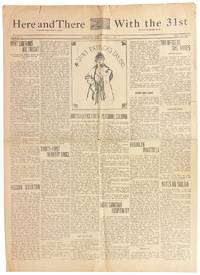
191947912Vladivostok Siberia: 31st Infantry Regiment 1919. Very Good -. Vladivostok Siberia: 31st Infantry Regiment 1919. First Edition. Oversized tabloid 59.5cm; 6pp. Folds chips and a few splits along edges; paper toned and a bit brittle; Good to Very Good. <br /> <br /> Quite scarce publication from the 31st Infantry Regiment published "Every Once In A While" "Wherever We Happen To Be." This issue was published during the Russian Civil War and the United States' failed Siberian Intervention. The paper itself is full of local and international news and leads with an article "What Siberians Are Taught: One Paper Says America Treats the Russians in the Same Way as Negroes."<br /> <br /> We find three holdings in OCLC at the Hoover Institution Montana State and U.S. Army War College. . 31st Infantry Regiment unknown
1919000114Post War Germany 1919. Very interesting and intriguing diary once one gets used to the author's scrawl. Containing approximately 29 pages written on both sides Ezra Skow writes one sometimes two days per page in this notebook style journal. Many entries are letter-style to his wife and signed at the bottom with his name and location. Many times he closes with XXX. May 19 writing of Coblenz and Berlin he closes: "I would just like to love you Dear. This is some life to be in and I don't know when I am coming home.I think next month." Another note on the inside front cover dated May 15th: "One year and 5 months since we have been married and have been in the army over 9 months now." Book shows general light wear and is about 3 1/4 x 5 1/4 inches. There is a sleeve for a pencil which it seems is long gone. . Good. 24mo - over 5" - 5¾" tall. Manuscript. unknown
1929152983Frome Somerset: Butler & Turner 1929. Foreword by General Sir H. L. Smith-Dorrien. In two volumes. Pp. xxxii764 frontispiece 1 folding and 43 full page plates 2 folding plus 35 full page text maps indices; cr. 4to; qr. purple cloth green cloth boards lettered ruled and decorated in gilt spines lightly faded boards lightly flecked and marked; upper hinges very slightly starting some light foxing surface damage to lower portion of lower free endpaper and lower pastedown in Volume II; Butler & Turner Frome Somerset 1929. White p. 101; Sutcliffe 1/p. 278. From the library of Lieut. Colonel H. F. N. Jourdain C.M.G. late The Connaught Rangers with his armorial bookplate on upper pastedowns and with presentation inscription to him 'by the Sherwood Foresters as some slight acknowledgement of his assistance in the compilation of this History.' Loosely inserted are two small autograph letters signed on embossed 'Upton Lodge Upper Hale Farnham Surrey' letterhead dated 15.3.33 3pp. and 21.3.33 2pp. addressed to 'Dear Jourdain' from Brigadier-General J. W. G. Roy concerning their contribution to the book and about the sending of this copy. Both men are acknowledged in the author's preface. Butler & Turner unknown
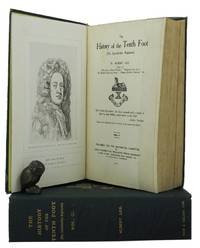
1916152495London: Spottiswoode Ballantyne & Co. Ltd 1916. In four volumes. Volume I: 1702-1914. Pp. xviii468 18 plates 2 coloured frontispiece tissue guard browned and creased text maps title page printed in fs24 red & blackfs26 ; Volumes II & III: 1914-1919. Introduction by Major-General Sir John R. Longley. Pp. xvi262x302 4 plates 2 folding 35 maps 10 folding; Volume IV: 1920-1952. Pp. 284last colophon frontispiece 8 plates text plus endpaper maps; top edge of free endpapers marked appendix Honours and awards index; Volumes I-III: cr. 4to; half black leather spines lettered in gilt gilt insignia to upper boards the leather worn and beginning to perish joints worn and with splits and chips particularly to head of spines the cloth soiled; t.e.g; endpapers browned and hinges cracked plus some water staining to top edge of several leaves towards end and lower endpapers of Volume I; Volume IV: demy 8vo; maize cloth spine lettered in gilt title on red ground; dust wrapper worn and with several splits and chips to edges; book label of David Levine Sydney on upper pastedown volumes 1-III and verso of upper free endpaper volume IV some foxing and browning to each of the four volumes occasionally heavy; Spottiswoode Ballantyne & Co. Ltd./Medici Society London 1916-1957 First editions. White p. 84; Sutcliffe 1/pp. 193/4. Spottiswoode, Ballantyne & Co. Ltd unknown
19501864Sydney: Angus & Robertson 1950. Octavo original blue cloth xviii 268 pp. frontispiece 16 double-sided photo plates endpaper maps and a further 12 maps throughout the text. Cloth a little dulled and flecked internally in very good order. First edition of a scarce and desirable Second World War regimental history.</p> <p>The 2/5th Australian Field Regiment were gunners stationed in the Middle East New Guinea and Kalimantan. This book contains valuable information and images on the Syrian campaign; specifically the battles at Merdjayoun Qouneitra Ibeles Saki Jerme Damour and Baalbek.</p> <p>This hard fighting was followed by a period of rest and recreation back in Australia followed by deployment to New Guinea where they provided artillery support at Milne Bay and Buna. This was followed by engagements in Kalimantan at Balikpapan Sepinggang and Manggar in present day Banga Belitung Island Indonesia. </p> <p>The frontispiece of the book depicts award of the Victoria Cross to Lieutenant A. R. Cutler. Trigellis-Smith 546; Dornbusch Australian Military Bibliography 474. Angus & Robertson unknown
194053679N. P.: Privately printed n. d. ca 1940. 1940. TEXAS WORLD WAR II. First edition. Stapled 6" x 9" brown printed wrappers with titles and unit insignia printed in black on the front and rear cover n. p. 39 pp. numerous illustrations from photographs. Camp Hulen was a military training camp near Palacios Texas operating from 1925 until 1946. At one time it supported the largest concentration of troops for field training in the U. S. military. In 1940 the War Department leased Camp Hulen from the Texas National Guard for antiaircraft training of National Guard units. At its peak the camp had facilities for 12000 military personnel. It continued as a training facility until 1944. The 197th Coast Artillery was one of these units. The oldest antiaircraft National Guard unit in the U.S. it was part of the New Hampshire National Guard. During World War II it was stationed in Australia as part of the defense against a feared Japanese invasion. This souvenir brochure shows group images of the various batteries making up the unit and its commanding officer. There are photographs of training exercises camp scenes recreation and social events including scenes from nearby Cuero and Palacious. Among the numerous images is a double page panoramic view of Camp Hulen in 1940. Also included is a history of the regiment and its unit. Very scarce with WorldCat locating only the copies at the United States War College and Yale. Faint evidence of a vertical crease to the front cover and minor wear to the top corner else a near fine copy of a scarce item. Privately printed, n. d. (ca 1940). unknown
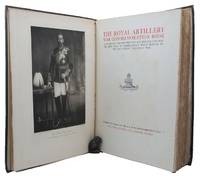
1920151344London: R.A. War Commemoration Fund 1920. Pp. xxiv408 title page printed in red & black collotype frontispiece portrait of H.M. King George V with 1 cm. closed tear into margin from centre of fore-edge 12 hand-tipped and 13 coloured plates plus 9 sepia and 16 black & white plates text illustrations decorative bordered endpapers The Victoria Cross section printed in red & black roll of Honour 1914-1919 a poem by Anita Dudley some representative artillerymen biographies and collotype portrait with guard and 6 black & white plates of portraits; roy. 4to; navy cloth lettered and decorated in gilt the boards heavily faded more so on upper board spine browned edges worn fore-corners lightly frayed; t.e.g. others uncut; book label of David Levine Sydney on upper pastedown endpapers offset scattered foxing throughout occasionally heavy unidentified former owner's armorial bookplate on upper pastedown; R.A. War Commemoration Fund/G. Bell and Sons Ltd. London 1920. First edition. White p. 29. R.A. War Commemoration Fund unknown
1928028311New Zealand: Whitcombe & Tombs Limited 1928. Cover: moderately sunned spine front and rear head margin; faint dusting of a little soiling. Thin bumping to head & foot of spine. Soft rubbing to corner tips with tiny bumping to bottom corner tips. Light age greying to head edge and just a few tiny spots to head & fore-edge. Quite clean content b&w illustrations all coloured maps clean and intact with the rear map having a thin fold crease to its whitespace margin edge. Binding tight. 267p. First Edition. Hb. VG/None. Whitcombe & Tombs Limited Hardcover
19822091502135501166Railway 15th Regiment Comrades Association 1982. Soft Cover. Fine. Number of pages: 343p Box size: 16x22cm Railway 15th Regiment Comrades Association paperback
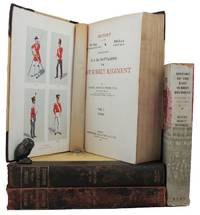
1911152383Aldershot Hants: The Regimental Committee 1911. In two volumes. Pp. xii438viii444 2 frontispieces 39 plates 5 coloured Alphabetical List of Officers 1685-1910. Compiled by A. C. Chamier indices; demy 8vo; green cloth lettered and ruled in gilt & blind gilt insignia to upper boards the boards lightly marked edges lightly worn spine cloth slightly bubbled Volume II; book label of David Levine Sydney on upper pastedowns and bookseller's sticker on upper pastedown Volume I leaves lightly browned some foxing throughout; The Regimental Committee/Gale & Polden Ltd. Aldershot Hants 1911. First edition. White p. 62; Sutcliffe 1/p. 75. The Regimental Committee unknown
190940921Memphis Tennessee: E. H. Clarke & Brother. Very Good. 1909. Hardcover. Very Good condition. Small grey cloth hardcover with gold writting on the title. Corners and bottom of spine are worn some markins on the cover. Pages are slightly aged and there are a couple small feded pencilings inside the cover. Otherwise the interior is excellent condition. Book has been glassine wrapped for protection. ; 5 3/4" x 8"; 189 pages . E. H. Clarke & Brother hardcover
1994L3 box774 b2<p>Prison-Life in the Tobacco Warehouse at Richmond. By a Ball's Bluff Prisoner Lieut. WM. C. Harris of Col. Baker's California Regiment. Second Printing by BookCrafters Inc. in 1994 from the 1862 Edition by George W. Childs. Hardcover 175 pp.</p> BookCrafters, Inc. hardcover