1 275 résultats
186166<p>Original rubbing for the Stele of Second Opium War Arrow War in China during 1856-1860. Stele erected in 1861 in Canton Guangzhou City in GuangTong Province in China.</p><p>Very big size on a whole thick rice paper 152cm X 98cm The original stone had been demolished long long ago. This rubbing is the only one found in the world. Folded a few wears at edges. Both text and pictures were fine copied and undamaged but had some folds.</p><p>Rubbing is an ancient Chinese method to copy text and pictures on stone or on bronze wares by hand.</p>
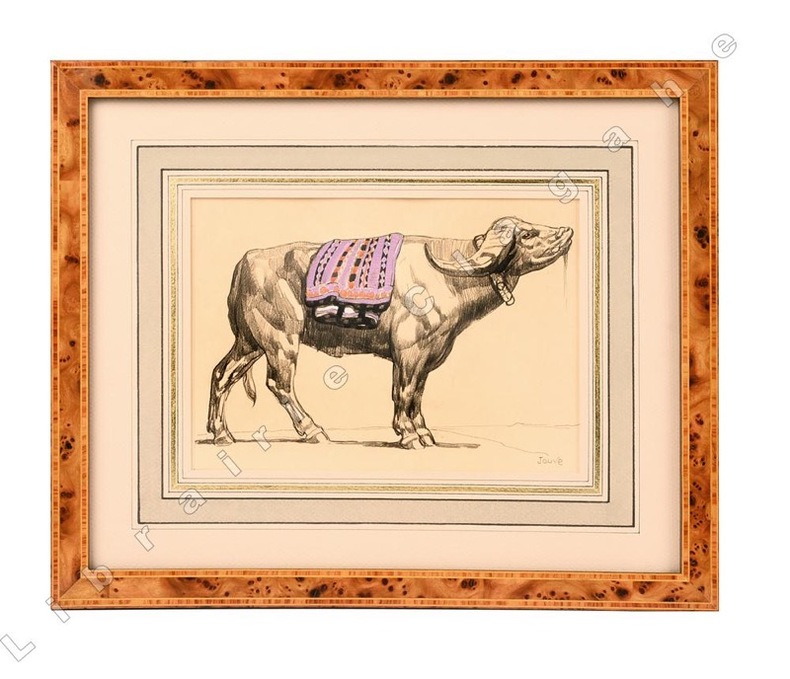
185221442Dessin original au crayon gras, gouache et aquarelle sur papier japon impérial (185 x 217 mm ; recadré 151 x 212), signé au crayon dans le coin inférieur droit ; passe-partout à large encadrement bicolore beige et vert et large filet doré, encadrement de loupe. Format total 295 x 355 mm. Au dos, partie de dessin au crayon et fusin, découpée.
181154628E-172: Longman Hurst Rees Orme and Brown. Very Good. 1811. First Edition; First Printing. Hardcover. Leather. 4to. Printed in London for Longman Hurst Rees Orme and Brown Paternoster-Row. 1811. 436 pgs. Fine folding engraved map "of the Interior of Louisiana with a part of New Mexico" and full-page map of ". The Mississippi River from its source to the Mouth of the Missouri." Bound by in full calf leather. Spine has been rebacked with contemporary leather spine and gilt titled spine label. Boards are scuffed and worn with wear present to the edges of the boards. Small name present to the reverse of the front board. Both maps present however the first map has a small piece missing and has been rebacked with linen. Foxing present. Text is free of marks. Binding tight and solid. The first U. S. Government exploration of the American southwest. In 1805 Wilkinson ordered Pike to find the source of the Mississippi River so Pike traveled into the northern Louisiana Territory newly purchased from France. In 1806 Pike led an expedition to the southwestern borders of the land acquired by the United States through the Louisiana Purchase. One of the most important inland travel narratives giving an account of the South-west including the author's description of his earlier journey to explore the headwaters of the Mississippi. The two maps are among the first of the area executed by a government expedition. After Pike returned from this first expedition General Wilkinson almost immediately ordered him to mount a second expedition this time to explore map and find the headwaters of the Arkansas and Red rivers. Additional objectives of this exploratory expedition into the southwestern part of the Louisiana Territory were to evaluate natural resources and establish friendly relations with Native Americans. Beginning July 15 1806 Pike led what became known as the "Pike Expedition". General Wilkinson's son James served as one of his lieutenants although it now seems that Wilkinson planned that the Spanish who controlled Mexico would capture him and his men. Over 100 years later France released official records showing General Wilkinson received personal trade concessions and thus could be labeled a spy for Spain at the time. Sabin 62837; Howes P373 e-172; 8vo 8" - 9" tall . Longman, Hurst, Rees, Orme, and Brown hardcover
1809000867cSCOTLAND IRELAND ENGLAND DUBLIN EDINBURGH UK. Good. 1809. On offer is a remarkable original 1809 - 1833 handwritten manuscript book once used by the British Army's 94th Regiment of Foot. This book contains all manner of writings relevant to the running and goings-on of the Regiment by the Officers. The book is rather eclectic containing standing orders regimental orders different charts and forms for payroll and other reportage for example on the conditions of the Dublin Garrison orders of the day direct communications between officers public requests for leave advancement of funds settling of accounts etc. public apologies for poor behavior copies of letters sent to superiors up to and including the Duke of York Commander of all His Majesty's Forces and many other of Britain's peerage and there are even personal reminiscences notes of reference for departing soldiers plus much much more. Most of the entries of personal notes and those for Day Book purposes are signed by all manner of officers and peerage; Colonels Captains Lords and many reference specific orders by the Supreme Commander of the Army or even the King. Most fascinating are the 'Memorialist' messages of certain officers writing in the 3rd person touting themselves while seeking favor. 164 pp of history and methodology of this noted British Army regiment contained in this entirely handwritten book. Most of the entries are circa 1809 - 1827 but the oldest entry in the book is dated Edinburgh Castle 1833 and is addressed to what appears to be 'My Dear Beaver' while the correspondent signs in initials F.M. late of St. Lucia. He makes reference to Mr. Beaver as the clergyman that baptized his 3 children. Also of note: on the very last page written upside down are a quote a note and an invitation dated Fort Charlotte 1825 to His Excellency Major General Blackwell by Mr. and Mrs. Murray. Many clues for the astute researcher will assuredly unveil many of the writers in this fascinating piece of British militaria. Save for the front cover being nearly detached and some loosened endpapers this book would be G. Truly one of the most exceptional pieces of manuscript militaria we have ever encountered.; English; 4to - over 9¾" - 12" tall; KEYWORDS: HISTORY OF MILITARY MILITARIA BRITISH ARMY 94TH REGIMENT SCOTLAND IRELAND DUBLIN GARRISON MAP MANUSCRIPT DOCUMENT LETTER AUTOGRAPH DIARY JOURNAL LOG KEEPSAKE WRITER HAND WRITTEN DOCUMENTS SIGNED LETTERS MANUSCRIPTS HISTORICAL HOLOGRAPH WRITERS DIARIES JOURNALS LOGS AUTOGRAPHS PERSONAL MEMOIR MEMORIAL PERSONAL HISTORY antiquité contrat vélin document manuscrit papier Antike Brief Pergament Dokument Manuskript Papier oggetto d'antiquariato atto velina documento manoscritto carta antigüedad hecho vitela documento manuscrito Papel . unknown
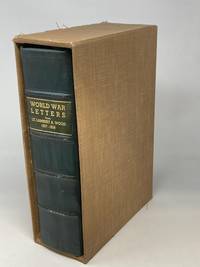
191888062SELF PUBLISHED 1918. Manuscript. Very Good Plus. Half-bound dark green morocco over light brown woven linen. A large sturdy hand-crafted book with sewn signatures 11 3/4 in. x 8 in. x 3 in. housed within a sturdy wooden slipcase covered with woven linen matching the cover of the book itself. Letters envelopes official documents etc.are displayed behind within clear plastic "jackets" each mounted to individual pages of thick card stock. The large tipped in photo shows some spotty residue and the slipcase shows a bit of edgewear.<br /> <br /> The archive consists of 77 detailed letters written by Lieutenant Wood 9th Infantry Regiment 2nd Division who was commanding his machine gun company and was killed during combat July 18 1918 southeast of Soissons France. <br /> <br /> A collection of remarkable letters reflecting an extraordinarily deep and philosophical grasp of both the lofty purpose justification and horrors of war "I am fighting for our very civilization" with none of the details left out "I have seen men die smiling." or "I haven't been out of my clothes for 30 days."<br /> <br /> Roughly half of this notable 77-letter archive are addressed to both parents with some addressed individually to "Mother" "Father" "Dad" and the other half -- 36 letters -- addressed to M____S____ his sweetheart. Woven throughout so many of the letters is Lambert Wood's profound and unstoppable sense of duty and responsibility and consistent view of himself as a crucial component of a much larger grand effort than merely his individual self -- one utterly dependent upon his steady and ferocious all-in participation. Further as an officer he felt his comportment had to be visibly far and above that required of the ordinary soldier - on a number of occasions he mentioned to M____S____ depriving himself of sleep and duly awarded leave - because he felt compelled to set an example -- yet with no trace of egoism or grandstanding; Lambert Wood was fighting the good fight the real fight and coming to realize and mentioning that it was the big brave two-fisted men who were the wons who would win this very tough war. Apparently he had encountered those who were ambivalent about what was required for a war effort.<br /> <br /> In his absolutely devoted deep and very sweet letters to M____S____ he explained both the logistics of his various responsibilities and placements -- instructor in Gas warfare for example -- and seldom neglected to delve deeper into the reasons behind waras if in explaining it to his beloved M____S____ he was also explaining it to himself; the young man was clearly a highly articulate writer who was able - at 22 and 23 - to clearly and convincingly convey the American sense of righteousness against a loathesome enemy. Somewhat alarmingly reading through the letters one sees this soldier-leader's growing -- it must be called "joy" for he himself terms it so in this and other synonymous words in KILLING the enemy the cold and dispassionate"otherizing" which steadily grows to supplant his still youthful and natural 23-year old boyish innocence and permits the taking of human life behind a script of justification.<br /> <br /> Lambert Alexander Wood age 23 was killed in action on July 181918 southeast of Soissons France while in command of his machine gun platoon on a flank movement against an enemy group which was enfilading the advancing infantry line 9th Infantry Regiment 2nd Division.<br /> <br /> Reading through this remarkably articulate archive one follows along the horrific yet fascinating path through the eyes of an educated and perhaps privileged son of Portland Oregon gradually transform into a focused and efficient killing machine a capable and effective instructor and leader of other men who had no choice but becoming the same if they were to survive. Their unit was the first in the actual trenches.<br /> <br /> Wood was the son of Dr. William Lee Wood a physician and Elizabeth Lambert Wood a Northwest author best known for her adventure stories for boys. His grandfather was J.H. Lambert Oregon pioneer horticulturist and originator of the Lambert Cherry. He grew up in Portland Oregon. While attending Willliams College in Massachusetts Wood enrolled in the vollunteer pre-enlistment training program in Plattsburgh New York as part of the "Preparedness" movement before actual U.S. involvement in World War I sailing for France in March of 1917. Note: The soldier Lambert Alexander Wood was the son of Oregon/Washington/Arizona author Elizabeth Lambert Wood. Two books comprising excerpts from these very letters were published and are included with the purchase of this letter-archive: The first entitled HIS JOB: LETTERS WRITTEN BY A 22 YEAR-OLD LIEUTENANT IN THE WORLD WAR TO HIS PARENTS AND OTHERS IN OREGON was published in 1936 by the Metropolitan Press of Portland OR. <br /> <br /> The second which appears to be a reissue but which may contain an edited selection of letters is entitled CERTAIN BRIEF CONCLUSIONS: FROM SELECTED LETTERS OF LAMBERT WOOD was issued by publishers Binfords & Mort Portland OR in 1939 and also printed by the Metropolitan Press in Portland OR. <br /> <br /> This copy includes the tipped-in photograph of Lambert Wood opposite the titlepage and a tipped-in handwritten presentation slip written and signed by his mother Northwest author Elizabeth Lambert Wood "With the compliments of soldier-author's mother. Elizabeth Lambert Wood".<br /> <br /> Wood served with the Machine Gun Company 9th Infantry Regiment 2nd Division. unknown
282 pages. Handsome bright gilt decoration upon front board. Gilt lettering upon backstrip clearly legible excepting a chip affecting three characters. Loss from top of backstrip. Prior owner's signature inside front board else unmarked. Narrow opening along back hinge. Average external wear. Additional photos available upon request. Book
14757Three plates engraved by Robert Havell and son printed by Edward Egerton-Williams in colours and finished by hand each with printer's blindstamp. From an edition limited to 110 copies printed from the original printing plates in 1988 employing the same techniques as used in 1823. This fine edition was published as a collaborative effort between the State Library of New South Wales and the renowned fine art publishers Alecto Editions.<br/> <br/> "By 1820 Sydney was a town of 12000 inhabitants about a third of whom were convicts. It had grown dramatically during the administration of Lachlan Macquarie who was appointed governor of New South Wales in 1810. Unlike previous governors Macquarie was not content merely to oversee a penal colony. His vigorous building programme changed forever the appearance of Sydney while his policy of accepting emancipated convicts as respected citizens demonstrated a social attitude strangely out of step with the times. Both these policies earned him criticism. In 1819 alarmed by Macquarie's extravagant public works the British Government commissioned a lawyer and civil servant J.T.Bigge to investigate. The attacks by his critics were met head on by Macquarrie's supporters in New South Wales. Books pamphlets and paintings luded the governor's undoubted achievements. Almost certainly Major Taylor's drawings were used in if not commissioned for this cause. The engraved views of the Panorama present a flattering image of the Australian seat of government and by extension of Macquarie's term there.Taylor arranged the engraving and printing of the of the three sheet Panorama. upon his return to England in July 1822.Havell appears to have worked from Taylor's. large watercolours but amended them with additional details. and decorative elements.It is most fortuitous that the copper plates.have survived. There is no other example of such a case for 19th century Australian engravings. unknown
186458358Various places including Methuen Lawrence Andover Boston and Lowell Massachusetts 1864-1865. modern calf antique with original gilt-lettered label "Company Clothing" laid down on front panel. Folio. Two pages list "Price of Clothing Camp & Garrison Equipage Year 1864." Following are 204 pages one to a soldier listing name company place and date of enlistment articles of clothing issued value itemized date of clothing issue and signature of soldier and witness. In some cases date of discharge desertion or demise is also noted. A "colored" under cook is also listed along with the soldiers. hardcover
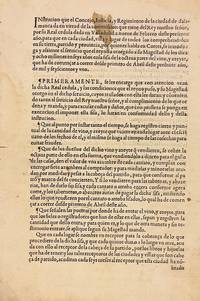
16013683Salamanca: S.n. 1601. First edition. Signed at foot by a municipal officer Diez de la Puente. One-page contemporary manuscript on p. 3 relating to the administration of the tax. Unbound as issued. Pinholes at gutter some edge chipping and small dents brown stain affecting the upper portion throughout. Otherwise a good well-preserved copy. First edition. Signed at foot by a municipal officer Diez de la Puente. One-page contemporary manuscript on p. 3 relating to the administration of the tax. Unbound as issued. 4 last 2 blank p. <p><br /> Unrecorded 1601 ordinance from Salamanca enforcing the Armada-era servicio de millones Spain’s foundational fiscal levy.<br /> <p><p><br /> Printed ordinance issued by the municipal council of Salamanca implementing the royal tax known as the servicio de los dieciocho millones. In accordance with the royal cédula of 9 February 1601 the Concejo Justicia y Regimiento instructs subordinate towns and villages to collect an eighth part of all wine and olive oil sold to be remitted through a chain of local receivers. The text regulates how wine and oil must be measured recorded and taxed forbids additional repartimientos and orders prompt transfer of funds to the city’s main treasury. Dated at Salamanca 10 March 1601 and naming four municipal commissioners appointed for its execution it represents the earliest stage of local enforcement of Philip III’s fiscal scheme transforming the national levy into a functioning municipal excise. A contemporary handwritten endorsement below the text signed by Diez de la Puente attests its execution. Accompanying the printed ordinance is a contemporary manuscript headed on p. 3 “Dudas que se ofrecen en la administración de las sisas†listing practical questions concerning the execution of the tax—registration and measurement of goods roles of administrators and receivers form of payment penalties and conditions of tax farming arrendamiento.<br /> <p><p><br /> The servicio de los dieciocho millones formed part of the broader system of millones taxes created by the Cortes of Castile to meet the Crown’s desperate financial needs after the prolonged wars of Philip II. The servicio de millones had first been introduced by royal request and approved by the Cortes on 4 April 1590 conceived to raise eight million ducats over six years to finance the royal expenditure associated with the Armada campaign against England and other military commitments. Rather than remaining temporary it evolved into a regular levy on six staple items—wine oil vinegar meat soap and tallow candles—collected through local sisas and eventually forming the backbone of Castile’s fiscal structure. By 1600–1601 under Philip III the scheme was renewed and expanded to eighteen million ducats its collection entrusted to municipal governments such as Salamanca’s Concejo Justicia y Regimiento. As described in Bartolomé Yun Casalilla’s Sobre la transición al capitalismo en Castilla this marked a transition from feudal income to a centralized fiscal system financed through municipal taxation embedding local economies within the machinery of the Habsburg war state. The present ordinance captures this process of consolidation—when the monarchy sought tighter control over municipal revenues demanded proper accounting and remittance of surpluses and aimed to prevent arbitrary over-taxation—reflecting both the fiscal strain and administrative centralization characteristic of early-seventeenth-century Spain.<br /> <p><p><br /> Reference: Yun Casalilla B. 1987. Sobre la transición al capitalismo en Castilla: EconomÃa y sociedad en Tierra de Campos 1500–1830. Valladolid: Junta de Castilla y León ConsejerÃa de Educación y Cultura.<br /> <p>. [S.n.] unknown
1847189591Deal: Printed by J. Deveson 1847. The battlefields of the Punjab seen from the ranks First and only contemporary edition of this brief but spirited and entirely unembroidered account in the authentic voice of an enlisted man. The 31st were one of the most heavily engaged units of the conflict seeing action at Mudki Ferozeshah Aliwal and Sobraon. Scarce with just two locations traced BL and Boston Public Library unrecorded at auction. Vivid vignettes from the battle front are set within the context of a diary account of an uneventful voyage back from Calcutta to Gravesend. Cleveland opens on 23 October 1846 "weather continues fine and the wind steady" reminiscing of Moodkee "the first battle in which I had even been engaged I have often since endeavoured to imagine what my feelings were on that occasion but the hurry and confusion of that Action prevented the exercise of thought". One thing remains clear in his memory "So confident were our Officers and men that the Sikh Army was composed of nothing but a rebel mob that they did not believe they would hazard an engagement. this entire ignorance of the Sikh Army it is wonderful that all were alike involved even the Governor and Commander in Chief each of whom it should fairly be supposed ought to have been possessed of correct information on so important a subject". Of Ferozeshah he recalls the "lurid flames" of the burning Sikh camp "gleaming through the darkness diffusing sufficient light to make the horrors of our situation more apparent" the shot from the Sikh guns falling "among us by far to thick and fast to be agreeable". The situation only saved by what Cleveland - along with Sikh commander Tej Singh - read as the Commander in Chief's order for the cavalry to make a "false charge" which was in fact the withdrawal of the Horse Artillery desperately short of ammunition to Ferozepur to resupply while under cavalry escort. At Aliwal the 31st were on the extreme right of the British line "When we had arrived within a short distance of the village under heavy fire from the enemy who were waving their swords and cutting a great variety of menacing capers in front of us General Smith galloped up and said 'take that village boys and carry it along with you' when the whole regiment broke into a rapid double which they did not abate until they had cleared the village captured the guns upon its left and caused the whole of the enemy's left flank to run for dear life. We now quietly took possession of the whole of their camp equipage ammunition and stores; and having amply supplied ourselves. we turned in for the night near the banks of the Sutlej". And so to Sobraon "At 9 A. M. the battle had reached its warmest point - shot and shell were then whizzing through the air in rapid succession. on their fearful missions of mischief. from the muzzles of 150 pieces of ordnance - about half past 9 a low rumbling sound was heard resembling distant thunder which was caused by the report of musquetry - as the infantry ad passed the Enemy's breastworks. thus concluded the most severe contest in the annals of Indian warfare and not a second to any fought in Europe with the exception of Waterloo". Following the ratification of the Treaty of Lahore the 31st marched to Calcutta and embarked for home Cleveland composing this very personal and telling NCO's witness to world-changing events while under weigh. Octavo. pp. 24. Original thin paper printed wrappers. Wraps rubbed and soiled with some minor chips and splits at the edges no loss of text creases to the corners; pale toning and some finger-soiling to the text; but a well preserved copy very good. paperback
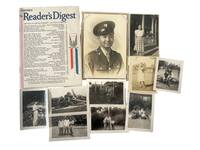
1944217981944. Japanese American WWII 442nd Regimental Combat Team soldier and family photograph archive showing Japanese American military service and community life in Hawaii during and immediately after World War II. This group documents the lives of Nisei soldiers connected to the 442nd Regimental Combat Team a segregated United States Army unit composed primarily of second generation Japanese Americans. The material shows individual soldiers with their families and communities while also documenting expressions of American patriotism among Japanese Americans during the period of wartime incarceration and discrimination generated by Executive Order 9066. <br /> <br /> Archive of 11 pieces including 10 silver gelatin photographs and one periodical issue. The photographs produced in Hawaii during the 1940s and early 1950s range in size from approximately 6.25 x 4 inches to 3.5 x 2.5 inches and depict Japanese American soldiers and members of their extended social circle in both military and civilian settings. One image presents a formal studio portrait of a Japanese American soldier in United States Army uniform wearing a cap and corporal's chevron. Other photographs show groups of men gathered outdoors among tropical plants and residential houses including scenes of veterans posing together in civilian clothing that suggest continuing friendships after military service. One image shows several Japanese American men raising an American flag while another depicts a group of young men lying closely together on the ground with their heads touching in a circle an intimate scene of camaraderie. Additional photographs depict domestic and social life within the Japanese American community including a young woman in Western dress seated with two soldiers on a porch and a young girl wearing a lei. Included with the photographs is the July 1945 issue of Reader's Digest containing the article "Hail Our Japanese-American GIs!" by Blake Clark and Oland D. Russell which publicly praised the service of Japanese American soldiers and called for recognition of their loyalty and wartime contributions.<br /> <br /> The 442nd Regimental Combat Team became the most decorated unit for its size and length of service in United States military history earning thousands of individual decorations for valor during combat operations in Europe. Many Nisei soldiers volunteered from mainland incarceration camps while others enlisted from Hawaii where Japanese Americans were not mass imprisoned but remained under intense scrutiny after the attack on Pearl Harbor. Contemporary publications such as the 1945 Reader's Digest article included here sought to influence public opinion by highlighting the loyalty of Japanese American soldiers at a time when their families continued to experience displacement discrimination and political marginalization. Photographic documentation of Nisei soldiers within family and community spaces is comparatively scarce particularly images that bridge wartime service and postwar civilian life in Hawaii. Minor edge wear and light handling marks visible to several photographs and the magazine otherwise well preserved with clear photographic contrast; overall very good condition. This archive provides direct documentation of Japanese American military participation and community during one of the most consequential periods in twentieth century civil rights and wartime history. unknown
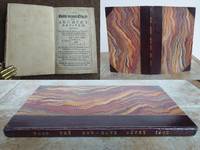
168252208<p>London printed by Samuel Roycroft and are to be sold by Edward Gough at Cow-Cross 1682. TITLE CONTINUED:As by their several gracious Commissions here recited may appear. With a brief Relation of the Manner of the Archers marching on several days of Solemnity. FIRST EDITION 1682. Small slim 8vo approximately 170 x 110 mm 7 x 4½ inches pages: xvi 1-78 lacking last leaf "Post Script" many copies are lacking this leaf pages 1-31 mostly printed in black letter then a new title page "A Remembrance of the Worthy Show and Shooting by the Duke of Shoreditch" followed by roman text bound in 19th century in maroon half roan over marbled boards marbled endpapers with bookplate of Fox Pointe Manor Library on first pastedown. Slight rubbing to binding pale stain affecting the lower inner margins of first 7 leaves including title page tiny repair to blank side of lower edge of title page slight shelf wear to edges and corners 3 corner tips neatly repaired not affecting text small closed tear to 1 margin and top margin of last page both neatly repaired not affecting text some very light soiling and staining to margins a very good copy. See Sotheby's Library of the Earls of Maccclesfield Part 10 page 364 No 3850; Catalogue of The Famous Library of Henry Huth Volume 9 page 2254 No. 8182; ESTC R22583. MORE IMAGES ATTACHED TO THIS LISTING ALL ZOOMABLE FURTHER IMAGES ON REQUEST. POSTAGE AT COST.</p> London, printed by S[amuel] R[oycroft] and are to be sold by Edward Gough at Cow-Cross, 1682. hardcover
36904publishedby Ackermann & Co. London. 1833. restrike c.1870. print size: 22.5x30 1/4"; image size: 17 1/8"x 26 3/8"; from the original plate 1830 butissued pulled later 1870/80 beautifully coloured in brilliantcondition. Spendlove pp46-51; plate 69. publishedby Ackermann & Co., London. [1833]. restrike c.1870? unknown
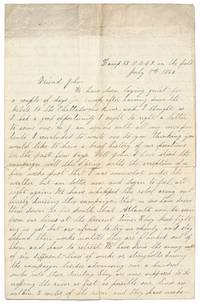
1864438776Atlanta Georgia 1864. Very Good. Autograph Letter Signed. Folio. 4pp. Partial splitting at the edges of one vertical and two horizontal folds about very good. A detailed and historically important long letter written in the field by Union soldier Harvey Rodgers just two weeks before he was killed at the Battle of Atlanta on July 22 1864.<br /> <br /> Rodgers was mustered into service in 1861 as a Corporal in the 54th Regiment Ohio Volunteer Infantry Zouaves Company A commanded by 1st Lt. Judson McCoy referred to as “Jud†in the letter. In the letter written to his “Friend John†on four easily legible folio pages Rodgers describes Confederate and Union Army maneuvers and skirmishes immediately after the Battle of Kennesaw Mountain fought from June 19 – July 2 1864 during the lead-up to the Battle of Atlanta which began on July 21st:<br /> <br /> “… Well John I have stood the campaign well this Spring … We have whipped the rebel army out finely … that is we have drove them so far South that Atlanta can be seen from our lines … I suppose you have heard about our making a charge on the 27th June … I do not wish to be in anymore such places … we lay in camp until the 2nd of July when our Division moved … very near due south of the Kennesaw mountain. That night Jud with our Company was on picket. We heard the cars very plain but did not think they the rebel army were evacuating the mountain and falling back … Next morning … We did not move forward until two o’clock when we advanced our lines two miles finding a small force of Cavalry in our front which we routed by charging them. The Regt. lost 1 killed 14 wounded …â€<br /> <br /> He describes a second skirmish on July 4th at which his Company fought in support of the Union army’s 16th Corps to advance Union lines and continues:<br /> <br /> “… On the 5th we were moved back again and brought further around on the right where we now lay. Our front lines are two miles further on. The rebels have a line of works between them and the Chattahoochee river … I expect we will have a pretty hard time before we get there and a hard time to cross the river …â€<br /> <br /> The Battle of Atlanta commenced on July 21 1864. Both Harvey Rodgers and Union Maj. Gen. James B. McPherson were killed during the battle on July 22nd. Rodgers' letter thus ends poignantly:<br /> <br /> “Well John my time is fast rolling around now and I begin to think I will soon get home again. Only two months and 8 days more … Still in that short time there are many dangers to undergo. I may be called on to go into several more charges. Perhaps of some one not to come out alive … There has not more than half a dozen days passed since the 10th of May but what we have been under the sound of artillery. The troops appear to be pretty well worn out and wish for the campaign to close yet they all want to get into Atlanta first …â€<br /> <br /> A compelling and ultimately heartbreaking eye witness account of General Sherman’s Atlanta campaign during the summer of 1864. Longer quoted extracts from the letter are available. unknown
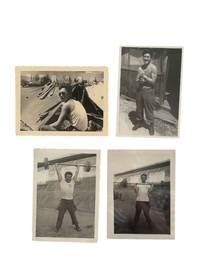
1945213801945. Japanese American soldier photograph archive documenting Nisei service in the United States Army during World War II in the European Theater a body of material connected to the generation of second-generation Japanese Americans who entered military service while many of their families were confined in American incarceration camps following Executive Order 9066. The photographs depict a uniformed soldier and fellow servicemen in training camp life and travel scenes during wartime service. Images include rifle drills field training exercises barracks and tent encampments and informal portraits of soldiers lifting barbells or posing at military installations. Such imagery is closely associated with the wartime mobilization of Japanese American troops that culminated in the formation and deployment of segregated Nisei units including the 100th Infantry Battalion and the 442nd Regimental Combat Team formations that fought extensively in Italy France and Germany while their families remained subject to wartime incarceration in the United States.<br /> <br /> Archive of 19 original black and white photographs documenting Japanese American soldiers during World War II service and training connected to the European Theater. Each measuring approximately 2.5" x 3" to 3.5" x 5" each. Photographs appear to date from the early to mid-1940s and show multiple scenes of military life including rifle training with U.S. service weapons soldiers conducting ground drills outside wooden barracks encampments of canvas military tents transport vehicles and informal moments of recreation including weightlifting and camp leisure. Several images depict European landmarks and travel scenes including a clear photograph of the Leaning Tower of Pisa and war-damaged Italian architecture indicating presence in Italy during the Allied campaign. Verso inscriptions appear on several photographs including handwritten captions such as "That's me in down town Chattaroy" and "Remembrance from leave 10 Min to Roberts 6345 Selma Ave Hollywood Calif." suggesting correspondence between soldiers and family or friends in California and documenting the personal circulation of these photographs during wartime service.<br /> <br /> Photographs measure approximately snapshot format to larger prints and consist primarily of silver gelatin prints typical of mid-twentieth-century military photography. The images collectively document the lived experience of Japanese American soldiers during the war including training camp life leisure travel and combat preparation. The presence of identifiable locations in Italy aligns the archive with the Italian campaign of 1943-1945 where Nisei units gained international recognition for battlefield performance while also serving as a powerful counterargument to domestic anti-Japanese prejudice in the United States. Light edge wear scattered corner creases and minor surface marks visible on several prints with occasional small stains and light curling typical of handled snapshot photographs; overall condition good. A visually varied documentary archive of Nisei military service during World War II preserving both training scenes and personal inscriptions connected to the Japanese American wartime experience. unknown
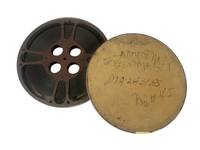
1945232061945. Capra Frank. Japanese-Americans a 1945 wartime military screen magazine segment film reel highlighting Japanese American service in the U.S. Army's information and morale boosting film distributions during the final year of World War II. Produced for exhibition to servicemen as part of Army-Navy Screen Magazine No. 45 the segment is also an example of the wartime contributions of legendary Italian-American filmmaker Frank Capra one of Hollywood's most influential directors best known for It Happened One Night Mr. Smith Goes to Washington and It's a Wonderful Life. During World War II Capra became a major figure in official U.S. military filmmaking directing or supervising films that translated government policy and Allied war aims into accessible emotionally forceful cinema for soldiers and civilians. Here his Army film work presents Nisei troops not as an isolated human-interest subject but as participants in a broader program joining military projection democratic rhetoric and controlled public acknowledgment of Japanese American loyalty after mass incarceration. The film's focus on the 100th Infantry Battalion the 442nd Regimental Combat Team battlefield casualties and a widow receiving the Silver Star shows how Capra's wartime production apparatus helped frame Japanese American military service for uniformed audiences in 1945.<br /> <br /> Capra Frank producer. Japanese-Americans. Segment from Army-Navy Screen Magazine No. 45. U.S. Army Signal Corps Army Pictorial Service 1945. Black and white sound film reel 16mm. Present on a large reel in metal can the lid handwritten in grease pencil "ARMY/NAVY SCREEN MAG." and "NO #45." The identified segment shows a spokesman in Hawaii praising Japanese Americans in the U.S. Army a war widow receiving a Silver Star scenes of Nisei troops in the Italian campaign the 100th Infantry Battalion entering Livorno wounded men being evacuated and General Mark Clark citing soldiers of the 34th Infantry Division. The physical reel remains tightly wound; the present housing and handwritten can notation directly support identification to issue no. 45.<br /> <br /> Issued at a time when Japanese Americans were serving in segregated units even as many of their families remained confined under wartime exclusion policy the segment shows how Capra's Army film production participated in reconciling racial tension and patriotic messaging to American servicemen. Japanese American servicemen are honored here as heroes and patriots. Light wear and dust to can; reel housed and tightly wound; surface inspection only. A strong piece of World War II military film notable both for its Japanese American subject matter and as a sample of Frank Capra's influential wartime propaganda work for the U.S. Army. unknown
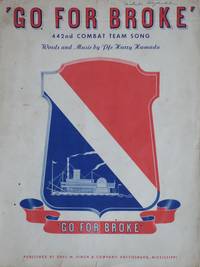
1944List2436Hattiesburg: Earl M. Finch 1944. Sheet music measuring 12 x 9 inches 4 pp. Signature of a Nabuko Hayashida on front cover. Slight tears at fold some toning two small pinholes very good overall quite attractive. Very Good. In Hawaii in May 1942 a battalion of Nisei volunteers was assembled for service in World War Two despite earlier failures of efforts to recruit Japanese-Americans due to the Army’s labeling of Nisei recruits as 4-C enemy aliens. Designated as the 100th Infantry Battalion they were deployed to North Africa in June 1943 integrating with the 34th Division in active combat. Their subsequent deployment to Italy in September 1943 exposed them to intense warfare earning them the moniker of the "Purple Heart Battalion" due to their notably high casualty rate.<br /> <br /> In January 1943 the U.S. War Department officially declared the establishment of the segregated 442nd Regimental Combat Team RCT which was comprised of Nisei volunteers originating from Hawaii and the mainland. The culmination of this initiative transpired in June 1944 when the 442nd RCT merged forces with the 100th Infantry Battalion in Europe subsequently absorbing the latter into its structure. The notable achievements of Nisei soldiers in combat operations prompted the reinstatement of the draft in January 1944 specifically targeting Nisei detainees to augment the ranks of the 442nd. Over time the 442nd RCT expanded to encompass the 2nd 3rd and 100th Battalions; the 522nd Field Artillery Battalion; the 232nd Engineering Company; the 206th Army Band; Anti-Tank Company; Cannon Company; and Service Company. <br /> <br /> Offered here is a very scarce piece of sheet music entitled “Go For Broke†which was written by the Hawaiian musician Harry Hamada reflecting the slogan of the 442nd and performed by Shelby and others during the war as part of efforts to boost morale. Hamada would feature in the 1951 movie “Go For Broke†as Masami alongside several other veterans of the 442nd. This publication of “Go For Broke†is from 1944 seven years before the movie’s release. The piece is dedicated to Colonel C.W. Pence. Hamada was a Hawaiian musician who performed with a band called the Shelby Hawaiians or the Shelby Serenaders. They performed as early as 1943. The Hattiesburg Mississippi merchant Earl M. Finch who ran an Army and Navy store close to Camp Shelby befriended Hamada and other members of the 442nd and acted as a sponsor for the group and eventually published this version despite his business being a dry goods merchant house and not a publishing house. The group with the support of Finch performed throughout the country to lift morale. At some point Hamada penned this composition likely in 1944 as we find no reference to it in 1943 articles and Finch published it - Hamada’s composition would become the theme song of the 442nd and Hamada would perform at the Halloran General Hospital in New York and the Walter Reed Hospital in Washington D.C. in 1944 likely performing this composition. Another composition called “Go For Broke†exists as well and it is unclear to what degree Hamada’s work caught on among the regiment. <br /> <br /> We find two records of Finch’s published version of the composition one listed as part of an online remembrance of the 442nd by the Smithsonian Institution https://americanhistory.si.edu/explore/stories/day-remembrance-70-years-after-executive-order-9066 which appears to have been on loan from the National Japanese American Historical Society and another copy held at Stanford though not listed in OCLC. Finch’s story is also interesting and is the subject of a remembrance on a 100th Battalion History page online https://www.100thbattalion.org/history/stories/earl-finch/. We find no copies listed in OCLC. Overall a very scarce piece of Japanese-American wartime history. Earl M. Finch unknown
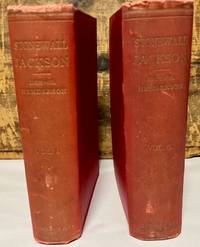
189835744London New York Bombay: Longmans Green and Co 1898. First Edition. Hardcover. Good. Octavos. Two volumes. Red cloth hardcovers with faded gilt titles on the spines. Volume I: xviii 550 pages 32 page publisher catalog. Volume II: 4 641 pages 1. Illustrated with 33 maps and two portraits volume 1. Complete. Black end papers both volumes possibly added later Faint evidence of plate removals on the front paste downs both volumes. A couple of tiny cracks on the front hinge volume 1. Both volumes text blocks are sturdy. Cloth spines are a bit dulled and lightly rubbed. Occasional scattered foxing to both volumes. <br /> <br /> Howes H 408; Nevins II page 62. Longmans, Green and Co hardcover
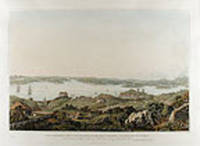
14891A fine pair of plates engraved by Robert Havell and son printed by Edward Egerton-Williams in colours and finished by hand each in very good condition "The Town of Sydney" with a slightly greyer paper tone. From an edition limited to 110 copies printed from the original printing plates in 1988 employing the same techniques as used in 1823. This fine edition was published as a collaborative effort between the State Library of New South Wales and the renowned fine art publishers Alecto Editions.<br/> <br/> "By 1820 Sydney was a town of 12000 inhabitants about a third of whom were convicts. It had grown dramatically during the administration of Lachlan Macquarie who was appointed governor of New South Wales in 1810. Unlike previous governors Macquarie was not content merely to oversee a penal colony. His vigorous building programme changed forever the appearance of Sydney while his policy of accepting emancipated convicts as respected citizens demonstrated a social attitude strangely out of step with the times. Both these policies earned him criticism. In 1819 alarmed by Macquarie's extravagant public works the British Government commissioned a lawyer and civil servant J.T.Bigge to investigate. The attacks by his critics were met head on by Macquarrie's supporters in New South Wales. Books pamphlets and paintings lauded the governor's undoubted achievements. Almost certainly Major Taylor's drawings were used in if not commissioned for this cause. The engraved views of the Panorama present a flattering image of the Australian seat of government and by extension of Macquarie's term there.Taylor arranged the engraving and printing of the of the three sheet Panorama. upon his return to England in July 1822.Havell appears to have worked from Taylor's. large watercolours but amended them with additional details. and decorative elements.It is most fortuitous that the copper plates.have survived. There is no other example of such a case for 19th century Australian engravings. unknown
17646600CBBerlin, ohne Verlagsangabe, 1764. 8°, 528 S. Text, 6 S. Anhang 'Ordre zu Erhaltung der Subordination bey der Armée', Pergamenteinband der Zeit mit Siegel mit einer am Rückdeckel montierten Lederschließe mit original Stoffband mit anhänglichen Siegelresten, erste Auflage dieser Ausgabe erste 33 Seiten mit kleiner werdenden Wurmgang (mit winzigem Buchstabenverlust auf Vorsatz- und Titelseite), von den im Anhang befindlichen Falt-Karten ist nur die Monatsliste sauber enthalten, eine weitere Liste nur zu einem kleinen Teil enthalten, sonst
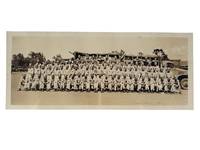
1943217311943. Japanese American soldiers associated with the 442nd Regimental Combat Team appear in these World War II panoramic photographs documenting Nisei military units training in Hawaii during the early stages of the regiment's formation. The 442nd Regimental Combat Team was composed primarily of second generation Japanese Americans who volunteered for military service during World War II while many of their families remained incarcerated in U.S. internment camps following the Executive Order 9066. Organized in 1943 and later deployed to Europe the regiment became one of the most decorated units for its size and length of service in United States military history. These photographs record the logistical and engineering personnel who supported that combat formation capturing the organization of Nisei soldiers stationed at Schofield Barracks during the training period preceding overseas deployment.<br /> <br /> Archive of two panoramic silver gelatin photographs taken outdoors at Schofield Barracks each measuring approximately 19.5 × 8 inches and stamped by Schofield Studio and Supply. Both photographs bear manuscript annotations on the versos identifying the images as taken while the writer served in a "Dump Trk. Co." at the "motor pool" indicating a transportation or engineering support unit attached to the broader 442nd organizational structure. The first photograph depicts approximately ninety Japanese American servicemen posed in uniform before two covered military transport trucks with soldiers seated in the vehicle beds and arranged in rows on the ground. Uniform details include khaki service uniforms garrison caps and visible rank insignia identifying several sergeants and noncommissioned officers seated in the front row. The second panoramic photograph shows a larger company of more than two hundred soldiers assembled on an open field beneath trees and utility poles. A banner marked "H & S" identifies Headquarters and Service Company and the front row includes a small group of white officers seated among the Nisei troops including a commanding officer identified in the caption as "my C.O Lt. Smejkal from Houston."<br /> <br /> These photographs illustrate the organizational structure of Japanese American military units during World War II when Nisei soldiers frequently served in segregated formations led by white officers under prevailing U.S. Army policies. Units associated with the 442nd Regimental Combat Team and related engineer and service companies trained extensively in Hawaii before later deployments connected to major European campaigns. The images therefore document a transitional moment in American military and social history when Japanese Americans sought to demonstrate loyalty to the United States through military service despite the wartime incarceration of their families in camps administered by the War Relocation Authority. Both photographs retain clear detail and legible manuscript annotations. Rolled with scattered foxing and light toning consistent with age; overall condition very good. unknown
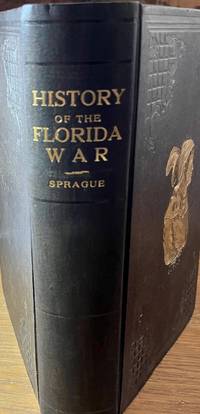
184834406New York: D. Appleton and Company 1848. Hardcover. Good. Octavo. 1 557 pages 1 page blank 32 pages publisher catalog 1. Frontispiece and Illustrations. Folding map of lower Florida. Restored. Dark brown cloth hardcover with decorative blind stamped borders and gilt illustration of Oseola on the front cover. Gilt title and publisher name stamped on the newer brown cloth spine. Frontispiece title page prliminary pages folding map and publisher catalog in back have moderate foxing. Light toning to the rest of the text. Map has a very small chip bottom edge and an approx. A 5"-6" closed split on a lower fold below Key Largo with no loss of content. D. Appleton and Company hardcover
14758London: Alecto Editions and the State Library of New South Wales 1988. Originally engraved by Robert Havell and son printed by Edward Egerton-Williams in colours and finished by hand with printer's blindstamp. "By 1820 Sydney was a town of 12000 inhabitants about a third of whom were convicts. It had grown dramatically during the administration of Lachlan Macquarie who was appointed governor of New South Wales in 1810. Unlike previous governors Macquarie was not content merely to oversee a penal colony. His vigorous building programme changed forever the appearance of Sydney while his policy of accepting emancipated convicts as respected citizens demonstrated a social attitude strangely out of step with the times. Both these policies earned him criticism. In 1819 alarmed by Macquarie's extravagant public works the British Government commissioned a lawyer and civil servant J.T.Bigge to investigate. The attacks by his critics were met head on by Macquarrie's supporters in New South Wales. Books pamphlets and paintings luded the governor's undoubted achievements. Almost certainly Major Taylor's drawings were used in if not commissioned for this cause. The engraved view presents a flattering image of the Australian seat of government and by extension of Macquarie's term there.Taylor arranged the engraving and printing of the of the three sheet Panorama. upon his return to England in July 1822.Havell appears to have worked from Taylor's. large watercolours but amended them with additional details. and decorative elements.It is most fortuitous that the copper plates.have survived. There is no other example of such a case for 19th century Australian engravings. Alecto Editions and the State Library of New South Wales unknown
39913London W. Bulmer and Co. 1800 Hardcover book first edition 503 pages with engraving and maps- some folding as called for. Dedicated the the chairman of the east India Company. this lovely volume explores the history geography people and natural history of the country now referred to as Myanmar and formerly Burma. The author undertook a long and arduas journey throgh the country ending in 1795. a Very good copy bound in half-calf brown boards and marbled endpapers. all plates and maps are present as listed in the directions to the binder at the rear. Maps and plates have some light foxing. Fold-out map of the Irrawwady river has some perforations to the foldsalthough this is not serious. Other plates have light foxing and some margin stains but this does not affect the images. One page 288 has some margin notes and one page 157 has a short closed tear to edge. Previous owners contemporary signature to top of title page. Binding is lightly rubbed but firm and without splits. Pictures available. Please note this is a heavy volume and will require additional shipping charges. London, W. Bulmer and Co. 1800 hardcover