421 résultats
189835744London New York Bombay: Longmans Green and Co 1898. First Edition. Hardcover. Good. Octavos. Two volumes. Red cloth hardcovers with faded gilt titles on the spines. Volume I: xviii 550 pages 32 page publisher catalog. Volume II: 4 641 pages 1. Illustrated with 33 maps and two portraits volume 1. Complete. Black end papers both volumes possibly added later Faint evidence of plate removals on the front paste downs both volumes. A couple of tiny cracks on the front hinge volume 1. Both volumes text blocks are sturdy. Cloth spines are a bit dulled and lightly rubbed. Occasional scattered foxing to both volumes. <br /> <br /> Howes H 408; Nevins II page 62. Longmans, Green and Co hardcover
186166<p>Original rubbing for the Stele of Second Opium War Arrow War in China during 1856-1860. Stele erected in 1861 in Canton Guangzhou City in GuangTong Province in China.</p><p>Very big size on a whole thick rice paper 152cm X 98cm The original stone had been demolished long long ago. This rubbing is the only one found in the world. Folded a few wears at edges. Both text and pictures were fine copied and undamaged but had some folds.</p><p>Rubbing is an ancient Chinese method to copy text and pictures on stone or on bronze wares by hand.</p>
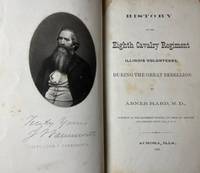
186834967Aurora Illinois: Self published 1868. First Edition. Hardcover. Fair. Octavo. Restored. Complete. 4 pages 33-368 3. Frontispiece engraving of General John F. Farnsworth. Illustrated with portraits. Original cloth laid back down onto newer covers. Newer gilt stamped title on the spine. Newer end sheets. Frontispiece engraving is the first original sheet. Scattered foxing and light staining to the text. Ocassional pencil corrections made to the text. Illustrated bookplate of Ray Russell on the front paste down. Illusrated bookplate of Marshall D. Krolick on the right front flyleaf. <br /> <br /> The 8th Illinois Cavalry called "Farnsworth's Abolitionist Regiment" by President Lincoln was the only Illinois cavalry regiment to serve the entirety of the war in the Army of the Potomac. The unit was involved in several major conflicts including Antietam Fredericksburg and Gettysburg. At the latter Lt. Marcellus E. Jones fired what is considered the first shot of the battle when he fired at an unidentified Confederate. After President Lincoln's assassination the regiment aided in the hunt for John Wilkes Booth and served in Lincoln's honor guard while he lay in state in the rotunda. Scarce regimental history of an important regiment. <br /> <br /> Nevins I page 100 "Written by the regimental surgeon this study contains both facts and personal incidents; some humor also enriches the narrative. Self published hardcover
1981373789Whittington Lichfield UK: The Stafford Knot 1981. First Edition. Softcover. Near fine set in the original stiff-card wrappers; edges very slightly dust-dulled and toned. Remains particularly and surprisingly well-preserved; tight bright clean and especially sharp-cornered. Physical description; 13 issues. Contents; No. 44 April 1981 ; No. 48 April 1983 ; No. 49 October 1983 ; No. 50 April 1984 ; No. 51 October 1984 ; No. 52 April 1985 ; No. 53 October 1985 ; No. 54 April 1986 ; No. 55 October 1986 ; No. 56 April 1987 ; No. 57 October 1987 ; No. 58 April 1988 ; Trooping The Colour: 16th June 1990. Subjects; The Stafford Knot. The Staffordshire Regiment. British Military. Whittington, Lichfield (UK): The Stafford Knot paperback
1930048647London: Offices of the "Fishing Gazette" 1930. 'With an Appendix Giving The Dressing of 361 Salmon Flies Alphabetically Arranged'. Maroon cloth on boards gilt title light couple fo small marks. Spine: soft rubbing to head & foot. Edges: light red-pink; slightly faded on top-edge. 4cm surface splitting to head of front hinge. Head of Frontis & title page a small light spot. Clean contents. Illustrated by drawings. Binding is VG. 189p 16.5 x 10.5 cm. Third Edition. Hb. VG/None. Offices of the "Fishing Gazette" Hardcover
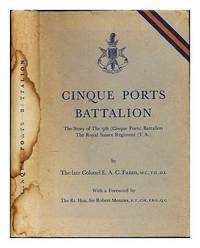
1971337852Chichester : Royal Sussex Regimental Association 1971. First Edition. Hardcover. Good cloth copy in a good if somewhat edge-torn with some loss and stained dust-wrapper now mylar-sleeved. Remains quite well-preserved overall; tight bright clean and strong. Includes previous owner's inscription. Physical description; xv 176 p. : ill. map port. ; 22 cm. Subjects; Cinque Ports Battalion. The Royal Sussex Regiment. British Military. Chichester : Royal Sussex Regimental Association hardcover
0946653062.Ghardcover. Good. Access codes and supplements are not guaranteed with used items. May be an ex-library book. hardcover
1984219278London : Published for The Royal Regiment of Artillery by Europa 1984. First Edition. Hardback. Near fine copy in the original gilt-blocked cloth. Gilt-stamped title and coat-of-arms to front panel. Slightest suggestion only of dust-dulling to the spine bands and panel edges. Remains particularly well-preserved overall; tight bright clean and strong.; 8vo 8"" - 9"" tall; 236 pages; Text written by Bill Hughes. Physical description: 236 p. : ill. some col. ports. ; 28 x 35 cm. Subjects: Great Britain. Army. Royal Regiment of Artillery. -- History -- Art collections. Royal Artillery -- History. London : Published for The Royal Regiment of Artillery by Europa hardcover
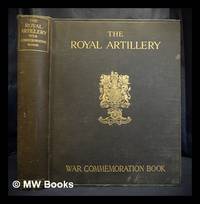
1920423691London :G. Bell and Sons 1920. 1st edition. Hardcover. Good copy in the original gilt-blocked cloth. Spine bands and panel edges somewhat dust-toned and rubbed as with age. Worn tissue-guards. Remains particularly well-preserved overall. Physical description: xxiv 408 p. 59 leaves of plates : ill. some col. ports. facsims. ; 33 cm. Subjects: Great Britain Royal Regiment of Artillery History; World War 1914-1918; Personal narratives British; Great Britain. London :G. Bell and Sons hardcover
1241701873.Gpaperback. Good. Access codes and supplements are not guaranteed with used items. May be an ex-library book. paperback
1883060641London: George Routledge and Sons 1883. Re-issue . Hardcover. Good Plus. 8vo. LONDON : No date Circa 1880s. First published in 1882. Hardback. Yellow colour pictorial covers paper covered boards. A bright tight and clean copy. Neat owner name to fly-leaf; no internal markings to text however Margaret Tait owner has written under author's name other works he has written. Moderate wear. GOOD. 446 pages. 2pp adverts. Tight and clean. SCARCE. Only 5 copies recorded in the UK: The National Library of Wales and Trinity College Dublin do not hold copies. Book now in an archival quality clear protective jacket. Will pack well. 'Victorian yellow-back novel'. 'Aide-de-camp' series of novels. Rosley Books for Antiquarian books Literature Theology and History. JAMES GRANT 1822-1887 was a Scottish author; born in Edinburgh and was a distant relation of Sir Walter Scott. He was a prolific author writing some 90 books including many yellow-backs. Titles included Adventures of an Aide-de-camp One of 'The six hundred' The Scottish musketeers and The Scottish cavalier. Many of his 56 novels are about important characters and events in Scottish history. In 1853 he founded the National Association for the Vindication of Scottish Rights. Grant is known today as an historian primarily because of his thoroughly-researched six-volume Old And New Edinburgh published in 1880 by Cassell. Will be well-packed for posting/shipping. 8vo. London: George Routledge and Sons. SCARCE. <br/> <br/> George Routledge and Sons hardcover
2g1834Mittler & Sohn Bln. 1894. VII/232 S. mit 1 Frontispiz 2 Tafeln 2 color. lithogr. Uniformtafeln sowie 4 gefalt. lithogr. Karten im Anhang. original Halbleder mit silberprägung. fleckig u. bst. unknown
1919004678Boston: Houghton Mifflin 1919 First edition. Cloth binding 259 pp. Antique ex-library with hand-numbered and hand-dated bookplate no pocket. Map endpapers. 259 pp. Soiling to boards a bit shaken. Very good condition. Houghton, Mifflin hardcover
20052485Lévis Quebec Canada: Le 6e Régiment D'artillerie de Campagne Du Canada 2005. First Edition First Printing. Hardcover. As New. pp. 470. 8vo. Black "leatherette" over boards silver lettering to the spine and front board. Replete with black-and-white photographs illustrations drawings et al. No detectable flaws contents remain bright clean and unmarked with tight sound binding; fine and housed in near fine very lightly rubbed dustjacket. <br/><br/>Limited Edition of only One-Hundred copies of which this is No. 94.; hand-written in ink. Le 6e Régiment D'artillerie de Campagne Du Canada hardcover
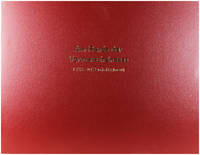
3392N/A. Hardcover. Very Good. Am Rande Der Vormarschstrasse At the Edge of the Road Ahead F.N.R. 40 Signals Regiment Large portfolio of 58 watercolour prints housed in original illustrated card folder. Bound in Collectors Hard Covers maroon with gold lettering size 35 x 45 cms. Complete and in very good condition. A22.2501 <br/> <br/> N/A hardcover
0282408428.Gpaperback. Good. Access codes and supplements are not guaranteed with used items. May be an ex-library book. paperback
0365247421.Ghardcover. Good. Access codes and supplements are not guaranteed with used items. May be an ex-library book. hardcover
1847189591Deal: Printed by J. Deveson 1847. The battlefields of the Punjab seen from the ranks First and only contemporary edition of this brief but spirited and entirely unembroidered account in the authentic voice of an enlisted man. The 31st were one of the most heavily engaged units of the conflict seeing action at Mudki Ferozeshah Aliwal and Sobraon. Scarce with just two locations traced BL and Boston Public Library unrecorded at auction. Vivid vignettes from the battle front are set within the context of a diary account of an uneventful voyage back from Calcutta to Gravesend. Cleveland opens on 23 October 1846 "weather continues fine and the wind steady" reminiscing of Moodkee "the first battle in which I had even been engaged I have often since endeavoured to imagine what my feelings were on that occasion but the hurry and confusion of that Action prevented the exercise of thought". One thing remains clear in his memory "So confident were our Officers and men that the Sikh Army was composed of nothing but a rebel mob that they did not believe they would hazard an engagement. this entire ignorance of the Sikh Army it is wonderful that all were alike involved even the Governor and Commander in Chief each of whom it should fairly be supposed ought to have been possessed of correct information on so important a subject". Of Ferozeshah he recalls the "lurid flames" of the burning Sikh camp "gleaming through the darkness diffusing sufficient light to make the horrors of our situation more apparent" the shot from the Sikh guns falling "among us by far to thick and fast to be agreeable". The situation only saved by what Cleveland - along with Sikh commander Tej Singh - read as the Commander in Chief's order for the cavalry to make a "false charge" which was in fact the withdrawal of the Horse Artillery desperately short of ammunition to Ferozepur to resupply while under cavalry escort. At Aliwal the 31st were on the extreme right of the British line "When we had arrived within a short distance of the village under heavy fire from the enemy who were waving their swords and cutting a great variety of menacing capers in front of us General Smith galloped up and said 'take that village boys and carry it along with you' when the whole regiment broke into a rapid double which they did not abate until they had cleared the village captured the guns upon its left and caused the whole of the enemy's left flank to run for dear life. We now quietly took possession of the whole of their camp equipage ammunition and stores; and having amply supplied ourselves. we turned in for the night near the banks of the Sutlej". And so to Sobraon "At 9 A. M. the battle had reached its warmest point - shot and shell were then whizzing through the air in rapid succession. on their fearful missions of mischief. from the muzzles of 150 pieces of ordnance - about half past 9 a low rumbling sound was heard resembling distant thunder which was caused by the report of musquetry - as the infantry ad passed the Enemy's breastworks. thus concluded the most severe contest in the annals of Indian warfare and not a second to any fought in Europe with the exception of Waterloo". Following the ratification of the Treaty of Lahore the 31st marched to Calcutta and embarked for home Cleveland composing this very personal and telling NCO's witness to world-changing events while under weigh. Octavo. pp. 24. Original thin paper printed wrappers. Wraps rubbed and soiled with some minor chips and splits at the edges no loss of text creases to the corners; pale toning and some finger-soiling to the text; but a well preserved copy very good. paperback
2091202133000431Shuho N.A. Soft Cover. Fine. Number of books: 7 Shuho paperback
19822091202133403496Shinodayama Cannon Four Association A5 version 1982. Soft Cover. Fine. Number of pages: 1159p Size: 22cm Shinodayama Cannon Four Association A5 version paperback
19190011016Coblenz Germany Benton Pa: Occupied Germany Coblenz Benton PA 56th Infantry. Good. 1919. Softcover. On offer is a superb pocket notebook kept by an American soldier in occupied Germany in the months immediately following World War One WW1. The author of this notebook is Ezra Skow. Little is known of Skow's early life. He was born in 1892 and enlisted in the U. S. Army in about September 1918 at the age of 25 or 26. Burial records in Benton PA indicate that he was attached to the 156th Infantry Regiment. However there was no 156th Infantry in the United States Order of Battle in WWI. In his notebook Skow records that he served in the 56th Infantry. This accords with the record of service of the 56th Infantry Regiment. The 56th Infantry Regiment was a regular infantry regiment in the United States Army. Its roots date back to the American Civil War where it served in the North's Army of the Potomac. It originated from personnel of the 17th Infantry Regiment in 1917 and fought in the region of Metz during World War I. In April 1919 a battalion of the 56th entered Metz as an honour guard for the Commanding General of the American Expeditionary Force John J. Pershing. Skow was married before joining the army. His wife Laura lived until 1987 passing away at the age of 93. Skow himself died in 1947 at the age of 57. His entries take the form of letters to his wife. They cover the period Jan 11 1919 through June 25 1919. In his diary Skow records several of the towns and cities in which his unit was stationed including Metz France Mulheim Metternich and other places in and around the city of Coblenz Germany. His entries speak about the day-to-day existence of a private soldier: "This is some place. Gee I wish I was home now. I would tell you a lot. The women are carrying their things on their back when they go to the store" Jan 13; ". I wrote you a letter tonight and send you the worlds clock too as I saw that today over at the city. And I was to see Charley Chaplin in the front line trenches and it was good. I would like to see you now. . I sit here at a Dutch table now writing notes and the Dutch man is reading the paper and his wife is talking out of the front window and you can see they are like but not quite as bad. Your Husband Ezra Skow xxxx" May 2; ". I was over to Coblenz today and wrote you a letter. And it is a fine day. I didn't do very much today. But believe me I would love to be home to loved you again. As I am getting tired of this life and will be able to tell you all about it when I get home . Your most lonely husband this side of the water. Ezra Skow" May 12. On June 4th he writes that he has learned his unit is going to be leaving the Coblenz area and hopefully heading home to the United States. In fact this is exactly what happened. By June 23rd he is in Fort Dix NJ and on the 25th he is out of the army. : ". I am out of the army now. Coming home to you dear." June 25. There are several other pages of note which include among other things the names and addresses of several other men - likely men he met and befriended. For a historian this is an outstanding piece of primary source material. It details the very ordinary day-to-day life of a soldier in WWI capturing his duties and his longing for home. For a regimental historian this fills in details of the history of their regiments. For a genealogist it offers some links to other Americans who served in that regiment. Measuring 5.25 inches by 3.5 inches this notebook contains 72 pages and is 85% complete. The book is in good condition. The binding and pages are intact. His handwriting is cramped but generally legible. ; Manuscripts; 24mo 5" - 6" tall; 72 pages; Keywords: handwritten manuscript document letter autograph writer hand written documents signed letters manuscripts historical holograph writers autographs personal memoir memorial antiquité contrat vélin document manuscrit papier antike brief pergament dokument manuskript papier oggetto d'antiquariato atto velina documento manoscritto carta antigüedad hecho vitela documento manuscrito papel 56th Infantry World War One US Army American soldier Occupied Germany . Occupied Germany, Coblenz, Benton, PA, 56th Infantry paperback
1919000114Post War Germany 1919. Very interesting and intriguing diary once one gets used to the author's scrawl. Containing approximately 29 pages written on both sides Ezra Skow writes one sometimes two days per page in this notebook style journal. Many entries are letter-style to his wife and signed at the bottom with his name and location. Many times he closes with XXX. May 19 writing of Coblenz and Berlin he closes: "I would just like to love you Dear. This is some life to be in and I don't know when I am coming home.I think next month." Another note on the inside front cover dated May 15th: "One year and 5 months since we have been married and have been in the army over 9 months now." Book shows general light wear and is about 3 1/4 x 5 1/4 inches. There is a sleeve for a pencil which it seems is long gone. . Good. 24mo - over 5" - 5¾" tall. Manuscript. unknown
12219Without place and date 1960s. The account describes events in April and May 1945. 13pp. foolscap 8vo. Paginated 1 to 13 and signed at the end 'Ernie Wilmott'. On seven leaves stapled into grey covers with the title 'The Last Month' typed on the front cover. In good condition in worn wraps. The account commences: 'There had been gun fire from the west and the south for the last three days. Friday the 13th April 1945 the usual officials did not come to fetch the men but a little later than usual the Gaschwyz sic column was called so we assembled and left for work about 20 of us. There was a lot of activity in the station yard German military vehicles were coming and going and a contingent of unarmed Russian fatigue men were on parade.' A typically vivid passage reads: 'In the morning of the 24th April I heard chaps reporting prisoners passing through and our guards not interfering a lot of Indians were going through without any guards. Chaps with kit got up early because of being cold. I got up after seven and went outside and saw the Indians going through. A column of Russian prisoners appeared with guards and were halted just outside. The German guards were standing about in groups talking to each other and taking no notice of the prisoners some of whom were already making off. A man got up on a cart and addressed us he said he couldn't advise us to go he couldn't advise us to stay the German commandant had said that if we stayed he would do his best to obtain food for us there was a horse dying in the next village and he had the first refusal of it if it expired and we should have it.' The account ends on Wilmott's return: 'At London I bid my comrades of the last 2 years goodbye and got on a train at Paddington. It was a noisy journey ex P.O.W.'s one side of the compartment civilians the other we all talked at once. At Bristol I had to catch a bus home and suddenly realised I had to pay the fare it was more than 3 years since I had paid a fare anywhere.' The covering Autograph Letter Signed by Batt is signed 'Jack' on letterhead of 1 Churstonville Court 1 Overbury Avenue Beckenham Kent. 1p. 4to. Undated and with recipient's name not given. 'The writer Ernie Willmott sic spoke 4 Languages and was learning Russian whilst POW in Germany. As he spoke German he was chosen as Camp Leader of our working Camp at Gaschwitz-Leipzig. Our Common path of experience starts at Campo 53 Page 69 - from there we were together unitl the war ended or shared similar experiences.' In a postscript he adds that Wilmott 'was not in Campo 66 at Capua but in hospital at Caserta'. Also present is a Typed Letter Signed to Batt from 'Charles'. On letterhead of 99 South Eden Park Road Beckenham Kent. 21 June 1974. 1p. 8vo. The 'article on Sidi Nsir' brings back 'many memories' and he is enclosing 'The Story of 46 Division'. Without place and date (1960s?). The account describes events in April and May 1945. paperback
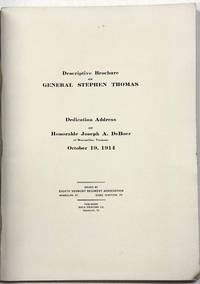
191441864Randolph VT: Buck Printing Co. 1914. 32 4 pp. Original staples original printed wrappers. Printed on glossy paper with frontispiece photo illustration of General Stephen Thomas tissue guard other full-page photo illustrations. Very Good.<br /> <br /> The heroism of this Vermont Regiment during the Civil War. Buck Printing Co. unknown
17022The account of 'Events in 1855 and 1856' dated by Wrench from Park Lodge Baslow Derbyshire 1902. The duplicated letter dated 12 December 1880. The printed advertisement for talk at the School Baslow and dated 14 January 1881. Wrench was the son of a clergyman and well connected being presented to the Prince of Wales and staying at Chatsworth in his old age. His obituary in the British Medical Journal 27 April 1812 describes how he went out to the Crimea in 1854. 'He had been gazetted Assistant Surgeon to the 34th Regiment in November and joined it on its arrival in the Crimea. He served during the terrible winter of that year and was present at the capture of the quarries the successful assault on the Redan of June 18th and the final capture of Sebastopol on September 8th 1855. He was mentioned in despatches and received the Crimean medal and clasp for Sebastopol and the Turkish medal.' Wrench's own account of his experiences in the Crimea Item One below – entirely unpublished – is a personal one vividly-written and full of detail. It does not appear to be present in the collection of his family papers at Nottingham University Library. ONE: Manuscript consisting of 'Events in 1855' 4pp and '1856 12pp making a total of 16pp. 8vo on twelve leaves attached with a stud. In good condition on aged and dogeared paper. The first page of the 1855 manuscript is headed '12 sic Pages in this Year' but comprises four numbered pages. The beginning of account sets the scene and gives an indication of the level of detail: 'The 1st Janry found me doing duty with the 28th Foot or Slashers in the 3rd. Divt of the army before Sebastopol having landed at Balaclava from the Ship "Queen of the South" on the 20th. Nov. 1854. On the 6th July I was ordered to do duty with the 50th. Foot but as I did not wish to move the weather being very bad and my tent being as comfortable or rather as little uncomfortable as it could be made except to join my own Regt. the 34th. to which I had been gazetted on the 1st. of December 1854. I applied to be sent to it and was ordered to join which I did on 9th of Janry.' The account is made up from diary entries and is none the less vivid and interesting for that: 'On the following morning a wounded Russian named Alexo was brought into our Hospital and we amputated his leg he did really well and was eventually exchanged at Odessa. Poor Jordan's death threw a great damp on the Regiment as he was the first Officer we had had killed. On the 9th. of April being Easter Monday the 2nd. Bombardment took place. It was a fearfully wet windy day so that no one was able to go out to see what damage was done. On the 10th. I was on trenches and the noise was terrific but nothing to what I have since heard. I had a very narrow escape from a round shot which hopped over the parapet close to where I was.' In June 'after 68 hours bombardment an assault was made on the Quarries by ourselves . I did not go down till about 8 with Robinson Scott & Peel and 100 men. We were marching about the Trenches half the night and were finally sent to the middle ravine just below Mamelon. The scene there was most horrible the ground being strewn with dead & wounded. English French & Russians. One poor Russian boy was dragged up by two Zouaves but fainted just opposite to where we were lying. I got a light and found he was shot through the belly and that nothing could be done for him. I gave him some water and he lie sic by me some time but died before morning. I got an amulet off his neck & his cap pouch which I sent home'. The 1856 account begins in dramatic style: 'The first entry in this Diary relates to the explosion which took place within the British Lines during the Siege of Sebastopol. Feb 3rd. I was not many hundred yards from this explosion when it took place & will here relate now Janry 1900 my recollection of it. It took place in Novr. or Decr. 1855. I had just come in from a ride & had given my horse to my Batman when I noticed a vast cloud of smoke shoot up from the Right Siege train an open air arsenal about 500 yds from my house - a tremendous noise of explosion followed & knowing that there would be a rain of missiles from above to fall immediately I jumped under my doorway - hoping the strong lintel would protect me . a shower of fragments fell around me rattling on my iron roof - and wounding many men in the Regiment - 70 men were killed by the explosion some over half a mile off. The artillery horses were passing in front of my door to water & stampeded hurting several men in their rush. Both my horse and my dog bolted. I got the horse back in a few hours - but my dog taken sic a few weeks before out of Sebastopol returned to her old home and was found there weeks afterwards I brought her to England My house that I had just finished building myself did not sustain much damage. .' The account continues packed with incident. At one point he writes: 'I had written the above in 1859 and continue it forty one years after November 4 1900. The events & fights of May 1856 being written so legibly in my brain that I can read much of what we did & said. Alas all the actors except myself are passed away. My notice has been called to the excursion by reading an Illustrated article in a magazine named "Travel" in which Dr. Hy. Lansell has been describing a tour taken last year over the same ground - so little altered from what I saw in 1856 that his description would do for mine'. The diary concludes in fine style. On 2 May 1856 he goes to Yalta where he finds 'the daughters of the English Clerk of the Works of Prince W's Palace were keeping the Hotel a very rough primitive structure low stone built rooms with a long rough wooden verandah overlooking the lovely Bay - We enjoyed an excellent dinner of Turbot & Oyster Sauce & a bottle of excellent local wine like Hock - as we returned we went over the Emperor's Villa Orianda . One day when I remember seeing for the first time a Persian horizontal Water Wheel in a very pretty village embosomed in Walnut Trees where also I bought an embroidered linen neck scarf which I still possess - On another occasion I accompanied Best & Chapman to the Alma & where I picked up the Russian Cannon Ball now on top of the Study Clock - I tried hard to get someone to accompany me to Bagshi Serai & Chuphut Kale but I had to go alone - I wonder now how I dare. For it was in the heart of the Enemies Country. I remember the Priest spit when I went near them in the Church in the Rock and I rode home at night through the Russian Camp on the river Balbec. I certainly felt no fear but that was the Ignorance of youth'. A final note more than half a page long records a meeting at Chatsworth in 1902 with Grand Duke Michael and his wife the Countess Torby. TWO: Duplicated letter by Wrench a hectograph in purple ink intended for circulation among his 'dear children'. 4pp. 12mo. Bifolium. In fair condition on aged and lightly-creased paper. Signed 'E. M. Wrench'. At the beginning is a half-page drawing by Wrench captioned 'Russian Soldier - In the Valley of the Shadow of Death. near Sebastopol - 1855 on Black Sea in the distance'. He describes a lecture he gave at Bakewell the previous Monday on the Siege of Sebastopol beginning 'I began by describing the terrible state of the hospital at Balaclava in November 1854. I had a ward full of wounded from Inkerman with bad cases of fever & cholera - All the windows had been blown out by the great storm of November the 14th. The sick had no beds and often nothing to eat until 3 or 4 oclock in the afternoon. The harbour of Balaclava was crowded with steamers while the coast near was strewn with the wrecks of the 21 ships that had gone down in the storm. .' The letter continues with much valuable detail and a drawing of a 'Section of "sunk" tent with fire place' on the third page. In the final paragraph he reports that 'Lord Edward Cavendish M.P. took the chair at my lecture. The room was quite full and some of the audience had come 8 or 10 miles to hear me.' THREE: Printed handbill advertisement with duplicated illustration another purple hectograph by Wrench on reverse joke featuring two soldiers and a horse and cart. 1p. 12mo. In good condition on lightly-aged paper. The printed advertisement is crisply printed and the date '14th' is added in red ink. It reads: 'A Lecture will be delivered in the School Baslow On Friday January 14th. 1881 At 7.30 p.m. By E. M. Wrench F.R.G.S. entitled Personal recollections of the Siege of Sebastopol. Illustrated by Drawings &c. Admission One Penny. No Change given at the Door.' The account of 'Events in 1855 [and 1856]' dated by Wrench from Park Lodge, Baslow [Derbyshire], 1902. The duplicated letter dat unknown