460 résultats
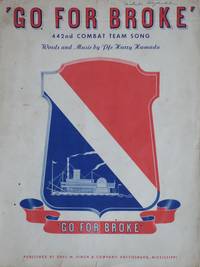
1944List2436Hattiesburg: Earl M. Finch 1944. Sheet music measuring 12 x 9 inches 4 pp. Signature of a Nabuko Hayashida on front cover. Slight tears at fold some toning two small pinholes very good overall quite attractive. Very Good. In Hawaii in May 1942 a battalion of Nisei volunteers was assembled for service in World War Two despite earlier failures of efforts to recruit Japanese-Americans due to the Army’s labeling of Nisei recruits as 4-C enemy aliens. Designated as the 100th Infantry Battalion they were deployed to North Africa in June 1943 integrating with the 34th Division in active combat. Their subsequent deployment to Italy in September 1943 exposed them to intense warfare earning them the moniker of the "Purple Heart Battalion" due to their notably high casualty rate.<br /> <br /> In January 1943 the U.S. War Department officially declared the establishment of the segregated 442nd Regimental Combat Team RCT which was comprised of Nisei volunteers originating from Hawaii and the mainland. The culmination of this initiative transpired in June 1944 when the 442nd RCT merged forces with the 100th Infantry Battalion in Europe subsequently absorbing the latter into its structure. The notable achievements of Nisei soldiers in combat operations prompted the reinstatement of the draft in January 1944 specifically targeting Nisei detainees to augment the ranks of the 442nd. Over time the 442nd RCT expanded to encompass the 2nd 3rd and 100th Battalions; the 522nd Field Artillery Battalion; the 232nd Engineering Company; the 206th Army Band; Anti-Tank Company; Cannon Company; and Service Company. <br /> <br /> Offered here is a very scarce piece of sheet music entitled “Go For Broke†which was written by the Hawaiian musician Harry Hamada reflecting the slogan of the 442nd and performed by Shelby and others during the war as part of efforts to boost morale. Hamada would feature in the 1951 movie “Go For Broke†as Masami alongside several other veterans of the 442nd. This publication of “Go For Broke†is from 1944 seven years before the movie’s release. The piece is dedicated to Colonel C.W. Pence. Hamada was a Hawaiian musician who performed with a band called the Shelby Hawaiians or the Shelby Serenaders. They performed as early as 1943. The Hattiesburg Mississippi merchant Earl M. Finch who ran an Army and Navy store close to Camp Shelby befriended Hamada and other members of the 442nd and acted as a sponsor for the group and eventually published this version despite his business being a dry goods merchant house and not a publishing house. The group with the support of Finch performed throughout the country to lift morale. At some point Hamada penned this composition likely in 1944 as we find no reference to it in 1943 articles and Finch published it - Hamada’s composition would become the theme song of the 442nd and Hamada would perform at the Halloran General Hospital in New York and the Walter Reed Hospital in Washington D.C. in 1944 likely performing this composition. Another composition called “Go For Broke†exists as well and it is unclear to what degree Hamada’s work caught on among the regiment. <br /> <br /> We find two records of Finch’s published version of the composition one listed as part of an online remembrance of the 442nd by the Smithsonian Institution https://americanhistory.si.edu/explore/stories/day-remembrance-70-years-after-executive-order-9066 which appears to have been on loan from the National Japanese American Historical Society and another copy held at Stanford though not listed in OCLC. Finch’s story is also interesting and is the subject of a remembrance on a 100th Battalion History page online https://www.100thbattalion.org/history/stories/earl-finch/. We find no copies listed in OCLC. Overall a very scarce piece of Japanese-American wartime history. Earl M. Finch unknown
199698004St. Gallen: Ersparnisanstalt der Stadt St. Gallen 1996. 33 Seiten. Gr. 8° (22,5-25 cm). Orig.-Broschur mit Orig.-Schutzumschlag. [Softcover / Paperback].
197533958Hessisch-Lichtenau, Vogt KG Druckerei + Verlag, 1975. gr. 8°, 293 S., mit zahlreichen s/w Abb., Zeichnungen, Karten, Regalsp. a. Fußschnitt, Bezahlung per PayPal möglich, we accept PayPal, Einb. ger. beschabt, Schnitte angeschmutzt, altersbed. Bräunungen, ger. Gebr.sp., broschiert
197733959Hessisch-Lichtenau, Vogt KG Druckerei + Verlag, 1977. gr. 8°, 245 S., mit zahlreichen s/w und farb. Abb., Bezahlung per PayPal möglich, we accept PayPal, Einb. ger. beschabt, Schnitte angeschmutzt, altersbed. Bräunungen, ger. Gebr.sp., broschiert
191080170Um 1910.
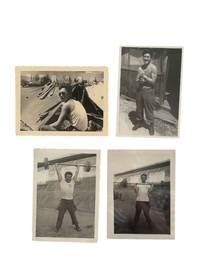
1945213801945. Japanese American soldier photograph archive documenting Nisei service in the United States Army during World War II in the European Theater a body of material connected to the generation of second-generation Japanese Americans who entered military service while many of their families were confined in American incarceration camps following Executive Order 9066. The photographs depict a uniformed soldier and fellow servicemen in training camp life and travel scenes during wartime service. Images include rifle drills field training exercises barracks and tent encampments and informal portraits of soldiers lifting barbells or posing at military installations. Such imagery is closely associated with the wartime mobilization of Japanese American troops that culminated in the formation and deployment of segregated Nisei units including the 100th Infantry Battalion and the 442nd Regimental Combat Team formations that fought extensively in Italy France and Germany while their families remained subject to wartime incarceration in the United States.<br /> <br /> Archive of 19 original black and white photographs documenting Japanese American soldiers during World War II service and training connected to the European Theater. Each measuring approximately 2.5" x 3" to 3.5" x 5" each. Photographs appear to date from the early to mid-1940s and show multiple scenes of military life including rifle training with U.S. service weapons soldiers conducting ground drills outside wooden barracks encampments of canvas military tents transport vehicles and informal moments of recreation including weightlifting and camp leisure. Several images depict European landmarks and travel scenes including a clear photograph of the Leaning Tower of Pisa and war-damaged Italian architecture indicating presence in Italy during the Allied campaign. Verso inscriptions appear on several photographs including handwritten captions such as "That's me in down town Chattaroy" and "Remembrance from leave 10 Min to Roberts 6345 Selma Ave Hollywood Calif." suggesting correspondence between soldiers and family or friends in California and documenting the personal circulation of these photographs during wartime service.<br /> <br /> Photographs measure approximately snapshot format to larger prints and consist primarily of silver gelatin prints typical of mid-twentieth-century military photography. The images collectively document the lived experience of Japanese American soldiers during the war including training camp life leisure travel and combat preparation. The presence of identifiable locations in Italy aligns the archive with the Italian campaign of 1943-1945 where Nisei units gained international recognition for battlefield performance while also serving as a powerful counterargument to domestic anti-Japanese prejudice in the United States. Light edge wear scattered corner creases and minor surface marks visible on several prints with occasional small stains and light curling typical of handled snapshot photographs; overall condition good. A visually varied documentary archive of Nisei military service during World War II preserving both training scenes and personal inscriptions connected to the Japanese American wartime experience. unknown
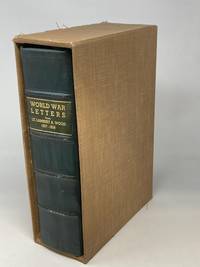
191888062SELF PUBLISHED 1918. Manuscript. Very Good Plus. Half-bound dark green morocco over light brown woven linen. A large sturdy hand-crafted book with sewn signatures 11 3/4 in. x 8 in. x 3 in. housed within a sturdy wooden slipcase covered with woven linen matching the cover of the book itself. Letters envelopes official documents etc.are displayed behind within clear plastic "jackets" each mounted to individual pages of thick card stock. The large tipped in photo shows some spotty residue and the slipcase shows a bit of edgewear.<br /> <br /> The archive consists of 77 detailed letters written by Lieutenant Wood 9th Infantry Regiment 2nd Division who was commanding his machine gun company and was killed during combat July 18 1918 southeast of Soissons France. <br /> <br /> A collection of remarkable letters reflecting an extraordinarily deep and philosophical grasp of both the lofty purpose justification and horrors of war "I am fighting for our very civilization" with none of the details left out "I have seen men die smiling." or "I haven't been out of my clothes for 30 days."<br /> <br /> Roughly half of this notable 77-letter archive are addressed to both parents with some addressed individually to "Mother" "Father" "Dad" and the other half -- 36 letters -- addressed to M____S____ his sweetheart. Woven throughout so many of the letters is Lambert Wood's profound and unstoppable sense of duty and responsibility and consistent view of himself as a crucial component of a much larger grand effort than merely his individual self -- one utterly dependent upon his steady and ferocious all-in participation. Further as an officer he felt his comportment had to be visibly far and above that required of the ordinary soldier - on a number of occasions he mentioned to M____S____ depriving himself of sleep and duly awarded leave - because he felt compelled to set an example -- yet with no trace of egoism or grandstanding; Lambert Wood was fighting the good fight the real fight and coming to realize and mentioning that it was the big brave two-fisted men who were the wons who would win this very tough war. Apparently he had encountered those who were ambivalent about what was required for a war effort.<br /> <br /> In his absolutely devoted deep and very sweet letters to M____S____ he explained both the logistics of his various responsibilities and placements -- instructor in Gas warfare for example -- and seldom neglected to delve deeper into the reasons behind waras if in explaining it to his beloved M____S____ he was also explaining it to himself; the young man was clearly a highly articulate writer who was able - at 22 and 23 - to clearly and convincingly convey the American sense of righteousness against a loathesome enemy. Somewhat alarmingly reading through the letters one sees this soldier-leader's growing -- it must be called "joy" for he himself terms it so in this and other synonymous words in KILLING the enemy the cold and dispassionate"otherizing" which steadily grows to supplant his still youthful and natural 23-year old boyish innocence and permits the taking of human life behind a script of justification.<br /> <br /> Lambert Alexander Wood age 23 was killed in action on July 181918 southeast of Soissons France while in command of his machine gun platoon on a flank movement against an enemy group which was enfilading the advancing infantry line 9th Infantry Regiment 2nd Division.<br /> <br /> Reading through this remarkably articulate archive one follows along the horrific yet fascinating path through the eyes of an educated and perhaps privileged son of Portland Oregon gradually transform into a focused and efficient killing machine a capable and effective instructor and leader of other men who had no choice but becoming the same if they were to survive. Their unit was the first in the actual trenches.<br /> <br /> Wood was the son of Dr. William Lee Wood a physician and Elizabeth Lambert Wood a Northwest author best known for her adventure stories for boys. His grandfather was J.H. Lambert Oregon pioneer horticulturist and originator of the Lambert Cherry. He grew up in Portland Oregon. While attending Willliams College in Massachusetts Wood enrolled in the vollunteer pre-enlistment training program in Plattsburgh New York as part of the "Preparedness" movement before actual U.S. involvement in World War I sailing for France in March of 1917. Note: The soldier Lambert Alexander Wood was the son of Oregon/Washington/Arizona author Elizabeth Lambert Wood. Two books comprising excerpts from these very letters were published and are included with the purchase of this letter-archive: The first entitled HIS JOB: LETTERS WRITTEN BY A 22 YEAR-OLD LIEUTENANT IN THE WORLD WAR TO HIS PARENTS AND OTHERS IN OREGON was published in 1936 by the Metropolitan Press of Portland OR. <br /> <br /> The second which appears to be a reissue but which may contain an edited selection of letters is entitled CERTAIN BRIEF CONCLUSIONS: FROM SELECTED LETTERS OF LAMBERT WOOD was issued by publishers Binfords & Mort Portland OR in 1939 and also printed by the Metropolitan Press in Portland OR. <br /> <br /> This copy includes the tipped-in photograph of Lambert Wood opposite the titlepage and a tipped-in handwritten presentation slip written and signed by his mother Northwest author Elizabeth Lambert Wood "With the compliments of soldier-author's mother. Elizabeth Lambert Wood".<br /> <br /> Wood served with the Machine Gun Company 9th Infantry Regiment 2nd Division. unknown
190932484Braunschweig, Westermann, 1909. Broschiert
19902090202120416078private version 1990. Soft Cover. Fine. Number of books: 1 private version paperback
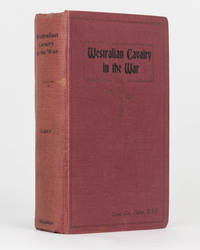
1921122313Melbourne: Alexander McCubbin 1921. First Edition. Hardcover. Very Good. Melbourne Alexander McCubbin 1921. Octavo 343 1 colophon pages plus 3 maps 2 folding 86 plates and 7 folding maps in a rear endpocket. Decorated cloth a little stained on the rear cover and lightly stained and sunned on the spine; endpapers offset; trifling signs of age and use; a very good copy internally excellent. The two-page foreword by Lieutenant-General Sir Harry Chauvel describes the author thus: 'Lieut.-Colonel Olden is well qualified to undertake the work as joining the Regiment on its inception he served with it throughout the War and though twice wounded was never long away from duty. He temporarily commanded it during the absence wounded of Colonel Todd on more than one occasion notably during the 2nd Battle of Gaza and finally succeeded to the command after the death of Colonel Todd'. He was awarded the DSO. <p>Dornbusch 399; Fielding and O'Neill page 233; Trigellis-Smith 280. Alexander McCubbin hardcover
1940117006Hannover, Verlag Osterwald, 1940.
191080168Um 1910.
195696797AB(Ansbach 1956). Mit Abb. i. Text u.a. Taf. 139 S. OKt. - Sehr gutes Ex.
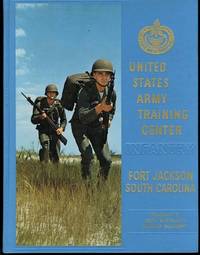
1963111111111449Generic 1963-01-01. Hardcover. Very Good. 0x0x0. United States Army Training Center Infantry; Fort Jackson 1963. Hardcover. Book is large additional shipping cost may apply. A Very Good blue binding with gilt lettering and embossed lettering on front board and paper color illustration on front board binding sturdy and intact some handling/rub marks to boards couple of small abrasions top front board edge bit of age toning to pages discoloration to verso front free endpaper slightly upward lifting of front board some scattered foxing top text block edge and top board edges few pages with ink check marks and ink notes previous owner info in ink front pastedown without Dust wrapper. A nice and clean copy. 4toquarto or approx. 11.5 x 13.5 inches unpaginated color and b&w illustrations. We pack securely and ship daily with delivery confirmation on every book. The picture on the listing page is of the actual book for sale. Additional Scans are available for any item please inquire. Generic hardcover