421 résultats
19302092902138200983Kawaryudo Kobayashi Matashichi Branch 1930. Soft Cover. Fine. Number of pages: 240 pages Size: A5 size Number of books: 1 volume Kawaryudo Kobayashi Matashichi Branch paperback
19302092902139000089Kyoto Regiment Headquarters 1930. Soft Cover. Fine. Number of books: 1 Kyoto Regiment Headquarters paperback
1900304367New York 1900. 2 pp. illuminated manuscript on vellum signed by Captain Morton B. Steele and Benj. H. Plattt Secretary. Reversed calf. Fine. 2 pp. illuminated manuscript on vellum signed by Captain Morton B. Steele and Benj. H. Plattt Secretary. "At a meeting of Company F Seventh Regiment N.C. N.Y. held April fifth nineteen hundred it was unanimously Resolved that the officers and members of the Sixth Company tender their sincere thanks to Edward Kemp. Esq. for the delightful entertainments which they owe to his kind and generous thoughtfulness ." The Seventh Regiment Armory is now more commonly called the Park Avenue Armory. unknown
186554442Hartford Connecticut: L. Stebbins 1865. 1865. CIVIL WAR. First edition.12 mo. Decorated cloth titles and decorations on front cover and spine stamped in gilt viii - 11 - 400 pp. frontispiece preface the eleven steel engraved illustrations are present includes the frontispiece two pages of advertisements. Also included is a list and location of principal Confederate prisons. "A sergeant’s journal of captivity reworked by the editor; very bitter over deliberate cruelty to prisoners but also gives facts tending to show the opposite." -- Nevins Civil War Books page 195. The author a Sergeant-Major in the 16th Connecticut Volunteers recounts his experiences at Andersonville Georgia and Florence South Carolina. He describes brutal conditions frequent deaths challenges to daily survival escape attempts and moments of humanity. This colorful detailed account is one of the best first-person descriptions of captivity in a Confederate pow camp. Front cover has three small colored spots gilt flaked off the spine but readable small label removed from the front pastedown sheet light wear to the fore-edge of the title page else internally clean and tight. Overall a good copy of a seldom offered book. L. Stebbins, 1865. hardcover
1865Alibris.0040555L. STEBBINS 1865. Hard cover. Fair. No dust jacket. Life and Death in Rebel Prisons Giving a complete history of the inhuman and barbararous treatment of our brave soldiers by rebel authorities inflicting terrible suffering and frightful mortality at Andersonville GA. and. 400 p. Includes illustrations. Life and Death in Rebel Prisons Giving a complete history of the inhuman and barbararous treatment of our brave soldiers by rebel authorities inflicting terrible suffering and frightful mortality at Andersonville GA. and Florence SC describing pla Life and Death in Rebel Prisons Giving a complete history of the inhuman and barbararous treatment of our brave soldiers by rebel authorities inflicting terrible suffering and frightful mortality at Andersonville GA. and Florence SC describing plans of escape arrival of prisoners with numerous and valued incidents and anecdotes of prison life by Sgt. Maj. 16th Regiment Connecticut Volunteers Robert H. Kellogg. prepared from his daily journal-TO WHICH IS ADDED AS FULL SKETCH'S OF OTHER PRISONS AS CAN BE GIVREN WITHOUT REPETITION OF THE ABOVE BY PARTIES WHO HAVE BEEN CONFINED THEREIN.L. Stebbins Hartford CT 1865. The book was prepared from Kellogg s daily journal. Illustrated Size 5 x 7 1/2 399 pages. There are 9 b w illustrations-CONDITION FAIR SPINE HAS SOME CLOTH WEAR-399 PAGES--PUBLISHED BY L. STEBBINS HARTFORD CONN L. STEBBINS hardcover
180966435London: printed for Richard Phillips Bridge Street Blackfriars 1809. First edition 8vo pp. 2 ii 288 16 Phillips catalog; folding frontispiece map 2 other folding maps; original blue paper-covered boards printed paper label on spine; front endpapers and frontispiece dampstained spine worn with small chips out label chipped with loss of one letter; a good sound and but for the initial dampstains clean copy. On the front pastedown is armorial bookplate for Robert Montgomery / Convoy. Wikipedia notes that "The Walcheren Campaign was an unsuccessful British expedition to the Netherlands in 1809 intended to open another front in the Austrian Empire's struggle with France during the War of the Fifth Coalition. printed for Richard Phillips, Bridge Street, Blackfriars unknown
1166656616.Ghardcover. Good. Access codes and supplements are not guaranteed with used items. May be an ex-library book. hardcover
1166604330.Gpaperback. Good. Access codes and supplements are not guaranteed with used items. May be an ex-library book. paperback
184574750X.Gpaperback. Good. Access codes and supplements are not guaranteed with used items. May be an ex-library book. paperback
1120313805.Gpaperback. Good. Access codes and supplements are not guaranteed with used items. May be an ex-library book. paperback
20052485Lévis Quebec Canada: Le 6e Régiment D'artillerie de Campagne Du Canada 2005. First Edition First Printing. Hardcover. As New. pp. 470. 8vo. Black "leatherette" over boards silver lettering to the spine and front board. Replete with black-and-white photographs illustrations drawings et al. No detectable flaws contents remain bright clean and unmarked with tight sound binding; fine and housed in near fine very lightly rubbed dustjacket. <br/><br/>Limited Edition of only One-Hundred copies of which this is No. 94.; hand-written in ink. Le 6e Régiment D'artillerie de Campagne Du Canada hardcover
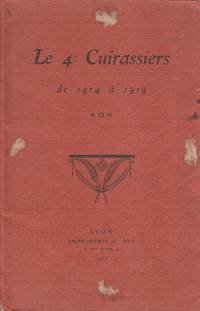
1920118441Lyon. Imprimerie Rey 1920. Paperback. <b>Livre en français</b>. Couverture souple. Broché. 83 pages. Couverture défraîchie. Graffittis sur la page de garde quelques noms soulignés. <i>ref. 118441</i> Lyon. Imprimerie Rey paperback
19782091502135415067Not Available 1978. Soft Cover. Fine. Number of books: 1 Not Available paperback
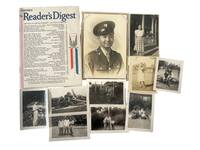
1944217981944. Japanese American WWII 442nd Regimental Combat Team soldier and family photograph archive showing Japanese American military service and community life in Hawaii during and immediately after World War II. This group documents the lives of Nisei soldiers connected to the 442nd Regimental Combat Team a segregated United States Army unit composed primarily of second generation Japanese Americans. The material shows individual soldiers with their families and communities while also documenting expressions of American patriotism among Japanese Americans during the period of wartime incarceration and discrimination generated by Executive Order 9066. <br /> <br /> Archive of 11 pieces including 10 silver gelatin photographs and one periodical issue. The photographs produced in Hawaii during the 1940s and early 1950s range in size from approximately 6.25 x 4 inches to 3.5 x 2.5 inches and depict Japanese American soldiers and members of their extended social circle in both military and civilian settings. One image presents a formal studio portrait of a Japanese American soldier in United States Army uniform wearing a cap and corporal's chevron. Other photographs show groups of men gathered outdoors among tropical plants and residential houses including scenes of veterans posing together in civilian clothing that suggest continuing friendships after military service. One image shows several Japanese American men raising an American flag while another depicts a group of young men lying closely together on the ground with their heads touching in a circle an intimate scene of camaraderie. Additional photographs depict domestic and social life within the Japanese American community including a young woman in Western dress seated with two soldiers on a porch and a young girl wearing a lei. Included with the photographs is the July 1945 issue of Reader's Digest containing the article "Hail Our Japanese-American GIs!" by Blake Clark and Oland D. Russell which publicly praised the service of Japanese American soldiers and called for recognition of their loyalty and wartime contributions.<br /> <br /> The 442nd Regimental Combat Team became the most decorated unit for its size and length of service in United States military history earning thousands of individual decorations for valor during combat operations in Europe. Many Nisei soldiers volunteered from mainland incarceration camps while others enlisted from Hawaii where Japanese Americans were not mass imprisoned but remained under intense scrutiny after the attack on Pearl Harbor. Contemporary publications such as the 1945 Reader's Digest article included here sought to influence public opinion by highlighting the loyalty of Japanese American soldiers at a time when their families continued to experience displacement discrimination and political marginalization. Photographic documentation of Nisei soldiers within family and community spaces is comparatively scarce particularly images that bridge wartime service and postwar civilian life in Hawaii. Minor edge wear and light handling marks visible to several photographs and the magazine otherwise well preserved with clear photographic contrast; overall very good condition. This archive provides direct documentation of Japanese American military participation and community during one of the most consequential periods in twentieth century civil rights and wartime history. unknown
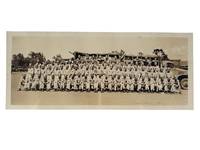
1943217311943. Japanese American soldiers associated with the 442nd Regimental Combat Team appear in these World War II panoramic photographs documenting Nisei military units training in Hawaii during the early stages of the regiment's formation. The 442nd Regimental Combat Team was composed primarily of second generation Japanese Americans who volunteered for military service during World War II while many of their families remained incarcerated in U.S. internment camps following the Executive Order 9066. Organized in 1943 and later deployed to Europe the regiment became one of the most decorated units for its size and length of service in United States military history. These photographs record the logistical and engineering personnel who supported that combat formation capturing the organization of Nisei soldiers stationed at Schofield Barracks during the training period preceding overseas deployment.<br /> <br /> Archive of two panoramic silver gelatin photographs taken outdoors at Schofield Barracks each measuring approximately 19.5 × 8 inches and stamped by Schofield Studio and Supply. Both photographs bear manuscript annotations on the versos identifying the images as taken while the writer served in a "Dump Trk. Co." at the "motor pool" indicating a transportation or engineering support unit attached to the broader 442nd organizational structure. The first photograph depicts approximately ninety Japanese American servicemen posed in uniform before two covered military transport trucks with soldiers seated in the vehicle beds and arranged in rows on the ground. Uniform details include khaki service uniforms garrison caps and visible rank insignia identifying several sergeants and noncommissioned officers seated in the front row. The second panoramic photograph shows a larger company of more than two hundred soldiers assembled on an open field beneath trees and utility poles. A banner marked "H & S" identifies Headquarters and Service Company and the front row includes a small group of white officers seated among the Nisei troops including a commanding officer identified in the caption as "my C.O Lt. Smejkal from Houston."<br /> <br /> These photographs illustrate the organizational structure of Japanese American military units during World War II when Nisei soldiers frequently served in segregated formations led by white officers under prevailing U.S. Army policies. Units associated with the 442nd Regimental Combat Team and related engineer and service companies trained extensively in Hawaii before later deployments connected to major European campaigns. The images therefore document a transitional moment in American military and social history when Japanese Americans sought to demonstrate loyalty to the United States through military service despite the wartime incarceration of their families in camps administered by the War Relocation Authority. Both photographs retain clear detail and legible manuscript annotations. Rolled with scattered foxing and light toning consistent with age; overall condition very good. unknown
224600C E & D J Finkemeyer Melbourne 1998. 291 pp illustrated end-papers b&w illustrations maps fine copy in like pictorial d/j. Inscribed and signed by the editor/ publisher on front end-paper: "Both our best wishes Colin Finkemeyer 4/1/99" with original sketch head of Japanese Guard with signature of Don Moore - the illustrator. C E & D J Finkemeyer, Melbourne, 1998 unknown
14197Dollar Mains Clackmannanshire Scotland. 9 December 1796. 1p. foolscap 8vo. Very good on lightly-aged paper. Docketted with title and date on reverse. The list is headed: 'Decr. 9th 1796 Inventory of farming utensels sic at Dollar mains belonging to Mr Williamson'. Listing in two columns 46 items from '2 Carls 1 Pair of Cart wheels' to 'about 1000 Stones of hay' and 'about 8 Balls of oats unthreshed'. At foot of page: 'NB A number of the above articles purchased since Capn.Williamson came to Dollar'. [Dollar Mains, Clackmannanshire, Scotland.] 9 December 1796. unknown
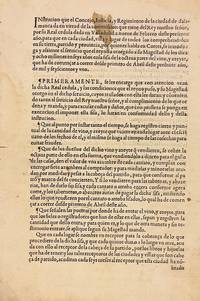
16013683Salamanca: S.n. 1601. First edition. Signed at foot by a municipal officer Diez de la Puente. One-page contemporary manuscript on p. 3 relating to the administration of the tax. Unbound as issued. Pinholes at gutter some edge chipping and small dents brown stain affecting the upper portion throughout. Otherwise a good well-preserved copy. First edition. Signed at foot by a municipal officer Diez de la Puente. One-page contemporary manuscript on p. 3 relating to the administration of the tax. Unbound as issued. 4 last 2 blank p. <p><br /> Unrecorded 1601 ordinance from Salamanca enforcing the Armada-era servicio de millones Spain’s foundational fiscal levy.<br /> <p><p><br /> Printed ordinance issued by the municipal council of Salamanca implementing the royal tax known as the servicio de los dieciocho millones. In accordance with the royal cédula of 9 February 1601 the Concejo Justicia y Regimiento instructs subordinate towns and villages to collect an eighth part of all wine and olive oil sold to be remitted through a chain of local receivers. The text regulates how wine and oil must be measured recorded and taxed forbids additional repartimientos and orders prompt transfer of funds to the city’s main treasury. Dated at Salamanca 10 March 1601 and naming four municipal commissioners appointed for its execution it represents the earliest stage of local enforcement of Philip III’s fiscal scheme transforming the national levy into a functioning municipal excise. A contemporary handwritten endorsement below the text signed by Diez de la Puente attests its execution. Accompanying the printed ordinance is a contemporary manuscript headed on p. 3 “Dudas que se ofrecen en la administración de las sisas†listing practical questions concerning the execution of the tax—registration and measurement of goods roles of administrators and receivers form of payment penalties and conditions of tax farming arrendamiento.<br /> <p><p><br /> The servicio de los dieciocho millones formed part of the broader system of millones taxes created by the Cortes of Castile to meet the Crown’s desperate financial needs after the prolonged wars of Philip II. The servicio de millones had first been introduced by royal request and approved by the Cortes on 4 April 1590 conceived to raise eight million ducats over six years to finance the royal expenditure associated with the Armada campaign against England and other military commitments. Rather than remaining temporary it evolved into a regular levy on six staple items—wine oil vinegar meat soap and tallow candles—collected through local sisas and eventually forming the backbone of Castile’s fiscal structure. By 1600–1601 under Philip III the scheme was renewed and expanded to eighteen million ducats its collection entrusted to municipal governments such as Salamanca’s Concejo Justicia y Regimiento. As described in Bartolomé Yun Casalilla’s Sobre la transición al capitalismo en Castilla this marked a transition from feudal income to a centralized fiscal system financed through municipal taxation embedding local economies within the machinery of the Habsburg war state. The present ordinance captures this process of consolidation—when the monarchy sought tighter control over municipal revenues demanded proper accounting and remittance of surpluses and aimed to prevent arbitrary over-taxation—reflecting both the fiscal strain and administrative centralization characteristic of early-seventeenth-century Spain.<br /> <p><p><br /> Reference: Yun Casalilla B. 1987. Sobre la transición al capitalismo en Castilla: EconomÃa y sociedad en Tierra de Campos 1500–1830. Valladolid: Junta de Castilla y León ConsejerÃa de Educación y Cultura.<br /> <p>. [S.n.] unknown
1930048647London: Offices of the "Fishing Gazette" 1930. 'With an Appendix Giving The Dressing of 361 Salmon Flies Alphabetically Arranged'. Maroon cloth on boards gilt title light couple fo small marks. Spine: soft rubbing to head & foot. Edges: light red-pink; slightly faded on top-edge. 4cm surface splitting to head of front hinge. Head of Frontis & title page a small light spot. Clean contents. Illustrated by drawings. Binding is VG. 189p 16.5 x 10.5 cm. Third Edition. Hb. VG/None. Offices of the "Fishing Gazette" Hardcover
B9781018730769Hardback. New. hardcover