421 résultats
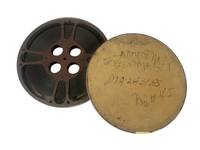
1945232061945. Capra Frank. Japanese-Americans a 1945 wartime military screen magazine segment film reel highlighting Japanese American service in the U.S. Army's information and morale boosting film distributions during the final year of World War II. Produced for exhibition to servicemen as part of Army-Navy Screen Magazine No. 45 the segment is also an example of the wartime contributions of legendary Italian-American filmmaker Frank Capra one of Hollywood's most influential directors best known for It Happened One Night Mr. Smith Goes to Washington and It's a Wonderful Life. During World War II Capra became a major figure in official U.S. military filmmaking directing or supervising films that translated government policy and Allied war aims into accessible emotionally forceful cinema for soldiers and civilians. Here his Army film work presents Nisei troops not as an isolated human-interest subject but as participants in a broader program joining military projection democratic rhetoric and controlled public acknowledgment of Japanese American loyalty after mass incarceration. The film's focus on the 100th Infantry Battalion the 442nd Regimental Combat Team battlefield casualties and a widow receiving the Silver Star shows how Capra's wartime production apparatus helped frame Japanese American military service for uniformed audiences in 1945.<br /> <br /> Capra Frank producer. Japanese-Americans. Segment from Army-Navy Screen Magazine No. 45. U.S. Army Signal Corps Army Pictorial Service 1945. Black and white sound film reel 16mm. Present on a large reel in metal can the lid handwritten in grease pencil "ARMY/NAVY SCREEN MAG." and "NO #45." The identified segment shows a spokesman in Hawaii praising Japanese Americans in the U.S. Army a war widow receiving a Silver Star scenes of Nisei troops in the Italian campaign the 100th Infantry Battalion entering Livorno wounded men being evacuated and General Mark Clark citing soldiers of the 34th Infantry Division. The physical reel remains tightly wound; the present housing and handwritten can notation directly support identification to issue no. 45.<br /> <br /> Issued at a time when Japanese Americans were serving in segregated units even as many of their families remained confined under wartime exclusion policy the segment shows how Capra's Army film production participated in reconciling racial tension and patriotic messaging to American servicemen. Japanese American servicemen are honored here as heroes and patriots. Light wear and dust to can; reel housed and tightly wound; surface inspection only. A strong piece of World War II military film notable both for its Japanese American subject matter and as a sample of Frank Capra's influential wartime propaganda work for the U.S. Army. unknown
19083632London: The Bodley Head 1908. Hard Back. Near Fine/Fair. 160-pages. Red cloth-bound book with bright gilt titles & fox-heads on cover 8 full-page photographic illustrations. Dust jacket is missing a 3 x 1 inch chunk top of front cover causing about half of the title to be gone. Dust jacket spine is age tanned. Old tape repair to back of dust jacket. Pages show normal aging for a 100 year old book crisp but not brittle. Very tight book that probably was read only a few times. Boards remarkably bright. Top page edges probably were a bright gold but are now dark gold. The front and bottom edges were rough cut. <br/> <br/> The Bodley Head hardcover
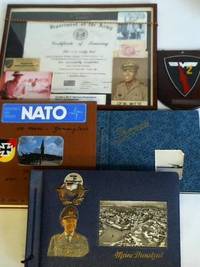
6a5681958-1974. leichte Gebrauchsspuren. - Die Aufnahmen zeigen: Manöver Grundausbildung / Funkwagen / Panzer / an Ehrenmal der Marine Laboe Flugabwehrkanone / Flugabwehr mit dem MG / Flußüberquerung im Großmanöver / Einsatz und Ausbildung in den USA / Boden-Luft-FK. SAM HAWK mit Ladefahrzeug / Raketenschule / Big-Air-Force Base Texas / einige wenige private Aufnahmen / Interessante umfangreiche Fotodokumentation - unknown
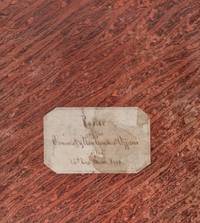
186434331n.p.: n/a 1864. Ledger. Fair. Folio. Manuscript. Approx. 16" x 10.25". 192 hand numbered pages. Orangish marbled paper covered boards with leather corners and spine. A paper label with the hand written title is pasted down center on the front cover. Damp stains to the title label. Blue front and rear end sheets. Pages 106-192 blank. Dried water stains persist from the rear end sheets and back pages gradually diminishing by page 160. The rear cover is slightly warped. Front joint is split upper edge. <br /> <br /> The majority of the first 105 pages contain hand written names with rank date of commission discharge cause of vacancy for the Field Staff non commissioned staff; Captains First Lieutenants Second Lieutenants and non commissioned officers of Companies A-K. Page 6 has the written name at the top of Colonel Edward F. Jones first commander of the 26th Regiment. He was Commissioned August 1861 and discharged July 28 1862 on account of disability. Dates of records range from August of 1861 to June 1st 1864 with the majority of recorded dates in 1862 and 1863. The 26th Regiment saw action in the Gulf operations and New Orleans up until 1863. The unit later moved to Virginia and participated in Sheridan's Shenandoah Campaign. The unit mustered out in Savannah Georgia 1865. n/a unknown
19392081502111809638Not Available 1939. Soft Cover. Fine. Volume: 1 Not Available paperback
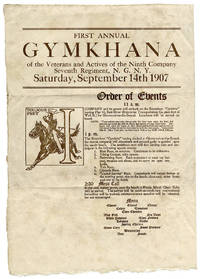
3726497<p>New York City 1907. Two-page program. Approx. 14 x 10 inches. Reverse bifolium. Laid paper; deckle edge along bottom. Folds; faint foxing; very good.</p> <p>Humorous fun-spirited program for the First Annual Gymkhana or field day held by the Ninth Company Company “I†of New York’s Seventh Regiment a National Guard equestrian unit.</p> <p>The late summer excursion took members of the regiment by boat from Manhattan to Glenwood-on-the-Sound Nassau County Long Island. In addition to a “Rhode Island Clam Bake†the complete menu is printed here—from “Clams! Clams! Clams!†to “Smoke†the day’s activities included various aquatic races and an assortment of traditional field events or picnic games—a parody of military and cavalry exercises.</p> <p>"The Steamboat “Cymbria†having docked at Glenwood-on-the-Sound themerrie companie will disembark and proceed gaily to gambol upon the sandy beach. The aquatic ones will don bathing suits and participate in the following aquatic events:<br /> 1. Boat Race en surprise. Conditions to be unknown.<br /> 3. Swimming Race. Each contestant to wear top hat coat trousers and shoes and to carry an open umbrella.<br /> 4. Tub Race.<br /> 6. “United Service†Race. Contestants will mount horses at the starting point ride to the beach dismount enter boats and row to the finish."</p> <p>At 4 o’clock there was a running of the “Porter House Stakes; for 10-year-olds and upward†a sham horse race:</p> <p>"A veterinary will be in attendance to administer “hop†beer in extreme cases. No horse will be left at the barrier if a hypodermic can prevent it. Eligible Starters: Pegasus Latrine…Rip Van Winkle Methuselah and Skelington i.e. skeleton.<br /> "</p> <p>Traditional picnic games followed: climbing a greased pole tug-of-war “Potato sack Race†catching a greased pig here “Lubricated Pork†“Reconnaissance Hamiltonian†finding a lemon in tall grass and an egg race. Tickets were $5.00: “Please send check immediately to Sergt. Palmer A. Paddock 196 Montague St. Brooklyn.â€</p> <p>New York’s Seventh Regiment was comprised of members of New York’s social élite. The regiment was formed before the American Civil War; its ninth company—Company I—was a cavalry unit. A printed historiated initial is the sole illustration; it depicts a mounted charging cavalry soldier with saber and the regimental motto: “Toujours Prêtâ€â€”always ready.</p> unknown
2g2857Herausgegeben von den Vereinen ehemaliger Kameraden des Regiments zu Berlin Görlitz Posen Glogau Lissa i.P. Bunzlau Breslau Hamburg. Im Verlage des Arbeitsausschusses für das Jubiläums-Denkmal Berlin 5. Mai 1910. Gertz Charlottenburg 1910. 158 Seiten/10 Blatt mit zahlreichen Tafeln u. 1 gefalteten Plan. original Halbleinen mit Silberprägung. etwas bestossen/Name auf Vorsatz. unknown
18337Arras. 6 December 1840. Headed with the first line in gold: 'Corps Royal du Genie. 2e. Regiment. Academie d'Escrime. Brévet de Maitre d'Armes.' The commission reads: 'Nous soussigné Maîtres d'Armes Composant la garrison d'Arras après avoir reconnu les capacités du Sieur Chaix Marius Maître Ouvrier à la Ce. Compagnie du 2e. Bataillon du dit Regiment. On one side of a 28 x 36 cm piece of cream paper. In fair condition aged creased and worn with central vertical fold. An attractive production within a black border with an illustration of a helmet breastplate axe sword and laurel leaf at head painted in red grey green and gold. Elève du Sieur Poncet Maître d'Armes reconnaissons l'avoir reçu en qualité de Maître en foi de quoi nous lui avons délivré le présent Brevet pour lui servir et valoir ce que de raison. En consequence nous invitons nos Freres d'Armes à lui préter aide et assistance en cas de besoins partout ou il aura merité leur Amitié et leur Estimé.' The signatures include: 'Faindienier 1er. Mtre.'; Reniéville; Bouvier; Grégoire; Champ; Bernard; Maray; Altier and Baldwin. See photo. Arras. 6 December 1840. unknown
1962001273Edinburgh: Thomas Nelson & Sons Ltd 1962. Appears unread fresh and crisp. Near Fine condition in bright shiny Near Fine Dust Jacket. Clean square tight unmarked copy. Not a book club edition. No remainder mark. No owner's name or bookplate. No underlining. No highlighting. No margin notes. Illustrated with full-color frontispiece and 54 maps. Index. No date on title page but circa 1962. The history of the first 200 years of this Regiment 1758 to 1958. Covers Wellington's Peninsula campaign the Crimean War the campaigns in Persia and New Zealand the Boer War WWI WWII etc. Published for the Durham Light Infantry by Thomas Nelson & Sons Ltd. First Edition. Hardcover. Original green cloth/DJ Not Price Clipped 50s. 8vo. xx 574pp. Thomas Nelson & Sons Ltd Hardcover
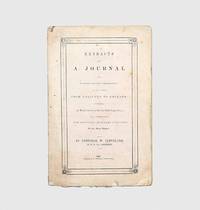
1847189591Deal: Printed by J. Deveson 1847. The battlefields of the Punjab seen from the ranks First and only contemporary edition of this brief but spirited and entirely unembroidered account in the authentic voice of an enlisted man. The 31st were one of the most heavily engaged units of the conflict seeing action at Mudki Ferozeshah Aliwal and Sobraon. Scarce with just two locations traced BL and Boston Public Library unrecorded at auction. Vivid vignettes from the battle front are set within the context of a diary account of an uneventful voyage back from Calcutta to Gravesend. Cleveland opens on 23 October 1846 "weather continues fine and the wind steady" reminiscing of Moodkee "the first battle in which I had even been engaged I have often since endeavoured to imagine what my feelings were on that occasion but the hurry and confusion of that Action prevented the exercise of thought". One thing remains clear in his memory "So confident were our Officers and men that the Sikh Army was composed of nothing but a rebel mob that they did not believe they would hazard an engagement. this entire ignorance of the Sikh Army it is wonderful that all were alike involved even the Governor and Commander in Chief each of whom it should fairly be supposed ought to have been possessed of correct information on so important a subject". Of Ferozeshah he recalls the "lurid flames" of the burning Sikh camp "gleaming through the darkness diffusing sufficient light to make the horrors of our situation more apparent" the shot from the Sikh guns falling "among us by far to thick and fast to be agreeable". The situation only saved by what Cleveland - along with Sikh commander Tej Singh - read as the Commander in Chief's order for the cavalry to make a "false charge" which was in fact the withdrawal of the Horse Artillery desperately short of ammunition to Ferozepur to resupply while under cavalry escort. At Aliwal the 31st were on the extreme right of the British line "When we had arrived within a short distance of the village under heavy fire from the enemy who were waving their swords and cutting a great variety of menacing capers in front of us General Smith galloped up and said 'take that village boys and carry it along with you' when the whole regiment broke into a rapid double which they did not abate until they had cleared the village captured the guns upon its left and caused the whole of the enemy's left flank to run for dear life. We now quietly took possession of the whole of their camp equipage ammunition and stores; and having amply supplied ourselves. we turned in for the night near the banks of the Sutlej". And so to Sobraon "At 9 A. M. the battle had reached its warmest point - shot and shell were then whizzing through the air in rapid succession. on their fearful missions of mischief. from the muzzles of 150 pieces of ordnance - about half past 9 a low rumbling sound was heard resembling distant thunder which was caused by the report of musquetry - as the infantry ad passed the Enemy's breastworks. thus concluded the most severe contest in the annals of Indian warfare and not a second to any fought in Europe with the exception of Waterloo". Following the ratification of the Treaty of Lahore the 31st marched to Calcutta and embarked for home Cleveland composing this very personal and telling NCO's witness to world-changing events while under weigh. Octavo. pp. 24. Original thin paper printed wrappers. Wraps rubbed and soiled with some minor chips and splits at the edges no loss of text creases to the corners; pale toning and some finger-soiling to the text; but a well preserved copy very good. paperback
0259124133.Gpaperback. Good. Access codes and supplements are not guaranteed with used items. May be an ex-library book. paperback
0332541762.Ghardcover. Good. Access codes and supplements are not guaranteed with used items. May be an ex-library book. hardcover
181154628E-172: Longman Hurst Rees Orme and Brown. Very Good. 1811. First Edition; First Printing. Hardcover. Leather. 4to. Printed in London for Longman Hurst Rees Orme and Brown Paternoster-Row. 1811. 436 pgs. Fine folding engraved map "of the Interior of Louisiana with a part of New Mexico" and full-page map of ". The Mississippi River from its source to the Mouth of the Missouri." Bound by in full calf leather. Spine has been rebacked with contemporary leather spine and gilt titled spine label. Boards are scuffed and worn with wear present to the edges of the boards. Small name present to the reverse of the front board. Both maps present however the first map has a small piece missing and has been rebacked with linen. Foxing present. Text is free of marks. Binding tight and solid. The first U. S. Government exploration of the American southwest. In 1805 Wilkinson ordered Pike to find the source of the Mississippi River so Pike traveled into the northern Louisiana Territory newly purchased from France. In 1806 Pike led an expedition to the southwestern borders of the land acquired by the United States through the Louisiana Purchase. One of the most important inland travel narratives giving an account of the South-west including the author's description of his earlier journey to explore the headwaters of the Mississippi. The two maps are among the first of the area executed by a government expedition. After Pike returned from this first expedition General Wilkinson almost immediately ordered him to mount a second expedition this time to explore map and find the headwaters of the Arkansas and Red rivers. Additional objectives of this exploratory expedition into the southwestern part of the Louisiana Territory were to evaluate natural resources and establish friendly relations with Native Americans. Beginning July 15 1806 Pike led what became known as the "Pike Expedition". General Wilkinson's son James served as one of his lieutenants although it now seems that Wilkinson planned that the Spanish who controlled Mexico would capture him and his men. Over 100 years later France released official records showing General Wilkinson received personal trade concessions and thus could be labeled a spy for Spain at the time. Sabin 62837; Howes P373 e-172; 8vo 8" - 9" tall . Longman, Hurst, Rees, Orme, and Brown hardcover
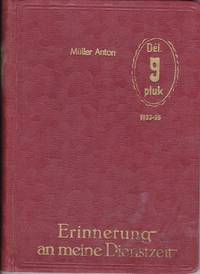
19339101C1933. Tschechoslowakei. 1933-35. ca. 205 x 15 cm. ca. 80 S. Original-Leinen mit goldgeprägtem Deckeltitel. Einband leicht berieben Deckel etwas gebogen. Innen zahlreiche private ganzseitige Einträge und Illustrationen. Altersentsprechend guter Zustand. Das Album zur Dienstzeit eines Soldaten besteht aus deutschsprachigen Einträgen von Kameraden zum Zwecke der Erinnerung an die gemeinsame Dienstzeit und aus Einträgen des Albumeigners selbst. Diese Einträge sind teils tagebuchartig teils sind es eher Verse zur Selbsterbauung. Die Einträge sind datiert und stammen meist aus 1934-1935. Die Soldaten waren scheinbar in ihrem Wehrdienst und wurden geschult die Naivität der Einträge scheint keine Berührung mit irgendeinem Kampfeinsatz zu kennen. Genannt sind Orte wie Nitra Zilina und Malazky welche allesamt in der heutigen Slowakei liegen und damals der Tschechoslowakei in den Jahren zwischen 1918 und 1938 zugehörten. Die Einträge sind alle in deutscher Sprache verfasst oft auch eher etwas holprig. Es scheint sich um das Album eines Deutschböhmers und Sudetendeutschen zu handeln der im Rahmen seiner tschechoslowakischen Soldatenzeit an diese Orte versetzt wurde. In mehreren Einträgen werden auch die Sehnsucht nach der Heimat und das Deutschsein zum Ausdruck gebracht. Ein längerer Eintrag des Albumbesitzers etwa zur Mitte des Albums trägt den Titel "Ein Deutscher Spruch!". Der mehrstrophige Text lautet: "Wenn alles reist wenn alles bricht du Deutsches Herz versage nicht. Versage nicht du Deutsches Land vergiss nicht unsere Bruderhand. / Versage nicht du Deutsches Herz versage nicht in Leid u. Schmerz. Denn einmal kommt die Zeit wo mann uns Deutschen doch befreit. / Halte Deiner Heimat heiligerscholle Deutsch soll sie bleiben komme was wolle komme was wolle Freud oder Leid Deutsch soll sie bleiben in Ewigkeit!" Es sieht so aus als hätte dieser Soldat das Jahr 1938 und den Einmarsch der Wehrmacht am 1.10.1938 kaum erwarten können. Interessante historische Archivalie privater Hand aus der Tschechoslowakei vor 1938! unknown
193636075Madrid 1936.- 1 hoja en papel couché de Gran Folio Imperial apaisado 325 x 73 cm. con texto trilingüe español-francés-inglés profusamente ilustrada en sus dos caras con fotografías de Museo del Prado en las que se aprecia toda la destrucción que causaron los ataques llevados a cabo sobre Madrid el 16 de Noviembre entre 7 y 8 de la tarde.- Lleva noticia del entonces subdirector del Museo F. S. Sánchez Cantón y artículo del poeta Antonio Machado. Está en buenas condiciones aunque se han restaurado rajitas de las dobleces. GUERRA CIVIL 1936-1939 Y EXILIO Libro en español Sin editorial paperback
193636076Madrid 1936.- Una enorme hoja de papel couchet en Gran folio Imperial 62 x 104 cm. con el texto bilingüe español-francés profusamente ilustrada por ambas caras con fotografías en negro y que muestran los diversos daños causados a la población civil por los ataques de aviones enemigos sobre el barrio de Tetuán de las Victorias.- Buen estado en general algo debilitada por la parte de las dobleces. GUERRA CIVIL 1936-1939 Y EXILIO Libro en español Sin editorial paperback
17022The account of 'Events in 1855 and 1856' dated by Wrench from Park Lodge Baslow Derbyshire 1902. The duplicated letter dated 12 December 1880. The printed advertisement for talk at the School Baslow and dated 14 January 1881. Wrench was the son of a clergyman and well connected being presented to the Prince of Wales and staying at Chatsworth in his old age. His obituary in the British Medical Journal 27 April 1812 describes how he went out to the Crimea in 1854. 'He had been gazetted Assistant Surgeon to the 34th Regiment in November and joined it on its arrival in the Crimea. He served during the terrible winter of that year and was present at the capture of the quarries the successful assault on the Redan of June 18th and the final capture of Sebastopol on September 8th 1855. He was mentioned in despatches and received the Crimean medal and clasp for Sebastopol and the Turkish medal.' Wrench's own account of his experiences in the Crimea Item One below – entirely unpublished – is a personal one vividly-written and full of detail. It does not appear to be present in the collection of his family papers at Nottingham University Library. ONE: Manuscript consisting of 'Events in 1855' 4pp and '1856 12pp making a total of 16pp. 8vo on twelve leaves attached with a stud. In good condition on aged and dogeared paper. The first page of the 1855 manuscript is headed '12 sic Pages in this Year' but comprises four numbered pages. The beginning of account sets the scene and gives an indication of the level of detail: 'The 1st Janry found me doing duty with the 28th Foot or Slashers in the 3rd. Divt of the army before Sebastopol having landed at Balaclava from the Ship "Queen of the South" on the 20th. Nov. 1854. On the 6th July I was ordered to do duty with the 50th. Foot but as I did not wish to move the weather being very bad and my tent being as comfortable or rather as little uncomfortable as it could be made except to join my own Regt. the 34th. to which I had been gazetted on the 1st. of December 1854. I applied to be sent to it and was ordered to join which I did on 9th of Janry.' The account is made up from diary entries and is none the less vivid and interesting for that: 'On the following morning a wounded Russian named Alexo was brought into our Hospital and we amputated his leg he did really well and was eventually exchanged at Odessa. Poor Jordan's death threw a great damp on the Regiment as he was the first Officer we had had killed. On the 9th. of April being Easter Monday the 2nd. Bombardment took place. It was a fearfully wet windy day so that no one was able to go out to see what damage was done. On the 10th. I was on trenches and the noise was terrific but nothing to what I have since heard. I had a very narrow escape from a round shot which hopped over the parapet close to where I was.' In June 'after 68 hours bombardment an assault was made on the Quarries by ourselves . I did not go down till about 8 with Robinson Scott & Peel and 100 men. We were marching about the Trenches half the night and were finally sent to the middle ravine just below Mamelon. The scene there was most horrible the ground being strewn with dead & wounded. English French & Russians. One poor Russian boy was dragged up by two Zouaves but fainted just opposite to where we were lying. I got a light and found he was shot through the belly and that nothing could be done for him. I gave him some water and he lie sic by me some time but died before morning. I got an amulet off his neck & his cap pouch which I sent home'. The 1856 account begins in dramatic style: 'The first entry in this Diary relates to the explosion which took place within the British Lines during the Siege of Sebastopol. Feb 3rd. I was not many hundred yards from this explosion when it took place & will here relate now Janry 1900 my recollection of it. It took place in Novr. or Decr. 1855. I had just come in from a ride & had given my horse to my Batman when I noticed a vast cloud of smoke shoot up from the Right Siege train an open air arsenal about 500 yds from my house - a tremendous noise of explosion followed & knowing that there would be a rain of missiles from above to fall immediately I jumped under my doorway - hoping the strong lintel would protect me . a shower of fragments fell around me rattling on my iron roof - and wounding many men in the Regiment - 70 men were killed by the explosion some over half a mile off. The artillery horses were passing in front of my door to water & stampeded hurting several men in their rush. Both my horse and my dog bolted. I got the horse back in a few hours - but my dog taken sic a few weeks before out of Sebastopol returned to her old home and was found there weeks afterwards I brought her to England My house that I had just finished building myself did not sustain much damage. .' The account continues packed with incident. At one point he writes: 'I had written the above in 1859 and continue it forty one years after November 4 1900. The events & fights of May 1856 being written so legibly in my brain that I can read much of what we did & said. Alas all the actors except myself are passed away. My notice has been called to the excursion by reading an Illustrated article in a magazine named "Travel" in which Dr. Hy. Lansell has been describing a tour taken last year over the same ground - so little altered from what I saw in 1856 that his description would do for mine'. The diary concludes in fine style. On 2 May 1856 he goes to Yalta where he finds 'the daughters of the English Clerk of the Works of Prince W's Palace were keeping the Hotel a very rough primitive structure low stone built rooms with a long rough wooden verandah overlooking the lovely Bay - We enjoyed an excellent dinner of Turbot & Oyster Sauce & a bottle of excellent local wine like Hock - as we returned we went over the Emperor's Villa Orianda . One day when I remember seeing for the first time a Persian horizontal Water Wheel in a very pretty village embosomed in Walnut Trees where also I bought an embroidered linen neck scarf which I still possess - On another occasion I accompanied Best & Chapman to the Alma & where I picked up the Russian Cannon Ball now on top of the Study Clock - I tried hard to get someone to accompany me to Bagshi Serai & Chuphut Kale but I had to go alone - I wonder now how I dare. For it was in the heart of the Enemies Country. I remember the Priest spit when I went near them in the Church in the Rock and I rode home at night through the Russian Camp on the river Balbec. I certainly felt no fear but that was the Ignorance of youth'. A final note more than half a page long records a meeting at Chatsworth in 1902 with Grand Duke Michael and his wife the Countess Torby. TWO: Duplicated letter by Wrench a hectograph in purple ink intended for circulation among his 'dear children'. 4pp. 12mo. Bifolium. In fair condition on aged and lightly-creased paper. Signed 'E. M. Wrench'. At the beginning is a half-page drawing by Wrench captioned 'Russian Soldier - In the Valley of the Shadow of Death. near Sebastopol - 1855 on Black Sea in the distance'. He describes a lecture he gave at Bakewell the previous Monday on the Siege of Sebastopol beginning 'I began by describing the terrible state of the hospital at Balaclava in November 1854. I had a ward full of wounded from Inkerman with bad cases of fever & cholera - All the windows had been blown out by the great storm of November the 14th. The sick had no beds and often nothing to eat until 3 or 4 oclock in the afternoon. The harbour of Balaclava was crowded with steamers while the coast near was strewn with the wrecks of the 21 ships that had gone down in the storm. .' The letter continues with much valuable detail and a drawing of a 'Section of "sunk" tent with fire place' on the third page. In the final paragraph he reports that 'Lord Edward Cavendish M.P. took the chair at my lecture. The room was quite full and some of the audience had come 8 or 10 miles to hear me.' THREE: Printed handbill advertisement with duplicated illustration another purple hectograph by Wrench on reverse joke featuring two soldiers and a horse and cart. 1p. 12mo. In good condition on lightly-aged paper. The printed advertisement is crisply printed and the date '14th' is added in red ink. It reads: 'A Lecture will be delivered in the School Baslow On Friday January 14th. 1881 At 7.30 p.m. By E. M. Wrench F.R.G.S. entitled Personal recollections of the Siege of Sebastopol. Illustrated by Drawings &c. Admission One Penny. No Change given at the Door.' The account of 'Events in 1855 [and 1856]' dated by Wrench from Park Lodge, Baslow [Derbyshire], 1902. The duplicated letter dat unknown
17021Two duplicate letters one dated from Park Lodge Baslow Derbyshire on 23 December 1907 and 'Christmas 1907'; and the other from the same place 'Aug 1909' and 13 September 1909. Third duplicate and typescript without place or date. Wrench was the son of a clergyman and well educated and well connected being presented to the Prince of Wales and staying at Chatsworth in his old age. His obituary in the British Medical Journal 27 April 1912 describes how after service in the Crimea 'he was transferred to the 4th Lancers went to Madras with that regiment in the following month and served with it during the whole of the Indian Mutiny. For his services in India he received the Indian medal and clasp for Central India. He returned to England in 1860 and married in 1861 his cousin the daughter of Mr. William Kirke of Markham Hall Nottinghamshire'. The four items in the present collection are all in good condition on lightly-aged paper. The three duplicates - all closely and neatly written in a vivid and informative style - are among ones produced by Wrench for circulation within his family there being copies in the collection of Wrench papers in Nottingham University Library. They comprise two letters and a narrative account. The typescript by an unnamed individual is not present at Nottingham. None of the four items is in the Imperial War Museum catalogue. ONE: Duplicate of Autograph Letter by Wrench 'Edwd M Wrench M.V.O - F.R.C.S. late asst Sugeon 12 R Lancers'. Dated at beginning 23 December 1907 and at end 'Christmas 1907 - Park Lodge Baslow Derbyshire'. The letter describes the 'Jubilee commemoration' at the Royal Albert Hall and is headed 'My last Parade'. It begins: 'It was indeed well done The dinner to the surviving Veterans who fought in the Indian Mutiny campaign in 1857 given by the proprietors of the London Daily Telegraph a procession of heart stirring episodes from the Inspection by F.M. Lord Roberts on the steps of the Albert Memorial where I found private Meredith of the 24th who was with me in the trenches at the assault on the Redan Sebastopol June 18 1855 to the surging chorus by the thousands in the Albert Hall of Auld Lang Syne near the end of what Lord Curzon in his thrilling speech said was a "ceremony" rather than a festival a speech that made the tears tremble on my eyelids. They overflowed at the solemn sounding of the "last post" recalling to my memory in the words of the poet O Hara a charge of the 12th Lancers I rode with at the battle of Banda .'. He names others present including 'Col Robertson . he was still the bravest of the brave for though 86 he was in velvet Levee dress silk stockings & pumps without a great coat. He told me he was a teetotaller his picturesque appearance attracted Lord Roberts eye and drew a heavy fire on us not of rifles but of snap shot cameras the result of which has been my portrait in such good company scattered by the hundreds of thousands in The Daily Mirror of Decr 24 . I have looked down the barrel of a loaded musket near enough to see a Sepoys yellow eyes taking aim at the butt end and ridden with cannon balls hopping over my head like balls in a cricket ground I cannot compare my perils during the Sepoy Mutiny to many others of the Kirke family'. 2pp. 8vo. TWO: Duplicate of Autograph Letter by Wrench 'Ed M Wrench'. Dated at beginning 'Park Lodge Baslow Aug 1909' and at end 13 September 1909. 3pp. 8vo. The letter begins: 'Having recently discovered that General W A Franks Major-General William Astell Franks 1838-1929 now living at Northland Road Southampton was present when Uncle Henry Kirke died when fleeing from the Mutineers of his Regt. 12 BNI in 1857 I took the liberty of writing to him he very kindly responded to my enquiries & I feel sure the information he has afforded will be interesting adding much to our scanty knowledge of that terrible time.' There follow extended transcriptions from Franks's letters: '. I saw him the day he died . he was on his horse but rolling about on it . he looked at me with a vacant stare & was deadly pale. I could see he was dying. Shortly after he fell off his horse he was the only one of our party that was buried all the rest being left where they fell .'. Of his own activities Wrench notes: 'I had gone to India almost direct from the Crimea in the year previous 1856. I was assistant Surgeon in the 12th Lancers so was never in the same danger as the Officers of the Native Regiments though I had my share of dangers . and had men blown to pieces by shell not a dozen yards from me . We went not as is said to revenge the Mutiny but to protect the loyal natives of which there were many & restore order yet in one battle we killed 500 rebels and looted two Palaces from one at Kabula we took 40 cart loads of gold & silver; my share of which was £750 . 0 . 0 so I have no personal grievance'. He continues with reference to the Battle of Banda and 'hunting rebels in the jungles'. THREE: Narrative account titled 'Cousin Henry Kirkes story of his escape from Mutineers June 1857'. The account begins: 'In 1857 Uncle Henry was commanding the Head Quarters of the 12th Bengal N.I. at Nowgong now spelt Naogaon Aunt Kirke Henry & St George were with him - He greatly distrusted the Sepoys and when he heard of the mutiny at Barrackpoor in April he immediately sent Aunt & St George off to the Hills just in time for they left Meerut only two days before the fatal 10 May'. A gripping account follows filled with incident: '. At the beginning of June Uncle heard that the left wing of his regiment stationed at Jhansi about sixty miles distant had killed the officers and all the Christian women and children there; Uncle forthwith ordered a parade and addressed the men. He told them of the mutiny of their comrades at Jhansi and added "Now I will let any man that wishes go and join the mutineers but let those who are true come and swear by the Colours". The whole 500 cheered and swore they would be true to him and the Colours. Two days afterwards they broke out into open mutiny shot the Regtl. Sergeant Major and made the officers fly for their lives. . The Europeans ten officers two ladies riding on Uncle's charger and a baby that Henry carried in front with a man riding behind him started for Banda. They asked a Brahmin the way he refused unless they gave him a rupee this Henry did when he ran off demanding another and swore by his gods that if given this he would be faithful but having got it he called to some villagers to come and kill the Faringhees for they had lots of money and so they would be rich for life. Some of the officers wished to shoot the man but Henry dissuaded them but presently the ruffian threw his lathi or club at the ladies horse which reared and they fell off. The man ran forward to kill them when Henry shot him through the back of the head he fell on his face. The villagers turned the dead man over and the two rupees fell out of his mouth when Henry heard them say "It is true they are rich for see they have loaded their guns with rupees". .'. 3pp. 8vo. FOUR: Mimeographed typescript titled '"Not to Revenge but to Protect."' 18pp. 8vo. Containing a transcriptions of Item One pp.16-18 and Item Three pp.4-9 and of passages from Item Two pp.13-15 with a commentary by a knowledgeable but unrelated party. Two duplicate letters, one dated from Park Lodge, Baslow, Derbyshire, on 23 December 1907 (and 'Christmas 1907'); and the other unknown
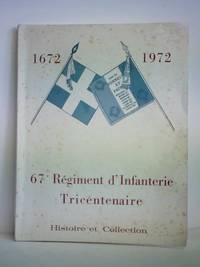
2i8099Eigenverlag ohne Ort 1972. 30 S. mit einigen eingeklebten Originalfotos kartoniert quart Einband fleckig/ganzseitige Widmung auf Vorsatz. - Typoskript / Texte et Collection de Monsieur Menuge-Crepeaux G. - Soissons / Text französisch - unknown
1333928041.Gpaperback. Good. Access codes and supplements are not guaranteed with used items. May be an ex-library book. paperback
185479672Cincinnati: U.P. James 1854. Later printing. Hardcover. Good. Quarterbound buckram over leather spine with gilt lettering. Original Minor age-tanning and staining/tideline throughout and marginal spotting. viii 144 pages. With price of twenty-five cents printed at the top of front wrap. 13 illustrations. Text in double columns. Howes H-767. Graff: 2006. One of the later printings from earlier stereotype plates which had been retained Wagner Camp Becker 134 probably 1854 or after when the James brothers dissolved their business partnership. U.P. James hardcover
2g1833Mittler & Sohn Bln. 1903. VI/90 S. mit 6 altcolor. lithogr. Uniformtafeln 1 Karte 4 Skizzen u. 2 Marschkarten. original Halbleinen. Einband fleckig u. berieben/Widmung der Zeit auf Vorsatz. unknown
1241701873.Gpaperback. Good. Access codes and supplements are not guaranteed with used items. May be an ex-library book. paperback
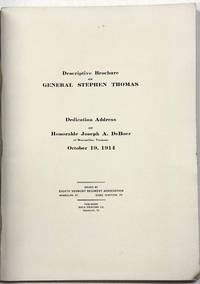
191441864Randolph VT: Buck Printing Co. 1914. 32 4 pp. Original staples original printed wrappers. Printed on glossy paper with frontispiece photo illustration of General Stephen Thomas tissue guard other full-page photo illustrations. Very Good.<br /> <br /> The heroism of this Vermont Regiment during the Civil War. Buck Printing Co. unknown
1342010957.Ghardcover. Good. Access codes and supplements are not guaranteed with used items. May be an ex-library book. hardcover