433 résultats
1807065810Paris: Giguet et Michaud 1807. Book. Fair. Hardcover. 12mo - over 6¾ - 7¾" tall. 5 volumes; leatherbound in the binding of the private library of Colonel at the time of binding William Inglis 57th Regt 1784-1835 including book plates; later previous owners name to ffeps; pages water stained and warped; boards worn; front board of vol. 2 almost loose; 2nd-5th vols have lost leather title to spine; vol. 1 spine falling apart but body whole; some page corners creased some loss of blank volume Size: 8vo - over 7¾" - 9¾" tall. Giguet et Michaud Hardcover
1851SHY1339Librairie Millitaire de J. Dumaine 1851. Hardcover. Good. 1851; Paris Volumes 1-3; French text; From the collection of John Shy professor at University of Michigan; 3/4 leather with marbled paper covered boards; edge worn and rubbed; spine labels are peeling off on V2 & 3; bookplates on front and rear pastedowns; 7 fold out tables in all 3 volumes are present and intact; interiors are fixed otherwise clean; 8vo 7 3/4" to 9 3/4" tall; 442 pages 474 pages & 392 pages; Additional shipping charges may need to be requested due to size or weight of book. Librairie Millitaire de J. Dumaine hardcover
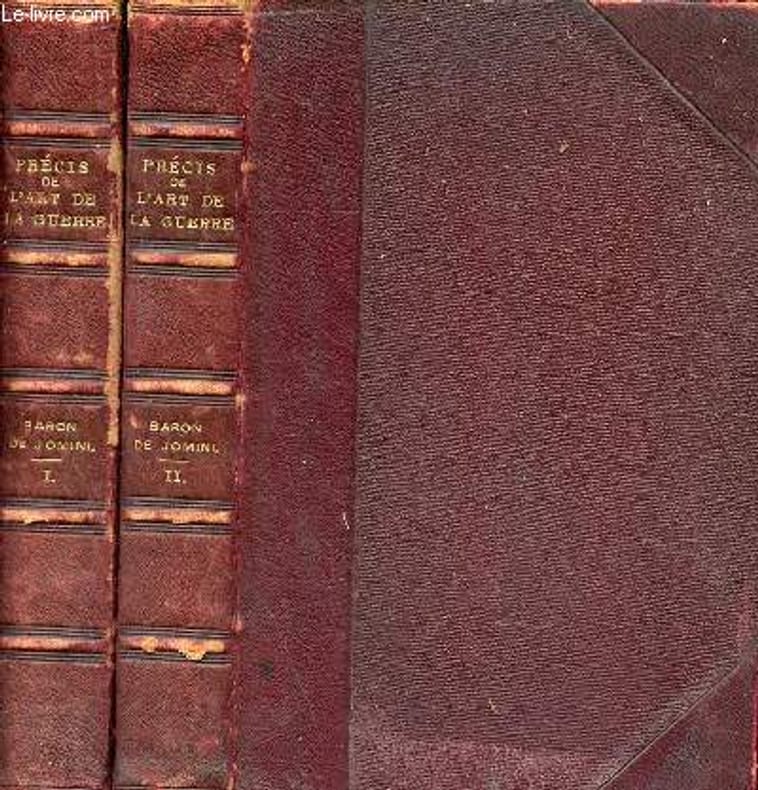
1894R160223159Librairie militaire de L.Baudoin. 1894. In-8. Relié cuir dos-coins. Etat d'usage, Coins frottés, Dos à nerfs, Papier jauni. 507 pages + 511 pages - quelques cartes en noir et blanc hors texte dépliantes - contre plats et gardes jaspés - ex libris jean bergue sur le 1er contre plat - dos à 5 nerfs - auteur, titre, tomaison et filet dorés sur le dos - nerfs frottés - quelques annotations au crayon à papier à l'intérieur des ouvrages ne gênant pas la lecture.. . . . Classification Dewey : 355-Art et science militaires, légion
1851RO80102069TANERA Ch. 4ème édition. 1851. In-8. Relié. Etat d'usage, Couv. légèrement passée, Dos satisfaisant, Rousseurs. 444 + 474 + 392 pages. Quelques planches de tableaux dépliants. Etiquette de code sur la coiffe en-tête et tampons de bibliothèque sur la page de titre et dans quelques marges.. . . . Classification Dewey : 944.06-Restauration, 1815-1848
1811S14191Paris: ca.1811. 1811. ATLAS : Oblong folio. Contains 41 engraved plates many folding 13 of which are heightened with hand coloring two with added flaps. Original quarter calf marbled boards dual red gilt-stamped spine labels ; speckled all edges well worn front joint reinforced with kozo rear joint cracked a few white paint speckles dotting the cover. Bookplate of Francisci Carafeae Ducis de Forli et Comitis Policastri Ex libris of Francesco Carafa 1781-1846. The maps are perfectly preserved. Lacks the text volumes. Generally a very good copy. This is the inspiration of Antoine-Henri Jomini in compiling his notable 'Treatise on Major Military Operations and Critical History of the Campaigns of the Revolution.' From my perspective it seems the publication of this work is complicated. Jomini seems to have issued his maps and texts in parts and the remaining extant copies each have different aspects different numbers of plates one stating 42 plates others with variable numbers of maps say up to 29 – clearly incomplete and the history of the texts and how they relate to the issued maps when is all vague. There were at least two editions issued. With the present Atlas there is no date on the title-page however one map shows an 1808 imprint. As the second edition was issued in 1811 this 41-map Atlas could be from that printing or perhaps the earlier. Another issue is dated 1816 also called a 'second' edition thus perhaps issued from 1811-1816 and the volumes of text are as many as 8 or they could be bound in other formats – each should be considered via the publisher's name and the pagination – neither of which are answerable with this assemblage of numbered plates. / Antoine-Henri Jomini was a Swiss military officer who served as a general in French and later in Russian service and one of the most celebrated writers on the Napoleonic art of war. Jomini was largely self-taught in military strategy and his ideas are a staple at military academies the United States Military Academy at West Point being a prominent example; his theories were thought to have affected many officers who later served in the American Civil War. He may have coined the term logistics in his Summary of the Art of War 1838. / In 1798 at time of the establishment of the Helvetic Republic Jomini was an eager revolutionary and an associate of Frederic-Cesar de La Harpe. He soon found a position in the new Swiss government as a secretary for the Minister of War with the rank of captain. In 1799 after being promoted to the rank of major Jomini took responsibility for reorganizing the operations of the ministry. In that capacity he standardized many procedures and used his position "to experiment with organizational systems and strategies". / After the Peace of Luneville in 1801 Jomini returned to Paris where he worked for a military equipment manufacturer. He found the job uninteresting and spent most of his time preparing his first book on military theory: Traite des grandes operations militaires Treatise on Major Military Operations. Michel Ney one of Napoleon's top generals read the book in 1803 and subsidized its publication. The book appeared in several volumes from 1804 to 1810 and was "quickly translated and widely discussed" throughout Europe. / Jomini served in the 1805 campaign by serving on Ney's staff. Jomini fought with Ney at the Battle of Ulm and in December of that year he was offered a commission as a colonel in the French Army. / In 1806 Jomini published his views as to the conduct of the impending war with Prussia. That along with his knowledge of Frederick the Great's campaigns which Jomini had described in the Traite led Napoleon to attach him to his own headquarters. Jomini was present with Napoleon at the Battle of Jena and at the Battle of Eylau where he won the cross of the Legion of Honour. / After the Peace of Tilsit Jomini was made chief of the staff to Ney and as well as a baron. In the Spanish campaign of 1808 his advice was often of the highest value to the marshal but Jomini quarrelled with his chief and he was left almost at the mercy of his numerous enemies especially Louis Alexandre Berthier the emperor's chief of staff. Complete list of maps available on request. PROVENANCE: The Carafa sometimes also referred to as Caraffa or Carrafa are a noble and ancient family of Neapolitan origin descended from the even more ancient Caracciolo family. Divided into numerous branches the main and most important of which are the Carafa della Spina and the Carafa della Stadera and decorated with the highest titles reaching the peak of its power with the election to the papal throne of Gian Pietro Carafa pope with the name of Paul IV. Francesco Carafa Duke of Forlì Count of Policastro last Baron of Pesco Sannita died in 1768. Nobili napoletani. See: 150th anniversary celebration of the life and legacy of General Antoine-Henri Jomini 1779-1869. Washington DC: Embassy of Switzerland in the United States of America 2019. Pavillon Olivier. General Antoine-Henri Jomini 1779-1869. Payerne 1969. Exposition . . . organisee par le Comite du centenaire du general Jomini en collaboration avec la Bibliotheque cantanale et universitaire de Lausanne. [ca.1811]. hardcover
6h77082. vermehrte Auflage. J.G. Cotta Tübingen 1811-12. 1 nn. Bl./XX/408 S. 3 nn. Bll./356 S./3 nn Bll./443 S./1 nn Bl./VI/306 S. Pappbände der Zeit mit goldgeprägten Rückentiteln berieben/alter handschriftlicher eintrag der Offiziers-Bibliothek des 2. Infanterie-Regiments. - ebert I 10868. Vgl. Krieg MNE 359./sehr seltene deutsche Ausgabe der erstmalig 1807 erschienenen bedeutenden Abhandlung "Traite des grandes operations militaires" des Baron Antoine-Henri Jormini 1779-1869 der als einer der einflussreichsten Militärtheoretiker gilt/Von der zweiten Auflage in der Übertragung durch den bayerischen Generalmajor Eduard von Völderndorff und Waradein 1783 - 1847 erschien lediglich die vierteilige ersteAbteilung welche vollständig die Feldzüge Friedrichs II. enthält. Die zweite Abteilung die die ersten Kriege der Revolution seit 1792 beinhalten sollte ist nicht erschienen - unknown
1816357367Paris.: Magimel. 1816. 4to. Hardcover. Contemporary quarter brown calf over marbled boards. Fair. Upper and lower parts of spine missing hinges split maps are all in good condition with some closely trimmed outer margins. 21.5x16.5x3.3 cm. French text. Maps of the major European battles of the Seven Years War and the wars of the French Revolution. Jomini if famous for his “Precis de l'Art de la Guerre†a perennial reference on strategy and logistics. Complete with all maps. weight: 1.3 lb. 29 engraved folding battle plans some with had color. [Magimel]. hardcover
1853964Z8New York: J. S. Redfield 1853. First edition. Leather. Fine. 7.5" by 5". None. A smartly bound first English edition of this work on the political and military history of the Campaign at Waterloo complete with a folding map. The first edition published previously only as an original manuscript from Jomini here translated from that original by S. V. Benet. Illustrated with a folding frontispiece map. Collated complete. Bound in modern quarter calf with marbled paper to the boards. Endpapers renewed. A fascinating and comprehensive outline of the Campaign at Waterloo fought in the summer of 1815 between the French Army against the Anglo and Prussian forces. Renowned French military and political leader Napoleon Bonaparte was defeated at the Battle of Waterloo. Written by General Baron de Jomini a prolific writer and historian on the Napoleonic Wars. Bound in modern quarter calf with marbled paper to the boards. Endpapers renewed. Externally lovely with only minimal fading to the spine. Internally firmly bound with lightly age toned and generally clean pages with only the very odd minor spot. Fine J. S. Redfield hardcover
18646061New York: D. Van Nostrand 1864. Ex-library. Measuring approximately 8" x 9.75" with 60 full page battle maps. <br /> <br /> This book is in good condition. No library markings on maps but present on the spine and both pastedowns. Moderate bumping and tearing to both ends of the spine and around corners to boards. Moderate staining to the boards and textblock. Library markings on title page otherwise the interior pages are clean. <br /> <br /> Please view the many other rare titles available for purchase at our store. We are always interested in purchasing individual or collections of fine books.<br /> <br /> Inventory #O5-84. D. Van Nostrand unknown
18202556SANS LIEU. SANS NOM. SANS DATE. (VERS 1820). IN-4 (21,5 X 29 X 3 CENTIMETRES ENVIRON) DE (4) PAGES ET 29 CARTES, RELIURE D'EPOQUE 1/2 BASANE HAVANE, DOS LISSE ORNE DE FILETS DORES, TITRE DORE. L'ATLAS SE COMPOSE DE 29 PLANS DE BATAILLES ET CARTES REPLIES, CERTAINS REHAUSSES EN COULEURS, 24 CONSACRES AU TRAITE DES GRANDES OPERATIONS MILITAIRES ET 5 A L’HISTOIRE CRITIQUE DES CAMPAGNES DE LA REVOLUTION. QUELQUES DEFAUTS EXTERIEURS, SINON BON EXEMPLAIRE.
18182187Paris 1818. 8vo. 3 cont.hcalf. Paperlabels on backs. St.o.t. XII 324 469 368 pp. and 24 of 25 fold.engr.plts. mostly in folio plans and maps. unknown
18182187Paris, 1818. 8vo. 3 cont.hcalf. Paperlabels on backs. St.o.t. XII, 324, 469, 368 pp. and 24 (of 25 ?) fold.engr.plts. (mostly in folio, plans and maps).
RO80102055PETIT J.-B.. XIXe siècle. In-Folio. Relié. Etat d'usage, Couv. défraîchie, Mors fendus, Intérieur frais. 30 planches, collationnées de cartes en couleurs + 4 planches dépliantes de cartes, en noir et blanc et en couleurs, en fin d'ouvrage (comportant quelques déchirures). Etiquette de code sur la coiffe en-tête et tampons de bibliothèque sur la page de titre et dans quelques marges.. . . . Classification Dewey : 912-Atlas, cartes et plans
222266Paris, Baudouin, 1892 in-8, LI-216 pp., carte dépl. couleurs, demi-chagrin brun, dos à nerfs (reliure postérieure).
18116287Chez Magimel 13 x 20,5 Paris 1811 Deux volumes in-8, 1811-1816, reliure demi-veau moderne, dos lisse orné de frises et de de fleurons dorés, auteur, titre et tomaison dorés, plats et gardes marbrés, tranches marbrées de l'époque. Volume I: Première partie, Magimel, 1811, deuxième édition, page de titre, 356 p., 3 tableaux d'ordre de bataille dépliants. [1] f. titré " Suite du traité des grandes opérations militaires, tome sixième". Deuxième partie, Magimel, 1811, deuxième édition, page de titre, 245 p., un tableau dépliant. Volume II: Troisième et dernière partie, Magimel, Anselin et Pochard, 1816, deuxième édition, titre, avis de l'éditeur, avertissement II-VIII-709 p. en pagination continue, mais séparée après la p. 336, par une page de faux titre intitulée "Suite du traité des grandes opérations militaires - tome huitième" suivie d'une page de titre, 6 tableaux dépliants. Notre exemplaire, qui constitue un ouvrage distinct, correspond aux tomes 5, 6 (1811) et 7, 8 (1816) de l'ensemble que Jomini avait intitulé en 1807 "Traité des grandes opérations militaires". Les campagnes de 1792-1793 et celles de 1794-1797 sont analysées de manière très didactique. Jomini conceptualise la "guerre moderne" en comparant Frédéric II et le système de guerre de Napoléon. Il trace les lignes de fractures stratégiques provoquées par la Révolution et l'Empire. Le système autrichien de défense "en cordon", de "vouloir tout couvrir", ou l'obsession "des boulangeries" y sont largement critiqués. Jomini démontre l'avantage à concentrer des forces sur une position centrale. L'intérêt de notre exemplaire en deuxième édition est la présence en fin de partie d'une conclusion en 1811 sous forme d'observations générales et d'un "Exposé des principes généraux sur lesquels l'art de la guerre repose" en 1816 (chapitre XL et dernier). Jomini avait rédigé ce chapitre à Posen en 1806. Il avait été imprimé pour la première fois dans une revue allemande en 1807. Jomini y développe treize principes "invariables", qui influencèrent profondément au XIXe siècle la pensée stratégique et les principes de la guerre. Elégante et très belle reliure, intérieur frais, étiquette de la librairie Roumanille (Avignon) au centre du premier contre plat.Très bon exemplaire.(B49)
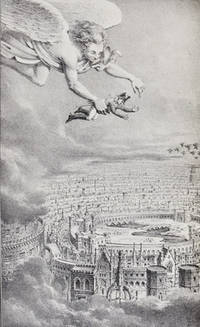
1827002257London: Henry Colburn 1827. 1st Edition. Leather. Very Good. 8vo - over 7¾ - 9¾" tall. 1st edition. A Very Good copy. 8vo. ix 406 pp. with engraved frontispiece. Bound in period full diced calf with boards double ruled and the spine's five compartments elaborately decorated in gilt. Title on red morocco title label. Previous owner's name and address on a front end paper. The board's edges and joints are mild to moderately rubbed with a small strip of leather pulled away on the rear board. Still an attractive binding of this piece of Napoleonana. Thought to be written by Baron Antoine-Henri Jomini. Jomini is considered a father of modern military strategy and was the only author of strategy taught at West Point before the Civil War. In this book Napoleon is given an angelic guide of Heaven and Hell before arriving to his new Celestial home Politicopolis. . Henry Colburn unknown
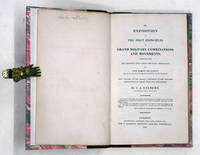
103354London Roworth 1825. 8° 160 S. einige Falttabellen 11 lithogr. Tafeln. Neuer HLdr. goldgeprägt. Exlibris a. Vors. min. gebrauchsp. gutes Ex. - Antoine-Henri Jomini 6. März 1779 in Payerne/Waadtland; † 24. März 1869 in Passy bei Paris seit 1808 Baron de Jomini war ein Schweizer Offizier und einer der einflussreichsten Militärtheoretiker. Die von ihm entwickelten Lehren prägten die Militärdoktrinen des 19. Jahrhunderts entscheidend. Unter Napoleon Brigade-General Gegner Berthiers darauf in hohen Ämtern in russischen Diensten Mitbegründer der Petersburger Militärakademie.Text: engl. 010 London, Roworth, 1825 unknown
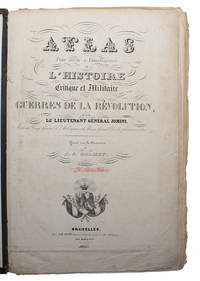
184056648Bruxelles J.B. Petit 1840. Large folio. 53 x 34 cm. Contemp. marbled boards later clothbacked. Scratches to boards. Engraved title-page lithographed table 581 pp. description of the maps/plans. 38 engraved/lithographed maps and plans many folding with handcoloured positions of troops. Some of the larger maps strenghtened on verso in foldings a few with tears. Margins a bit frayed. some scattered brownspots. hardcover
184056648Bruxelles, J.B. Petit, 1840. Large folio. (53 x 34 cm.). Contemp. marbled boards, later clothbacked. Scratches to boards. Engraved title-page, lithographed table, 58,(1) pp. (description of the maps/plans). 38 engraved/lithographed maps and plans, many folding with handcoloured positions of troops. Some of the larger maps strenghtened on verso in foldings, a few with tears. Margins a bit frayed. some scattered brownspots.
182725797London: Henry Colburn 1827. First edition. Hardcover. vg. Large octavo. IX 406pp. Gold-lined three-quarter morocco over brown cloth with gold decorations stamped on spine. Gold-tooled raised bands. Top edge gilt. Deckled fore- and bottom page edges. Marbled endpapers. Frontispiece reproductions of a drawing by T. Dighton drawn on stone. Scarce and fascinating piece of Napoleoniana describing the fallen Emperor on a tour through the outskirts of Heaven and Hell. After various curious experiences Napoleon is finally brought to the entrance of his Celestial home. Front board and part of back cover sunned. Few small stains on front board small stain on spine. Slight rubbing on parts of edges and along head and tail of spine. Wear on top corners otherwise a tight copy with binding in good interior in very good to near fine condition. Henry Colburn hardcover
17898436Imprimerie Impériale / Chez Pillet / Delaunay / J.C. Cotta / Poussielgue / Asselin / Gaultier - Laguionie 13 x 20,5 1789 Petit in-8, reliure à la bradel pleine toile bleue moderne, titre "France 1789-1815" doré au dos, réunissant 8 pièces rares, parues entre 1789 et 1840, concernant l'histoire de la période qui s'étend de 1789 à 1815. I./ La galerie des Etats-Généraux, 1789, 204-[1] pp. Ecrit à plusieurs mains (Luchet, Mirabeau ?), la "Galerie" est une succession de portraits (31) satiriques des hommes de 1789, de Narsès (Necker) à (Francus l'archevêque de Vienne/Lefranc de Pompignan, affublé chacun d'un nom codé, dont la clé figure sur la dernière page. L'ensemble compte 3 volumes, il s'agit ici du seul premier volume. II. Notice abrégée sur la vie, le caractère et les crimes des principaux assassins aux gages de l'Angleterre qui sont aujourd'hui traduit devant le Tribunal de la Seine, Paris, Imprimerie Impériale, An XII, 1804, 72 pp. Notice à charge, attribuée à l'agent de Napoléon Roques de Montgaillard, qui dresse la biographie des hommes autour de Cadoudal qui fomentèrent le complot de 1804. III. Procès de M. Marie Chamans de Lavalette, accusé de complicité dans l'attentat qui a ramené l'usurpateur en France et condamné à mort le 21 novembre à la peine de mort, précédé d'une notice historique sur la carrière civile et militaire de M. de Lavalette, Paris, chez Pillet, 1815, 50 p. IV. Mémoire de M. le Maréchal Masséna duc de Rivoli, prince d'Essling, sur les événements qui ont eu lieu en Provence, pendant les mois de mars et d'avril 1815, suivi de pièce justificatives et d'une carte géographique, Deuxième édition; Paris, Delaunay, 1816, 89 pp. Réponse du maréchal d'Empire (1758-1817) aux accusations des Ultras de ne pas avoir voulu arrêter Bonaparte à son retour lors de sa traversée de la Provence en mars 1815. V. Projet de pétition au Parlement d'Angleterre par le comte de Las Cases, Stuttgart, dans la librairie de J.G. Cotta, 1818, 51 pp. Page de titre en allemand également (Entwurf einer Bittschrift an das brittische Parlament vom Grafen de Las Cases) et texte allemand et traduction française page à page. Après Waterloo, Las Cases (1766-1842) accompagne Napoléon à Sainte-Hélène. Pétition que Las Cases aurait transmise lors de son arrivée au Cap de Bonne Espérance, après avoir laissé Napoléon à Longwood. VI. Appel à tous les Français contre les calomnies par lesquelles on a cherché à flétrir la conduite du comte de Bourmont en 1815, Paris, Imprimerie de Poussielgue, 1840, 40 pp. Plaidoyer de Charles de Bourmont lors du retour d'exil de son père le maréchal d'Empire. VII. Documents inédits sur la campagne de 1815 publiés par le duc d'Elchingen, Paris, 1840, Asselin - Laguionie, 87 pp. Défense de la mémoire de Ney maréchal d'Empire, par son fils Michel Ney (1804-1854), duc d'Elchingen, qui avait réuni d'importants documents sur la bataille de Waterloo et sur le rôle joué par son père. Mais carte dépliante absente. Ce texte est suivi par une note du général Jomini (pp. 265-280), adressée à Michel Ney en septembre 1841. VIII. Relation de la campagne de 1815, dite de Waterloo, pour servir à l'histoire du maréchal Ney, par le colonel Heymès, son premier aide de camp, témoin oculaire, Paris, imprimerie de Gaultier-Laguionie, Paris 1829. Exemplaire de bibliothèque avec ses cotes au dos, très bon état de cet ensemble de pièces peu fréquentes. Ex-libris gravé sur le premier contre plat du collectionneur et prêtre californien Joseph M. Gleason (1869-1942) et petit ex-libris récent.(B56). PHOTOS NUMERIQUES DISPONIBLES PAR EMAIL SUR SIMPLE DEMANDE-DIGITAL PHOTOGRAPS MAY BE AVAILABLE ON REQUEST
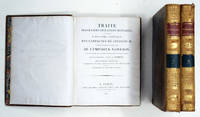
103441Paris Magimel 1811. 4° XLI X 376 7 Falttaf. / 392 S. 4 Falttaf.; 395 S. 2 Falttaf. HLdr. d. Zeit m. Rückenschild Rücken beschienen berieben etwas fleckig Exlibris a Vors. Deuxième Editions. Text franz. Ohne den Atlas.- Antoine-Henri Jomini 6. März 1779 in Payerne/Waadtland; † 24. März 1869 in Passy bei Paris seit 1808 Baron de Jomini war ein Schweizer Offizier und einer der einflussreichsten Militärtheoretiker. Die von ihm entwickelten Lehren prägten die Militärdoktrinen des 19. Jahrhunderts entscheidend. Unter Napoleon Brigade-General Gegner Berthiers darauf in hohen Ämtern in russischen Diensten Mitbegründer der Petersburger Militärakademie. 010 Paris, Magimel, 1811 unknown