45 résultats
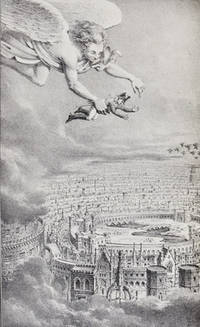
182725797London: Henry Colburn 1827. First edition. Hardcover. vg. Large octavo. IX 406pp. Gold-lined three-quarter morocco over brown cloth with gold decorations stamped on spine. Gold-tooled raised bands. Top edge gilt. Deckled fore- and bottom page edges. Marbled endpapers. Frontispiece reproductions of a drawing by T. Dighton drawn on stone. Scarce and fascinating piece of Napoleoniana describing the fallen Emperor on a tour through the outskirts of Heaven and Hell. After various curious experiences Napoleon is finally brought to the entrance of his Celestial home. Front board and part of back cover sunned. Few small stains on front board small stain on spine. Slight rubbing on parts of edges and along head and tail of spine. Wear on top corners otherwise a tight copy with binding in good interior in very good to near fine condition. Henry Colburn hardcover
1836319194Schlesinger`sche Buch- und Musikhandlung Berlin 1836. Hardcover mit Lederrücken und -ecken Neue vermehrte Auflage Zustand: Keine Beschädigungen keine Eintragungen. Rücken Ecken Kanten bestoßen. Aus einer Klosterbibliothek mit Kennungen Stempel Rückenschild. Das Papier ist im oberen Teil braunfleckig. Schlesinger`sche Buch- und Musikhandlung, Berlin, hardcover
1842505835J.B. petit 1842 358 + carte pages in8. 1842. Relié. 358 + carte pages. Livre contenant des tampons et étiquettes de bibliothèque de garnison reliure usagée pages fatiguées nombreuses petites tâches majoritairement en marge
1818R320140765Chez Magimel Anselin et Pochard. 1818. In-8. Relié. Etat d'usage, Plats abîmés, Dos satisfaisant, Rousseurs. Environ 200 pages - auteur, titre, tomaison et ornements dorés sur le dos - manque de nombreuses pages à l'intérieur de l'ouvrage - tampons sur la page de titre - rousseurs sans réelle conséquence sur la lecture - tranches jaunes - coins, tranches et plats frottés - étiquette collée sur la coiffe en tête - papier collé sur le 1er plat.. . . . Classification Dewey : 355.021-Militaria
1820kb132.536FRANCE: Anselin et Pochard 1820. FRENCH TEXT. Old brown paper covered boards with a leather spine. Spine has eight sets of twin gold rules and is lettered in gold with arabicvolume number. All edges marbled. Clean tight text. Some cover and spine wear. Inscription of owner at start of book. Top right corner of title page clipped not affecting lettering. Nouvelle Edition. Hardback. G/No DW. Anselin et Pochard Hardcover
1820kb132.534FRANCE: Anselin et Pochard 1820. FRENCH TEXT. Old brown paper covered boards with a leather spine. Spine has eight sets of twin gold rules and is lettered in gold with arabicvolume number. All edges marbled. Clean tight text. Some cover and spine wear. Top right corner of title page clipped not affecting lettering. Nouvelle Edition. Hardback. G/No DW. Anselin et Pochard Hardcover
1820kb132.535FRANCE: Anselin et Pochard 1820. FRENCH TEXT. Old brown paper covered boards with a leather spine. Spine has eight sets of twin gold rules and is lettered in gold with arabicvolume number. All edges marbled. Clean tight text. Some cover and spine wear. Inscription of owner at start of book. Top right corner of title page clipped not affecting lettering. Nouvelle Edition. Hardback. G/No DW. Anselin et Pochard Hardcover
1830R300325179Chez Anselin. 1830. In-8. Relié demi-cuir. Etat d'usage, Couv. légèrement passée, Dos frotté, Rousseurs. 299 pages. Tampon en pages de titre et de faux titre. Etiquettes collées sur le 1er contreplat. Plats et tranches des plats frottés. Dos cuir à titre, auteur et filets dorés. Accroc sur le cuir du 1er plat.. . . . Classification Dewey : 303.66-Guerre
183059509Paris, Anselin, 1830. Uncut in original printed wrappers. A corner of upper wrapper gone. Stamp on title-page. X,299 pp., 2 large folded engraved plates. Faint dampstain on half-title and title-page. Faint scattered brownspots. Stitching loosening. Wrappers taped to spine.
183059509Paris Anselin 1830. Uncut in original printed wrappers. A corner of upper wrapper gone. Stamp on title-page. X299 pp. 2 large folded engraved plates. Faint dampstain on half-title and title-page. Faint scattered brownspots. Stitching loosening. Wrappers taped to spine. unknown
1816357367Paris.: Magimel. 1816. 4to. Hardcover. Contemporary quarter brown calf over marbled boards. Fair. Upper and lower parts of spine missing hinges split maps are all in good condition with some closely trimmed outer margins. 21.5x16.5x3.3 cm. French text. Maps of the major European battles of the Seven Years War and the wars of the French Revolution. Jomini if famous for his “Precis de l'Art de la Guerre†a perennial reference on strategy and logistics. Complete with all maps. weight: 1.3 lb. 29 engraved folding battle plans some with had color. [Magimel]. hardcover
18116287Chez Magimel 13 x 20,5 Paris 1811 Deux volumes in-8, 1811-1816, reliure demi-veau moderne, dos lisse orné de frises et de de fleurons dorés, auteur, titre et tomaison dorés, plats et gardes marbrés, tranches marbrées de l'époque. Volume I: Première partie, Magimel, 1811, deuxième édition, page de titre, 356 p., 3 tableaux d'ordre de bataille dépliants. [1] f. titré " Suite du traité des grandes opérations militaires, tome sixième". Deuxième partie, Magimel, 1811, deuxième édition, page de titre, 245 p., un tableau dépliant. Volume II: Troisième et dernière partie, Magimel, Anselin et Pochard, 1816, deuxième édition, titre, avis de l'éditeur, avertissement II-VIII-709 p. en pagination continue, mais séparée après la p. 336, par une page de faux titre intitulée "Suite du traité des grandes opérations militaires - tome huitième" suivie d'une page de titre, 6 tableaux dépliants. Notre exemplaire, qui constitue un ouvrage distinct, correspond aux tomes 5, 6 (1811) et 7, 8 (1816) de l'ensemble que Jomini avait intitulé en 1807 "Traité des grandes opérations militaires". Les campagnes de 1792-1793 et celles de 1794-1797 sont analysées de manière très didactique. Jomini conceptualise la "guerre moderne" en comparant Frédéric II et le système de guerre de Napoléon. Il trace les lignes de fractures stratégiques provoquées par la Révolution et l'Empire. Le système autrichien de défense "en cordon", de "vouloir tout couvrir", ou l'obsession "des boulangeries" y sont largement critiqués. Jomini démontre l'avantage à concentrer des forces sur une position centrale. L'intérêt de notre exemplaire en deuxième édition est la présence en fin de partie d'une conclusion en 1811 sous forme d'observations générales et d'un "Exposé des principes généraux sur lesquels l'art de la guerre repose" en 1816 (chapitre XL et dernier). Jomini avait rédigé ce chapitre à Posen en 1806. Il avait été imprimé pour la première fois dans une revue allemande en 1807. Jomini y développe treize principes "invariables", qui influencèrent profondément au XIXe siècle la pensée stratégique et les principes de la guerre. Elégante et très belle reliure, intérieur frais, étiquette de la librairie Roumanille (Avignon) au centre du premier contre plat.Très bon exemplaire.(B49)
18116287Chez Magimel 13 x 20,5 Paris 1811 Deux volumes in-8, 1811-1816, reliure demi-veau moderne, dos lisse orné de frises et de de fleurons dorés, auteur, titre et tomaison dorés, plats et gardes marbrés, tranches marbrées de l'époque. Volume I: Première partie, Magimel, 1811, deuxième édition, page de titre, 356 p., 3 tableaux d'ordre de bataille dépliants. [1] f. titré " Suite du traité des grandes opérations militaires, tome sixième". Deuxième partie, Magimel, 1811, deuxième édition, page de titre, 245 p., un tableau dépliant. Volume II: Troisième et dernière partie, Magimel, Anselin et Pochard, 1816, deuxième édition, titre, avis de l'éditeur, avertissement II-VIII-709 p. en pagination continue, mais séparée après la p. 336, par une page de faux titre intitulée "Suite du traité des grandes opérations militaires - tome huitième" suivie d'une page de titre, 6 tableaux dépliants. Notre exemplaire, qui constitue un ouvrage distinct, correspond aux tomes 5, 6 (1811) et 7, 8 (1816) de l'ensemble que Jomini avait intitulé en 1807 "Traité des grandes opérations militaires". Les campagnes de 1792-1793 et celles de 1794-1797 sont analysées de manière très didactique. Jomini conceptualise la "guerre moderne" en comparant Frédéric II et le système de guerre de Napoléon. Il trace les lignes de fractures stratégiques provoquées par la Révolution et l'Empire. Le système autrichien de défense "en cordon", de "vouloir tout couvrir", ou l'obsession "des boulangeries" y sont largement critiqués. Jomini démontre l'avantage à concentrer des forces sur une position centrale. L'intérêt de notre exemplaire en deuxième édition est la présence en fin de partie d'une conclusion en 1811 sous forme d'observations générales et d'un "Exposé des principes généraux sur lesquels l'art de la guerre repose" en 1816 (chapitre XL et dernier). Jomini avait rédigé ce chapitre à Posen en 1806. Il avait été imprimé pour la première fois dans une revue allemande en 1807. Jomini y développe treize principes "invariables", qui influencèrent profondément au XIXe siècle la pensée stratégique et les principes de la guerre. Elégante et très belle reliure, intérieur frais, étiquette de la librairie Roumanille (Avignon) au centre du premier contre plat.Très bon exemplaire.(B49)
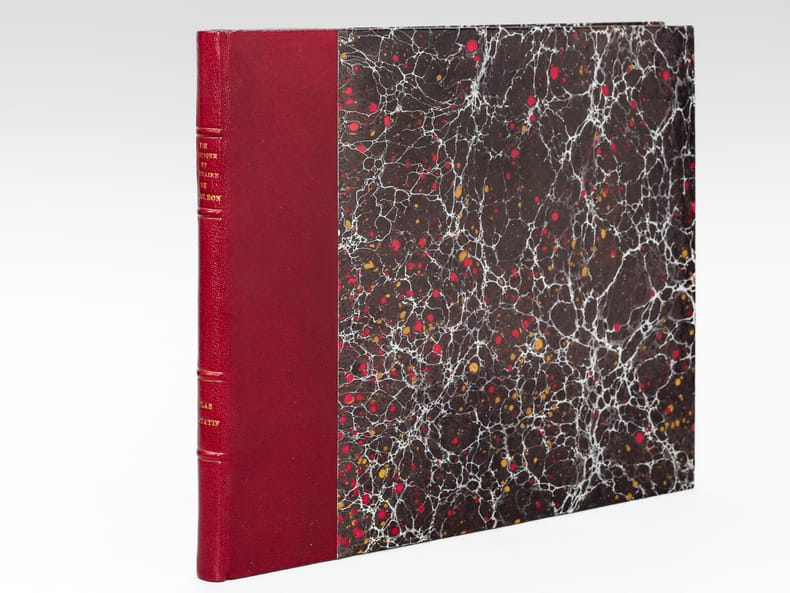
1841681491 vol. petit in-folio oblong (29 x 36,5 cm en reliure) reliure postérieure demi-chagrin maroquiné bordeaux, dos à 5 nerfs, couverture conservée, Librairie Militaire de J.-B. Petit, Bruxelles, 1841, 1 f. (titre) et 36 cartes dont 5 grandes cartes dépliantes (2 cartes générales d'Allemagne, une carte d'une partie de la Prusse et de la Russie, une carte générale d'Espagne et de Portugal et une carte générale de la France), souvent rehaussées en couleurs.
1811S14191Paris: ca.1811. 1811. ATLAS : Oblong folio. Contains 41 engraved plates many folding 13 of which are heightened with hand coloring two with added flaps. Original quarter calf marbled boards dual red gilt-stamped spine labels ; speckled all edges well worn front joint reinforced with kozo rear joint cracked a few white paint speckles dotting the cover. Bookplate of Francisci Carafeae Ducis de Forli et Comitis Policastri Ex libris of Francesco Carafa 1781-1846. The maps are perfectly preserved. Lacks the text volumes. Generally a very good copy. This is the inspiration of Antoine-Henri Jomini in compiling his notable 'Treatise on Major Military Operations and Critical History of the Campaigns of the Revolution.' From my perspective it seems the publication of this work is complicated. Jomini seems to have issued his maps and texts in parts and the remaining extant copies each have different aspects different numbers of plates one stating 42 plates others with variable numbers of maps say up to 29 – clearly incomplete and the history of the texts and how they relate to the issued maps when is all vague. There were at least two editions issued. With the present Atlas there is no date on the title-page however one map shows an 1808 imprint. As the second edition was issued in 1811 this 41-map Atlas could be from that printing or perhaps the earlier. Another issue is dated 1816 also called a 'second' edition thus perhaps issued from 1811-1816 and the volumes of text are as many as 8 or they could be bound in other formats – each should be considered via the publisher's name and the pagination – neither of which are answerable with this assemblage of numbered plates. / Antoine-Henri Jomini was a Swiss military officer who served as a general in French and later in Russian service and one of the most celebrated writers on the Napoleonic art of war. Jomini was largely self-taught in military strategy and his ideas are a staple at military academies the United States Military Academy at West Point being a prominent example; his theories were thought to have affected many officers who later served in the American Civil War. He may have coined the term logistics in his Summary of the Art of War 1838. / In 1798 at time of the establishment of the Helvetic Republic Jomini was an eager revolutionary and an associate of Frederic-Cesar de La Harpe. He soon found a position in the new Swiss government as a secretary for the Minister of War with the rank of captain. In 1799 after being promoted to the rank of major Jomini took responsibility for reorganizing the operations of the ministry. In that capacity he standardized many procedures and used his position "to experiment with organizational systems and strategies". / After the Peace of Luneville in 1801 Jomini returned to Paris where he worked for a military equipment manufacturer. He found the job uninteresting and spent most of his time preparing his first book on military theory: Traite des grandes operations militaires Treatise on Major Military Operations. Michel Ney one of Napoleon's top generals read the book in 1803 and subsidized its publication. The book appeared in several volumes from 1804 to 1810 and was "quickly translated and widely discussed" throughout Europe. / Jomini served in the 1805 campaign by serving on Ney's staff. Jomini fought with Ney at the Battle of Ulm and in December of that year he was offered a commission as a colonel in the French Army. / In 1806 Jomini published his views as to the conduct of the impending war with Prussia. That along with his knowledge of Frederick the Great's campaigns which Jomini had described in the Traite led Napoleon to attach him to his own headquarters. Jomini was present with Napoleon at the Battle of Jena and at the Battle of Eylau where he won the cross of the Legion of Honour. / After the Peace of Tilsit Jomini was made chief of the staff to Ney and as well as a baron. In the Spanish campaign of 1808 his advice was often of the highest value to the marshal but Jomini quarrelled with his chief and he was left almost at the mercy of his numerous enemies especially Louis Alexandre Berthier the emperor's chief of staff. Complete list of maps available on request. PROVENANCE: The Carafa sometimes also referred to as Caraffa or Carrafa are a noble and ancient family of Neapolitan origin descended from the even more ancient Caracciolo family. Divided into numerous branches the main and most important of which are the Carafa della Spina and the Carafa della Stadera and decorated with the highest titles reaching the peak of its power with the election to the papal throne of Gian Pietro Carafa pope with the name of Paul IV. Francesco Carafa Duke of Forlì Count of Policastro last Baron of Pesco Sannita died in 1768. Nobili napoletani. See: 150th anniversary celebration of the life and legacy of General Antoine-Henri Jomini 1779-1869. Washington DC: Embassy of Switzerland in the United States of America 2019. Pavillon Olivier. General Antoine-Henri Jomini 1779-1869. Payerne 1969. Exposition . . . organisee par le Comite du centenaire du general Jomini en collaboration avec la Bibliotheque cantanale et universitaire de Lausanne. [ca.1811]. hardcover
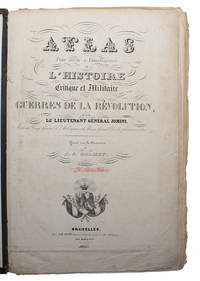
18405599Bruxelles, J.B. Petit, 1840 Une collection intéressante de cartes gravées et coloriées à la main. Il s'agit du volume de l'atlas accompagnant le vaste ouvrage de Jomini comparant la guerre de Sept Ans et les guerres de la Révolution. Nous supposons que la page de titre est manquante, car après une page de garde, l'atlas commence directement par la planche n° 1. Nous avons eu du mal à établir la pagination de cet ouvrage, car de nombreuses planches (mais pas toutes) sont munies d'étiquettes en papier et, bien que la planche n° 2 semble manquer, deux cartes différentes sont toutes deux étiquetées « planche n° 5 ». Nous supposons donc que cet ouvrage est complet avec ses 25 planches (dont beaucoup sont pliables). Le principal défaut (outre l'absence de titre) est que la planche 9 a été arrachée, ne laissant qu'un coin attaché (nous proposons donc en réalité une collection de 24 planches sur 25). Ces planches contiennent au total 39 cartes réparties sur les 24 feuilles. La plupart sont pliables et comportent des éléments colorés à la main. Une belle collection de planches militaires. Reliure cartonnée avec dos en cuir bordeaux et plats marbrés. (Les deux sont quelque peu frottés). À l'exception de la perte de la planche 19, les autres sont en excellent état. 39 cm x 30 cm. Conforme à WorldCat / OCLC : 16661241, qui mentionne 25 planches (mais ne fait aucune mention d'autres pages).
181358544BBLeipzig, (s.n.), 1813. 8°. 16 S. Ohne Einband.
1807180257Paris: Giguet et Michaud Imprimeurs-Libraires 1807. Par le Colonel Jomini employe pres de la Majeste l'Empereur Napoleon. Text in French. Pp. 4the title page and one leaf of explanation to plate 19 21 engraved folding plates battle maps or plans a few with multiple figures the final map with hand-coloured highlights; cr. 4to; rebound in modern qr. leather spine ruled in blind compartments with gilt lettered & decorated red leather title label marbled papered boards; later endpapers; small ownership stamp a lion brandishing a sword and the initials F M on the title page twice and on 4 of the maps mainly on the reverse one inked and a few brief pencilled marginal annotations in English neat repair on reverse of first map to a short closed tear at the innermost fold a couple of the maps slightly creased a little light foxing and occasional slight soiling; Giguet et Michaud Imprimeurs-Libraires Paris 1807. Lacking the text volumes. Covers the conflicts of the Seven Years War 1756-1763 including the battles of Kollin Rosbach Breslau a.o. The maps were engraved by J. Weibel F. Wexelberg and Jean Renard Vienna. Antoine Henri Jomini 1779-1869 was appointed staff colonel in 1805 by Napoleon and in 1813 became Marshal Ney's chief of staff. Jomini was one of the most celebrated writers on military thought. His Traite des grandes operations militaires was first published in 1804-1805. Giguet et Michaud, Imprimeurs-Libraires unknown
18405599Bruxelles : J.B. Petit 1840. An interesting collection of engraved and hand coloured maps. This is the atlas volume for Jomini's extensive work comparing the Seven Years' War and the Revolutionary Wars. We assume that the title page is lacking as after an end paper the atlas begins with plate one. We have struggled with the pagination of this work as there are paper labels to many of the plates but not all and although plate two appears not to be present two different maps are both labelled as plate five. So we assume that this work is complete with the 25 plates many folding. The major flaw apart from the lack of title is that plate nine has been torn out leaving just a corner attached so essentially we are offering a collection of 24/25 plates. These plates contain a total of 39 maps / cartes on the 24 sheets. Most are folding and most have hand coloured elements. An attractive collection of military plates. The maps in this collection depict battles between 1741 and 1761 some printed in Germany. In hardback boards with a burgundy leather spine and marbled boards. Both somewhat rubbed. Apart from the loss of plate 19 the rest are in excellent condition. 39cm x 30cm. Conforms to WorldCat / OCLC: 16661241 which states 25 plates but makes no mention of any other pages. . Une collection intéressante de cartes gravées et coloriées à la main. Il s'agit du volume de l'atlas accompagnant le vaste ouvrage de Jomini comparant la guerre de Sept Ans et les guerres de la Révolution. Nous supposons que la page de titre est manquante car après une page de garde l'atlas commence directement par la planche n° 1. Nous avons eu du mal à établir la pagination de cet ouvrage car de nombreuses planches mais pas toutes sont munies d'étiquettes en papier et bien que la planche n° 2 semble manquer deux cartes différentes sont toutes deux étiquetées « planche n° 5 ». Nous supposons donc que cet ouvrage est complet avec ses 25 planches dont beaucoup sont pliables. Le principal défaut outre l'absence de titre est que la planche 9 a été arrachée ne laissant qu'un coin attaché nous proposons donc en réalité une collection de 24 planches sur 25. Ces planches contiennent au total 39 cartes réparties sur les 24 feuilles. La plupart sont pliables et comportent des éléments colorés à la main. Une belle collection de planches militaires. Reliure cartonnée avec dos en cuir bordeaux et plats marbrés. Les deux sont quelque peu frottés. À l'exception de la perte de la planche 19 les autres sont en excellent état. 39 cm x 30 cm. Conforme à WorldCat / OCLC : 16661241 qui mentionne 25 planches mais ne fait aucune mention d'autres pages. J.B. Petit, hardcover
18182187Paris, 1818. 8vo. 3 cont.hcalf. Paperlabels on backs. St.o.t. XII, 324, 469, 368 pp. and 24 (of 25 ?) fold.engr.plts. (mostly in folio, plans and maps).
184056648Bruxelles, J.B. Petit, 1840. Large folio. (53 x 34 cm.). Contemp. marbled boards, later clothbacked. Scratches to boards. Engraved title-page, lithographed table, 58,(1) pp. (description of the maps/plans). 38 engraved/lithographed maps and plans, many folding with handcoloured positions of troops. Some of the larger maps strenghtened on verso in foldings, a few with tears. Margins a bit frayed. some scattered brownspots.
185637977Paris, Ch. Tanera, 1856. Orig. clothbacked printed boards. Stamp on titlepage. 27 pp. A little brownspotted.
184056648Bruxelles J.B. Petit 1840. Large folio. 53 x 34 cm. Contemp. marbled boards later clothbacked. Scratches to boards. Engraved title-page lithographed table 581 pp. description of the maps/plans. 38 engraved/lithographed maps and plans many folding with handcoloured positions of troops. Some of the larger maps strenghtened on verso in foldings a few with tears. Margins a bit frayed. some scattered brownspots. hardcover
18182187Paris 1818. 8vo. 3 cont.hcalf. Paperlabels on backs. St.o.t. XII 324 469 368 pp. and 24 of 25 fold.engr.plts. mostly in folio plans and maps. unknown